Creative Tasks for the Multiple
         Intelligences
 by Susan Osher   Hareut School, Karmiel

    ETAI 6th International Conference
       “Linking Through Language”
              July 14, 2010
What is intelligence?

Traditional definition:

   Intelligence is a cognitive capacity people are born
    with.

   It can be measured.
Howard Gardner’s definition:

  ability to create an effective product or offer a
   service;

  skills that make it possible to solve problems;

  potential for finding or creating solutions for
   problems.
According to Gardner,

   People possess all eight intelligences in diff. amounts.

   They have different intellectual compositions.

   These intelligences are in different areas
    of the brain

   They can work independently or together.
Implications of MI Theory
   All human beings possess all 8 intelligences in varying
    amounts.

   Intelligences can be developed.

   No intelligence exists by itself in life.

   There are many different ways to be intelligent.
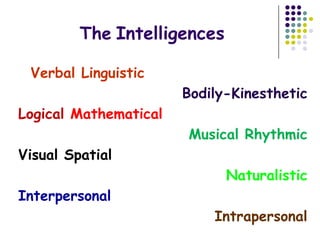
The Intelligences

 Verbal Linguistic
                       Bodily-Kinesthetic
Logical Mathematical
                       Musical Rhythmic
Visual Spatial
                             Naturalistic
Interpersonal
                           Intrapersonal
Question and Answer Game   
Verbal Linguistic Intelligence:

The ability to think in words and use words effectively
whether orally or in writing.


The Linguistic Learner

1. reads and tell stories;

2. can memorize data;

3. develops best in a print rich environment.
Charades
Prepare exercises for your pupils to do!!!!

Here are some examples:
Thump your chest like a gorilla.
Scratch like a cat.
Climb the tree like a monkey.
Slide, slide like a snake.
Swim, swim like a fish.
Bend your knees like a camel.
Bodily-Kinesthetic


Consists of the ability to use the body to express ideas
and feelings and to solve problems.

The Bodily – Kinesthetic Learner
1. works well with hands;

2. has good coordination;

3. is good at physical activities;

4. develops through role- playing, charades and
   exercises
It’s Raining Kids
Change the words in bold from the song “It’s Raining
Men”.
For example:
It’s raining kids, halleluya.
It’s raining kids, oh yeah,
Tall, short
Fat and thin
It’s going to start raining kids.

Rewrite the song with your own vocabulary and
categories. Children can write their own songs and
illustrate them.
Musical- Rhythmic Intelligence
Consists of the ability to sense rhythm, pitch, and
melody.


The Musical Learner

1. sings and listens to songs;

2. remembers melodies and keeps time;

3. develops best by singing and dancing.
Shapes
 triangles, circles, squares, rectangles, cones etc….. in different sizes and colors
    depending on the level of the class
Practice shapes.
Model giving directions
Put the circle on the square!
Students give each
other directions in pairs.
Visual-Spatial Intelligence
Consists of the ability to sense form, space, color, and shape.

The Visual- Spatial Learner

1. draws, builds, designs and creates things;

2. watches movies and plays with computers;

3. reads maps, charts and diagrams;

4. solves puzzles and mazes;

5. needs a print rich environment.
Logical Mathematical
            Intelligence
Consists of the ability to use numbers effectively,
reasoning and recognizing abstract patterns.

The Logical Mathematical Learner
1. finds patterns and relationships;

2. is good at strategy games and puzzles;

3. develops best by categorizing, deciphering ,
   and outlining;

4. finds patterns and relationships.
Letters
December 10, 2009

Dear Friend,

My favorite food is pizza.
What's your favorite food?

Yours,
Shosh

December 10, 20--10

Dear Friend,

My favorite color is blue.
What's your favorite color?

Yours,
Shosh
Interpersonal Intelligence
Consists of the ability to sense other people’s moods
an feelings, communicate and cooperate with others

The Interpersonal Learner

1. talks and has friends;

2. works well in groups and peer teaching;

3. shares, compares, interviews;

4. organizes, leads and mediates.
All By Myself
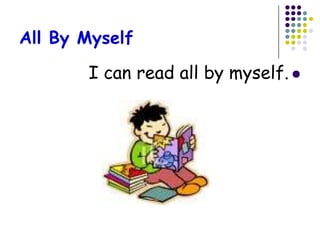
All By Myself

       I can read all by myself. 
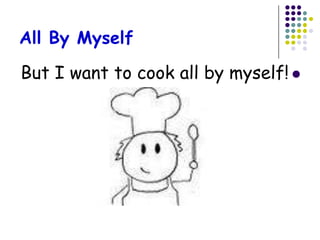
All By Myself

But I want to cook all by myself! 
Intrapersonal Intelligence:
Consists of the ability to understand yourself – your
strengths, weaknesses, moods, desires, and
intentions.

The Intrapersonal Learner
1. works independently and pursues own interests;

2. understands self and feelings;

3. develops best in quiet places;

4. prepares portfolios;

5. Prepares checklists to examine work.
Over in the Meadow

The version below of "Over in the Meadow" is the general way
    this song has been sung since the 1880's or earlier...
                    Over in the Meadow
                     Children's Song


                 Over in the meadow,
               In the sand, in the sun,
              Lived an old mother toad
             And her little toadies one.
              "Jump!" said the mother;
               "I jump!" said the one.
          So they jumped and they jumped,
               In the sand in the sun.
shoshanaosh@gmail.com


mes-english.com
Sparklebox
Adrianbruce
barryfunenglish
Naturalistic Intelligence
Consists of the ability to understand, appreciate and enjoy the natural
world

The Naturalistic Learner

1. interacts with the surroundings;

2. studies and learns about animals and plants;

3. is interested in geography and natural
   phenomena;

4. classifies and cares for plants and animals.

Creative Teaching Activities for the Multiple Intelligences

  • 1.
    Creative Tasks forthe Multiple Intelligences by Susan Osher Hareut School, Karmiel ETAI 6th International Conference “Linking Through Language” July 14, 2010
  • 2.
    What is intelligence? Traditionaldefinition:  Intelligence is a cognitive capacity people are born with.  It can be measured.
  • 3.
    Howard Gardner’s definition:  ability to create an effective product or offer a service;  skills that make it possible to solve problems;  potential for finding or creating solutions for problems.
  • 4.
    According to Gardner,  People possess all eight intelligences in diff. amounts.  They have different intellectual compositions.  These intelligences are in different areas of the brain  They can work independently or together.
  • 5.
    Implications of MITheory  All human beings possess all 8 intelligences in varying amounts.  Intelligences can be developed.  No intelligence exists by itself in life.  There are many different ways to be intelligent.
  • 6.
    The Intelligences VerbalLinguistic Bodily-Kinesthetic Logical Mathematical Musical Rhythmic Visual Spatial Naturalistic Interpersonal Intrapersonal
  • 7.
  • 8.
    Verbal Linguistic Intelligence: Theability to think in words and use words effectively whether orally or in writing. The Linguistic Learner 1. reads and tell stories; 2. can memorize data; 3. develops best in a print rich environment.
  • 9.
    Charades Prepare exercises foryour pupils to do!!!! Here are some examples: Thump your chest like a gorilla. Scratch like a cat. Climb the tree like a monkey. Slide, slide like a snake. Swim, swim like a fish. Bend your knees like a camel.
  • 10.
    Bodily-Kinesthetic Consists of theability to use the body to express ideas and feelings and to solve problems. The Bodily – Kinesthetic Learner 1. works well with hands; 2. has good coordination; 3. is good at physical activities; 4. develops through role- playing, charades and exercises
  • 11.
    It’s Raining Kids Changethe words in bold from the song “It’s Raining Men”. For example: It’s raining kids, halleluya. It’s raining kids, oh yeah, Tall, short Fat and thin It’s going to start raining kids. Rewrite the song with your own vocabulary and categories. Children can write their own songs and illustrate them.
  • 12.
    Musical- Rhythmic Intelligence Consistsof the ability to sense rhythm, pitch, and melody. The Musical Learner 1. sings and listens to songs; 2. remembers melodies and keeps time; 3. develops best by singing and dancing.
  • 13.
    Shapes triangles, circles,squares, rectangles, cones etc….. in different sizes and colors depending on the level of the class Practice shapes. Model giving directions Put the circle on the square! Students give each other directions in pairs.
  • 14.
    Visual-Spatial Intelligence Consists ofthe ability to sense form, space, color, and shape. The Visual- Spatial Learner 1. draws, builds, designs and creates things; 2. watches movies and plays with computers; 3. reads maps, charts and diagrams; 4. solves puzzles and mazes; 5. needs a print rich environment.
  • 15.
    Logical Mathematical Intelligence Consists of the ability to use numbers effectively, reasoning and recognizing abstract patterns. The Logical Mathematical Learner 1. finds patterns and relationships; 2. is good at strategy games and puzzles; 3. develops best by categorizing, deciphering , and outlining; 4. finds patterns and relationships.
  • 16.
    Letters December 10, 2009 DearFriend, My favorite food is pizza. What's your favorite food? Yours, Shosh December 10, 20--10 Dear Friend, My favorite color is blue. What's your favorite color? Yours, Shosh
  • 17.
    Interpersonal Intelligence Consists ofthe ability to sense other people’s moods an feelings, communicate and cooperate with others The Interpersonal Learner 1. talks and has friends; 2. works well in groups and peer teaching; 3. shares, compares, interviews; 4. organizes, leads and mediates.
  • 18.
  • 19.
    All By Myself I can read all by myself. 
  • 20.
    All By Myself ButI want to cook all by myself! 
  • 21.
    Intrapersonal Intelligence: Consists ofthe ability to understand yourself – your strengths, weaknesses, moods, desires, and intentions. The Intrapersonal Learner 1. works independently and pursues own interests; 2. understands self and feelings; 3. develops best in quiet places; 4. prepares portfolios; 5. Prepares checklists to examine work.
  • 22.
    Over in theMeadow The version below of "Over in the Meadow" is the general way this song has been sung since the 1880's or earlier... Over in the Meadow Children's Song Over in the meadow, In the sand, in the sun, Lived an old mother toad And her little toadies one. "Jump!" said the mother; "I jump!" said the one. So they jumped and they jumped, In the sand in the sun.
  • 23.
  • 24.
    Naturalistic Intelligence Consists ofthe ability to understand, appreciate and enjoy the natural world The Naturalistic Learner 1. interacts with the surroundings; 2. studies and learns about animals and plants; 3. is interested in geography and natural phenomena; 4. classifies and cares for plants and animals.