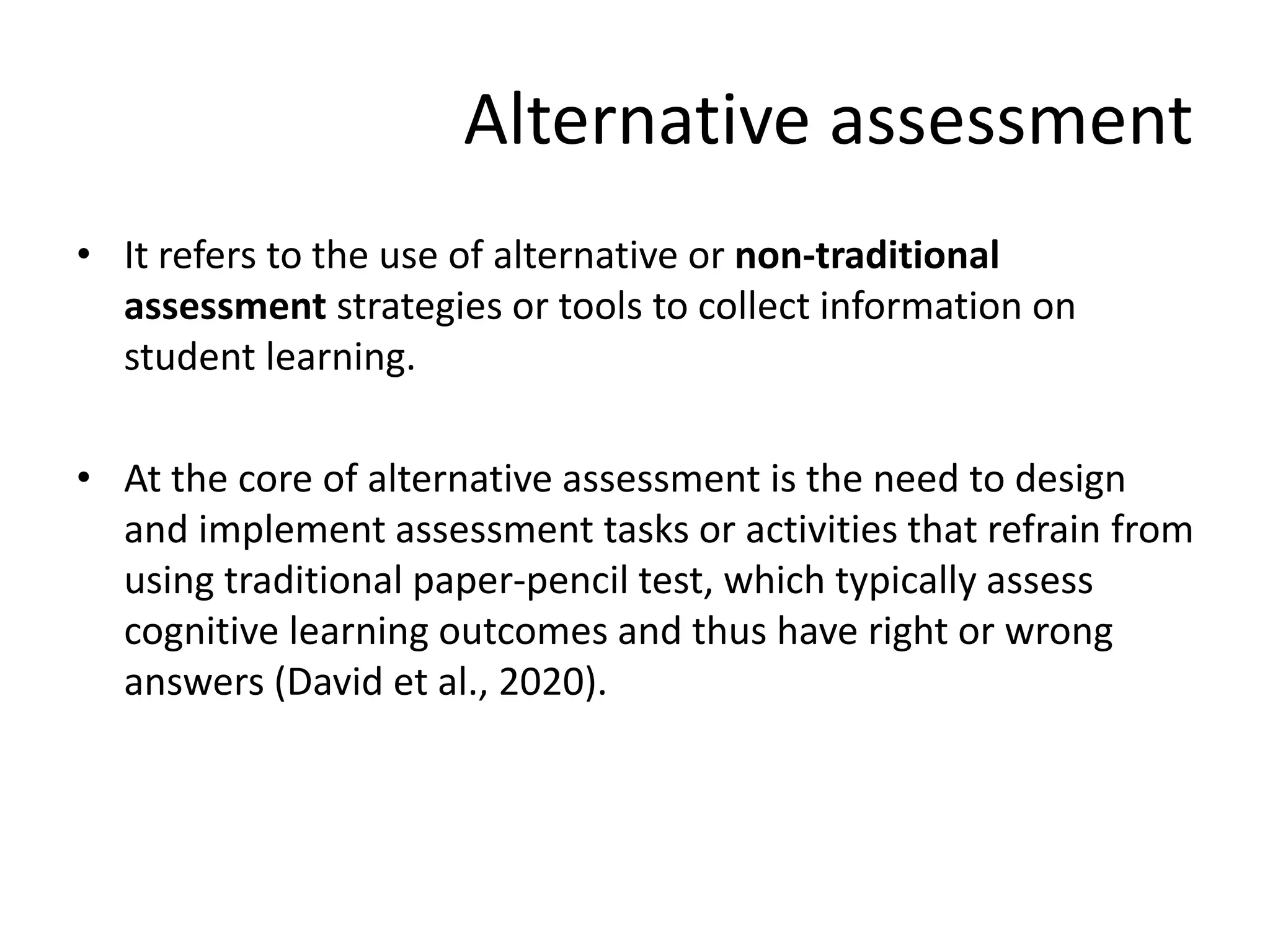
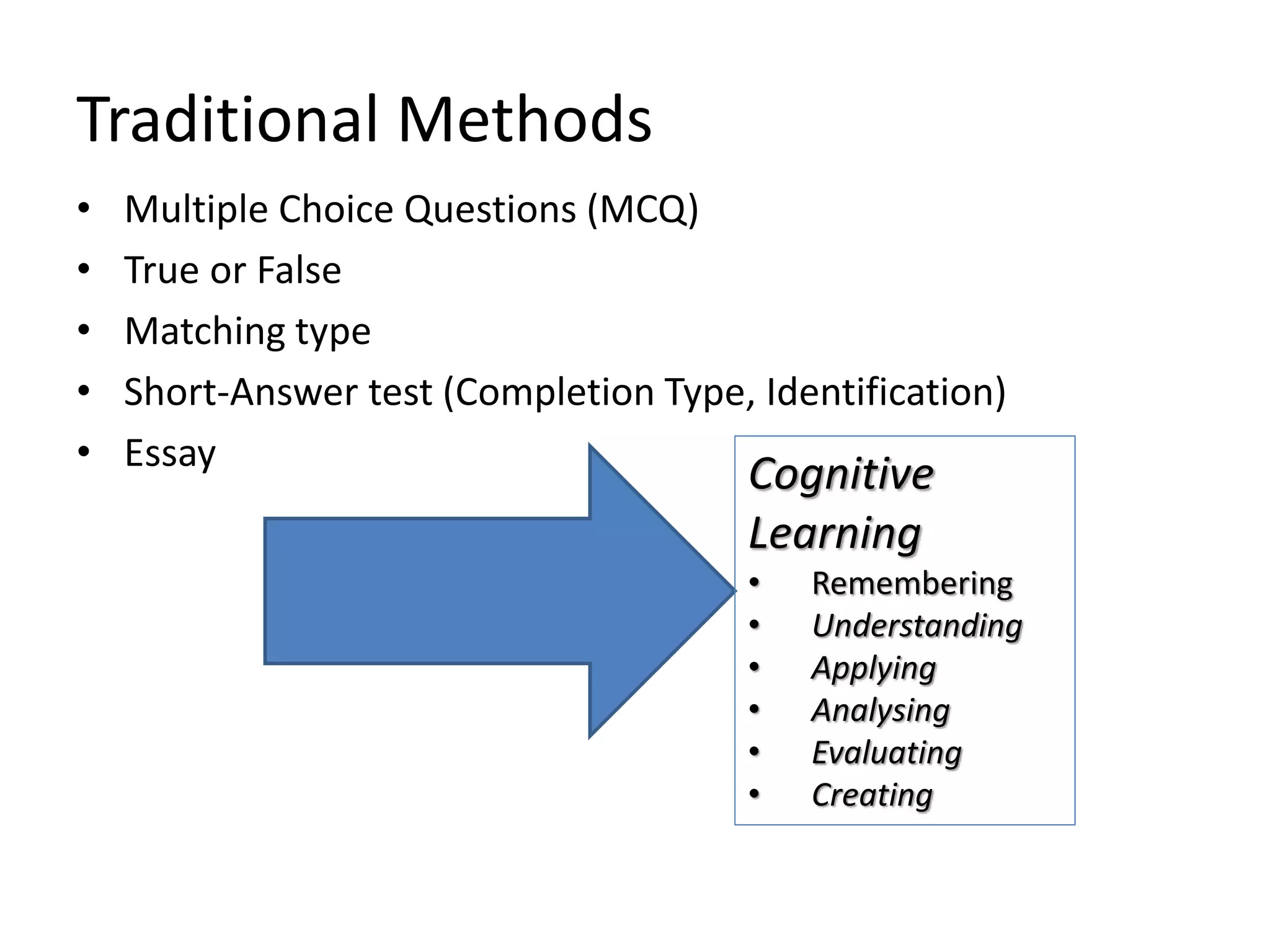
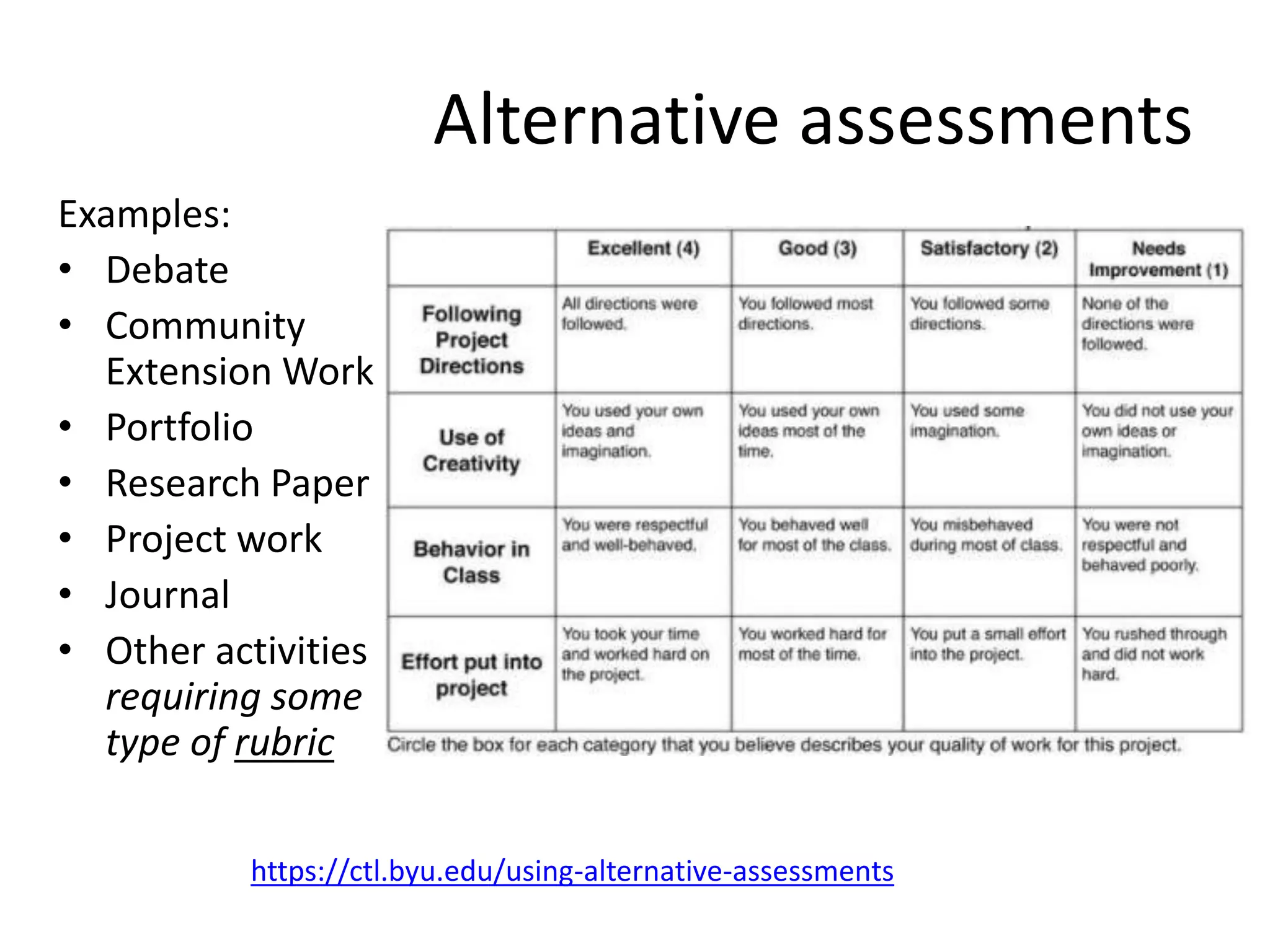
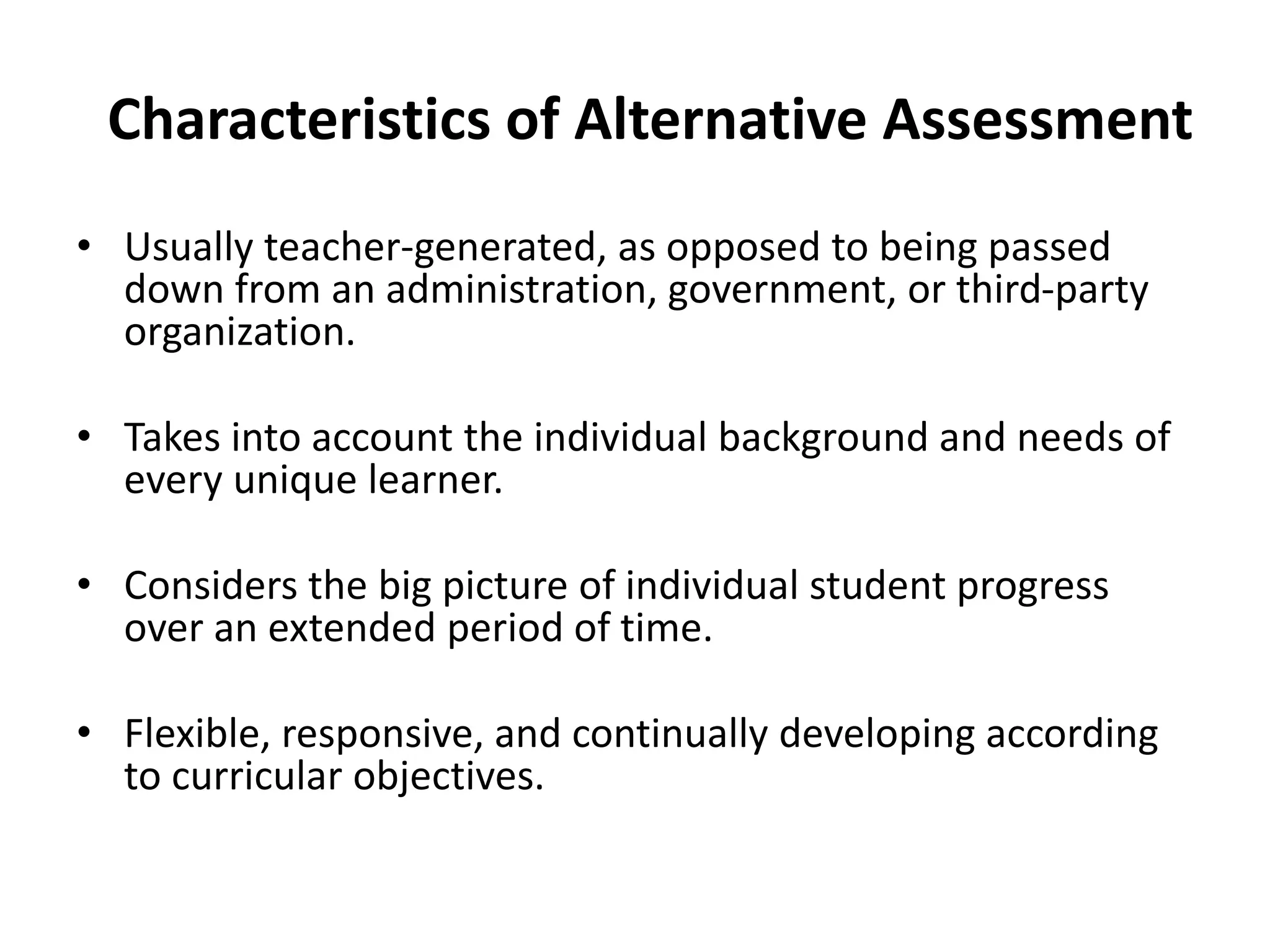
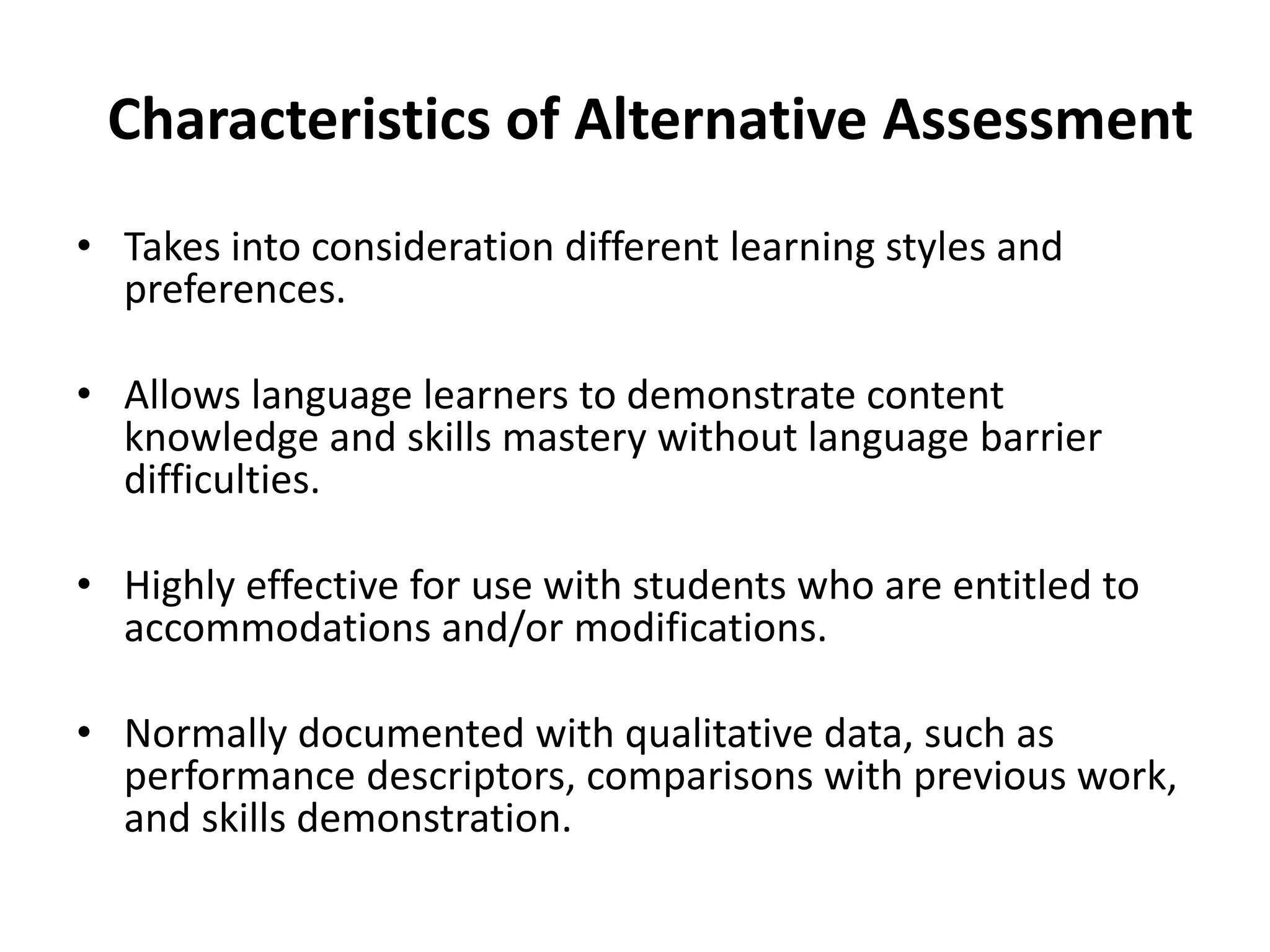
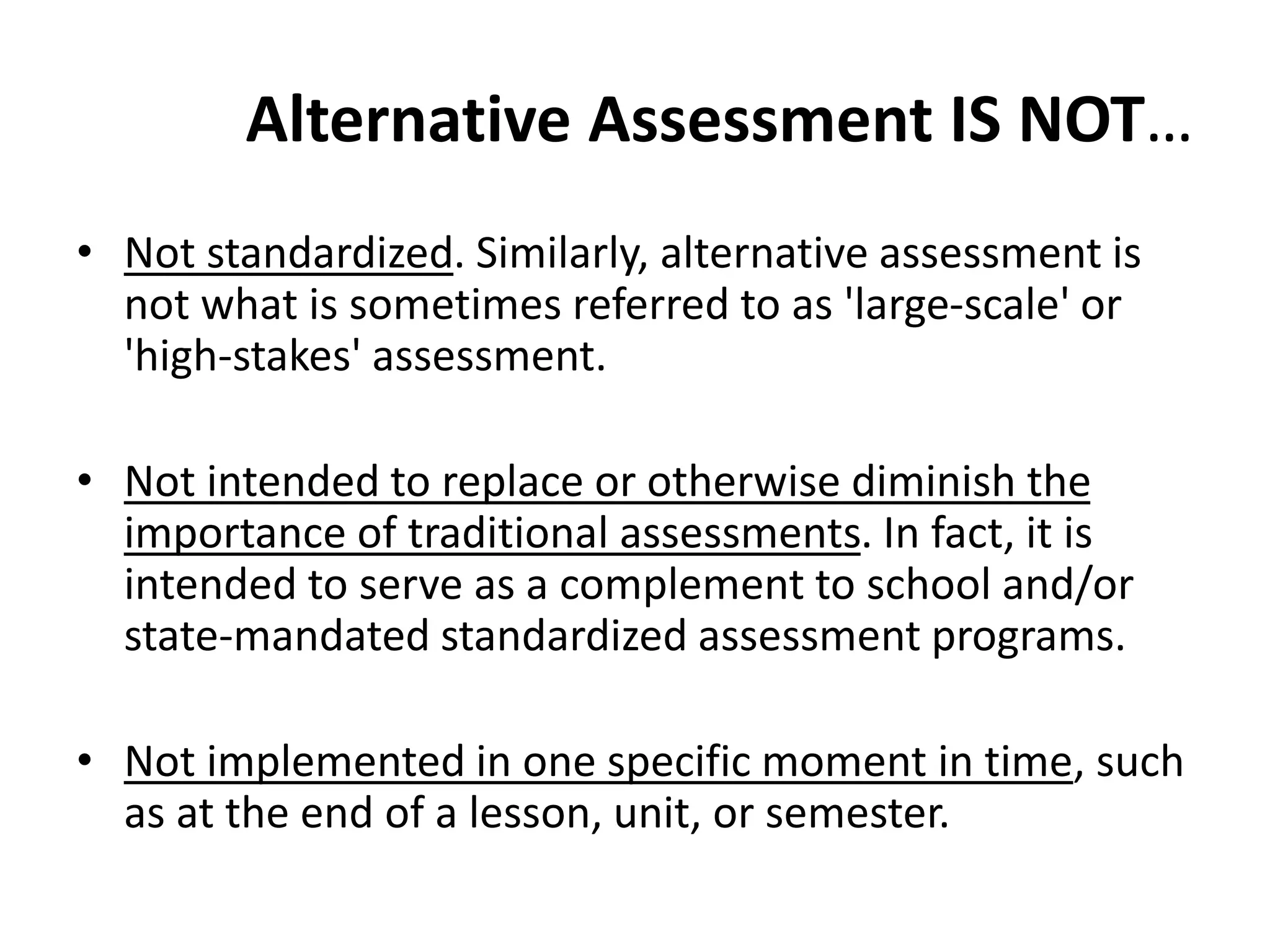
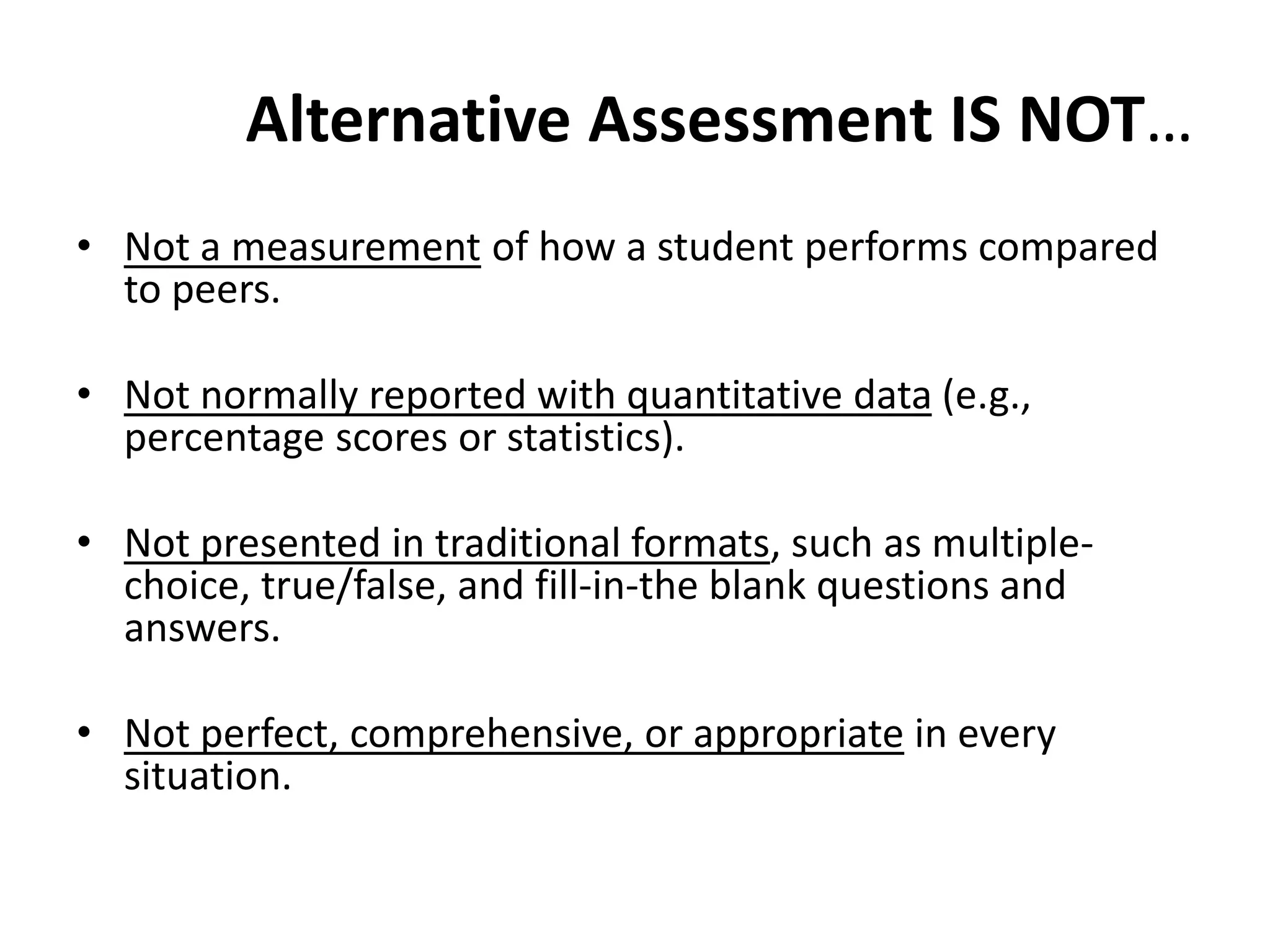
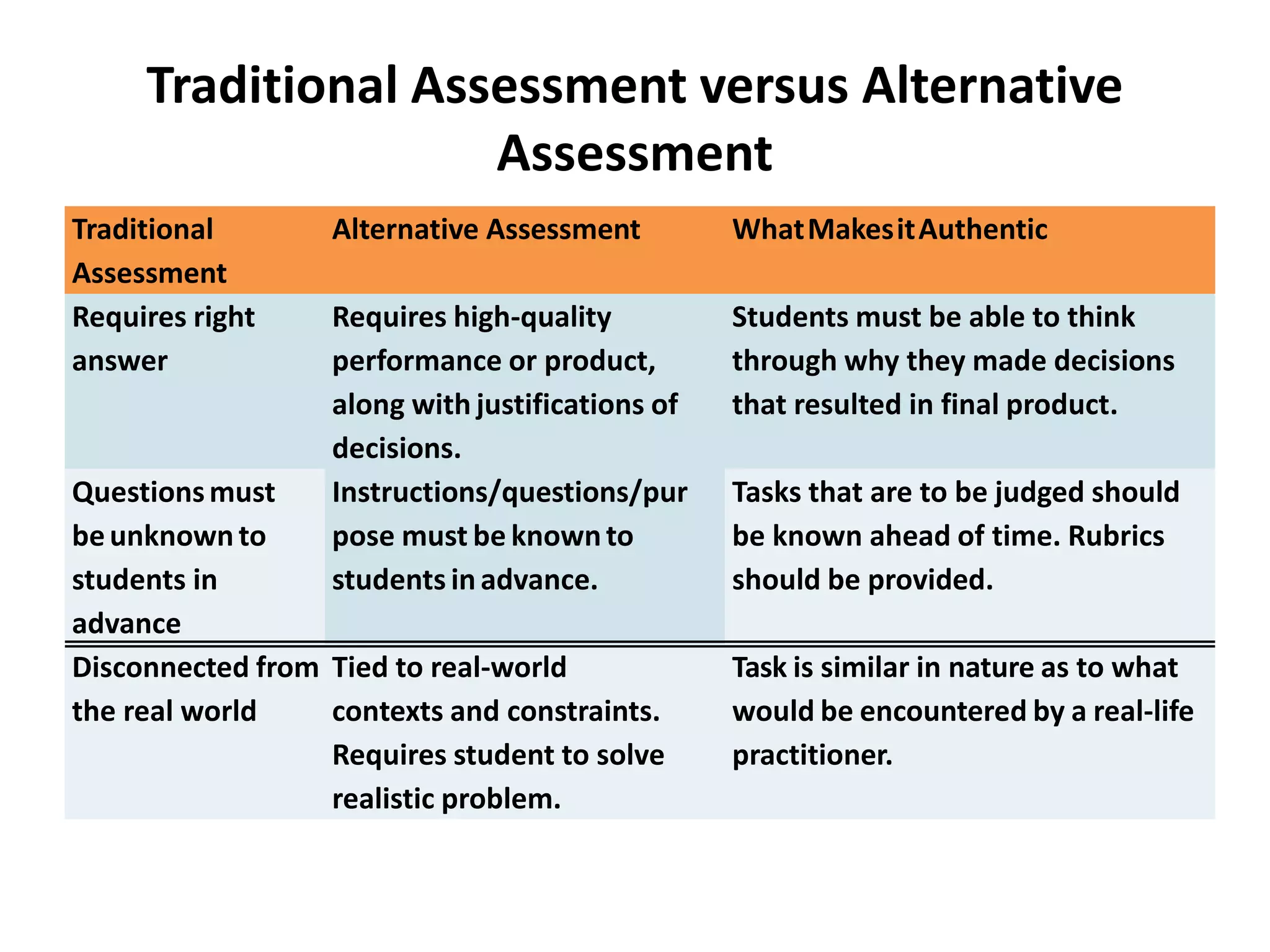
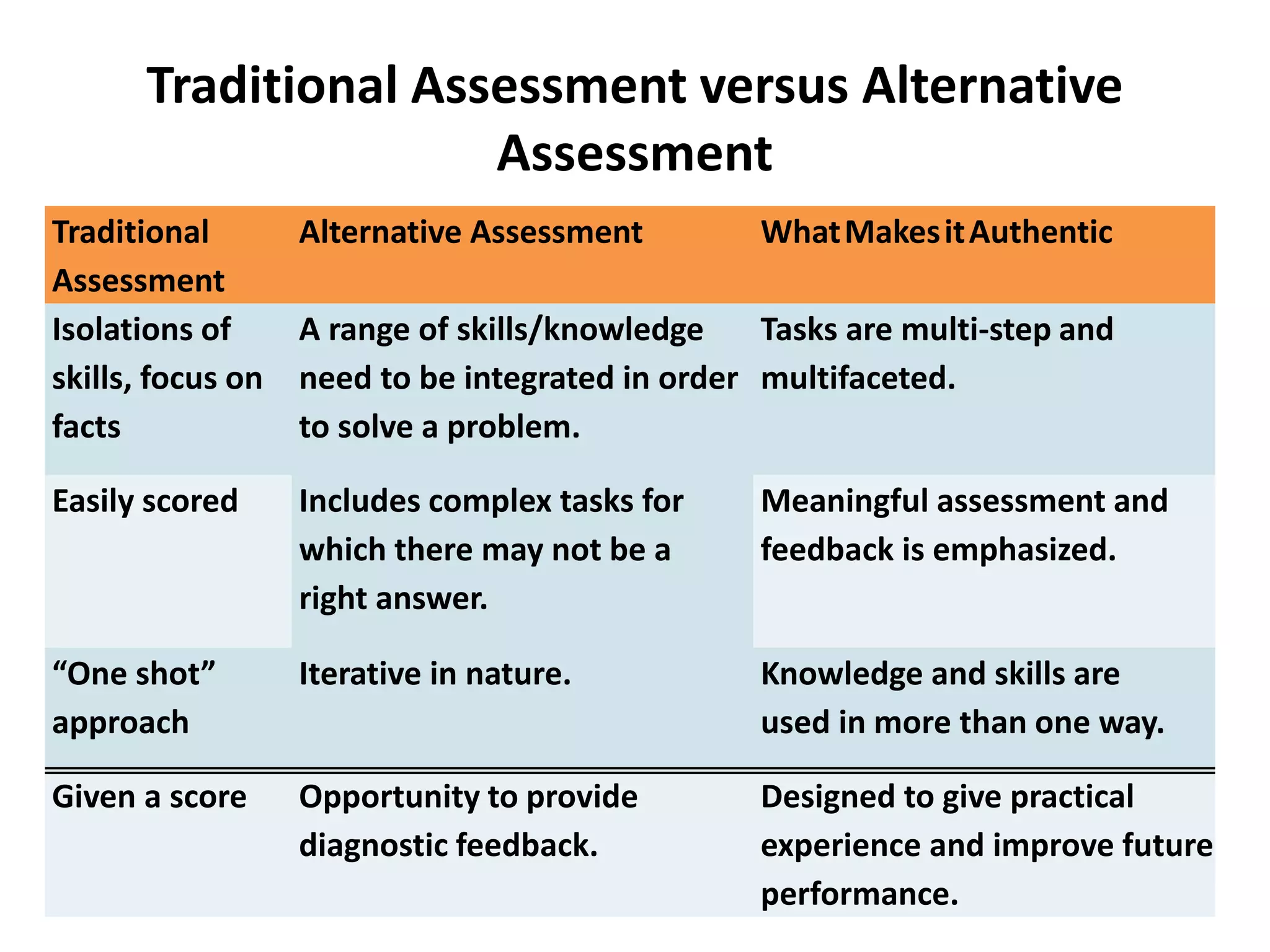
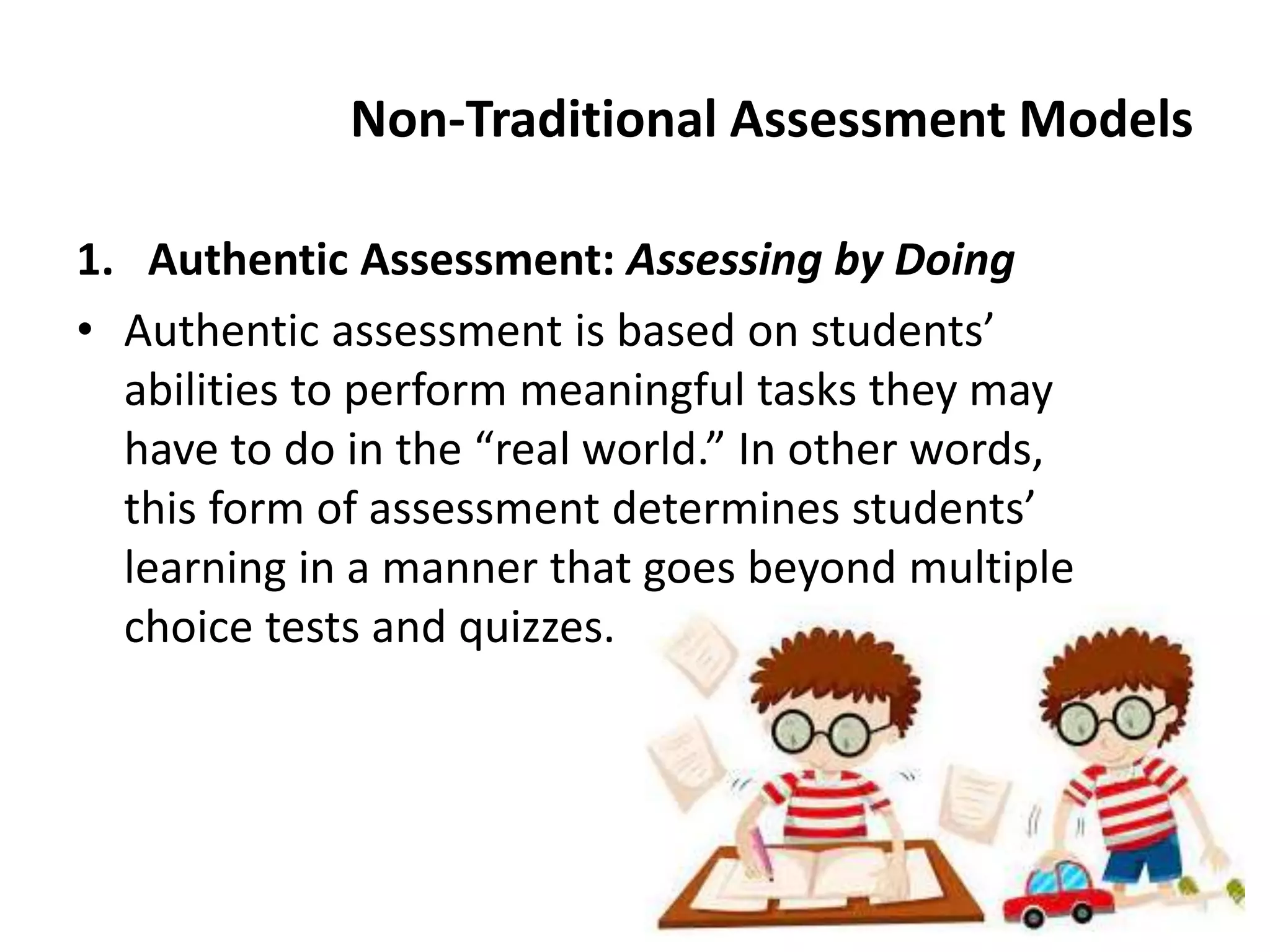
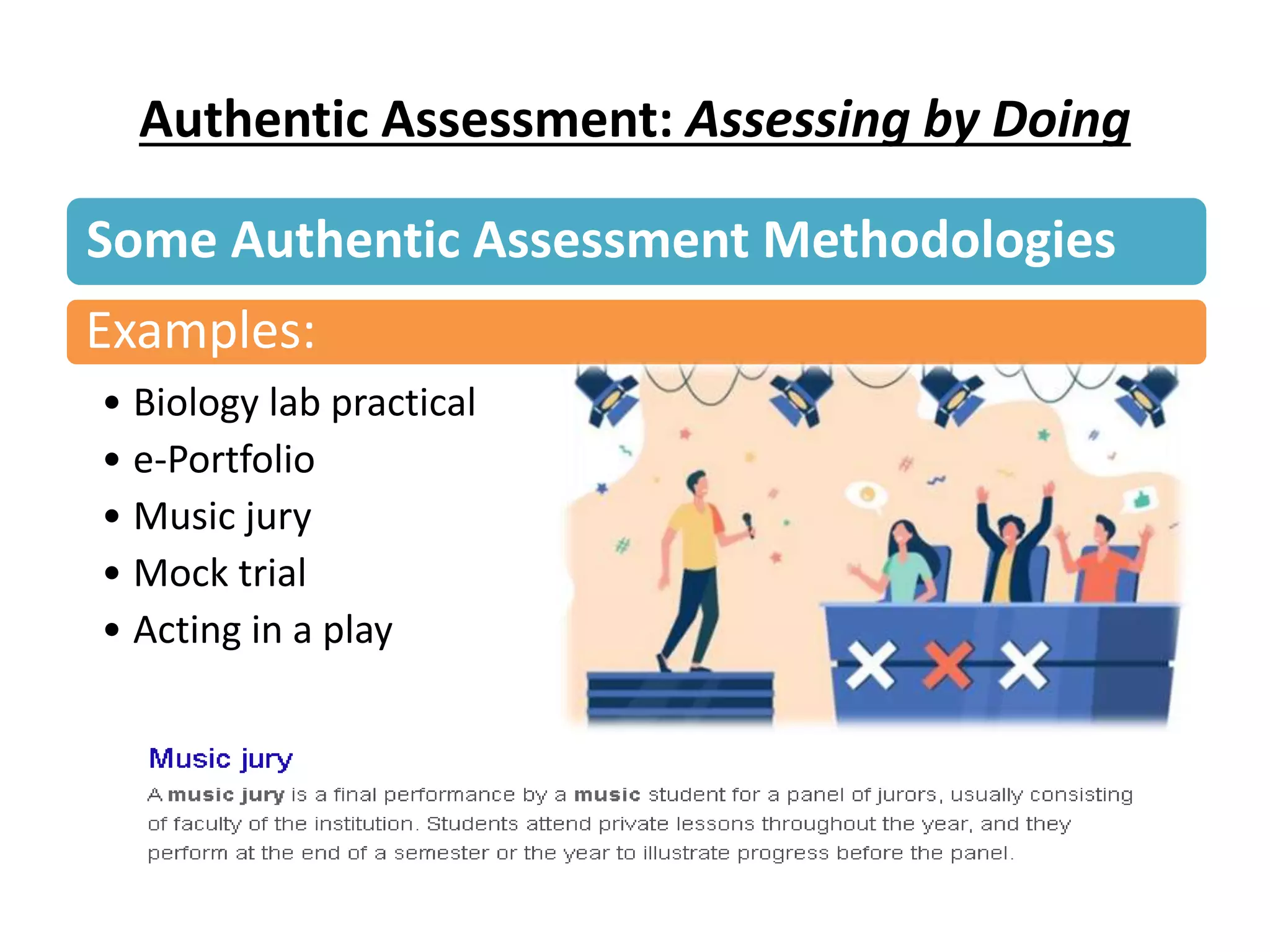
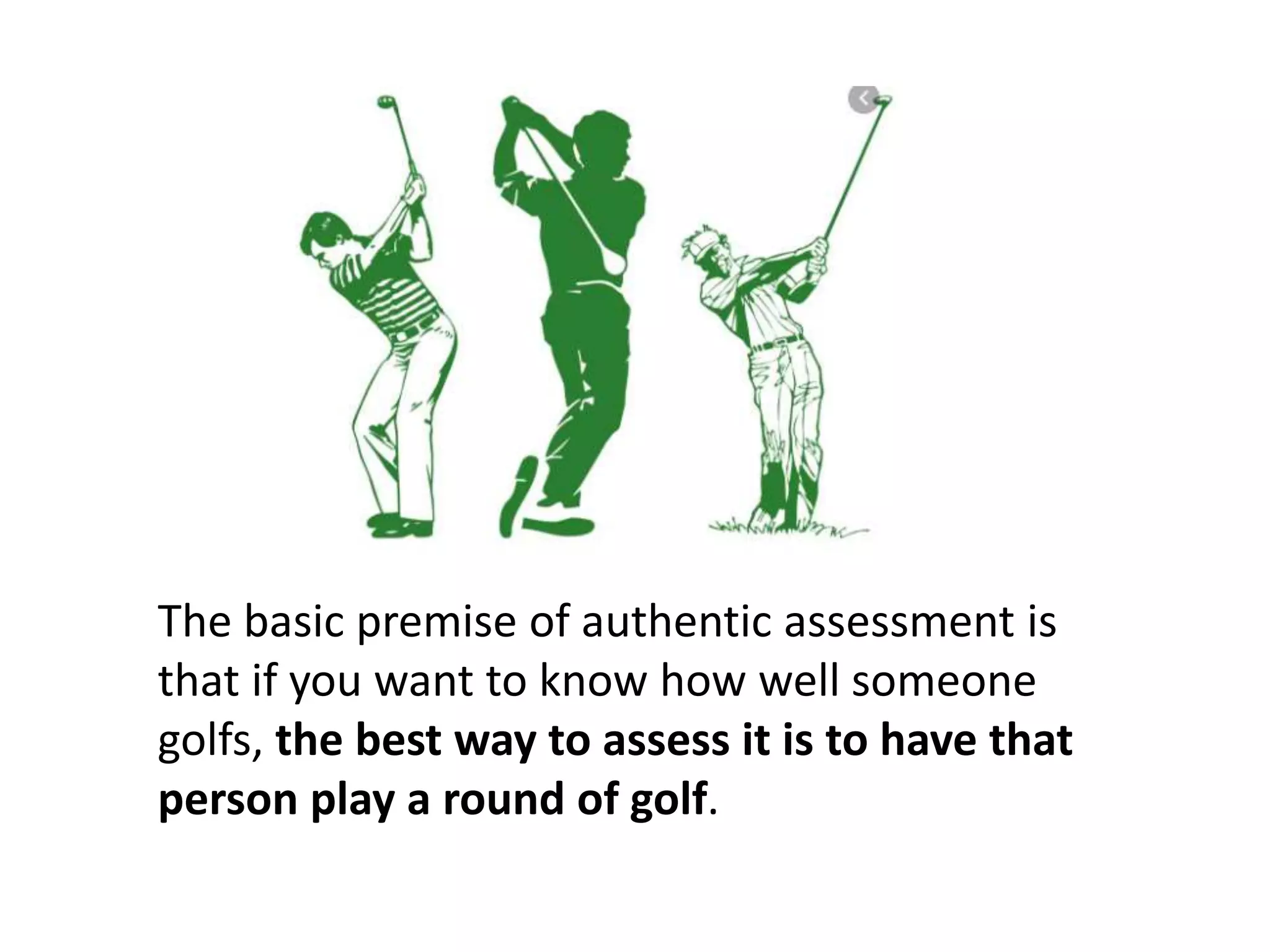
Alternative assessments measure applied proficiency rather than just knowledge through methods like debates, projects, portfolios, and research papers. They are designed to have real-world meaning and require students to integrate skills to solve realistic problems. Traditional assessments focus on isolated skills and facts through multiple choice questions, while alternative assessments provide iterative feedback through complex, multi-step tasks with no single right answer. Examples of alternative assessments include lab practicals, e-portfolios, music juries, mock trials, and acting performances.