Discussant: Sr. Marie Camelle S. Fernando
What is a
conference?
-A conference is simply a conversation
between two people. One person listens
while the other talks, then the roles are
reversed.
-In the beginning, the teacher is the listener
and the student is the talker. Then, the roles
switch, where the student listens and the
teacher talks.
What is the structure of
a conference?
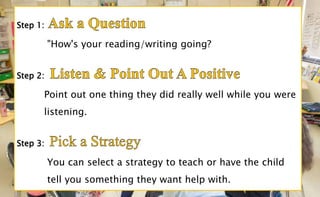
"How's your reading/writing going?
Point out one thing they did really well while you were
listening.
You can select a strategy to teach or have the child
tell you something they want help with.
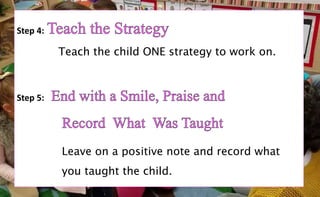
Step 4:
Teach the child ONE strategy to work on.
Step 5:
Leave on a positive note and record what
you taught the child.
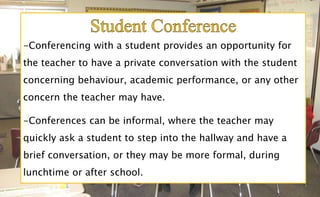
-Conferencing with a student provides an opportunity for
the teacher to have a private conversation with the student
concerning behaviour, academic performance, or any other
concern the teacher may have.
-Conferences can be informal, where the teacher may
quickly ask a student to step into the hallway and have a
brief conversation, or they may be more formal, during
lunchtime or after school.
How to Approach It
1.Find the best moments where kids can
be talking to each other while working
independently.
2. Find the right location.
3. Give students specific days when
they know they will have a
conference.
How to conference with
students?
Select an assignment – it may be a current work or
an assignment in progress to discuss and help the
student improve.
Set aside instruction time and make yourself
available during scheduled class time to meet
with all students – be careful not to meet only with
students who have more difficulties than
others and be mindful not to let a few students
monopolize the time.
1. Declare a Purpose
-A student conference should be used to discuss a student’s
performance or behaviour.
2. Hold the Conference
-The teacher should clearly explain the reason for the conference,
the issue that is concerning the teacher, and how the student and
teacher can work together.
3. Keep a Record
-A simple form or log can be used to acknowledge when the
conference occurred, why it occurred, and what was accomplished.
4. Follow Up
-It is important to check in with the student after the conference,
even if it is just briefly.
Why does conferencing
work?
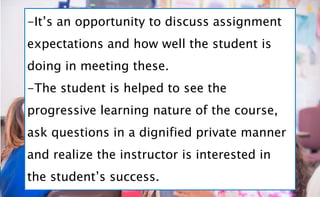
-It’s an opportunity to discuss assignment
expectations and how well the student is
doing in meeting these.
-The student is helped to see the
progressive learning nature of the course,
ask questions in a dignified private manner
and realize the instructor is interested in
the student’s success.
The Three Types of
Conferences
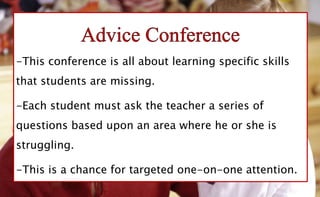
-This conference is all about learning specific skills
that students are missing.
-Each student must ask the teacher a series of
questions based upon an area where he or she is
struggling.
-This is a chance for targeted one-on-one attention.
-Instead of telling students what to do, the
goal is to draw out student reflection.
-The teacher uses a series of reflective
questions to lead students through the
process of meta-cognition and into the
setting and monitoring of goals.
-Unlike the reflection conference, the focus here is
less about reflecting on the process and more about
students judging their own mastery of the content.
-We use the Standards-Based Assessment Grid as a
way to figure out the level of mastery on particular
standards.
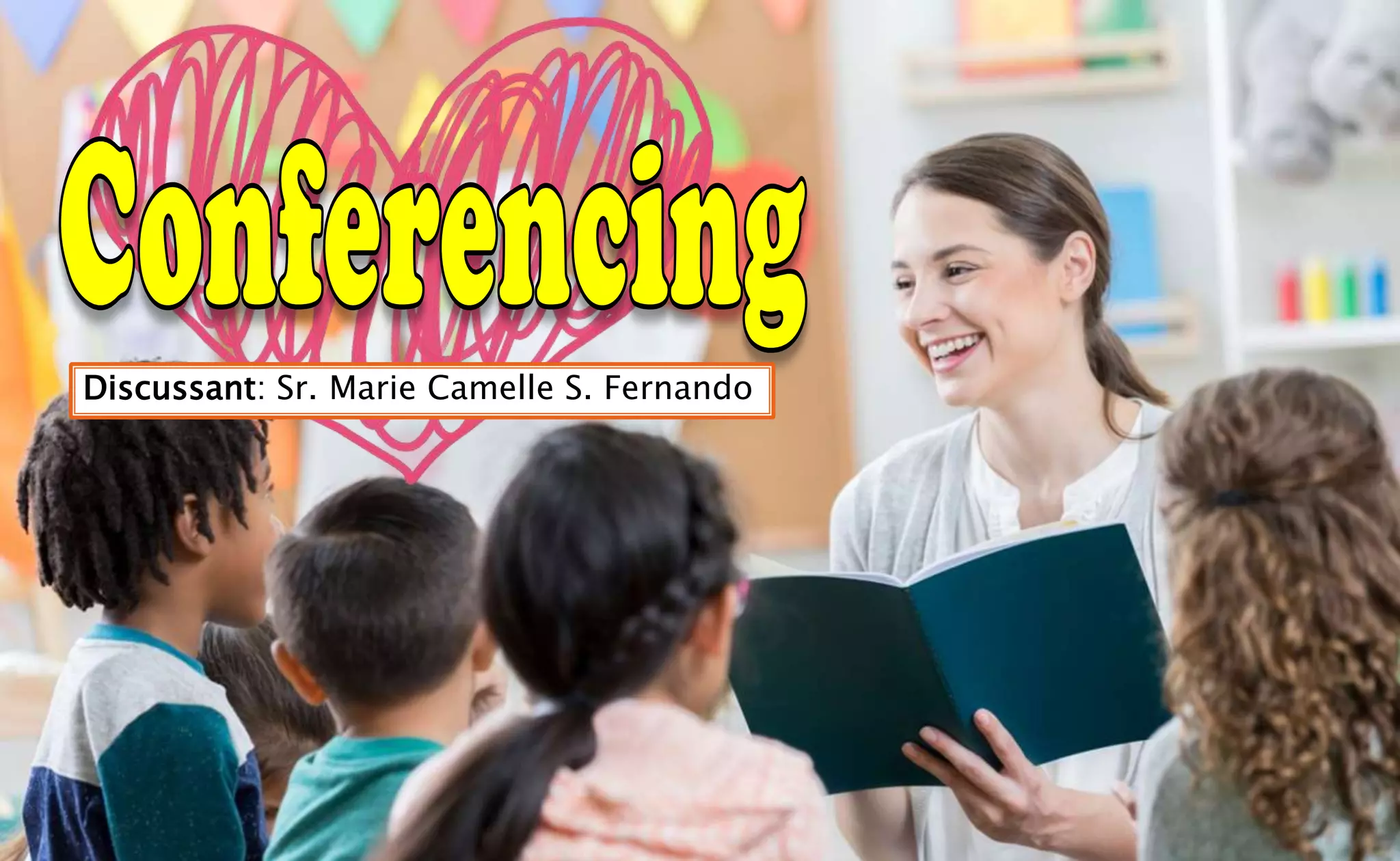
Conferencing

Conferencing

  • 1.
    Discussant: Sr. MarieCamelle S. Fernando
  • 2.
  • 3.
    -A conference issimply a conversation between two people. One person listens while the other talks, then the roles are reversed. -In the beginning, the teacher is the listener and the student is the talker. Then, the roles switch, where the student listens and the teacher talks.
  • 4.
    What is thestructure of a conference?
  • 5.
    "How's your reading/writinggoing? Point out one thing they did really well while you were listening. You can select a strategy to teach or have the child tell you something they want help with.
  • 6.
    Step 4: Teach thechild ONE strategy to work on. Step 5: Leave on a positive note and record what you taught the child.
  • 7.
    -Conferencing with astudent provides an opportunity for the teacher to have a private conversation with the student concerning behaviour, academic performance, or any other concern the teacher may have. -Conferences can be informal, where the teacher may quickly ask a student to step into the hallway and have a brief conversation, or they may be more formal, during lunchtime or after school.
  • 8.
  • 9.
    1.Find the bestmoments where kids can be talking to each other while working independently. 2. Find the right location. 3. Give students specific days when they know they will have a conference.
  • 10.
    How to conferencewith students?
  • 11.
    Select an assignment– it may be a current work or an assignment in progress to discuss and help the student improve. Set aside instruction time and make yourself available during scheduled class time to meet with all students – be careful not to meet only with students who have more difficulties than others and be mindful not to let a few students monopolize the time.
  • 12.
    1. Declare aPurpose -A student conference should be used to discuss a student’s performance or behaviour. 2. Hold the Conference -The teacher should clearly explain the reason for the conference, the issue that is concerning the teacher, and how the student and teacher can work together. 3. Keep a Record -A simple form or log can be used to acknowledge when the conference occurred, why it occurred, and what was accomplished. 4. Follow Up -It is important to check in with the student after the conference, even if it is just briefly.
  • 13.
  • 14.
    -It’s an opportunityto discuss assignment expectations and how well the student is doing in meeting these. -The student is helped to see the progressive learning nature of the course, ask questions in a dignified private manner and realize the instructor is interested in the student’s success.
  • 15.
    The Three Typesof Conferences
  • 16.
    -This conference isall about learning specific skills that students are missing. -Each student must ask the teacher a series of questions based upon an area where he or she is struggling. -This is a chance for targeted one-on-one attention.
  • 17.
    -Instead of tellingstudents what to do, the goal is to draw out student reflection. -The teacher uses a series of reflective questions to lead students through the process of meta-cognition and into the setting and monitoring of goals.
  • 18.
    -Unlike the reflectionconference, the focus here is less about reflecting on the process and more about students judging their own mastery of the content. -We use the Standards-Based Assessment Grid as a way to figure out the level of mastery on particular standards.