
B y : K i m v e r l y T o r r e s
TYPES OF ASSESSMENT
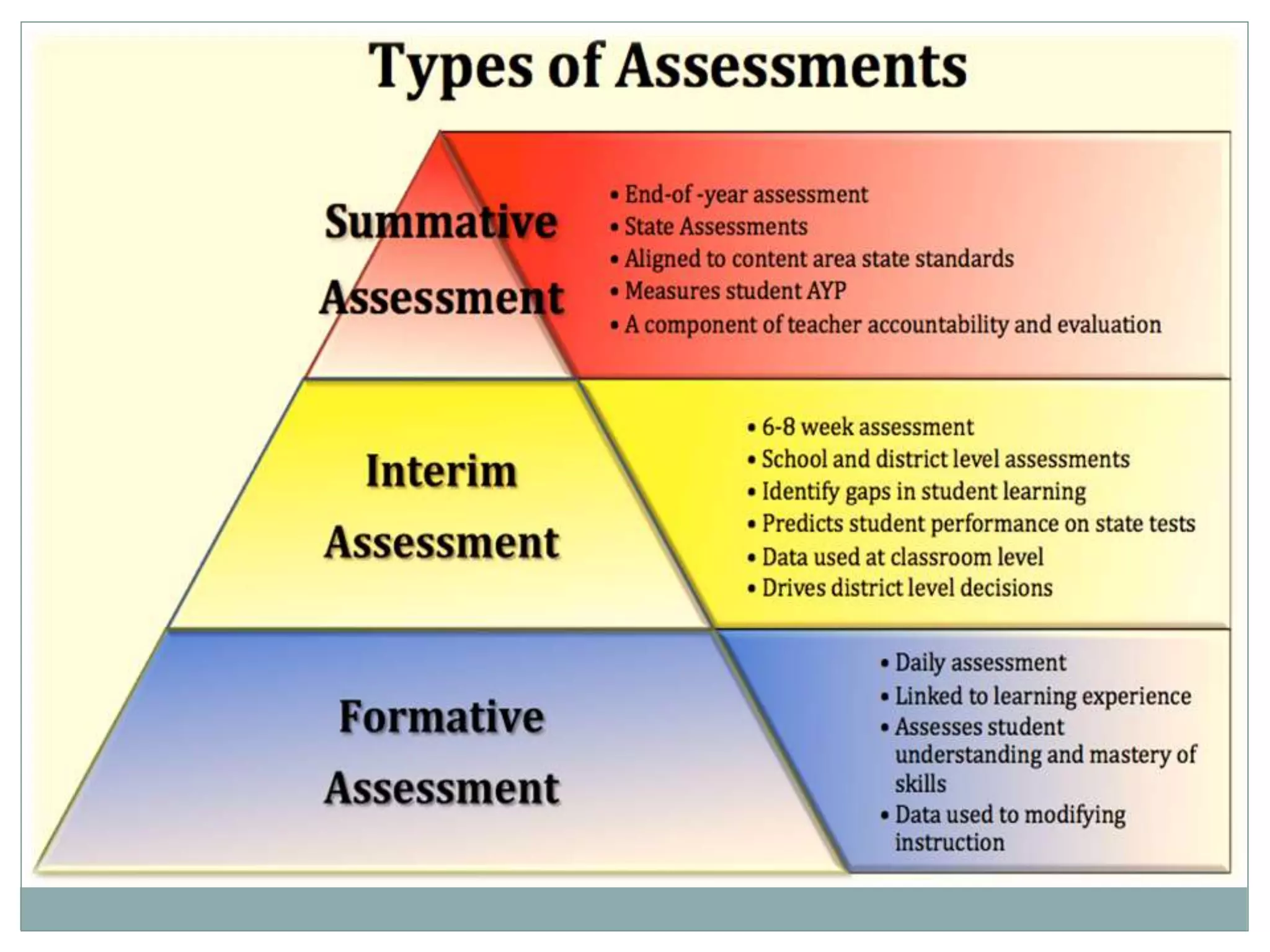
THREE TYPES OF ASSESSMENT
 Formative Assessment - occurs in the short term, as
learners are in the process of making meaning of new
content and of integrating it into what they already know.
 Interim Assessment - takes place occasionally throughout
a larger time period. Feedback to the learner is still quick,
but may not be immediate.
 Summative Assessment –takes place at the end of a large
chunk of learning, with the results being primarily for the
teacher's or school's use.
Formative Assessment
There is a large range of formative assessment
methods available. This includes:
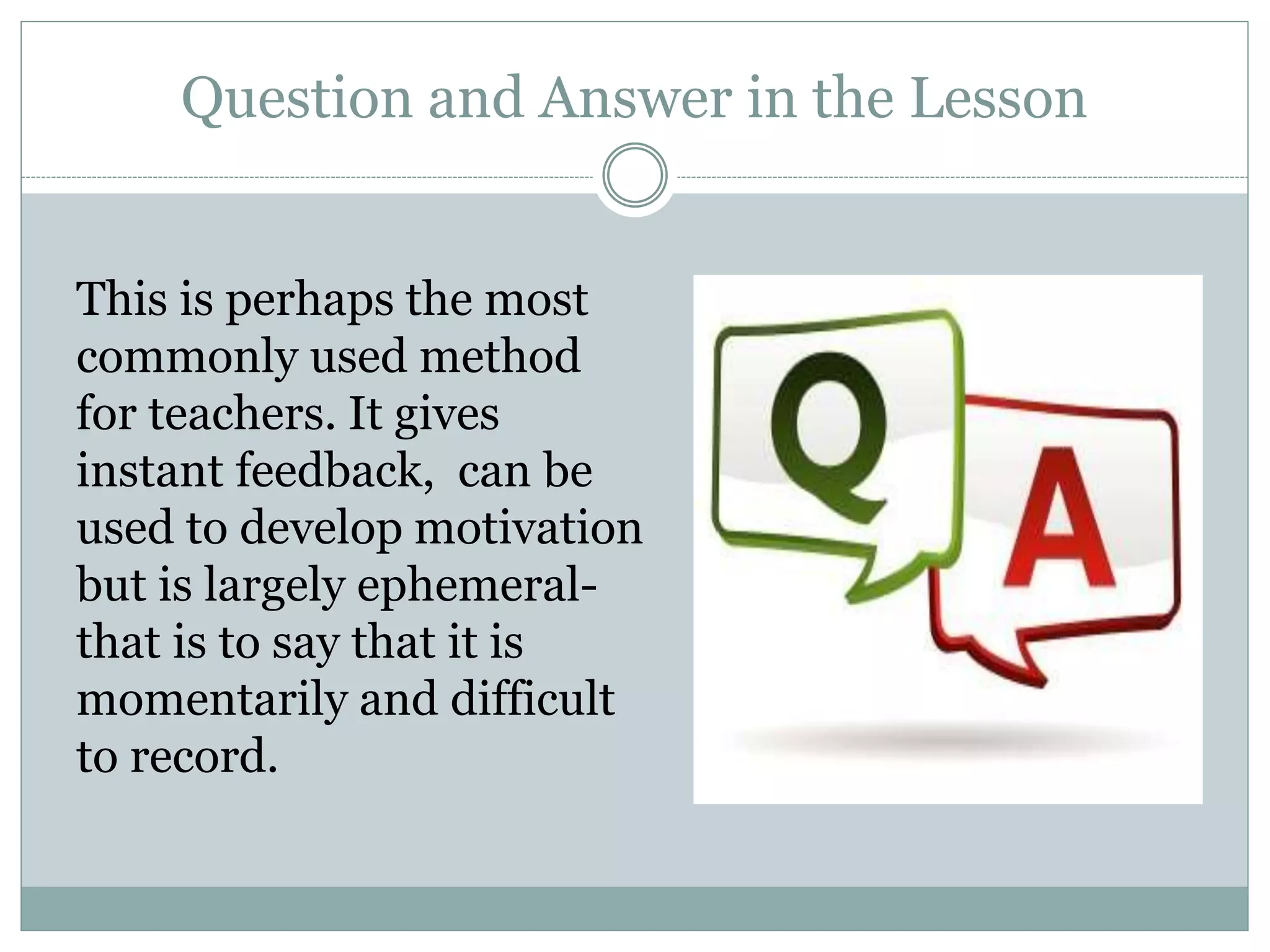
Question and Answer in the Lesson
This is perhaps the most
commonly used method
for teachers. It gives
instant feedback, can be
used to develop motivation
but is largely ephemeral-
that is to say that it is
momentarily and difficult
to record.
Short test and Quizzes
 These are either from
textbooks or devised by
the teacher. These are
informal, can be fun and
marks can be simply
recorded. Used with
care they can become
part of everyday
teaching and learning.
Homework Exercises
 These vary in purpose,
design and complexity.
‘Purpose’ is the keyword
here. Students will make
good use of homework if
they feel it is useful, for
example, preparation of
material for class
discussion, seeing how a
piece of writing ends,
developing a skill, are all
appealing tasks.
Projects
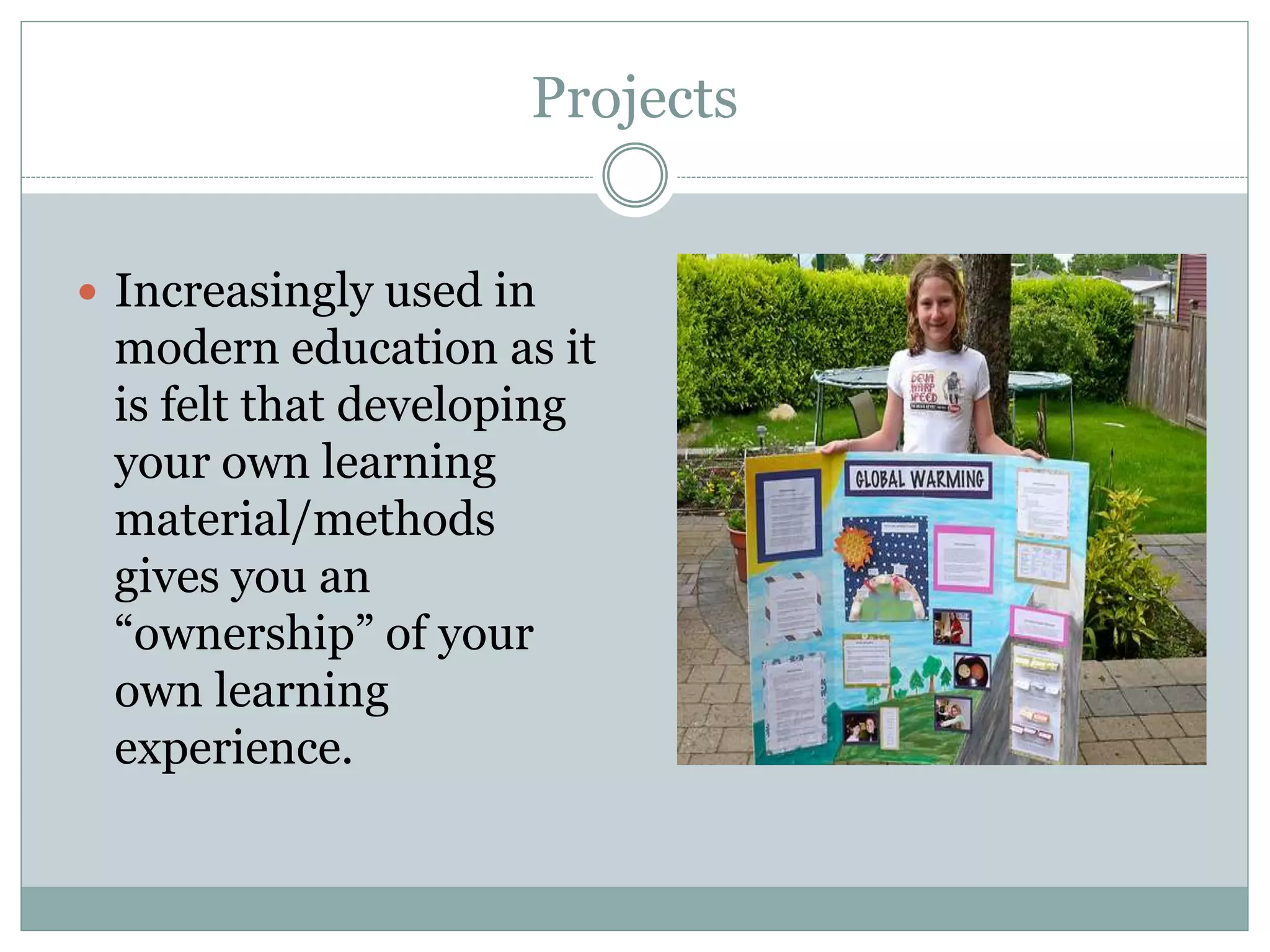
 Increasingly used in
modern education as it
is felt that developing
your own learning
material/methods
gives you an
“ownership” of your
own learning
experience.
Interim Assessment
 Most interim assessment questions reflect
those of the state test: multiple-choice, short
answer responses, and extended responses.
But, be careful because some multiple-
choice questions require higher-level
thinking than others. There must be
consistency amongst all teachers who are
designing questions so the questions are of
equal rigor.
Types of Assessment

Types of Assessment

  • 1.
    B y :K i m v e r l y T o r r e s TYPES OF ASSESSMENT
  • 2.
    THREE TYPES OFASSESSMENT  Formative Assessment - occurs in the short term, as learners are in the process of making meaning of new content and of integrating it into what they already know.  Interim Assessment - takes place occasionally throughout a larger time period. Feedback to the learner is still quick, but may not be immediate.  Summative Assessment –takes place at the end of a large chunk of learning, with the results being primarily for the teacher's or school's use.
  • 3.
    Formative Assessment There isa large range of formative assessment methods available. This includes:
  • 4.
    Question and Answerin the Lesson This is perhaps the most commonly used method for teachers. It gives instant feedback, can be used to develop motivation but is largely ephemeral- that is to say that it is momentarily and difficult to record.
  • 5.
    Short test andQuizzes  These are either from textbooks or devised by the teacher. These are informal, can be fun and marks can be simply recorded. Used with care they can become part of everyday teaching and learning.
  • 6.
    Homework Exercises  Thesevary in purpose, design and complexity. ‘Purpose’ is the keyword here. Students will make good use of homework if they feel it is useful, for example, preparation of material for class discussion, seeing how a piece of writing ends, developing a skill, are all appealing tasks.
  • 7.
    Projects  Increasingly usedin modern education as it is felt that developing your own learning material/methods gives you an “ownership” of your own learning experience.
  • 8.
    Interim Assessment  Mostinterim assessment questions reflect those of the state test: multiple-choice, short answer responses, and extended responses. But, be careful because some multiple- choice questions require higher-level thinking than others. There must be consistency amongst all teachers who are designing questions so the questions are of equal rigor.