Periphlebitis Retinae
[Eale’s Disease]
By - Raju Rathore
B.opto 3 Sam
ITM UNIVERSITY RAIPUR
INTRODUCTION
• idiopathic
• inflammatory peripheral retinal
vasculopathy which presents
withrecurrent vitreous and retinal
haemorrhages in young males
Etiology
• There is periphlebitis, i.e.inflammation of
the wall of the retinal veins commonly
associated with tuberculosis
(tuberculoprotein hypersensitivity)
Incidence
• Age—Young adults (20-30 years) are affected
commonly
• Sex—It occurs in males usually. It is a bilateral
condition
Symptom
• Usually none but there may be sudden impairment of
vision due to vitreous haemorrhage
Signs
• A large vitreous haemorrhage may occur all of a
sudden
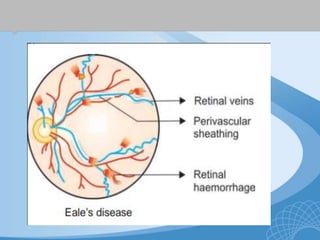
• Peripheral retinal veins appear thickened,
tortuousand congested
Complications
• Loss of vision
• Retinitis proliferans
• Rubeosis iridis, glaucoma and cataract may
develop in late stages
Treatment
• Photocoagulation of leaking areas prevents retinal
hypoxia
• Treat the underlying cause of inflammation, e.g.
tuberculosis or septic foci
• Vitrectomy with division of fibrous bands is
recommended in cases of retinitis proliferans
Reference
Basic ophthalmology /4rth edition /Renu Jogi/page
305/306
Thank You
Raju Rathore
B.opto 3sem

Periphlebitis Retinae [Eale’s Disease]

  • 1.
    Periphlebitis Retinae [Eale’s Disease] By- Raju Rathore B.opto 3 Sam ITM UNIVERSITY RAIPUR
  • 2.
    INTRODUCTION • idiopathic • inflammatoryperipheral retinal vasculopathy which presents withrecurrent vitreous and retinal haemorrhages in young males
  • 3.
    Etiology • There isperiphlebitis, i.e.inflammation of the wall of the retinal veins commonly associated with tuberculosis (tuberculoprotein hypersensitivity)
  • 5.
    Incidence • Age—Young adults(20-30 years) are affected commonly • Sex—It occurs in males usually. It is a bilateral condition Symptom • Usually none but there may be sudden impairment of vision due to vitreous haemorrhage
  • 6.
    Signs • A largevitreous haemorrhage may occur all of a sudden • Peripheral retinal veins appear thickened, tortuousand congested Complications • Loss of vision • Retinitis proliferans • Rubeosis iridis, glaucoma and cataract may develop in late stages
  • 7.
    Treatment • Photocoagulation ofleaking areas prevents retinal hypoxia • Treat the underlying cause of inflammation, e.g. tuberculosis or septic foci • Vitrectomy with division of fibrous bands is recommended in cases of retinitis proliferans
  • 8.
    Reference Basic ophthalmology /4rthedition /Renu Jogi/page 305/306
  • 9.