SARCOIDOSIS
Dr DHANALAKSHMI
DNB OPHTHALMOLOGY
AUGUST 2019
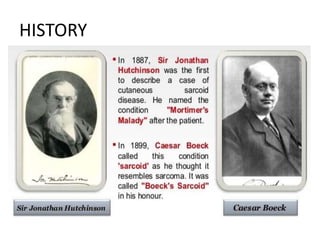
HISTORY
• Sarcoidosis-associated uveitis was first
described in the early 1900s and in 1936
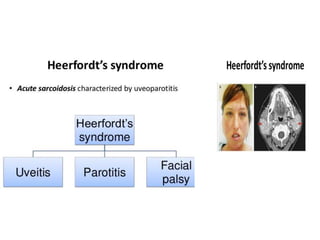
• Heerfordt – Danish Ophthalmologist –
Heerfordt syndrome – Uveoparotid fever
syndrome
Definition
Sarcoidosis is a chronic multisystem inflamatory
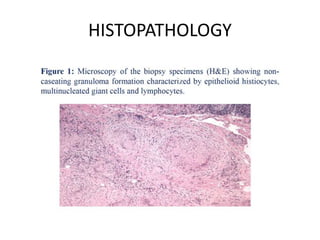
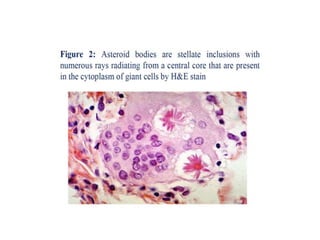
disorder characterized histologically by the
accumulation of non caseating epitheloid
granulomas in affected tissues.
Main organs involved are lungs, lymphnodes,
eyes, skin, heart,brain, liver, kidney.
Ocular involvement - 40% of patients with
sarcoidosis, most commonly uveitis
Usually bilateral – asymmetric
ETIOLOGY AND PATHOGENESIS
• Etiology – unknown
Proposed mechanisms
• Triggering of immune responses by an
inifectious or non-infectious agent in the
environment in a genetically susceptible host.
• HLA B8, HLA DRB1 – sarcoidosis
• HLA-DRB1*0401 allele - ocular involvement
(ACCESS)
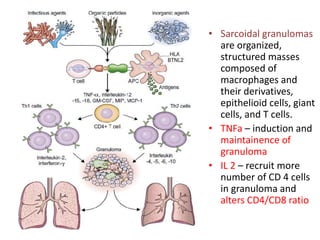
• Sarcoidal granulomas
are organized,
structured masses
composed of
macrophages and
their derivatives,
epithelioid cells, giant
cells, and T cells.
• TNFa – induction and
maintainence of
granuloma
• IL 2 – recruit more
number of CD 4 cells
in granuloma and
alters CD4/CD8 ratio
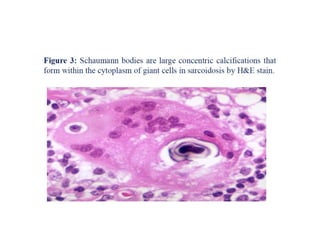
HISTOPATHOLOGY
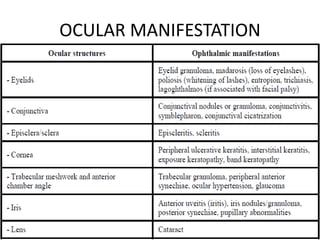
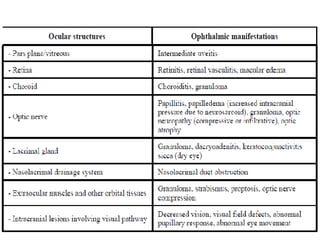
OCULAR MANIFESTATION
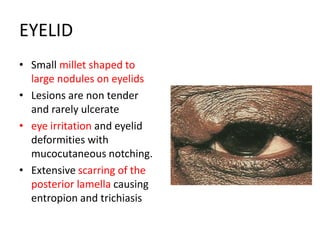
EYELID
• Small millet shaped to
large nodules on eyelids
• Lesions are non tender
and rarely ulcerate
• eye irritation and eyelid
deformities with
mucocutaneous notching.
• Extensive scarring of the
posterior lamella causing
entropion and trichiasis
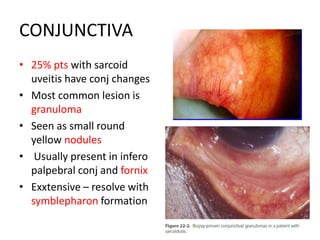
CONJUNCTIVA
• 25% pts with sarcoid
uveitis have conj changes
• Most common lesion is
granuloma
• Seen as small round
yellow nodules
• Usually present in infero
palpebral conj and fornix
• Exxtensive – resolve with
symblepharon formation
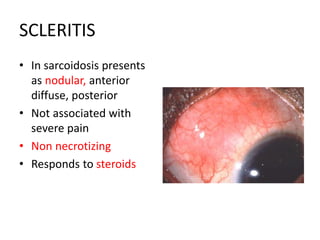
SCLERITIS
• In sarcoidosis presents
as nodular, anterior
diffuse, posterior
• Not associated with
severe pain
• Non necrotizing
• Responds to steroids
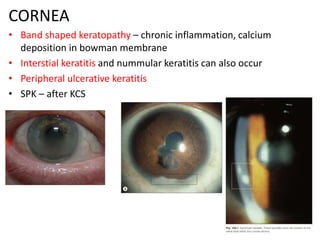
CORNEA
• Band shaped keratopathy – chronic inflammation, calcium
deposition in bowman membrane
• Interstial keratitis and nummular keratitis can also occur
• Peripheral ulcerative keratitis
• SPK – after KCS
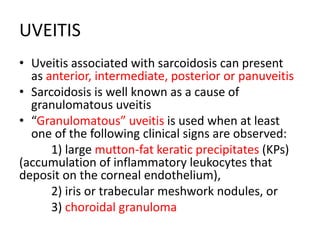
UVEITIS
• Uveitis associated with sarcoidosis can present
as anterior, intermediate, posterior or panuveitis
• Sarcoidosis is well known as a cause of
granulomatous uveitis
• “Granulomatous” uveitis is used when at least
one of the following clinical signs are observed:
1) large mutton-fat keratic precipitates (KPs)
(accumulation of inflammatory leukocytes that
deposit on the corneal endothelium),
2) iris or trabecular meshwork nodules, or
3) choroidal granuloma
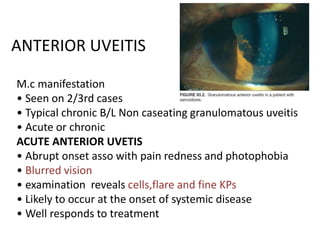
ANTERIOR UVEITIS
M.c manifestation
• Seen on 2/3rd cases
• Typical chronic B/L Non caseating granulomatous uveitis
• Acute or chronic
ACUTE ANTERIOR UVETIS
• Abrupt onset asso with pain redness and photophobia
• Blurred vision
• examination reveals cells,flare and fine KPs
• Likely to occur at the onset of systemic disease
• Well responds to treatment
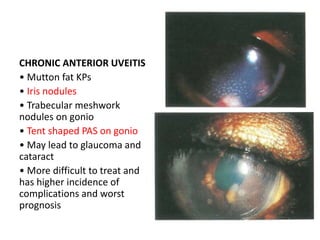
CHRONIC ANTERIOR UVEITIS
• Mutton fat KPs
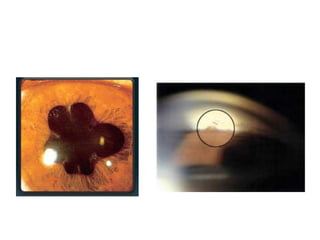
• Iris nodules
• Trabecular meshwork
nodules on gonio
• Tent shaped PAS on gonio
• May lead to glaucoma and
cataract
• More difficult to treat and
has higher incidence of
complications and worst
prognosis
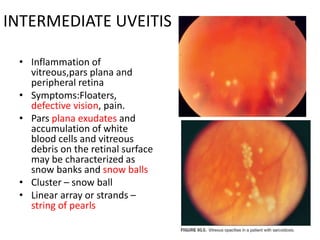
INTERMEDIATE UVEITIS
• Inflammation of
vitreous,pars plana and
peripheral retina
• Symptoms:Floaters,
defective vision, pain.
• Pars plana exudates and
accumulation of white
blood cells and vitreous
debris on the retinal surface
may be characterized as
snow banks and snow balls
• Cluster – snow ball
• Linear array or strands –
string of pearls
POSTERIOR UVEITIS
• Inflammation of the retina, and choroid is less
common but more visually disabling than
inflammation in the anterior segment
• occurs in 6–33% of patients with sarcoidosis.
CLINICAL FEATURES
 Candle wax dripping ( periphlebitis)
Multifocal chorioretinal lesion
Retinal granuloma
Cystoid macular edema
Dalen fuchs nodules
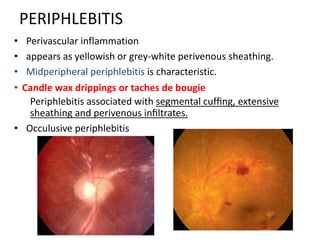
PERIPHLEBITIS
• Perivascular inflammation
• appears as yellowish or grey-white perivenous sheathing.
• Midperipheral periphlebitis is characteristic.
• Candle wax drippings or taches de bougie
Periphlebitis associated with segmental cuffing, extensive
sheathing and perivenous infiltrates.
• Occulusive periphlebitis
CHORIORETINAL LESION
• Choroidal lesions are uncommon & vary in
appearance:
• multiple small pale-yellow infiltrates,
• sometimes with a punched-out appearance most
numerous inferiorly.
• Multiple large confluent infiltrates
• Multifocal choroiditis – secondary CNVM poor
visual prognosis
• Retinal granuloma
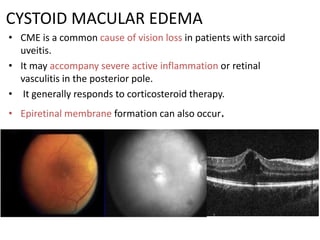
CYSTOID MACULAR EDEMA
• CME is a common cause of vision loss in patients with sarcoid
uveitis.
• It may accompany severe active inflammation or retinal
vasculitis in the posterior pole.
• It generally responds to corticosteroid therapy.
• Epiretinal membrane formation can also occur.
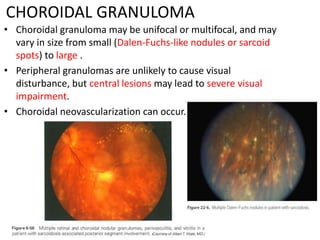
CHOROIDAL GRANULOMA
• Choroidal granuloma may be unifocal or multifocal, and may
vary in size from small (Dalen-Fuchs-like nodules or sarcoid
spots) to large .
• Peripheral granulomas are unlikely to cause visual
disturbance, but central lesions may lead to severe visual
impairment.
• Choroidal neovascularization can occur.
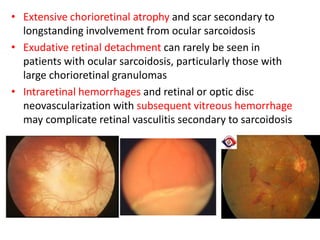
• Extensive chorioretinal atrophy and scar secondary to
longstanding involvement from ocular sarcoidosis
• Exudative retinal detachment can rarely be seen in
patients with ocular sarcoidosis, particularly those with
large chorioretinal granulomas
• Intraretinal hemorrhages and retinal or optic disc
neovascularization with subsequent vitreous hemorrhage
may complicate retinal vasculitis secondary to sarcoidosis
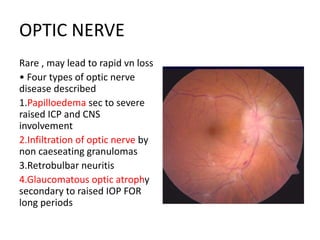
OPTIC NERVE
Rare , may lead to rapid vn loss
• Four types of optic nerve
disease described
1.Papilloedema sec to severe
raised ICP and CNS
involvement
2.Infiltration of optic nerve by
non caeseating granulomas
3.Retrobulbar neuritis
4.Glaucomatous optic atrophy
secondary to raised IOP FOR
long periods
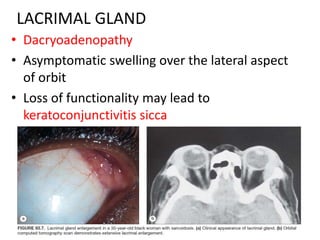
LACRIMAL GLAND
• Dacryoadenopathy
• Asymptomatic swelling over the lateral aspect
of orbit
• Loss of functionality may lead to
keratoconjunctivitis sicca
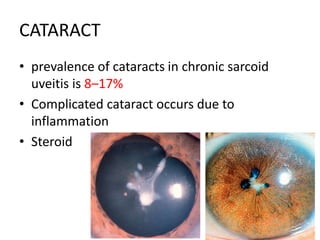
CATARACT
• prevalence of cataracts in chronic sarcoid
uveitis is 8–17%
• Complicated cataract occurs due to
inflammation
• Steroid
GLAUCOMA
• prevalence of glaucoma varies from 11% to
23%.
• pupillary block - due to posterior synechiae.
• trabecular meshwork damage or occlusion by
inflammatory cells can cause glaucoma.
• Severe or chronic anterior chamber
inflammation may cause angle closure
glaucoma secondary to peripheral anterior
synechiae formation
CHILDHOOD SARCOIDOSIS
• less common in the pediatric population
• Under 5 yrs
• typically characterized by a granulomatous
anterior uveitis, polyarticular arthritis, rash, and
lymphadenopathy.
• Pulmonary involvement 1/3rd
• Vision loss – amblyopia
• Aggressive treatment
• D/D – Blau syndrome.
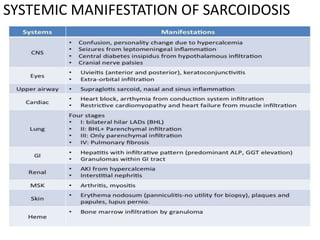
SYSTEMIC MANIFESTATION OF SARCOIDOSIS
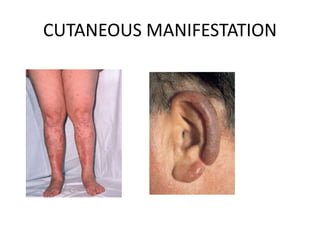
CUTANEOUS MANIFESTATION
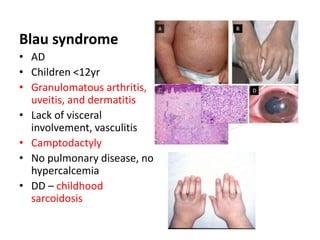
Blau syndrome
• AD
• Children <12yr
• Granulomatous arthritis,
uveitis, and dermatitis
• Lack of visceral
involvement, vasculitis
• Camptodactyly
• No pulmonary disease, no
hypercalcemia
• DD – childhood
sarcoidosis
DIFFERENTIAL DIAGONOSIS
GRANULOMATOUS UVEITIS Tb, Syphilis, leprosy, vkh,
toxoplasmosis, herpetic uveitis
ISOLATED IRIS NODULES Iris neoplasms, metastatic
carcinomas, leukemic infiltrates, seeding from
retinoblastoma
INTERMEDIATE UVEITIS multiplesclerosis,pars planitis
CHOROIDAL LESIONS tb, birdshot retinopathy, metastatic
tumours, large cell lymphomas, vkh, serpigrnous
choroidopathy, behcets disease , CMV retinitis,
Sympathetic ophthalmia, histoplasmosis
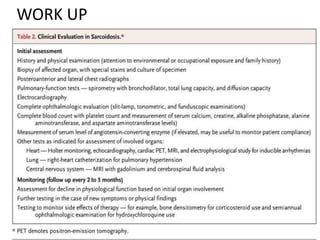
WORK UP
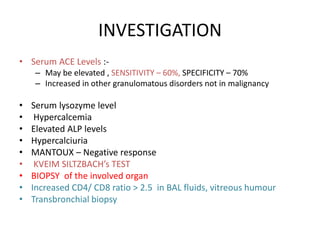
INVESTIGATION
• Serum ACE Levels :-
– May be elevated , SENSITIVITY – 60%, SPECIFICITY – 70%
– Increased in other granulomatous disorders not in malignancy
• Serum lysozyme level
• Hypercalcemia
• Elevated ALP levels
• Hypercalciuria
• MANTOUX – Negative response
• KVEIM SILTZBACH’s TEST
• BIOPSY of the involved organ
• Increased CD4/ CD8 ratio > 2.5 in BAL fluids, vitreous humour
• Transbronchial biopsy
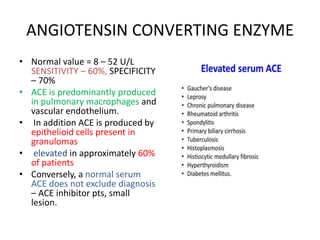
ANGIOTENSIN CONVERTING ENZYME
• Normal value = 8 – 52 U/L
SENSITIVITY – 60%, SPECIFICITY
– 70%
• ACE is predominantly produced
in pulmonary macrophages and
vascular endothelium.
• In addition ACE is produced by
epithelioid cells present in
granulomas
• elevated in approximately 60%
of patients
• Conversely, a normal serum
ACE does not exclude diagnosis
– ACE inhibitor pts, small
lesion.
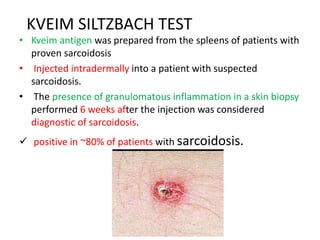
KVEIM SILTZBACH TEST
• Kveim antigen was prepared from the spleens of patients with
proven sarcoidosis
• Injected intradermally into a patient with suspected
sarcoidosis.
• The presence of granulomatous inflammation in a skin biopsy
performed 6 weeks after the injection was considered
diagnostic of sarcoidosis.
 positive in ~80% of patients with sarcoidosis.
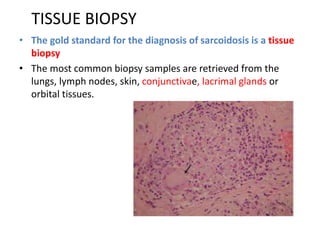
TISSUE BIOPSY
• The gold standard for the diagnosis of sarcoidosis is a tissue
biopsy
• The most common biopsy samples are retrieved from the
lungs, lymph nodes, skin, conjunctivae, lacrimal glands or
orbital tissues.
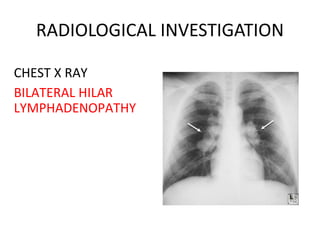
RADIOLOGICAL INVESTIGATION
CHEST X RAY
BILATERAL HILAR
LYMPHADENOPATHY
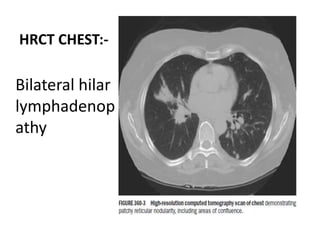
HRCT CHEST:-
Bilateral hilar
lymphadenop
athy
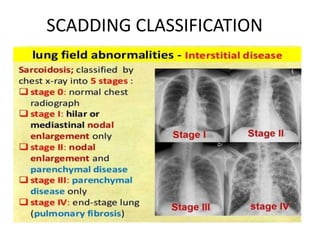
SCADDING CLASSIFICATION
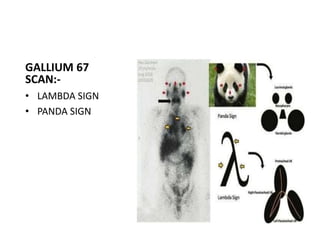
GALLIUM 67
SCAN:-
• LAMBDA SIGN
• PANDA SIGN
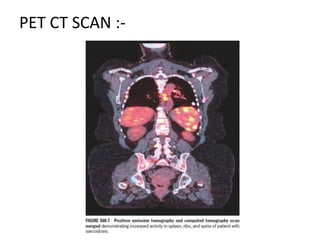
PET CT SCAN :-
DIAGNOSIS OF OCULAR SARCOIDOSIS
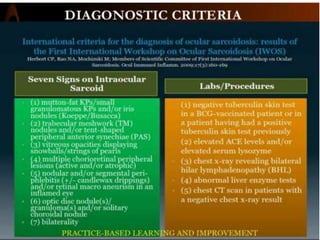
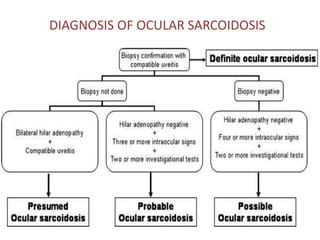
• In 2009, the first International Workshop on
Ocular Sarcoidosis (IWOS) published the
international criteria for the diagnosis of ocular
sarcoidosis
• The members of the IWOS identified
- 7 clinical signs suggestive of ocular
sarcoidosis,
- 5 laboratory investigations in suspected
ocular sarcoidosis, and
- 4 diagnostic terms for ocular sarcoidosis
DIAGNOSIS OF OCULAR SARCOIDOSIS
• Br J Ophthalmol. 2019 Feb 23. pii: bjophthalmol-2018-313356. doi:
10.1136/bjophthalmol-2018-313356. [Epub ahead of print]
• Revised criteria of International Workshop on Ocular Sarcoidosis (IWOS)
for the diagnosis of ocular sarcoidosis
Results The survey and subsequent workshop reached
consensus agreements of the revised criteria for the
diagnosis of OS as follows:
(1) other causes of granulomatous uveitis must be ruled
out;
(2) seven intraocular clinical signs suggestive of OS;
(3) eight results of systemic investigations in suspected
OS and
(4) three categories of diagnostic criteria depending on
biopsy results and combination of intraocular signs and
results of systemic investigations.
TREATMENT
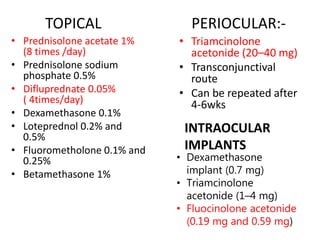
TOPICAL
• Prednisolone acetate 1%
(8 times /day)
• Prednisolone sodium
phosphate 0.5%
• Difluprednate 0.05%
( 4times/day)
• Dexamethasone 0.1%
• Loteprednol 0.2% and
0.5%
• Fluorometholone 0.1% and
0.25%
• Betamethasone 1%
PERIOCULAR:-
• Triamcinolone
acetonide (20–40 mg)
• Transconjunctival
route
• Can be repeated after
4-6wks
INTRAOCULAR
IMPLANTS
• Dexamethasone
implant (0.7 mg)
• Triamcinolone
acetonide (1–4 mg)
• Fluocinolone acetonide
(0.19 mg and 0.59 mg)
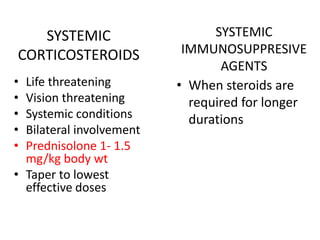
SYSTEMIC
CORTICOSTEROIDS
• Life threatening
• Vision threatening
• Systemic conditions
• Bilateral involvement
• Prednisolone 1- 1.5
mg/kg body wt
• Taper to lowest
effective doses
SYSTEMIC
IMMUNOSUPPRESIVE
AGENTS
• When steroids are
required for longer
durations
Immunosuppressive
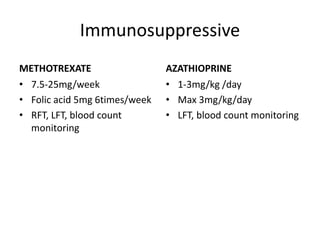
METHOTREXATE
• 7.5-25mg/week
• Folic acid 5mg 6times/week
• RFT, LFT, blood count
monitoring
AZATHIOPRINE
• 1-3mg/kg /day
• Max 3mg/kg/day
• LFT, blood count monitoring
Immunosuppressive
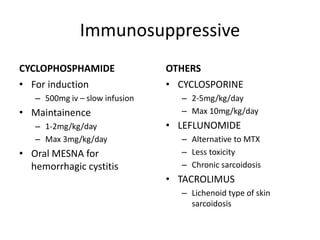
CYCLOPHOSPHAMIDE
• For induction
– 500mg iv – slow infusion
• Maintainence
– 1-2mg/kg/day
– Max 3mg/kg/day
• Oral MESNA for
hemorrhagic cystitis
OTHERS
• CYCLOSPORINE
– 2-5mg/kg/day
– Max 10mg/kg/day
• LEFLUNOMIDE
– Alternative to MTX
– Less toxicity
– Chronic sarcoidosis
• TACROLIMUS
– Lichenoid type of skin
sarcoidosis
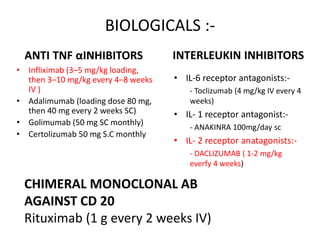
BIOLOGICALS :-
ANTI TNF αINHIBITORS
• Infliximab (3–5 mg/kg loading,
then 3–10 mg/kg every 4–8 weeks
IV )
• Adalimumab (loading dose 80 mg,
then 40 mg every 2 weeks SC)
• Golimumab (50 mg SC monthly)
• Certolizumab 50 mg S.C monthly
INTERLEUKIN INHIBITORS
• IL-6 receptor antagonists:-
- Toclizumab (4 mg/kg IV every 4
weeks)
• IL- 1 receptor antagonist:-
- ANAKINRA 100mg/day sc
• IL- 2 receptor anatagonists:-
- DACLIZUMAB ( 1-2 mg/kg
everfy 4 weeks)
CHIMERAL MONOCLONAL AB
AGAINST CD 20
Rituximab (1 g every 2 weeks IV)
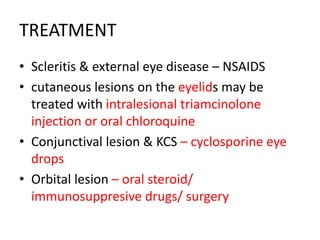
TREATMENT
• Scleritis & external eye disease – NSAIDS
• cutaneous lesions on the eyelids may be
treated with intralesional triamcinolone
injection or oral chloroquine
• Conjunctival lesion & KCS – cyclosporine eye
drops
• Orbital lesion – oral steroid/
immunosuppresive drugs/ surgery
SURGICAL TREATMENT
CATARACT
 Eye quiet for 3 months
 Pre op steroids 1 week
 Cataract surgery
GLAUCOMA
 trabeculectomy
 with or without antimetabolites
 tube shunt procedures
SUBRETINAL NEOVASCULARISATION
 Laser photocoagulation
CME persists without active inflammation
 intravitreal injections of bevacizumab or ranibizumab
However, treatment of associated inflammation and/or edema
should be maximized prior to considering surgery to avoid
postoperative inflammation
PROGNOSIS;
Visual prognosis of ocular sarcoidosis may vary
depending upon severity and chronicity of eye
inflammation, a delay in presentation to a specialist,
and ocular complications secondary to uveitis.
OUTCOME
• Spontaneous regression
• Improvement with treatment
• Persistence of lesions
• Relapse, recurrence
• Deteriortion
THANK YOU

Sarcoidosis

  • 1.
  • 2.
  • 3.
    • Sarcoidosis-associated uveitiswas first described in the early 1900s and in 1936 • Heerfordt – Danish Ophthalmologist – Heerfordt syndrome – Uveoparotid fever syndrome
  • 4.
    Definition Sarcoidosis is achronic multisystem inflamatory disorder characterized histologically by the accumulation of non caseating epitheloid granulomas in affected tissues. Main organs involved are lungs, lymphnodes, eyes, skin, heart,brain, liver, kidney. Ocular involvement - 40% of patients with sarcoidosis, most commonly uveitis Usually bilateral – asymmetric
  • 5.
    ETIOLOGY AND PATHOGENESIS •Etiology – unknown Proposed mechanisms • Triggering of immune responses by an inifectious or non-infectious agent in the environment in a genetically susceptible host. • HLA B8, HLA DRB1 – sarcoidosis • HLA-DRB1*0401 allele - ocular involvement (ACCESS)
  • 6.
    • Sarcoidal granulomas areorganized, structured masses composed of macrophages and their derivatives, epithelioid cells, giant cells, and T cells. • TNFa – induction and maintainence of granuloma • IL 2 – recruit more number of CD 4 cells in granuloma and alters CD4/CD8 ratio
  • 7.
  • 10.
  • 12.
    EYELID • Small milletshaped to large nodules on eyelids • Lesions are non tender and rarely ulcerate • eye irritation and eyelid deformities with mucocutaneous notching. • Extensive scarring of the posterior lamella causing entropion and trichiasis
  • 13.
    CONJUNCTIVA • 25% ptswith sarcoid uveitis have conj changes • Most common lesion is granuloma • Seen as small round yellow nodules • Usually present in infero palpebral conj and fornix • Exxtensive – resolve with symblepharon formation
  • 14.
    SCLERITIS • In sarcoidosispresents as nodular, anterior diffuse, posterior • Not associated with severe pain • Non necrotizing • Responds to steroids
  • 15.
    CORNEA • Band shapedkeratopathy – chronic inflammation, calcium deposition in bowman membrane • Interstial keratitis and nummular keratitis can also occur • Peripheral ulcerative keratitis • SPK – after KCS
  • 16.
    UVEITIS • Uveitis associatedwith sarcoidosis can present as anterior, intermediate, posterior or panuveitis • Sarcoidosis is well known as a cause of granulomatous uveitis • “Granulomatous” uveitis is used when at least one of the following clinical signs are observed: 1) large mutton-fat keratic precipitates (KPs) (accumulation of inflammatory leukocytes that deposit on the corneal endothelium), 2) iris or trabecular meshwork nodules, or 3) choroidal granuloma
  • 17.
    ANTERIOR UVEITIS M.c manifestation •Seen on 2/3rd cases • Typical chronic B/L Non caseating granulomatous uveitis • Acute or chronic ACUTE ANTERIOR UVETIS • Abrupt onset asso with pain redness and photophobia • Blurred vision • examination reveals cells,flare and fine KPs • Likely to occur at the onset of systemic disease • Well responds to treatment
  • 18.
    CHRONIC ANTERIOR UVEITIS •Mutton fat KPs • Iris nodules • Trabecular meshwork nodules on gonio • Tent shaped PAS on gonio • May lead to glaucoma and cataract • More difficult to treat and has higher incidence of complications and worst prognosis
  • 20.
    INTERMEDIATE UVEITIS • Inflammationof vitreous,pars plana and peripheral retina • Symptoms:Floaters, defective vision, pain. • Pars plana exudates and accumulation of white blood cells and vitreous debris on the retinal surface may be characterized as snow banks and snow balls • Cluster – snow ball • Linear array or strands – string of pearls
  • 21.
    POSTERIOR UVEITIS • Inflammationof the retina, and choroid is less common but more visually disabling than inflammation in the anterior segment • occurs in 6–33% of patients with sarcoidosis. CLINICAL FEATURES  Candle wax dripping ( periphlebitis) Multifocal chorioretinal lesion Retinal granuloma Cystoid macular edema Dalen fuchs nodules
  • 22.
    PERIPHLEBITIS • Perivascular inflammation •appears as yellowish or grey-white perivenous sheathing. • Midperipheral periphlebitis is characteristic. • Candle wax drippings or taches de bougie Periphlebitis associated with segmental cuffing, extensive sheathing and perivenous infiltrates. • Occulusive periphlebitis
  • 23.
    CHORIORETINAL LESION • Choroidallesions are uncommon & vary in appearance: • multiple small pale-yellow infiltrates, • sometimes with a punched-out appearance most numerous inferiorly. • Multiple large confluent infiltrates • Multifocal choroiditis – secondary CNVM poor visual prognosis • Retinal granuloma
  • 25.
    CYSTOID MACULAR EDEMA •CME is a common cause of vision loss in patients with sarcoid uveitis. • It may accompany severe active inflammation or retinal vasculitis in the posterior pole. • It generally responds to corticosteroid therapy. • Epiretinal membrane formation can also occur.
  • 26.
    CHOROIDAL GRANULOMA • Choroidalgranuloma may be unifocal or multifocal, and may vary in size from small (Dalen-Fuchs-like nodules or sarcoid spots) to large . • Peripheral granulomas are unlikely to cause visual disturbance, but central lesions may lead to severe visual impairment. • Choroidal neovascularization can occur.
  • 27.
    • Extensive chorioretinalatrophy and scar secondary to longstanding involvement from ocular sarcoidosis • Exudative retinal detachment can rarely be seen in patients with ocular sarcoidosis, particularly those with large chorioretinal granulomas • Intraretinal hemorrhages and retinal or optic disc neovascularization with subsequent vitreous hemorrhage may complicate retinal vasculitis secondary to sarcoidosis
  • 28.
    OPTIC NERVE Rare ,may lead to rapid vn loss • Four types of optic nerve disease described 1.Papilloedema sec to severe raised ICP and CNS involvement 2.Infiltration of optic nerve by non caeseating granulomas 3.Retrobulbar neuritis 4.Glaucomatous optic atrophy secondary to raised IOP FOR long periods
  • 29.
    LACRIMAL GLAND • Dacryoadenopathy •Asymptomatic swelling over the lateral aspect of orbit • Loss of functionality may lead to keratoconjunctivitis sicca
  • 30.
    CATARACT • prevalence ofcataracts in chronic sarcoid uveitis is 8–17% • Complicated cataract occurs due to inflammation • Steroid
  • 31.
    GLAUCOMA • prevalence ofglaucoma varies from 11% to 23%. • pupillary block - due to posterior synechiae. • trabecular meshwork damage or occlusion by inflammatory cells can cause glaucoma. • Severe or chronic anterior chamber inflammation may cause angle closure glaucoma secondary to peripheral anterior synechiae formation
  • 32.
    CHILDHOOD SARCOIDOSIS • lesscommon in the pediatric population • Under 5 yrs • typically characterized by a granulomatous anterior uveitis, polyarticular arthritis, rash, and lymphadenopathy. • Pulmonary involvement 1/3rd • Vision loss – amblyopia • Aggressive treatment • D/D – Blau syndrome.
  • 33.
  • 34.
  • 37.
    Blau syndrome • AD •Children <12yr • Granulomatous arthritis, uveitis, and dermatitis • Lack of visceral involvement, vasculitis • Camptodactyly • No pulmonary disease, no hypercalcemia • DD – childhood sarcoidosis
  • 38.
    DIFFERENTIAL DIAGONOSIS GRANULOMATOUS UVEITISTb, Syphilis, leprosy, vkh, toxoplasmosis, herpetic uveitis ISOLATED IRIS NODULES Iris neoplasms, metastatic carcinomas, leukemic infiltrates, seeding from retinoblastoma INTERMEDIATE UVEITIS multiplesclerosis,pars planitis CHOROIDAL LESIONS tb, birdshot retinopathy, metastatic tumours, large cell lymphomas, vkh, serpigrnous choroidopathy, behcets disease , CMV retinitis, Sympathetic ophthalmia, histoplasmosis
  • 39.
  • 40.
    INVESTIGATION • Serum ACELevels :- – May be elevated , SENSITIVITY – 60%, SPECIFICITY – 70% – Increased in other granulomatous disorders not in malignancy • Serum lysozyme level • Hypercalcemia • Elevated ALP levels • Hypercalciuria • MANTOUX – Negative response • KVEIM SILTZBACH’s TEST • BIOPSY of the involved organ • Increased CD4/ CD8 ratio > 2.5 in BAL fluids, vitreous humour • Transbronchial biopsy
  • 41.
    ANGIOTENSIN CONVERTING ENZYME •Normal value = 8 – 52 U/L SENSITIVITY – 60%, SPECIFICITY – 70% • ACE is predominantly produced in pulmonary macrophages and vascular endothelium. • In addition ACE is produced by epithelioid cells present in granulomas • elevated in approximately 60% of patients • Conversely, a normal serum ACE does not exclude diagnosis – ACE inhibitor pts, small lesion.
  • 42.
    KVEIM SILTZBACH TEST •Kveim antigen was prepared from the spleens of patients with proven sarcoidosis • Injected intradermally into a patient with suspected sarcoidosis. • The presence of granulomatous inflammation in a skin biopsy performed 6 weeks after the injection was considered diagnostic of sarcoidosis.  positive in ~80% of patients with sarcoidosis.
  • 43.
    TISSUE BIOPSY • Thegold standard for the diagnosis of sarcoidosis is a tissue biopsy • The most common biopsy samples are retrieved from the lungs, lymph nodes, skin, conjunctivae, lacrimal glands or orbital tissues.
  • 44.
    RADIOLOGICAL INVESTIGATION CHEST XRAY BILATERAL HILAR LYMPHADENOPATHY
  • 45.
  • 46.
  • 47.
    GALLIUM 67 SCAN:- • LAMBDASIGN • PANDA SIGN
  • 48.
  • 49.
    DIAGNOSIS OF OCULARSARCOIDOSIS • In 2009, the first International Workshop on Ocular Sarcoidosis (IWOS) published the international criteria for the diagnosis of ocular sarcoidosis • The members of the IWOS identified - 7 clinical signs suggestive of ocular sarcoidosis, - 5 laboratory investigations in suspected ocular sarcoidosis, and - 4 diagnostic terms for ocular sarcoidosis
  • 51.
  • 52.
    • Br JOphthalmol. 2019 Feb 23. pii: bjophthalmol-2018-313356. doi: 10.1136/bjophthalmol-2018-313356. [Epub ahead of print] • Revised criteria of International Workshop on Ocular Sarcoidosis (IWOS) for the diagnosis of ocular sarcoidosis Results The survey and subsequent workshop reached consensus agreements of the revised criteria for the diagnosis of OS as follows: (1) other causes of granulomatous uveitis must be ruled out; (2) seven intraocular clinical signs suggestive of OS; (3) eight results of systemic investigations in suspected OS and (4) three categories of diagnostic criteria depending on biopsy results and combination of intraocular signs and results of systemic investigations.
  • 53.
  • 54.
    TOPICAL • Prednisolone acetate1% (8 times /day) • Prednisolone sodium phosphate 0.5% • Difluprednate 0.05% ( 4times/day) • Dexamethasone 0.1% • Loteprednol 0.2% and 0.5% • Fluorometholone 0.1% and 0.25% • Betamethasone 1% PERIOCULAR:- • Triamcinolone acetonide (20–40 mg) • Transconjunctival route • Can be repeated after 4-6wks INTRAOCULAR IMPLANTS • Dexamethasone implant (0.7 mg) • Triamcinolone acetonide (1–4 mg) • Fluocinolone acetonide (0.19 mg and 0.59 mg)
  • 55.
    SYSTEMIC CORTICOSTEROIDS • Life threatening •Vision threatening • Systemic conditions • Bilateral involvement • Prednisolone 1- 1.5 mg/kg body wt • Taper to lowest effective doses SYSTEMIC IMMUNOSUPPRESIVE AGENTS • When steroids are required for longer durations
  • 56.
    Immunosuppressive METHOTREXATE • 7.5-25mg/week • Folicacid 5mg 6times/week • RFT, LFT, blood count monitoring AZATHIOPRINE • 1-3mg/kg /day • Max 3mg/kg/day • LFT, blood count monitoring
  • 57.
    Immunosuppressive CYCLOPHOSPHAMIDE • For induction –500mg iv – slow infusion • Maintainence – 1-2mg/kg/day – Max 3mg/kg/day • Oral MESNA for hemorrhagic cystitis OTHERS • CYCLOSPORINE – 2-5mg/kg/day – Max 10mg/kg/day • LEFLUNOMIDE – Alternative to MTX – Less toxicity – Chronic sarcoidosis • TACROLIMUS – Lichenoid type of skin sarcoidosis
  • 58.
    BIOLOGICALS :- ANTI TNFαINHIBITORS • Infliximab (3–5 mg/kg loading, then 3–10 mg/kg every 4–8 weeks IV ) • Adalimumab (loading dose 80 mg, then 40 mg every 2 weeks SC) • Golimumab (50 mg SC monthly) • Certolizumab 50 mg S.C monthly INTERLEUKIN INHIBITORS • IL-6 receptor antagonists:- - Toclizumab (4 mg/kg IV every 4 weeks) • IL- 1 receptor antagonist:- - ANAKINRA 100mg/day sc • IL- 2 receptor anatagonists:- - DACLIZUMAB ( 1-2 mg/kg everfy 4 weeks) CHIMERAL MONOCLONAL AB AGAINST CD 20 Rituximab (1 g every 2 weeks IV)
  • 59.
    TREATMENT • Scleritis &external eye disease – NSAIDS • cutaneous lesions on the eyelids may be treated with intralesional triamcinolone injection or oral chloroquine • Conjunctival lesion & KCS – cyclosporine eye drops • Orbital lesion – oral steroid/ immunosuppresive drugs/ surgery
  • 60.
    SURGICAL TREATMENT CATARACT  Eyequiet for 3 months  Pre op steroids 1 week  Cataract surgery GLAUCOMA  trabeculectomy  with or without antimetabolites  tube shunt procedures SUBRETINAL NEOVASCULARISATION  Laser photocoagulation CME persists without active inflammation  intravitreal injections of bevacizumab or ranibizumab However, treatment of associated inflammation and/or edema should be maximized prior to considering surgery to avoid postoperative inflammation
  • 61.
    PROGNOSIS; Visual prognosis ofocular sarcoidosis may vary depending upon severity and chronicity of eye inflammation, a delay in presentation to a specialist, and ocular complications secondary to uveitis. OUTCOME • Spontaneous regression • Improvement with treatment • Persistence of lesions • Relapse, recurrence • Deteriortion
  • 62.