Families on the Periodic Table
Elements on the periodic table can be grouped into
families bases on their chemical properties.
Each family has a specific name to differentiate it
from the other families in the periodic table.
Elements in each family
react differently with
other elements.
ALKALI METALS
Group 1
Hydrogen is not a member, it
is a non-metal
1 electron in the outer shell
Soft and silvery metals
Very reactive, esp. with water
Conduct electricity
Image: http://www.learner.org/interactives/periodic/groups2.html
ALKALINE EARTH METALS
Group 2
2 electrons in the
outer shell
White and
malleable
Reactive, but less
than Alkali metals
Conduct electricity
TRANSITION METALS
Groups in the middle
Good conductors of
heat and electricity.
Some are used for
jewelry.
The transition metals
are able to put up to 32
electrons in their
second to last shell.
Can bond with many
elements in a variety of
shapes.
BORON FAMILY
Group 3
3 electrons in the
outer shell
Most are metals
Boron is a
metalloid
CARBON FAMILY
Group 4
4 electrons in the
outer shell
Contains metals,
metalloids, and a
non-metal Carbon
(C)
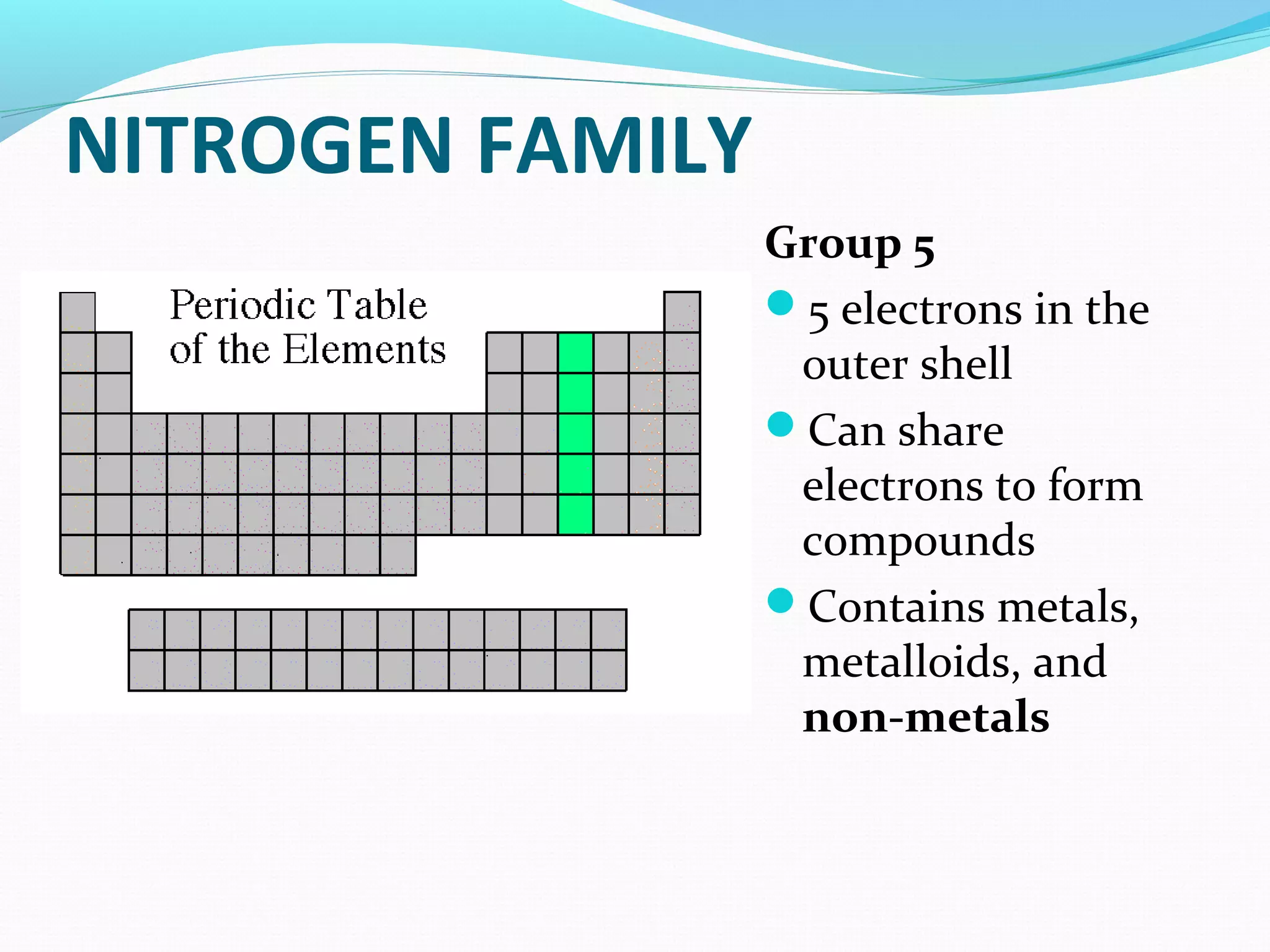
NITROGEN FAMILY
Group 5
5 electrons in the
outer shell
Can share
electrons to form
compounds
Contains metals,
metalloids, and
non-metals
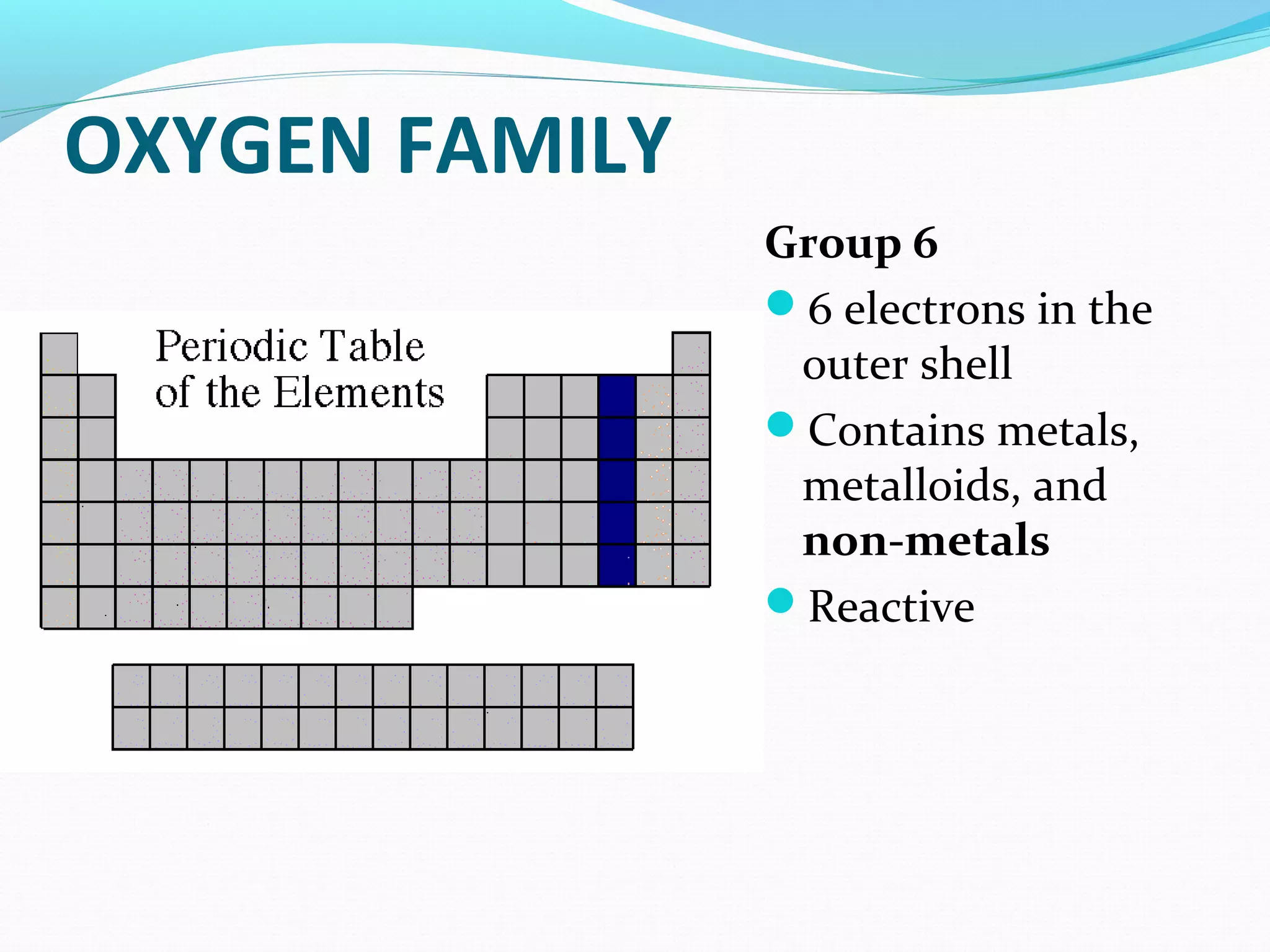
OXYGEN FAMILY
Group 6
6 electrons in the
outer shell
Contains metals,
metalloids, and
non-metals
Reactive
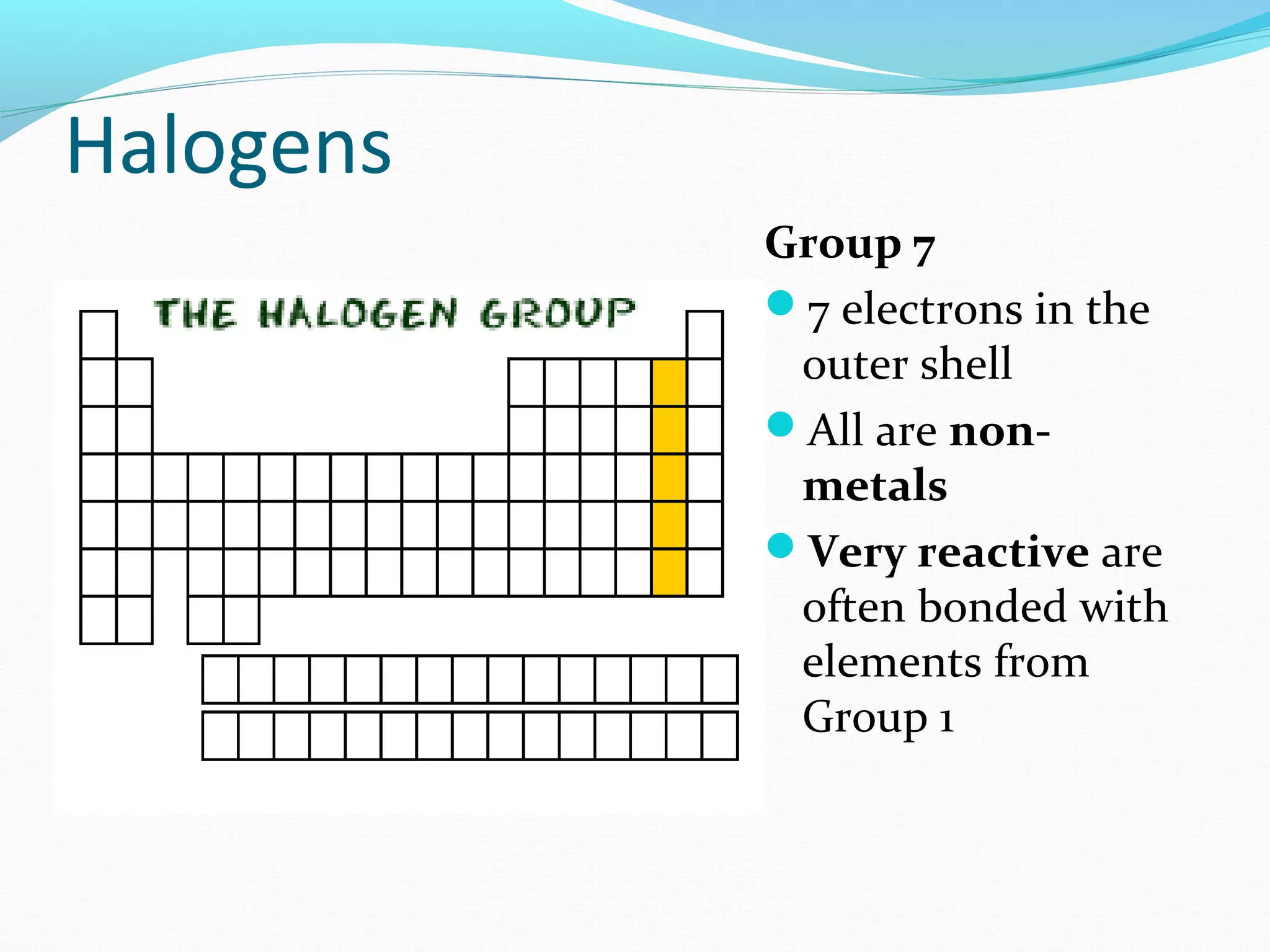
Halogens
Group 7
7 electrons in the
outer shell
All are non-
metals
Very reactive are
often bonded with
elements from
Group 1
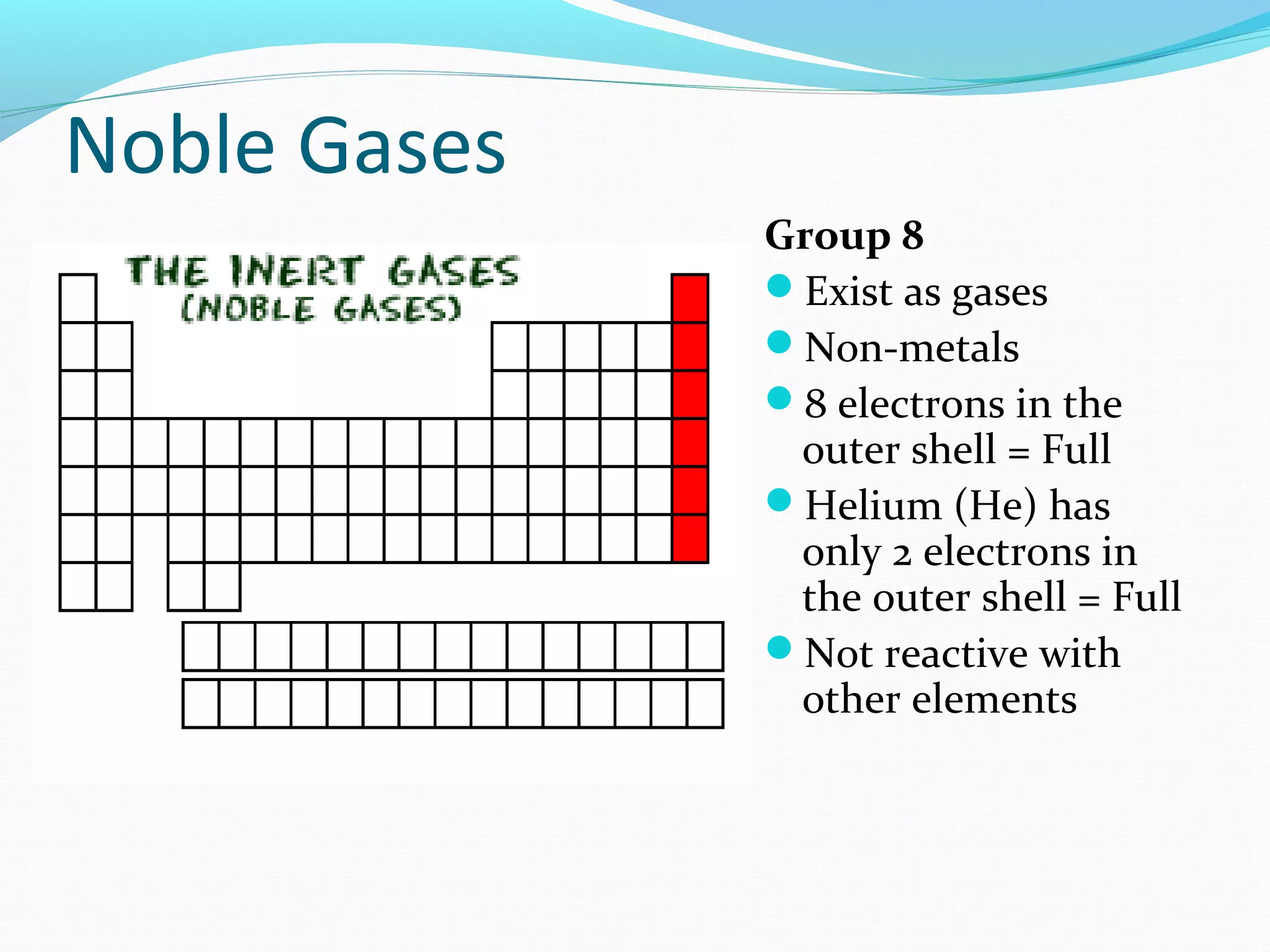
Noble Gases
Group 8
Exist as gases
Non-metals
8 electrons in the
outer shell = Full
Helium (He) has
only 2 electrons in
the outer shell = Full
Not reactive with
other elements
Rare Earth Metals
Some are
Radioactive
The rare
earths are
silver, silvery-
white, or gray
metals.
Conduct
electricity
Periodic table-families

Periodic table-families

  • 2.
    Families on thePeriodic Table Elements on the periodic table can be grouped into families bases on their chemical properties. Each family has a specific name to differentiate it from the other families in the periodic table. Elements in each family react differently with other elements.
  • 3.
    ALKALI METALS Group 1 Hydrogenis not a member, it is a non-metal 1 electron in the outer shell Soft and silvery metals Very reactive, esp. with water Conduct electricity Image: http://www.learner.org/interactives/periodic/groups2.html
  • 4.
    ALKALINE EARTH METALS Group2 2 electrons in the outer shell White and malleable Reactive, but less than Alkali metals Conduct electricity
  • 5.
    TRANSITION METALS Groups inthe middle Good conductors of heat and electricity. Some are used for jewelry. The transition metals are able to put up to 32 electrons in their second to last shell. Can bond with many elements in a variety of shapes.
  • 6.
    BORON FAMILY Group 3 3electrons in the outer shell Most are metals Boron is a metalloid
  • 7.
    CARBON FAMILY Group 4 4electrons in the outer shell Contains metals, metalloids, and a non-metal Carbon (C)
  • 8.
    NITROGEN FAMILY Group 5 5electrons in the outer shell Can share electrons to form compounds Contains metals, metalloids, and non-metals
  • 9.
    OXYGEN FAMILY Group 6 6electrons in the outer shell Contains metals, metalloids, and non-metals Reactive
  • 10.
    Halogens Group 7 7 electronsin the outer shell All are non- metals Very reactive are often bonded with elements from Group 1
  • 11.
    Noble Gases Group 8 Existas gases Non-metals 8 electrons in the outer shell = Full Helium (He) has only 2 electrons in the outer shell = Full Not reactive with other elements
  • 12.
    Rare Earth Metals Someare Radioactive The rare earths are silver, silvery- white, or gray metals. Conduct electricity