“A process by which we give meaning to our environment
by organizing and interpreting sensory impressions.”
PERCERTION
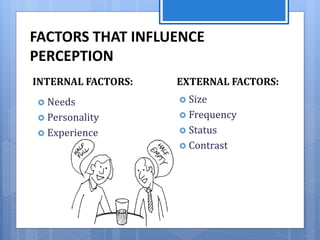
FACTORS THAT INFLUENCE
PERCEPTION
INTERNAL FACTORS:
 Needs
 Personality
 Experience
EXTERNAL FACTORS:
 Size
 Frequency
 Status
 Contrast
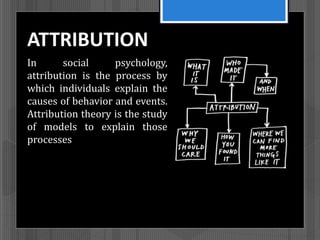
ATTRIBUTION
In social psychology,
attribution is the process by
which individuals explain the
causes of behavior and events.
Attribution theory is the study
of models to explain those
processes
ATTRIBUTION THEORY
 Our perceptions of people differ from our perceptions of inanimate
objects( Robots, computers etc).
 Attribution theory suggests that when we observe an individual’s
behavior , we attempt to determine whether it was internally caused
or externally caused.
 Theory that states that we all have basic need to understand and
explain the causes of other’s people behavior.
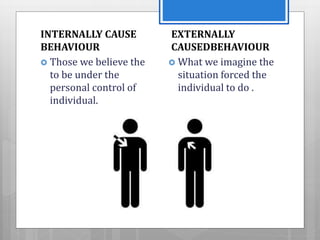
INTERNALLY CAUSE
BEHAVIOUR
 Those we believe the
to be under the
personal control of
individual.
EXTERNALLY
CAUSEDBEHAVIOUR
 What we imagine the
situation forced the
individual to do .
FACTORS THAT INFLUENCE ATTRIBUTION
 DISTINCTIVENESS: The consideration given to how consistent a
person’s behavior is across different situation .
 CONSENSUS: Refers to the likelihood that all those facing the
same situation will have similar response .
 CONSISTENCY: Refers to the measure of whether an individual
responds the same way across time.
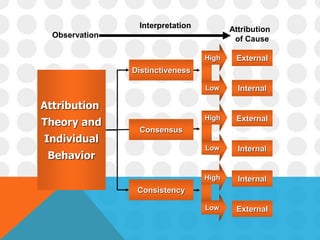
Attribution
Theory and
Individual
Behavior
External
External
Internal
Internal
Internal
External
Attribution
of Cause
Distinctiveness
Consensus
Consistency
High
Low
High
Low
High
Low
Interpretation
Observation
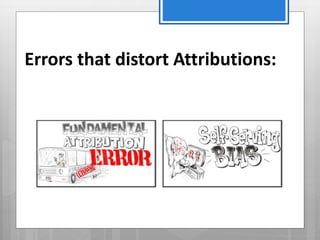
Errors that distort Attributions:
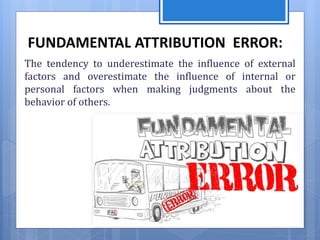
FUNDAMENTAL ATTRIBUTION ERROR:
The tendency to underestimate the influence of external
factors and overestimate the influence of internal or
personal factors when making judgments about the
behavior of others.
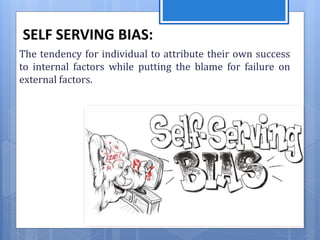
SELF SERVING BIAS:
The tendency for individual to attribute their own success
to internal factors while putting the blame for failure on
external factors.
SHORTCUTS USED IN JUDGING OTHERS
 Selectivity
 Assumed Similarity
 Stereotyping
 Halo Effect
 Self-fulfilling prophecy
LEARNING
Any relatively permanent change in behavior that occur
as a result of experience.
THEORIES OF LEARNING
 Operant conditioning
 Social learning theory
1.OPERANT CONDITIONING THEORY
A method of learning that occur through reward and
punishments for behavior. Through operant conditioning,
an association is made between a behavior and a
consequences for that behavior.
EXAMPLE:
 Children completing homework to earn a reward from
teacher and parent.
 Employee completing project to receive promotion.
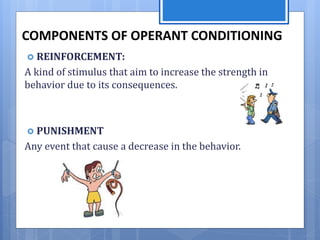
COMPONENTS OF OPERANT CONDITIONING
 REINFORCEMENT:
A kind of stimulus that aim to increase the strength in
behavior due to its consequences.
 PUNISHMENT
Any event that cause a decrease in the behavior.
TYPES OF REINFORCEMENT
 POSITIVE REINFORCEMENT:
Favorable events that’s are presented after the behavior. (
Reward learning)
 NEGATIVE REINFORCEMENT:
A response or behavior strengthened by stopping, removing or
avoiding a negative outcome.
When positive reinforcement most
effective?
 When it is occur immediately after the behavior.
 When the reinforcement is presented frequently.
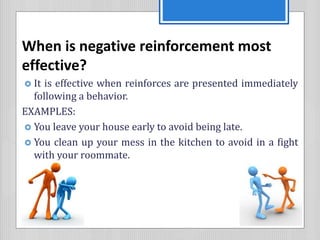
When is negative reinforcement most
effective?
 It is effective when reinforces are presented immediately
following a behavior.
EXAMPLES:
 You leave your house early to avoid being late.
 You clean up your mess in the kitchen to avoid in a fight
with your roommate.
2.Social learning theory
“The theory that people can learn through observation and
direct experience.”
 This theory is an extension of operant conditioning but it
also acknowledge the existence of observational learning
and the importance of perception.
 People learn from watching models- parents, teacher,
television, bosses etc.
Four processes that determine the influence
of model on individual:
 Attention processes
 Retention process
 Motor reproduction processes
 Reinforcement processes

Perception and learning

  • 2.
    “A process bywhich we give meaning to our environment by organizing and interpreting sensory impressions.” PERCERTION
  • 3.
    FACTORS THAT INFLUENCE PERCEPTION INTERNALFACTORS:  Needs  Personality  Experience EXTERNAL FACTORS:  Size  Frequency  Status  Contrast
  • 4.
    ATTRIBUTION In social psychology, attributionis the process by which individuals explain the causes of behavior and events. Attribution theory is the study of models to explain those processes
  • 5.
    ATTRIBUTION THEORY  Ourperceptions of people differ from our perceptions of inanimate objects( Robots, computers etc).  Attribution theory suggests that when we observe an individual’s behavior , we attempt to determine whether it was internally caused or externally caused.  Theory that states that we all have basic need to understand and explain the causes of other’s people behavior.
  • 6.
    INTERNALLY CAUSE BEHAVIOUR  Thosewe believe the to be under the personal control of individual. EXTERNALLY CAUSEDBEHAVIOUR  What we imagine the situation forced the individual to do .
  • 7.
    FACTORS THAT INFLUENCEATTRIBUTION  DISTINCTIVENESS: The consideration given to how consistent a person’s behavior is across different situation .  CONSENSUS: Refers to the likelihood that all those facing the same situation will have similar response .  CONSISTENCY: Refers to the measure of whether an individual responds the same way across time.
  • 8.
  • 9.
    Errors that distortAttributions:
  • 10.
    FUNDAMENTAL ATTRIBUTION ERROR: Thetendency to underestimate the influence of external factors and overestimate the influence of internal or personal factors when making judgments about the behavior of others.
  • 11.
    SELF SERVING BIAS: Thetendency for individual to attribute their own success to internal factors while putting the blame for failure on external factors.
  • 12.
    SHORTCUTS USED INJUDGING OTHERS  Selectivity  Assumed Similarity  Stereotyping  Halo Effect  Self-fulfilling prophecy
  • 13.
    LEARNING Any relatively permanentchange in behavior that occur as a result of experience. THEORIES OF LEARNING  Operant conditioning  Social learning theory
  • 14.
    1.OPERANT CONDITIONING THEORY Amethod of learning that occur through reward and punishments for behavior. Through operant conditioning, an association is made between a behavior and a consequences for that behavior. EXAMPLE:  Children completing homework to earn a reward from teacher and parent.  Employee completing project to receive promotion.
  • 15.
    COMPONENTS OF OPERANTCONDITIONING  REINFORCEMENT: A kind of stimulus that aim to increase the strength in behavior due to its consequences.  PUNISHMENT Any event that cause a decrease in the behavior.
  • 16.
    TYPES OF REINFORCEMENT POSITIVE REINFORCEMENT: Favorable events that’s are presented after the behavior. ( Reward learning)  NEGATIVE REINFORCEMENT: A response or behavior strengthened by stopping, removing or avoiding a negative outcome.
  • 17.
    When positive reinforcementmost effective?  When it is occur immediately after the behavior.  When the reinforcement is presented frequently.
  • 18.
    When is negativereinforcement most effective?  It is effective when reinforces are presented immediately following a behavior. EXAMPLES:  You leave your house early to avoid being late.  You clean up your mess in the kitchen to avoid in a fight with your roommate.
  • 19.
    2.Social learning theory “Thetheory that people can learn through observation and direct experience.”  This theory is an extension of operant conditioning but it also acknowledge the existence of observational learning and the importance of perception.  People learn from watching models- parents, teacher, television, bosses etc.
  • 20.
    Four processes thatdetermine the influence of model on individual:  Attention processes  Retention process  Motor reproduction processes  Reinforcement processes

Editor's Notes

  • #9 When we observe people, we attempt to develop explanations for their behavior. Our perceptions and judgements will be influenced by the assumptions we make about the person’s internal state. Attribution theory asserts that when we observe behavior, we classify it as either internally or externally motivated. We believe that internally caused behaviors are under an individual’s control; externally caused behaviors are motivated by outside forces. How we determine the source of behavior is determined by three factors: distinctiveness, consensus, and consistency. Distinctiveness refers to whether an individual displays different behavior in different situations. If everyone who is faced with a similar situation responds in the same way, we can say the behavior shows consensus. Finally, an observer looks for consistency in a person’s actions. The figure above summarizes the key elements in attribution theory. Managers should remember that errors and biases can distort attributions. For instance, fundamental attribution error is underestimating the influence of external factors and overestimating the influence of internal factors. Also, attributing success to internal factors and failure to external factors is called self-serving bias.