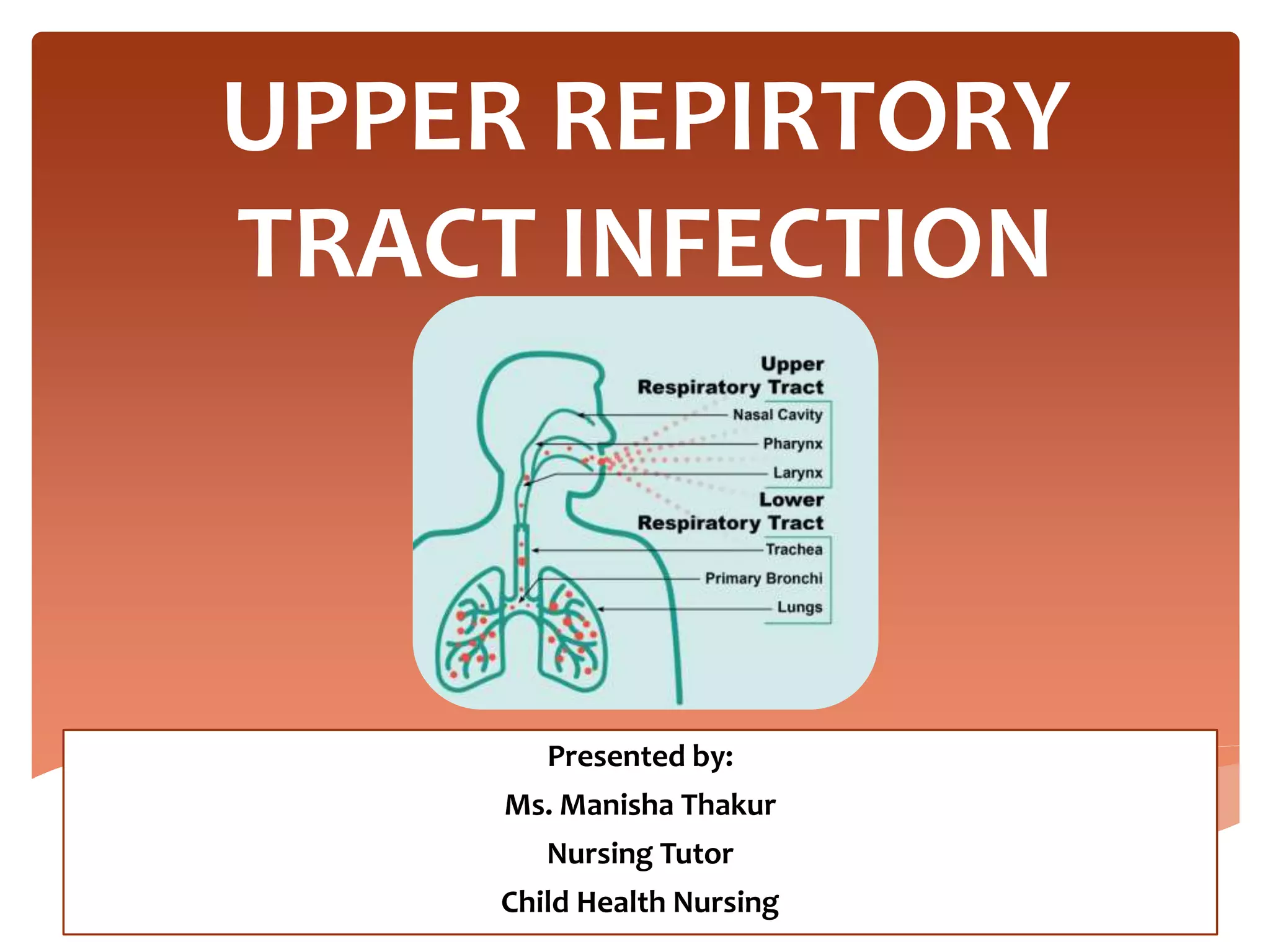
UPPER REPIRTORY
TRACT INFECTION
Presented by:
Ms. Manisha Thakur
Nursing Tutor
Child Health Nursing
SINUSITIS
SINUSES:
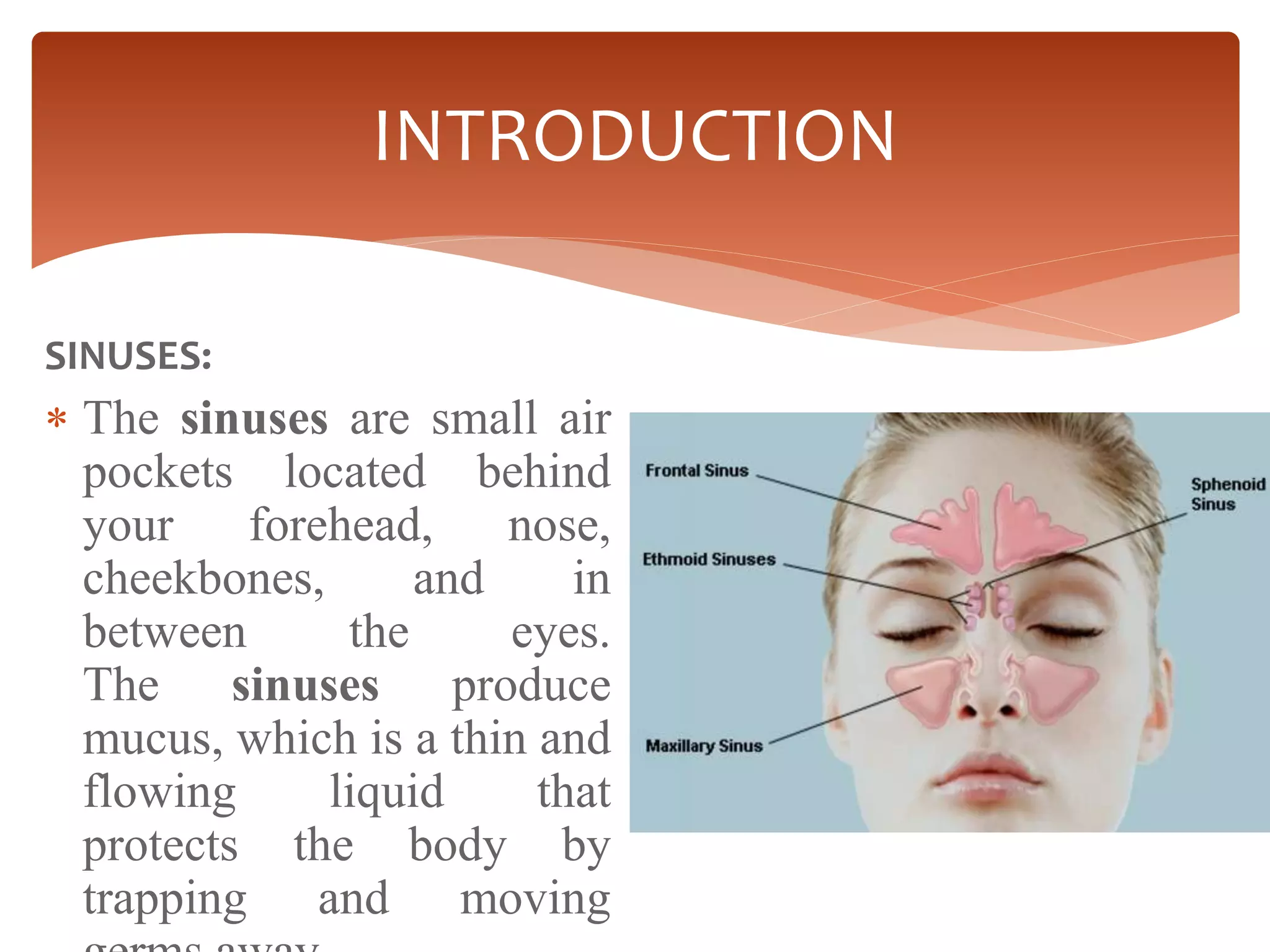
 The sinuses are small air
pockets located behind
your forehead, nose,
cheekbones, and in
between the eyes.
The sinuses produce
mucus, which is a thin and
flowing liquid that
protects the body by
trapping and moving
INTRODUCTION
SINUSITIS:
 It refers to the inflammatory conditions
involving the four paired structures surrounding
the nasal cavities.
 Most frequently maxillary sinus is involved
followed by ethmoid, frontal, and sphenoid
sinuses.
 It is usually precipitated by congestion from
viral URI’s.
DEFINITION
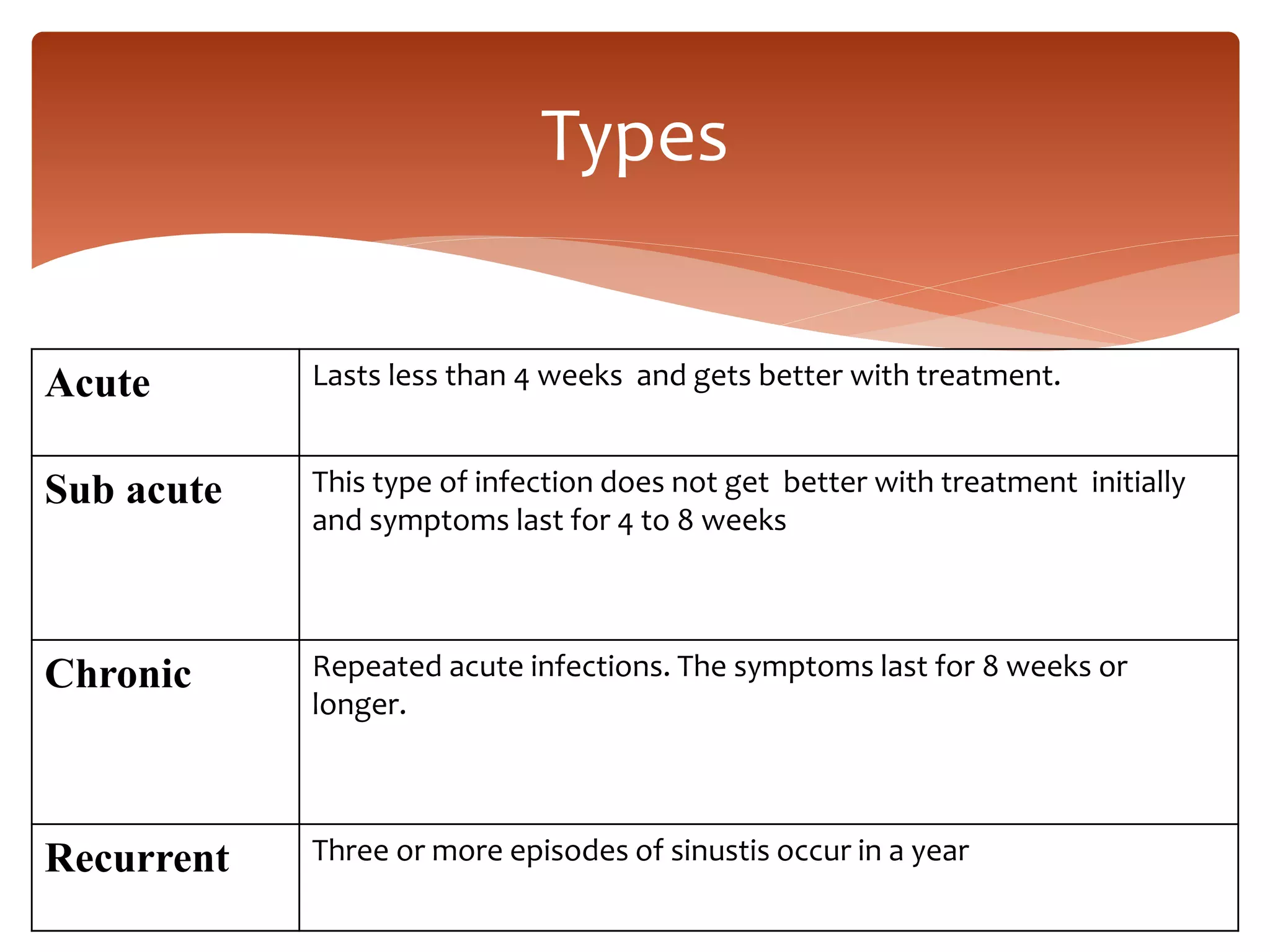
Acute Lasts less than 4 weeks and gets better with treatment.
Sub acute This type of infection does not get better with treatment initially
and symptoms last for 4 to 8 weeks
Chronic Repeated acute infections. The symptoms last for 8 weeks or
longer.
Recurrent Three or more episodes of sinustis occur in a year
Types
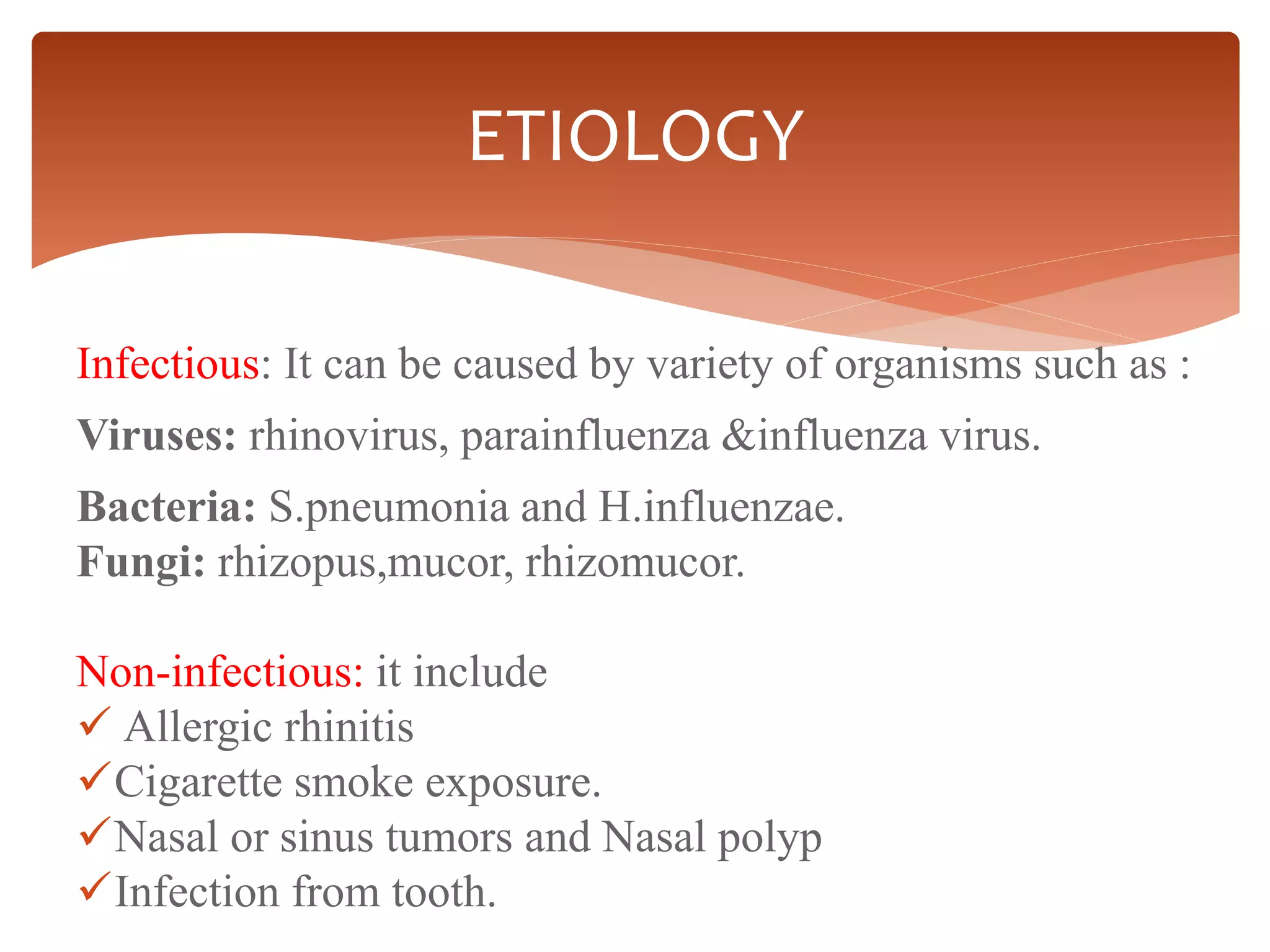
Infectious: It can be caused by variety of organisms such as :
Viruses: rhinovirus, parainfluenza &influenza virus.
Bacteria: S.pneumonia and H.influenzae.
Fungi: rhizopus,mucor, rhizomucor.
Non-infectious: it include
 Allergic rhinitis
Cigarette smoke exposure.
Nasal or sinus tumors and Nasal polyp
Infection from tooth.
ETIOLOGY
Clinical features
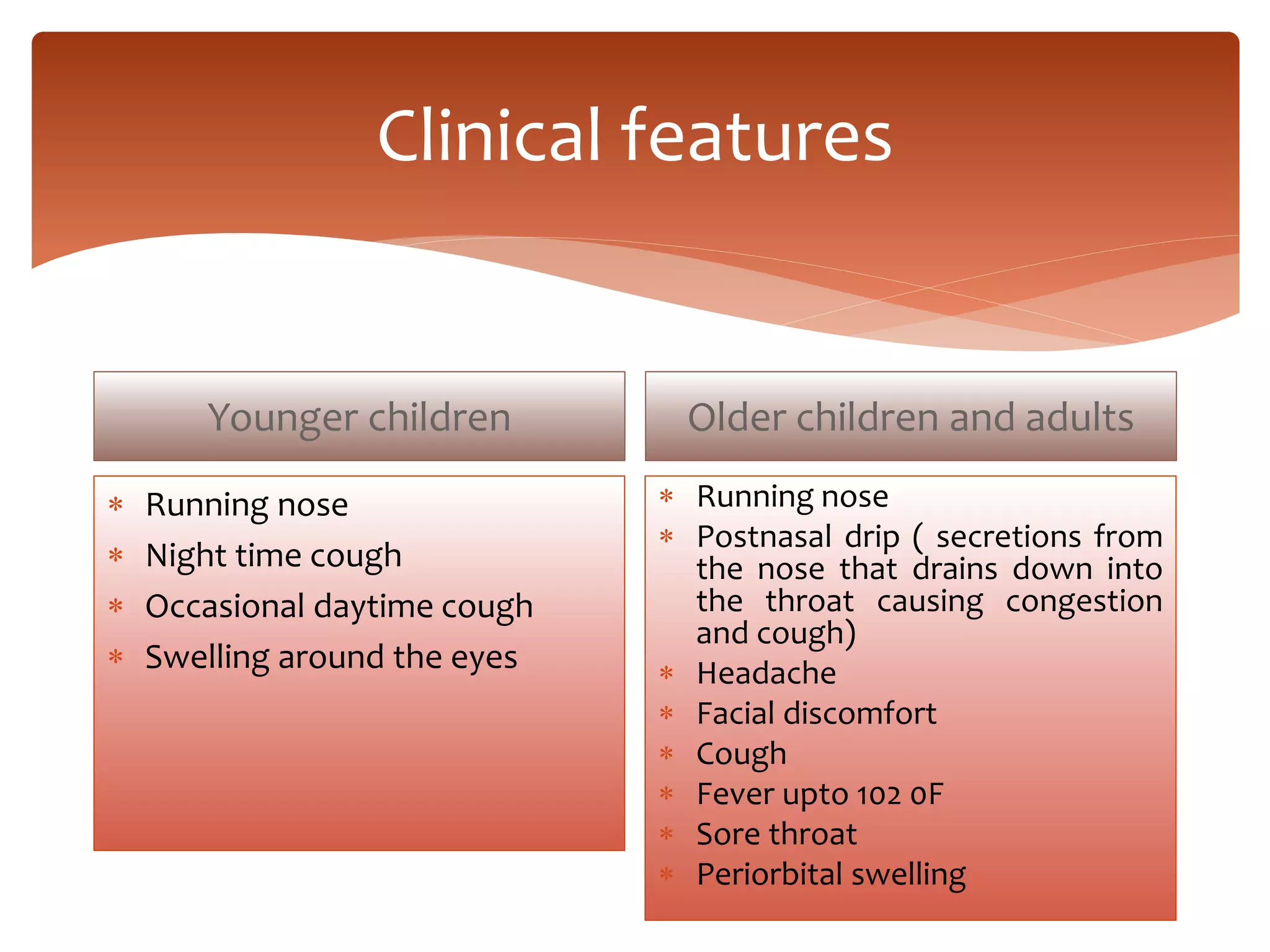
Younger children
 Running nose
 Night time cough
 Occasional daytime cough
 Swelling around the eyes
Older children and adults
 Running nose
 Postnasal drip ( secretions from
the nose that drains down into
the throat causing congestion
and cough)
 Headache
 Facial discomfort
 Cough
 Fever upto 102 0F
 Sore throat
 Periorbital swelling
 Childs medical and physical examination
 Sinus x ray : show fluid in sinus and thick mucus.
 CT scan ( obstructed sinus)
 Culture from sinuses
Diagnostic approaches
Medical management:
 Antibiotic medication: for 10 to 14 days)
 Anti-histamines (used to decrease secretions &
congestion)
 Topical decongestants and mucous thinner : e.g.
Guaifenesin
 Nasal sprays: to reduce inflammation
 Acetaminophen: for pain and discomfort
Endoscopic sinus surgery, if other treatment fails.
Management
 Nose drops or sprays containing phenylephrine 0.25% to 0.125%
are administered as prescribed after cleaning the nasal passages.
 Humidifier may be used to increase the water vapour in the air,
liquify the secretions and facilitate the drainage.
 Warm moist compresses may be applied to the affected area.
 Temperature monitoring
 Sponge baths and prescribed antipyretics may be given to reduce
fever.
 Position the child with his or her head elevation which will ease in
breathing.
 Increased fluid intake to keep nasopharynx mucosa moist and
prevent dehydration.
Nursing management
 Increased fluid intake
 Observing for the complications such as cry, ear ache
 Administer Systemic antibiotics are given as
prescribed after cultures are done.
Cont…
 Ineffective Airway Clearance related to airway obstruction due to thick mucus
production as evidenced by the monitoring of SPO2.
 Acute Pain related to inflammation of the sinusitis as evidenced by the
verbalization of the patient.
 Imbalanced Nutrition: Less than Body Requirements related to decreased
appetite secondary to sinus inflammation as evidenced by monitoring of intake
output chart.
 Disturbed Sleep Pattern related to clogged nose, nasal inflammation secondary
pain as evidenced by verbalization of the client.
 Anxiety related to lack of knowledge about diseases and medical procedures as
evidenced by the continues questioning by the parents.
Nursing diagnosis
NASOPHARYNGITIS
It is also known as common cold or rhinosinusitis
, this is one of the common illness leading to
maximum of doctor visits, absence from school
and work.
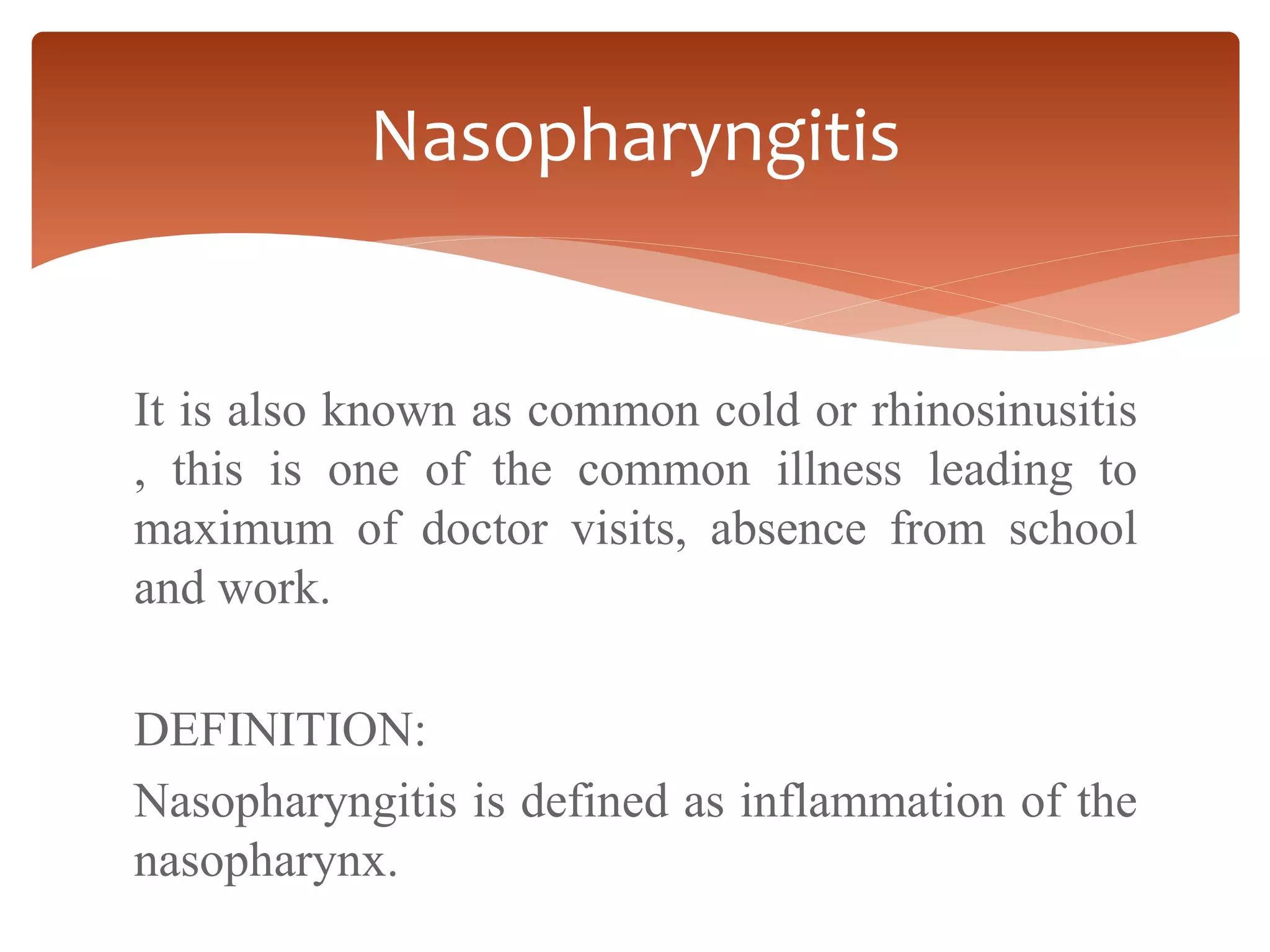
DEFINITION:
Nasopharyngitis is defined as inflammation of the
nasopharynx.
Nasopharyngitis
asopharyngitis
 Children have about 6-10 episodes of cold per year,
usually winters and spring.
 Adenovirus, Rhinovirus (most common), influenza,
parainfluenza virus, enterovirus, respiratory syncytial
virus etc.
 The commonest virus responsible is Rhinovirus.
Etiology
Pathophysiology
Like cytokines: chemokines will be
secreted leading to inflammatory
reaction
1. Rhinorrhea
2. Nasal congestion
3. Breathing difficult
4.Sore throat
5. Sneezing
6.Cough and low grade fever
7. Muscle aches
8.Malaise
9.poor appetite
Clinical features
 There is no specific treatment for cold. Treatment
involves symptomatic and supportive care.
1. Analgesics and antipyretic to reduce discomfort and
fever.
2. Decongestant nose drops and cough suppressant to
to relieve congestion.
3. Older children: gargles with warm saline solution.
Management
• Anti-histamines: for sneezing, itching, rhinorrhoea.
• Increased intake of vit.C
• Adequate rest
• Administer Increased amount of fluids
Management
 Collecting patients history.
 Physical examination: nasal discharge, hydration
status and other symptoms of respiratory distress.
 Children with nasopharyngitis are managed at home,
so health education should be provided.
Nursing Management
Health education:
1. Position the child with his or her head
elevation which will ease in breathing.
1. Increased fluid intake to keep nasopharynx
mucosa moist and prevent dehydration.
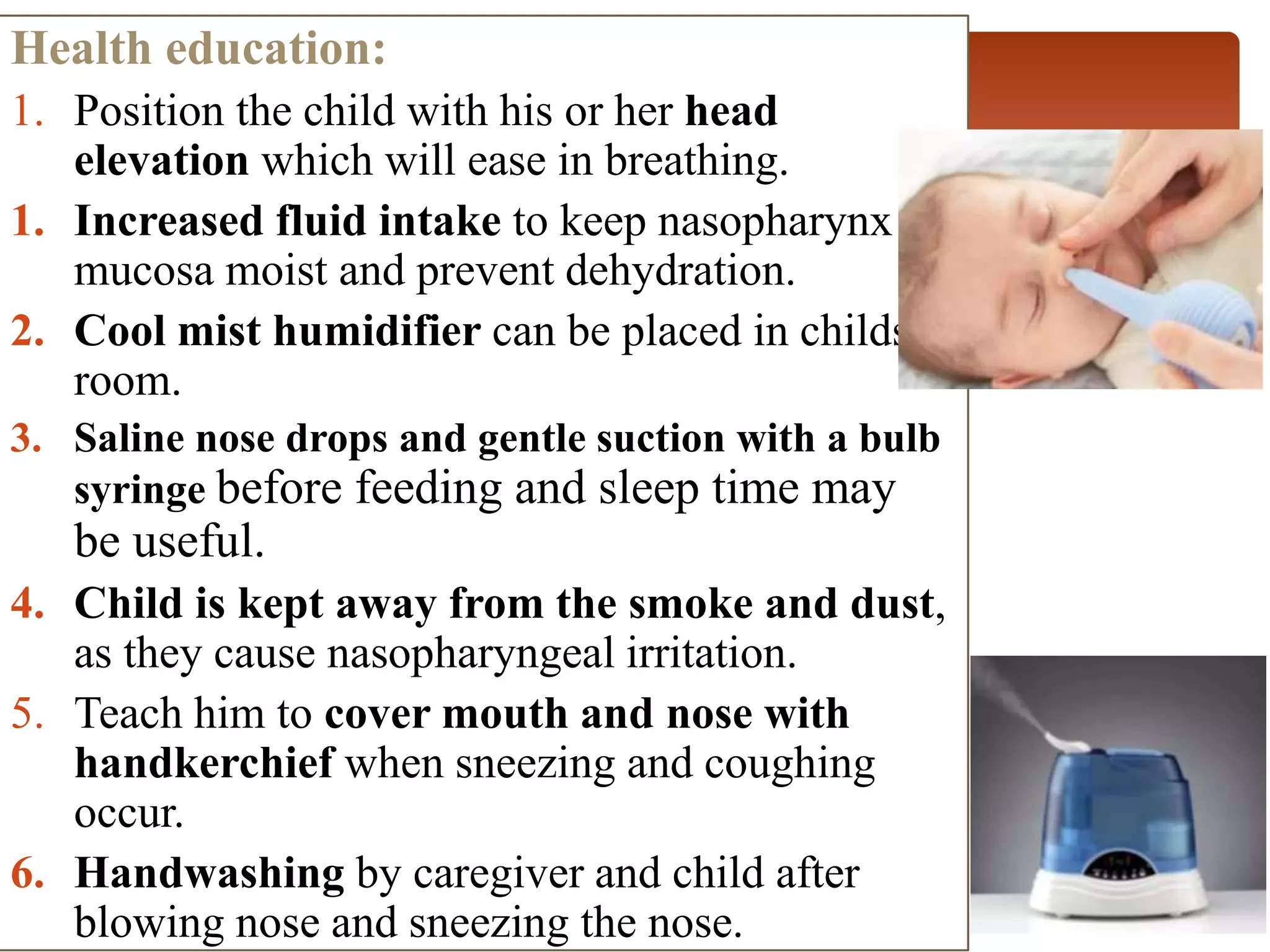
2. Cool mist humidifier can be placed in childs
room.
3. Saline nose drops and gentle suction with a bulb
syringe before feeding and sleep time may
be useful.
4. Child is kept away from the smoke and dust,
as they cause nasopharyngeal irritation.
5. Teach him to cover mouth and nose with
handkerchief when sneezing and coughing
occur.
6. Handwashing by caregiver and child after
blowing nose and sneezing the nose.
 Ineffective airway clearance related to mechanical obstruction of
the airway secretions and increased production of secretions.
 Ineffective breathing pattern related to the inflammatory process
in the respiratory tract.
 Imbalanced Nutrition: Less than Body Requirements related to
decreased appetite secondary to disease condition
 Disturbed Sleep Pattern related to clogged nose, nasal
congestion
 Anxiety related to lack of knowledge about diseases and medical
procedures
Nursing diagnosis
STRIDOR
Stridor is high pitch sound produced due to the
obstruction or narrowing of the childs upper
airway. Stridor can be heard well when a childs
breath in ( inspiration) and can be heard during
expiration
Definition
 Inspiratory stridor
 Expiratory stridor
 Biphasic stridor
Types of stridor
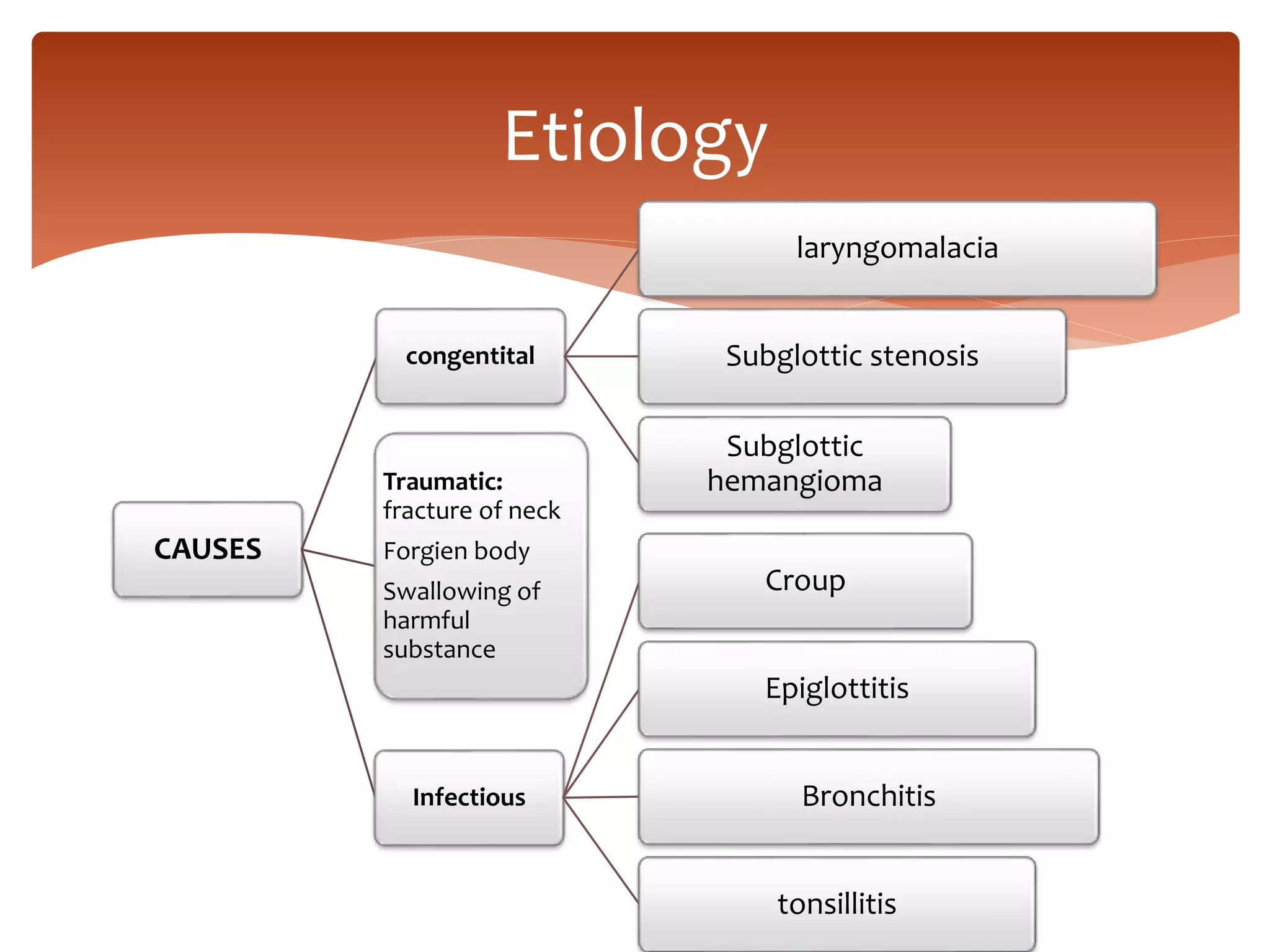
CAUSES
congentital
laryngomalacia
Subglottic stenosis
Subglottic
hemangioma
Traumatic:
fracture of neck
Forgien body
Swallowing of
harmful
substance
Infectious
Croup
Epiglottitis
Bronchitis
tonsillitis
Etiology
1. Medical and physical examination
2. Chest and neck x ray
3. Bronchoscopy ( A bronchoscope is introduced
into the airway to visualize any abnormalities)
4. Pulse oximetry
5. Sputum culture
Diagnostic Evaluation
Once the diagnosis has been made treatment of exact cause can be
made.
 Nebulization with adrenaline epinephrine in cases where
airway edema may be the cause of the stridor.
 Use of dexamethasone.
 Use of inhaled Heliox (70% helium, 30% oxygen); Helium,
being a less dense gas than nitrogen, reduces turbulent flow
through the airways.
 Some conditions (ex: epiglottitis, bacterial infection) may require
antibiotics, while steroids may be useful in other situations.
Management
 Administer oxygen as prescribed.
 Steam inhalation can be given incase of excessive mucus
production.
 Antipyretic can be given if patient is having fever.
 Referral to ear, nose and throat specialist for evaluation
of the cause of stridor.
Cont…
PHARYNGITIS
TONSILLITIS
Pharyngitis is inflammation of the pharynx,
which is in the back of the throat.
Tonsillitis is defined as the inflammation of the
tonsils ( lymphoid tissue located in the
oropharynx)
Pharyngotonsillitis : inflammation of the
pharynx and tonsils
Definition
Waldeyer ring of tonsils
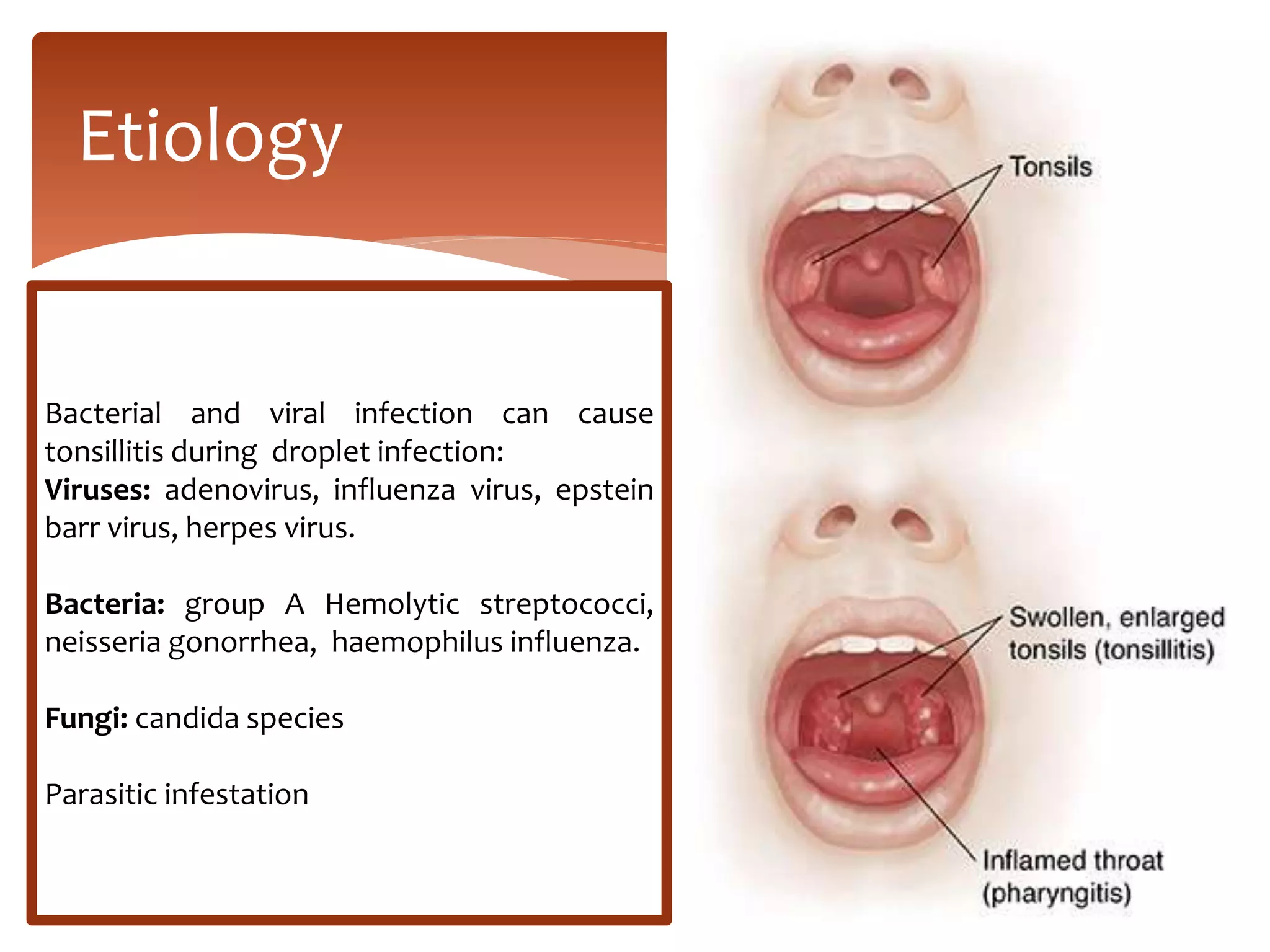
Etiology
Bacterial and viral infection can cause
tonsillitis during droplet infection:
Viruses: adenovirus, influenza virus, epstein
barr virus, herpes virus.
Bacteria: group A Hemolytic streptococci,
neisseria gonorrhea, haemophilus influenza.
Fungi: candida species
Parasitic infestation
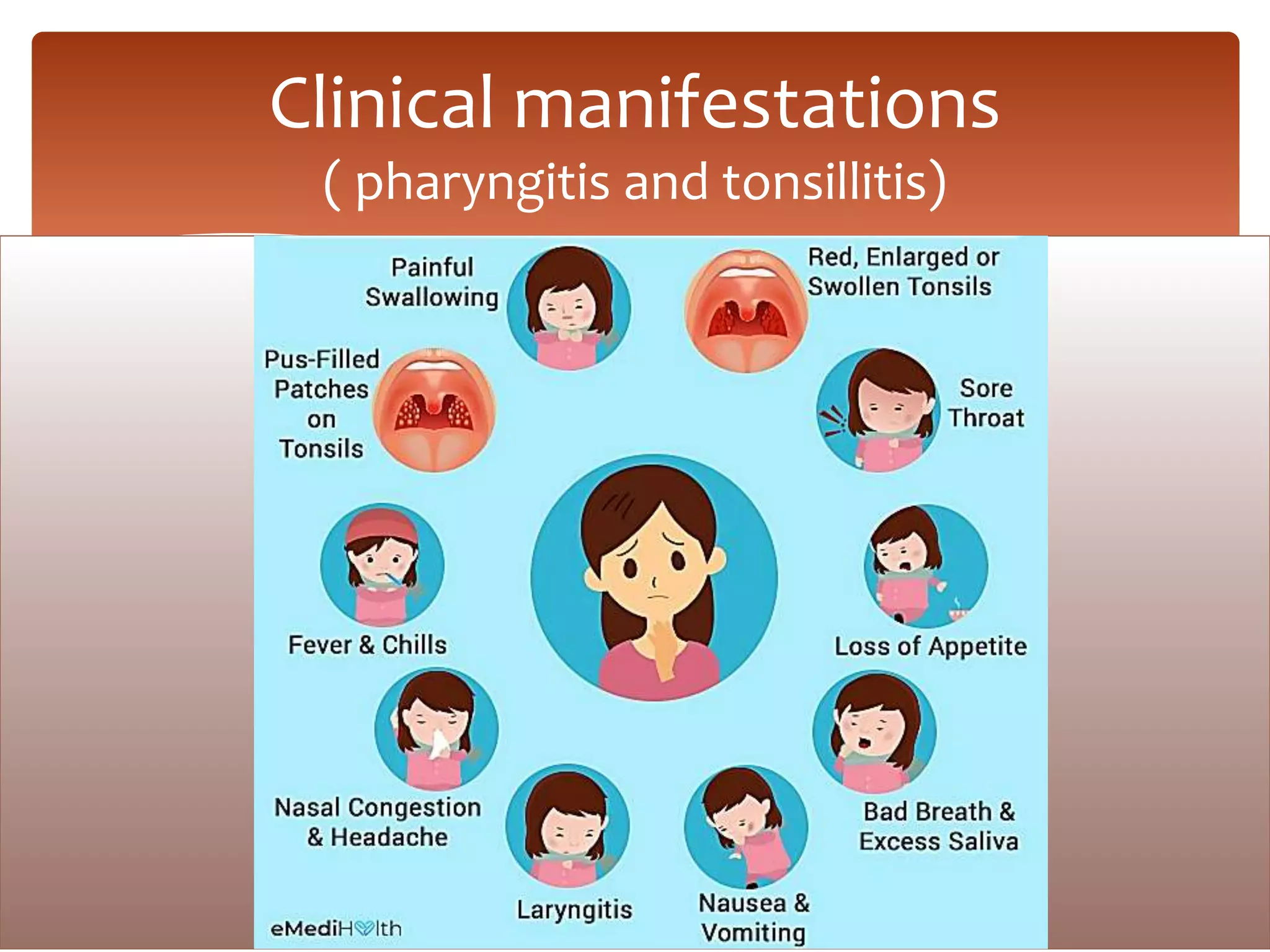
Clinical manifestations
( pharyngitis and tonsillitis)
 History and physical examination
 WBC Count
 Throat culture
Diagnostic approach
 Antibiotics are used to treat acute tonsillitis.
 Increase adequate amount of fluid intake.
 Saline throat irrigation or gargles may relives
the discomfort.
 Anti pyretics
 Throat lozenges: dissolve slowly in the mouth to
temporarily suppress the cough, and lubricate and soothe
irritated tissues of the throat.
Surgical management
 Surgical removal of the tonsils ( tonsillectomy)
Management
1. Make pre- operative assessment.
2. Lab investigations: bleeding time, clotting
time.
3. Consent for the surgery should be taken.
4. Answer the queries of the parents and child.
Pre-operative care
 Watch and control hemorrhage.
 Monitor vital sign of the patients.
 Notice for the increase pulse rate, pallor, any bleeding from nose and
mouth and frequent swallowing.
 Suctioning should be done in case of excessive secretions.
 Control fever:
 Monitor temperature
 Encourage fluid intake.
 Administer prescribed antipyretics.
 Promote hydrations:
 Maintain IV fluids
 Start oral fluid if child is concious
 Give small and frequent icechips , cold water
 Relieve anxiety of child and parents
Post-operative care
 Ineffective air way clearance related to pus or mucous
formation secondary to inflammation
 Acute pain related to the presence of inflammation in
tonsils.
 Imbalanced Nutrition Less Than Body Requirements
related to inadequate intake.
 Hyperthermia related to acute infection by
microorganisms.
 Disturbed Sleep Pattern related to the pain in the tonsil
Nursing diagnosis
CROUP
Croup (or laryngotracheobronchitis) is a respiratory
condition that is usually triggered by an acute viral
infection of the upper airway.
Croup refers to an infection of the upper airway, which
obstructs breathing.
Croup produces the classic symptoms of
"barking/brassy" cough, stridor, and a hoarse voice.
Definition
Childrens are affected between 3 months to 5 years of age.
The incidence is higher in males and can occur throughout the
year with peaks in winter and late fall.
Commonly causedvirus
 RSV, influenza virus, measles, adenovirus and enterovirus.
 Rarely caused by bacteria: Mycoplasma pneumoniae,
Corynebacterium diphtheriae, Staphylococcus aureus
 Allergies.
Etiology
Incidence
Child get in direct contact with a secretions or
infected person
Infection begins in upper respiratory tract and
travels down
Inflammation, hyperemia, edema causes
narrowing of the airway lumen( mucosa and
submucosa of layrnx, trachea and bronchi)
Production of stridor, cough, hoarsness
Pathophysiology
1. Barking cough
2. Respiratory distress: nasal flaring, supraclavicular,
epigastric/subcoastal , intercoastal retractions
3. Tachpnea
4. Stridor
5. Hoarsness
6. Fever
7. Rapid pulse
8. Anxiety
9. Restlessness
10. Dysphagia
Clinical features
Supra clavicular
Intercoastal
 History and physical examination
 Neck and chest x ray
 Blood tests: culture
 Broncoscopy
 Pulse oxymetry
DIAGNOSTIC EVALUATION
 Supportive care including intravenous fluids to
maintain hydration and oxygen inhalation to relieve
hypoxia has to be given.
 A single dose of dexamethasone 0.6 mg/kg may
decrease the severity and duration of illness.
 Nebulization by epinephrine may decrease the
symptoms of stridor and respiratory distress
immediately.
 Antibiotics in case of infection.
Management
 Steam inhalation to moisten the thick mucus
secretions.
 Humidifier can be used in the room to moisten and
soothen the mucosa and submucosa of the airway.
 Chest physiotherapy and suctioning may be done to
remove the excessive secretions.
 Encourage child to increase fluid intake.
 Positoning in fowlers can ease in breathing.
 Ineffective air way clearance related to mucous formation
secondary to inflammation.
 Acute pain related to the presence of inflammation in upper
respiratory tract.
 Imbalanced Nutrition Less Than Body Requirements related to
inadequate intake and dysphagia.
 Hyperthermia related to acute infection by microorganisms.
 Disturbed Sleep Pattern related to the pain in the throat and
continuous cough at night.
 Knowledge deficit related to the treatment and prognosis of the
disease.
Nursing management
PEDIATRIC: Upper respiratory tract infectionS in children: SINUSITIS, NASOPHARYNGITIS, STRIDOR, PHARYNGITIS, TONSILLITIS, CROUP

PEDIATRIC: Upper respiratory tract infectionS in children: SINUSITIS, NASOPHARYNGITIS, STRIDOR, PHARYNGITIS, TONSILLITIS, CROUP

  • 1.
    UPPER REPIRTORY TRACT INFECTION Presentedby: Ms. Manisha Thakur Nursing Tutor Child Health Nursing
  • 3.
  • 4.
    SINUSES:  The sinusesare small air pockets located behind your forehead, nose, cheekbones, and in between the eyes. The sinuses produce mucus, which is a thin and flowing liquid that protects the body by trapping and moving INTRODUCTION
  • 5.
    SINUSITIS:  It refersto the inflammatory conditions involving the four paired structures surrounding the nasal cavities.  Most frequently maxillary sinus is involved followed by ethmoid, frontal, and sphenoid sinuses.  It is usually precipitated by congestion from viral URI’s. DEFINITION
  • 7.
    Acute Lasts lessthan 4 weeks and gets better with treatment. Sub acute This type of infection does not get better with treatment initially and symptoms last for 4 to 8 weeks Chronic Repeated acute infections. The symptoms last for 8 weeks or longer. Recurrent Three or more episodes of sinustis occur in a year Types
  • 8.
    Infectious: It canbe caused by variety of organisms such as : Viruses: rhinovirus, parainfluenza &influenza virus. Bacteria: S.pneumonia and H.influenzae. Fungi: rhizopus,mucor, rhizomucor. Non-infectious: it include  Allergic rhinitis Cigarette smoke exposure. Nasal or sinus tumors and Nasal polyp Infection from tooth. ETIOLOGY
  • 9.
    Clinical features Younger children Running nose  Night time cough  Occasional daytime cough  Swelling around the eyes Older children and adults  Running nose  Postnasal drip ( secretions from the nose that drains down into the throat causing congestion and cough)  Headache  Facial discomfort  Cough  Fever upto 102 0F  Sore throat  Periorbital swelling
  • 10.
     Childs medicaland physical examination  Sinus x ray : show fluid in sinus and thick mucus.  CT scan ( obstructed sinus)  Culture from sinuses Diagnostic approaches
  • 11.
    Medical management:  Antibioticmedication: for 10 to 14 days)  Anti-histamines (used to decrease secretions & congestion)  Topical decongestants and mucous thinner : e.g. Guaifenesin  Nasal sprays: to reduce inflammation  Acetaminophen: for pain and discomfort Endoscopic sinus surgery, if other treatment fails. Management
  • 12.
     Nose dropsor sprays containing phenylephrine 0.25% to 0.125% are administered as prescribed after cleaning the nasal passages.  Humidifier may be used to increase the water vapour in the air, liquify the secretions and facilitate the drainage.  Warm moist compresses may be applied to the affected area.  Temperature monitoring  Sponge baths and prescribed antipyretics may be given to reduce fever.  Position the child with his or her head elevation which will ease in breathing.  Increased fluid intake to keep nasopharynx mucosa moist and prevent dehydration. Nursing management
  • 13.
     Increased fluidintake  Observing for the complications such as cry, ear ache  Administer Systemic antibiotics are given as prescribed after cultures are done. Cont…
  • 14.
     Ineffective AirwayClearance related to airway obstruction due to thick mucus production as evidenced by the monitoring of SPO2.  Acute Pain related to inflammation of the sinusitis as evidenced by the verbalization of the patient.  Imbalanced Nutrition: Less than Body Requirements related to decreased appetite secondary to sinus inflammation as evidenced by monitoring of intake output chart.  Disturbed Sleep Pattern related to clogged nose, nasal inflammation secondary pain as evidenced by verbalization of the client.  Anxiety related to lack of knowledge about diseases and medical procedures as evidenced by the continues questioning by the parents. Nursing diagnosis
  • 15.
  • 16.
    It is alsoknown as common cold or rhinosinusitis , this is one of the common illness leading to maximum of doctor visits, absence from school and work. DEFINITION: Nasopharyngitis is defined as inflammation of the nasopharynx. Nasopharyngitis asopharyngitis
  • 17.
     Children haveabout 6-10 episodes of cold per year, usually winters and spring.  Adenovirus, Rhinovirus (most common), influenza, parainfluenza virus, enterovirus, respiratory syncytial virus etc.  The commonest virus responsible is Rhinovirus. Etiology
  • 18.
    Pathophysiology Like cytokines: chemokineswill be secreted leading to inflammatory reaction
  • 19.
    1. Rhinorrhea 2. Nasalcongestion 3. Breathing difficult 4.Sore throat 5. Sneezing 6.Cough and low grade fever 7. Muscle aches 8.Malaise 9.poor appetite Clinical features
  • 20.
     There isno specific treatment for cold. Treatment involves symptomatic and supportive care. 1. Analgesics and antipyretic to reduce discomfort and fever. 2. Decongestant nose drops and cough suppressant to to relieve congestion. 3. Older children: gargles with warm saline solution. Management
  • 21.
    • Anti-histamines: forsneezing, itching, rhinorrhoea. • Increased intake of vit.C • Adequate rest • Administer Increased amount of fluids Management
  • 22.
     Collecting patientshistory.  Physical examination: nasal discharge, hydration status and other symptoms of respiratory distress.  Children with nasopharyngitis are managed at home, so health education should be provided. Nursing Management
  • 23.
    Health education: 1. Positionthe child with his or her head elevation which will ease in breathing. 1. Increased fluid intake to keep nasopharynx mucosa moist and prevent dehydration. 2. Cool mist humidifier can be placed in childs room. 3. Saline nose drops and gentle suction with a bulb syringe before feeding and sleep time may be useful. 4. Child is kept away from the smoke and dust, as they cause nasopharyngeal irritation. 5. Teach him to cover mouth and nose with handkerchief when sneezing and coughing occur. 6. Handwashing by caregiver and child after blowing nose and sneezing the nose.
  • 25.
     Ineffective airwayclearance related to mechanical obstruction of the airway secretions and increased production of secretions.  Ineffective breathing pattern related to the inflammatory process in the respiratory tract.  Imbalanced Nutrition: Less than Body Requirements related to decreased appetite secondary to disease condition  Disturbed Sleep Pattern related to clogged nose, nasal congestion  Anxiety related to lack of knowledge about diseases and medical procedures Nursing diagnosis
  • 26.
  • 27.
    Stridor is highpitch sound produced due to the obstruction or narrowing of the childs upper airway. Stridor can be heard well when a childs breath in ( inspiration) and can be heard during expiration Definition
  • 28.
     Inspiratory stridor Expiratory stridor  Biphasic stridor Types of stridor
  • 29.
    CAUSES congentital laryngomalacia Subglottic stenosis Subglottic hemangioma Traumatic: fracture ofneck Forgien body Swallowing of harmful substance Infectious Croup Epiglottitis Bronchitis tonsillitis Etiology
  • 31.
    1. Medical andphysical examination 2. Chest and neck x ray 3. Bronchoscopy ( A bronchoscope is introduced into the airway to visualize any abnormalities) 4. Pulse oximetry 5. Sputum culture Diagnostic Evaluation
  • 32.
    Once the diagnosishas been made treatment of exact cause can be made.  Nebulization with adrenaline epinephrine in cases where airway edema may be the cause of the stridor.  Use of dexamethasone.  Use of inhaled Heliox (70% helium, 30% oxygen); Helium, being a less dense gas than nitrogen, reduces turbulent flow through the airways.  Some conditions (ex: epiglottitis, bacterial infection) may require antibiotics, while steroids may be useful in other situations. Management
  • 33.
     Administer oxygenas prescribed.  Steam inhalation can be given incase of excessive mucus production.  Antipyretic can be given if patient is having fever.  Referral to ear, nose and throat specialist for evaluation of the cause of stridor. Cont…
  • 34.
  • 35.
    Pharyngitis is inflammationof the pharynx, which is in the back of the throat. Tonsillitis is defined as the inflammation of the tonsils ( lymphoid tissue located in the oropharynx) Pharyngotonsillitis : inflammation of the pharynx and tonsils Definition
  • 36.
  • 37.
    Etiology Bacterial and viralinfection can cause tonsillitis during droplet infection: Viruses: adenovirus, influenza virus, epstein barr virus, herpes virus. Bacteria: group A Hemolytic streptococci, neisseria gonorrhea, haemophilus influenza. Fungi: candida species Parasitic infestation
  • 38.
  • 39.
     History andphysical examination  WBC Count  Throat culture Diagnostic approach
  • 40.
     Antibiotics areused to treat acute tonsillitis.  Increase adequate amount of fluid intake.  Saline throat irrigation or gargles may relives the discomfort.  Anti pyretics  Throat lozenges: dissolve slowly in the mouth to temporarily suppress the cough, and lubricate and soothe irritated tissues of the throat. Surgical management  Surgical removal of the tonsils ( tonsillectomy) Management
  • 41.
    1. Make pre-operative assessment. 2. Lab investigations: bleeding time, clotting time. 3. Consent for the surgery should be taken. 4. Answer the queries of the parents and child. Pre-operative care
  • 42.
     Watch andcontrol hemorrhage.  Monitor vital sign of the patients.  Notice for the increase pulse rate, pallor, any bleeding from nose and mouth and frequent swallowing.  Suctioning should be done in case of excessive secretions.  Control fever:  Monitor temperature  Encourage fluid intake.  Administer prescribed antipyretics.  Promote hydrations:  Maintain IV fluids  Start oral fluid if child is concious  Give small and frequent icechips , cold water  Relieve anxiety of child and parents Post-operative care
  • 43.
     Ineffective airway clearance related to pus or mucous formation secondary to inflammation  Acute pain related to the presence of inflammation in tonsils.  Imbalanced Nutrition Less Than Body Requirements related to inadequate intake.  Hyperthermia related to acute infection by microorganisms.  Disturbed Sleep Pattern related to the pain in the tonsil Nursing diagnosis
  • 44.
  • 45.
    Croup (or laryngotracheobronchitis)is a respiratory condition that is usually triggered by an acute viral infection of the upper airway. Croup refers to an infection of the upper airway, which obstructs breathing. Croup produces the classic symptoms of "barking/brassy" cough, stridor, and a hoarse voice. Definition
  • 47.
    Childrens are affectedbetween 3 months to 5 years of age. The incidence is higher in males and can occur throughout the year with peaks in winter and late fall. Commonly causedvirus  RSV, influenza virus, measles, adenovirus and enterovirus.  Rarely caused by bacteria: Mycoplasma pneumoniae, Corynebacterium diphtheriae, Staphylococcus aureus  Allergies. Etiology Incidence
  • 48.
    Child get indirect contact with a secretions or infected person Infection begins in upper respiratory tract and travels down Inflammation, hyperemia, edema causes narrowing of the airway lumen( mucosa and submucosa of layrnx, trachea and bronchi) Production of stridor, cough, hoarsness Pathophysiology
  • 50.
    1. Barking cough 2.Respiratory distress: nasal flaring, supraclavicular, epigastric/subcoastal , intercoastal retractions 3. Tachpnea 4. Stridor 5. Hoarsness 6. Fever 7. Rapid pulse 8. Anxiety 9. Restlessness 10. Dysphagia Clinical features
  • 51.
  • 52.
     History andphysical examination  Neck and chest x ray  Blood tests: culture  Broncoscopy  Pulse oxymetry DIAGNOSTIC EVALUATION
  • 53.
     Supportive careincluding intravenous fluids to maintain hydration and oxygen inhalation to relieve hypoxia has to be given.  A single dose of dexamethasone 0.6 mg/kg may decrease the severity and duration of illness.  Nebulization by epinephrine may decrease the symptoms of stridor and respiratory distress immediately.  Antibiotics in case of infection. Management
  • 54.
     Steam inhalationto moisten the thick mucus secretions.  Humidifier can be used in the room to moisten and soothen the mucosa and submucosa of the airway.  Chest physiotherapy and suctioning may be done to remove the excessive secretions.  Encourage child to increase fluid intake.  Positoning in fowlers can ease in breathing.
  • 55.
     Ineffective airway clearance related to mucous formation secondary to inflammation.  Acute pain related to the presence of inflammation in upper respiratory tract.  Imbalanced Nutrition Less Than Body Requirements related to inadequate intake and dysphagia.  Hyperthermia related to acute infection by microorganisms.  Disturbed Sleep Pattern related to the pain in the throat and continuous cough at night.  Knowledge deficit related to the treatment and prognosis of the disease. Nursing management