Pediatric Tuberculosis
Tuberculosis 411
 Caused by mycobacterium tuberculosis
 Can cause latent TB or primary TB
 Primary TB can be pulmonary or extrapulmonary TB
 Spread by aerosolized particles during coughing,

sneezing, or speaking


Children less likely to spread

 Extrapulmonary TB is not transmitted
 Incubation period is 2-12 weeks
 Time from infection to identification of a primary lesion on
TST
Worldwide TB Epidemiology
 8.7 million NEW cases per year
 490,000 pediatric cases
 Low burden countries – 5% pediatric cases
 High burden countries- 20% pediatric cases
 Infants and young children are more prone to

develop life threatening forms



Disseminated TB
TB meningitis

 1.4 million deaths
 64,000 pediatric deaths
 Top ten cause of pediatric death
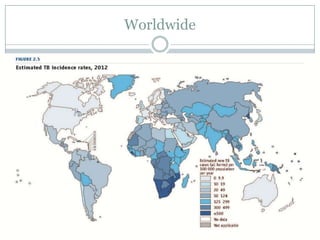
Worldwide
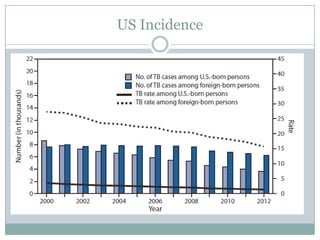
US Incidence
Clinical Features
 Bimodal presentation


Children < 5 y/o and adolescents >10 y/o

 Most children asymptomatic
 Most common symptoms:










Chronic cough (>21 days)
+/- wheezing
Dyspnea
Hemoptysis
Fever (>14 days)
Weight loss/FTT
Weakness/lethargy
Night sweats
Pulmonary TB
 Pulmonary parenchymal disease and intrathoracic

adenopathy
 Most common: 60-80% of cases
Extrapulmonary TB
 Harder to diagnose
 Symptoms highly suggestive of extrapulmonary TB
 Gibbus from vertebral body
 Enlarged or painless joints
 Cervical lymphadenopathy with fistula
 Meningitis or pleural effusion not responsive to antibiotics
 Pericardial effusion
 Abdominal ascites
TB meningitis
 CNS involvement is common
 Symptoms include:
 Headache
 Neck stiffness
 Coma
 Hemiplegia
 Seizures
 LP to diagnose
 SIADH is common
Latent TB
 Do not show any symptoms of the disease
 Not infectious
 Can transition from LTBI to active TB more

frequently and faster (within weeks)
 Conversion rate is 5% in 2 years
Diagnosis
 Must distinguish between latent TB (LTBI) or TB
 Diagnostic tests include
 TST/QFT-GIT
 CXR
 AFB/Sputum culture

 Majority of case ( < 12y/o) are paucibacillary
 Microscopically negative for AFB
 Culture negative
 Smear positive TB only 20-40% of pediatric cases
Diagnosis
 TST- Mantoux method: 0.1ml dermal injection of

PPD into volar surface of forearm



Positive can mean current or future active TB
False positive in BCG vaccine and non tuberculosis
mycobacteria

 Interferon-gamma release assays (IGRAs)
 IGRAs can not distinguish between current or past
 QuantiFERON-TB Gold in Tube (QFT- GIT) ELISA test
QFT- GIT and TST sensitivity: 38% and 35%
 QFT- GIT and TST specificity: 81% and 84%


 Nucleic acid amplification tests (NAATs)
 Used in neg. AFB microscopy and to detect drug resistance
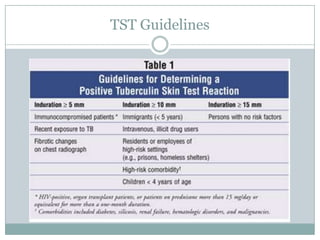
TST Guidelines
Laboratory tests
 TST- Mantoux method: 0.1ml dermal injection into

volar surface of forearm



Positive can mean current or future active TB
False positive in BCG vaccine and non tuberculosis
mycobacteria

 Interferon-gamma release assays (IGRAs)
 IGRAs can not distinguish between current or past
 QuantiFERON-TB Gold in Tube (QFT- GIT) ELISA test
QFT- GIT and TST sensitivity: 38% and 35%
 QFT- GIT and TST specificity: 81% and 84%


 Nucleic acid amplification tests (NAATs)
 Used in neg. AFB microscopy and to detect drug resistance
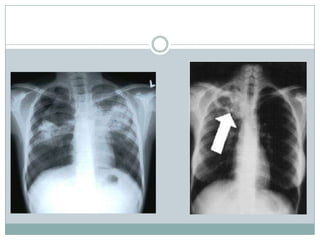
Pulmonary TB on CXR
 Primary TB- infiltrate usually in middle or lower lobe
 Ipsilateral hilar adenopathy
 Any lobe can be affected
 25% multilobar
 Endogenous TB- develops from LTBI
 Infiltrate in upper lobes
 Cavitation and collapse
 Both can have atelectasis, pleural effusions,

pericardial effusion, or lymphadenopathy
Primary TB Treatment
 Initial phase for 2 months then continuation phase for 4

months
 Isoniazid (INH) and rifampicin (RIF)


Bactericidal, decrease microbial loads

 RIF and pyrazinamide (PZA)


Sterilizing drugs that eradicate slow- replicating organism

 Ethambutol (EMB)



Protects against the emergence of drug resistant TB
Not used in <8 y/o’s due to concerns for optic neuritis

 Disseminated TB and TB meningitis treatment is 12

months
 LTBI treatment:


INH daily for 6-9 months or RIF for 4 months

Pediatric tuberculosis

  • 1.
  • 2.
    Tuberculosis 411  Causedby mycobacterium tuberculosis  Can cause latent TB or primary TB  Primary TB can be pulmonary or extrapulmonary TB  Spread by aerosolized particles during coughing, sneezing, or speaking  Children less likely to spread  Extrapulmonary TB is not transmitted  Incubation period is 2-12 weeks  Time from infection to identification of a primary lesion on TST
  • 3.
    Worldwide TB Epidemiology 8.7 million NEW cases per year  490,000 pediatric cases  Low burden countries – 5% pediatric cases  High burden countries- 20% pediatric cases  Infants and young children are more prone to develop life threatening forms   Disseminated TB TB meningitis  1.4 million deaths  64,000 pediatric deaths  Top ten cause of pediatric death
  • 4.
  • 5.
  • 6.
    Clinical Features  Bimodalpresentation  Children < 5 y/o and adolescents >10 y/o  Most children asymptomatic  Most common symptoms:         Chronic cough (>21 days) +/- wheezing Dyspnea Hemoptysis Fever (>14 days) Weight loss/FTT Weakness/lethargy Night sweats
  • 7.
    Pulmonary TB  Pulmonaryparenchymal disease and intrathoracic adenopathy  Most common: 60-80% of cases
  • 8.
    Extrapulmonary TB  Harderto diagnose  Symptoms highly suggestive of extrapulmonary TB  Gibbus from vertebral body  Enlarged or painless joints  Cervical lymphadenopathy with fistula  Meningitis or pleural effusion not responsive to antibiotics  Pericardial effusion  Abdominal ascites
  • 9.
    TB meningitis  CNSinvolvement is common  Symptoms include:  Headache  Neck stiffness  Coma  Hemiplegia  Seizures  LP to diagnose  SIADH is common
  • 10.
    Latent TB  Donot show any symptoms of the disease  Not infectious  Can transition from LTBI to active TB more frequently and faster (within weeks)  Conversion rate is 5% in 2 years
  • 11.
    Diagnosis  Must distinguishbetween latent TB (LTBI) or TB  Diagnostic tests include  TST/QFT-GIT  CXR  AFB/Sputum culture  Majority of case ( < 12y/o) are paucibacillary  Microscopically negative for AFB  Culture negative  Smear positive TB only 20-40% of pediatric cases
  • 12.
    Diagnosis  TST- Mantouxmethod: 0.1ml dermal injection of PPD into volar surface of forearm   Positive can mean current or future active TB False positive in BCG vaccine and non tuberculosis mycobacteria  Interferon-gamma release assays (IGRAs)  IGRAs can not distinguish between current or past  QuantiFERON-TB Gold in Tube (QFT- GIT) ELISA test QFT- GIT and TST sensitivity: 38% and 35%  QFT- GIT and TST specificity: 81% and 84%   Nucleic acid amplification tests (NAATs)  Used in neg. AFB microscopy and to detect drug resistance
  • 13.
  • 14.
    Laboratory tests  TST-Mantoux method: 0.1ml dermal injection into volar surface of forearm   Positive can mean current or future active TB False positive in BCG vaccine and non tuberculosis mycobacteria  Interferon-gamma release assays (IGRAs)  IGRAs can not distinguish between current or past  QuantiFERON-TB Gold in Tube (QFT- GIT) ELISA test QFT- GIT and TST sensitivity: 38% and 35%  QFT- GIT and TST specificity: 81% and 84%   Nucleic acid amplification tests (NAATs)  Used in neg. AFB microscopy and to detect drug resistance
  • 15.
    Pulmonary TB onCXR  Primary TB- infiltrate usually in middle or lower lobe  Ipsilateral hilar adenopathy  Any lobe can be affected  25% multilobar  Endogenous TB- develops from LTBI  Infiltrate in upper lobes  Cavitation and collapse  Both can have atelectasis, pleural effusions, pericardial effusion, or lymphadenopathy
  • 17.
    Primary TB Treatment Initial phase for 2 months then continuation phase for 4 months  Isoniazid (INH) and rifampicin (RIF)  Bactericidal, decrease microbial loads  RIF and pyrazinamide (PZA)  Sterilizing drugs that eradicate slow- replicating organism  Ethambutol (EMB)   Protects against the emergence of drug resistant TB Not used in <8 y/o’s due to concerns for optic neuritis  Disseminated TB and TB meningitis treatment is 12 months  LTBI treatment:  INH daily for 6-9 months or RIF for 4 months