Hypertensive EMERGENCY
5 TAKE HOME POINTS
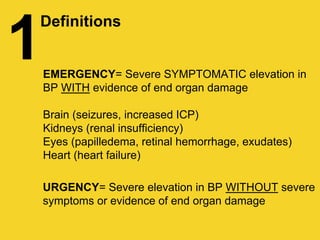
1EMERGENCY= Severe SYMPTOMATIC elevation in
BP WITH evidence of end organ damage
Brain (seizures, increased ICP)
Kidneys (renal insufficiency)
Eyes (papilledema, retinal hemorrhage, exudates)
Heart (heart failure)
URGENCY= Severe elevation in BP WITHOUT severe
symptoms or evidence of end organ damage
Definitions
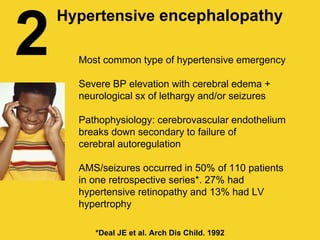
2 Most common type of hypertensive emergency
Severe BP elevation with cerebral edema +
neurological sx of lethargy and/or seizures
Pathophysiology: cerebrovascular endothelium
breaks down secondary to failure of
cerebral autoregulation
AMS/seizures occurred in 50% of 110 patients
in one retrospective series*. 27% had
hypertensive retinopathy and 13% had LV
hypertrophy
Hypertensive encephalopathy
*Deal JE et al. Arch Dis Child. 1992
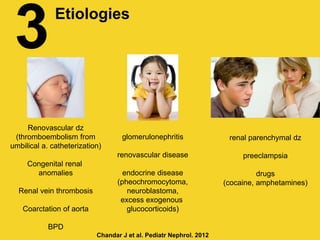
3Etiologies
Renovascular dz
(thromboembolism from
umbilical a. catheterization)
Congenital renal
anomalies
Renal vein thrombosis
Coarctation of aorta
BPD
glomerulonephritis
renovascular disease
endocrine disease
(pheochromocytoma,
neuroblastoma,
excess exogenous
glucocorticoids)
renal parenchymal dz
preeclampsia
drugs
(cocaine, amphetamines)
Chandar J et al. Pediatr Nephrol. 2012
4
Approach
Confirm marked BP elevation
Rapid assessment of severity of disease
Exclusion of other causes of severe HTN
for which rapid reduction of BP might be harmful
(intracranial injury, mass lesion, coarct, drugs)
Emergent antihypertensive therapy
5
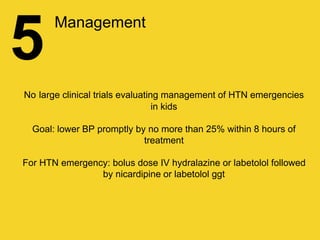
Management
No large clinical trials evaluating management of HTN emergencies
in kids
Goal: lower BP promptly by no more than 25% within 8 hours of
treatment
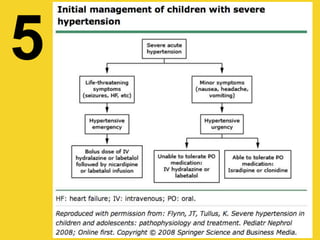
For HTN emergency: bolus dose IV hydralazine or labetolol followed
by nicardipine or labetolol ggt
5
5
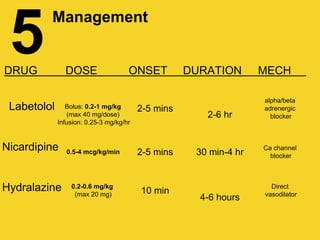
Management
DRUG DOSE ONSET DURATION MECH
Labetolol
Nicardipine
Hydralazine
Bolus: 0.2-1 mg/kg
(max 40 mg/dose)
Infusion: 0.25-3 mg/kg/hr
2-5 mins
2-5 mins
10 min
alpha/beta
adrenergic
blocker2-6 hr
30 min-4 hr
4-6 hours
Direct
vasodilator
0.2-0.6 mg/kg
(max 20 mg)
Ca channel
blocker
0.5-4 mcg/kg/min

Hypertensive Emergency

  • 1.
  • 2.
    1EMERGENCY= Severe SYMPTOMATICelevation in BP WITH evidence of end organ damage Brain (seizures, increased ICP) Kidneys (renal insufficiency) Eyes (papilledema, retinal hemorrhage, exudates) Heart (heart failure) URGENCY= Severe elevation in BP WITHOUT severe symptoms or evidence of end organ damage Definitions
  • 3.
    2 Most commontype of hypertensive emergency Severe BP elevation with cerebral edema + neurological sx of lethargy and/or seizures Pathophysiology: cerebrovascular endothelium breaks down secondary to failure of cerebral autoregulation AMS/seizures occurred in 50% of 110 patients in one retrospective series*. 27% had hypertensive retinopathy and 13% had LV hypertrophy Hypertensive encephalopathy *Deal JE et al. Arch Dis Child. 1992
  • 4.
    3Etiologies Renovascular dz (thromboembolism from umbilicala. catheterization) Congenital renal anomalies Renal vein thrombosis Coarctation of aorta BPD glomerulonephritis renovascular disease endocrine disease (pheochromocytoma, neuroblastoma, excess exogenous glucocorticoids) renal parenchymal dz preeclampsia drugs (cocaine, amphetamines) Chandar J et al. Pediatr Nephrol. 2012
  • 5.
    4 Approach Confirm marked BPelevation Rapid assessment of severity of disease Exclusion of other causes of severe HTN for which rapid reduction of BP might be harmful (intracranial injury, mass lesion, coarct, drugs) Emergent antihypertensive therapy
  • 6.
    5 Management No large clinicaltrials evaluating management of HTN emergencies in kids Goal: lower BP promptly by no more than 25% within 8 hours of treatment For HTN emergency: bolus dose IV hydralazine or labetolol followed by nicardipine or labetolol ggt
  • 7.
  • 8.
    5 Management DRUG DOSE ONSETDURATION MECH Labetolol Nicardipine Hydralazine Bolus: 0.2-1 mg/kg (max 40 mg/dose) Infusion: 0.25-3 mg/kg/hr 2-5 mins 2-5 mins 10 min alpha/beta adrenergic blocker2-6 hr 30 min-4 hr 4-6 hours Direct vasodilator 0.2-0.6 mg/kg (max 20 mg) Ca channel blocker 0.5-4 mcg/kg/min