St
ates
of matter
and the kinetic
molecular theory
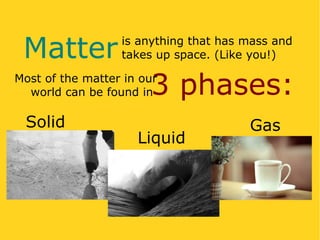
Matter

is anything that has mass and
takes up space. (Like you!)

3 phases:

Most of the matter in our
world can be found in

Solid

Liquid

Gas
of solids

Properties

Solids are in a fixed form that
can only change by denting,
breaking or bending it.
Solids are hard.
High density.
Can not be compressed.
Can not flow, except when it is
in small pieces.
Has a fixed volume.
of liquids

Properties

Liquids have no fixed form – it
takes the shape of the
container.
Not hard.
High density.
Cannot be visibly compressed.
Can flow.
Has a fixed volume.
of gases

Properties

Gases have no fixed form – it
takes the shape of the
container.
Not hard.
Low density.
Can easily be compressed.
Can flow.
Does not have a fixed volume.
Matter consists of

particles.

This is proven when you look at DIFFUSION.

Diffusion
The movement of particles from a high
concentration to a low concentration.
Diffusion is the result of constant motion of particles.
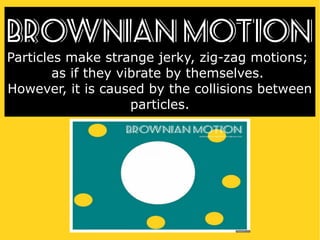
Brownian motion
Particles make strange jerky, zig-zag motions;
as if they vibrate by themselves.
However, it is caused by the collisions between
particles.
The physical condition of a substance
depends on the temperature, which is
measured with a thermometer in degrees
Celsius.
There are two fixed points on a
thermometer: The freezing point of water
(0 °C) and the boiling point of water
(100°C).
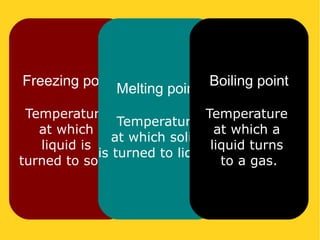
Freezing point

Melting point

Boiling point

Temperature
Temperature
Temperature
at which
at which a
at which solid
liquid is
liquid turns
is turned to liquid.
turned to solid.
to a gas.
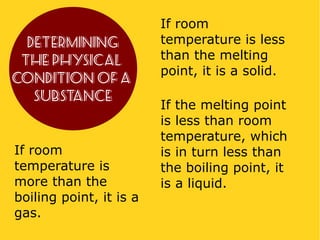
Determining
the physical
Condition of a
subst
ance

If room
temperature is
more than the
boiling point, it is a
gas.

If room
temperature is less
than the melting
point, it is a solid.
If the melting point
is less than room
temperature, which
is in turn less than
the boiling point, it
is a liquid.
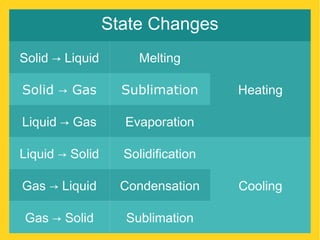
State Changes
Solid → Liquid

Melting

Solid → Gas

Sublimation

Liquid → Gas

Evaporation

Liquid → Solid

Solidification

Gas → Liquid

Condensation

Gas → Solid

Sublimation

Heating

Cooling
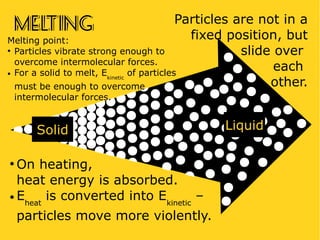
Particles are not in a
Mel
ting
fixed position, but
Melting point:
Particles vibrate strong enough to
slide over
overcome intermolecular forces.
each
For a solid to melt, E
of particles
other.
must be enough to overcome
●

●

kinetic

intermolecular forces.

Solid
On heating,
heat energy is absorbed.
●E
is converted into Ekinetic –
heat
●

particles move more violently.

Liquid
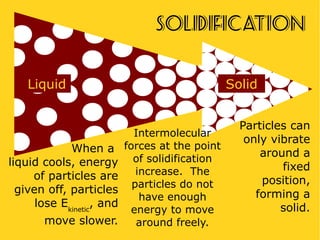
solidification
Liquid

When a
liquid cools, energy
of particles are
given off, particles
lose Ekinetic, and
move slower.

Solid

Intermolecular
forces at the point
of solidification
increase. The
particles do not
have enough
energy to move
around freely.

Particles can
only vibrate
around a
fixed
position,
forming a
solid.
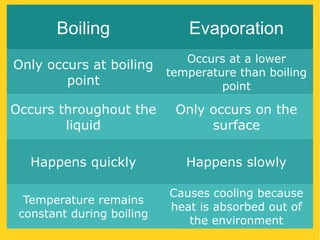
Boiling

Evaporation

Only occurs at boiling
point

Occurs at a lower
temperature than boiling
point

Occurs throughout the
liquid

Only occurs on the
surface

Happens quickly

Happens slowly

Temperature remains
constant during boiling

Causes cooling because
heat is absorbed out of
the environment
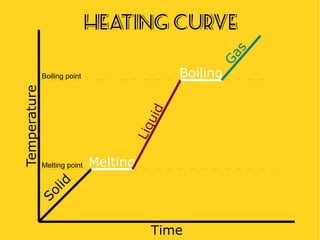
G
as

Heating curve
Boiling
Liq
ui d
Melting point

Melting

So
lid

Temperature

Boiling point

Time
Slide 2:
Solid – iheartsportsgifs.tumblr.com
Liquid – aspworldtour.tumblr.com
Gas – rebloggy.com
All other diagrams drawn by author.
Slide 7:
duckingsciencebombs.wordpress.com
Fonts:
Verdana
Seasideresortnf
Segoe Print

Particle model of matter a quick summary

  • 1.
    St ates of matter and thekinetic molecular theory
  • 2.
    Matter is anything thathas mass and takes up space. (Like you!) 3 phases: Most of the matter in our world can be found in Solid Liquid Gas
  • 3.
    of solids Properties Solids arein a fixed form that can only change by denting, breaking or bending it. Solids are hard. High density. Can not be compressed. Can not flow, except when it is in small pieces. Has a fixed volume.
  • 4.
    of liquids Properties Liquids haveno fixed form – it takes the shape of the container. Not hard. High density. Cannot be visibly compressed. Can flow. Has a fixed volume.
  • 5.
    of gases Properties Gases haveno fixed form – it takes the shape of the container. Not hard. Low density. Can easily be compressed. Can flow. Does not have a fixed volume.
  • 6.
    Matter consists of particles. Thisis proven when you look at DIFFUSION. Diffusion The movement of particles from a high concentration to a low concentration. Diffusion is the result of constant motion of particles.
  • 7.
    Brownian motion Particles makestrange jerky, zig-zag motions; as if they vibrate by themselves. However, it is caused by the collisions between particles.
  • 8.
    The physical conditionof a substance depends on the temperature, which is measured with a thermometer in degrees Celsius. There are two fixed points on a thermometer: The freezing point of water (0 °C) and the boiling point of water (100°C).
  • 9.
    Freezing point Melting point Boilingpoint Temperature Temperature Temperature at which at which a at which solid liquid is liquid turns is turned to liquid. turned to solid. to a gas.
  • 10.
    Determining the physical Condition ofa subst ance If room temperature is more than the boiling point, it is a gas. If room temperature is less than the melting point, it is a solid. If the melting point is less than room temperature, which is in turn less than the boiling point, it is a liquid.
  • 11.
    State Changes Solid →Liquid Melting Solid → Gas Sublimation Liquid → Gas Evaporation Liquid → Solid Solidification Gas → Liquid Condensation Gas → Solid Sublimation Heating Cooling
  • 12.
    Particles are notin a Mel ting fixed position, but Melting point: Particles vibrate strong enough to slide over overcome intermolecular forces. each For a solid to melt, E of particles other. must be enough to overcome ● ● kinetic intermolecular forces. Solid On heating, heat energy is absorbed. ●E is converted into Ekinetic – heat ● particles move more violently. Liquid
  • 13.
    solidification Liquid When a liquid cools,energy of particles are given off, particles lose Ekinetic, and move slower. Solid Intermolecular forces at the point of solidification increase. The particles do not have enough energy to move around freely. Particles can only vibrate around a fixed position, forming a solid.
  • 14.
    Boiling Evaporation Only occurs atboiling point Occurs at a lower temperature than boiling point Occurs throughout the liquid Only occurs on the surface Happens quickly Happens slowly Temperature remains constant during boiling Causes cooling because heat is absorbed out of the environment
  • 15.
    G as Heating curve Boiling Liq ui d Meltingpoint Melting So lid Temperature Boiling point Time
  • 16.
    Slide 2: Solid –iheartsportsgifs.tumblr.com Liquid – aspworldtour.tumblr.com Gas – rebloggy.com All other diagrams drawn by author. Slide 7: duckingsciencebombs.wordpress.com
  • 17.