Twitter: @LilyKotzè
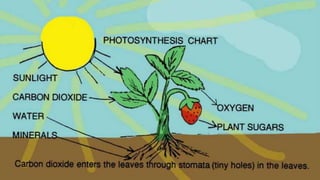
Process whereby plants use
CO2, water and light energy
in a series of chemical
reactions to produce
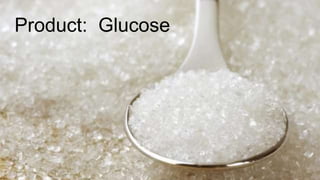
glucose.
Definition: Photosynthesis
Requirements: Sunlight
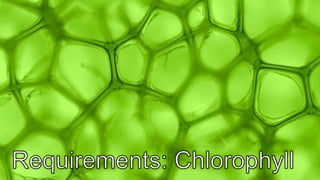
Requirements: CO2
Product: Glucose
Product: Oxygen
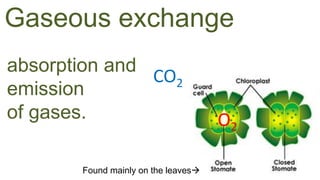
CO2
Gaseous exchange
absorption and
emission
of gases. O2
Found mainly on the leaves
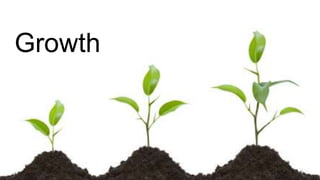
Growth
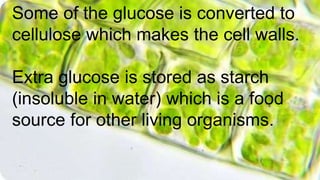
Some of the glucose is converted to
cellulose which makes the cell walls.
Extra glucose is stored as starch
(insoluble in water) which is a food
source for other living organisms.
Green plants are autotrophs.
Autotrhophic plants make their
own food.
Plants that cannot make their own
food, need to get it by other means:
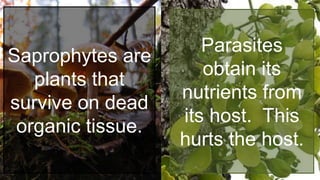
Saprophytes are
plants that
survive on dead
organic tissue.
Parasites
obtain its
nutrients from
its host. This
hurts the host.
Slide 1: https://aos.iacpublishinglabs.com/question/aq/700px-394px/what-is-
photosynthesis_d5c8881a2129151f.jpg?domain=cx.aos.ask.com
Slide 3: https://encrypted-
tbn2.gstatic.com/images?q=tbn:ANd9GcQkG3Ku9GjzjdF4RvBbfshGMq7abwDKzUKVaNDFFZ0BkLvGtZvQ
Slide 4: http://www.pem-analytics.com/wp-content/uploads/2016/07/mof.jpg
Slide 5: https://www.planetnatural.com/wp-content/uploads/2012/12/watering-plants-1.jpg
Slide 6: http://www.greenmedinfo.com/sites/default/files/ckeditor/Sayer%20Ji/images/Chlorophyll.jpg
Slide 7: https://leafimg-a.akamaihd.net/640/cppd/getty/article/176/132/488100187_XS.jpg
Slide 8: http://cimg0.ibsrv.net/cimg/www.fitday.com/693x350_100-1/700/oxygen-20therapy-105700.jpg
Slide 9: http://activity3.weebly.com/uploads/8/5/3/5/8535464/9832265.jpg?1313653698
Slide 10: https://4.bp.blogspot.com/-i4OfPV65Y4c/TZ07X0JhT5I/AAAAAAAAB6Q/3-Yv-zARHKY/s1600/gas-exchange-1.gif
Slide 11: https://aos.iacpublishinglabs.com/question/aq/1400px-788px/structure-root-hair-
cell_77d8bcc07c272cea.jpg?domain=cx.aos.ask.com
Slide 13: https://crookedbearcreekorganicherbs.files.wordpress.com/2016/11/plant-propagation-roots.jpg?w=863
Slide 14: https://micro.magnet.fsu.edu/micro/gallery/mitosis/mitosisheader.jpg
Slide 15: http://biochem.kd-hk.com/wp-content/uploads/2015/09/Plant-Growth-Regulators.jpg
Slide 16: https://dr282zn36sxxg.cloudfront.net/datastreams/f-
d%3A5346a9a0585b9d66bd7849d41e930c949522493ec08037633ecc93ce%2BIMAGE_THUMB_POSTCARD_TINY%2BIMAG
E_THUMB_POSTCARD_TINY.1
Slide 17: https://www.wonderwhizkids.com/resources/content/imagesv4/biology/concept/plant_nutrition/Modes-of-nutrition1.gif
Slide 19: saprophytes (mushrooms) https://c1.staticflickr.com/1/43/102767563_bbd7db6d07_b.jpg parasites (mistletoe)
https://upload.wikimedia.org/wikipedia/commons/thumb/f/f3/Mistletoe-0243.jpg/394px-Mistletoe-0243.jpg

1. photosynthesis

  • 1.
  • 2.
    Process whereby plantsuse CO2, water and light energy in a series of chemical reactions to produce glucose. Definition: Photosynthesis
  • 3.
  • 4.
  • 7.
  • 8.
  • 10.
    CO2 Gaseous exchange absorption and emission ofgases. O2 Found mainly on the leaves
  • 15.
  • 16.
    Some of theglucose is converted to cellulose which makes the cell walls. Extra glucose is stored as starch (insoluble in water) which is a food source for other living organisms.
  • 17.
    Green plants areautotrophs. Autotrhophic plants make their own food.
  • 18.
    Plants that cannotmake their own food, need to get it by other means:
  • 19.
    Saprophytes are plants that surviveon dead organic tissue. Parasites obtain its nutrients from its host. This hurts the host.
  • 20.
    Slide 1: https://aos.iacpublishinglabs.com/question/aq/700px-394px/what-is- photosynthesis_d5c8881a2129151f.jpg?domain=cx.aos.ask.com Slide3: https://encrypted- tbn2.gstatic.com/images?q=tbn:ANd9GcQkG3Ku9GjzjdF4RvBbfshGMq7abwDKzUKVaNDFFZ0BkLvGtZvQ Slide 4: http://www.pem-analytics.com/wp-content/uploads/2016/07/mof.jpg Slide 5: https://www.planetnatural.com/wp-content/uploads/2012/12/watering-plants-1.jpg Slide 6: http://www.greenmedinfo.com/sites/default/files/ckeditor/Sayer%20Ji/images/Chlorophyll.jpg Slide 7: https://leafimg-a.akamaihd.net/640/cppd/getty/article/176/132/488100187_XS.jpg Slide 8: http://cimg0.ibsrv.net/cimg/www.fitday.com/693x350_100-1/700/oxygen-20therapy-105700.jpg Slide 9: http://activity3.weebly.com/uploads/8/5/3/5/8535464/9832265.jpg?1313653698 Slide 10: https://4.bp.blogspot.com/-i4OfPV65Y4c/TZ07X0JhT5I/AAAAAAAAB6Q/3-Yv-zARHKY/s1600/gas-exchange-1.gif Slide 11: https://aos.iacpublishinglabs.com/question/aq/1400px-788px/structure-root-hair- cell_77d8bcc07c272cea.jpg?domain=cx.aos.ask.com Slide 13: https://crookedbearcreekorganicherbs.files.wordpress.com/2016/11/plant-propagation-roots.jpg?w=863 Slide 14: https://micro.magnet.fsu.edu/micro/gallery/mitosis/mitosisheader.jpg Slide 15: http://biochem.kd-hk.com/wp-content/uploads/2015/09/Plant-Growth-Regulators.jpg Slide 16: https://dr282zn36sxxg.cloudfront.net/datastreams/f- d%3A5346a9a0585b9d66bd7849d41e930c949522493ec08037633ecc93ce%2BIMAGE_THUMB_POSTCARD_TINY%2BIMAG E_THUMB_POSTCARD_TINY.1 Slide 17: https://www.wonderwhizkids.com/resources/content/imagesv4/biology/concept/plant_nutrition/Modes-of-nutrition1.gif Slide 19: saprophytes (mushrooms) https://c1.staticflickr.com/1/43/102767563_bbd7db6d07_b.jpg parasites (mistletoe) https://upload.wikimedia.org/wikipedia/commons/thumb/f/f3/Mistletoe-0243.jpg/394px-Mistletoe-0243.jpg

Editor's Notes

  • #14 (and keeping it’s desirable characteristics)
  • #20 Saprophytes: mushrooms; Parasytes: mistletoe