Phase Changes
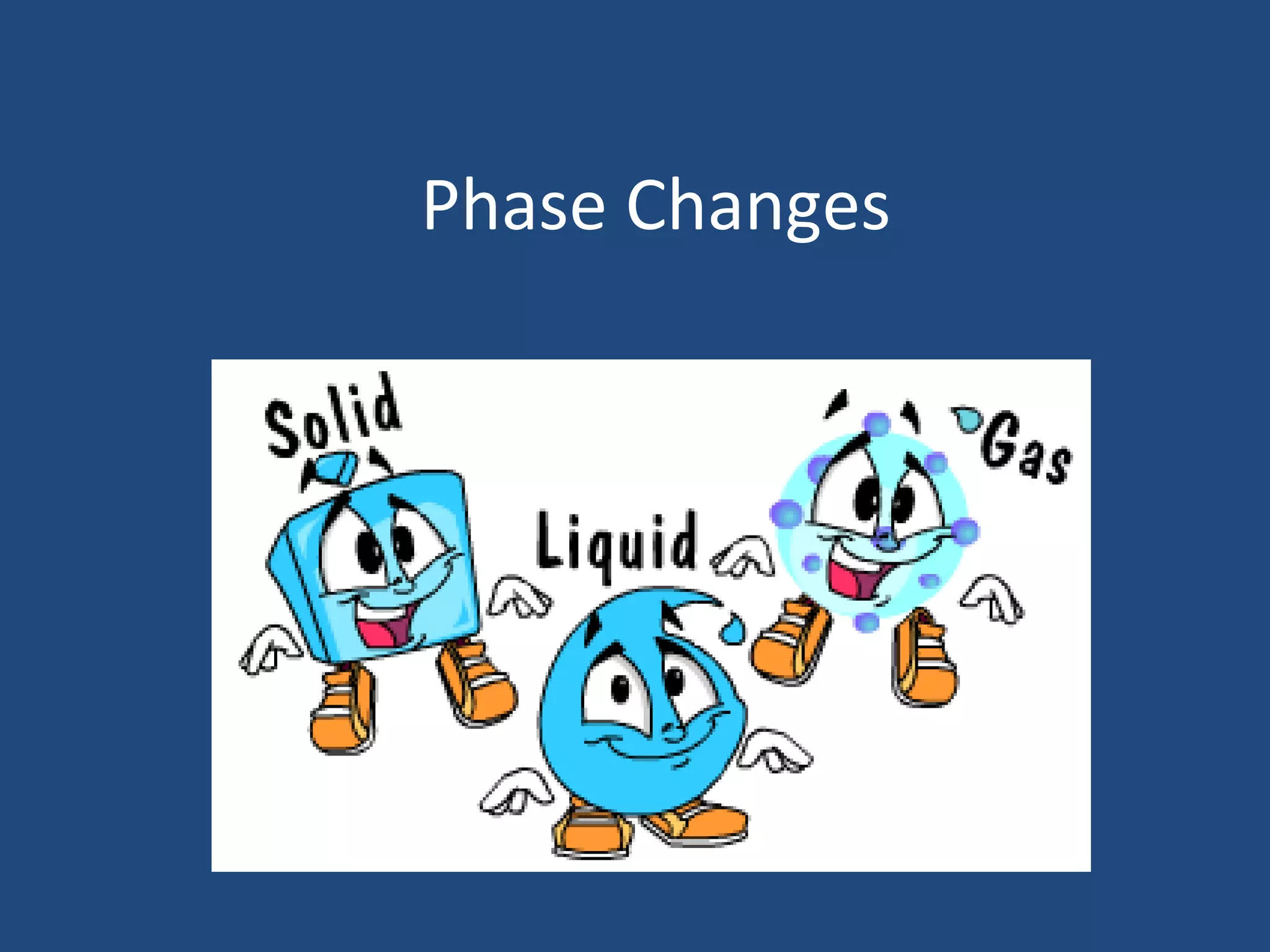
Review: 3 Phases of Matter
• Solid
• Liquid
• Gas
What is a Phase Change?
• Is a change from one state of matter
(solid, liquid, gas) to another.
• Phase changes are physical changes because:
- It only affects physical appearance, not
chemical make-up.
- Reversible
What happens during a phase change?
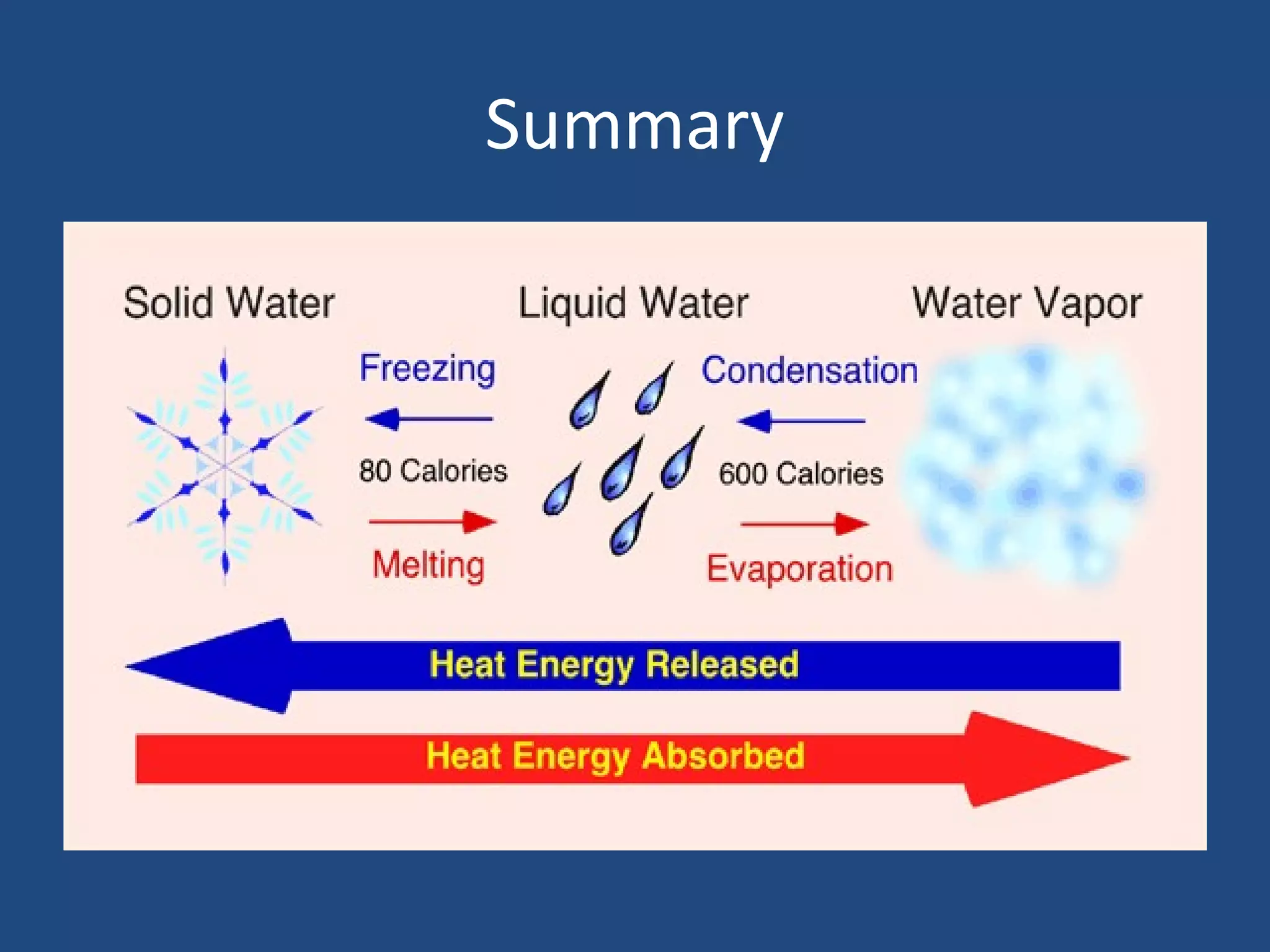
• During a phase change,
heat energy is either
absorbed or released.
• Heat energy is released as
molecules slow down and
move closer together.
• Heat energy is absorbed
as molecules speed up
and expand.
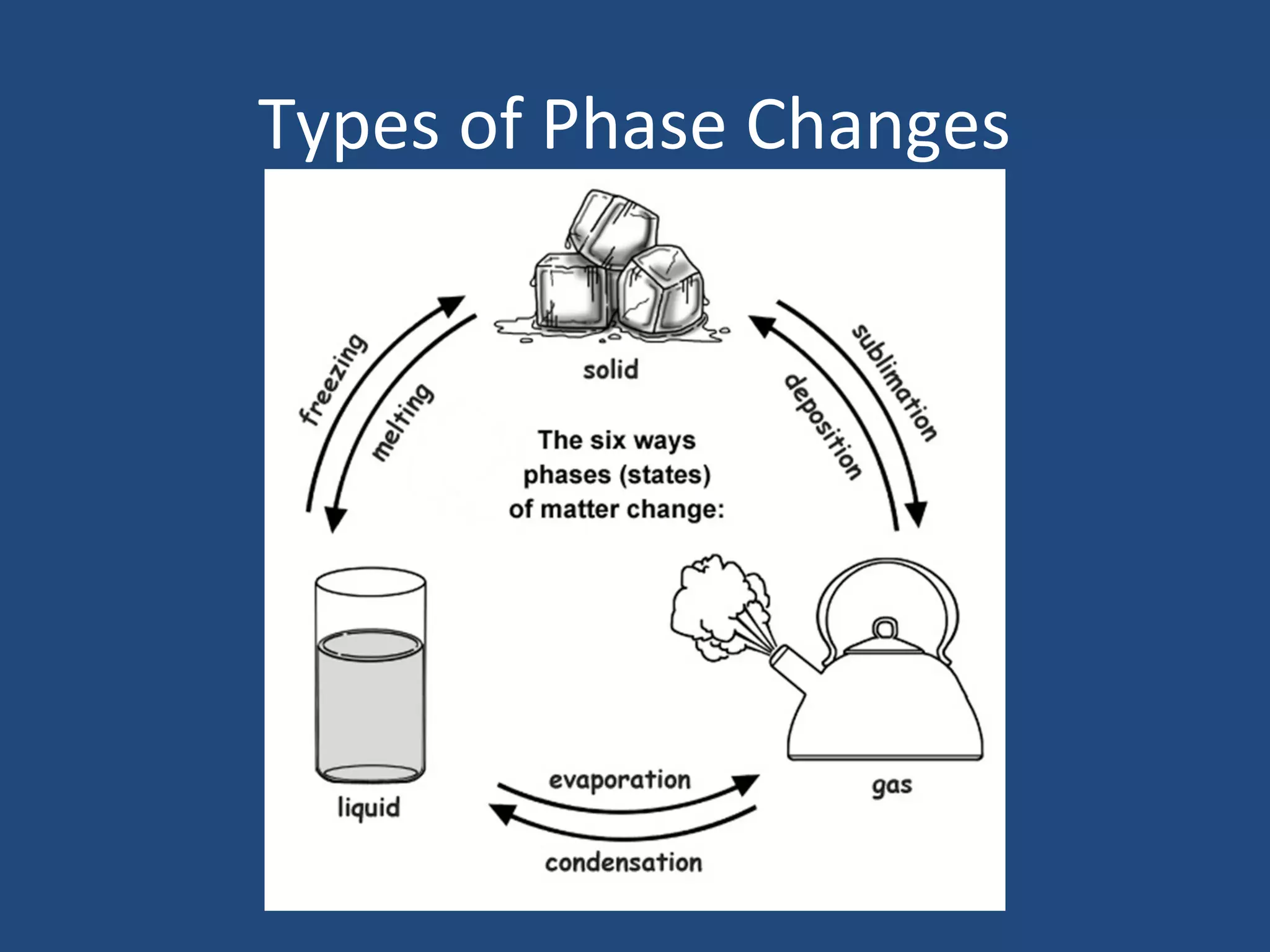
Types of Phase Changes
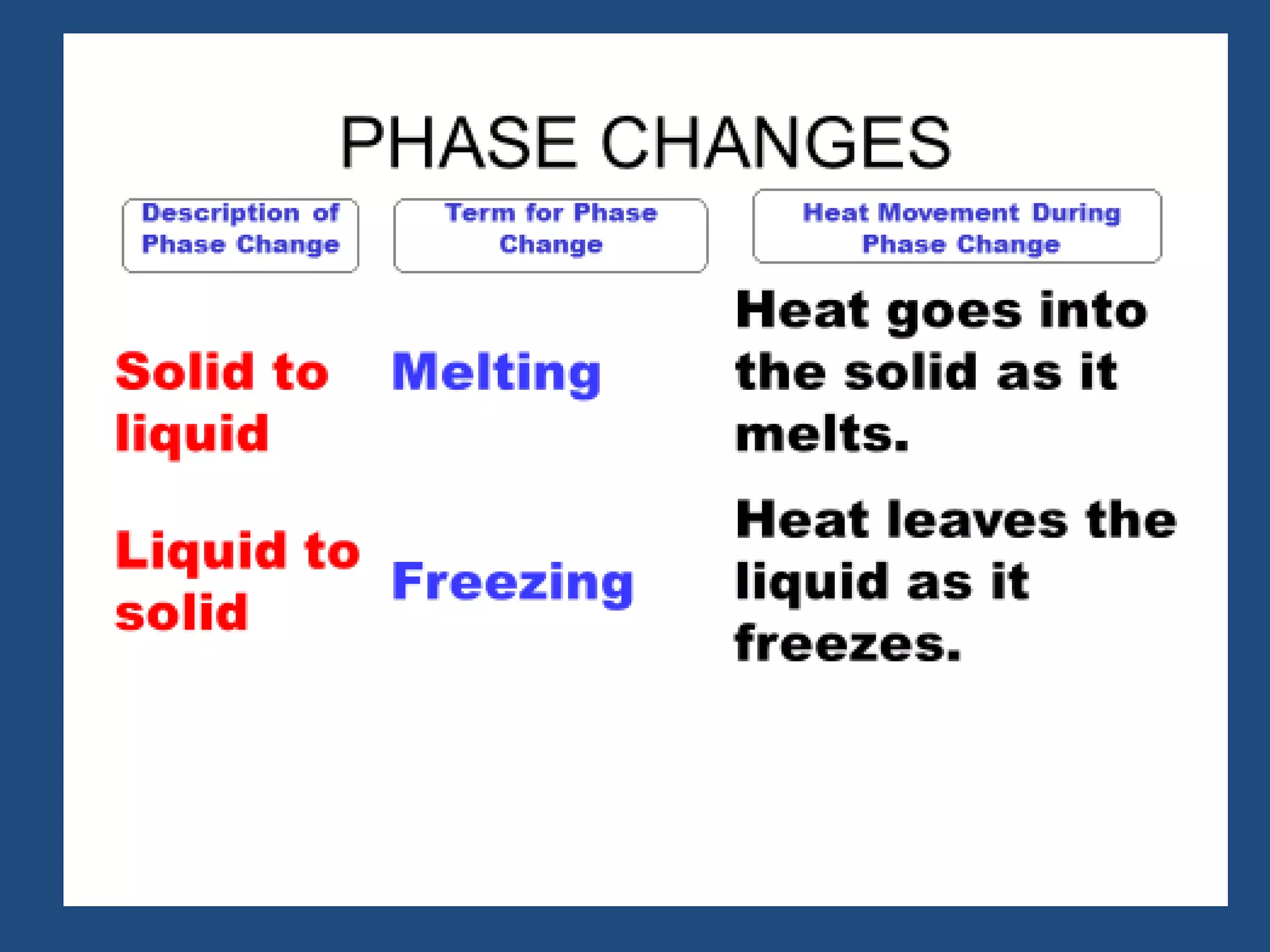
Melting
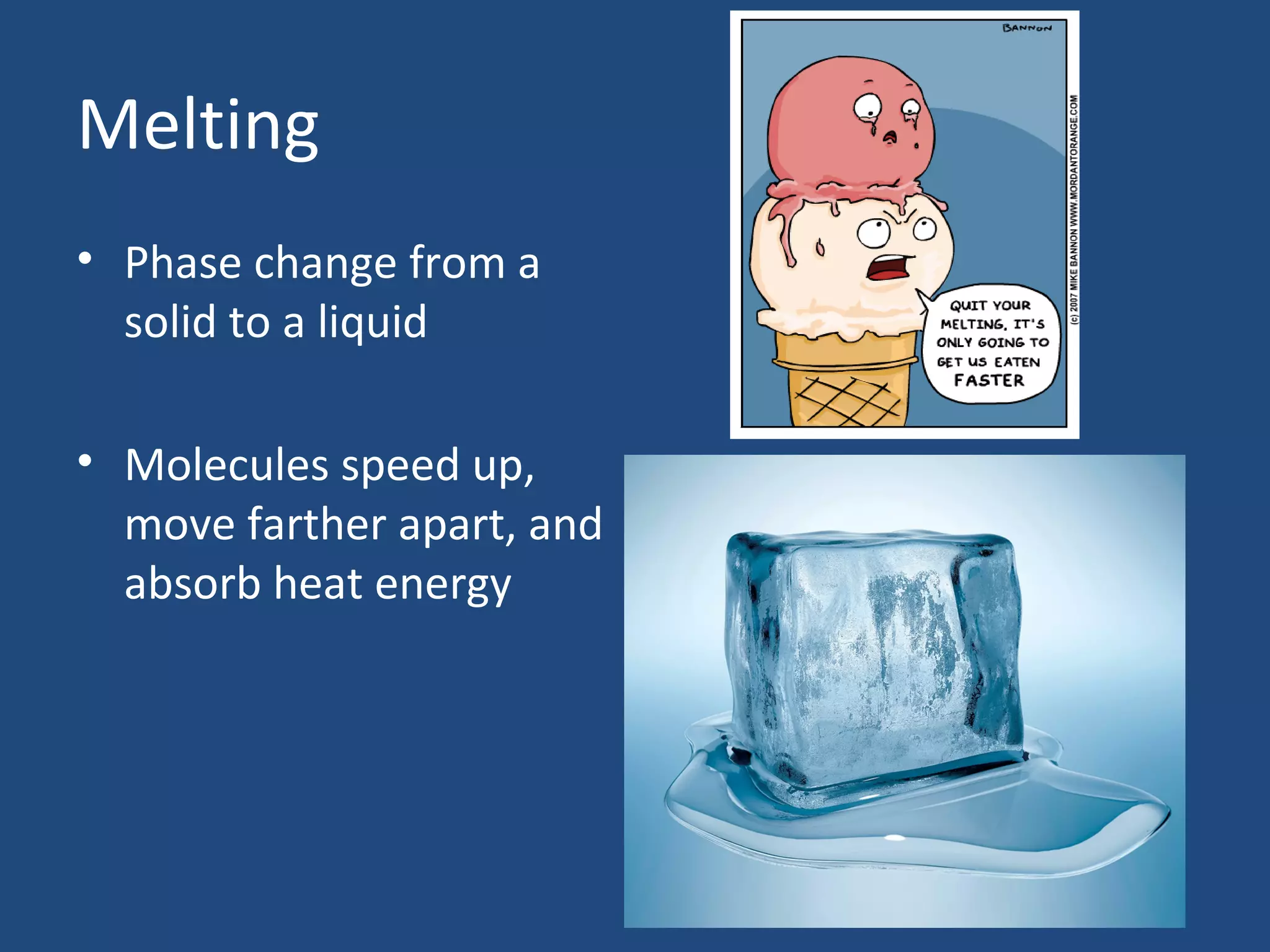
• Phase change from a
solid to a liquid
• Molecules speed up,
move farther apart, and
absorb heat energy
Freezing
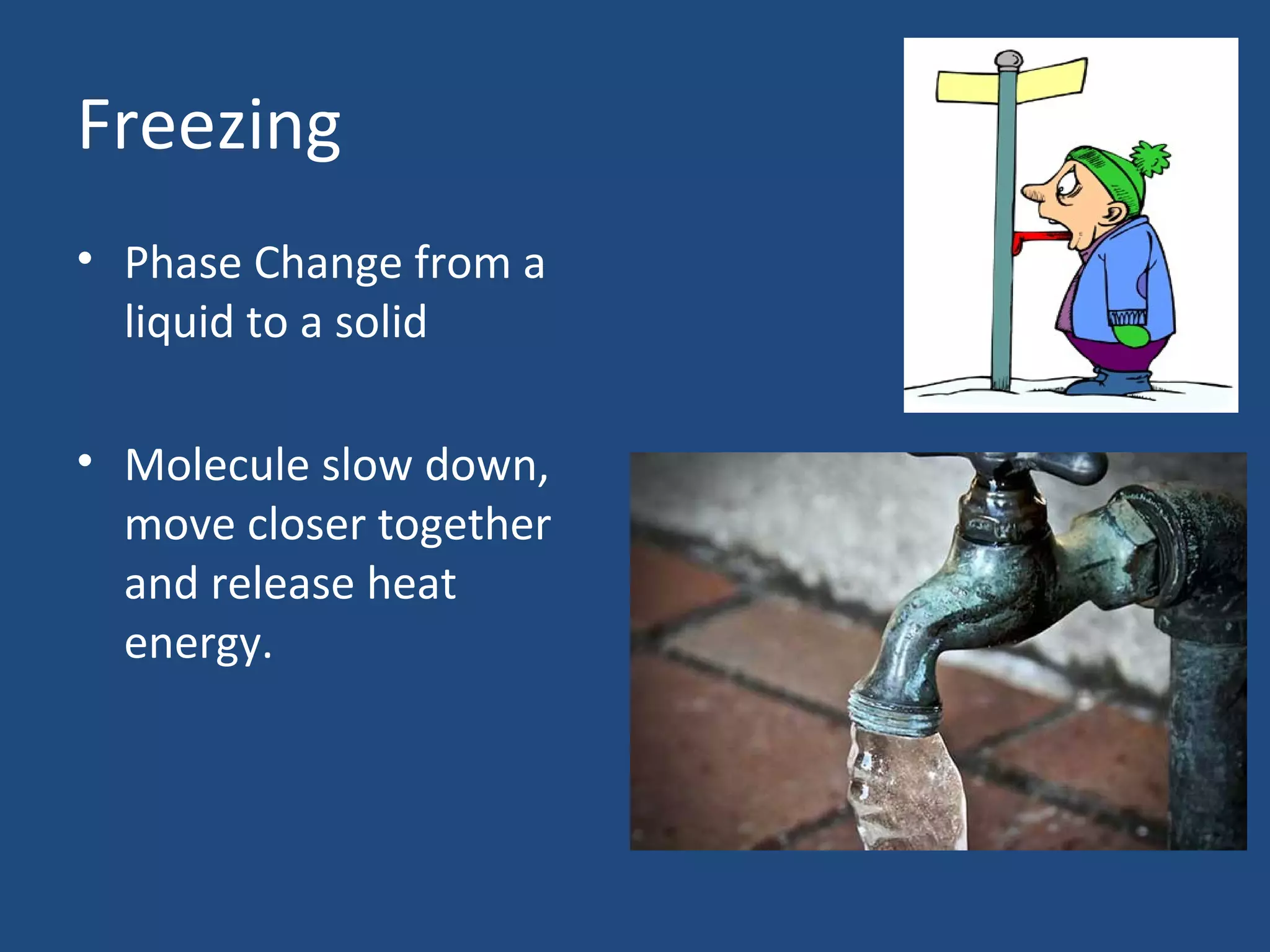
• Phase Change from a
liquid to a solid
• Molecule slow down,
move closer together
and release heat
energy.
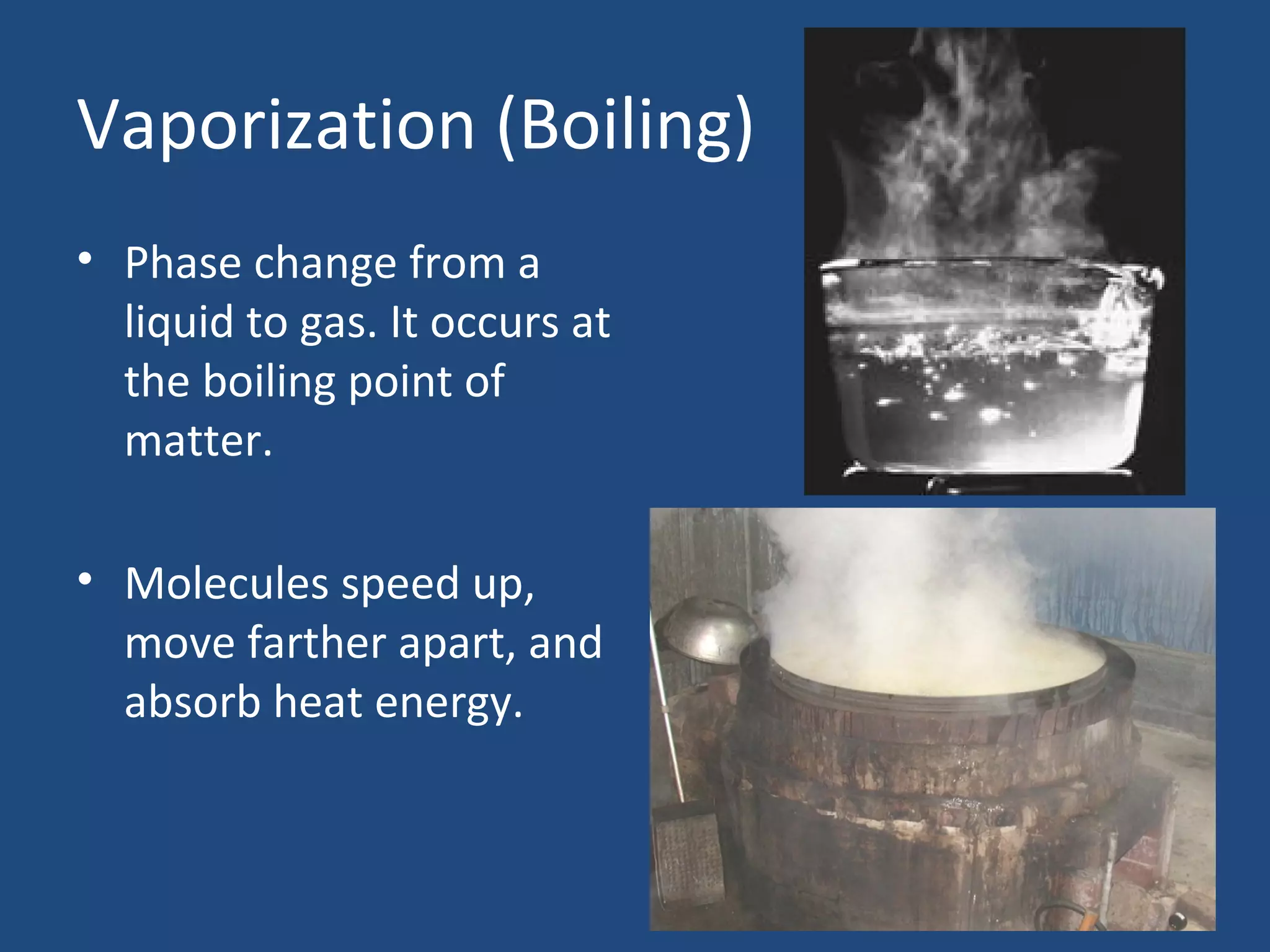
Vaporization (Boiling)
• Phase change from a
liquid to gas. It occurs at
the boiling point of
matter.
• Molecules speed up,
move farther apart, and
absorb heat energy.
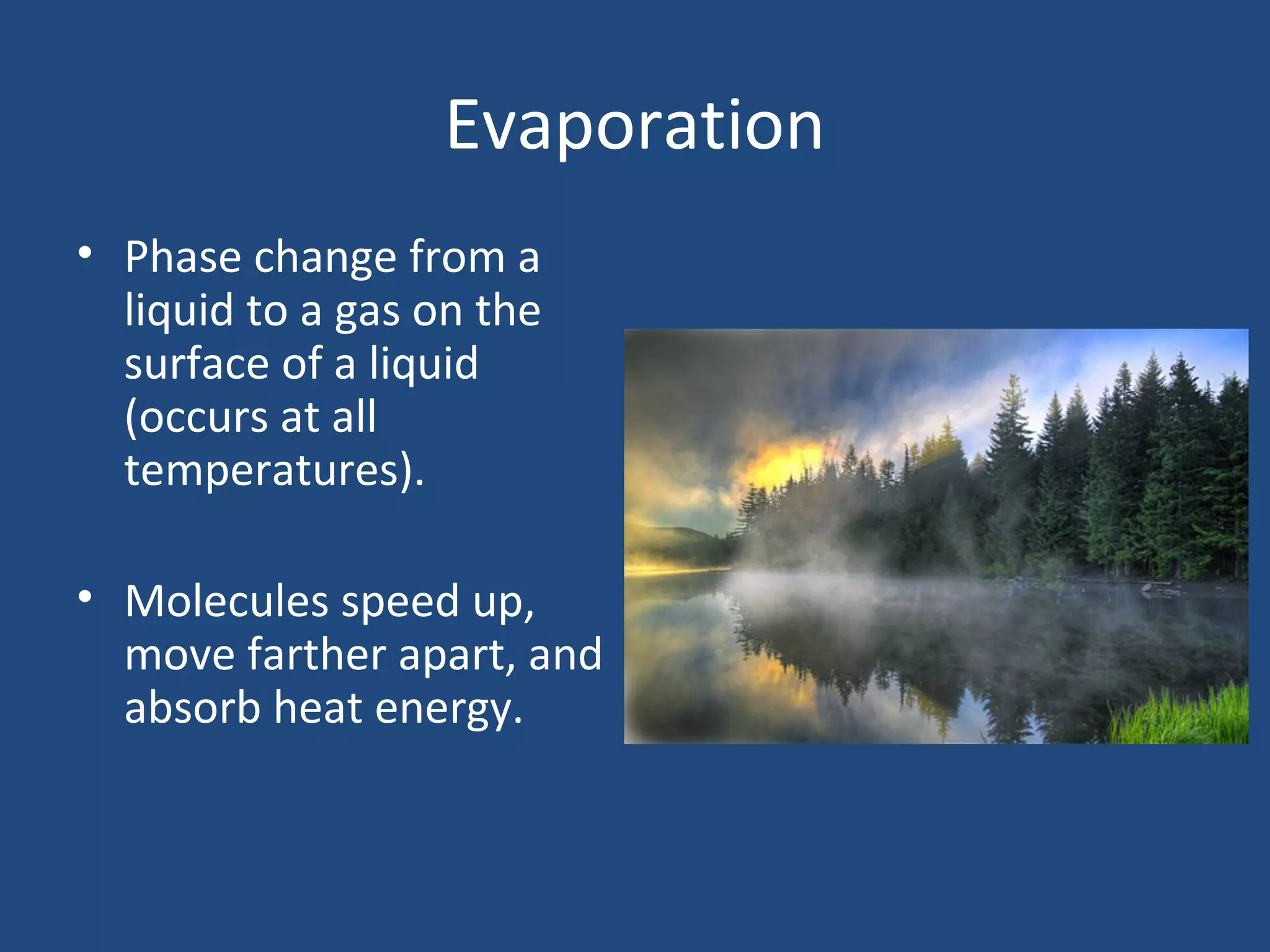
Evaporation
• Phase change from a
liquid to a gas on the
surface of a liquid
(occurs at all
temperatures).
• Molecules speed up,
move farther apart, and
absorb heat energy.
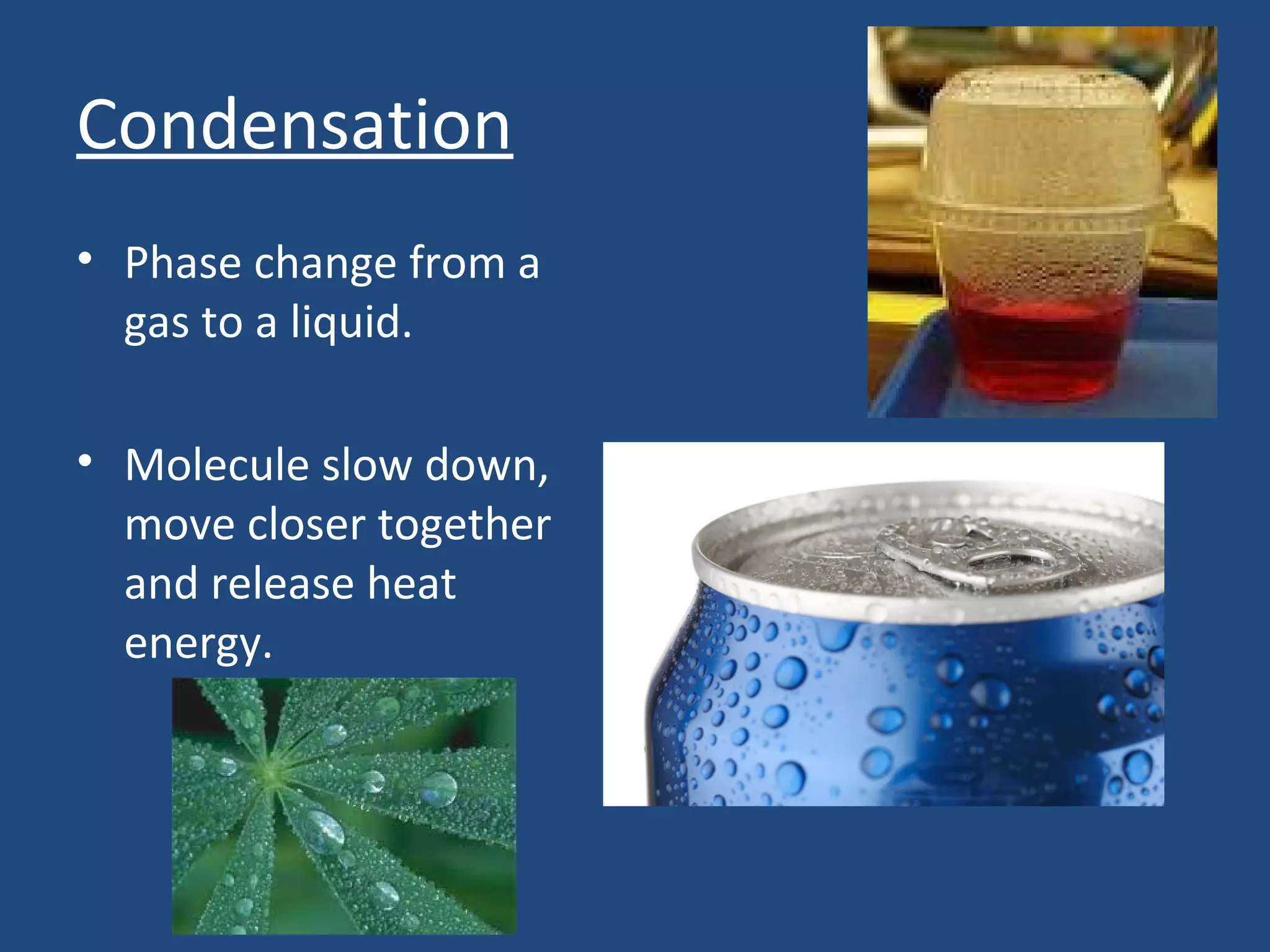
Condensation
• Phase change from a
gas to a liquid.
• Molecule slow down,
move closer together
and release heat
energy.
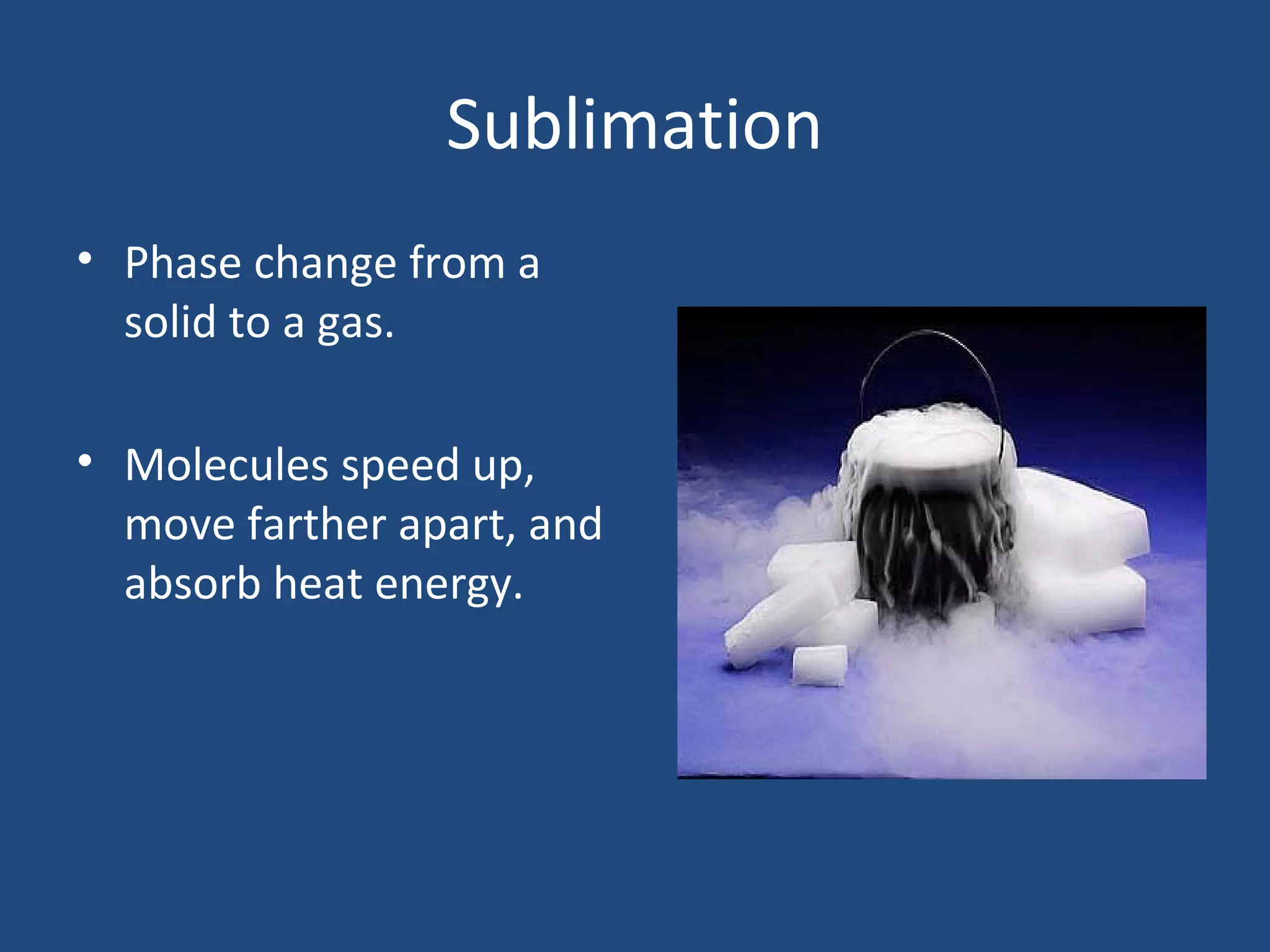
Sublimation
• Phase change from a
solid to a gas.
• Molecules speed up,
move farther apart, and
absorb heat energy.
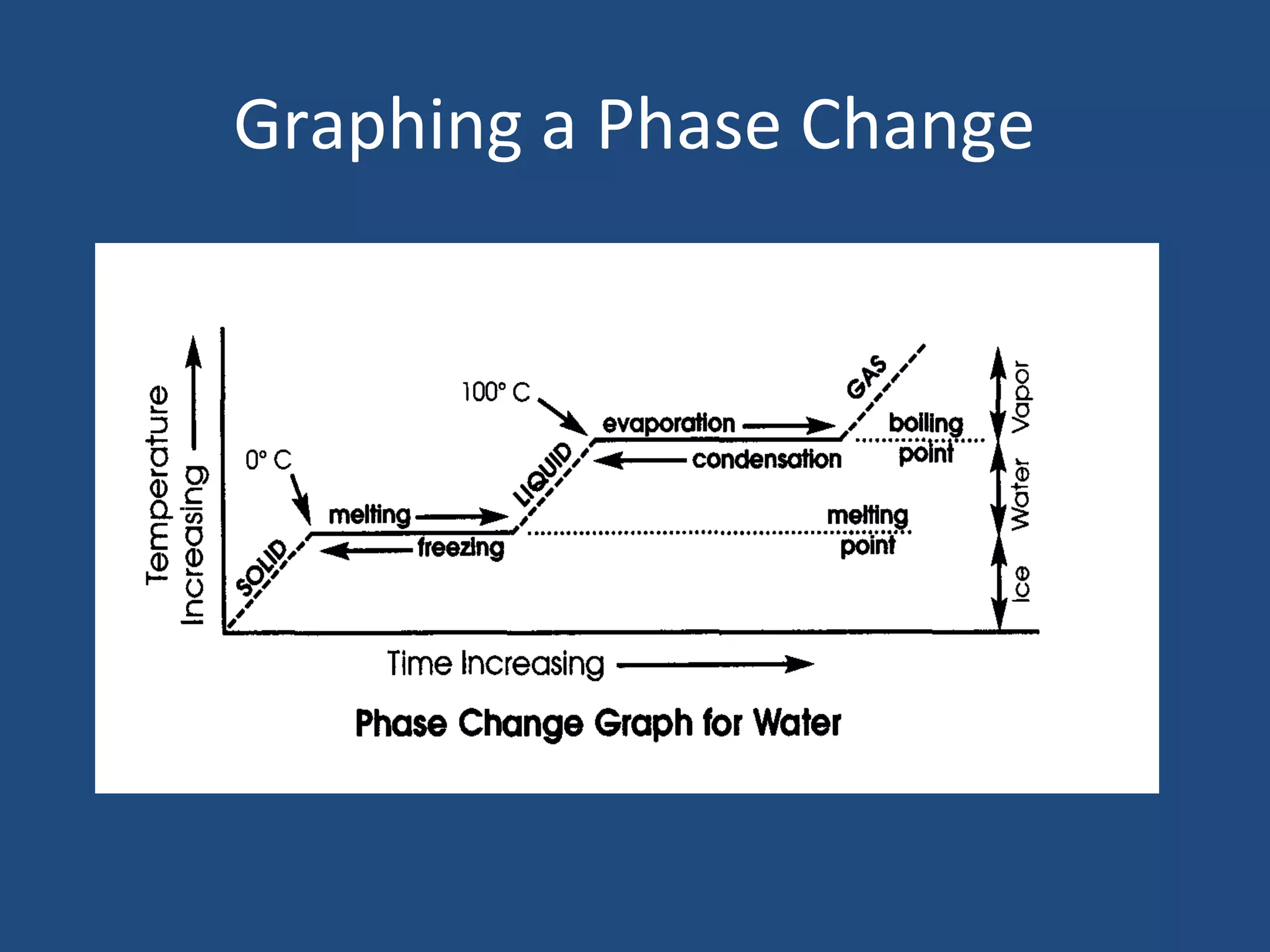
Graphing a Phase Change
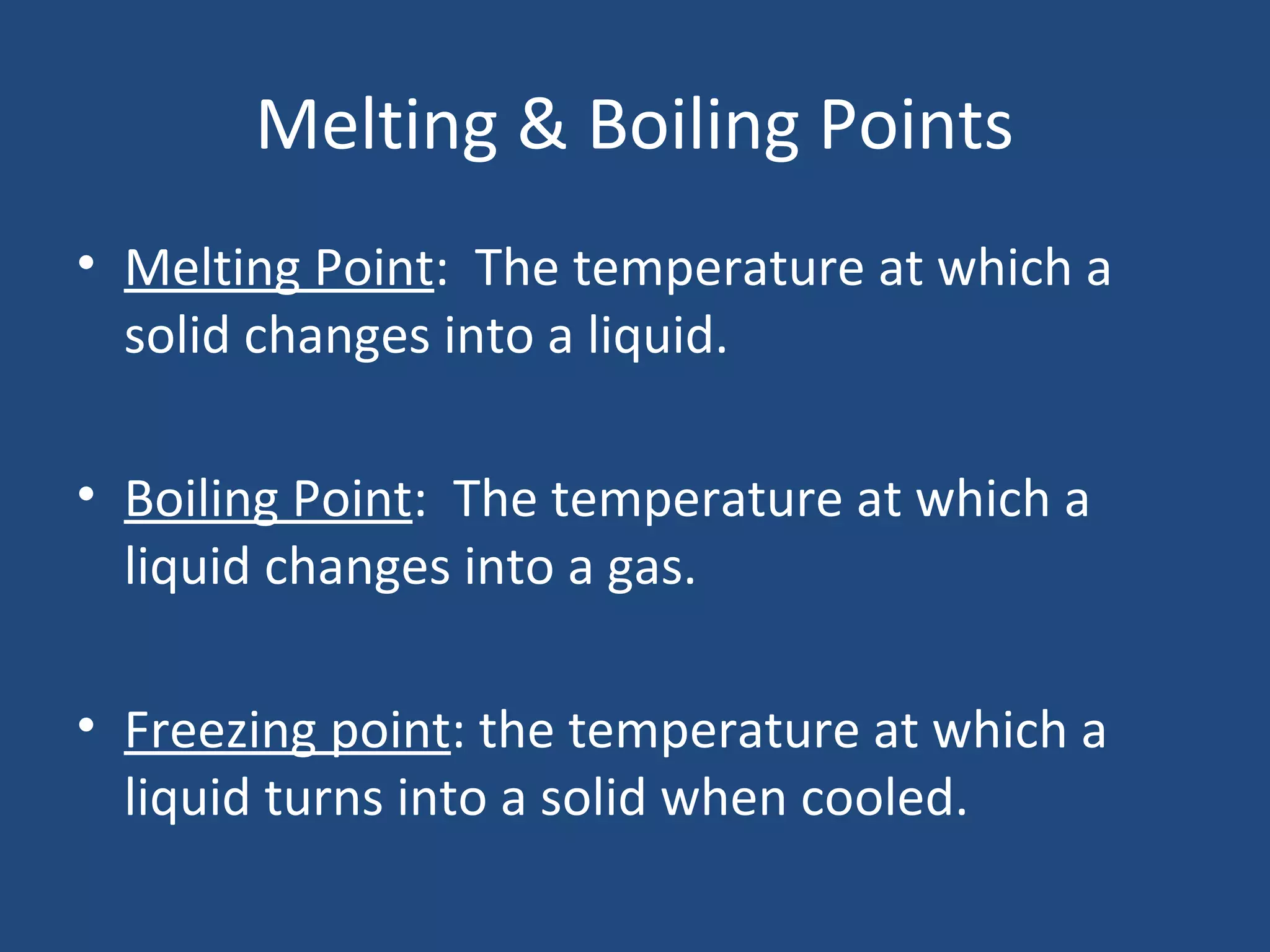
Melting & Boiling Points
• Melting Point: The temperature at which a
solid changes into a liquid.
• Boiling Point: The temperature at which a
liquid changes into a gas.
• Freezing point: the temperature at which a
liquid turns into a solid when cooled.
Summary
Graphing a Phase Change
– Why is there no change
in temperature during a
phase change?
– Define melting and
boiling points.
– What is the melting
point and boiling point
of water?
– At what temperature
does water freeze and
become a solid?

Phase changes

  • 1.
  • 2.
    Review: 3 Phasesof Matter • Solid • Liquid • Gas
  • 3.
    What is aPhase Change? • Is a change from one state of matter (solid, liquid, gas) to another. • Phase changes are physical changes because: - It only affects physical appearance, not chemical make-up. - Reversible
  • 4.
    What happens duringa phase change? • During a phase change, heat energy is either absorbed or released. • Heat energy is released as molecules slow down and move closer together. • Heat energy is absorbed as molecules speed up and expand.
  • 5.
  • 6.
    Melting • Phase changefrom a solid to a liquid • Molecules speed up, move farther apart, and absorb heat energy
  • 7.
    Freezing • Phase Changefrom a liquid to a solid • Molecule slow down, move closer together and release heat energy.
  • 8.
    Vaporization (Boiling) • Phasechange from a liquid to gas. It occurs at the boiling point of matter. • Molecules speed up, move farther apart, and absorb heat energy.
  • 9.
    Evaporation • Phase changefrom a liquid to a gas on the surface of a liquid (occurs at all temperatures). • Molecules speed up, move farther apart, and absorb heat energy.
  • 10.
    Condensation • Phase changefrom a gas to a liquid. • Molecule slow down, move closer together and release heat energy.
  • 11.
    Sublimation • Phase changefrom a solid to a gas. • Molecules speed up, move farther apart, and absorb heat energy.
  • 15.
  • 17.
    Melting & BoilingPoints • Melting Point: The temperature at which a solid changes into a liquid. • Boiling Point: The temperature at which a liquid changes into a gas. • Freezing point: the temperature at which a liquid turns into a solid when cooled.
  • 19.
  • 20.
    Graphing a PhaseChange – Why is there no change in temperature during a phase change? – Define melting and boiling points. – What is the melting point and boiling point of water? – At what temperature does water freeze and become a solid?