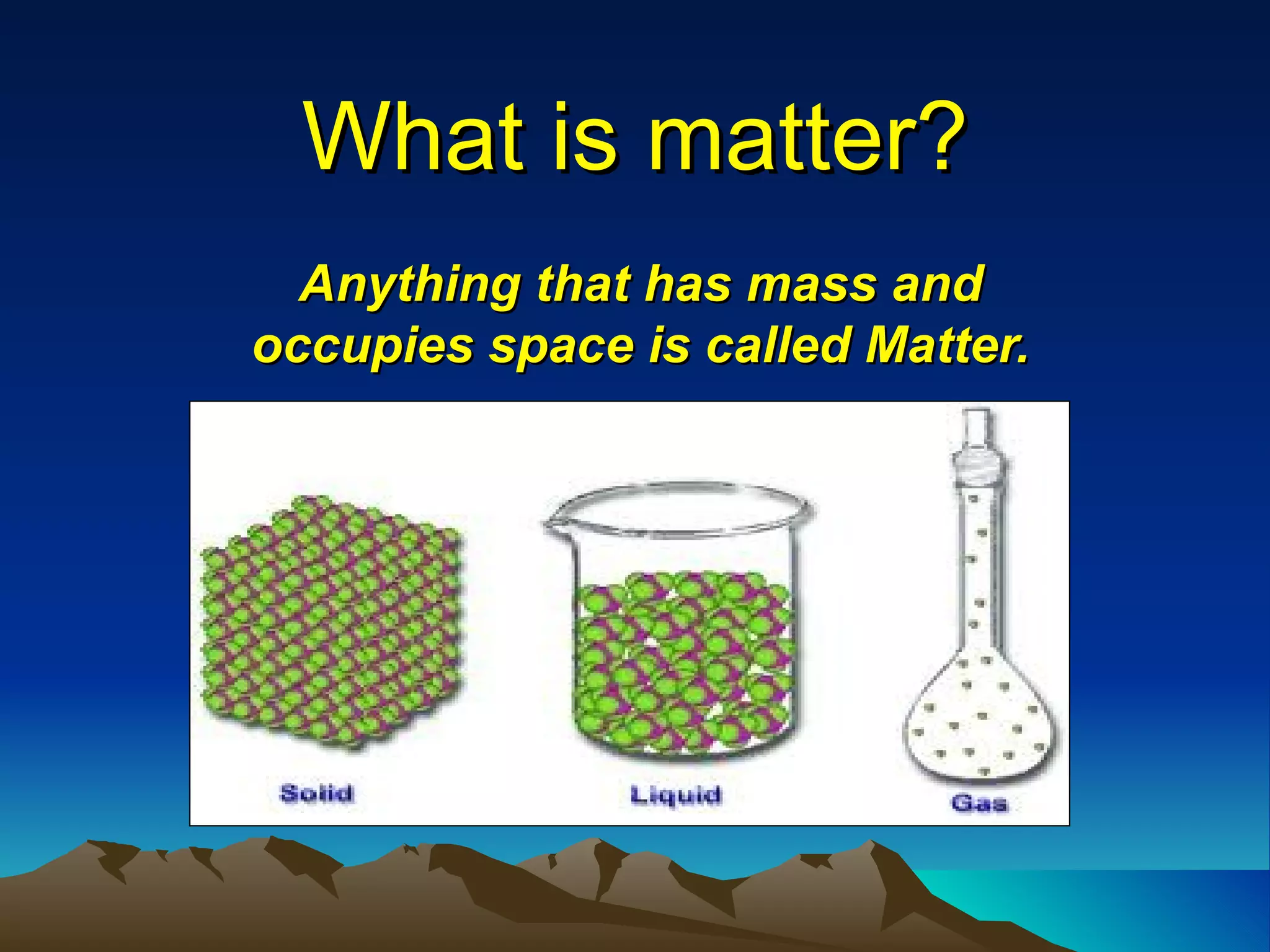
What is matter? Anything that has mass and occupies space is called Matter.
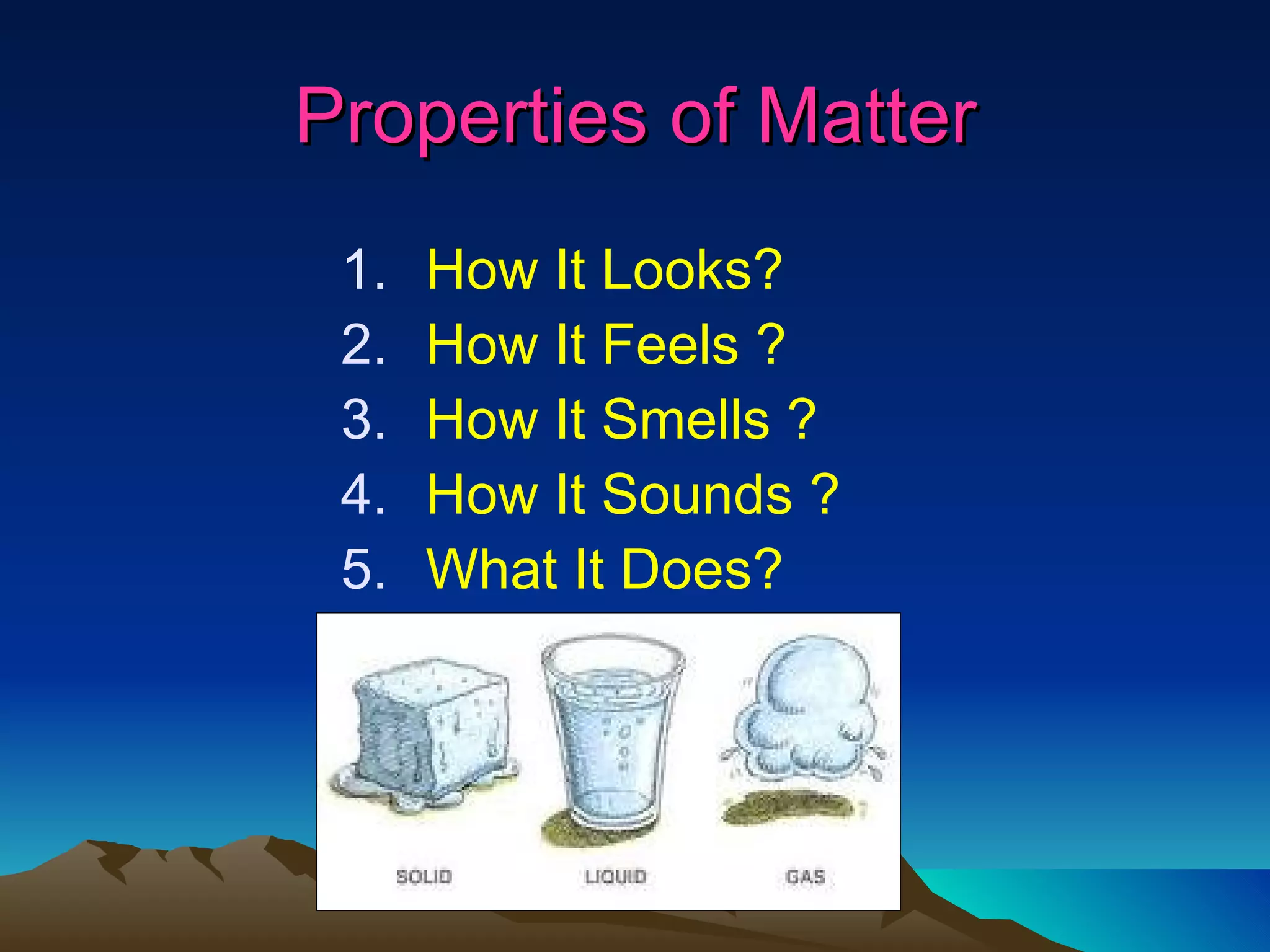
Properties of Matter How It Looks?  How It Feels ? How It Smells ? How It Sounds ? What It Does?
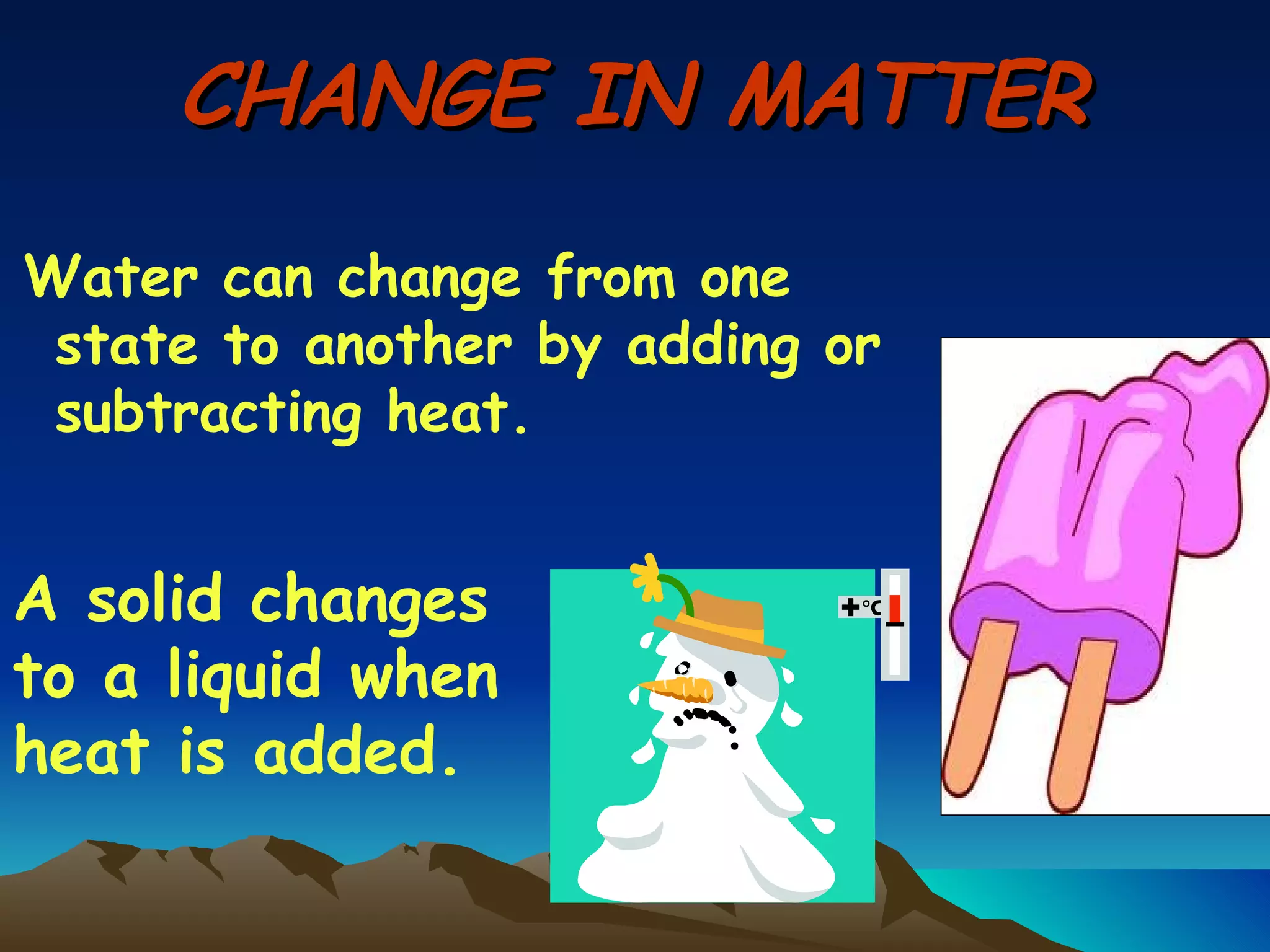
CHANGE IN MATTER Water can change from one state to another by adding or subtracting heat. A solid changes to a liquid when heat is added.
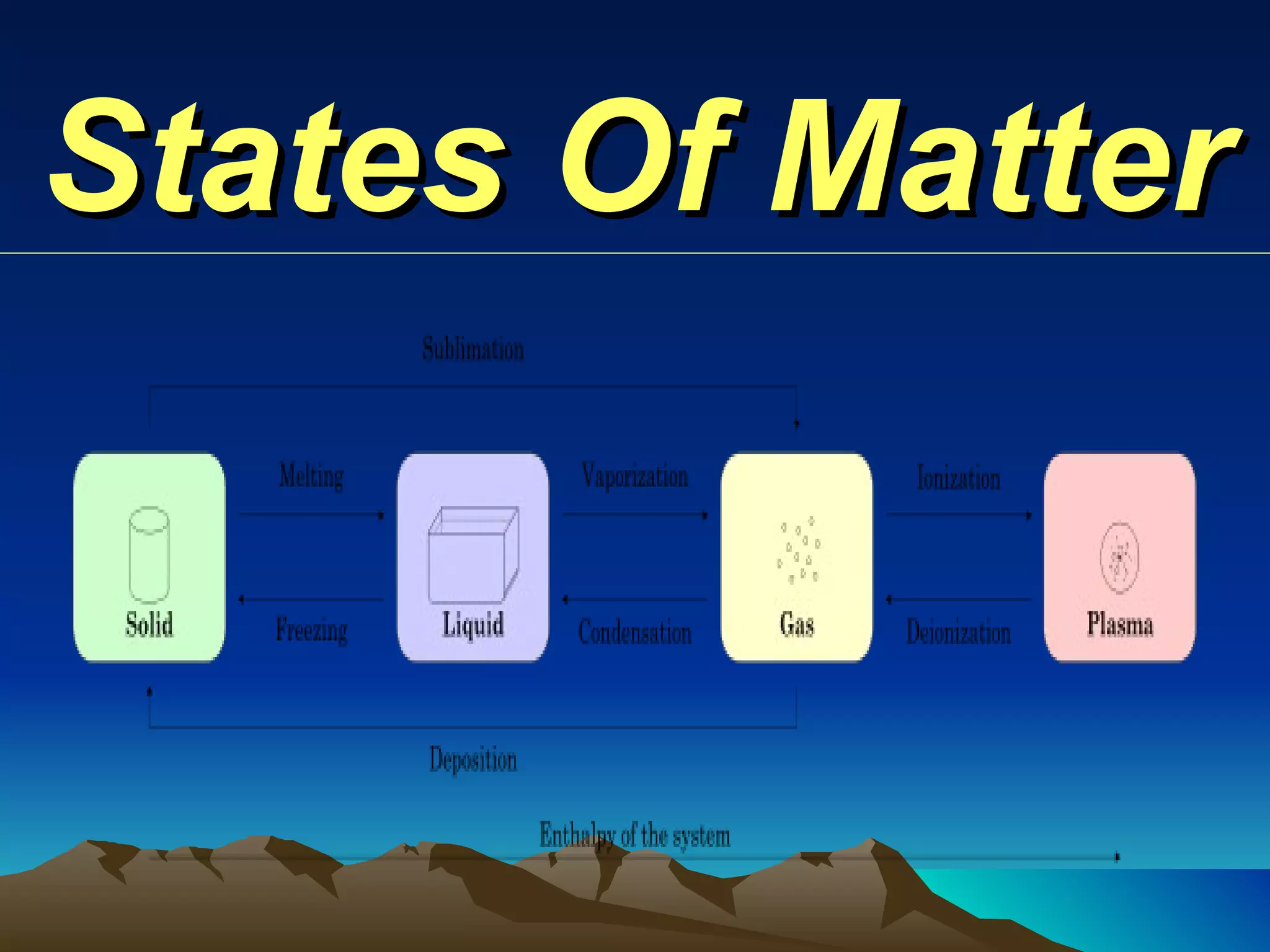
What are States of Matter? States of matter are the distinct forms that different phases of matter take on. Solid, liquid and gas are the most common states of matter on Earth.  Historically, the distinction is made based on qualitative differences in bulk properties. Solid is the state in which matter maintains a fixed volume and shape; liquid is the state in which matter maintains a fixed volume but adapts to the shape of its container and gas is the state in which matter expands to occupy whatever volume is available.
States Of Matter
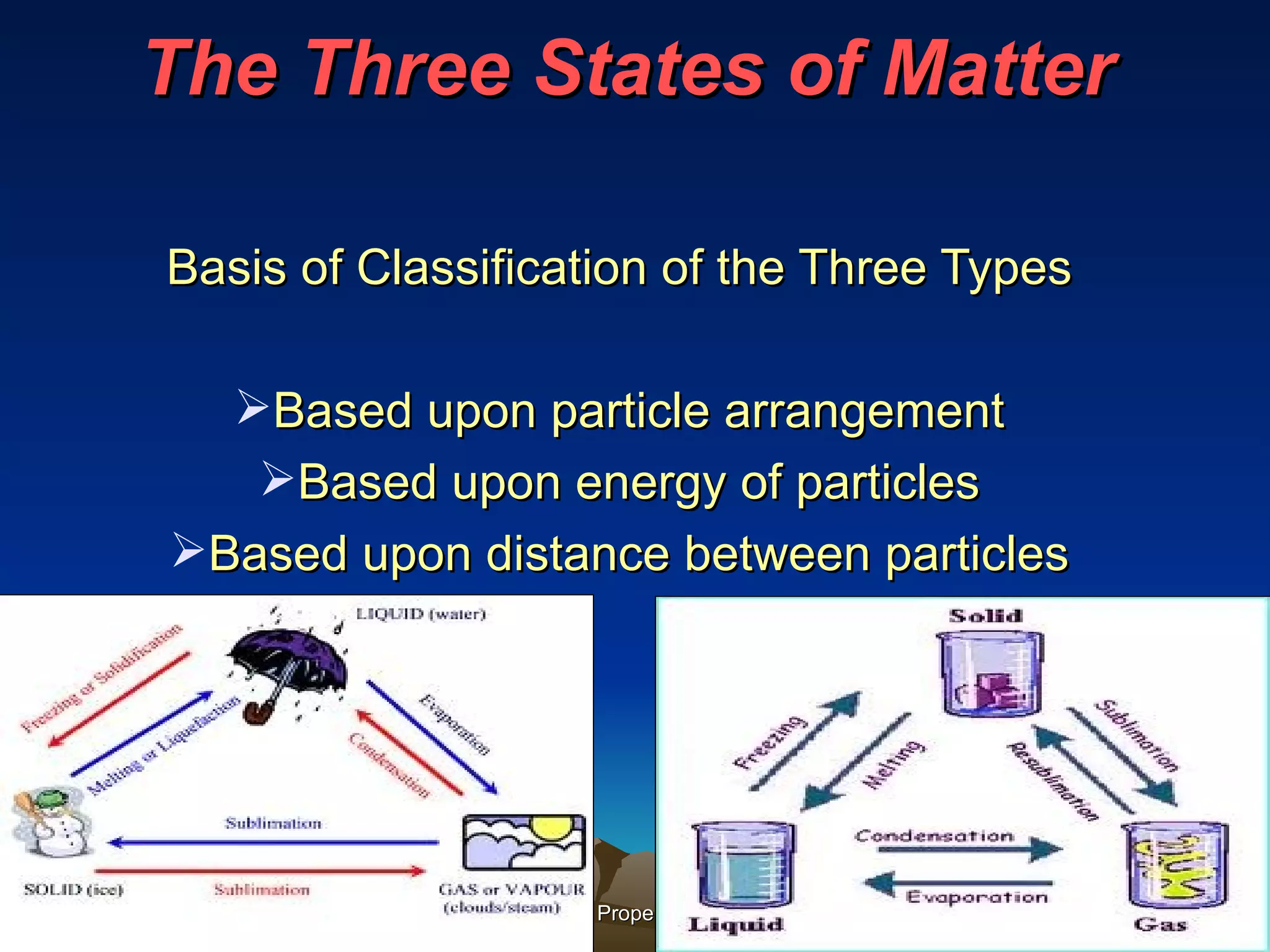
The Three States of Matter Basis of Classification of the Three Types Based upon particle arrangement Based upon energy of particles Based upon distance between particles Chumbler - Properties of Matter
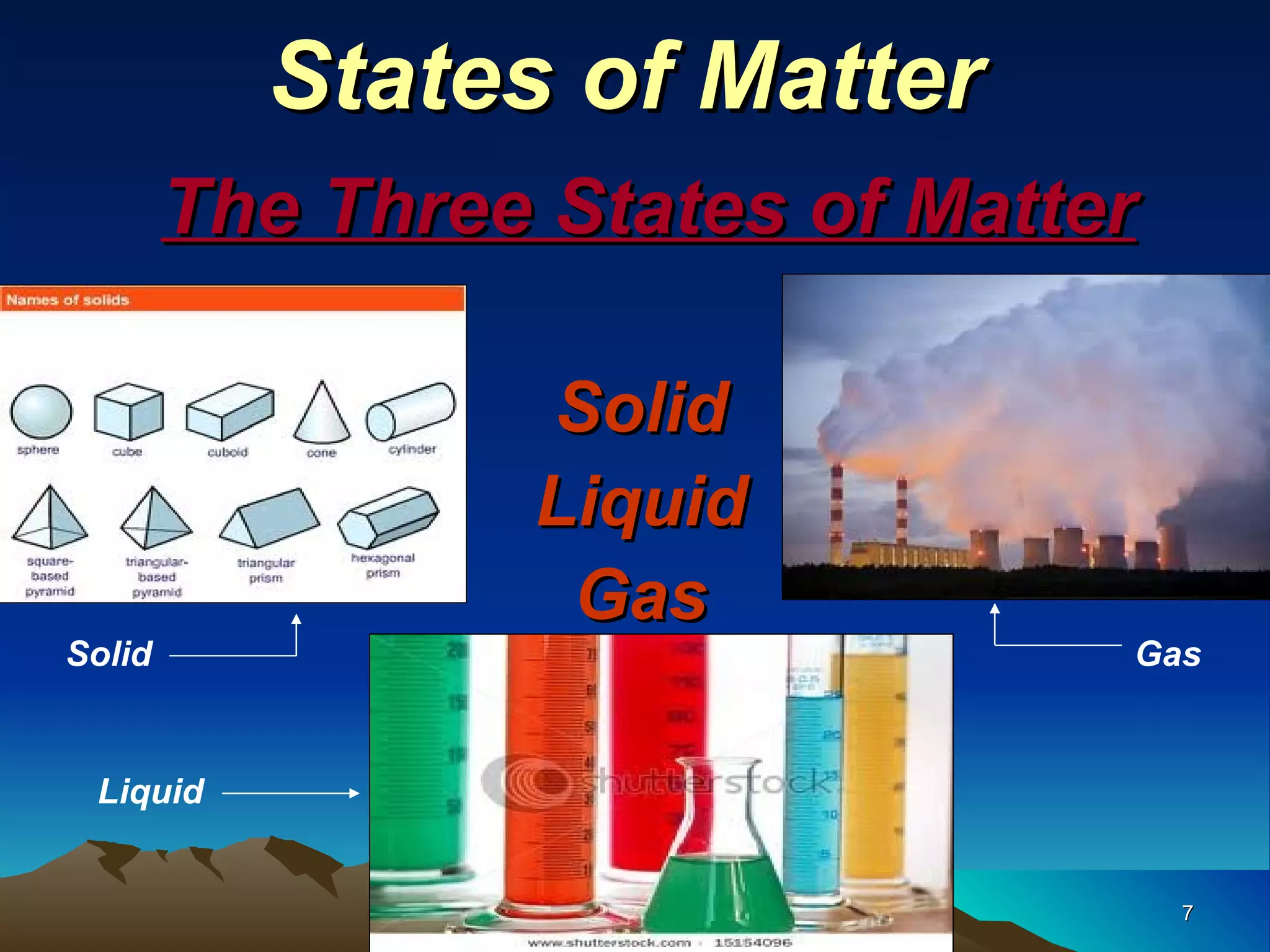
States of Matter The Three States of Matter Solid Liquid Gas Chumbler - Properties of Matter Solid Liquid Gas
SOLIDS
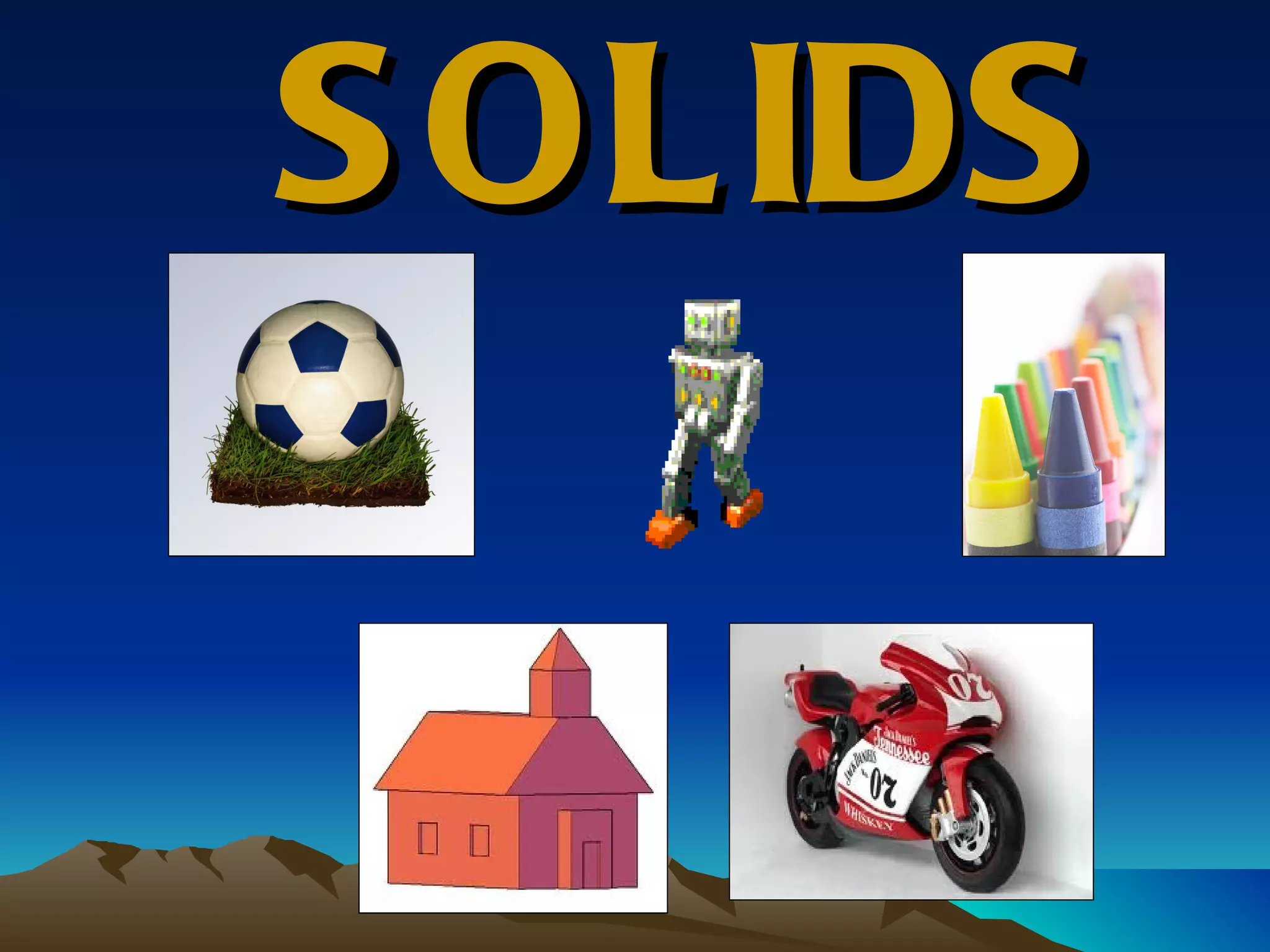
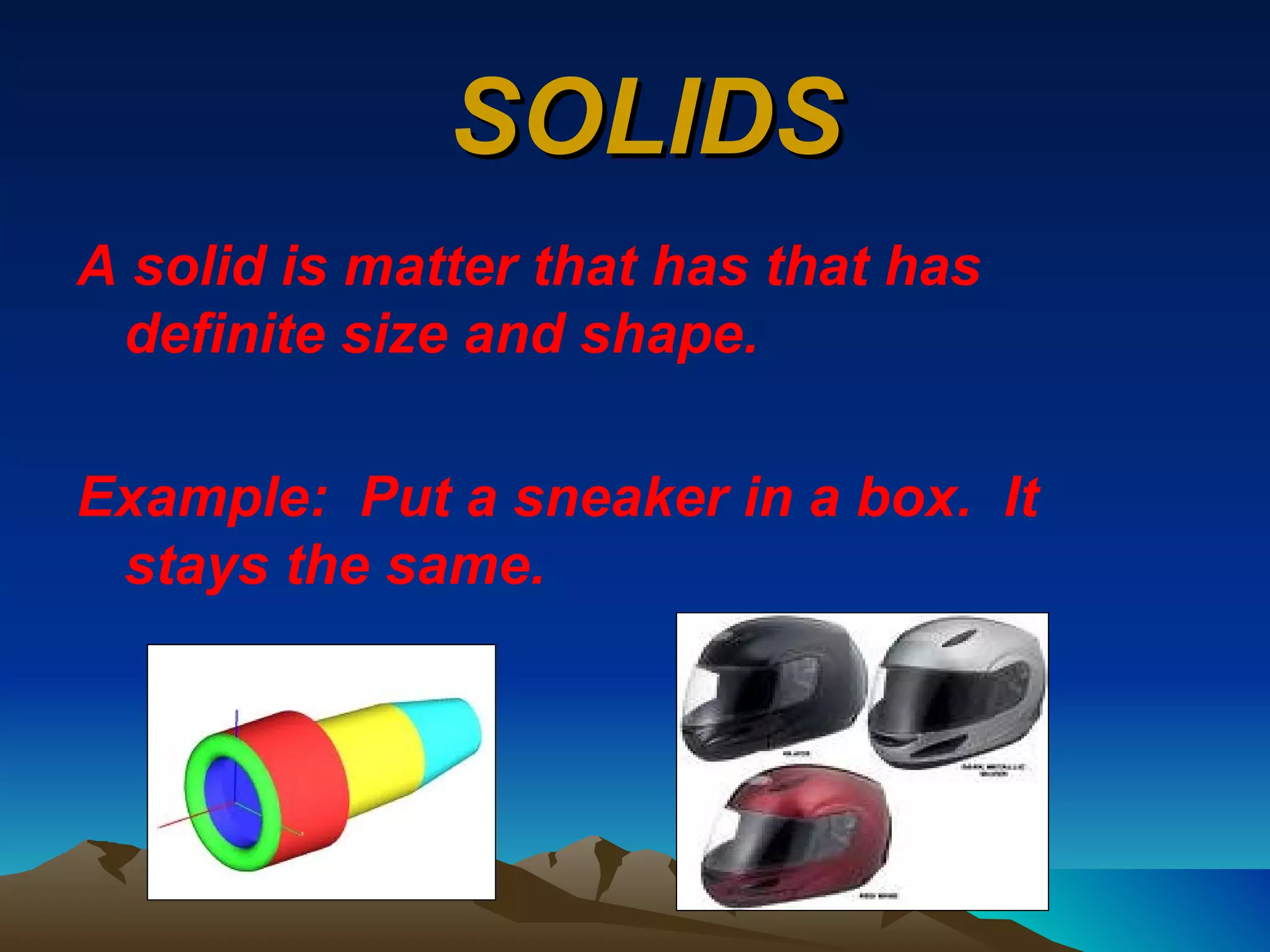
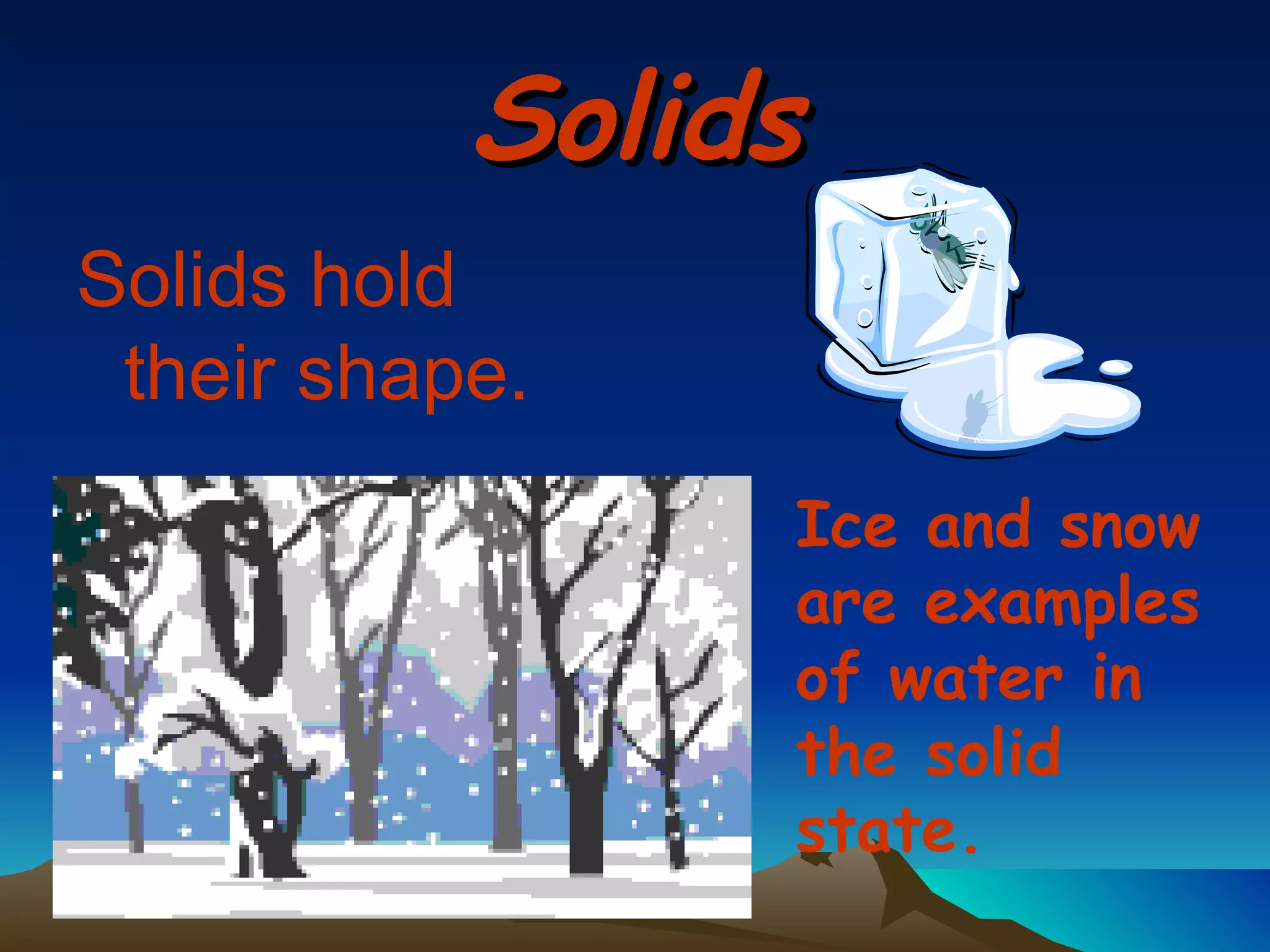
SOLIDS A solid is matter that has that has definite size and shape.  Example:  Put a sneaker in a box.  It stays the same.
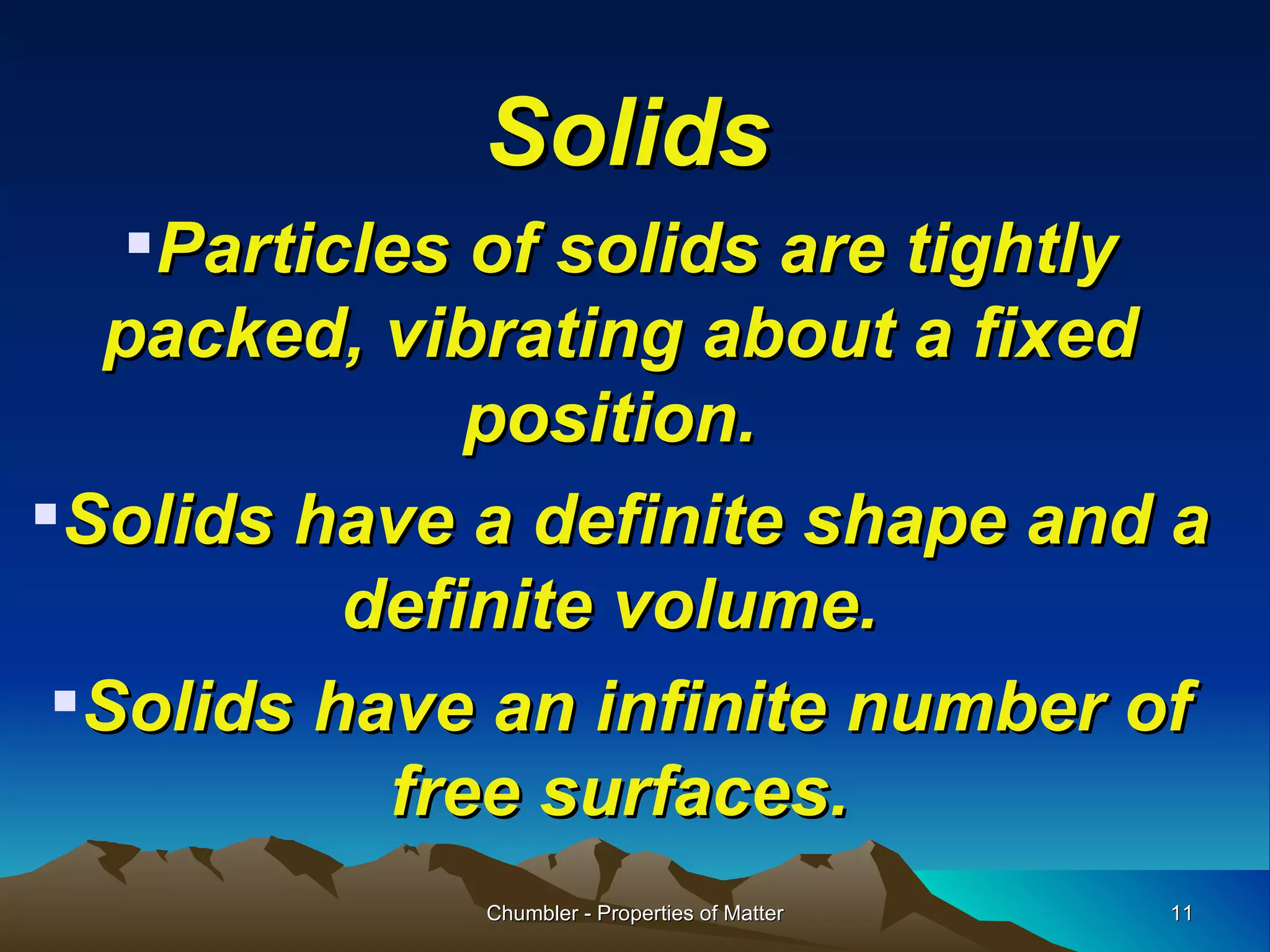
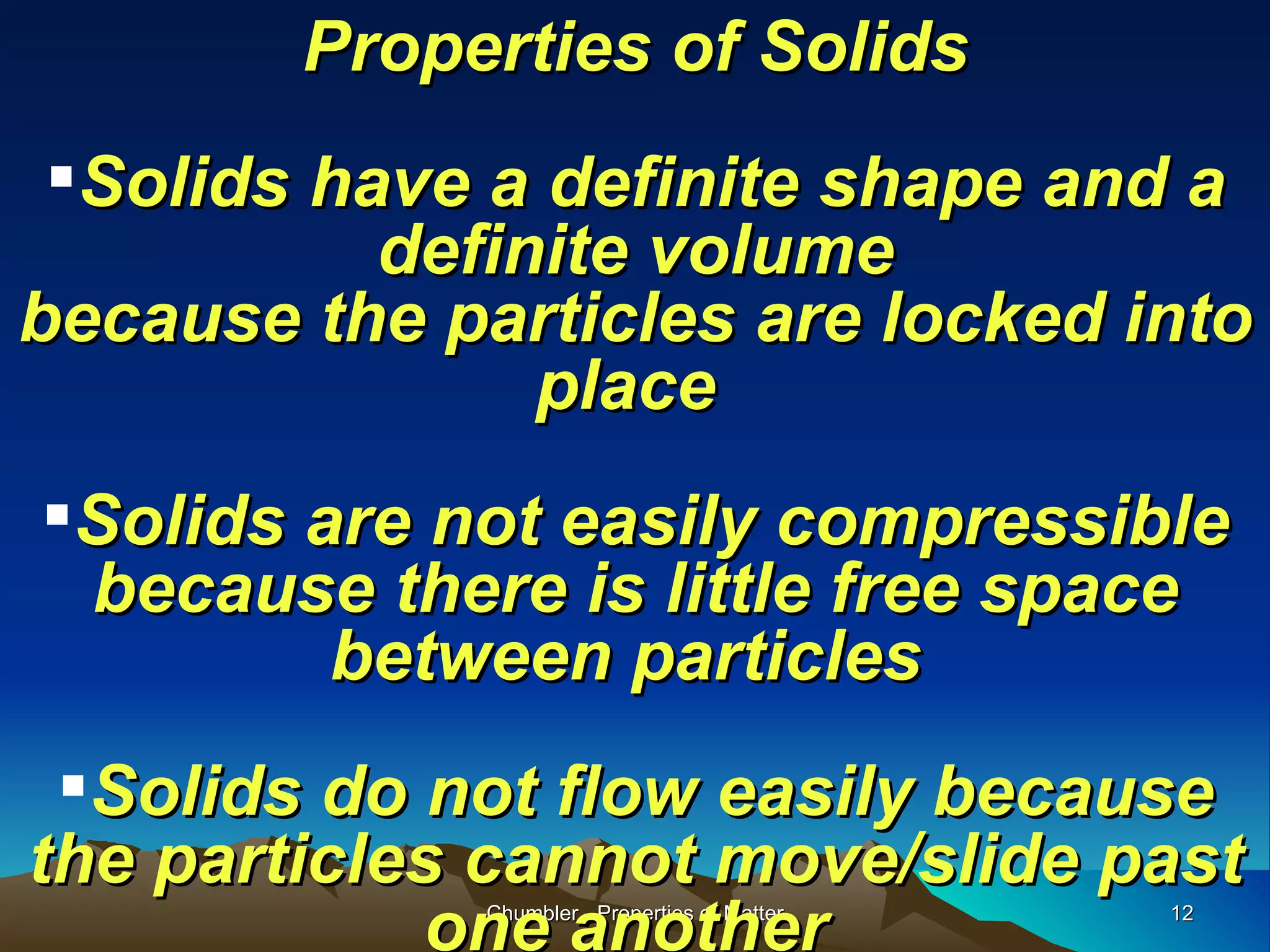
Solids Solids hold their shape. Ice and snow are examples of water in the solid state.
Solids Particles of solids are tightly packed, vibrating about a fixed position.  Solids have a definite shape and a definite volume.  Solids have an infinite number of free surfaces. Chumbler - Properties of Matter
Properties of Solids Solids have a definite shape and a definite volume because the particles are locked into place  Solids are not easily compressible because there is little free space between particles  Solids do not flow easily because the particles cannot move/slide past one another   Chumbler - Properties of Matter
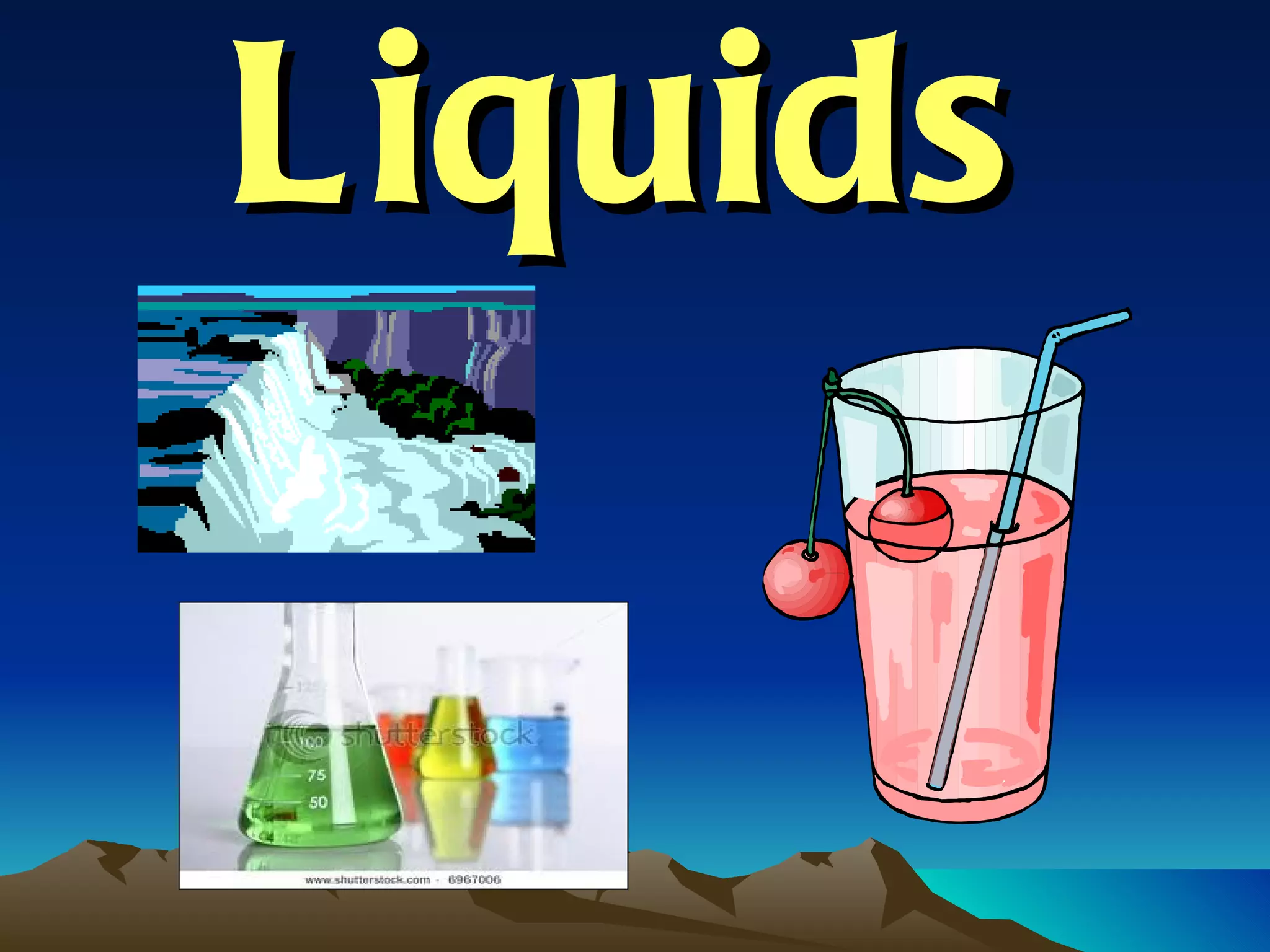
Liquids
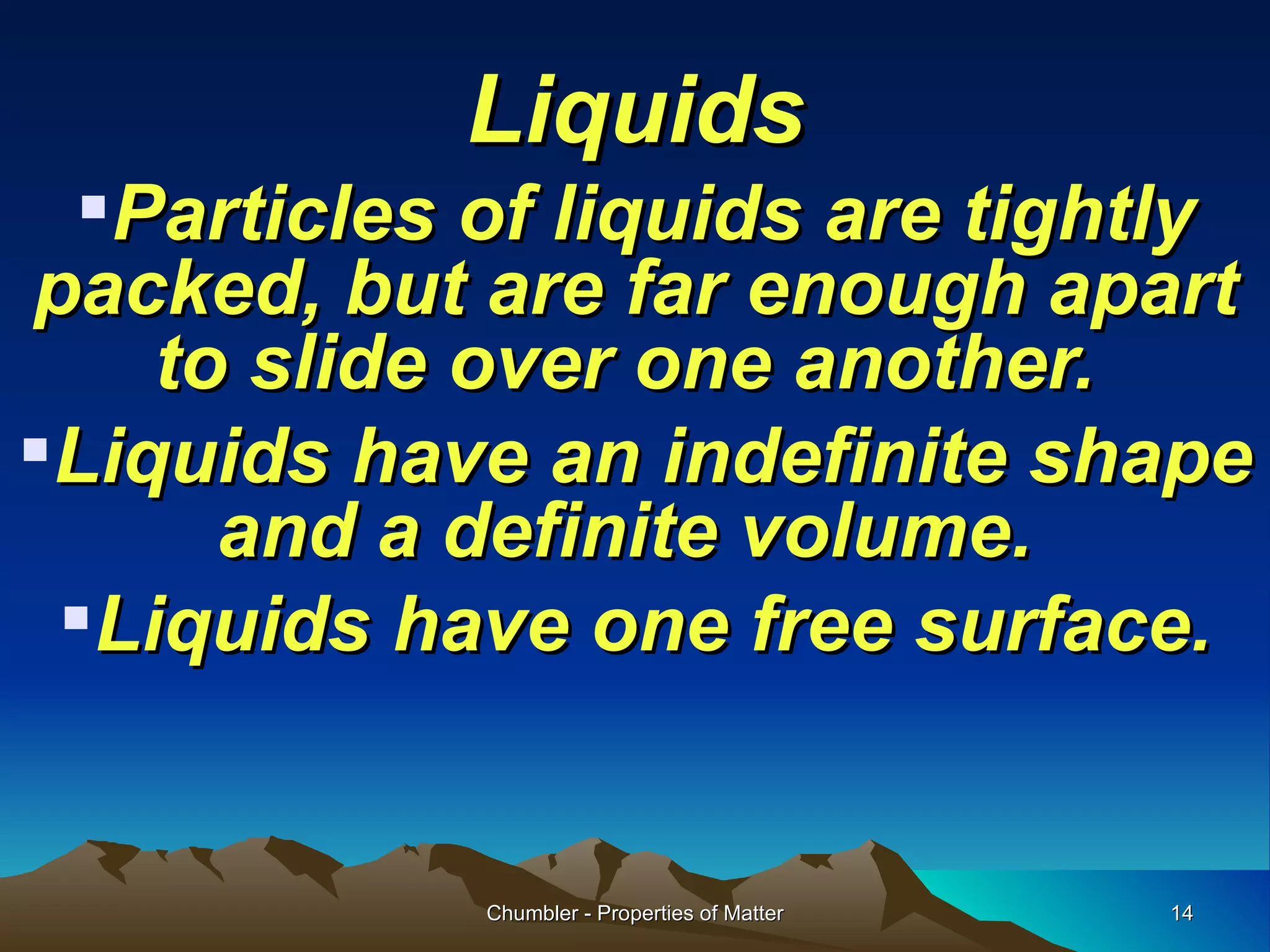
Liquids Particles of liquids are tightly packed, but are far enough apart to slide over one another.  Liquids have an indefinite shape and a definite volume.  Liquids have one free surface. Chumbler - Properties of Matter
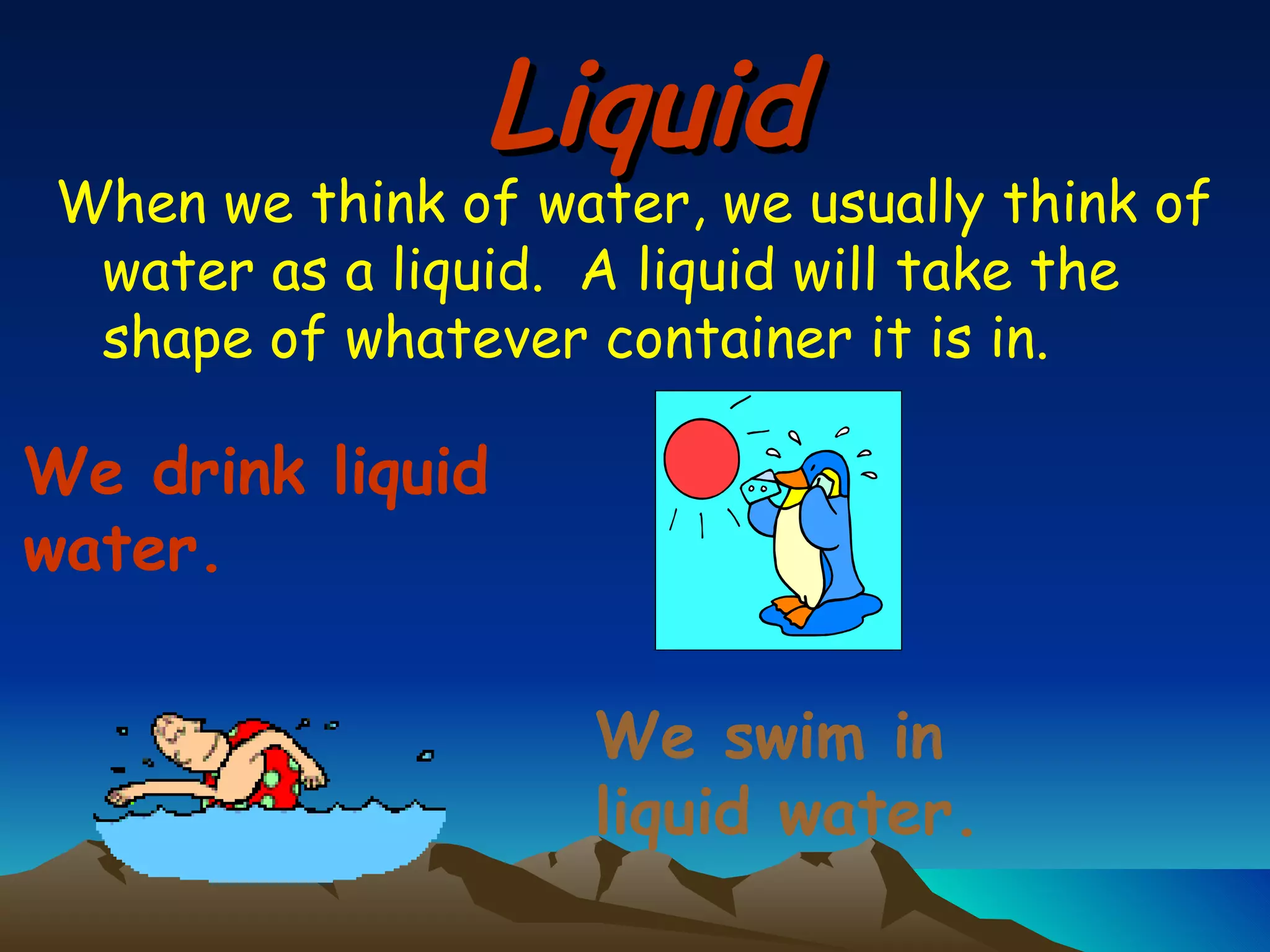
Liquid When we think of water, we usually think of water as a liquid.  A liquid will take the shape of whatever container it is in. We drink liquid water. We swim in liquid water.
A liquid changes to a solid when you take away heat, or it gets colder.
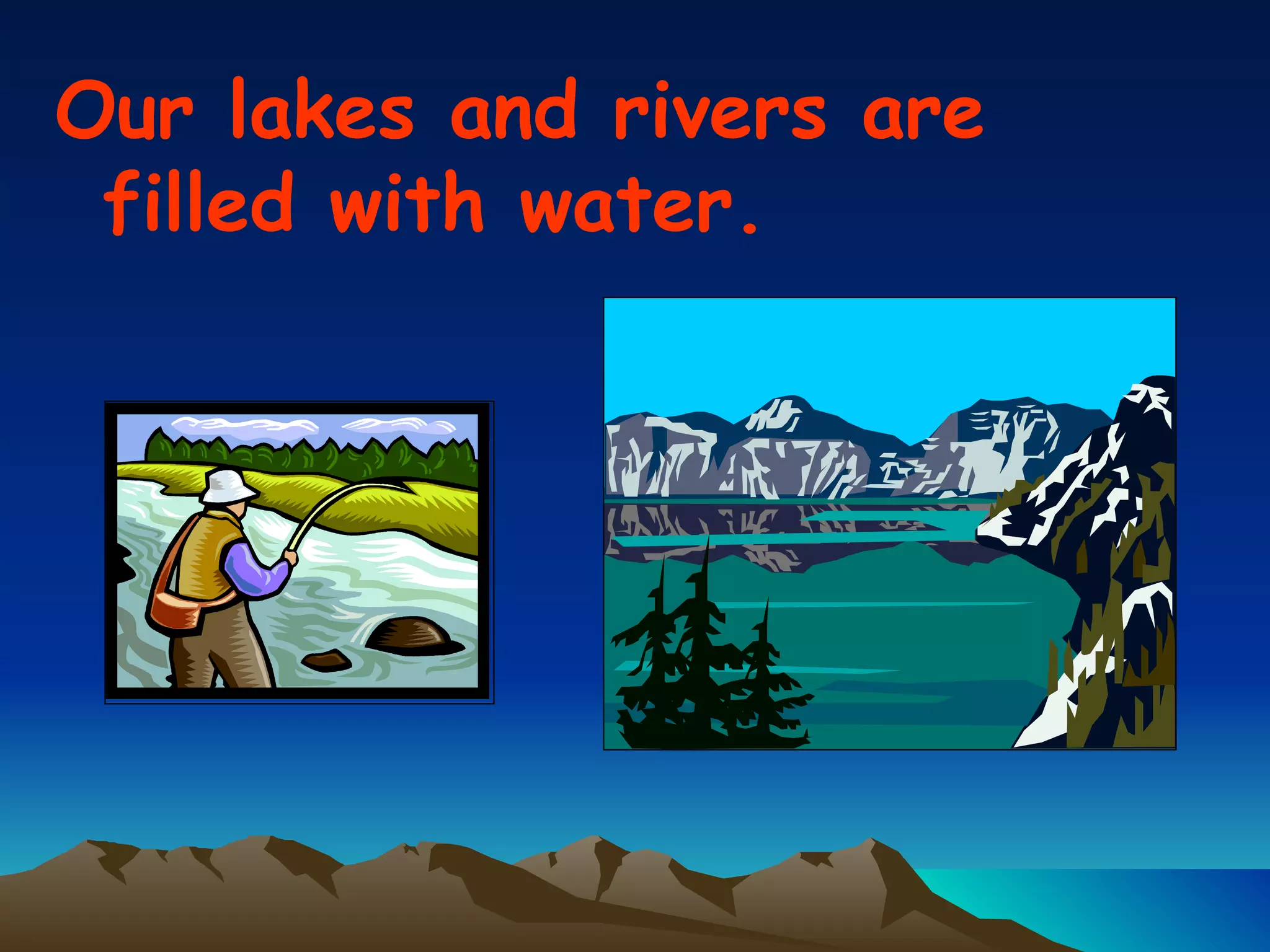
Our lakes and rivers are filled with water.
Properties of Liquids Liquids have an indefinite shape because the particles can slide past one another.  Liquids are not easily compressible and have a definite volume because there is little free space between particles.  Liquids flow easily because the particles can move/slide past one another.  Chumbler - Properties of Matter
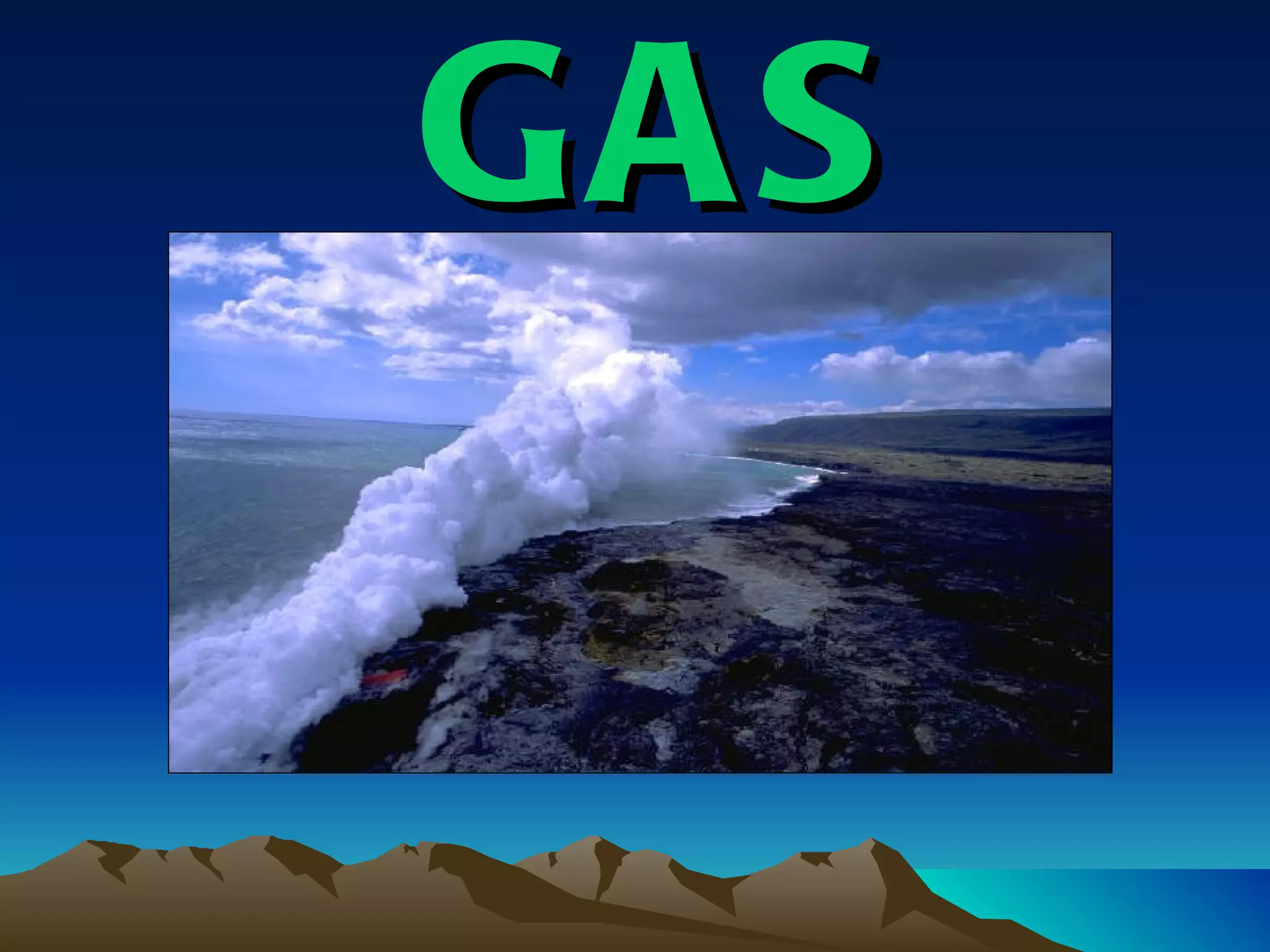
GAS
Gas Particles of gases are very far apart and move freely.  Gases have an indefinite shape and an indefinite volume.  Gases have no free surfaces. Chumbler - Properties of Matter
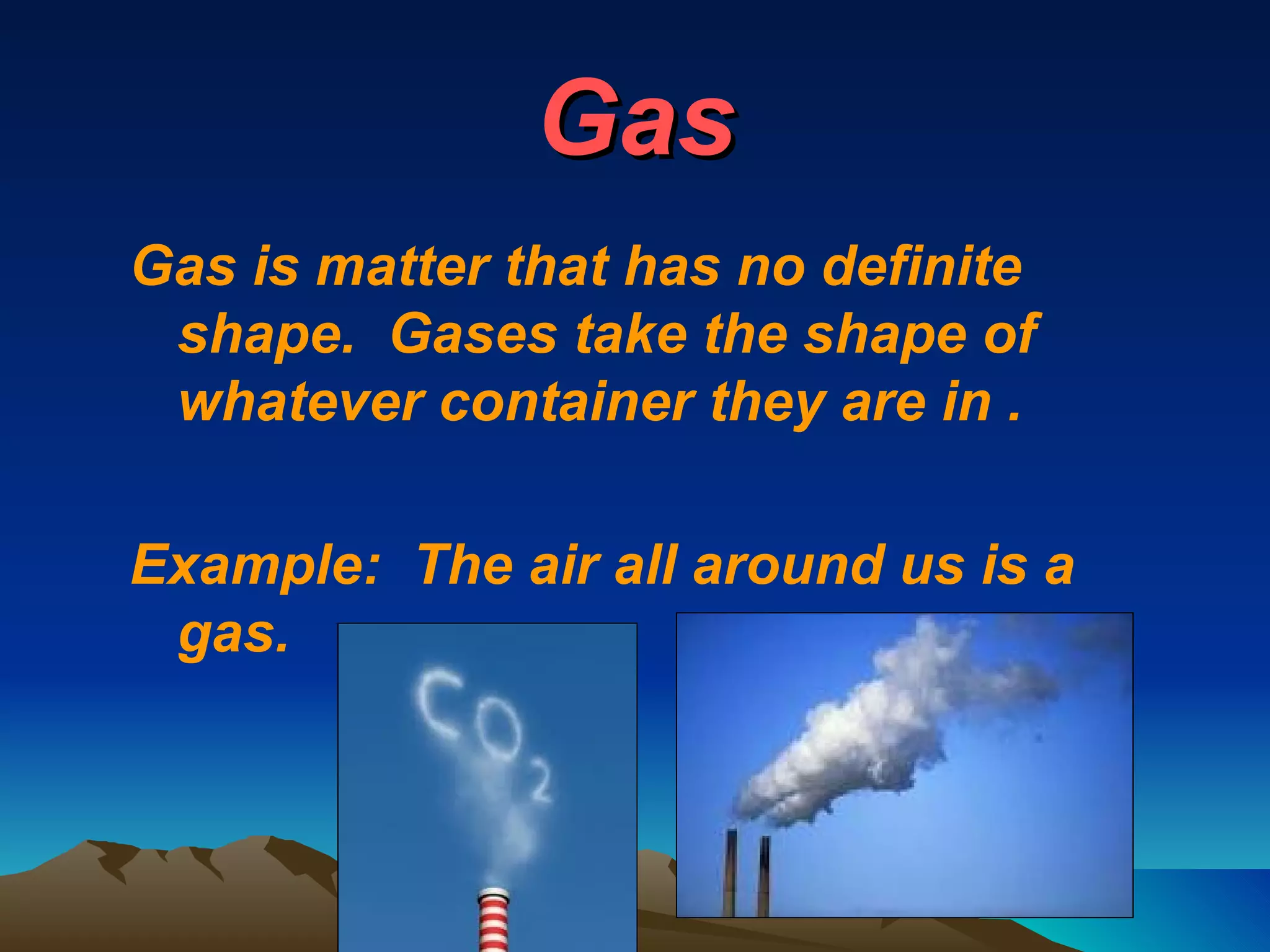
Gas Gas is matter that has no definite shape.  Gases take the shape of whatever container they are in . Example:  The air all around us is a gas.
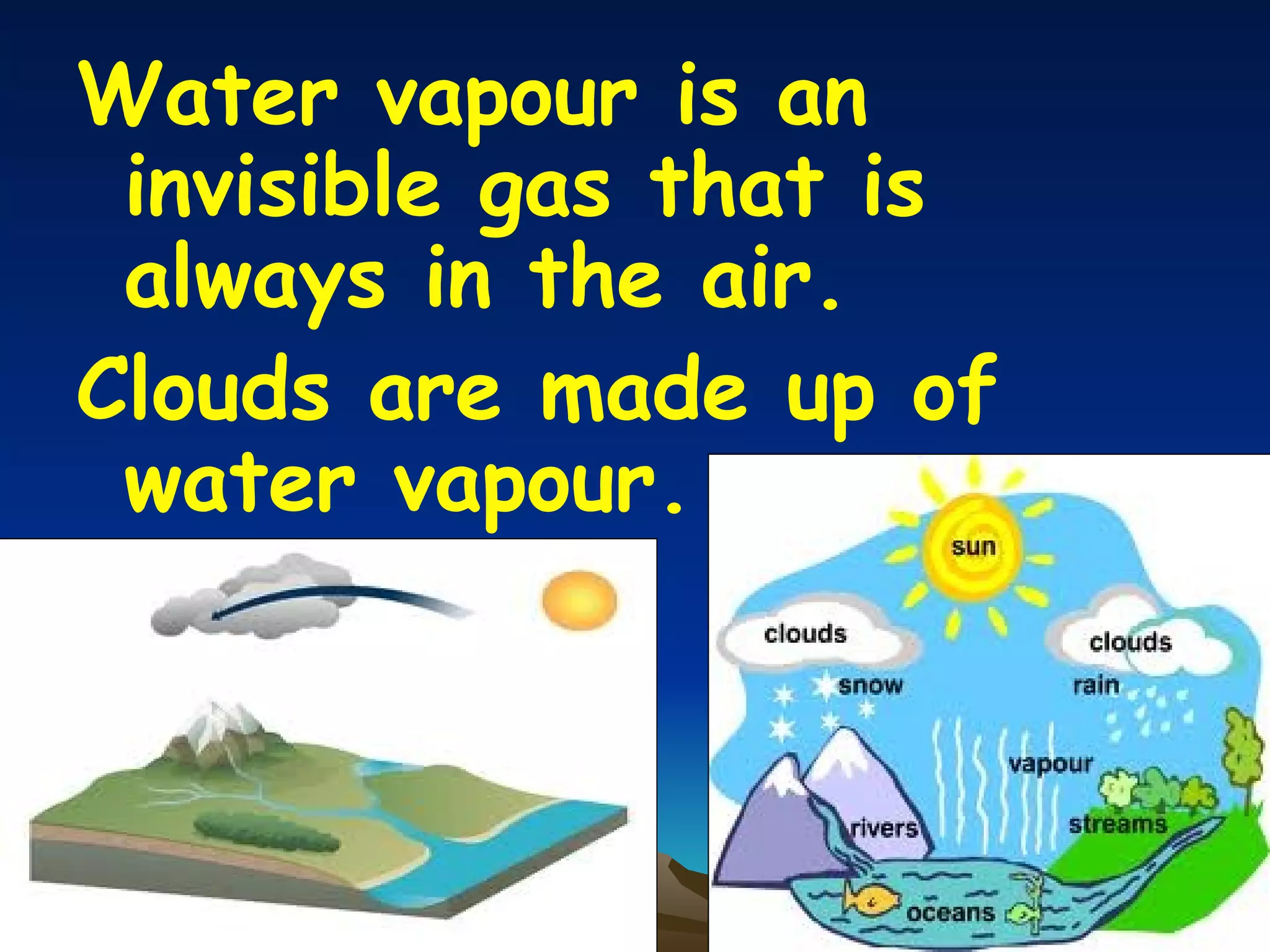
Water vapour is an invisible gas that is always in the air.  Clouds are made up of water vapour.
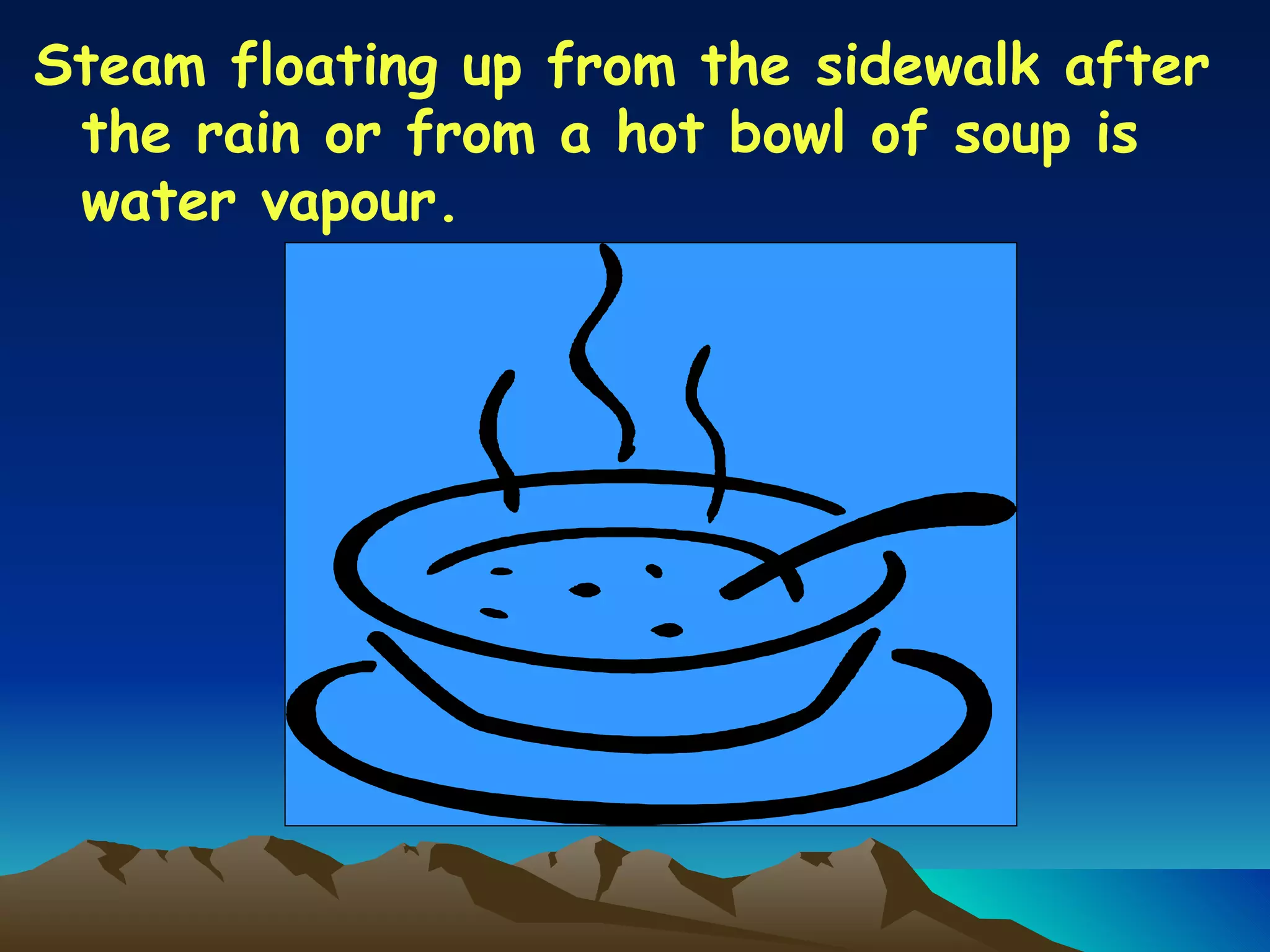
Steam floating up from the sidewalk after the rain or from a hot bowl of soup is water vapour.
Properties of Gases Gases have an indefinite shape and an indefinite volume because the particles can move past one another.  Gases are easily compressible because there is a great deal of free space between particles.  Gases flow very easily because the particles randomly move past one another.  Chumbler - Properties of Matter
A Presentation By : The Golden Intelligence Group Members : 1. Anurag Singla 2. Abhishek Garg 3. Himanshu Chauhan 4. Kunal Aggarwal 5. Nishant Gupta Group Leader : Himanshu Chauhan Topic : Matter

Presentation of science (matter)

  • 1.
    What is matter?Anything that has mass and occupies space is called Matter.
  • 2.
    Properties of MatterHow It Looks? How It Feels ? How It Smells ? How It Sounds ? What It Does?
  • 3.
    CHANGE IN MATTERWater can change from one state to another by adding or subtracting heat. A solid changes to a liquid when heat is added.
  • 4.
    What are Statesof Matter? States of matter are the distinct forms that different phases of matter take on. Solid, liquid and gas are the most common states of matter on Earth. Historically, the distinction is made based on qualitative differences in bulk properties. Solid is the state in which matter maintains a fixed volume and shape; liquid is the state in which matter maintains a fixed volume but adapts to the shape of its container and gas is the state in which matter expands to occupy whatever volume is available.
  • 5.
  • 6.
    The Three Statesof Matter Basis of Classification of the Three Types Based upon particle arrangement Based upon energy of particles Based upon distance between particles Chumbler - Properties of Matter
  • 7.
    States of MatterThe Three States of Matter Solid Liquid Gas Chumbler - Properties of Matter Solid Liquid Gas
  • 8.
  • 9.
    SOLIDS A solidis matter that has that has definite size and shape. Example: Put a sneaker in a box. It stays the same.
  • 10.
    Solids Solids holdtheir shape. Ice and snow are examples of water in the solid state.
  • 11.
    Solids Particles ofsolids are tightly packed, vibrating about a fixed position. Solids have a definite shape and a definite volume. Solids have an infinite number of free surfaces. Chumbler - Properties of Matter
  • 12.
    Properties of SolidsSolids have a definite shape and a definite volume because the particles are locked into place Solids are not easily compressible because there is little free space between particles Solids do not flow easily because the particles cannot move/slide past one another Chumbler - Properties of Matter
  • 13.
  • 14.
    Liquids Particles ofliquids are tightly packed, but are far enough apart to slide over one another. Liquids have an indefinite shape and a definite volume. Liquids have one free surface. Chumbler - Properties of Matter
  • 15.
    Liquid When wethink of water, we usually think of water as a liquid. A liquid will take the shape of whatever container it is in. We drink liquid water. We swim in liquid water.
  • 16.
    A liquid changesto a solid when you take away heat, or it gets colder.
  • 17.
    Our lakes andrivers are filled with water.
  • 18.
    Properties of LiquidsLiquids have an indefinite shape because the particles can slide past one another. Liquids are not easily compressible and have a definite volume because there is little free space between particles. Liquids flow easily because the particles can move/slide past one another. Chumbler - Properties of Matter
  • 19.
  • 20.
    Gas Particles ofgases are very far apart and move freely. Gases have an indefinite shape and an indefinite volume. Gases have no free surfaces. Chumbler - Properties of Matter
  • 21.
    Gas Gas ismatter that has no definite shape. Gases take the shape of whatever container they are in . Example: The air all around us is a gas.
  • 22.
    Water vapour isan invisible gas that is always in the air. Clouds are made up of water vapour.
  • 23.
    Steam floating upfrom the sidewalk after the rain or from a hot bowl of soup is water vapour.
  • 24.
    Properties of GasesGases have an indefinite shape and an indefinite volume because the particles can move past one another. Gases are easily compressible because there is a great deal of free space between particles. Gases flow very easily because the particles randomly move past one another. Chumbler - Properties of Matter
  • 25.
    A Presentation By: The Golden Intelligence Group Members : 1. Anurag Singla 2. Abhishek Garg 3. Himanshu Chauhan 4. Kunal Aggarwal 5. Nishant Gupta Group Leader : Himanshu Chauhan Topic : Matter

Editor's Notes

  • #7 The different states of matter are categorized by the arrangement and energy of the particles at normal temperatures and pressures. The state of matter can be altered by adding or removing energy and/or pressure which can affect the arrangement and energy of the particles.
  • #8 The most basic classification scheme of matter is based on the states of solid, liquid, gas, and plasma. Of these the least discussed in most texts is plasma even though it is the most abundant of all states. 99% of all matter in the universe is plasma.