PARKINSON’S
DISEASE
Mr. Kekal kenneth Vinitkumar
1st Year MSc Nursing
Symbiosis College Of Nursing
Parkinson’s Disease
Parkinson’s disease is named after James Parkinson who in 1817
wrote a classic “shaking palsy” a disease for which the reason is
still unknown.
Overview
 Parkinson's disease is a progressive nervous system disorder that affects
movement. Symptoms start gradually, sometimes starting with a barely
noticeable tremor in just one hand. Tremors are common, but the disorder also
commonly causes stiffness or slowing of movement.
 In the early stages of Parkinson's disease, your face may show little or no
expression. Your arms may not swing when you walk. Your speech may
become soft or slurred. Parkinson's disease symptoms worsen as your
condition progresses over time.
 Although Parkinson's disease can't be cured, medications might significantly
improve your symptoms. Occasionally, your doctor may suggest surgery to
regulate certain regions of your brain and improve your symptoms.
Definition of Parkinson’s Disease
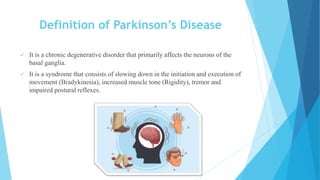
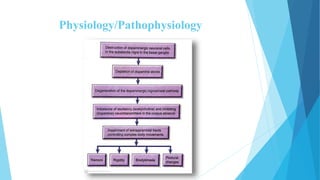
 It is a chronic degenerative disorder that primarily affects the neurons of the
basal ganglia.
 It is a syndrome that consists of slowing down in the initiation and execution of
movement (Bradykinesia), increased muscle tone (Rigidity), tremor and
impaired postural reflexes.
Causes
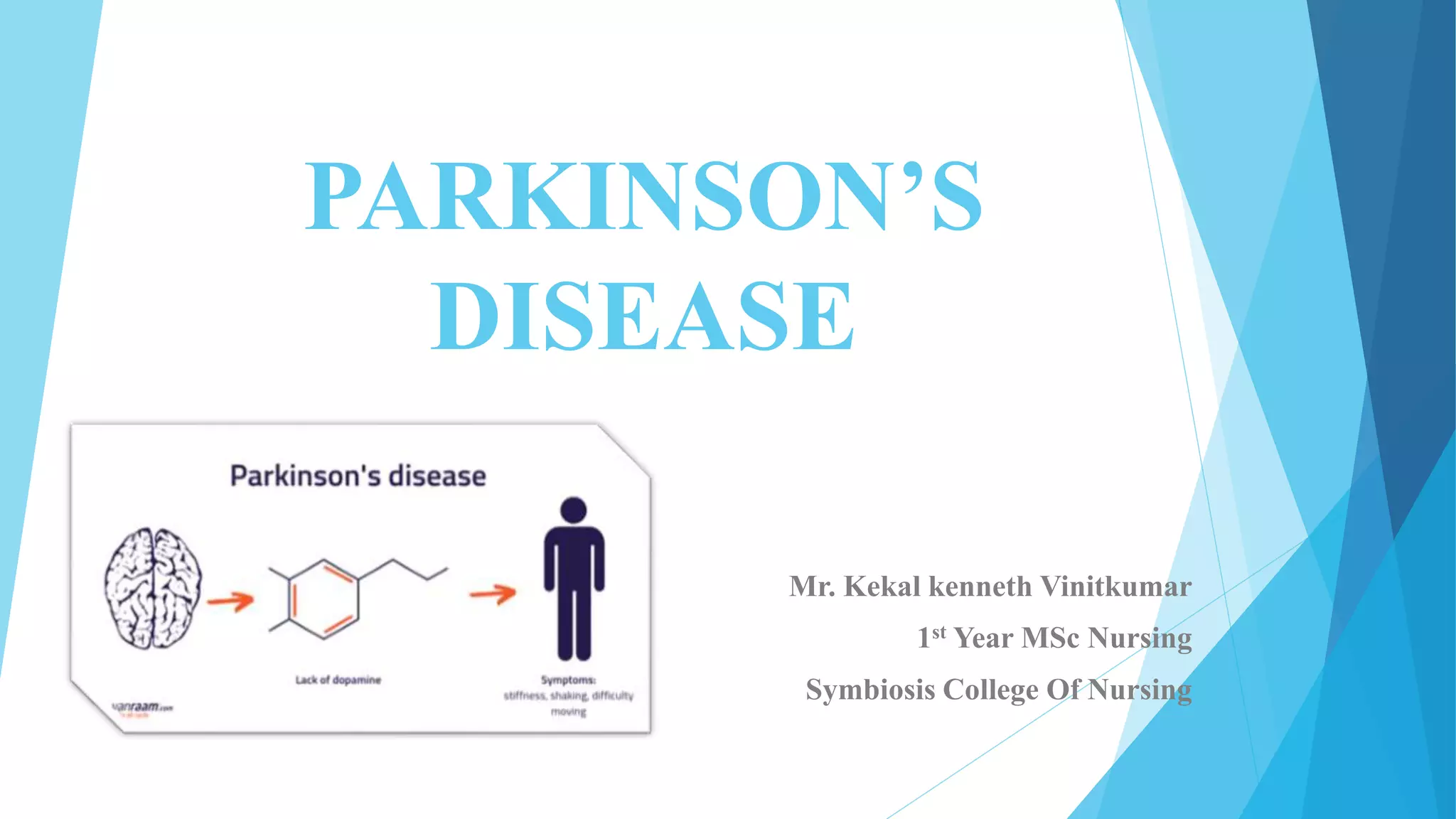
 In Parkinson's disease, certain nerve cells (neurons) in the brain gradually
break down or die. Many of the symptoms are due to a loss of neurons that
produce a chemical messenger in your brain called dopamine. When dopamine
levels decrease, it causes abnormal brain activity, leading to impaired
movement and other symptoms of Parkinson's disease.
 The cause of Parkinson's disease is unknown, but several factors appear to play
a role, including:
 Gene: Researchers have identified specific genetic mutations that can cause
Parkinson's disease. But these are uncommon except in rare cases with many
family members affected by Parkinson's disease.
 Environmental triggers: Exposure to certain toxins or environmental factors
may increase the risk of later Parkinson's disease, but the risk is relatively
small.
Causes
 The presence of Lewy bodies: Clumps of specific substances within brain
cells are microscopic markers of Parkinson's disease. These are called Lewy
bodies, and researchers believe these Lewy bodies hold an important clue to
the cause of Parkinson's disease.
 Alpha-synuclein found within Lewy bodies: Although many substances are
found within Lewy bodies, scientists believe an important one is the natural
and widespread protein called alpha-synuclein (a-synuclein). It's found in all
Lewy bodies in a clumped form that cells can't break down. This is currently
an important focus among Parkinson's disease researchers.
Symptoms
 Parkinson's disease signs and symptoms can be different for everyone.
Early signs may be mild and go unnoticed. Symptoms often begin on one
side of your body and usually remain worse on that side, even after
symptoms begin to affect both sides.
 Parkinson's signs and symptoms may include:
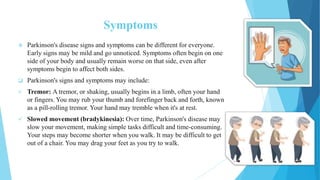
 Tremor: A tremor, or shaking, usually begins in a limb, often your hand
or fingers. You may rub your thumb and forefinger back and forth, known
as a pill-rolling tremor. Your hand may tremble when it's at rest.
 Slowed movement (bradykinesia): Over time, Parkinson's disease may
slow your movement, making simple tasks difficult and time-consuming.
Your steps may become shorter when you walk. It may be difficult to get
out of a chair. You may drag your feet as you try to walk.
Symptoms
 Rigid muscles: Muscle stiffness may occur in any part of your body. The
stiff muscles can be painful and limit your range of motion.
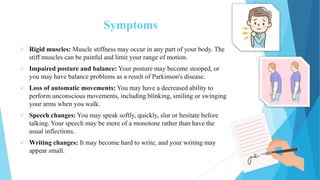
 Impaired posture and balance: Your posture may become stooped, or
you may have balance problems as a result of Parkinson's disease.
 Loss of automatic movements: You may have a decreased ability to
perform unconscious movements, including blinking, smiling or swinging
your arms when you walk.
 Speech changes: You may speak softly, quickly, slur or hesitate before
talking. Your speech may be more of a monotone rather than have the
usual inflections.
 Writing changes: It may become hard to write, and your writing may
appear small.
Physiology/Pathophysiology
Risk factors
 Risk factors for Parkinson's disease include:
 Age: Young adults rarely experience Parkinson's disease. It ordinarily begins in
middle or late life, and the risk increases with age. People usually develop the
disease around age 60 or older.
 Heredity: Having a close relative with Parkinson's disease increases the
chances that you'll develop the disease. However, your risks are still small
unless you have many relatives in your family with Parkinson's disease.
 Sex: Men are more likely to develop Parkinson's disease than are women.
 Exposure to toxins: Ongoing exposure to herbicides and pesticides may
slightly increase your risk of Parkinson's disease.
Complication
 Parkinson's disease is often accompanied by these additional problems, which
may be treatable:
 Thinking difficulties: You may experience cognitive problems (dementia) and
thinking difficulties. These usually occur in the later stages of Parkinson's
disease. Such cognitive problems aren't very responsive to medications.
 Depression and emotional changes: You may experience depression,
sometimes in the very early stages. Receiving treatment for depression can
make it easier to handle the other challenges of Parkinson's disease.
• You may also experience other emotional changes, such as fear, anxiety or loss
of motivation. Doctors may give you medications to treat these symptoms.
 Swallowing problems: You may develop difficulties with swallowing as your
condition progresses. Saliva may accumulate in your mouth due to slowed
swallowing, leading to drooling.
Complication
 Chewing and eating problems: Late-stage Parkinson's disease affects the
muscles in your mouth, making chewing difficult. This can lead to choking and
poor nutrition.
 Sleep problems and sleep disorders: People with Parkinson's disease often
have sleep problems, including waking up frequently throughout the night,
waking up early or falling asleep during the day.
• People may also experience rapid eye movement sleep behavior disorder,
which involves acting out your dreams. Medications may help your sleep
problems.
 Bladder problems: Parkinson's disease may cause bladder problems,
including being unable to control urine or having difficulty urinating.
 Constipation: Many people with Parkinson's disease develop constipation,
mainly due to a slower digestive tract.
Complication
 You may also experience:
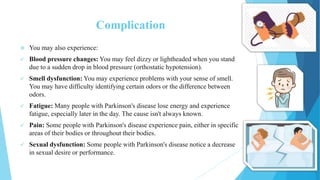
 Blood pressure changes: You may feel dizzy or lightheaded when you stand
due to a sudden drop in blood pressure (orthostatic hypotension).
 Smell dysfunction: You may experience problems with your sense of smell.
You may have difficulty identifying certain odors or the difference between
odors.
 Fatigue: Many people with Parkinson's disease lose energy and experience
fatigue, especially later in the day. The cause isn't always known.
 Pain: Some people with Parkinson's disease experience pain, either in specific
areas of their bodies or throughout their bodies.
 Sexual dysfunction: Some people with Parkinson's disease notice a decrease
in sexual desire or performance.
Prevention to be taken
1. Because the cause of Parkinson's is unknown, proven ways to prevent the
disease also remain a mystery.
2. Some research has shown that regular aerobic exercise might reduce the risk
of Parkinson's disease.
3. Some other research has shown that people who consume caffeine — which
is found in coffee, tea and cola — get Parkinson's disease less often than those
who don't drink it. Green tea is also related to a reduced risk of developing
Parkinson's disease. However, it is still not known whether caffeine actually
protects against getting Parkinson's, or is related in some other way. Currently
there is not enough evidence to suggest drinking caffeinated beverages to
protect against Parkinson's.
Diagnosis
 No specific test exists to diagnose Parkinson's disease. Your doctor trained in nervous
system conditions (neurologist) will diagnose Parkinson's disease based on your
medical history, a review of your signs and symptoms, and a neurological and physical
examination.
 Your doctor may suggest a specific single photon emission computerized
tomography(SPECT) scan called a dopamine transporter scan (Da Tscan). Although this
can help support the suspicion that you have Parkinson’s disease, it is your symptoms
and neurologic examination that ultimately determine the correct diagnosis. Most of the
people do not require DaTscan.
 Your doctor may order some lab tests, such as blood test, to rule out other conditions
that may be causing your symptoms.
 Imaging tests – such as an MRI, Ultrasound of the brain and PET scans also may be
used to help rule out other disorders. Imaging test aren’t particularly helpful for
diagnosing Parkinson’s disease.
 sometimes it takes time to diagnose Parkinson's disease. Doctors may recommend
regular follow-up appointments with neurologists trained in movement disorders to
evaluate your condition and symptoms over time and diagnose Parkinson's disease.
Treatment
1. Parkinson's disease can't be cured, but medications can help control your
symptoms, often dramatically. In some more advanced cases, surgery may be
advised.
2. Your doctor may also recommend lifestyle changes, especially ongoing
aerobic exercise. In some cases, physical therapy that focuses on balance and
stretching also is important. A speech-language pathologist may help improve
your speech problems.
Medication
 Medications may help you manage problems with walking, movement and
tremor. These medications increase or substitute for dopamine.
 People with Parkinson's disease have low brain dopamine concentrations.
However, dopamine can't be given directly, as it can't enter your brain.
 You may have significant improvement of your symptoms after beginning
Parkinson's disease treatment. Over time, however, the benefits of drugs
frequently diminish or become less consistent. You can usually still control
your symptoms fairly well.
Medication
 Carbidopa-levodopa
1. Levodopa, the most effective Parkinson's disease medication, is a natural
chemical that passes into your brain and is converted to dopamine.
2. Levodopa is combined with carbidopa (Lodosyn), which protects levodopa
from early conversion to dopamine outside your brain. This prevents or
lessens side effects such as nausea.
3. Side effects may include nausea or lightheadedness (orthostatic hypotension).
4. After years, as your disease progresses, the benefit from levodopa may
become less stable, with a tendency to wax and wane ("wearing off").
5. Also, you may experience involuntary movements (dyskinesia) after taking
higher doses of levodopa. Your doctor may lessen your dose or adjust the
times of your doses to control these effects.
Medication
 Inhaled carbidopa-levodopa
1. Inbrija is a new brand-name drug delivering carbidopa-levodopa in an
inhaled form. It may be helpful in managing symptoms that arise when oral
medications suddenly stop working during the day.
 Carbidopa-levodopa infusion
1. Duopa is a brand-name medication made up of carbidopa and levodopa.
However, it's administered through a feeding tube that delivers the medication
in a gel form directly to the small intestine.
2. Duopa is for patients with more-advanced Parkinson's who still respond to
carbidopa-levodopa, but who have a lot of fluctuations in their response.
Because Duopa is continually infused, blood levels of the two drugs remain
constant.
3. Placement of the tube requires a small surgical procedure. Risks associated
with having the tube include the tube falling out or infections at the infusion
site.
Medication
 Dopamine agonists
1. Unlike levodopa, dopamine agonists don't change into dopamine. Instead,
they mimic dopamine effects in your brain.
2. They aren't as effective as levodopa in treating your symptoms. However,
they last longer and may be used with levodopa to smooth the sometimes off-
and-on effect of levodopa.
3. Dopamine agonists include pramipexole (Mirapex), ropinirole (Requip) and
rotigotine (Neupro, given as a patch). Apomorphine (Apokyn) is a short-
acting injectable dopamine agonist used for quick relief.
4. Some of the side effects of dopamine agonists are similar to the side effects of
carbidopa-levodopa. But they can also include hallucinations, sleepiness and
compulsive behaviors such as hypersexuality, gambling and eating. If you're
taking these medications and you behave in a way that's out of character for
you, talk to your doctor.
Medication
 MAO B inhibitors
1. These medications include selegiline (Zelapar), rasagiline (Azilect) and
safinamide (Xadago). They help prevent the breakdown of brain dopamine
by inhibiting the brain enzyme monoamine oxidase B (MAO B). This
enzyme metabolizes brain dopamine. Selegiline given with levodopa may
help prevent wearing-off.
2. Side effects of MAO B inhibitors may include headaches, nausea or
insomnia. When added to carbidopa-levodopa, these medications increase
the risk of hallucinations.
3. These medications are not often used in combination with most
antidepressants or certain narcotics due to potentially serious but rare
reactions. Check with your doctor before taking any additional medications
with an MAO B inhibitor.
Medication
 Catechol O-methyltransferase (COMT) inhibitors
1. Entacapone (Comtan) and opicapone (Ongentys) are the primary medications
from this class. This medication mildly prolongs the effect of levodopa
therapy by blocking an enzyme that breaks down dopamine.
2. Side effects, including an increased risk of involuntary movements
(dyskinesia), mainly result from an enhanced levodopa effect. Other side
effects include diarrhea, nausea or vomiting.
3. Tolcapone (Tasmar) is another COMT inhibitor that is rarely prescribed due to
a risk of serious liver damage and liver failure.
 Anticholinergics
1. These medications were used for many years to help control the tremor
associated with Parkinson's disease. Several anticholinergic medications are
available, including benztropine (Cogentin) or trihexyphenidyl.
2. However, their modest benefits are often offset by side effects such as
impaired memory, confusion, hallucinations, constipation, dry mouth and
impaired urination.
Medication
 Amantadine
1. Doctors may prescribe amantadine alone to provide short-term relief of
symptoms of mild, early-stage Parkinson's disease. It may also be given with
carbidopa-levodopa therapy during the later stages of Parkinson's disease to
control involuntary movements (dyskinesia) induced by carbidopa-levodopa.
2. Side effects may include a purple mottling of the skin, ankle swelling or
hallucinations.
Surgical Procedure
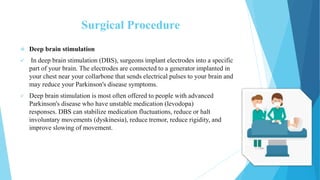
 Deep brain stimulation
 In deep brain stimulation (DBS), surgeons implant electrodes into a specific
part of your brain. The electrodes are connected to a generator implanted in
your chest near your collarbone that sends electrical pulses to your brain and
may reduce your Parkinson's disease symptoms.
 Deep brain stimulation is most often offered to people with advanced
Parkinson's disease who have unstable medication (levodopa)
responses. DBS can stabilize medication fluctuations, reduce or halt
involuntary movements (dyskinesia), reduce tremor, reduce rigidity, and
improve slowing of movement.
Lifestyles and Home Remedies
Certain lifestyle changes also may help make living with Parkinson's disease
easier.
 Healthy eating
1. While no food or combination of foods has been proved to help in Parkinson's
disease, some foods may help ease some of the symptoms. For example,
eating foods high in fiber and drinking an adequate amount of fluids can help
prevent constipation that is common in Parkinson's disease.
2. A balanced diet also provides nutrients, such as omega-3 fatty acids, that
might be beneficial for people with Parkinson's disease.
Lifestyle and Home Remedies
 Exercise
1. Exercising may increase your muscle strength, flexibility and balance.
Exercise can also improve your well-being and reduce depression or anxiety.
2. Parkinson's disease can disturb your sense of balance, making it difficult to
walk with a normal gait. Exercise may improve your balance. These
suggestions may also help:
 Try not to move too quickly.
 Aim for your heel to strike the floor first when you're walking.
 If you notice yourself shuffling, stop and check your posture. It's best to stand
up straight.
 Look in front of you, not directly down, while walking.
Lifestyle and Home Remedies
 Avoiding falls
1. In the later stages of the disease, you may fall more easily. In fact, you may be
thrown off balance by just a small push or bump. The following suggestions
may help:
 Make a U-turn instead of pivoting your body over your feet.
 Distribute your weight evenly between both feet, and don't lean.
 Avoid carrying things while you walk.
 Avoid walking backward.
 Daily living activities
1. Daily living activities — such as dressing, eating, bathing and writing — can
be difficult for people with Parkinson's disease. An occupational therapist can
show you techniques that make daily life easier.
Alternative Medicine/Therapy
 Supportive therapies can help ease some of the symptoms and complications of
Parkinson's disease, such as pain, fatigue and depression. When performed in
combination with your treatments, these therapies might improve your quality
of life:
 Massage: Massage therapy can reduce muscle tension and promote relaxation.
This therapy, however, is rarely covered by health insurance.
 Tai chi: An ancient form of Chinese exercise, tai chi employs slow, flowing
motions that may improve flexibility, balance and muscle strength. Tai chi may
also help prevent falls. Several forms of tai chi are tailored for people of any
age or physical condition.
• A study showed that tai chi may improve the balance of people with mild to
moderate Parkinson's disease more than stretching and resistance training.
Alternate Medicine/Therapy
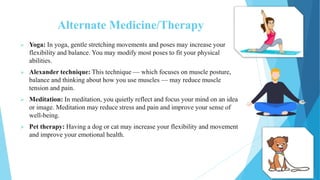
 Yoga: In yoga, gentle stretching movements and poses may increase your
flexibility and balance. You may modify most poses to fit your physical
abilities.
 Alexander technique: This technique — which focuses on muscle posture,
balance and thinking about how you use muscles — may reduce muscle
tension and pain.
 Meditation: In meditation, you quietly reflect and focus your mind on an idea
or image. Meditation may reduce stress and pain and improve your sense of
well-being.
 Pet therapy: Having a dog or cat may increase your flexibility and movement
and improve your emotional health.
Nursing Management
 To promote the optimal health, the nurse works closely with the patient and
family to ensure that they understand:
a. How Parkinson’s disease and it’s treatment impact the physiologic
functioning, roles, relationships and spirituality.
b. The importance of adhering to the prescribed medication regimen; including
knowing the purpose, dose, route, schedule, side effects and precautions for
all the medication.
c. How and when to contact all members of the treatment team (E.g. Health care
workers, home care professionals and durable medical equipment's and
supply vendors).
d. Specific type of environmental and safety changes or support that will allow
optimum functioning in the home.
e. The risk of falls/injury and how to implement fall prevention and adaptive
measures in the home.
Nursing Management
 In addition the nurse advises that patient and family about the lifestyle changes that
are necessary to maintain health and promote self-care and independence. These
includes,
a. Ensuring nutritional needs, including adhering to dietary restrictions, managing
dysphagia and preventing aspiration.
b. Promoting speech and communication skills; speech exercises, communication
techniques and breathing exercises.
c. Managing constipation; fluid intake and bowel routine.
d. Managing urinary problems; functional incontinence and retention.
e. Avoiding the effects of immobility and promoting the advantages of preventive
care.
f. Promoting the benefits of a daily exercise program.
g. Ensuring safe walking and balancing.
h. Using appropriate coping mechanism and diversional activities.
Assignment for the Student’s
 Mr. X is admitted in the hospital with the diagnosis of Parkinson’s Disease.
1. Enlist 3 Nursing diagnosis based on the assessment data ?
2. Elaborate any 1 Nursing diagnosis ?
Bibliography
1. Lewis’s, Medical Surgical Nursing, Assessment and Management of Clinical
problems, Page no: 1516 – 1522.
2. Brunner and Suddarth’s, Textbook of Medical Surgical Nursing, South Asian
Edition, Page no: 1805 – 1811.
3. Debr’s, Mental Health Nursing, EMMESS Publications, D. Elakkuvana
Bhaskara Raj, 2ND Edition.
4. R. Sreevani, A guide to mental health and psychiatric nursing, 3rd Edition.
5. https://www.apdaparkinson.org/wp-
content/uploads/2017/02/APDA1703_Basic-Handbook-D5V4-4web.pdf
6. https://www.mayoclinic.org/diseases-conditions/parkinsons-disease/diagnosis-
treatment/drc-20376062

Parkinson's disease

  • 1.
    PARKINSON’S DISEASE Mr. Kekal kennethVinitkumar 1st Year MSc Nursing Symbiosis College Of Nursing
  • 2.
    Parkinson’s Disease Parkinson’s diseaseis named after James Parkinson who in 1817 wrote a classic “shaking palsy” a disease for which the reason is still unknown.
  • 3.
    Overview  Parkinson's diseaseis a progressive nervous system disorder that affects movement. Symptoms start gradually, sometimes starting with a barely noticeable tremor in just one hand. Tremors are common, but the disorder also commonly causes stiffness or slowing of movement.  In the early stages of Parkinson's disease, your face may show little or no expression. Your arms may not swing when you walk. Your speech may become soft or slurred. Parkinson's disease symptoms worsen as your condition progresses over time.  Although Parkinson's disease can't be cured, medications might significantly improve your symptoms. Occasionally, your doctor may suggest surgery to regulate certain regions of your brain and improve your symptoms.
  • 4.
    Definition of Parkinson’sDisease  It is a chronic degenerative disorder that primarily affects the neurons of the basal ganglia.  It is a syndrome that consists of slowing down in the initiation and execution of movement (Bradykinesia), increased muscle tone (Rigidity), tremor and impaired postural reflexes.
  • 5.
    Causes  In Parkinson'sdisease, certain nerve cells (neurons) in the brain gradually break down or die. Many of the symptoms are due to a loss of neurons that produce a chemical messenger in your brain called dopamine. When dopamine levels decrease, it causes abnormal brain activity, leading to impaired movement and other symptoms of Parkinson's disease.  The cause of Parkinson's disease is unknown, but several factors appear to play a role, including:  Gene: Researchers have identified specific genetic mutations that can cause Parkinson's disease. But these are uncommon except in rare cases with many family members affected by Parkinson's disease.  Environmental triggers: Exposure to certain toxins or environmental factors may increase the risk of later Parkinson's disease, but the risk is relatively small.
  • 6.
    Causes  The presenceof Lewy bodies: Clumps of specific substances within brain cells are microscopic markers of Parkinson's disease. These are called Lewy bodies, and researchers believe these Lewy bodies hold an important clue to the cause of Parkinson's disease.  Alpha-synuclein found within Lewy bodies: Although many substances are found within Lewy bodies, scientists believe an important one is the natural and widespread protein called alpha-synuclein (a-synuclein). It's found in all Lewy bodies in a clumped form that cells can't break down. This is currently an important focus among Parkinson's disease researchers.
  • 7.
    Symptoms  Parkinson's diseasesigns and symptoms can be different for everyone. Early signs may be mild and go unnoticed. Symptoms often begin on one side of your body and usually remain worse on that side, even after symptoms begin to affect both sides.  Parkinson's signs and symptoms may include:  Tremor: A tremor, or shaking, usually begins in a limb, often your hand or fingers. You may rub your thumb and forefinger back and forth, known as a pill-rolling tremor. Your hand may tremble when it's at rest.  Slowed movement (bradykinesia): Over time, Parkinson's disease may slow your movement, making simple tasks difficult and time-consuming. Your steps may become shorter when you walk. It may be difficult to get out of a chair. You may drag your feet as you try to walk.
  • 8.
    Symptoms  Rigid muscles:Muscle stiffness may occur in any part of your body. The stiff muscles can be painful and limit your range of motion.  Impaired posture and balance: Your posture may become stooped, or you may have balance problems as a result of Parkinson's disease.  Loss of automatic movements: You may have a decreased ability to perform unconscious movements, including blinking, smiling or swinging your arms when you walk.  Speech changes: You may speak softly, quickly, slur or hesitate before talking. Your speech may be more of a monotone rather than have the usual inflections.  Writing changes: It may become hard to write, and your writing may appear small.
  • 9.
  • 10.
    Risk factors  Riskfactors for Parkinson's disease include:  Age: Young adults rarely experience Parkinson's disease. It ordinarily begins in middle or late life, and the risk increases with age. People usually develop the disease around age 60 or older.  Heredity: Having a close relative with Parkinson's disease increases the chances that you'll develop the disease. However, your risks are still small unless you have many relatives in your family with Parkinson's disease.  Sex: Men are more likely to develop Parkinson's disease than are women.  Exposure to toxins: Ongoing exposure to herbicides and pesticides may slightly increase your risk of Parkinson's disease.
  • 11.
    Complication  Parkinson's diseaseis often accompanied by these additional problems, which may be treatable:  Thinking difficulties: You may experience cognitive problems (dementia) and thinking difficulties. These usually occur in the later stages of Parkinson's disease. Such cognitive problems aren't very responsive to medications.  Depression and emotional changes: You may experience depression, sometimes in the very early stages. Receiving treatment for depression can make it easier to handle the other challenges of Parkinson's disease. • You may also experience other emotional changes, such as fear, anxiety or loss of motivation. Doctors may give you medications to treat these symptoms.  Swallowing problems: You may develop difficulties with swallowing as your condition progresses. Saliva may accumulate in your mouth due to slowed swallowing, leading to drooling.
  • 12.
    Complication  Chewing andeating problems: Late-stage Parkinson's disease affects the muscles in your mouth, making chewing difficult. This can lead to choking and poor nutrition.  Sleep problems and sleep disorders: People with Parkinson's disease often have sleep problems, including waking up frequently throughout the night, waking up early or falling asleep during the day. • People may also experience rapid eye movement sleep behavior disorder, which involves acting out your dreams. Medications may help your sleep problems.  Bladder problems: Parkinson's disease may cause bladder problems, including being unable to control urine or having difficulty urinating.  Constipation: Many people with Parkinson's disease develop constipation, mainly due to a slower digestive tract.
  • 13.
    Complication  You mayalso experience:  Blood pressure changes: You may feel dizzy or lightheaded when you stand due to a sudden drop in blood pressure (orthostatic hypotension).  Smell dysfunction: You may experience problems with your sense of smell. You may have difficulty identifying certain odors or the difference between odors.  Fatigue: Many people with Parkinson's disease lose energy and experience fatigue, especially later in the day. The cause isn't always known.  Pain: Some people with Parkinson's disease experience pain, either in specific areas of their bodies or throughout their bodies.  Sexual dysfunction: Some people with Parkinson's disease notice a decrease in sexual desire or performance.
  • 14.
    Prevention to betaken 1. Because the cause of Parkinson's is unknown, proven ways to prevent the disease also remain a mystery. 2. Some research has shown that regular aerobic exercise might reduce the risk of Parkinson's disease. 3. Some other research has shown that people who consume caffeine — which is found in coffee, tea and cola — get Parkinson's disease less often than those who don't drink it. Green tea is also related to a reduced risk of developing Parkinson's disease. However, it is still not known whether caffeine actually protects against getting Parkinson's, or is related in some other way. Currently there is not enough evidence to suggest drinking caffeinated beverages to protect against Parkinson's.
  • 15.
    Diagnosis  No specifictest exists to diagnose Parkinson's disease. Your doctor trained in nervous system conditions (neurologist) will diagnose Parkinson's disease based on your medical history, a review of your signs and symptoms, and a neurological and physical examination.  Your doctor may suggest a specific single photon emission computerized tomography(SPECT) scan called a dopamine transporter scan (Da Tscan). Although this can help support the suspicion that you have Parkinson’s disease, it is your symptoms and neurologic examination that ultimately determine the correct diagnosis. Most of the people do not require DaTscan.  Your doctor may order some lab tests, such as blood test, to rule out other conditions that may be causing your symptoms.  Imaging tests – such as an MRI, Ultrasound of the brain and PET scans also may be used to help rule out other disorders. Imaging test aren’t particularly helpful for diagnosing Parkinson’s disease.  sometimes it takes time to diagnose Parkinson's disease. Doctors may recommend regular follow-up appointments with neurologists trained in movement disorders to evaluate your condition and symptoms over time and diagnose Parkinson's disease.
  • 16.
    Treatment 1. Parkinson's diseasecan't be cured, but medications can help control your symptoms, often dramatically. In some more advanced cases, surgery may be advised. 2. Your doctor may also recommend lifestyle changes, especially ongoing aerobic exercise. In some cases, physical therapy that focuses on balance and stretching also is important. A speech-language pathologist may help improve your speech problems.
  • 17.
    Medication  Medications mayhelp you manage problems with walking, movement and tremor. These medications increase or substitute for dopamine.  People with Parkinson's disease have low brain dopamine concentrations. However, dopamine can't be given directly, as it can't enter your brain.  You may have significant improvement of your symptoms after beginning Parkinson's disease treatment. Over time, however, the benefits of drugs frequently diminish or become less consistent. You can usually still control your symptoms fairly well.
  • 18.
    Medication  Carbidopa-levodopa 1. Levodopa,the most effective Parkinson's disease medication, is a natural chemical that passes into your brain and is converted to dopamine. 2. Levodopa is combined with carbidopa (Lodosyn), which protects levodopa from early conversion to dopamine outside your brain. This prevents or lessens side effects such as nausea. 3. Side effects may include nausea or lightheadedness (orthostatic hypotension). 4. After years, as your disease progresses, the benefit from levodopa may become less stable, with a tendency to wax and wane ("wearing off"). 5. Also, you may experience involuntary movements (dyskinesia) after taking higher doses of levodopa. Your doctor may lessen your dose or adjust the times of your doses to control these effects.
  • 19.
    Medication  Inhaled carbidopa-levodopa 1.Inbrija is a new brand-name drug delivering carbidopa-levodopa in an inhaled form. It may be helpful in managing symptoms that arise when oral medications suddenly stop working during the day.  Carbidopa-levodopa infusion 1. Duopa is a brand-name medication made up of carbidopa and levodopa. However, it's administered through a feeding tube that delivers the medication in a gel form directly to the small intestine. 2. Duopa is for patients with more-advanced Parkinson's who still respond to carbidopa-levodopa, but who have a lot of fluctuations in their response. Because Duopa is continually infused, blood levels of the two drugs remain constant. 3. Placement of the tube requires a small surgical procedure. Risks associated with having the tube include the tube falling out or infections at the infusion site.
  • 20.
    Medication  Dopamine agonists 1.Unlike levodopa, dopamine agonists don't change into dopamine. Instead, they mimic dopamine effects in your brain. 2. They aren't as effective as levodopa in treating your symptoms. However, they last longer and may be used with levodopa to smooth the sometimes off- and-on effect of levodopa. 3. Dopamine agonists include pramipexole (Mirapex), ropinirole (Requip) and rotigotine (Neupro, given as a patch). Apomorphine (Apokyn) is a short- acting injectable dopamine agonist used for quick relief. 4. Some of the side effects of dopamine agonists are similar to the side effects of carbidopa-levodopa. But they can also include hallucinations, sleepiness and compulsive behaviors such as hypersexuality, gambling and eating. If you're taking these medications and you behave in a way that's out of character for you, talk to your doctor.
  • 21.
    Medication  MAO Binhibitors 1. These medications include selegiline (Zelapar), rasagiline (Azilect) and safinamide (Xadago). They help prevent the breakdown of brain dopamine by inhibiting the brain enzyme monoamine oxidase B (MAO B). This enzyme metabolizes brain dopamine. Selegiline given with levodopa may help prevent wearing-off. 2. Side effects of MAO B inhibitors may include headaches, nausea or insomnia. When added to carbidopa-levodopa, these medications increase the risk of hallucinations. 3. These medications are not often used in combination with most antidepressants or certain narcotics due to potentially serious but rare reactions. Check with your doctor before taking any additional medications with an MAO B inhibitor.
  • 22.
    Medication  Catechol O-methyltransferase(COMT) inhibitors 1. Entacapone (Comtan) and opicapone (Ongentys) are the primary medications from this class. This medication mildly prolongs the effect of levodopa therapy by blocking an enzyme that breaks down dopamine. 2. Side effects, including an increased risk of involuntary movements (dyskinesia), mainly result from an enhanced levodopa effect. Other side effects include diarrhea, nausea or vomiting. 3. Tolcapone (Tasmar) is another COMT inhibitor that is rarely prescribed due to a risk of serious liver damage and liver failure.  Anticholinergics 1. These medications were used for many years to help control the tremor associated with Parkinson's disease. Several anticholinergic medications are available, including benztropine (Cogentin) or trihexyphenidyl. 2. However, their modest benefits are often offset by side effects such as impaired memory, confusion, hallucinations, constipation, dry mouth and impaired urination.
  • 23.
    Medication  Amantadine 1. Doctorsmay prescribe amantadine alone to provide short-term relief of symptoms of mild, early-stage Parkinson's disease. It may also be given with carbidopa-levodopa therapy during the later stages of Parkinson's disease to control involuntary movements (dyskinesia) induced by carbidopa-levodopa. 2. Side effects may include a purple mottling of the skin, ankle swelling or hallucinations.
  • 24.
    Surgical Procedure  Deepbrain stimulation  In deep brain stimulation (DBS), surgeons implant electrodes into a specific part of your brain. The electrodes are connected to a generator implanted in your chest near your collarbone that sends electrical pulses to your brain and may reduce your Parkinson's disease symptoms.  Deep brain stimulation is most often offered to people with advanced Parkinson's disease who have unstable medication (levodopa) responses. DBS can stabilize medication fluctuations, reduce or halt involuntary movements (dyskinesia), reduce tremor, reduce rigidity, and improve slowing of movement.
  • 25.
    Lifestyles and HomeRemedies Certain lifestyle changes also may help make living with Parkinson's disease easier.  Healthy eating 1. While no food or combination of foods has been proved to help in Parkinson's disease, some foods may help ease some of the symptoms. For example, eating foods high in fiber and drinking an adequate amount of fluids can help prevent constipation that is common in Parkinson's disease. 2. A balanced diet also provides nutrients, such as omega-3 fatty acids, that might be beneficial for people with Parkinson's disease.
  • 26.
    Lifestyle and HomeRemedies  Exercise 1. Exercising may increase your muscle strength, flexibility and balance. Exercise can also improve your well-being and reduce depression or anxiety. 2. Parkinson's disease can disturb your sense of balance, making it difficult to walk with a normal gait. Exercise may improve your balance. These suggestions may also help:  Try not to move too quickly.  Aim for your heel to strike the floor first when you're walking.  If you notice yourself shuffling, stop and check your posture. It's best to stand up straight.  Look in front of you, not directly down, while walking.
  • 27.
    Lifestyle and HomeRemedies  Avoiding falls 1. In the later stages of the disease, you may fall more easily. In fact, you may be thrown off balance by just a small push or bump. The following suggestions may help:  Make a U-turn instead of pivoting your body over your feet.  Distribute your weight evenly between both feet, and don't lean.  Avoid carrying things while you walk.  Avoid walking backward.  Daily living activities 1. Daily living activities — such as dressing, eating, bathing and writing — can be difficult for people with Parkinson's disease. An occupational therapist can show you techniques that make daily life easier.
  • 28.
    Alternative Medicine/Therapy  Supportivetherapies can help ease some of the symptoms and complications of Parkinson's disease, such as pain, fatigue and depression. When performed in combination with your treatments, these therapies might improve your quality of life:  Massage: Massage therapy can reduce muscle tension and promote relaxation. This therapy, however, is rarely covered by health insurance.  Tai chi: An ancient form of Chinese exercise, tai chi employs slow, flowing motions that may improve flexibility, balance and muscle strength. Tai chi may also help prevent falls. Several forms of tai chi are tailored for people of any age or physical condition. • A study showed that tai chi may improve the balance of people with mild to moderate Parkinson's disease more than stretching and resistance training.
  • 29.
    Alternate Medicine/Therapy  Yoga:In yoga, gentle stretching movements and poses may increase your flexibility and balance. You may modify most poses to fit your physical abilities.  Alexander technique: This technique — which focuses on muscle posture, balance and thinking about how you use muscles — may reduce muscle tension and pain.  Meditation: In meditation, you quietly reflect and focus your mind on an idea or image. Meditation may reduce stress and pain and improve your sense of well-being.  Pet therapy: Having a dog or cat may increase your flexibility and movement and improve your emotional health.
  • 30.
    Nursing Management  Topromote the optimal health, the nurse works closely with the patient and family to ensure that they understand: a. How Parkinson’s disease and it’s treatment impact the physiologic functioning, roles, relationships and spirituality. b. The importance of adhering to the prescribed medication regimen; including knowing the purpose, dose, route, schedule, side effects and precautions for all the medication. c. How and when to contact all members of the treatment team (E.g. Health care workers, home care professionals and durable medical equipment's and supply vendors). d. Specific type of environmental and safety changes or support that will allow optimum functioning in the home. e. The risk of falls/injury and how to implement fall prevention and adaptive measures in the home.
  • 31.
    Nursing Management  Inaddition the nurse advises that patient and family about the lifestyle changes that are necessary to maintain health and promote self-care and independence. These includes, a. Ensuring nutritional needs, including adhering to dietary restrictions, managing dysphagia and preventing aspiration. b. Promoting speech and communication skills; speech exercises, communication techniques and breathing exercises. c. Managing constipation; fluid intake and bowel routine. d. Managing urinary problems; functional incontinence and retention. e. Avoiding the effects of immobility and promoting the advantages of preventive care. f. Promoting the benefits of a daily exercise program. g. Ensuring safe walking and balancing. h. Using appropriate coping mechanism and diversional activities.
  • 32.
    Assignment for theStudent’s  Mr. X is admitted in the hospital with the diagnosis of Parkinson’s Disease. 1. Enlist 3 Nursing diagnosis based on the assessment data ? 2. Elaborate any 1 Nursing diagnosis ?
  • 33.
    Bibliography 1. Lewis’s, MedicalSurgical Nursing, Assessment and Management of Clinical problems, Page no: 1516 – 1522. 2. Brunner and Suddarth’s, Textbook of Medical Surgical Nursing, South Asian Edition, Page no: 1805 – 1811. 3. Debr’s, Mental Health Nursing, EMMESS Publications, D. Elakkuvana Bhaskara Raj, 2ND Edition. 4. R. Sreevani, A guide to mental health and psychiatric nursing, 3rd Edition. 5. https://www.apdaparkinson.org/wp- content/uploads/2017/02/APDA1703_Basic-Handbook-D5V4-4web.pdf 6. https://www.mayoclinic.org/diseases-conditions/parkinsons-disease/diagnosis- treatment/drc-20376062