Parameters of
wastewater analysis
• Acidity
• Sulphates
• Volatile Acids
• Nitrogen
• Grease and Oils
ACIDITY
 The quantitative capacity of water to neutralize a base is
called “Acidity”.
 The number of hydrogen atoms that are present
determines acidity.
 Acidity of natural water is caused by carbon dioxide or by
strong mineral acids.
FIGURE
Types of acidity
of importance in
ordinary water
and waste water
analysis, and the
pH ranges in
which they are
significant
 It is customary to consider that all water
having a pH lower than 8.5 contain
acidity.
 Two types of acidity as follows
1. Total acidity (phenolphthalein acidity)
2. Mineral acidity (methyl orange acidity)
ENVIRONMENTAL SIGNIFICANCE
 Little concern from sanitary or public health viewpoint.
 No deleterious effect due to 𝐂𝐎 𝟐has been recognized.
 Acid water are of concern because of their corrosive
characteristics.
 𝐂𝐎 𝟐 must be calculated during after softening problems
(using lime or lime soda ash methods)
 pH Range should be 6to 9.5 for biological process of
treatment.
 Lower the pH in buffered lakes affecting aquatic life &
thus increases chemicals ( e.g. aluminium)
DETERMINATION OFACIDITY
 Mineral acids are measured titration to a of about 3.7,
the methyl orange end point.
 Titration of sample to the phenolphthalein end point
of 8.3 measures total acidity.
 Two methods of measurement of acidy
1. Titration method
2. Field method
MINERAL ACIDITY
 BURETTE : NaOH
 FLASK : Sample
 INDICATOR: Methayle orange
Bromophenol Blue
 COLOR CHANGE :
TOTALACIDITY
 BURETTE : NaOH
 FLASK : Sample
 INDICATOR: Phenolphthalein
Metacresol purple
 COLOR CHANGE :
Burette
filling
Take
sample
Add
indicator
Titrate
Take
readings
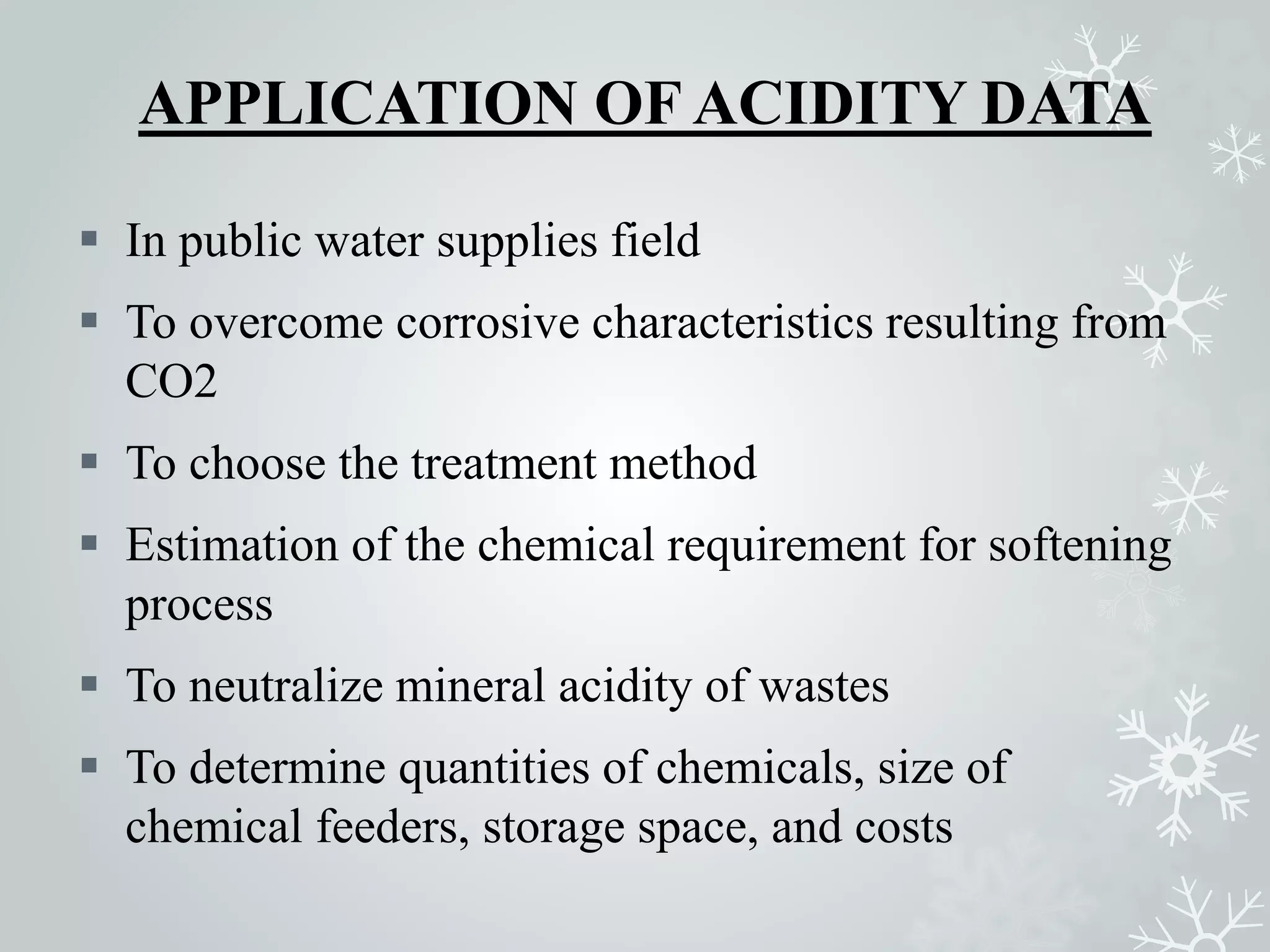
APPLICATION OF ACIDITY DATA
 In public water supplies field
 To overcome corrosive characteristics resulting from
CO2
 To choose the treatment method
 Estimation of the chemical requirement for softening
process
 To neutralize mineral acidity of wastes
 To determine quantities of chemicals, size of
chemical feeders, storage space, and costs
SULFATE
 It is of considerable concern because it is indirectly
responsible for two serious problem those are odor &
sewer-corrosion often associated with the handling
and treatment plant
 It is of importance in public water supplies because of
its cathartic effect upon human when it is present in
excessive amounts.
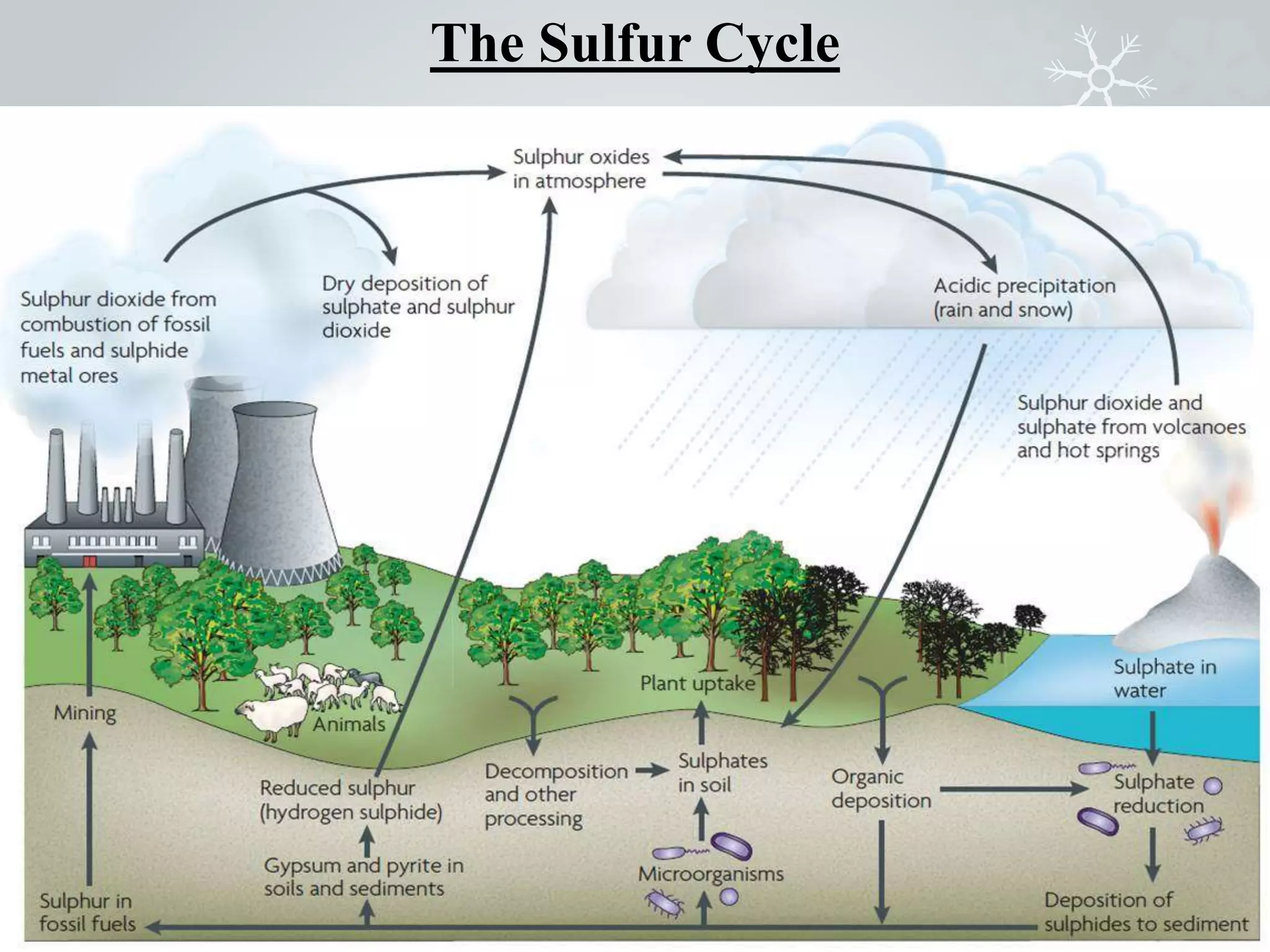
The Sulfur Cycle
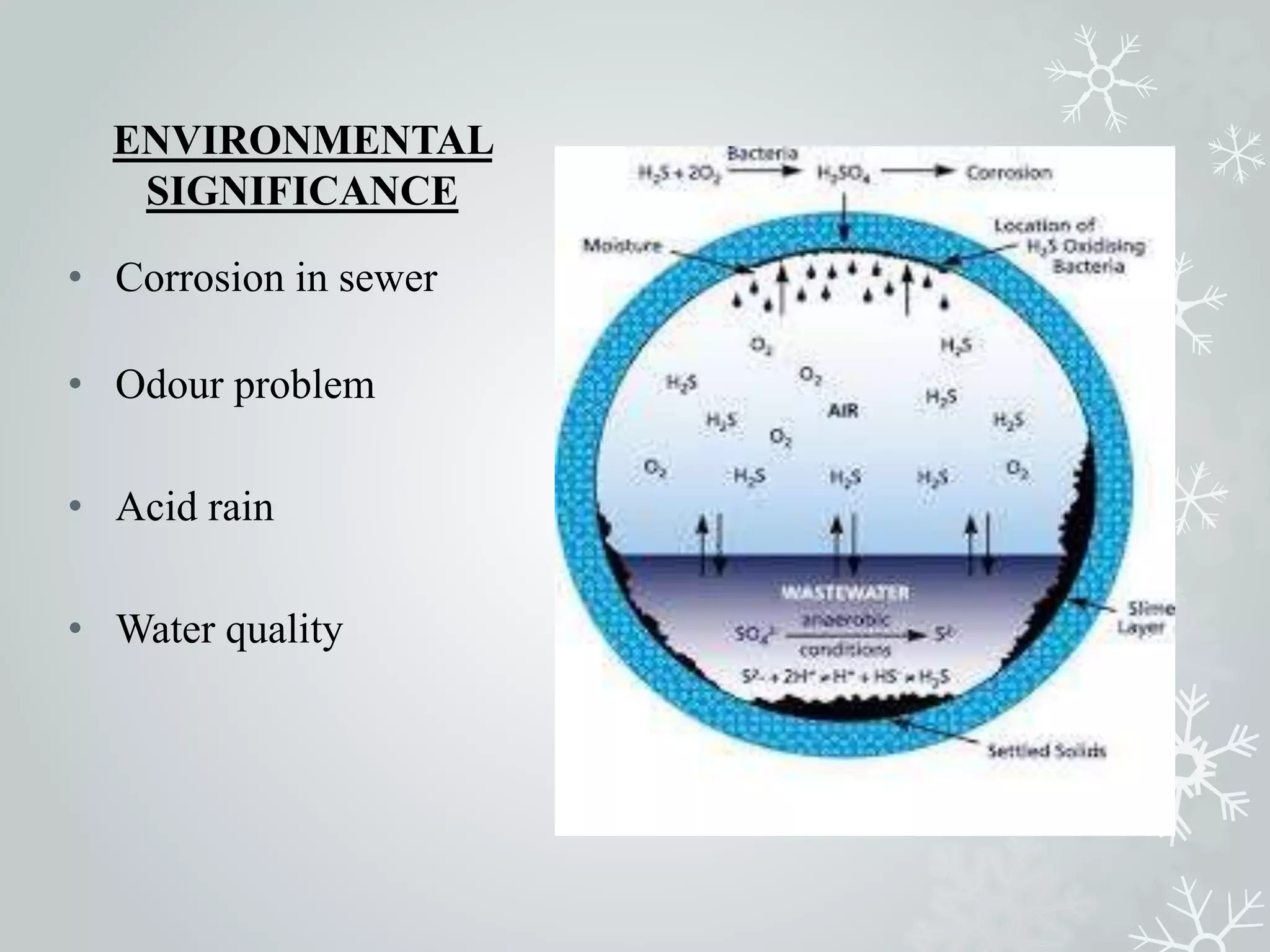
ENVIRONMENTAL
SIGNIFICANCE
• Corrosion in sewer
• Odour problem
• Acid rain
• Water quality
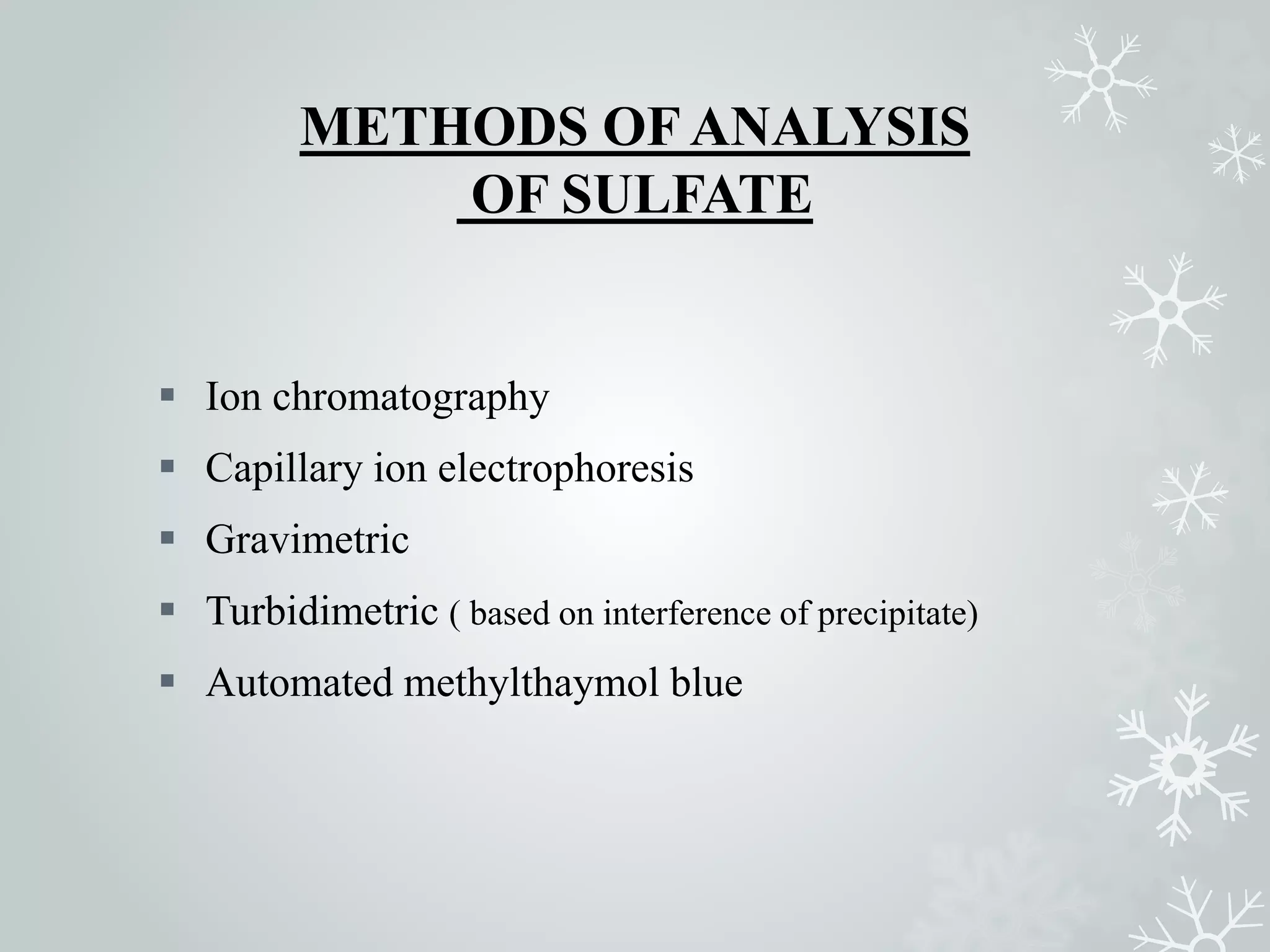
METHODS OF ANALYSIS
OF SULFATE
 Ion chromatography
 Capillary ion electrophoresis
 Gravimetric
 Turbidimetric ( based on interference of precipitate)
 Automated methylthaymol blue
APPLICATION OF
SULAPHTE DATA
 Consideration in determining their suitability for public and industrial
water supplies
 Knowledge of sulphate content of the sludge or waste fed to
digestion units provides means of estimating 𝐇 𝟐S.
 To determine whether scrubbing facilities will be needed to remove
𝐇 𝟐S and size of units requirement.
 Knowledge of sulphate especially in anaerobic treatments is very
useful.
 Sulphate has highly adverse impact on methanogenic process.
 High sulphate concentration in ground water can hinder natural
anaerobic biodegradation of chlorinated solvents.
 In anaerobic treatment sulfur as sulphate ion,
In anaerobic treatment sulfur as sulphide.
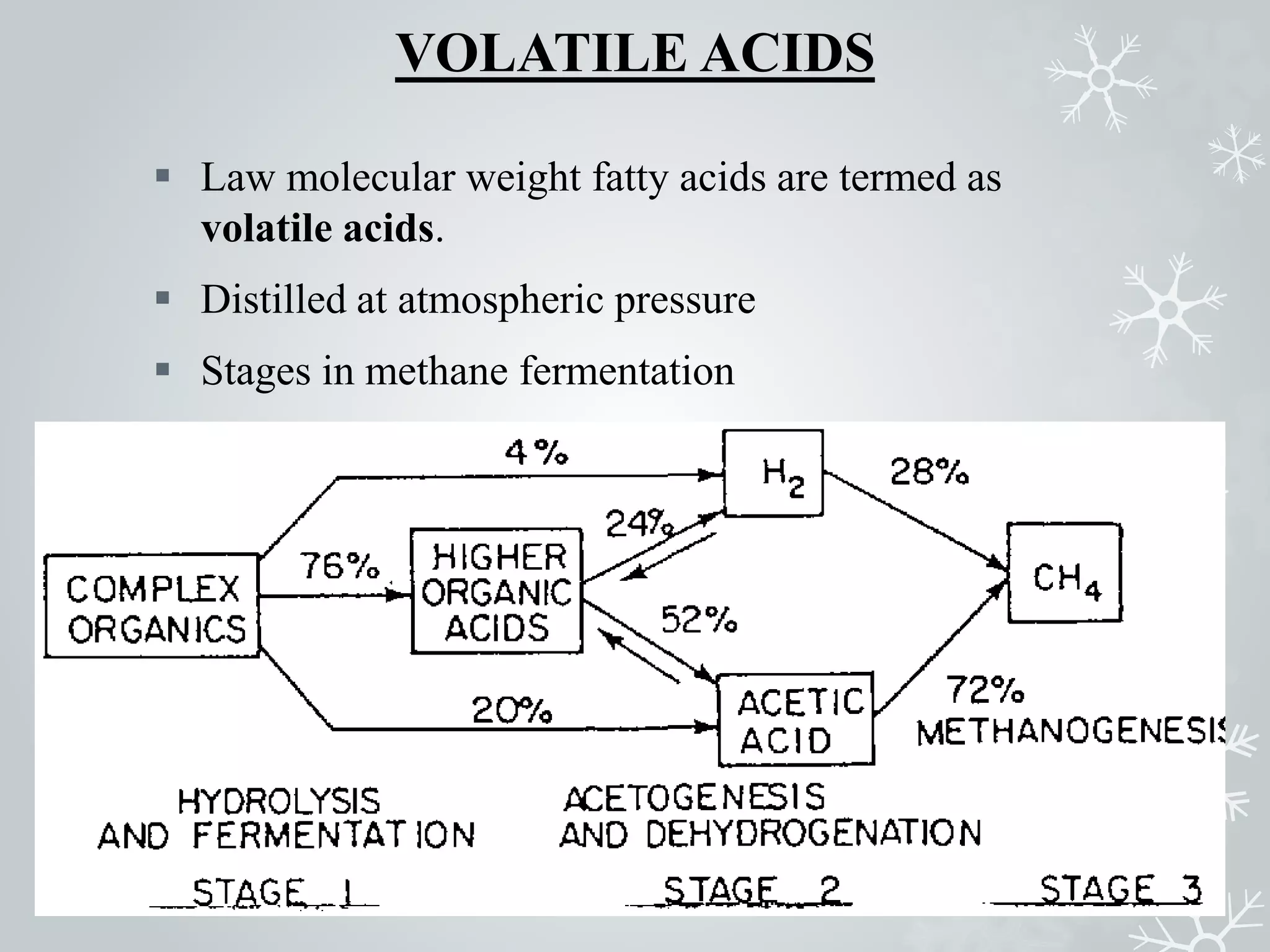
VOLATILE ACIDS
 Law molecular weight fatty acids are termed as
volatile acids.
 Distilled at atmospheric pressure
 Stages in methane fermentation
ENVIRONMENTAL SIGNIFICANCE
 Control of anaerobic waste treatment process.
 Accumulation should be controlled or causes
disastrous effect
 Inhibitions caused results in decreased the rate of
destruction of volatile.
 Sludge must be removed or transferred
 Important in detecting presence of unbalanced
conditions in anaerobic treatment units.
DETERMINATION OF
VOLATILE ACIDS
 Two standard methods of measurement of volatile
acids
1. Chromatographic Separation
2. Distillation
 Gas chromatography or ion chromatography are not
yet considered as standard.
CHROMATOGRAPHIC
SEPARATION
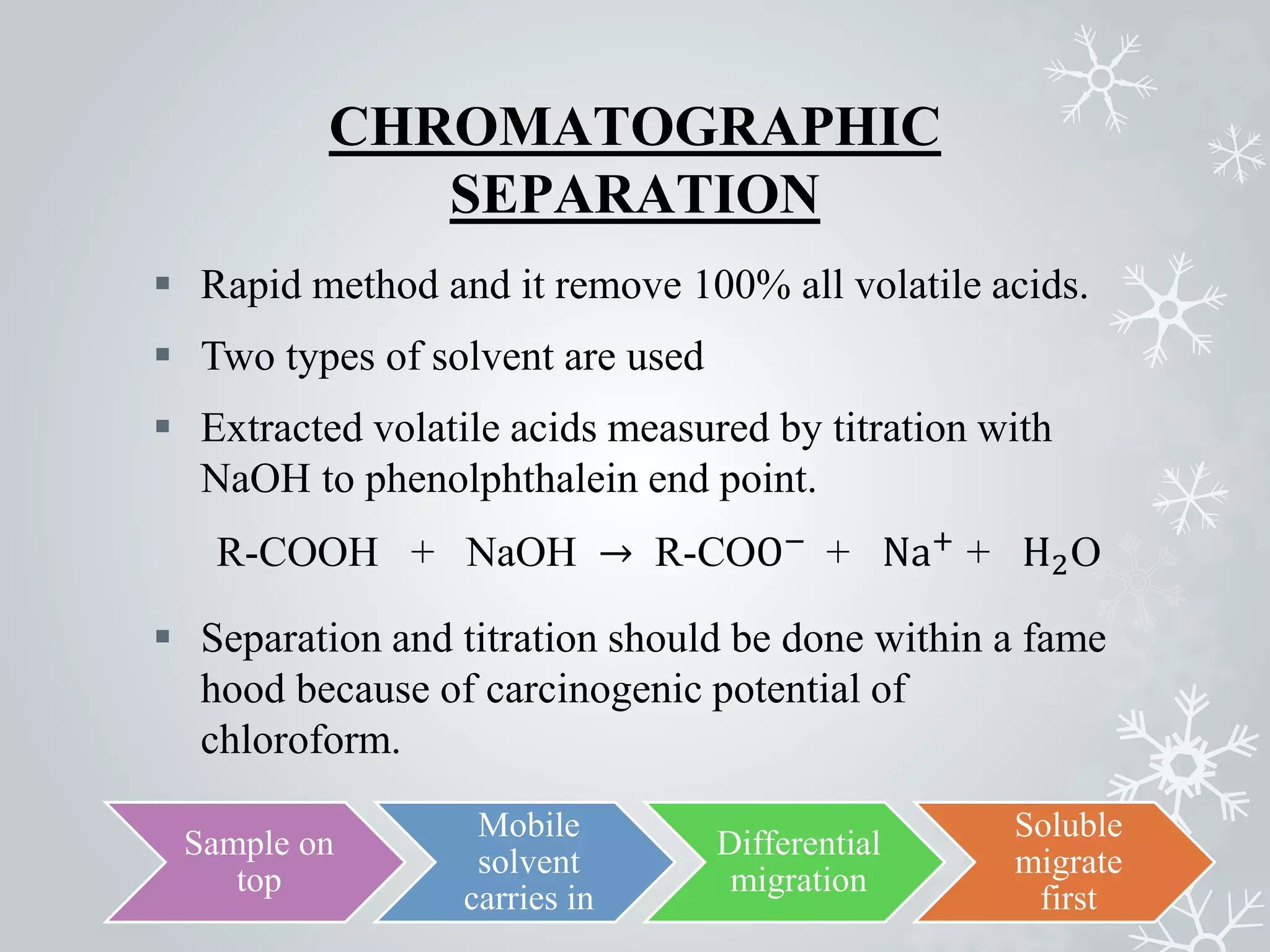
 Rapid method and it remove 100% all volatile acids.
 Two types of solvent are used
 Extracted volatile acids measured by titration with
NaOH to phenolphthalein end point.
R-COOH + NaOH R-COO−
+ Na+
+ H2O
 Separation and titration should be done within a fame
hood because of carcinogenic potential of
chloroform.
Sample on
top
Mobile
solvent
carries in
Differential
migration
Soluble
migrate
first
DISTILLATION
 Routine determination, rapid and sufficient accurate
method.
 All low molecular weight fatty acids up to octanic
acids have vapour pressure at 100º C.
 Strong non-volatile acid like sulphuric, the organic
acids are converted and can be distilled.
 Distilled acids are measured by titration with NaOH
solution to phenolphthalein end point.
 Approximately 70% of volatile acids distilled from
samples.
THANK YOU

Parameters of waste water analysis

  • 1.
    Parameters of wastewater analysis •Acidity • Sulphates • Volatile Acids • Nitrogen • Grease and Oils
  • 2.
    ACIDITY  The quantitativecapacity of water to neutralize a base is called “Acidity”.  The number of hydrogen atoms that are present determines acidity.  Acidity of natural water is caused by carbon dioxide or by strong mineral acids.
  • 3.
    FIGURE Types of acidity ofimportance in ordinary water and waste water analysis, and the pH ranges in which they are significant
  • 4.
     It iscustomary to consider that all water having a pH lower than 8.5 contain acidity.  Two types of acidity as follows 1. Total acidity (phenolphthalein acidity) 2. Mineral acidity (methyl orange acidity)
  • 5.
    ENVIRONMENTAL SIGNIFICANCE  Littleconcern from sanitary or public health viewpoint.  No deleterious effect due to 𝐂𝐎 𝟐has been recognized.  Acid water are of concern because of their corrosive characteristics.  𝐂𝐎 𝟐 must be calculated during after softening problems (using lime or lime soda ash methods)  pH Range should be 6to 9.5 for biological process of treatment.  Lower the pH in buffered lakes affecting aquatic life & thus increases chemicals ( e.g. aluminium)
  • 6.
    DETERMINATION OFACIDITY  Mineralacids are measured titration to a of about 3.7, the methyl orange end point.  Titration of sample to the phenolphthalein end point of 8.3 measures total acidity.  Two methods of measurement of acidy 1. Titration method 2. Field method
  • 7.
    MINERAL ACIDITY  BURETTE: NaOH  FLASK : Sample  INDICATOR: Methayle orange Bromophenol Blue  COLOR CHANGE : TOTALACIDITY  BURETTE : NaOH  FLASK : Sample  INDICATOR: Phenolphthalein Metacresol purple  COLOR CHANGE : Burette filling Take sample Add indicator Titrate Take readings
  • 8.
    APPLICATION OF ACIDITYDATA  In public water supplies field  To overcome corrosive characteristics resulting from CO2  To choose the treatment method  Estimation of the chemical requirement for softening process  To neutralize mineral acidity of wastes  To determine quantities of chemicals, size of chemical feeders, storage space, and costs
  • 9.
    SULFATE  It isof considerable concern because it is indirectly responsible for two serious problem those are odor & sewer-corrosion often associated with the handling and treatment plant  It is of importance in public water supplies because of its cathartic effect upon human when it is present in excessive amounts.
  • 10.
  • 11.
    ENVIRONMENTAL SIGNIFICANCE • Corrosion insewer • Odour problem • Acid rain • Water quality
  • 12.
    METHODS OF ANALYSIS OFSULFATE  Ion chromatography  Capillary ion electrophoresis  Gravimetric  Turbidimetric ( based on interference of precipitate)  Automated methylthaymol blue
  • 14.
    APPLICATION OF SULAPHTE DATA Consideration in determining their suitability for public and industrial water supplies  Knowledge of sulphate content of the sludge or waste fed to digestion units provides means of estimating 𝐇 𝟐S.  To determine whether scrubbing facilities will be needed to remove 𝐇 𝟐S and size of units requirement.  Knowledge of sulphate especially in anaerobic treatments is very useful.  Sulphate has highly adverse impact on methanogenic process.  High sulphate concentration in ground water can hinder natural anaerobic biodegradation of chlorinated solvents.  In anaerobic treatment sulfur as sulphate ion, In anaerobic treatment sulfur as sulphide.
  • 15.
    VOLATILE ACIDS  Lawmolecular weight fatty acids are termed as volatile acids.  Distilled at atmospheric pressure  Stages in methane fermentation
  • 16.
    ENVIRONMENTAL SIGNIFICANCE  Controlof anaerobic waste treatment process.  Accumulation should be controlled or causes disastrous effect  Inhibitions caused results in decreased the rate of destruction of volatile.  Sludge must be removed or transferred  Important in detecting presence of unbalanced conditions in anaerobic treatment units.
  • 17.
    DETERMINATION OF VOLATILE ACIDS Two standard methods of measurement of volatile acids 1. Chromatographic Separation 2. Distillation  Gas chromatography or ion chromatography are not yet considered as standard.
  • 18.
    CHROMATOGRAPHIC SEPARATION  Rapid methodand it remove 100% all volatile acids.  Two types of solvent are used  Extracted volatile acids measured by titration with NaOH to phenolphthalein end point. R-COOH + NaOH R-COO− + Na+ + H2O  Separation and titration should be done within a fame hood because of carcinogenic potential of chloroform. Sample on top Mobile solvent carries in Differential migration Soluble migrate first
  • 20.
    DISTILLATION  Routine determination,rapid and sufficient accurate method.  All low molecular weight fatty acids up to octanic acids have vapour pressure at 100º C.  Strong non-volatile acid like sulphuric, the organic acids are converted and can be distilled.  Distilled acids are measured by titration with NaOH solution to phenolphthalein end point.  Approximately 70% of volatile acids distilled from samples.
  • 22.