EXPERIMENTS WITH
     WATER
  C. P. VILLAPENDI
●   This experiments were made by children
    five to 7 years old.
●   They used their knowledge about water to
    make predictions.
●   Some times their predictions were right,
    some times were wrong.
●   They recorded their discoveries in
    worksheets
●   We related the experiments with nature
    facts, like water cycle, river pollution...
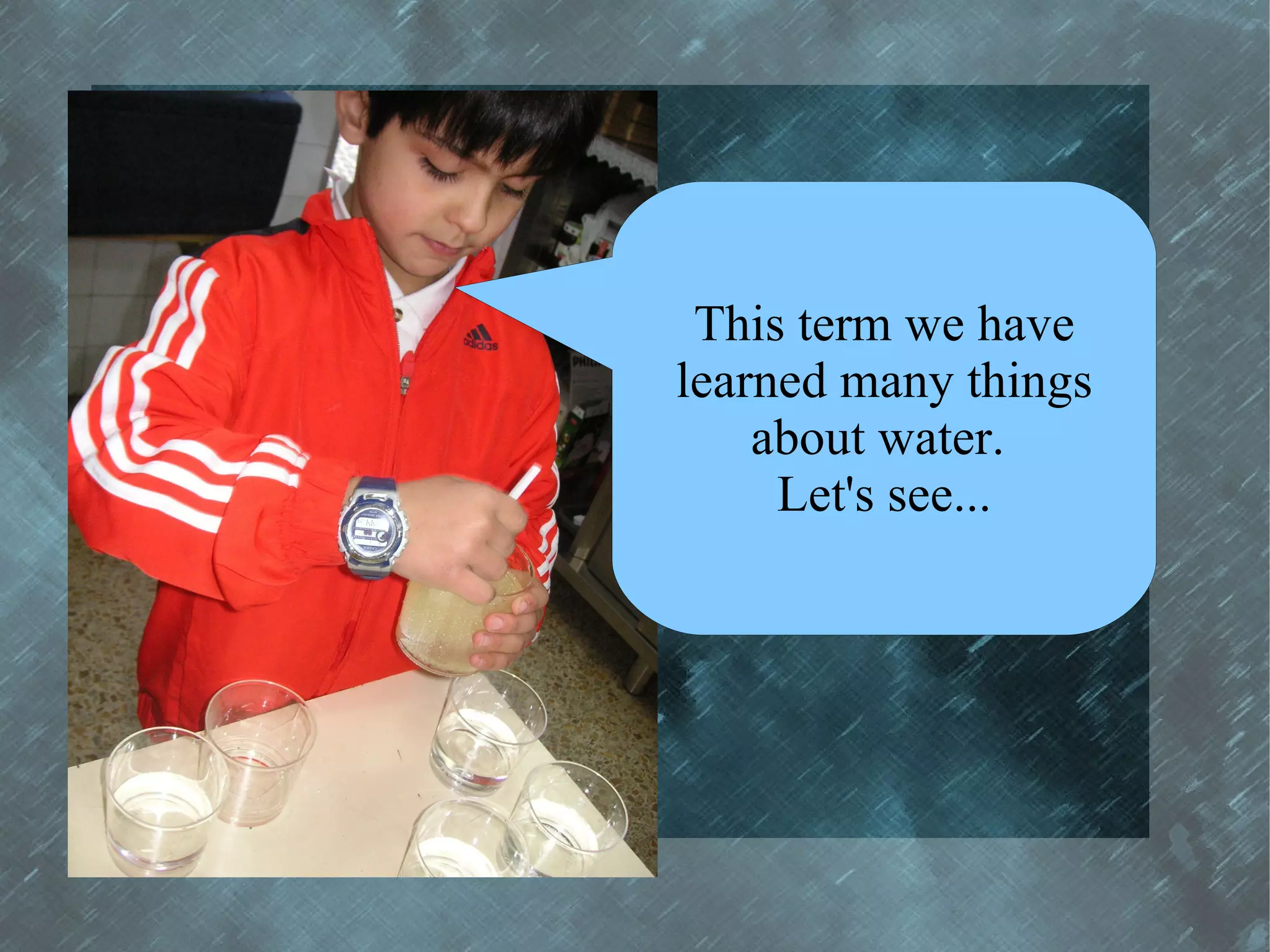
This term we have
learned many things
    about water.
     Let's see...
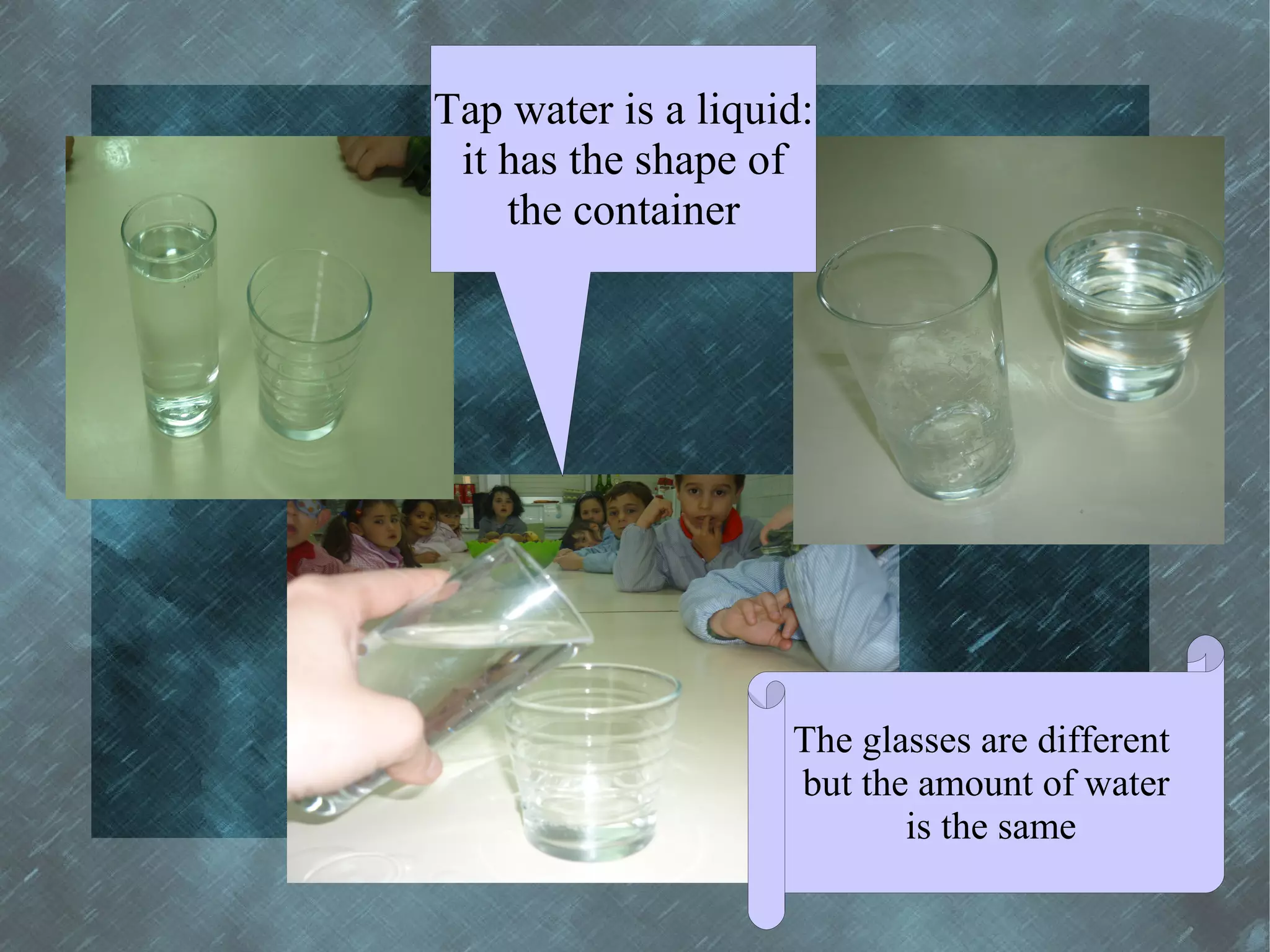
Tap water is a liquid:
 it has the shape of
    the container


                    The glasses are different
                    but the amount of water
                           is the same
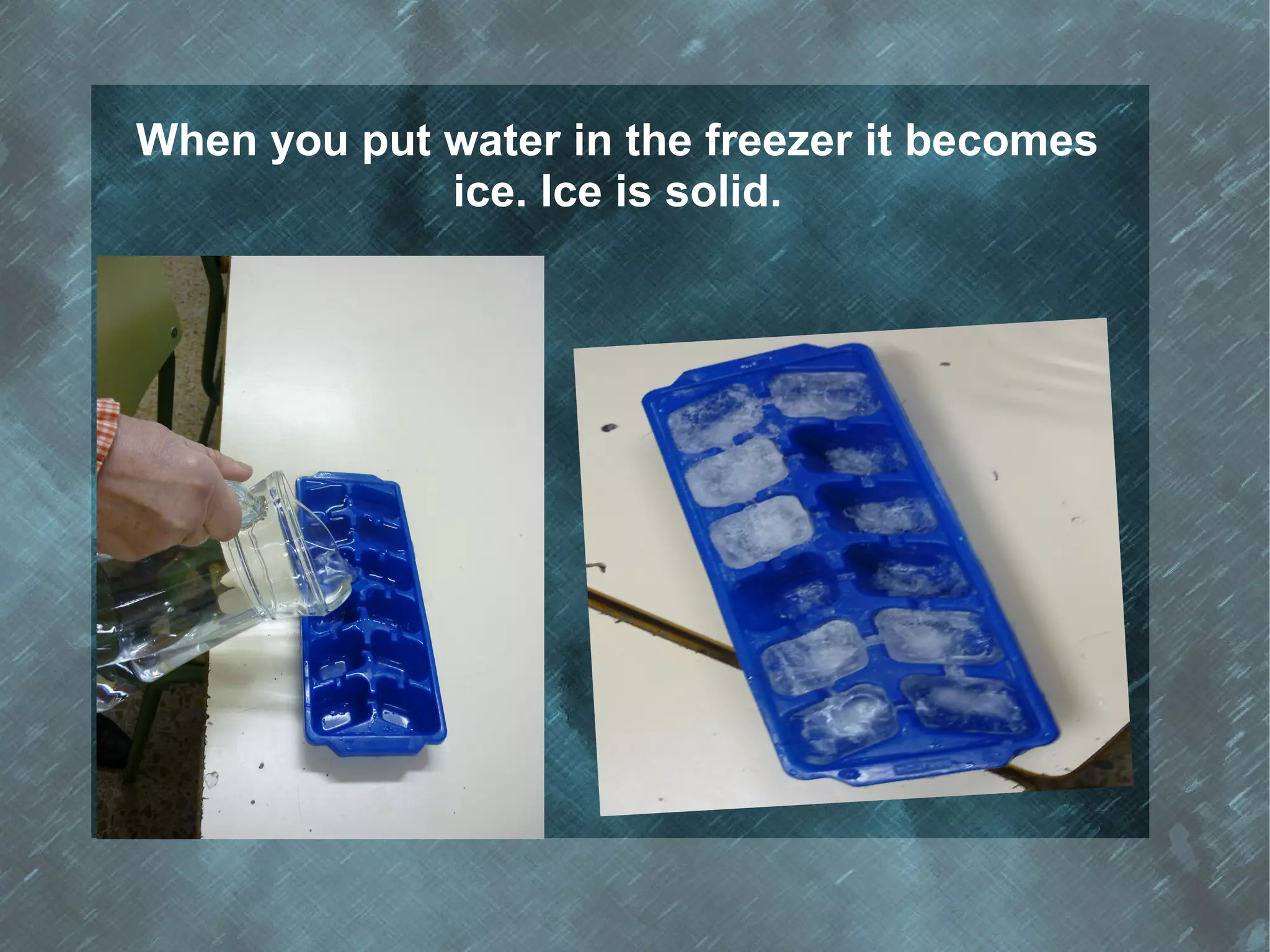
When you put water in the freezer it becomes
             ice. Ice is solid.
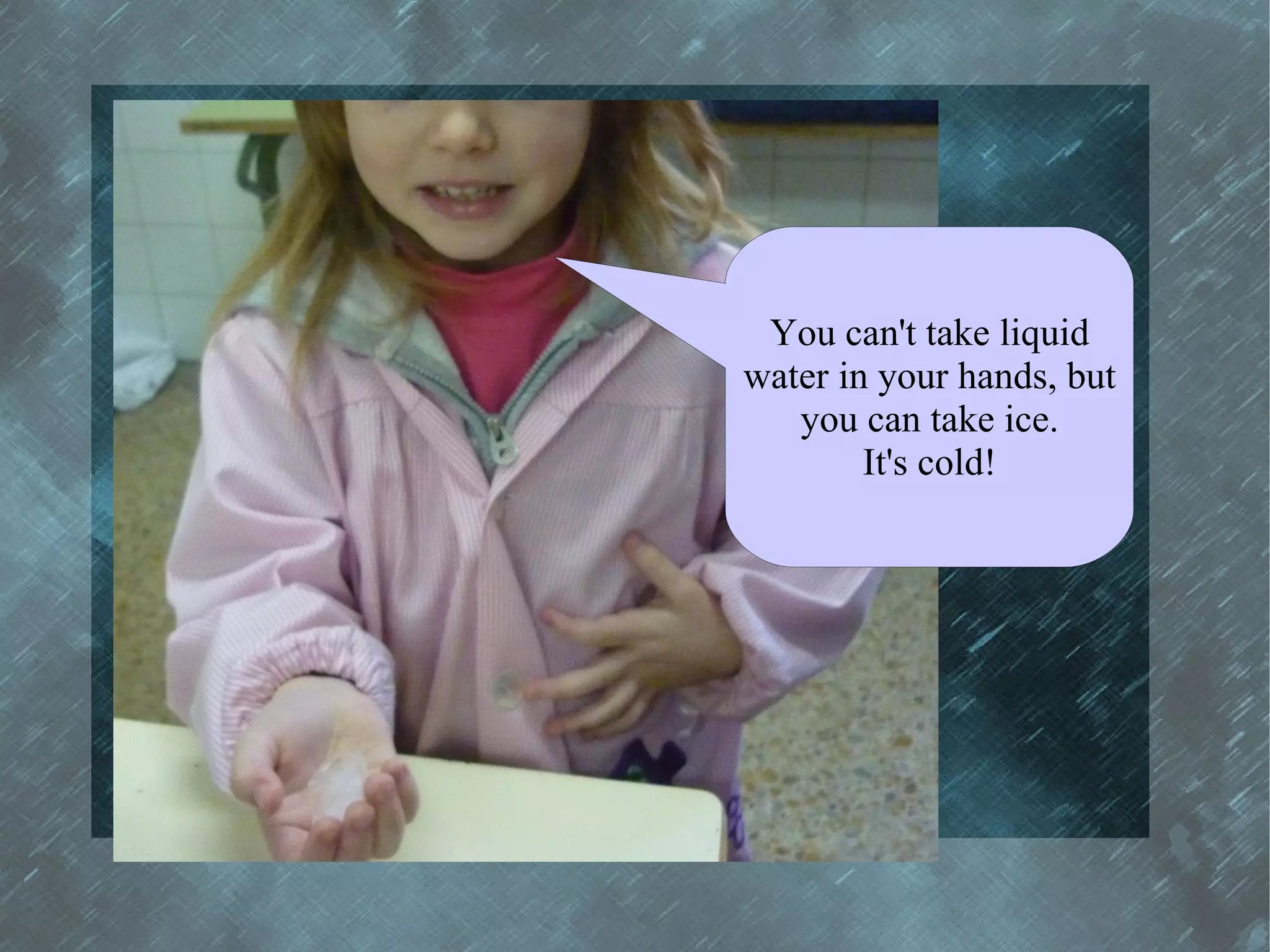
You can't take liquid
water in your hands, but
   you can take ice.
        It's cold!
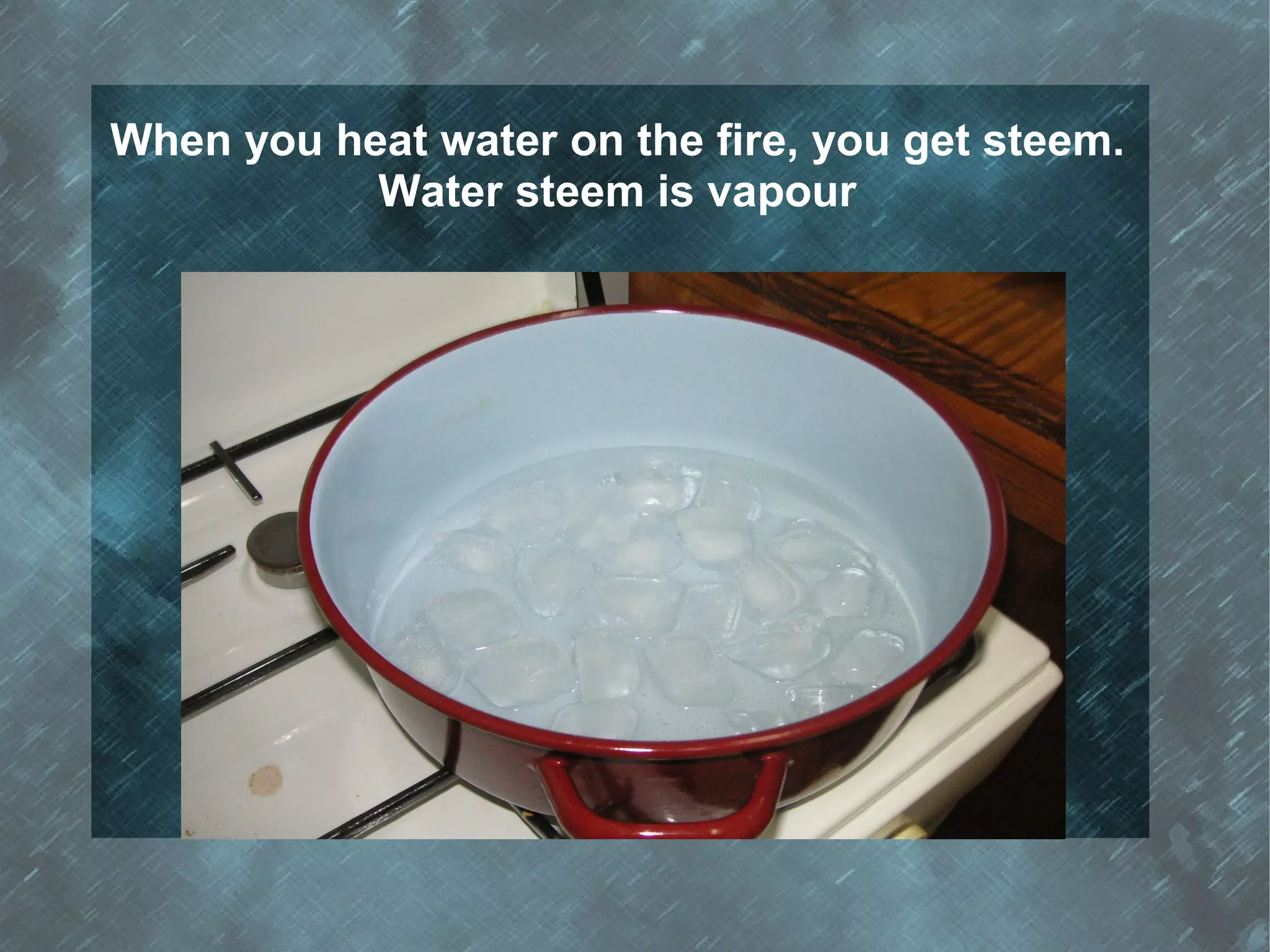
When you heat water on the fire, you get steem.
           Water steem is vapour
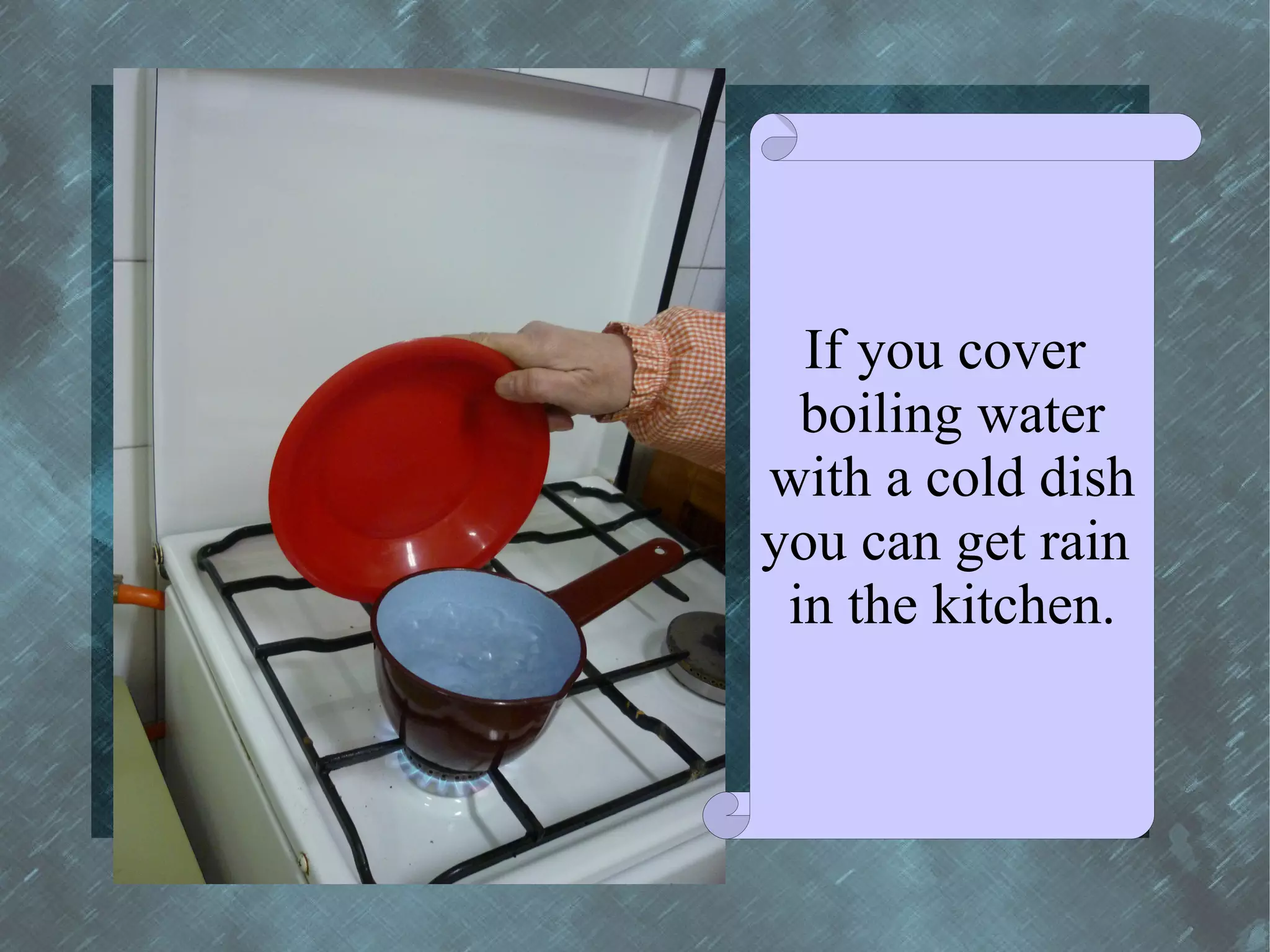
If you cover
  boiling water
with a cold dish
you can get rain
 in the kitchen.
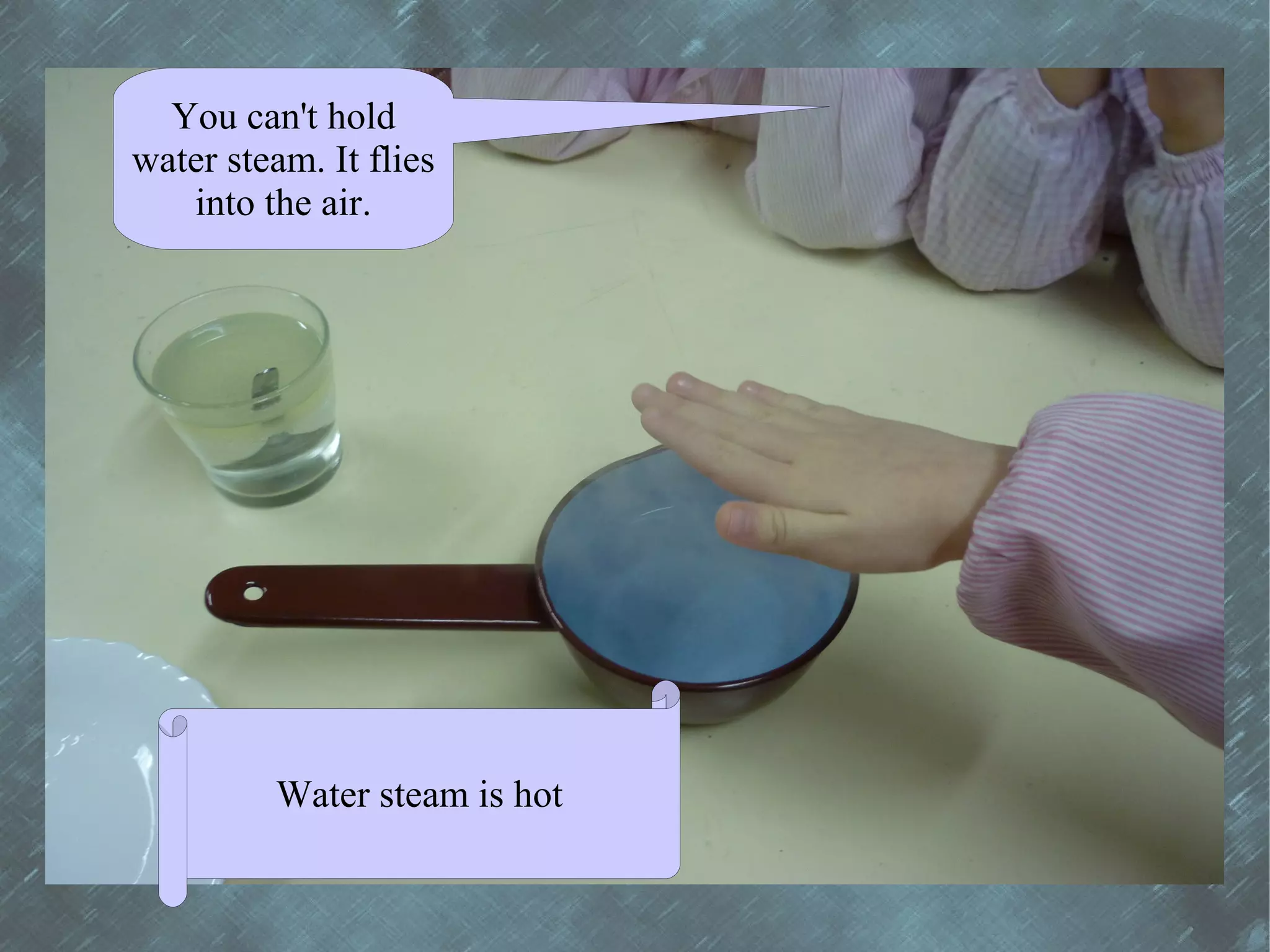
You can't hold
water steam. It flies
   into the air.


         Water steam is hot
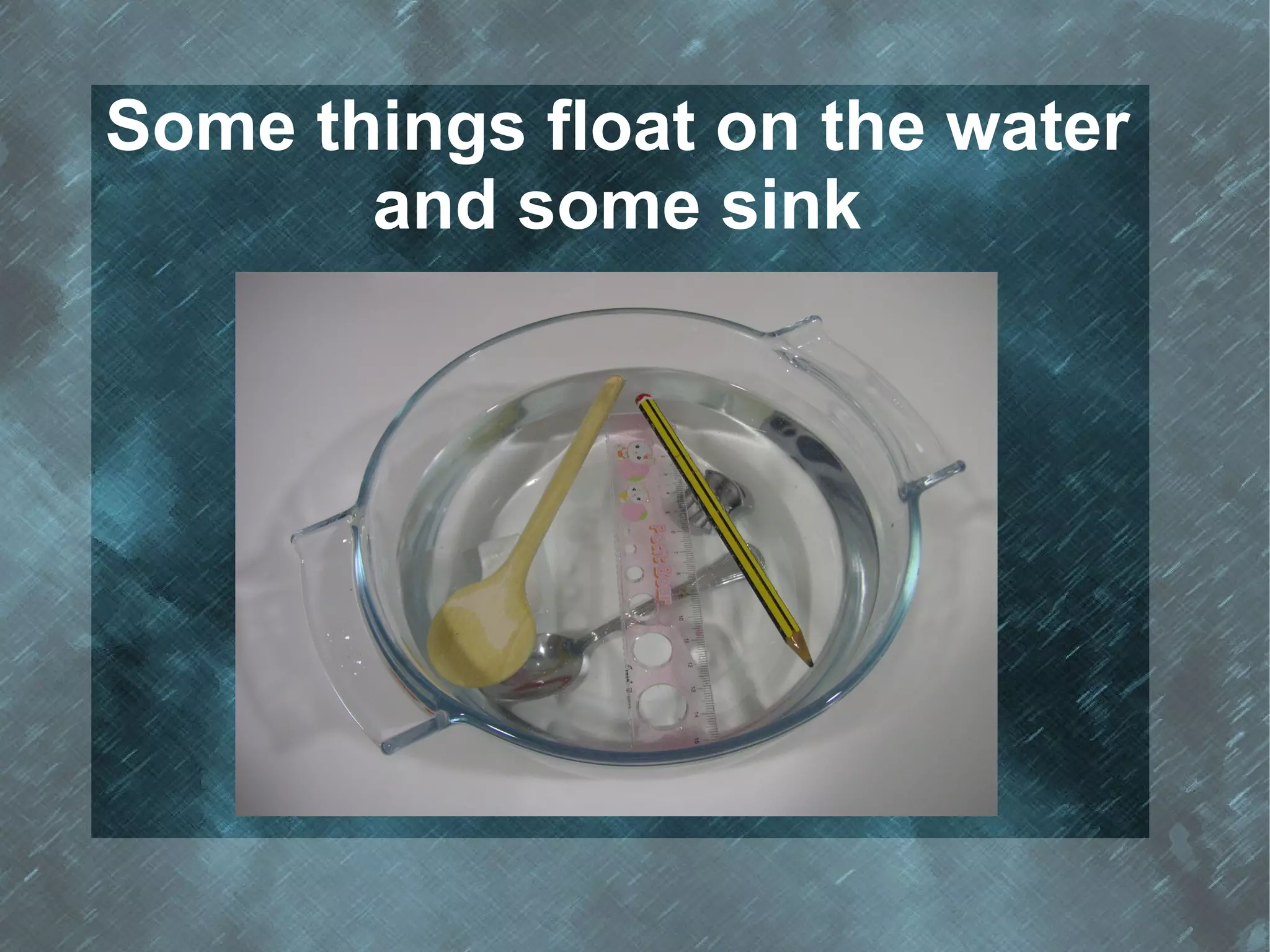
Some things float on the water
       and some sink
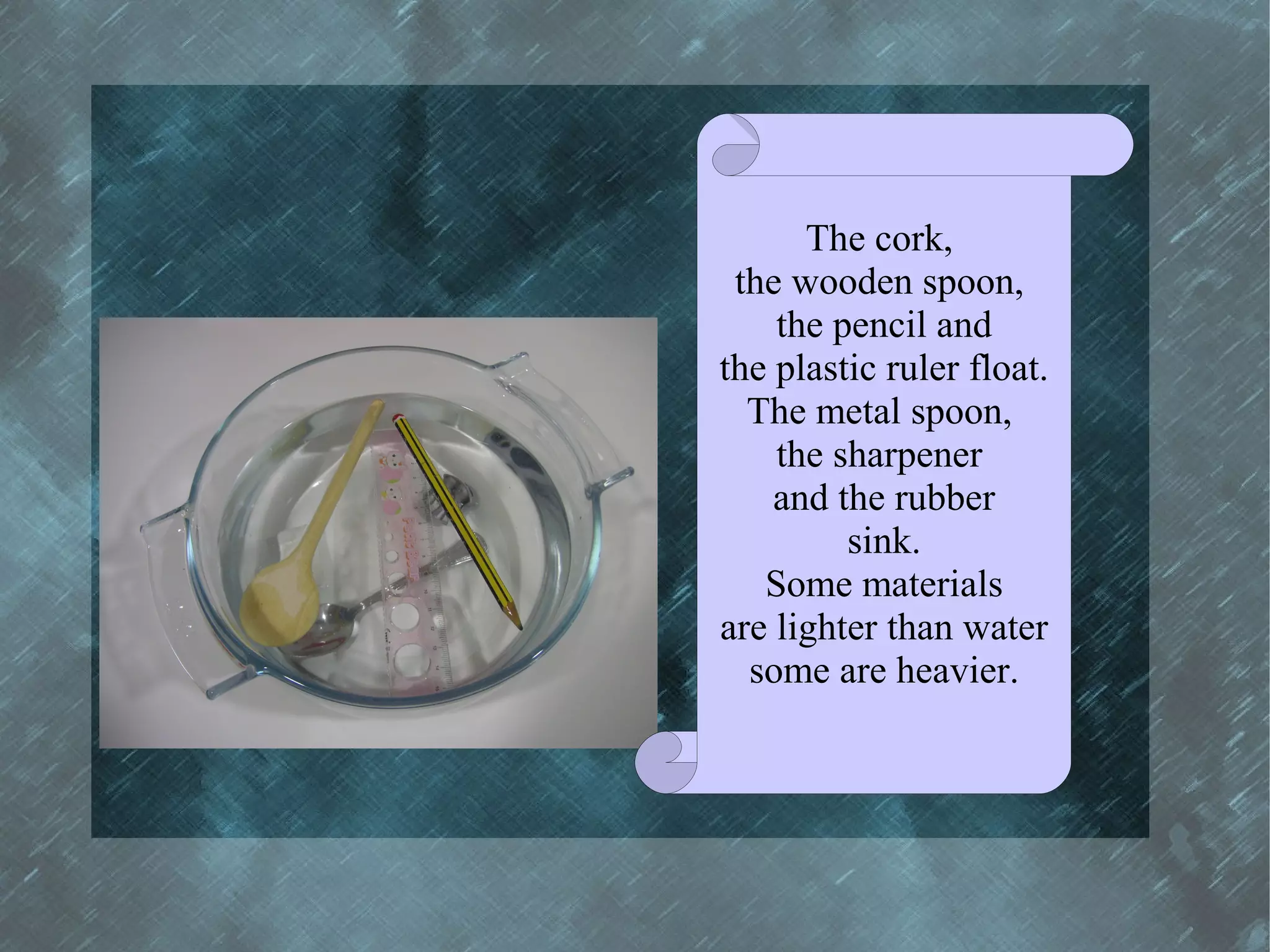
The cork,
 the wooden spoon,
    the pencil and
the plastic ruler float.
  The metal spoon,
    the sharpener
    and the rubber
         sink.
   Some materials
are lighter than water
  some are heavier.
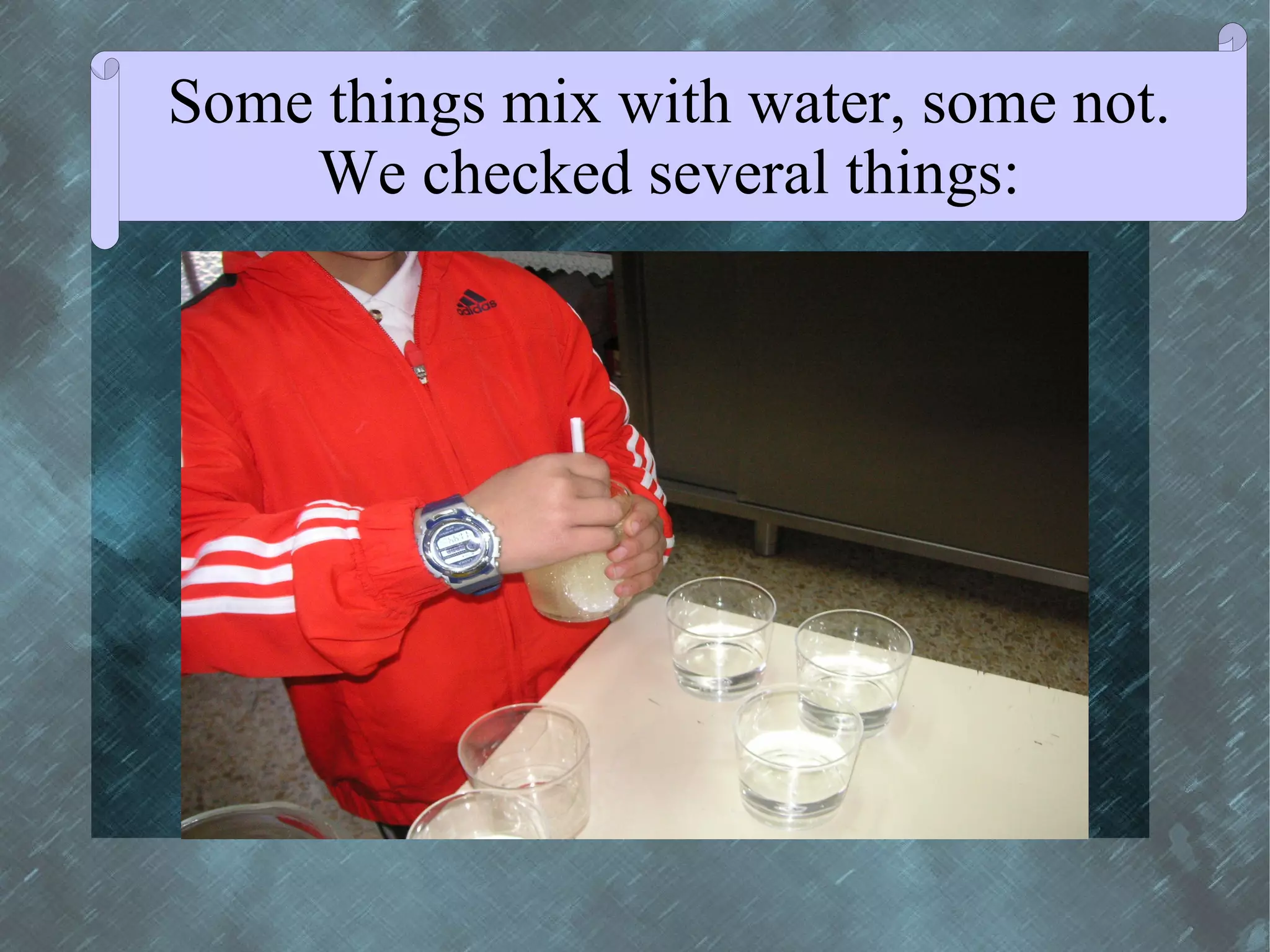
Some things mix with water, some not.
    We checked several things:
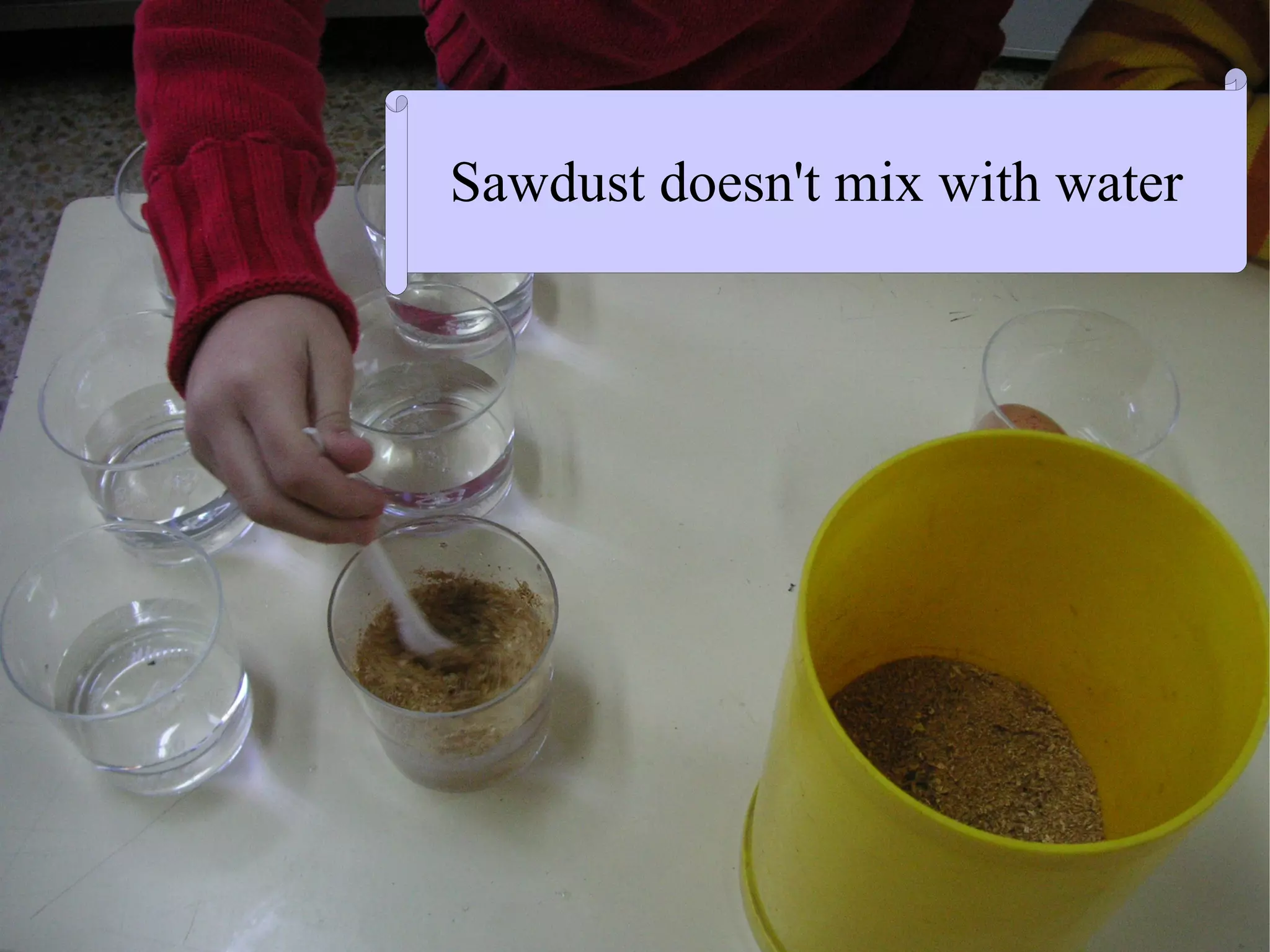
Sawdust doesn't mix with water
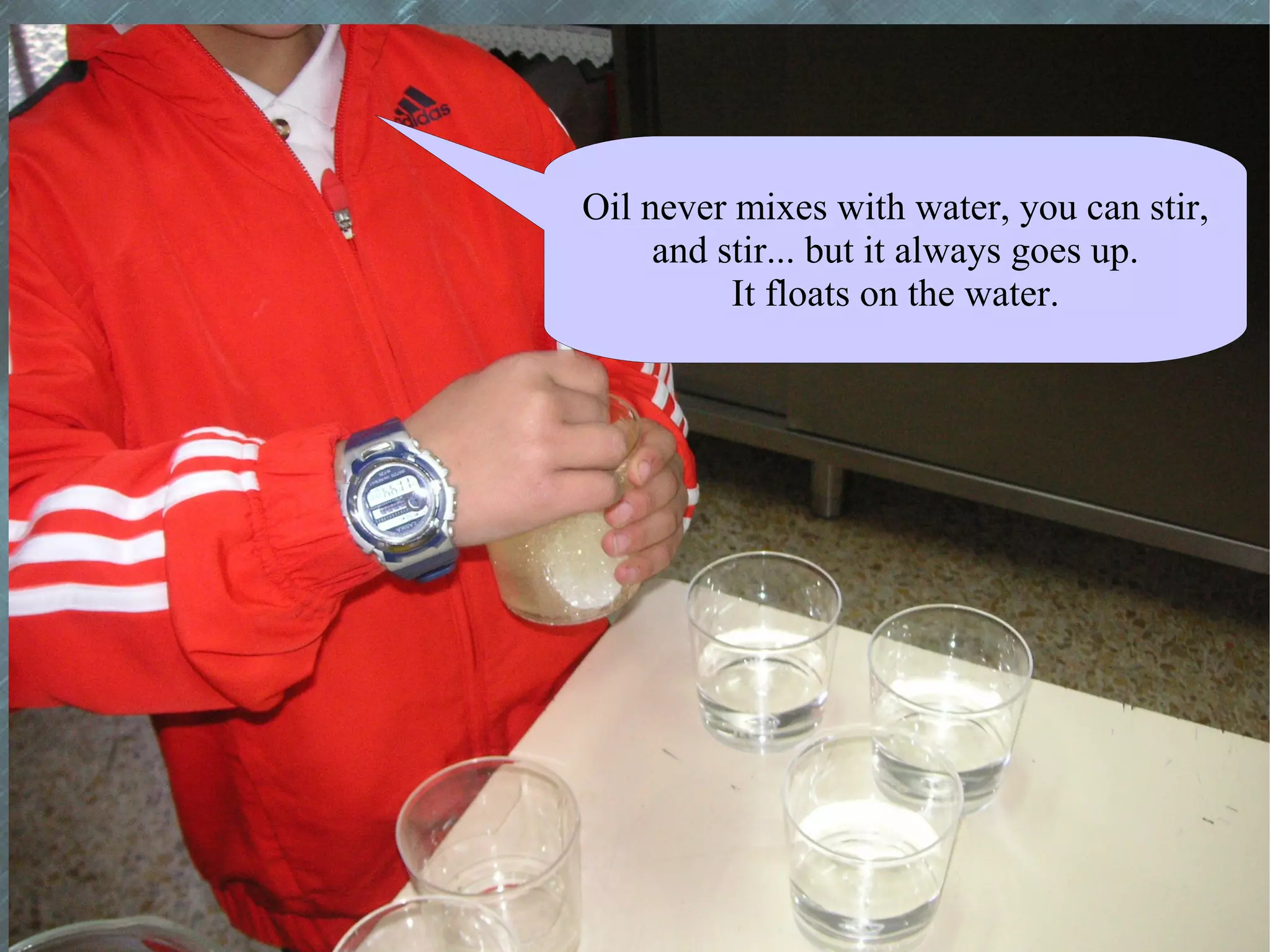
Oil never mixes with water, you can stir,
     and stir... but it always goes up.
          It floats on the water.
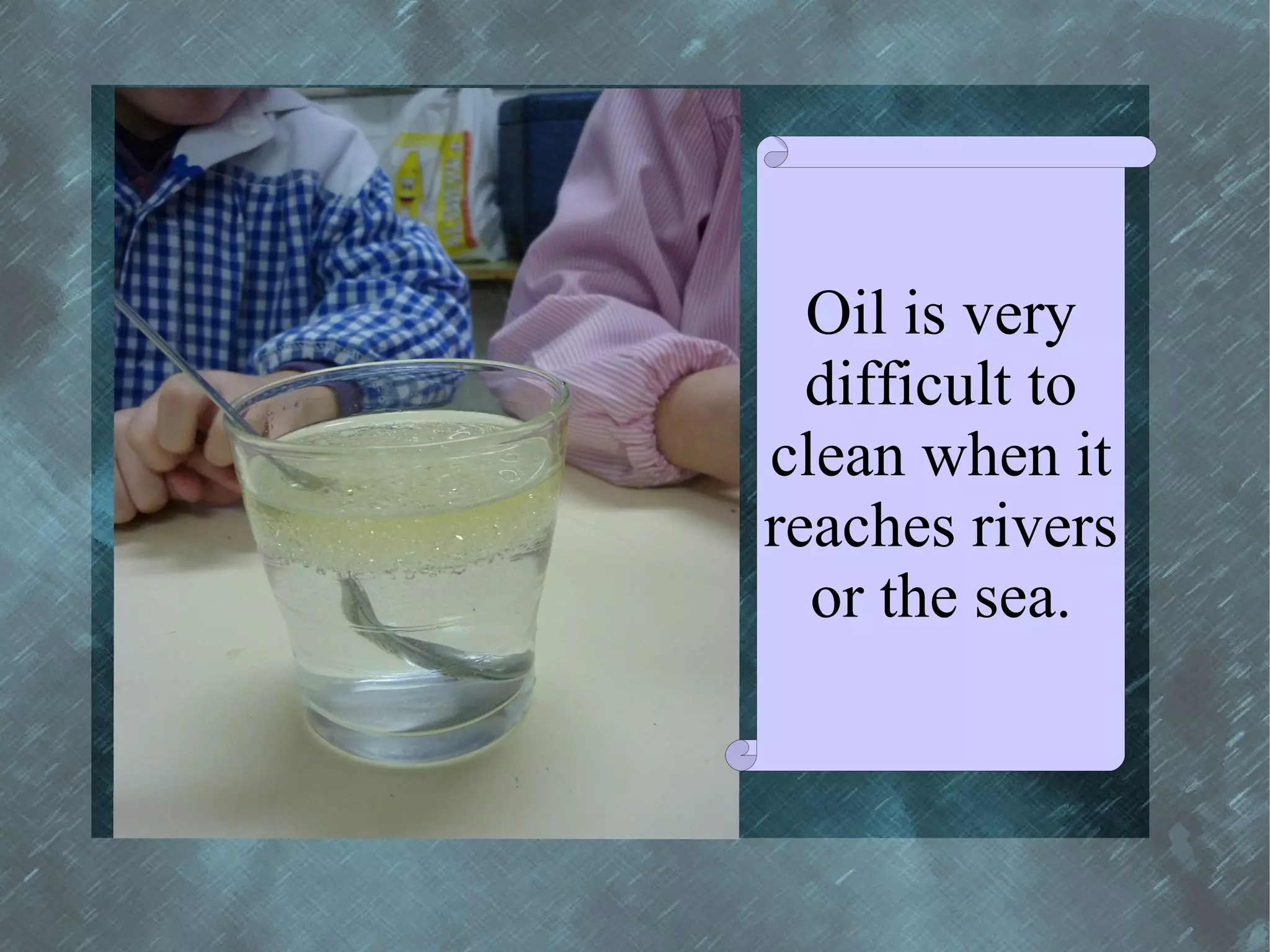
Oil is very
  difficult to
clean when it
reaches rivers
  or the sea.
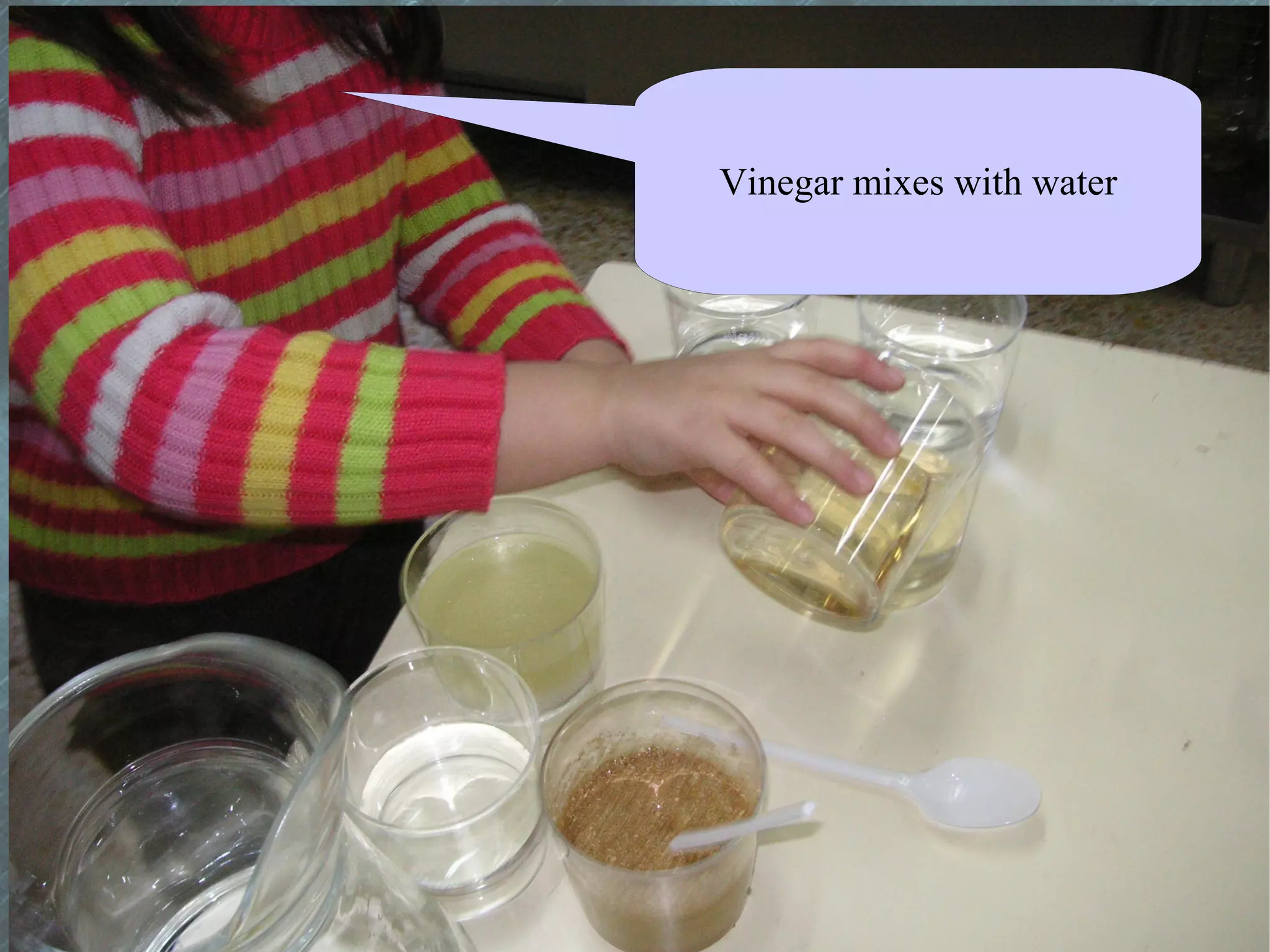
Vinegar mixes with water
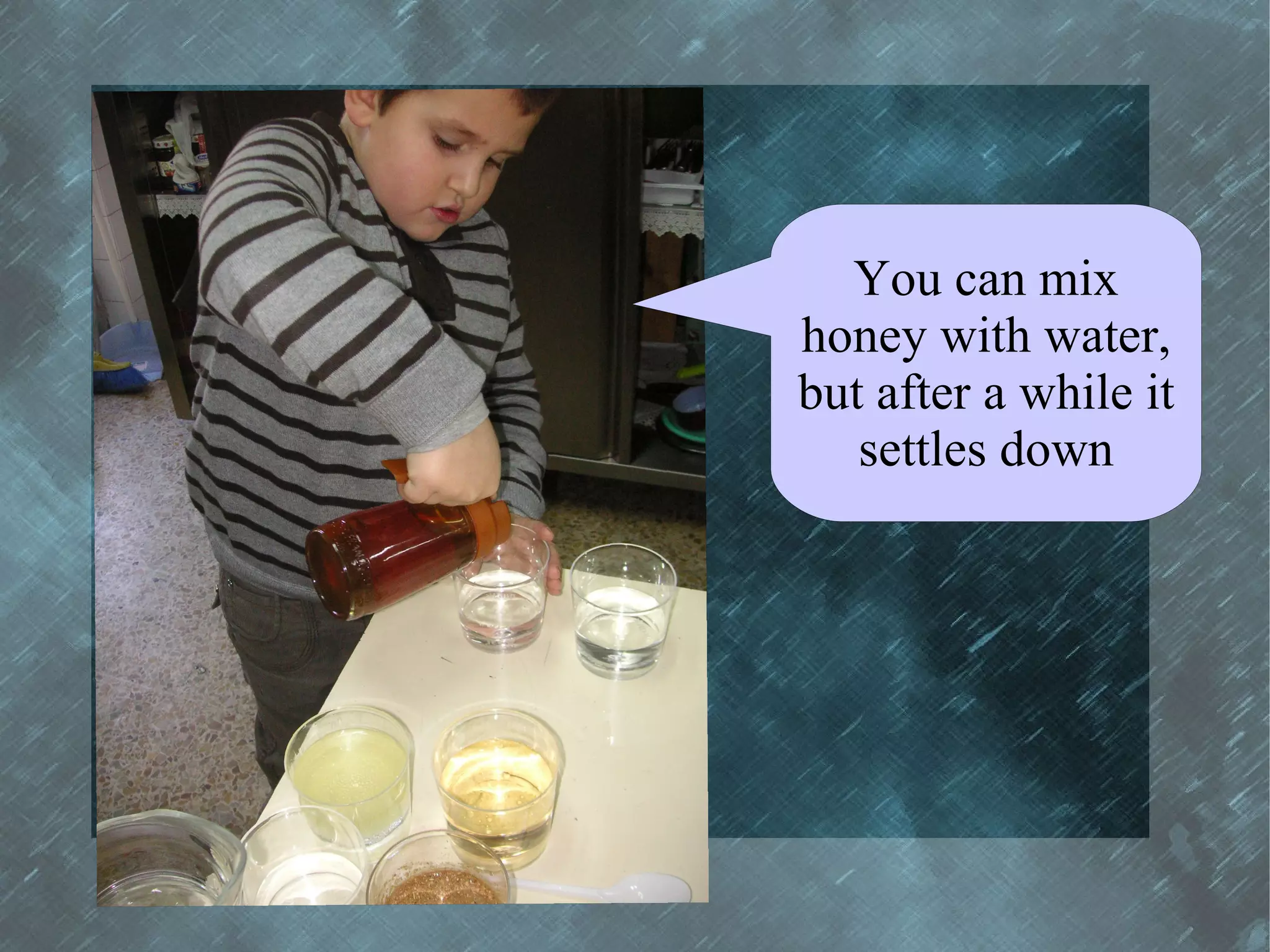
You can mix
honey with water,
but after a while it
   settles down
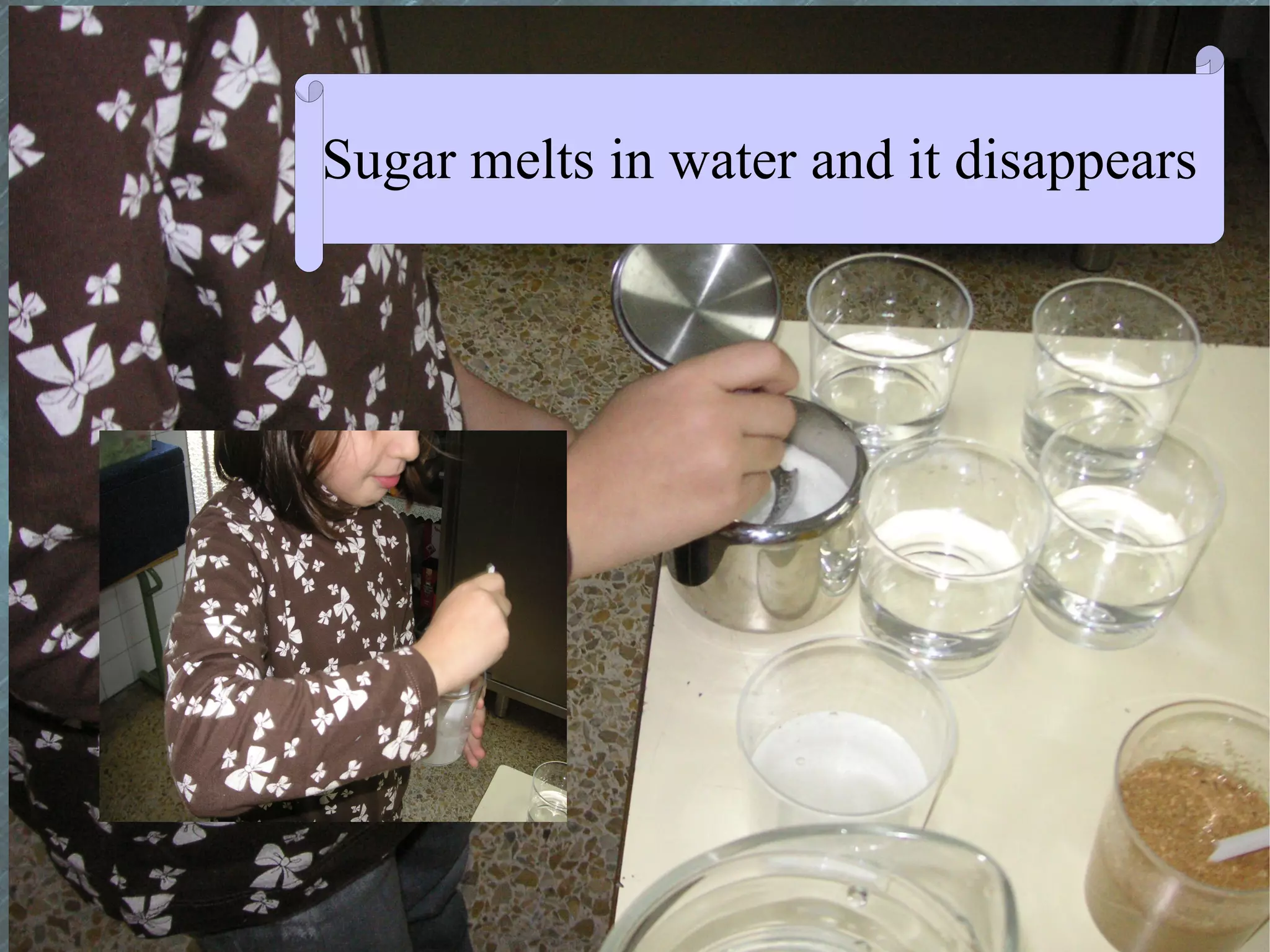
Sugar melts in water and it disappears
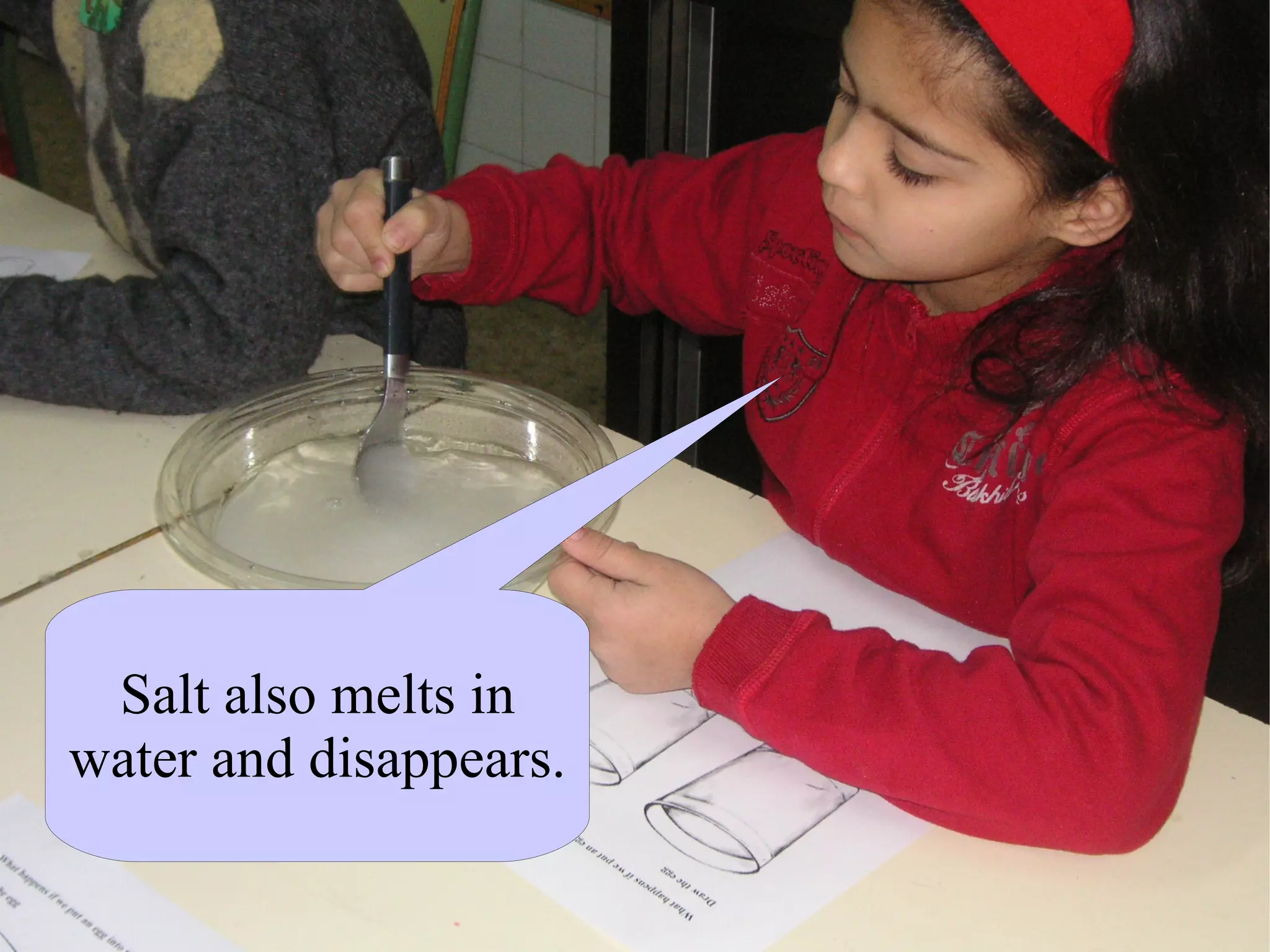
Salt also melts in
water and disappears.
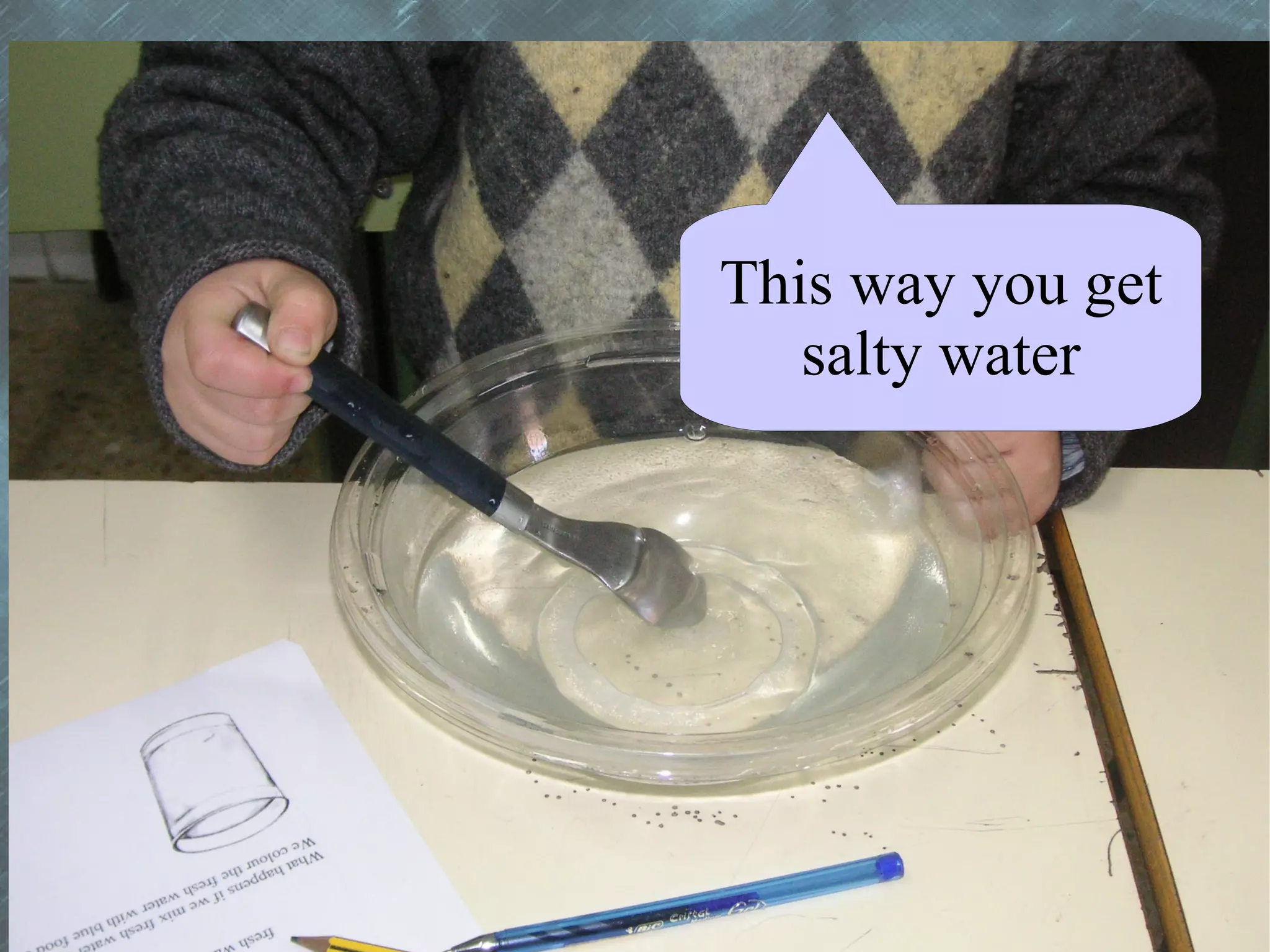
This way you get
   salty water
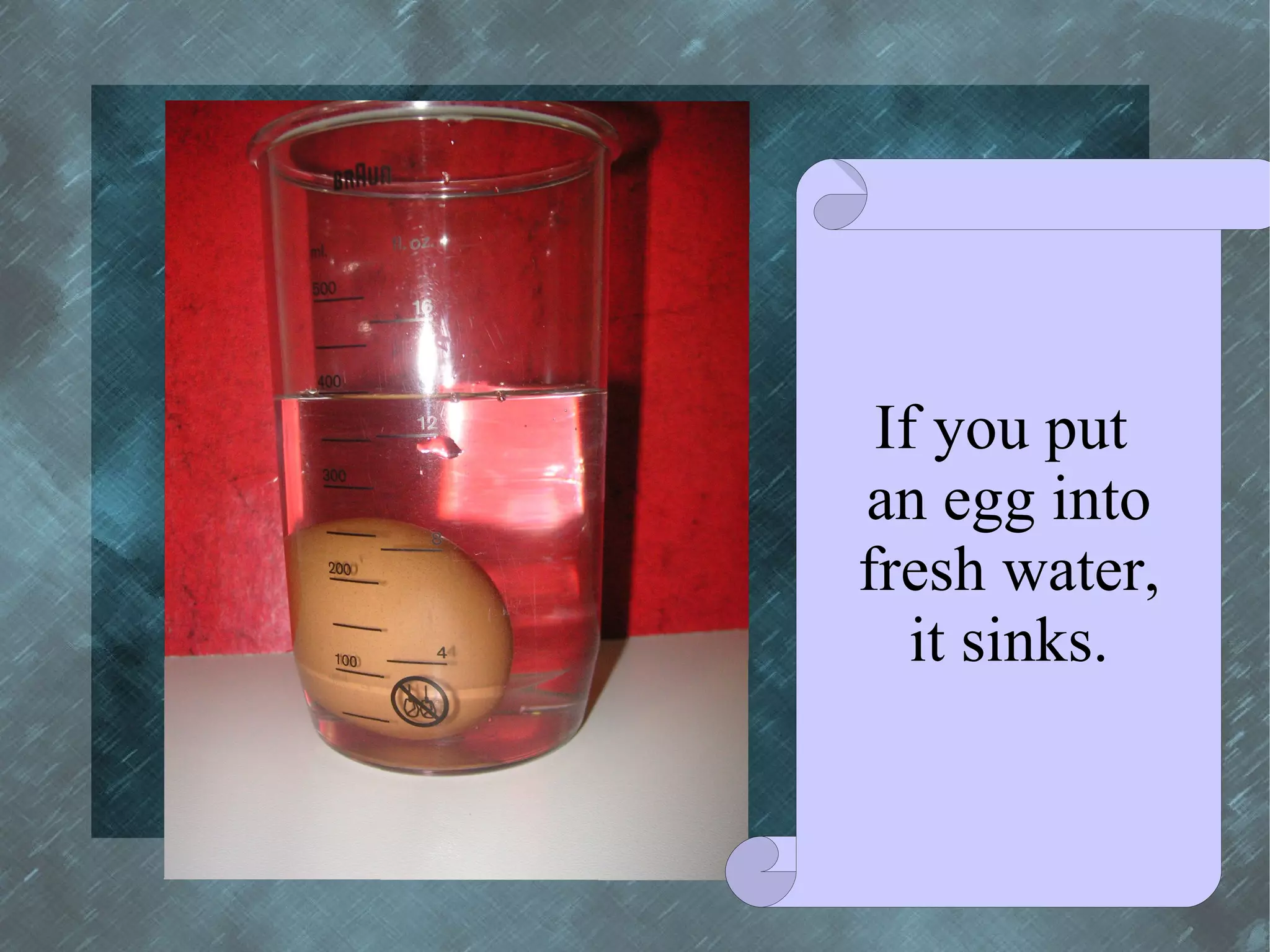
If you put
an egg into
fresh water,
   it sinks.
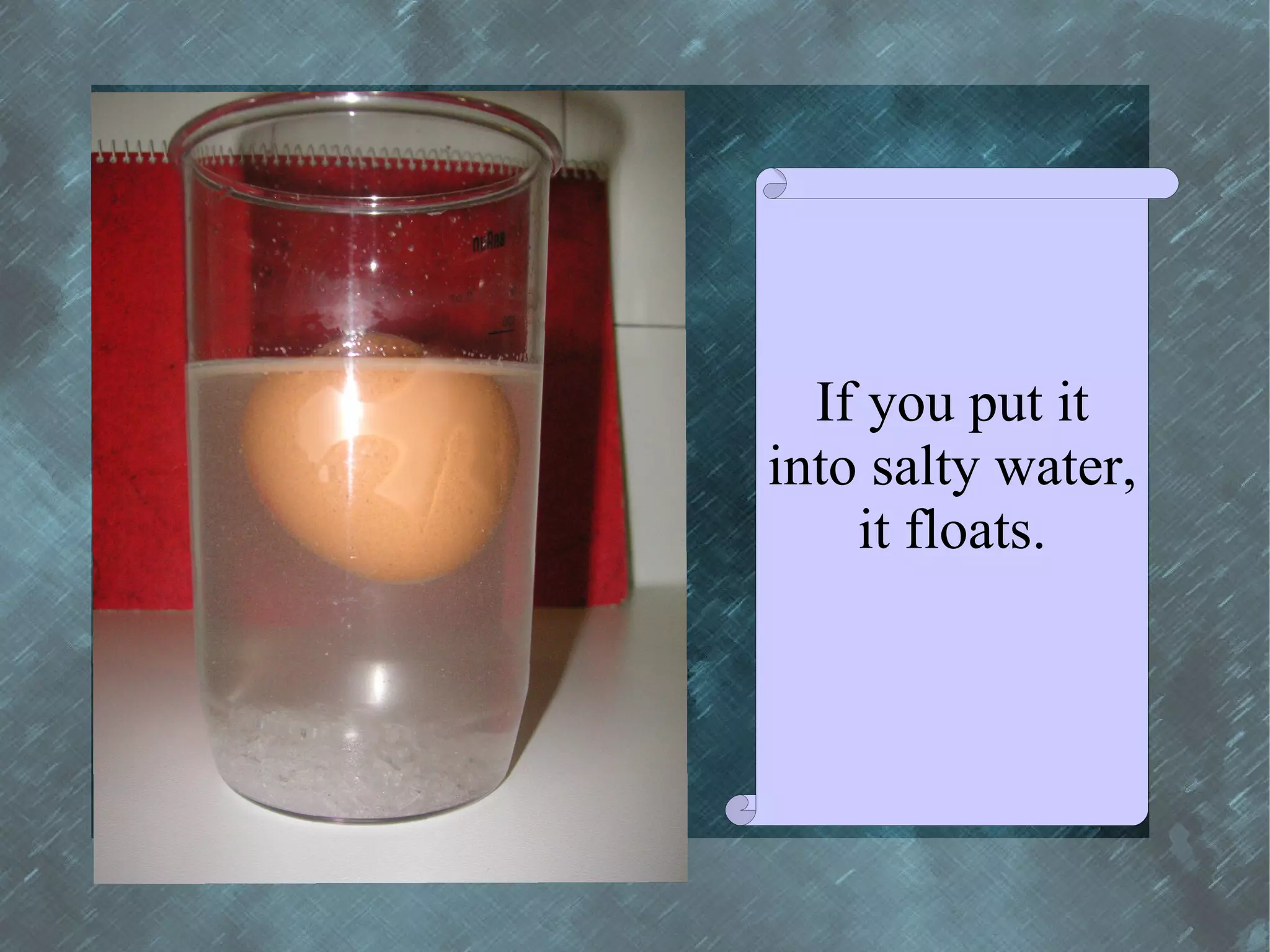
If you put it
into salty water,
    it floats.
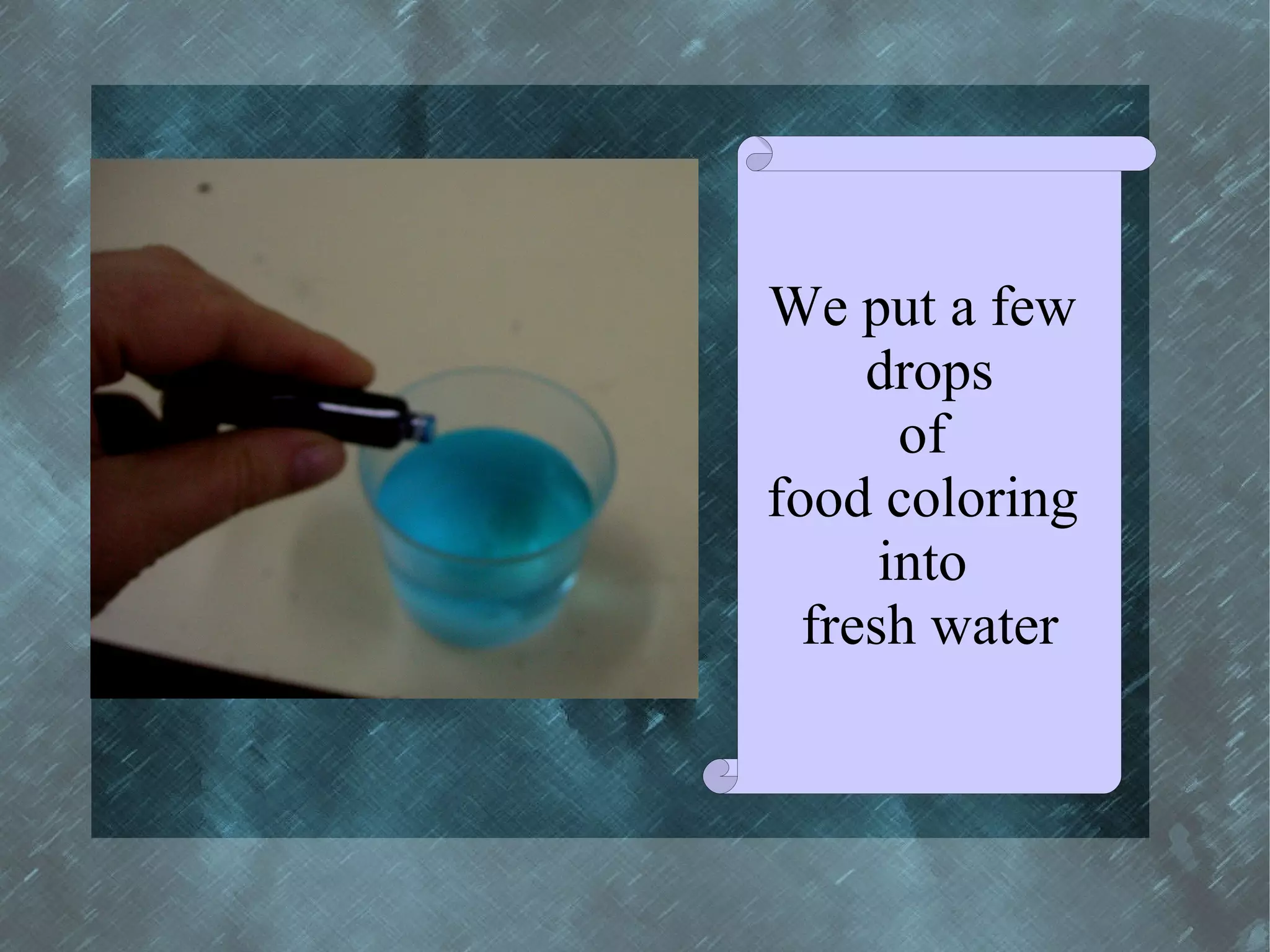
We put a few
     drops
       of
food coloring
      into
  fresh water
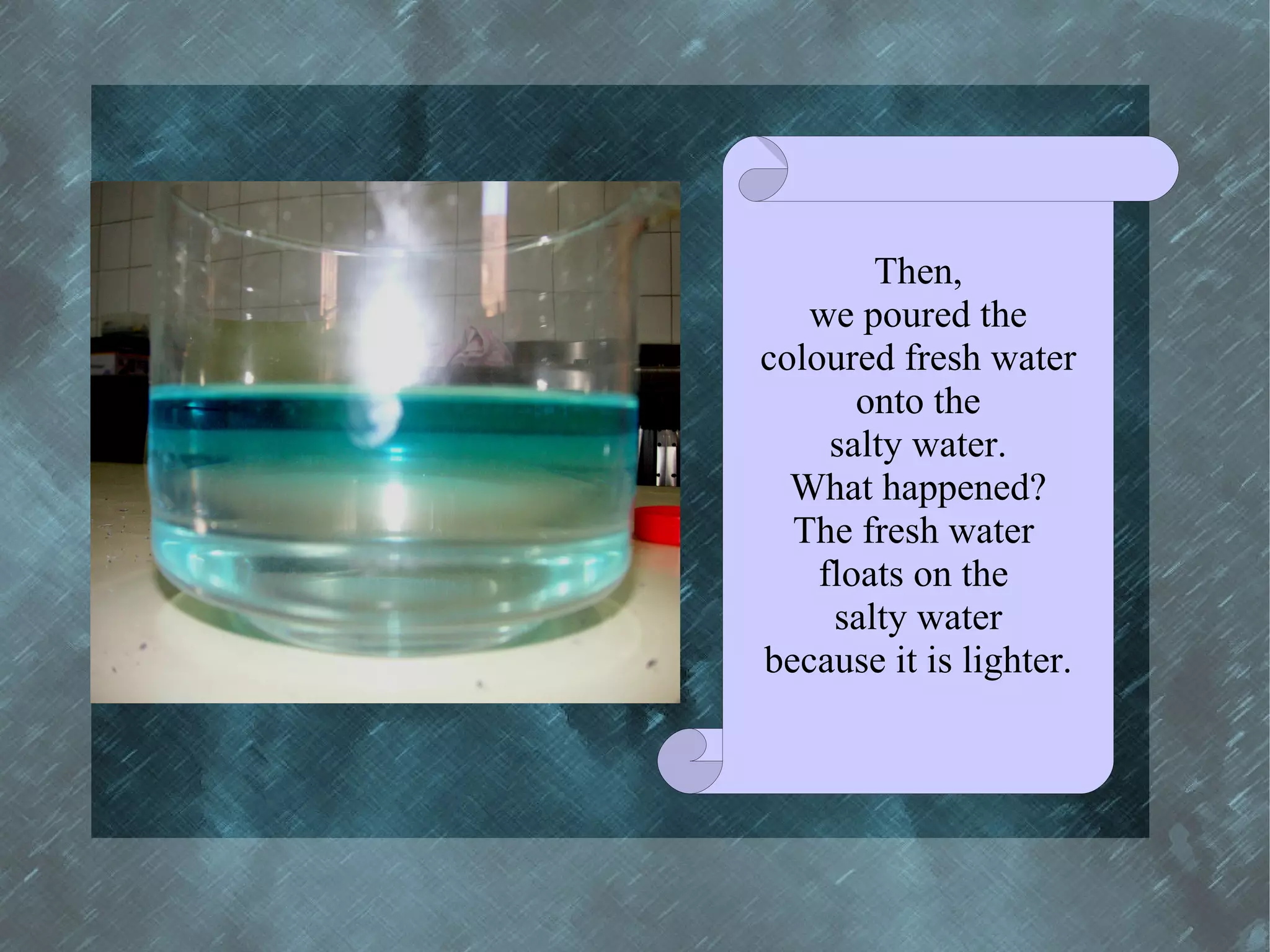
Then,
   we poured the
coloured fresh water
       onto the
     salty water.
  What happened?
  The fresh water
    floats on the
     salty water
because it is lighter.

Experiments with water

  • 1.
    EXPERIMENTS WITH WATER C. P. VILLAPENDI
  • 2.
    This experiments were made by children five to 7 years old. ● They used their knowledge about water to make predictions. ● Some times their predictions were right, some times were wrong. ● They recorded their discoveries in worksheets ● We related the experiments with nature facts, like water cycle, river pollution...
  • 3.
    This term wehave learned many things about water. Let's see...
  • 4.
    Tap water isa liquid: it has the shape of the container The glasses are different but the amount of water is the same
  • 5.
    When you putwater in the freezer it becomes ice. Ice is solid.
  • 6.
    You can't takeliquid water in your hands, but you can take ice. It's cold!
  • 7.
    When you heatwater on the fire, you get steem. Water steem is vapour
  • 8.
    If you cover boiling water with a cold dish you can get rain in the kitchen.
  • 9.
    You can't hold watersteam. It flies into the air. Water steam is hot
  • 10.
    Some things floaton the water and some sink
  • 11.
    The cork, thewooden spoon, the pencil and the plastic ruler float. The metal spoon, the sharpener and the rubber sink. Some materials are lighter than water some are heavier.
  • 12.
    Some things mixwith water, some not. We checked several things:
  • 13.
  • 14.
    Oil never mixeswith water, you can stir, and stir... but it always goes up. It floats on the water.
  • 15.
    Oil is very difficult to clean when it reaches rivers or the sea.
  • 16.
  • 17.
    You can mix honeywith water, but after a while it settles down
  • 18.
    Sugar melts inwater and it disappears
  • 19.
    Salt also meltsin water and disappears.
  • 20.
    This way youget salty water
  • 21.
    If you put anegg into fresh water, it sinks.
  • 22.
    If you putit into salty water, it floats.
  • 23.
    We put afew drops of food coloring into fresh water
  • 24.
    Then, we poured the coloured fresh water onto the salty water. What happened? The fresh water floats on the salty water because it is lighter.