“2024-2025”
Instructor :Dr /Marwa Maher
Lec 1
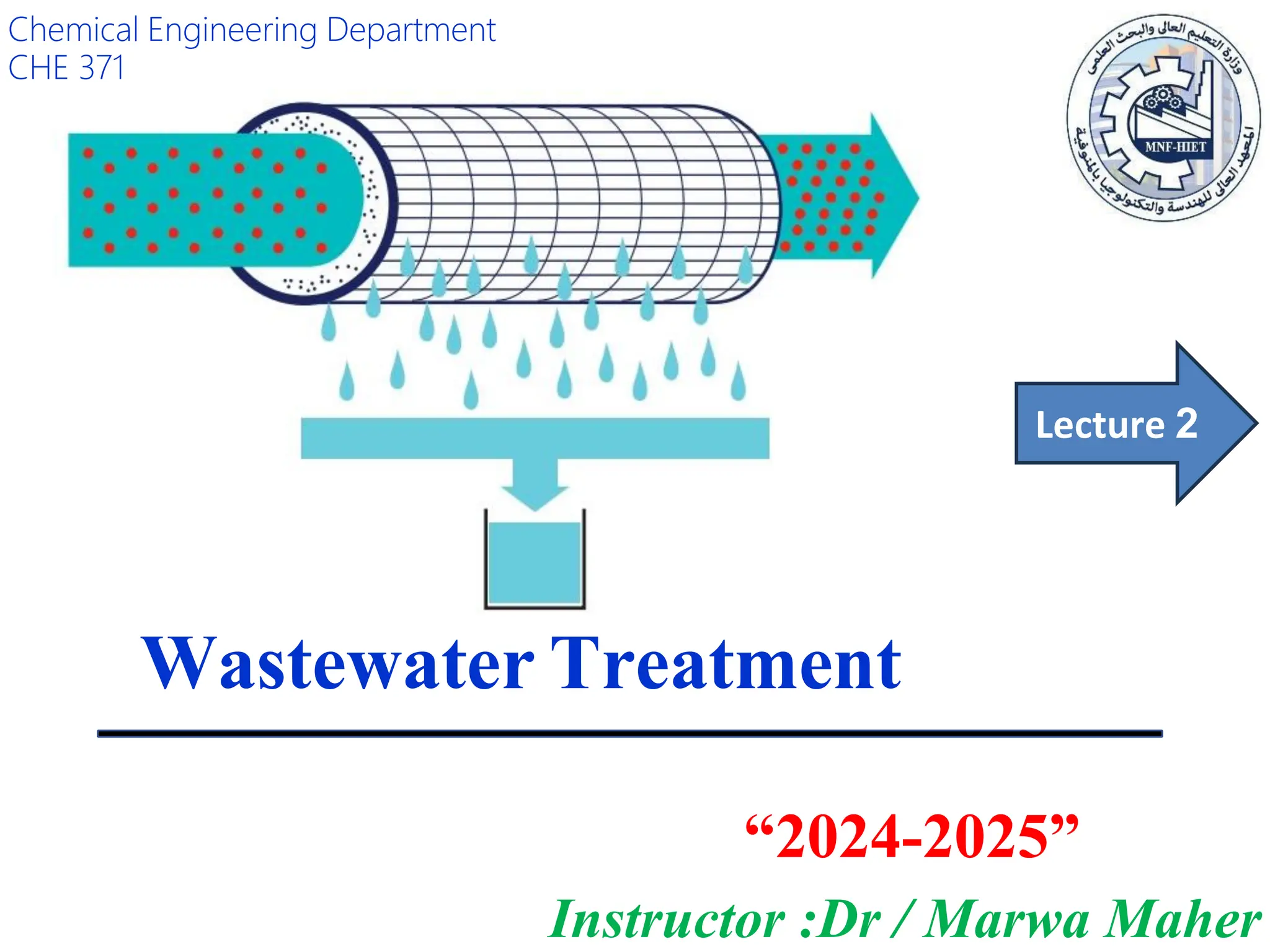
Wastewater Treatment
Chemical Engineering Department
CHE 371
Lecture 2
2.
"Wastewater is simplythat part of the water
supply to the community or to the industry
which has been used for different purposes and
has been mixed with solids either suspended or
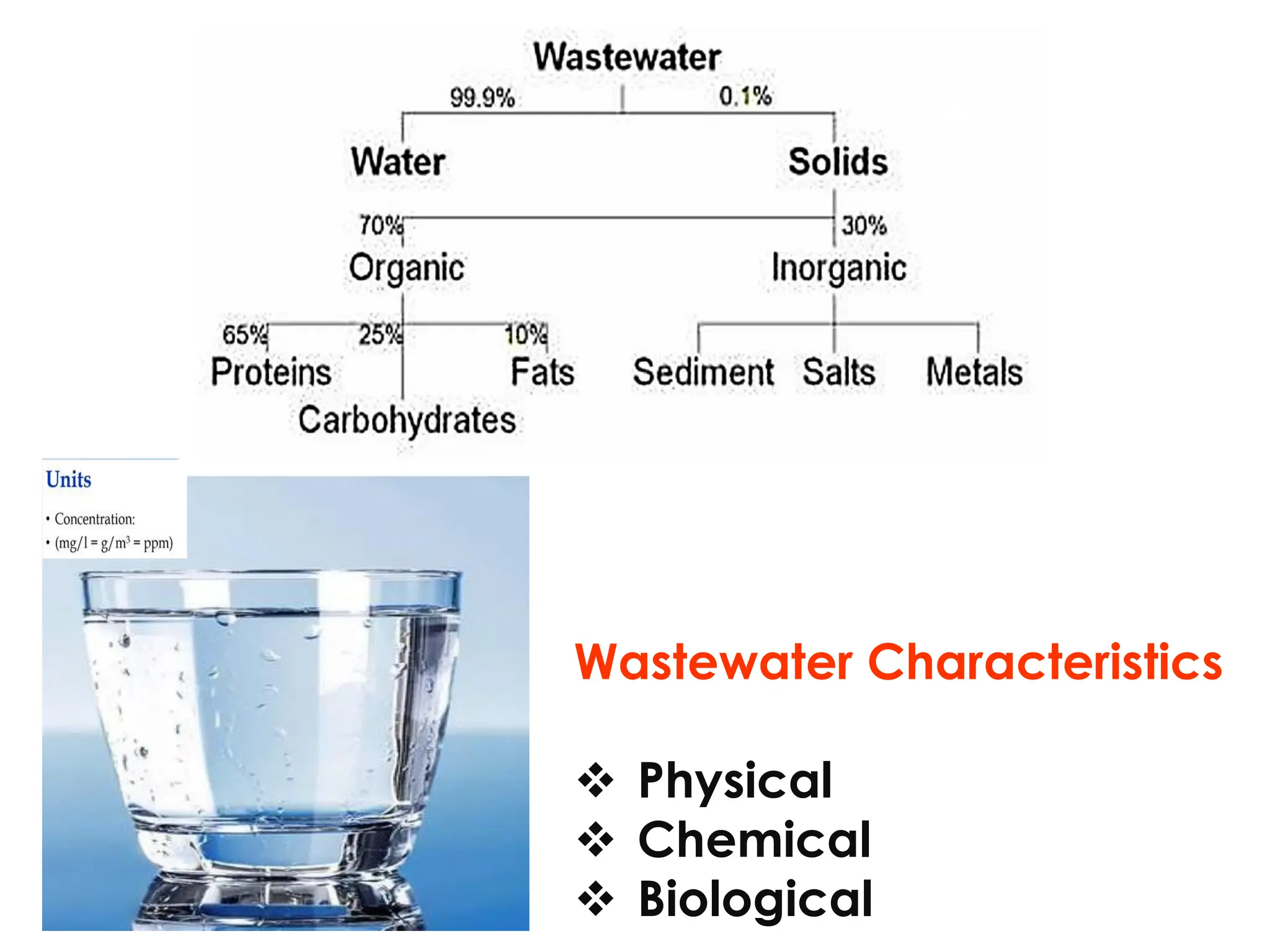
dissolved." Wastewater is 99.9% water and
0.1% solids. The main task in treating the
wastewater is simply to remove most or all
of this 0.1% of solids.
Wastewater = clean water supply + solids
Wastewater treatment is simply the separation of
solids from water.
Clean water =Wastewater– Solids
1.Introduction
Physical Characteristics
Physical propertiesare subject to natural forces making it easier to
measure & determine their values & effects. Physical properties of
significance include: concentration of solids, turbidity, taste, odor,
color, temperature, electrical conductivity, salinity, density, standard
volume, viscosity, surface tension, moisture content, humidity, radiation
and dissolved oxygen.
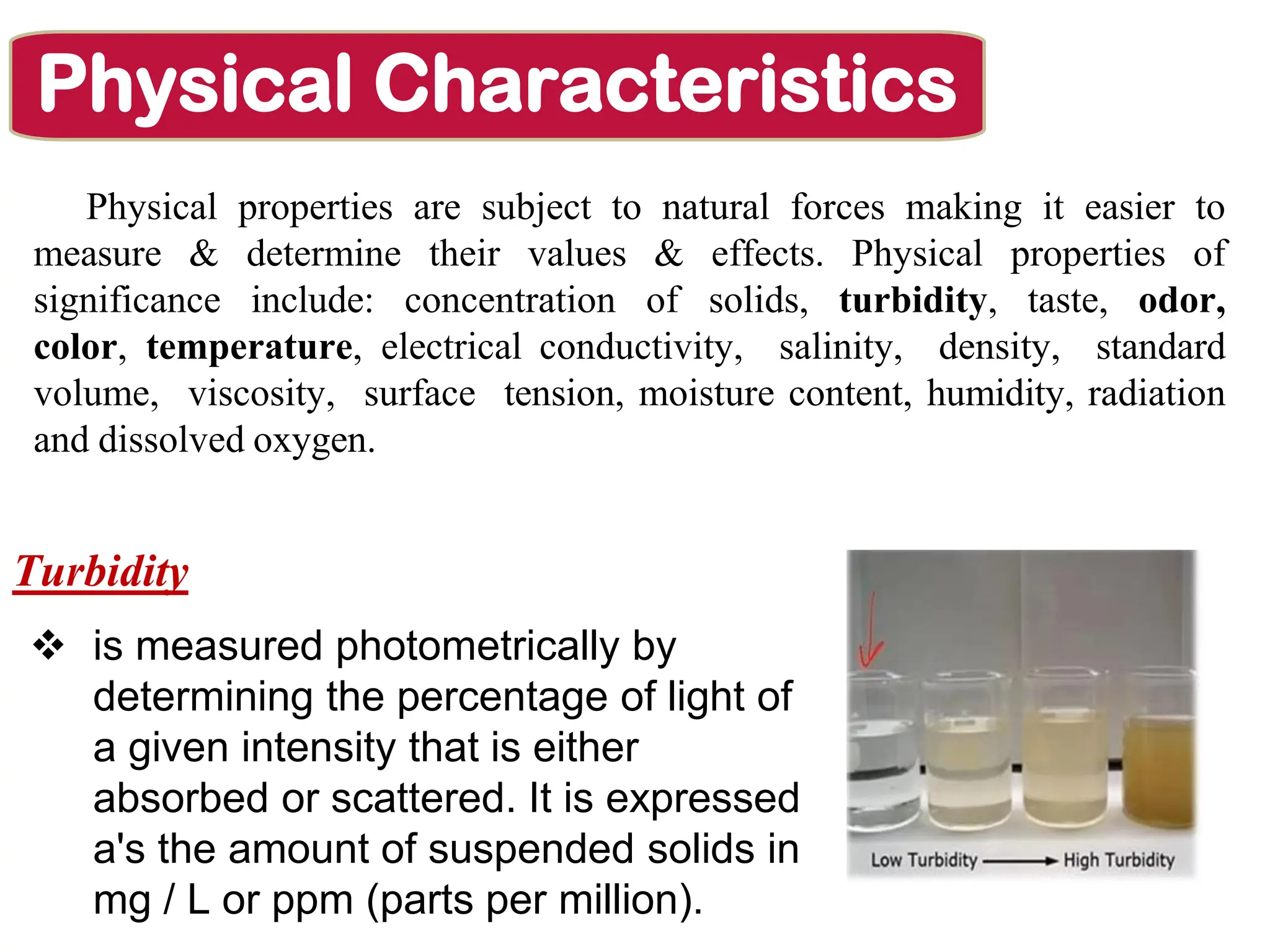
Turbidity
❖ is measured photometrically by
determining the percentage of light of
a given intensity that is either
absorbed or scattered. It is expressed
a's the amount of suspended solids in
mg / L or ppm (parts per million).
5.
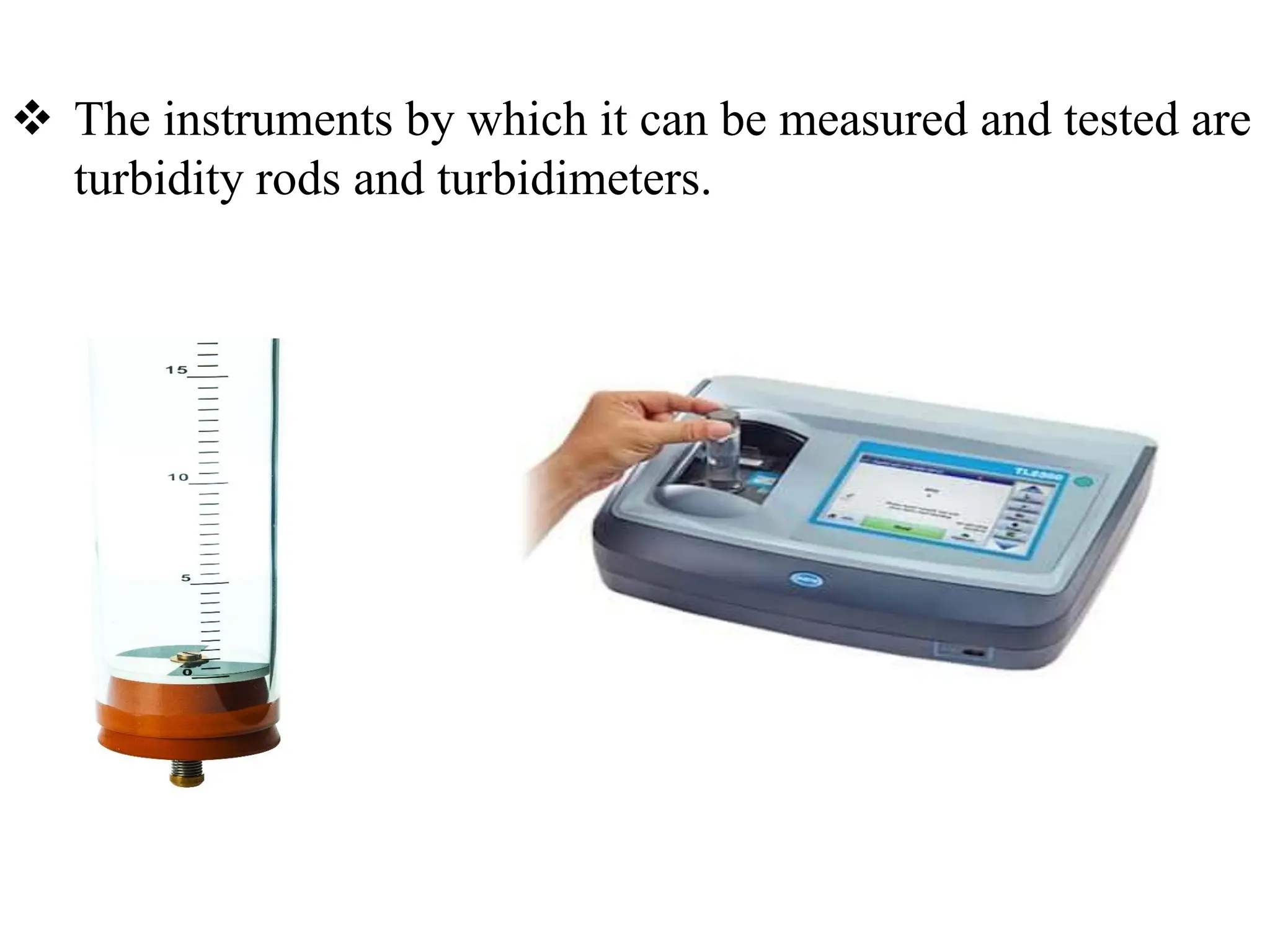
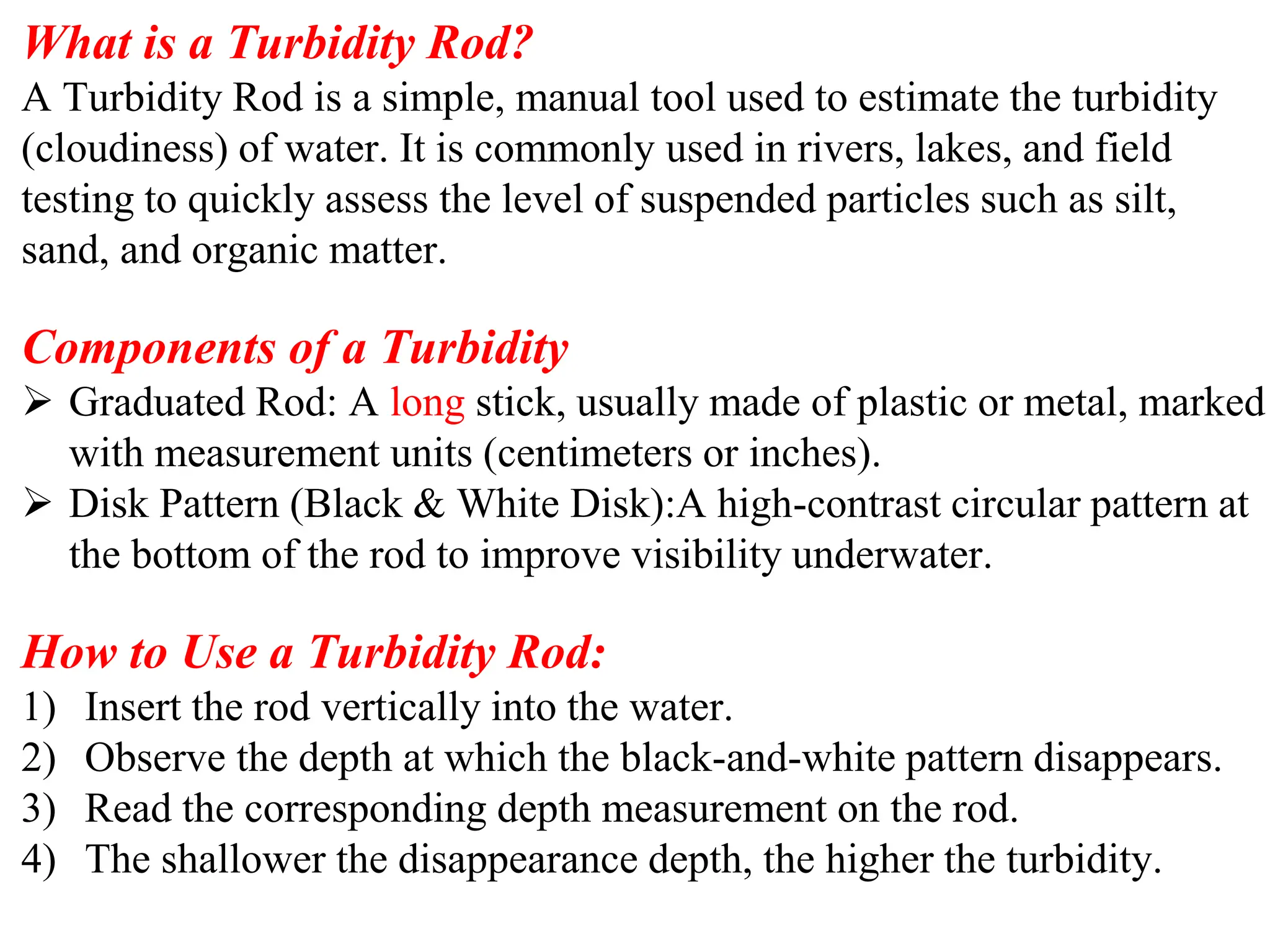
❖ The instrumentsby which it can be measured and tested are
turbidity rods and turbidimeters.
6.
What is aTurbidity Rod?
A Turbidity Rod is a simple, manual tool used to estimate the turbidity
(cloudiness) of water. It is commonly used in rivers, lakes, and field
testing to quickly assess the level of suspended particles such as silt,
sand, and organic matter.
Components of a Turbidity
➢ Graduated Rod: A long stick, usually made of plastic or metal, marked
with measurement units (centimeters or inches).
➢ Disk Pattern (Black & White Disk):A high-contrast circular pattern at
the bottom of the rod to improve visibility underwater.
How to Use a Turbidity Rod:
1) Insert the rod vertically into the water.
2) Observe the depth at which the black-and-white pattern disappears.
3) Read the corresponding depth measurement on the rod.
4) The shallower the disappearance depth, the higher the turbidity.
7.
What is aTurbidimeter?
A turbidimeter is a device used to accurately measure water turbidity by
determining the amount of light scattered by suspended particles in the water. It is
widely used in water treatment plants, laboratories, and industrial settings to monitor
water quality and ensure compliance with health and safety standards.
How Does a Turbidimeter Work?
•Light Emission:
•A light source emits a beam of light through a water sample.
•Light Interaction with Particles:
•The more suspended particles in the water, the more the light is scattered in different
directions.
•Detection of Scattered Light:
•Sensors detect the scattered light at specific angles, usually 90 degrees, which is
known as Nephelometric Turbidity Units (NTU) measurement.
•Turbidity Calculation:
•The device calculates the turbidity level based on the intensity of the scattered light,
expressed in NTU (Nephelometric Turbidity Units).
9
Temperature
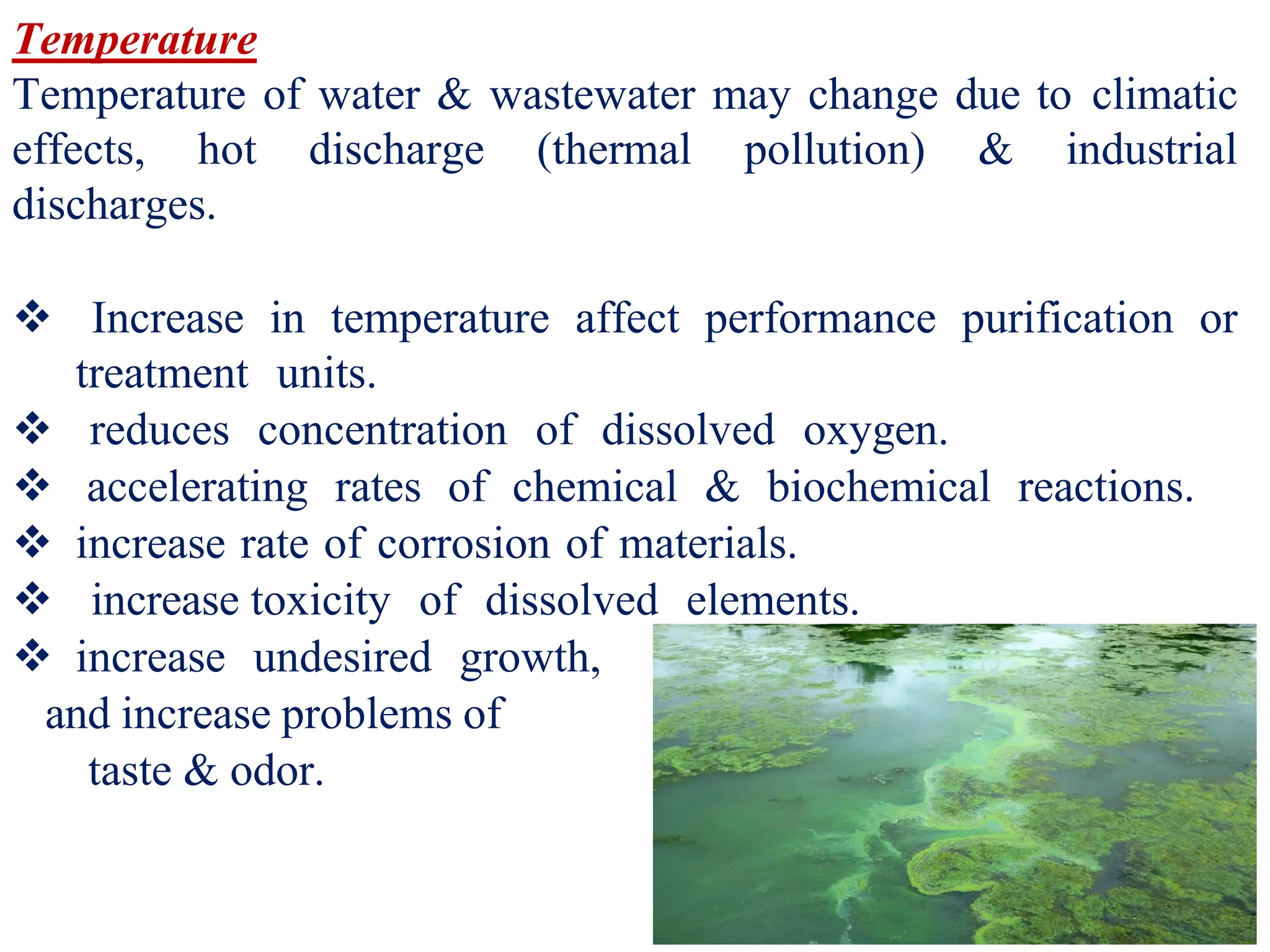
Temperature of water& wastewater may change due to climatic
effects, hot discharge (thermal pollution) & industrial
discharges.
❖ Increase in temperature affect performance purification or
treatment units.
❖ reduces concentration of dissolved oxygen.
❖ accelerating rates of chemical & biochemical reactions.
❖ increase rate of corrosion of materials.
❖ increase toxicity of dissolved elements.
❖ increase undesired growth,
and increase problems of
taste & odor.
10.
Colour
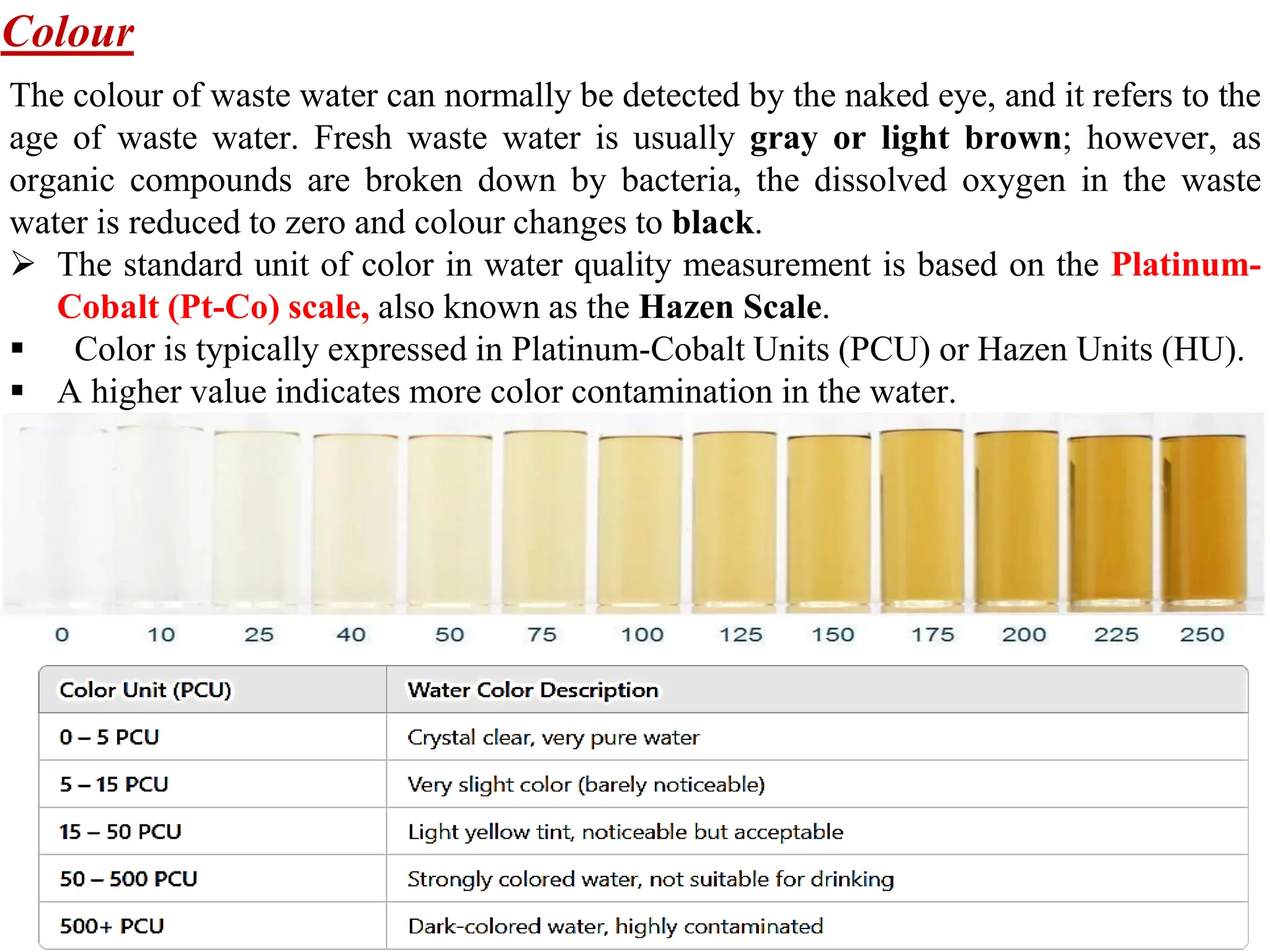
The colour ofwaste water can normally be detected by the naked eye, and it refers to the
age of waste water. Fresh waste water is usually gray or light brown; however, as
organic compounds are broken down by bacteria, the dissolved oxygen in the waste
water is reduced to zero and colour changes to black.
➢ The standard unit of color in water quality measurement is based on the Platinum-
Cobalt (Pt-Co) scale, also known as the Hazen Scale.
▪ Color is typically expressed in Platinum-Cobalt Units (PCU) or Hazen Units (HU).
▪ A higher value indicates more color contamination in the water.
11.
4. Conductivity
❖ Conductivitydenotes intensity of an aqueous solution to carry an
electric current. This ability is influenced by: concentration, type
mobility, valence & relative concentration of ions; & temperature.
❖ Generally, solutions of most inorganic acids, bases & salts are
relatively good conductors.
❖ Electrical conductivity is an important indicator of water quality and
can be used for:
Monitoring water salinity:
Water with high conductivity contains a large amount of dissolved salts.
Determining pollution levels in wastewater:
Wastewater contains numerous ions, which increase electrical
conductivity compared to freshwater.
Monitoring water quality in treatment plants:
Conductivity measurements can be used to ensure that water has been
properly treated and is free from harmful dissolved substances.
12.
10
5.Density
Density is themass of a substance per unit volume or in a
qualitative manner it is the measure of the relative
"heaviness" of objects with a constant volume. Density is
temperature dependent.
ρ = m/V (1)
where: ρ = Density of the fluid, kg/m3 . m = Mass, kg. V =
Volume, m3.
Specific volume Specific volume is the volume per unit mass,
i.e. it is the reciprocal of the density.
κ = 1/ρ (2)
Where: κ = Specific volume of the fluid, m3 /kg. ρ = Density
of the fluid, kg/m3.
13.
Specific weight Specificweight is the weight of unit volume.
γ = m*g/V = ρ*g
Where: γ = Specific weight, N/m3.
m = Mass, kg.
g = Gravitational acceleration, m/s2.
V = Volume, m3.
ρ = Density of the fluid, kg/m3. Specific gravity Specific gravity is the
ratio of the density of fluid to the density of water at some specified
temperature.
(3)
14.
14
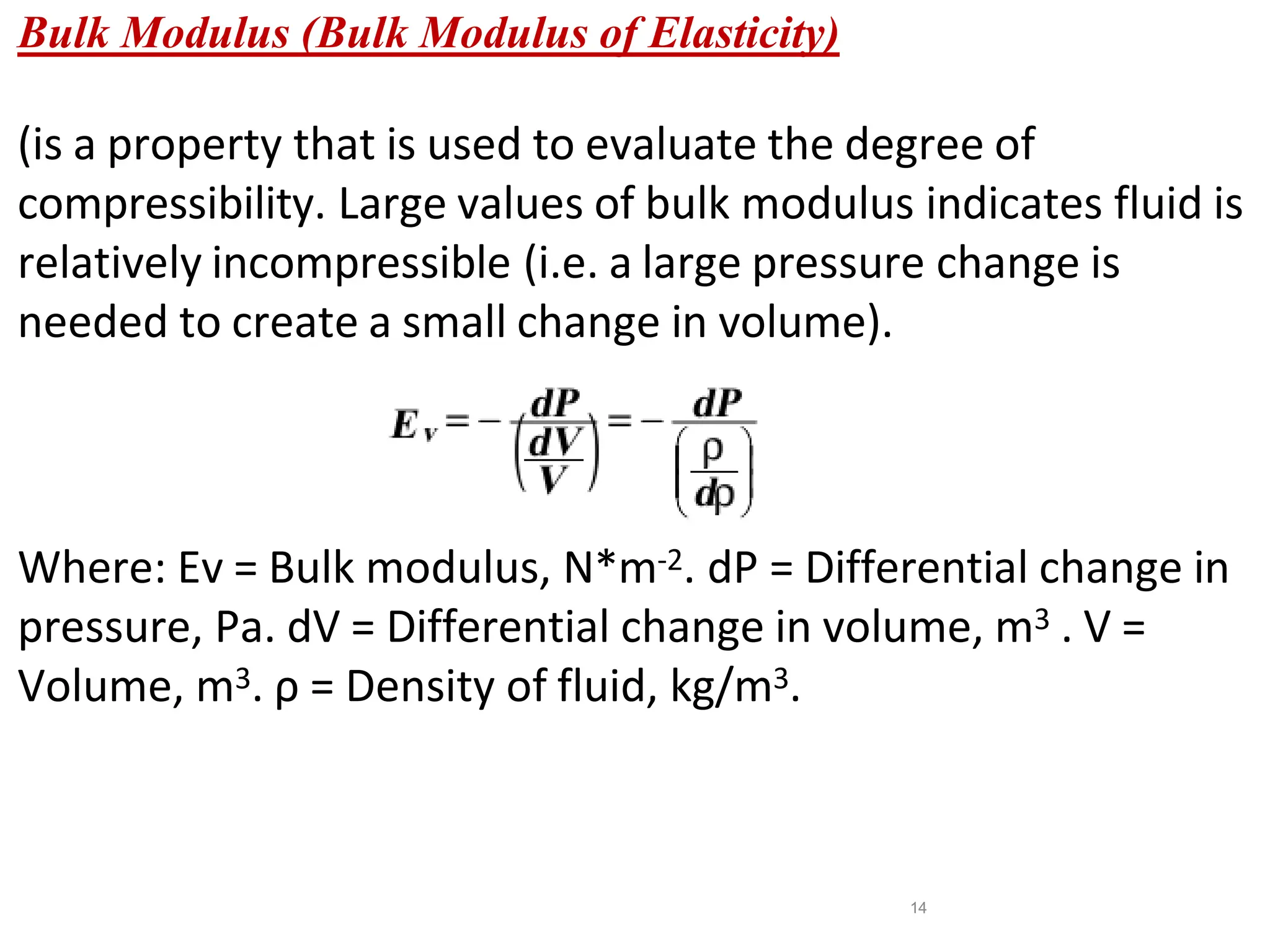
Bulk Modulus (BulkModulus of Elasticity)
(is a property that is used to evaluate the degree of
compressibility. Large values of bulk modulus indicates fluid is
relatively incompressible (i.e. a large pressure change is
needed to create a small change in volume).
Where: Ev = Bulk modulus, N*m-2. dP = Differential change in
pressure, Pa. dV = Differential change in volume, m3 . V =
Volume, m3. ρ = Density of fluid, kg/m3.
15.
Determining the chemicalcharacteristics of waste water help
in indicating, the stage of waste water decomposition, its
strength, extent and type of treatment required for making it
safe to the point of disposal.
Important chemical characteristics of waste water are listed below :
(i) Total solids, suspended solids and settleable solids.
(ii) pH value.
(iii) Chloride content.
(iv) Nitrogen content.
(v) Presence of fats, greases, and oils.
(vi) Sulphides, sulphates and H2S gas.
(vii) Dissolved oxygen.
(viii) Chemical oxygen demand (COD).
(ix) Bio-chemical oxygen demand (BOD).
Chemical Characteristics
16.
1.Total Solids, SuspendedSolids and Settleable Solids
Solids present in waste water may be : suspended) colloidal( solids,
dissolved solids, and settleable solids.
Total Solids (TS)
Total solids refer to all solid materials present in a water sample, including dissolved
and suspended solids. These solids can be organic (from plants, microorganisms) or
inorganic (minerals, salts, metals).
Types of Total Solids:
•Dissolved Solids (TDS) → Solids that pass through a 0.45-micron filter
(e.g., salts, minerals, organic matter). TDS (mg/L) ≈ EC (mS/cm (millisiemens
per cm) × Conversion
•Suspended Solids (TSS) → Solids that do not pass through a 0.45-
micron filter (e.g., silt, clay, organic particles).
Settleable Solids (SSS)
Settleable solids are the heavier particles that settle to the bottom of a
water sample within a specified time (usually 1 hour). These solids are a
major concern in wastewater treatment.
17.
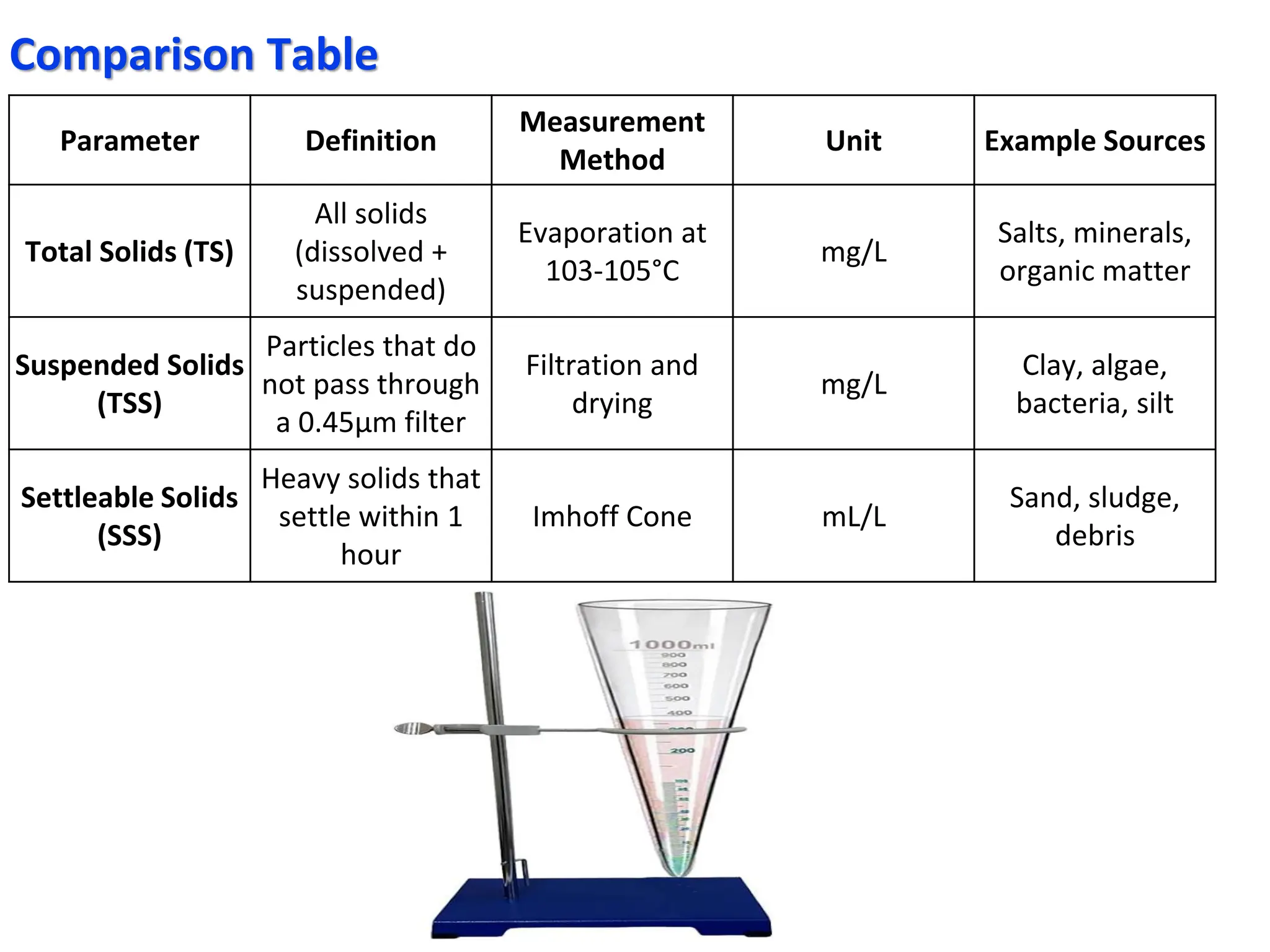
Comparison Table
Parameter Definition
Measurement
Method
UnitExample Sources
Total Solids (TS)
All solids
(dissolved +
suspended)
Evaporation at
103-105°C
mg/L
Salts, minerals,
organic matter
Suspended Solids
(TSS)
Particles that do
not pass through
a 0.45µm filter
Filtration and
drying
mg/L
Clay, algae,
bacteria, silt
Settleable Solids
(SSS)
Heavy solids that
settle within 1
hour
Imhoff Cone mL/L
Sand, sludge,
debris
18.
2.pH Value
The hydrogenion concentration is an important quality parameter for both
natural water and waste waters. The concentrating range suitable for the
existence of most biological life is quite narrow and critical.
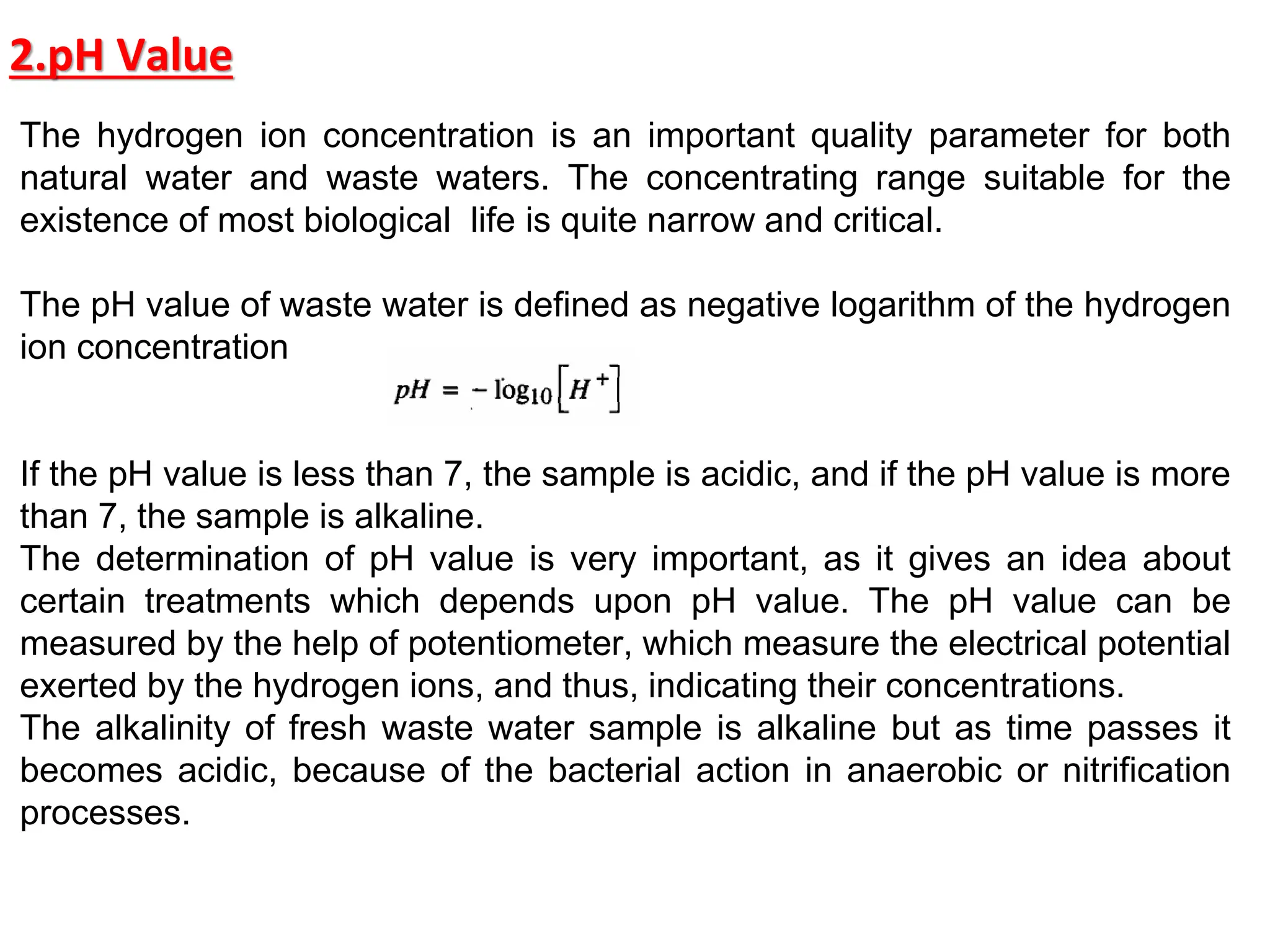
The pH value of waste water is defined as negative logarithm of the hydrogen
ion concentration
If the pH value is less than 7, the sample is acidic, and if the pH value is more
than 7, the sample is alkaline.
The determination of pH value is very important, as it gives an idea about
certain treatments which depends upon pH value. The pH value can be
measured by the help of potentiometer, which measure the electrical potential
exerted by the hydrogen ions, and thus, indicating their concentrations.
The alkalinity of fresh waste water sample is alkaline but as time passes it
becomes acidic, because of the bacterial action in anaerobic or nitrification
processes.
19.
3. Chloride Content
Chloridecontent in wastewater comes from kitchen waste, and urine, with a typical
concentration of 120 mg/L. Industrial sources like ice cream plants and meat salting
can increase chloride levels. It is measured by titration with silver nitrate using
potassium chromate as an indicator.
4. Nitrogen Content
The presence of nitrogen in wastewater indicates organic matter contamination and
can exist in different forms:
1.Albuminoid Nitrogen (Organic Nitrogen) – Represents nitrogen before
decomposition starts. It is measured by adding potassium permanganate (KMnO₄) to a
boiled wastewater sample and boiling it again to release ammonia gas.
2.Ammonia (Ammonia Nitrogen) – Indicates the initial stage of organic
decomposition. It can be measured by boiling the sample and measuring the released
ammonia gas.
3.Nitrites – Indicate partially decomposed organic matter. They are measured using a
color-matching method with naphthylamine and sulphonic acid.
4.Nitrates – Represent fully oxidized organic matter. They are measured using
phenol-disulphonic acid and potassium hydroxide in a color-matching method.
20.
5. Presence ofFats, Oils and Greases
Fats, oils, and greases (FOG) in wastewater are composed of alcohol or
glycerol combined with fatty acids.
•Oils are liquid at normal temperatures, while fats are solid.
•Grease includes fats, oils, waxes, and other similar substances found in
wastewater.
Impact on Wastewater Treatment:
•These substances form scum on sedimentation tanks and clog filtration
systems, disrupting treatment processes.
Measurement Method:
1.The wastewater sample is evaporated to remove water.
2.The remaining solid residue is mixed with ether (hexane) to dissolve
fats and greases.
3.The solution is poured off and evaporated again.
4.The remaining residue (fats and greases) is weighed to determine its
concentration.
21.
6. Sulphides, Sulphatesand Hydrogen Sulphide Gas
Sulphides and sulphates in wastewater result from the decomposition of sulfur-
containing substances. This process also releases hydrogen sulfide (H₂S) gas, which:
•Causes bad odors and unpleasant smells.
•Leads to corrosion of concrete sewer pipes.
Formation Process:
1. Aerobic and facultative bacteria oxidize sulfur compounds in sewage.
2.This oxidation first produces sulphides, which decompose further, releasing H₂S gas.
3.Over time, H₂S gas is further oxidized into sulphate ions (SO₄²⁻), which are stable and
harmless.
6. Dissolved Oxygen
When treated sewage is discharged into a river, at least 4 ppm of D.O. is required to
prevent fish deaths. Fresh wastewater contains some dissolved oxygen, but it is quickly
depleted due to aerobic decomposition.
Temperature Effect:
Higher temperature → Lower D.O. levels
Lower temperature → Higher D.O. levels
22.
22
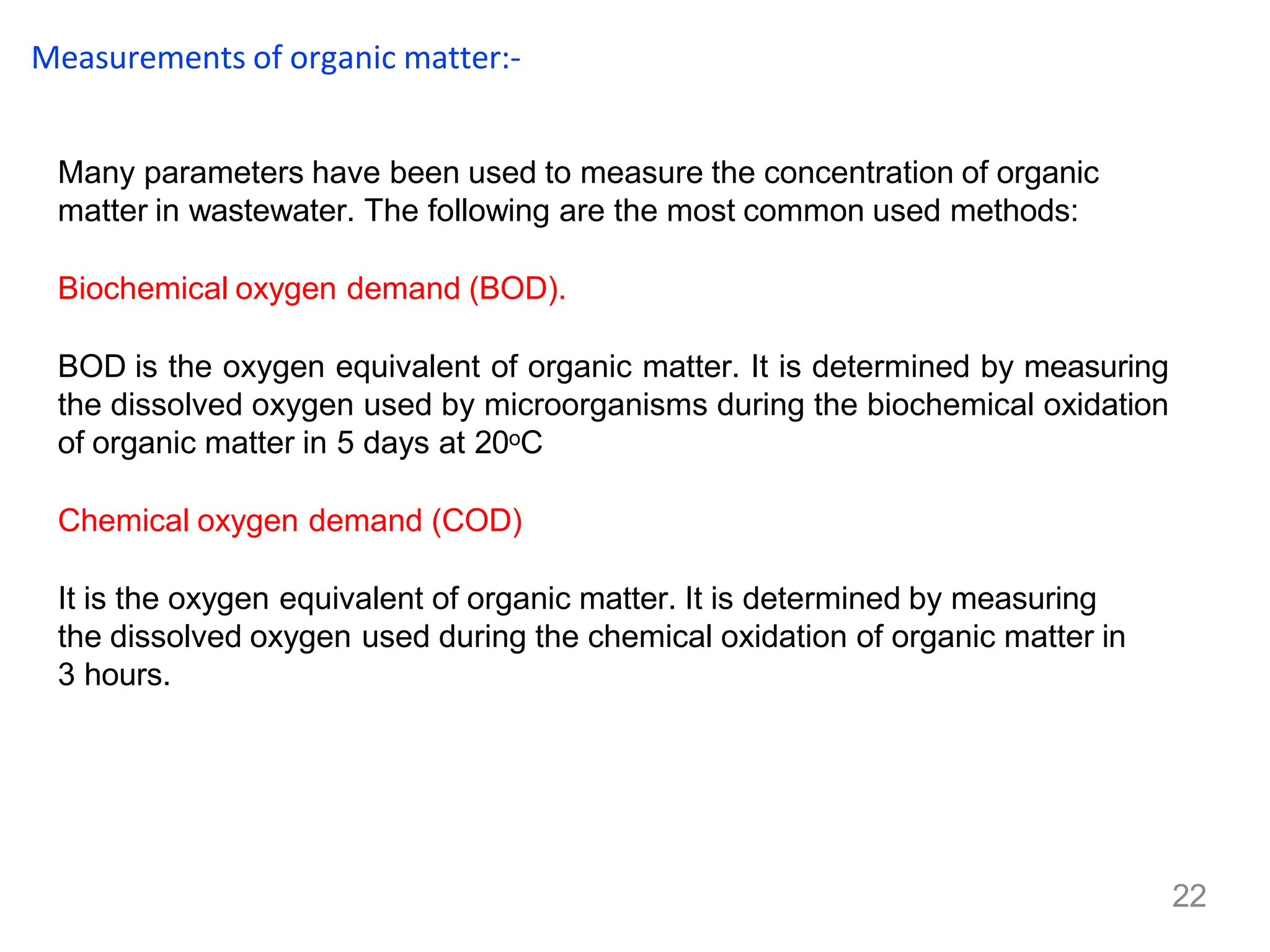
Measurements of organicmatter:-
Many parameters have been used to measure the concentration of organic
matter in wastewater. The following are the most common used methods:
Biochemical oxygen demand (BOD).
BOD is the oxygen equivalent of organic matter. It is determined by measuring
the dissolved oxygen used by microorganisms during the biochemical oxidation
of organic matter in 5 days at 20oC
Chemical oxygen demand (COD)
It is the oxygen equivalent of organic matter. It is determined by measuring
the dissolved oxygen used during the chemical oxidation of organic matter in
3 hours.
23.
23
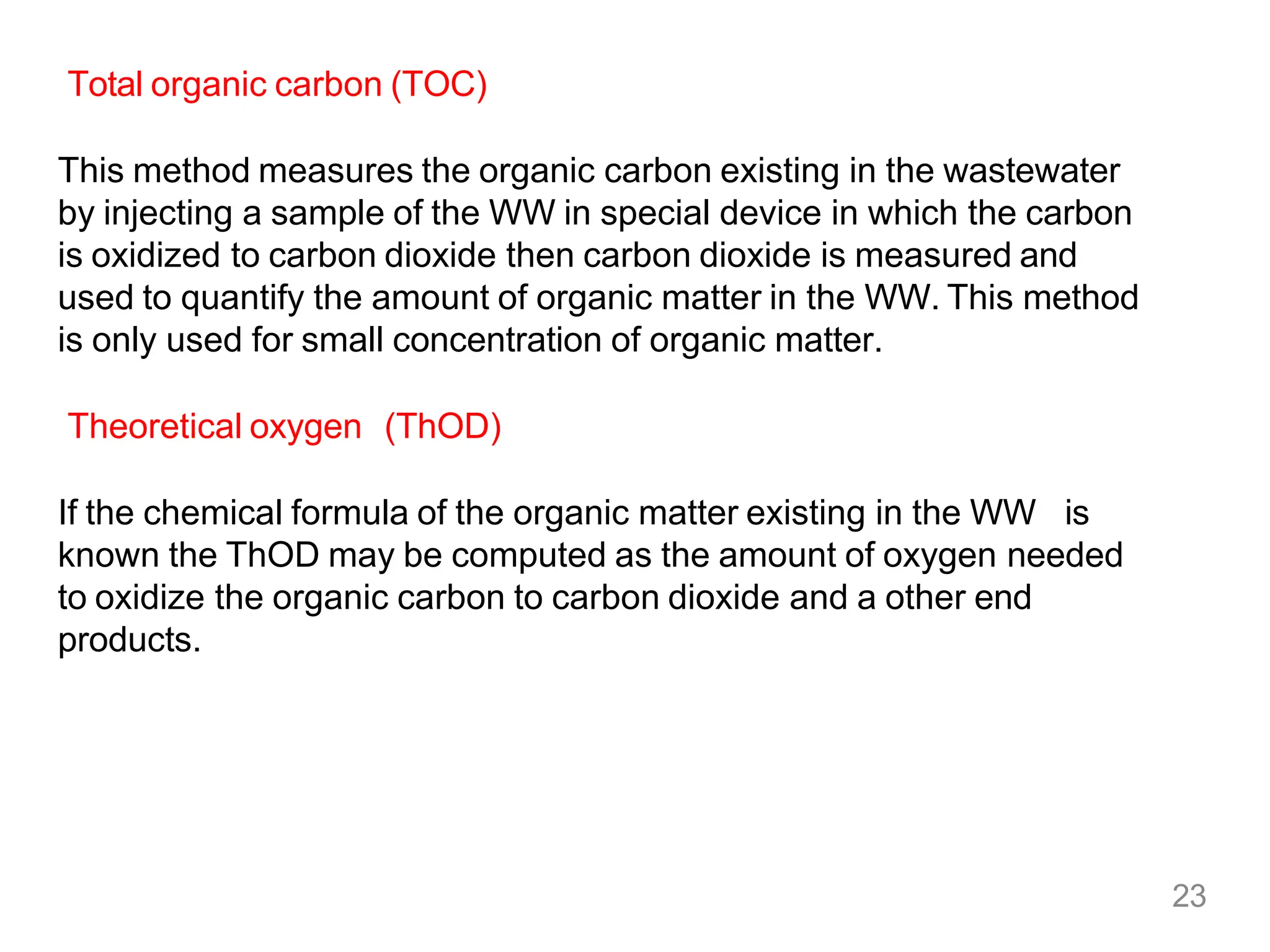
Total organic carbon(TOC)
This method measures the organic carbon existing in the wastewater
by injecting a sample of the WW in special device in which the carbon
is oxidized to carbon dioxide then carbon dioxide is measured and
used to quantify the amount of organic matter in the WW. This method
is only used for small concentration of organic matter.
Theoretical oxygen (ThOD)
If the chemical formula of the organic matter existing in the WW is
known the ThOD may be computed as the amount of oxygen needed
to oxidize the organic carbon to carbon dioxide and a other end
products.
24.
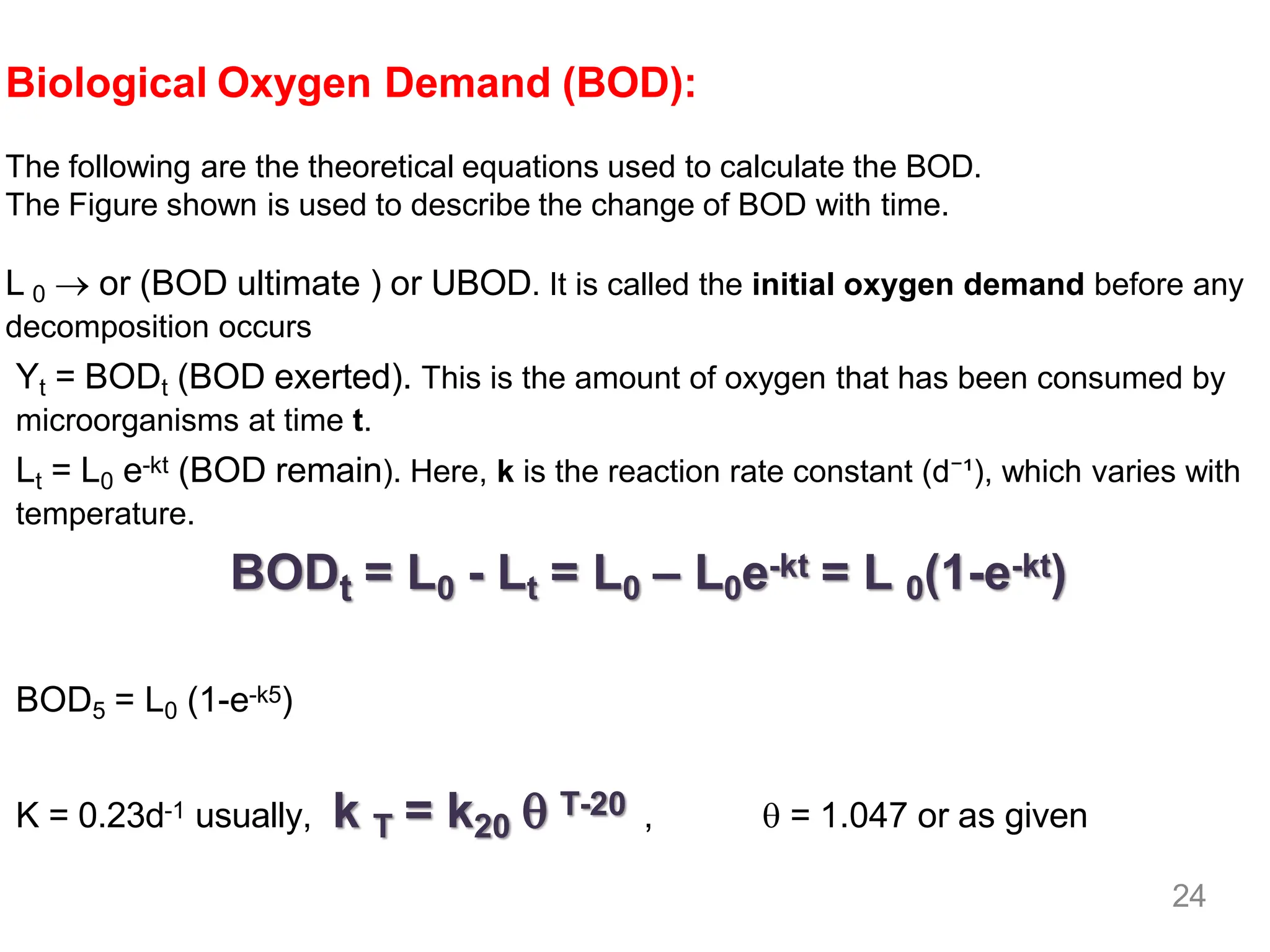
Biological Oxygen Demand(BOD):
The following are the theoretical equations used to calculate the BOD.
The Figure shown is used to describe the change of BOD with time.
L 0 → or (BOD ultimate ) or UBOD. It is called the initial oxygen demand before any
decomposition occurs
Yt = BODt (BOD exerted). This is the amount of oxygen that has been consumed by
microorganisms at time t.
Lt = L0 e-kt (BOD remain). Here, k is the reaction rate constant (d⁻¹), which varies with
temperature.
BODt = L0 - Lt = L0 – L0e-kt = L 0(1-e-kt)
BOD5 = L0 (1-e-k5)
K = 0.23d-1 usually, k T = k20 T-20 , = 1.047 or as given
24
25.
25
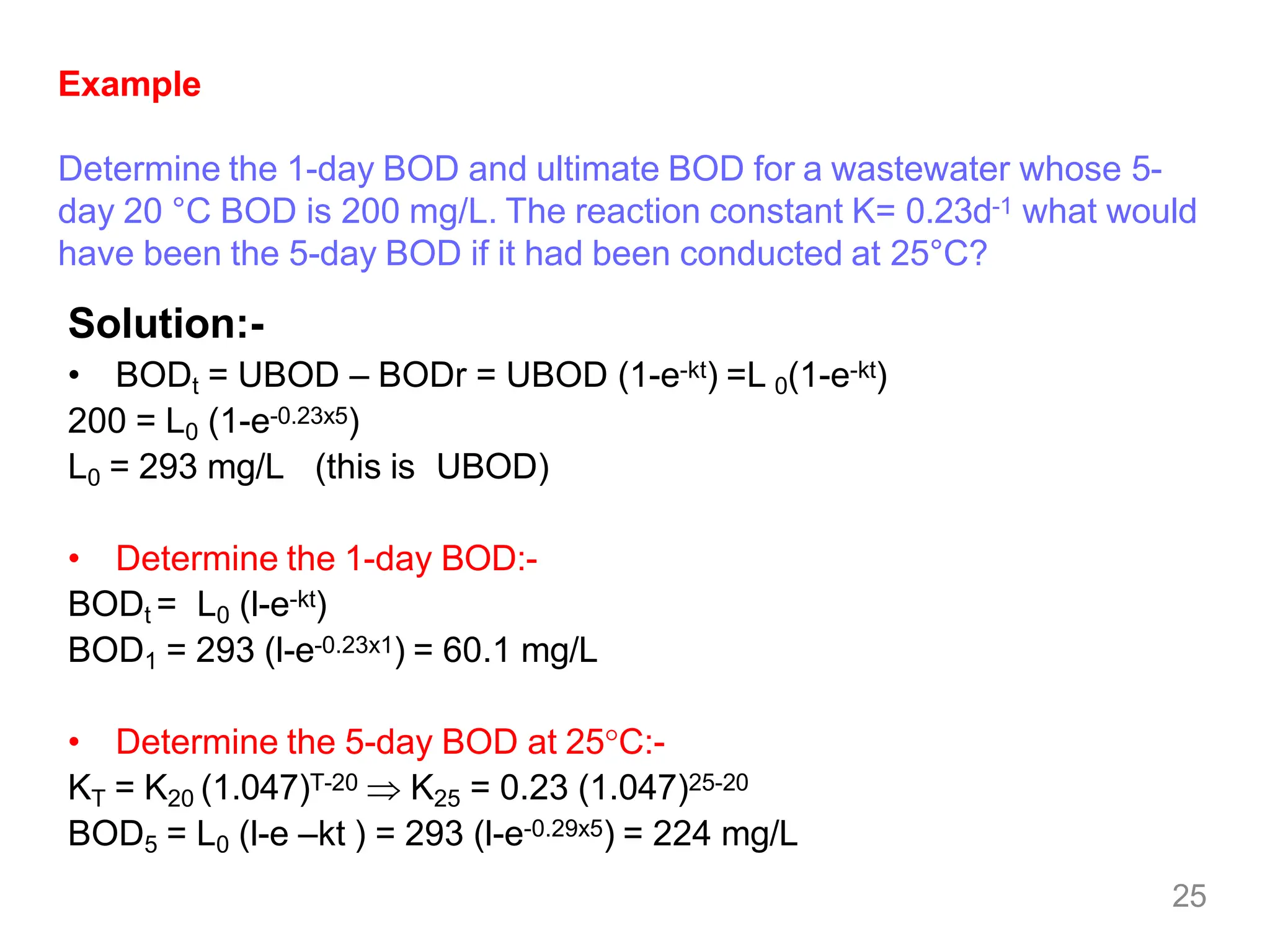
Example
Determine the 1-dayBOD and ultimate BOD for a wastewater whose 5-
day 20 °C BOD is 200 mg/L. The reaction constant K= 0.23d-1 what would
have been the 5-day BOD if it had been conducted at 25°C?
Solution:-
• BODt = UBOD – BODr = UBOD (1-e-kt) =L 0(1-e-kt)
200 = L0 (1-e-0.23x5)
L0 = 293 mg/L (this is UBOD)
• Determine the 1-day BOD:-
BODt = L0 (l-e-kt)
BOD1 = 293 (l-e-0.23x1) = 60.1 mg/L
• Determine the 5-day BOD at 25C:-
KT = K20 (1.047)T-20 K25 = 0.23 (1.047)25-20
BOD5 = L0 (l-e –kt ) = 293 (l-e-0.29x5) = 224 mg/L
26.
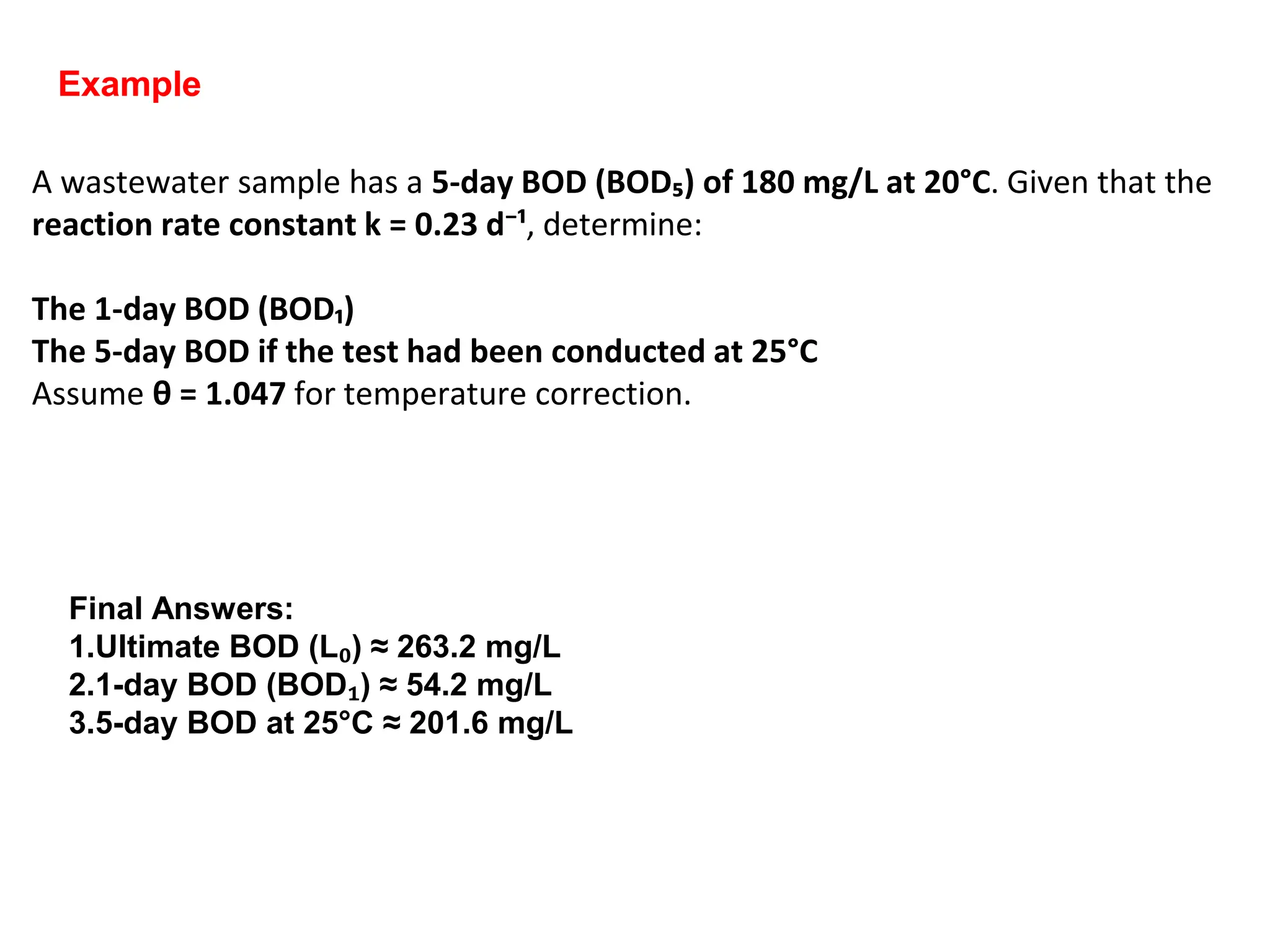
A wastewater samplehas a 5-day BOD (BOD₅) of 180 mg/L at 20°C. Given that the
reaction rate constant k = 0.23 d⁻¹, determine:
The 1-day BOD (BOD₁)
The 5-day BOD if the test had been conducted at 25°C
Assume θ = 1.047 for temperature correction.
Example
Final Answers:
1.Ultimate BOD (L₀) ≈ 263.2 mg/L
2.1-day BOD (BOD₁) ≈ 54.2 mg/L
3.5-day BOD at 25°C ≈ 201.6 mg/L
27.
Theoretical Oxygen demand(ThOD):
Example
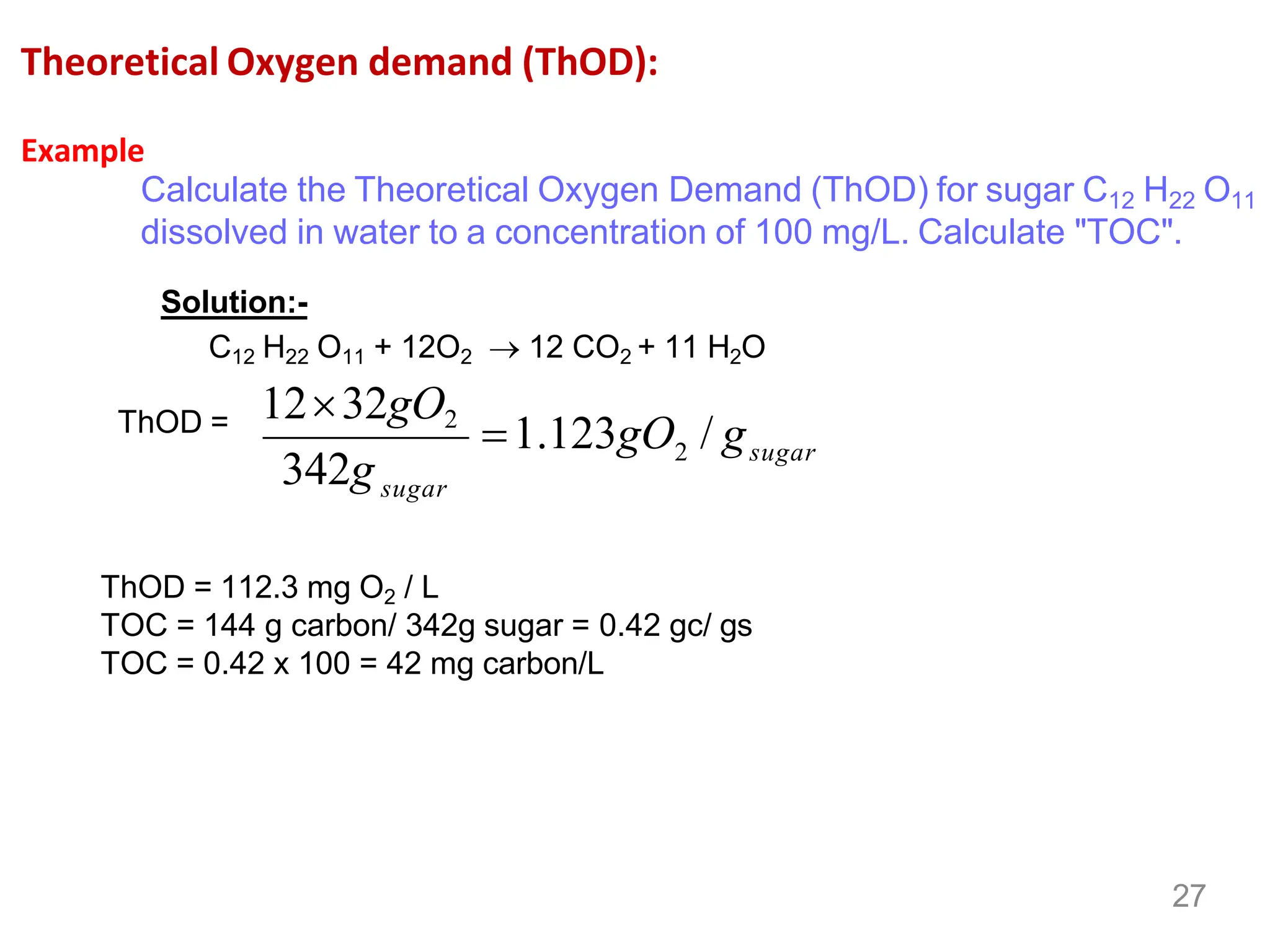
Calculate the Theoretical Oxygen Demand (ThOD) for sugar C12 H22 O11
dissolved in water to a concentration of 100 mg/L. Calculate "TOC".
Solution:-
C12 H22 O11 + 12O2 → 12 CO2 + 11 H2O
ThOD =
sugar
sugar
342g
1232gO2
2
=1.123gO / g
27
ThOD = 112.3 mg O2 / L
TOC = 144 g carbon/ 342g sugar = 0.42 gc/ gs
TOC = 0.42 x 100 = 42 mg carbon/L
28.
28
Chemical Oxygen demand(COD) and Total Organic carbon
(TOC) Example:
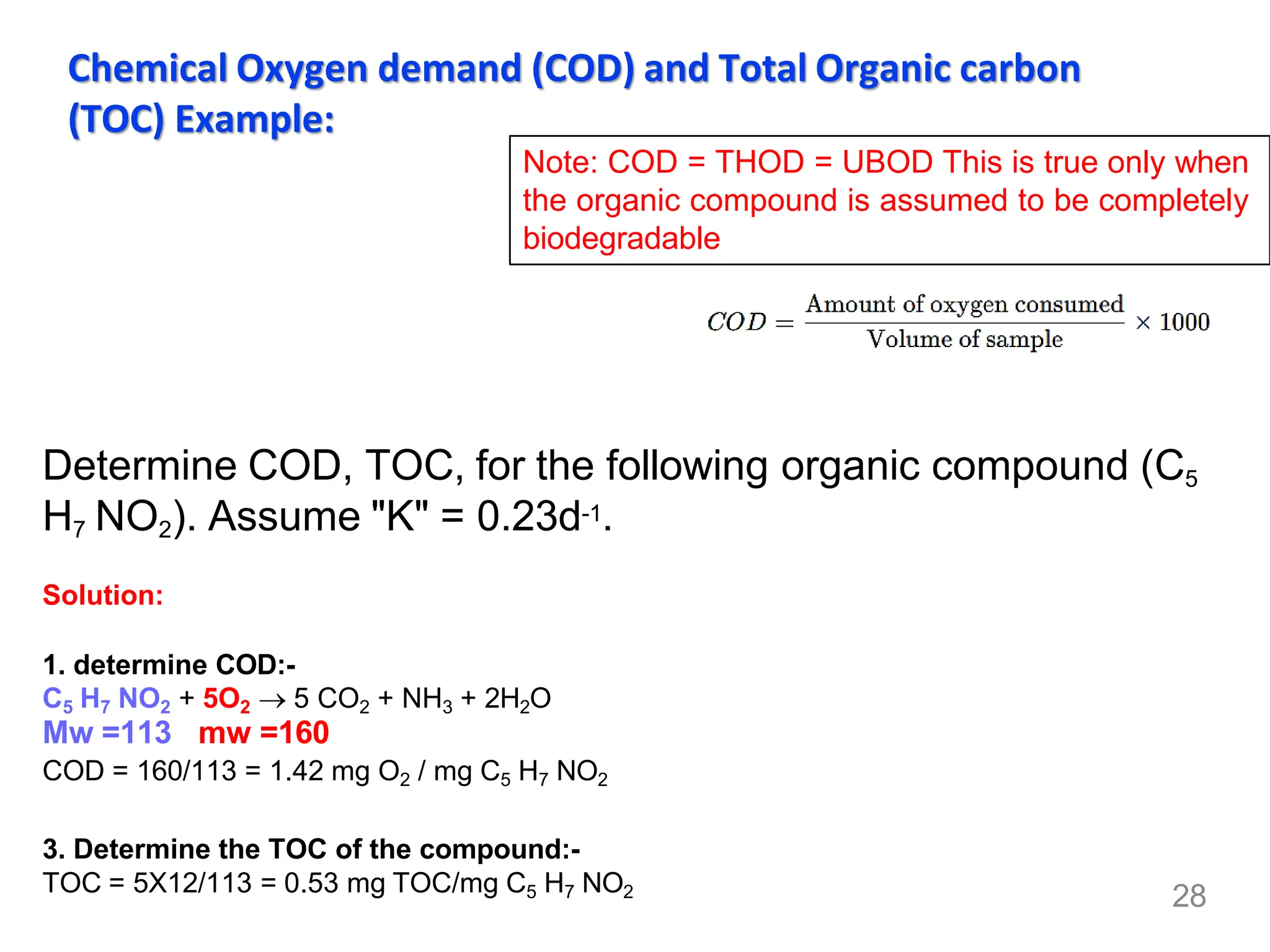
Determine COD, TOC, for the following organic compound (C5
H7 NO2). Assume "K" = 0.23d-1.
Solution:
1. determine COD:-
C5 H7 NO2 + 5O2 → 5 CO2 + NH3 + 2H2O
Mw =113 mw =160
COD = 160/113 = 1.42 mg O2 / mg C5 H7 NO2
3. Determine the TOC of the compound:-
TOC = 5X12/113 = 0.53 mg TOC/mg C5 H7 NO2
Note: COD = THOD = UBOD This is true only when
the organic compound is assumed to be completely
biodegradable
29.
29
Biological Characteristics:-
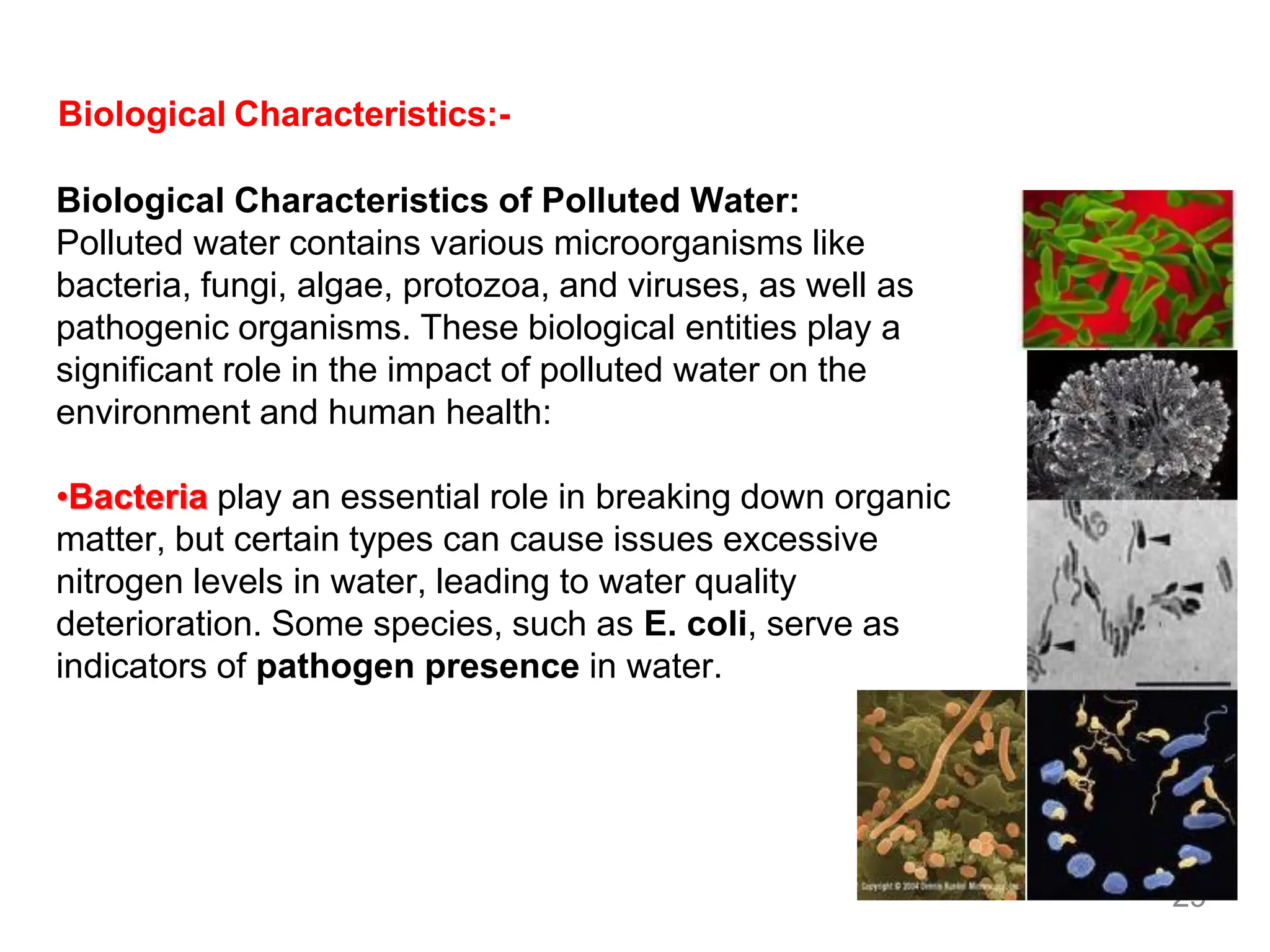
Biological Characteristicsof Polluted Water:
Polluted water contains various microorganisms like
bacteria, fungi, algae, protozoa, and viruses, as well as
pathogenic organisms. These biological entities play a
significant role in the impact of polluted water on the
environment and human health:
•Bacteria play an essential role in breaking down organic
matter, but certain types can cause issues excessive
nitrogen levels in water, leading to water quality
deterioration. Some species, such as E. coli, serve as
indicators of pathogen presence in water.
30.
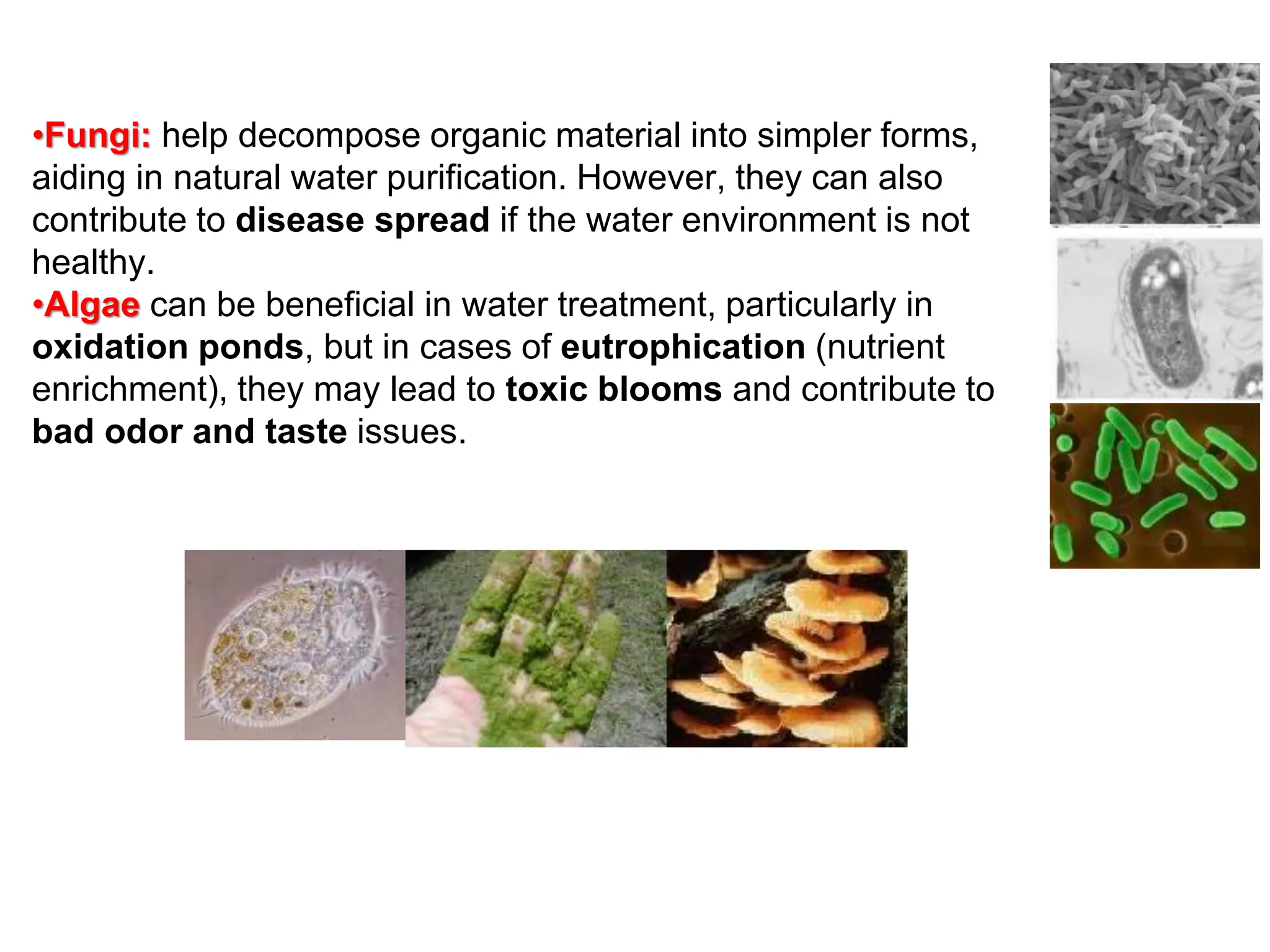
•Fungi: help decomposeorganic material into simpler forms,
aiding in natural water purification. However, they can also
contribute to disease spread if the water environment is not
healthy.
•Algae can be beneficial in water treatment, particularly in
oxidation ponds, but in cases of eutrophication (nutrient
enrichment), they may lead to toxic blooms and contribute to
bad odor and taste issues.
31.
•Protozoa feed onbacteria, helping in water purification. However, some protozoa
can be pathogenic, leading to infections and health risks.
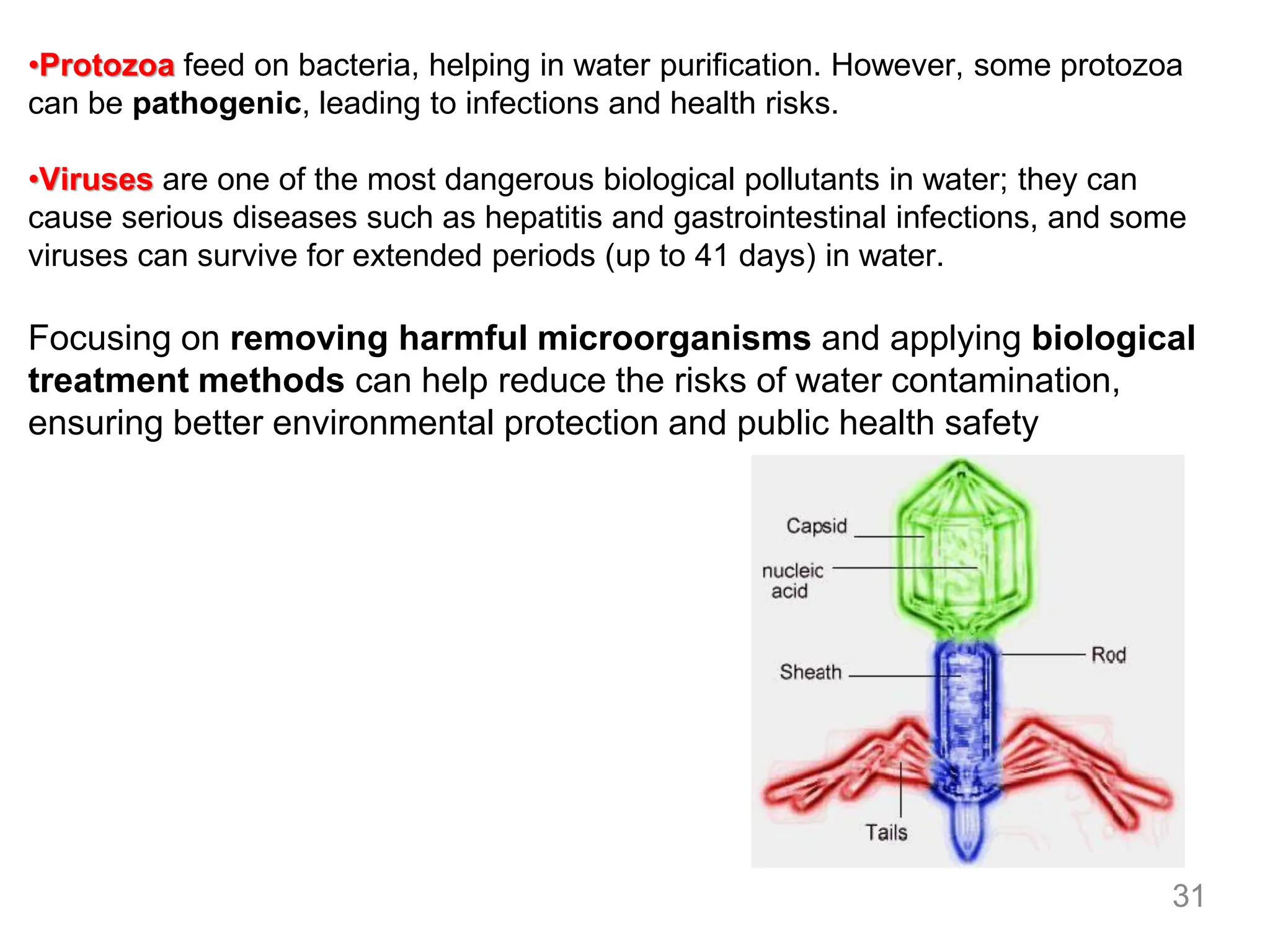
•Viruses are one of the most dangerous biological pollutants in water; they can
cause serious diseases such as hepatitis and gastrointestinal infections, and some
viruses can survive for extended periods (up to 41 days) in water.
Focusing on removing harmful microorganisms and applying biological
treatment methods can help reduce the risks of water contamination,
ensuring better environmental protection and public health safety
31