Downloaded 1,533 times
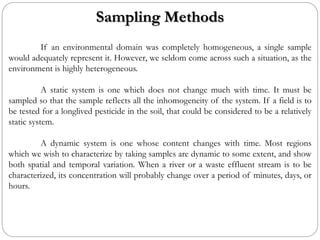
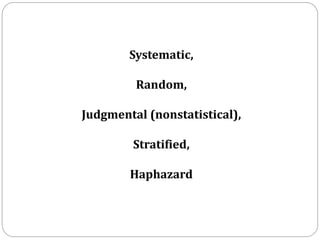
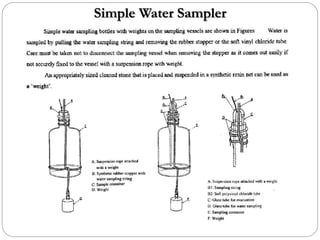
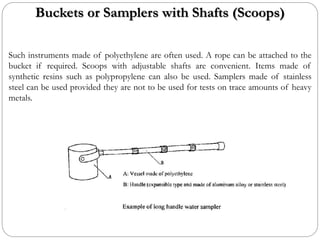
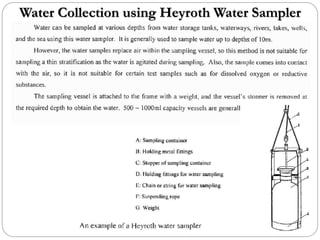
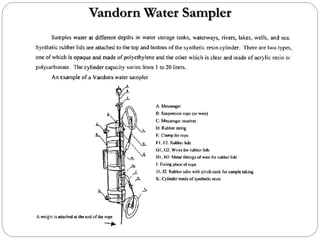
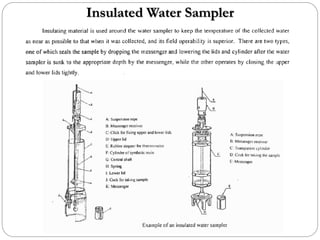
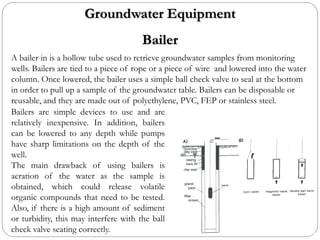
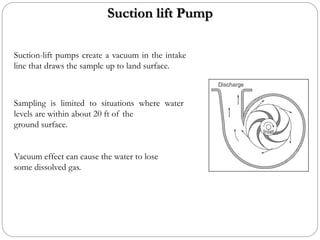
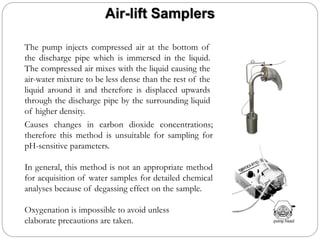


This document discusses various methods for sampling water. It begins by explaining that sampling must account for environmental heterogeneity and can involve static or dynamic systems. It then outlines five main sampling methods: systematic, random, judgmental, stratified, and haphazard. For each method, it provides an example of how it would be implemented for water sampling. It also discusses types of samples, equipment for surface and groundwater sampling, and considerations for continuous monitoring. The key points are that sampling must address spatial and temporal variability and that different methods have advantages for different sampling needs and environments.


