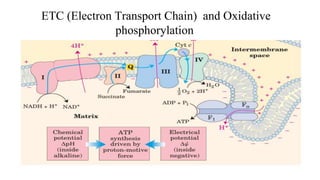
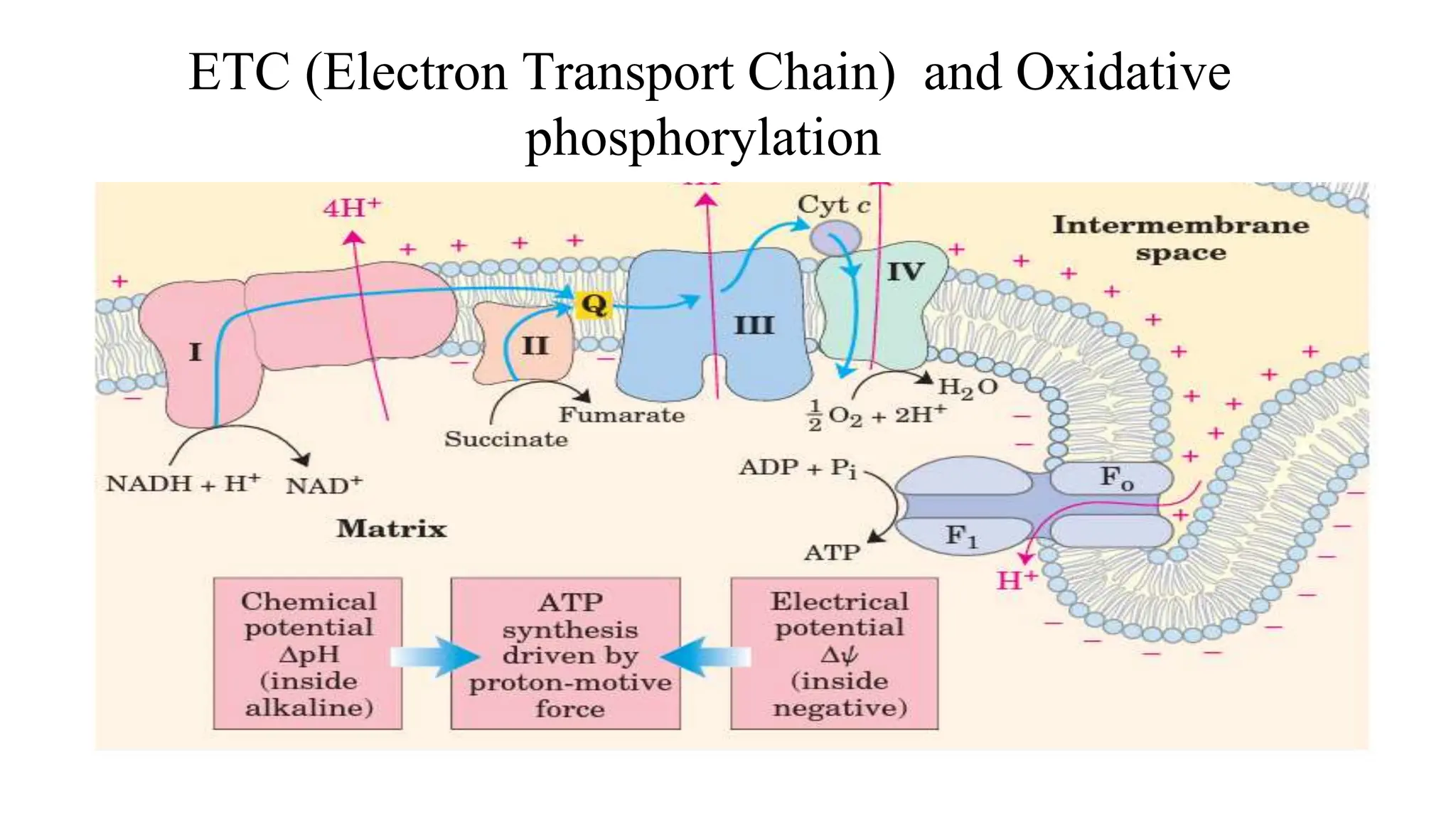
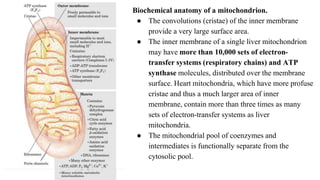
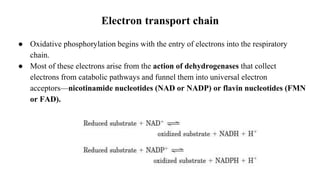
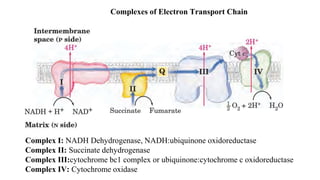
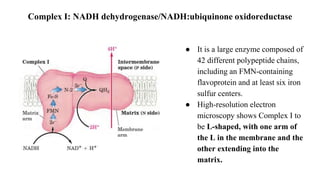
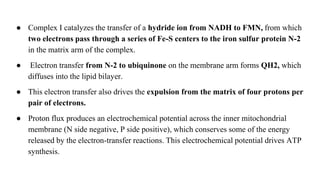
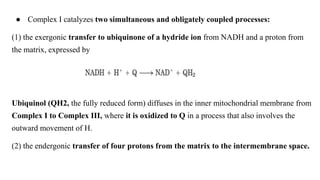
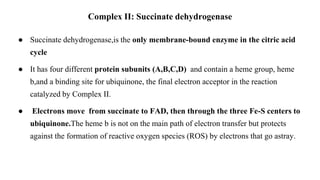
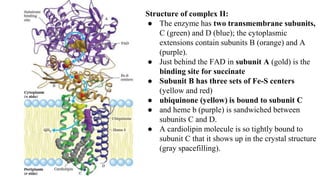
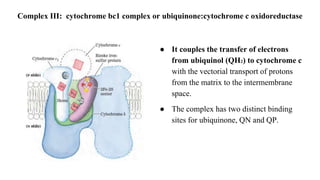
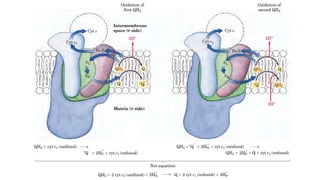
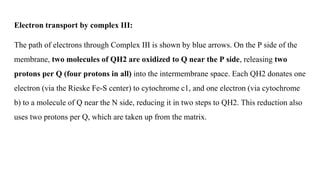
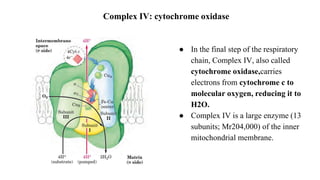
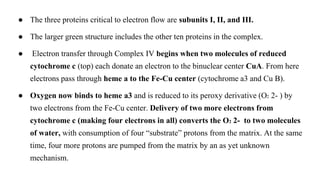
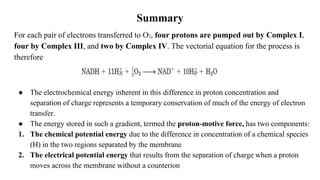
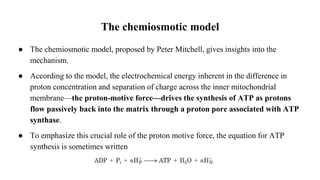
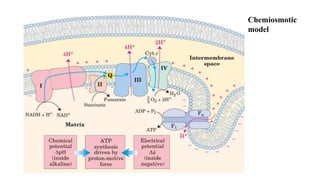
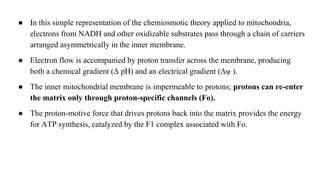
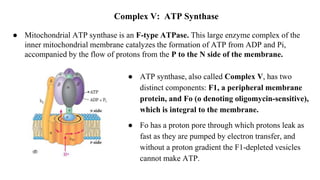
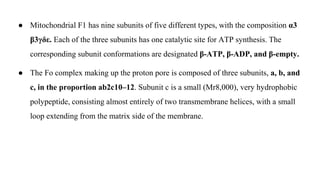
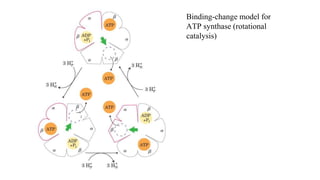
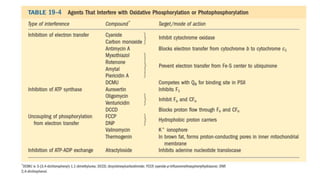

Oxidative phosphorylation is the final stage of cellular respiration in aerobic organisms, occurring in mitochondria, where energy from oxidation drives ATP synthesis via the electron transport chain. This process involves multiple complexes (I-IV) that transfer electrons from NADH and FADH2 to oxygen, coupled with proton pumping to create a proton gradient essential for ATP production. The chemiosmotic model explains how the proton motive force drives ATP synthesis through ATP synthase, which relies on the flow of protons back into the matrix.


![Polymer [ बहुलक ] Chemistry Notes PDF - Irfanullah Mehar - JJ Sir Chemistry.pdf](https://cdn.slidesharecdn.com/ss_thumbnails/polymerchemistrynotespdf-irfanullahmehar-jjsirchemistry-260210172118-3f9b37f7-thumbnail.jpg?width=640&height=640&fit=bounds)