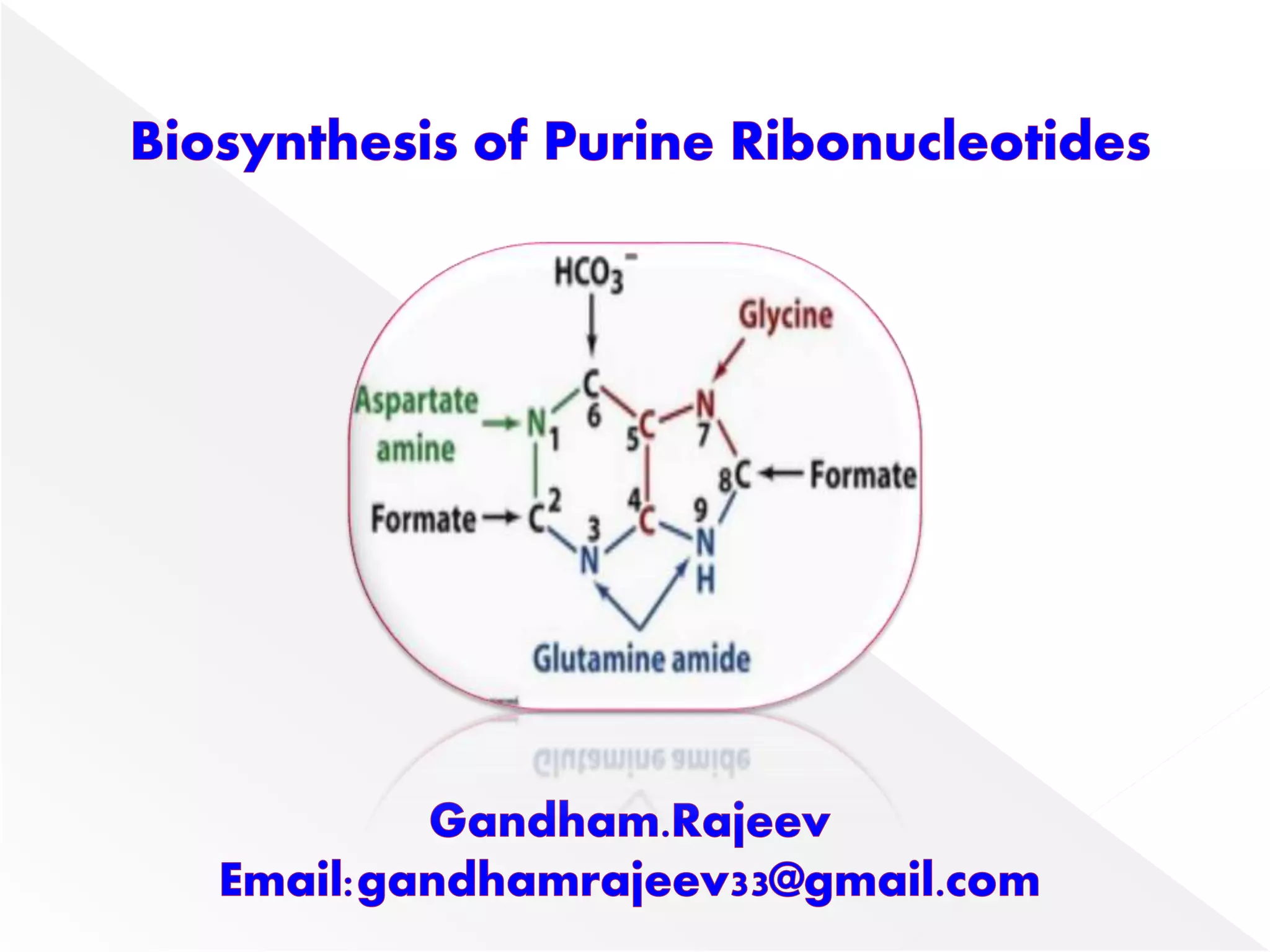
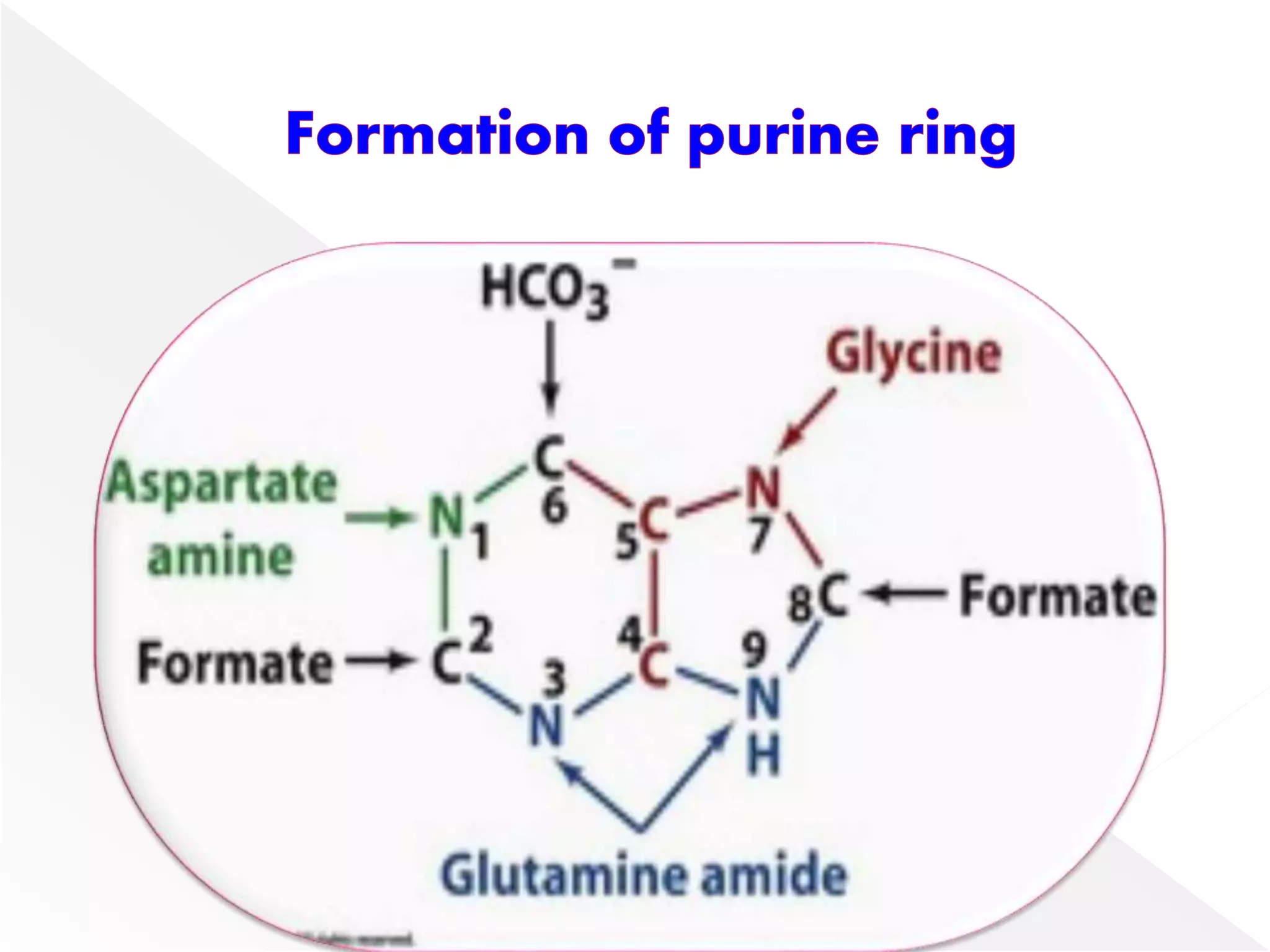
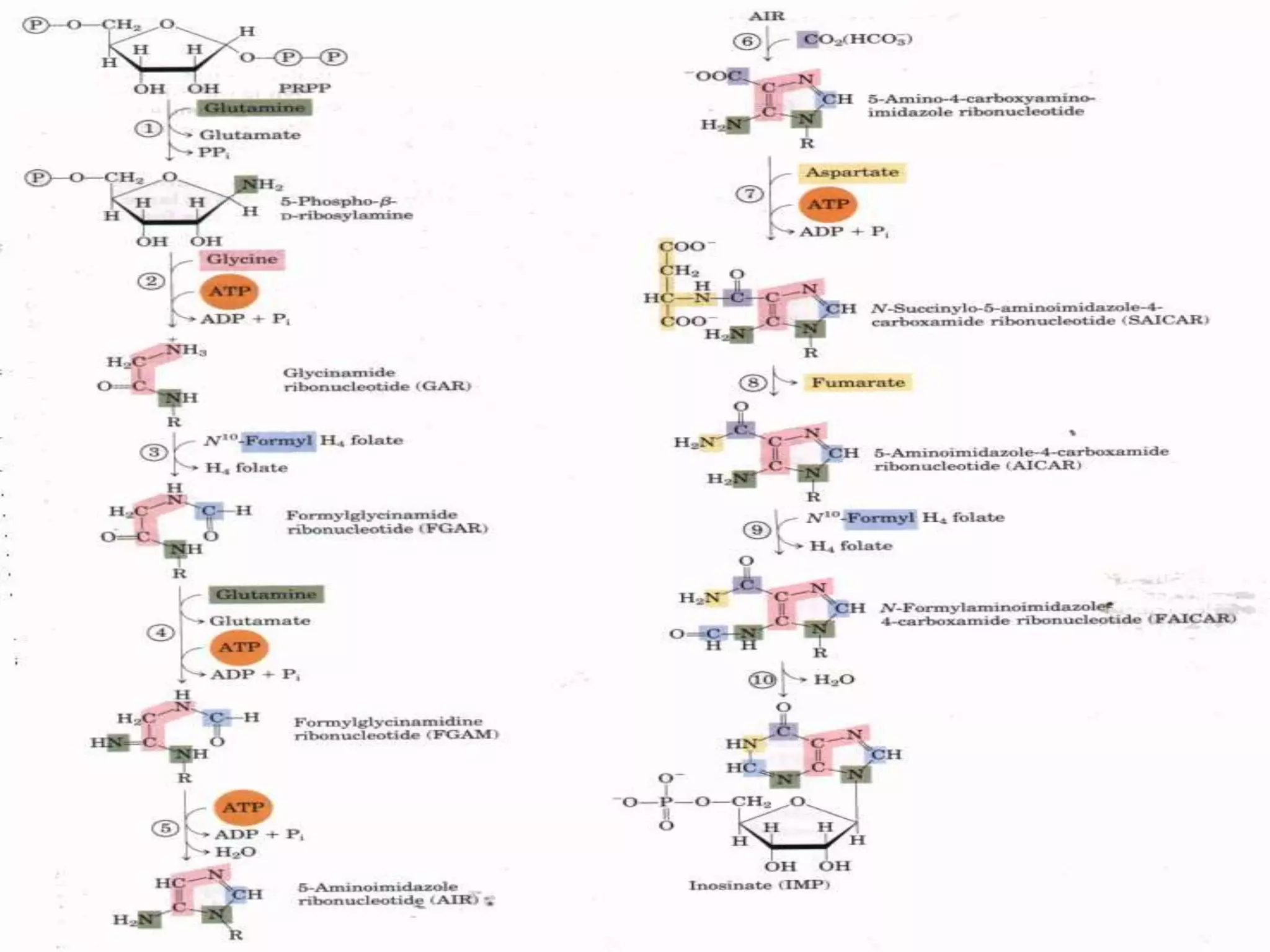
 N1 of purine is derived from amino group
of aspartate.
 C2 & C8 from formate of N10 - formyl THF.
 N3 & N9 are obtained from amide group of
glutamine.
 C4, C5 & N7 are contributed by glycine.
 C6 directly comes from CO2.
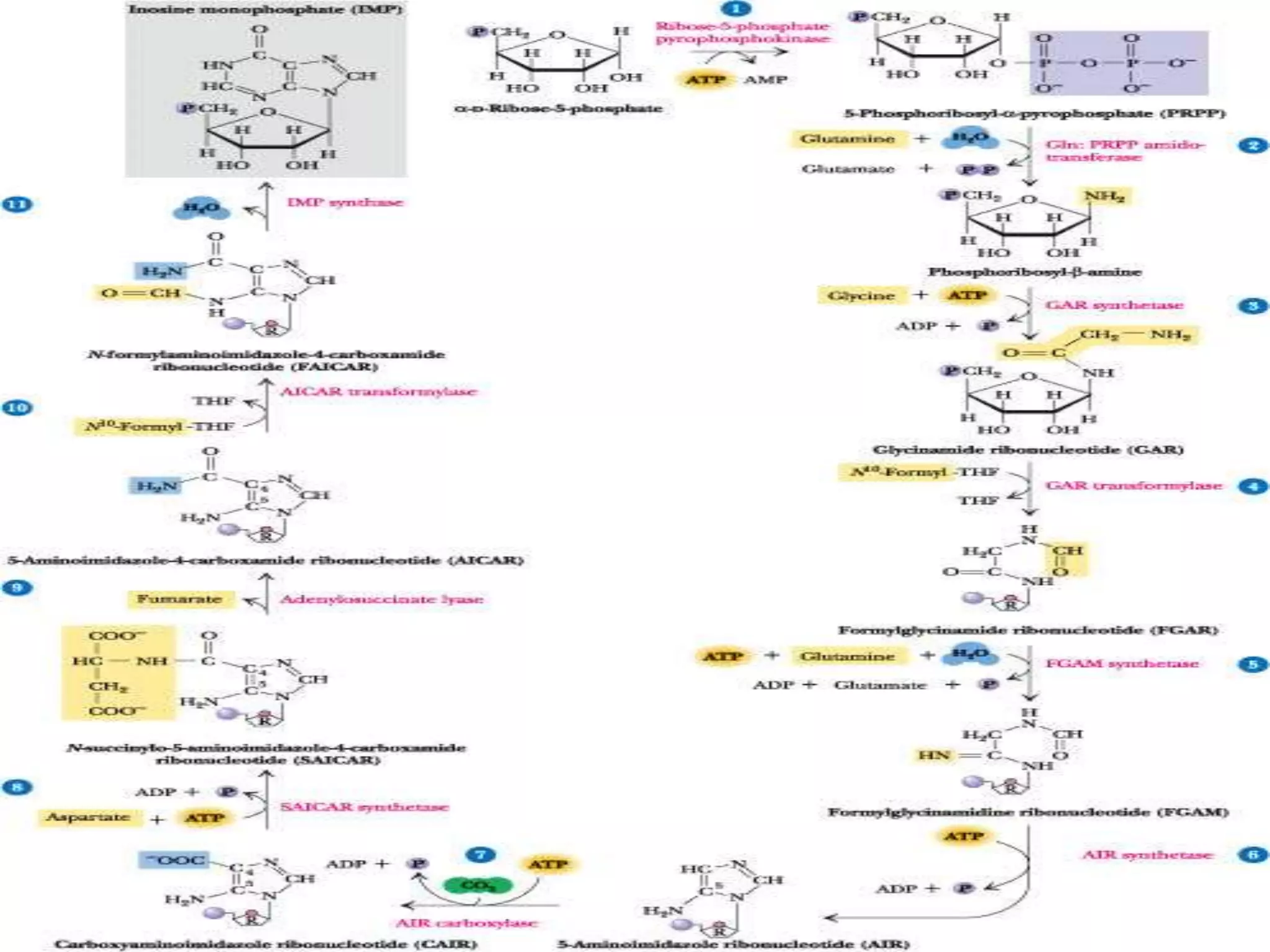
 The purines are built upon a pre-existing
ribose 5-phosphate.
 Liver is the major site for purine nucleotide
synthesis.
 Erythrocytes, polymorphonuclear
leukocytes & brain cannot produce purines.
 Ribose 5-phosphate, of carbohydrate
metabolism is the starting material for
purine nucleotide synthesis.
 It reacts with ATP to form phosphoribosyl
pyrophosphate (PRPP).
 Glutamine transfers its amide nitrogen to
PRPP to replace pyrophosphate & produce 5-
phosphoribosylamine.
 PRPP glutamyl amidotransferase is
controlled by feedback inhibition of
nucleotides (IMP, AMP & GMP).
 This reaction is the 'committed.
 Phosphoribosylamine reacts with glycine in
the presence of ATP to form glycinamide
ribosyl 5-phosphate or glycinamide ribotide
(GAR).
 Catalyzed by synthetase.
 N10-Formyl tetrahydrofolate donates the formyl
group & the product formed is
formylglycinamide ribosyl 5-phosphate.
 The reaction is catalyzed by formyltransferase.
 Glutamine transfers the second amido amino
group to produce formylglycinamidine ribosyl
5-phosphate.
 The reaction is catalyzed by synthetase.
 The imidazole ring of the purine is closed in
an ATP dependent reaction to yield 5-
aminoimidazole ribosyl 5-phosphate.
 The reaction is catalyzed by synthetase.
 Incorporation of CO2 (carboxylation) occurs
to yield aminoimidazole carboxylate ribosyl
5-phosphate.
 The reaction is catalyzed by carboxylase.
 Does not require the vitamin biotin or ATP.
 Aspartate condenses with the
aminoimidazole carboxylate ribosyl 5-
phosphate to form aminoimidazole 4-
succinylcarboxamide ribosyl 5-phosphate.
 The reaction is catalyzed by synthetase.
 Adenosuccinate lyase cleaves off fumarate &
only the amino group of aspartate is retained
to yield aminoimidazole 4-carboxamide
ribosyl 5-phosphate.
 N10-Formyl tetrahydrofolate donates a one-
carbon moiety to produce 5-
formaminoimidazole 4-carboxamide ribosyl 5-
phosphate.
 Catalyzed by formyltransferase.
 The final reaction catalyzed by
cyclohydrolase leads to ring closure with an
elimination of water molecule.
 The product obtained is inosine
monophosphate (IMP), the parent purine
nucleotide from which other purine
nucleotides can be synthesized.
 Synthesis of AMP:
 Ionosine monophosphate (IMP) is the
immediate precursor for the formation of
AMP & GMP.
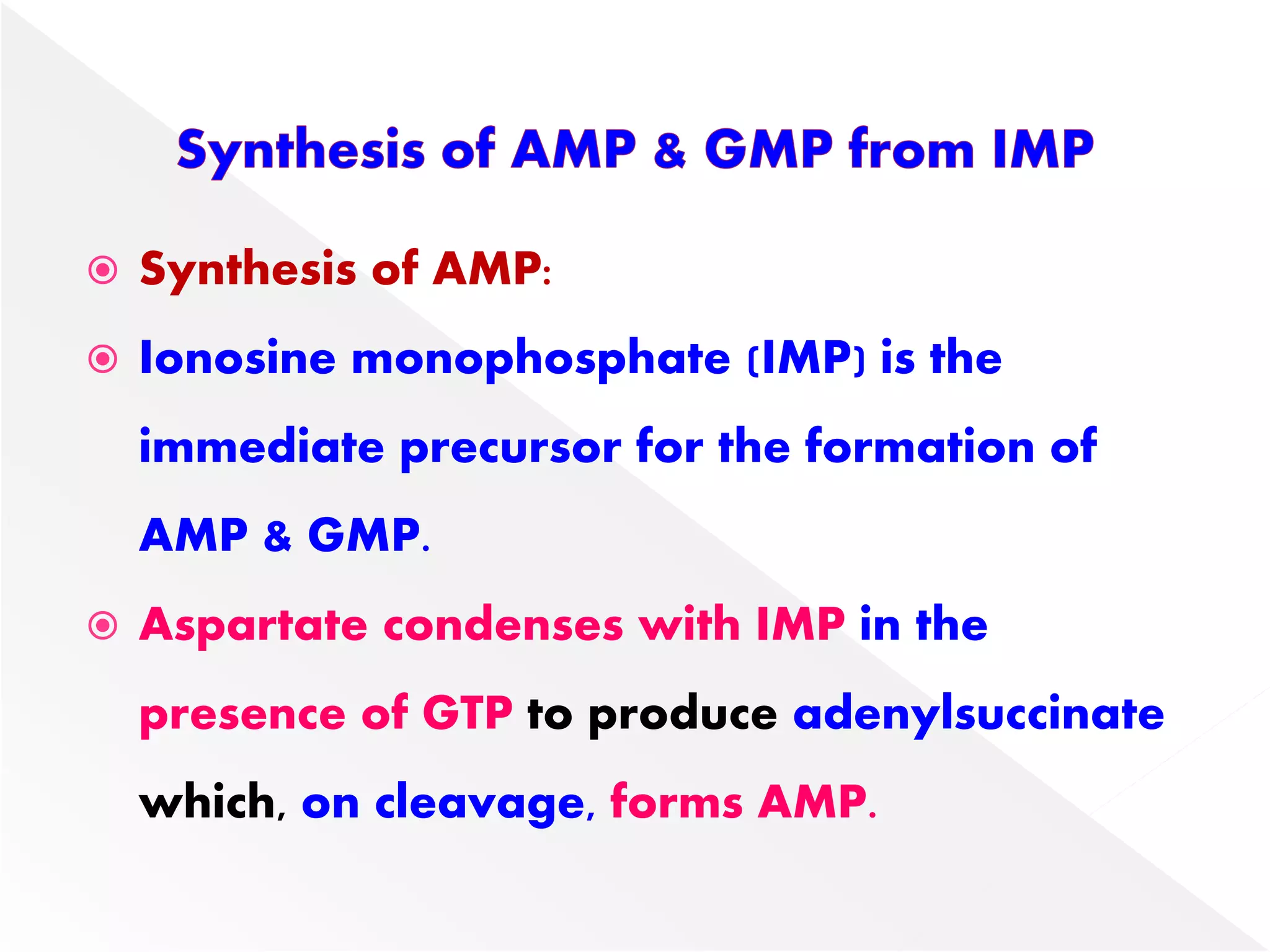
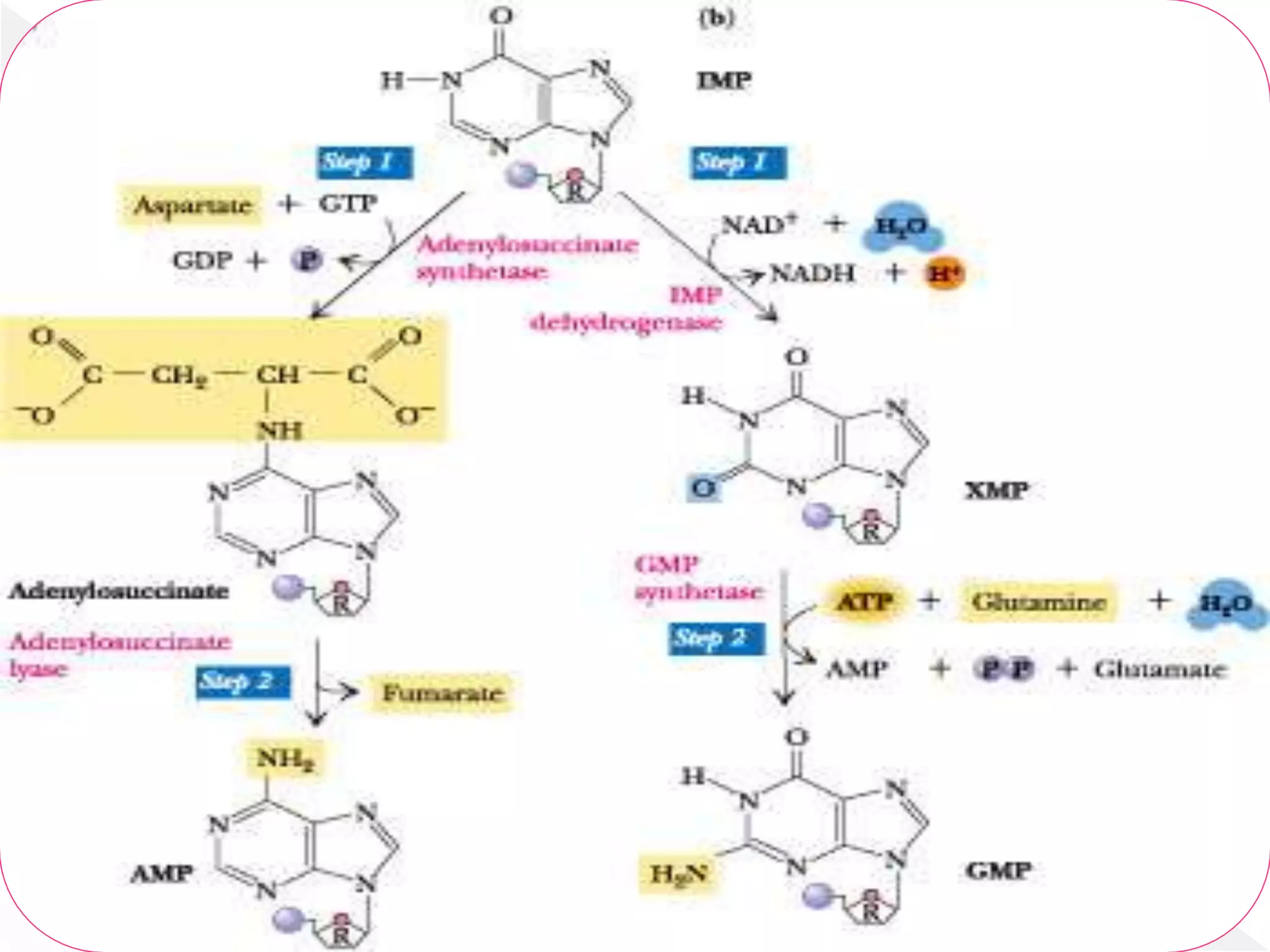
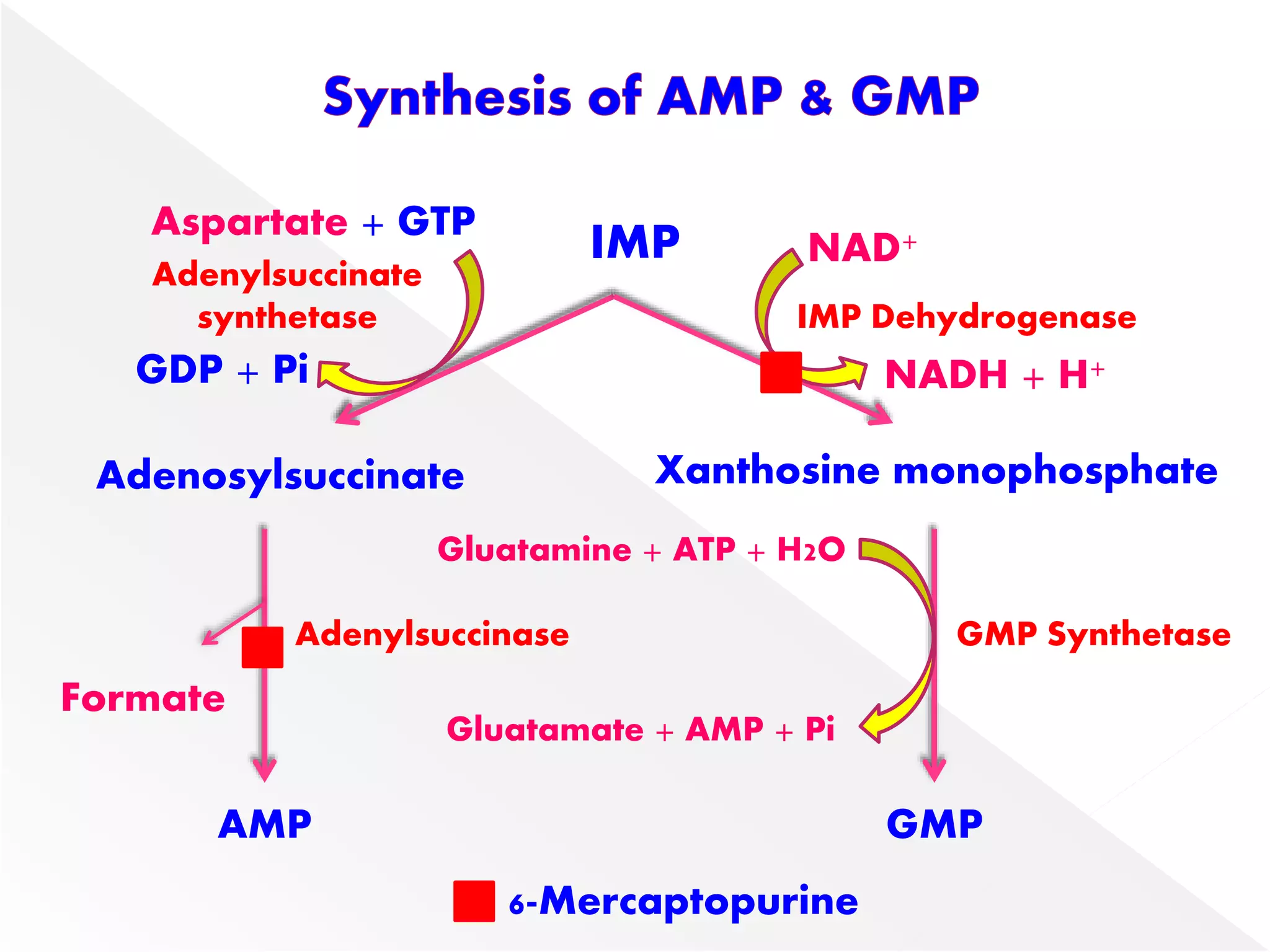
 Aspartate condenses with IMP in the
presence of GTP to produce adenylsuccinate
which, on cleavage, forms AMP.
 Synthesis of GMP:
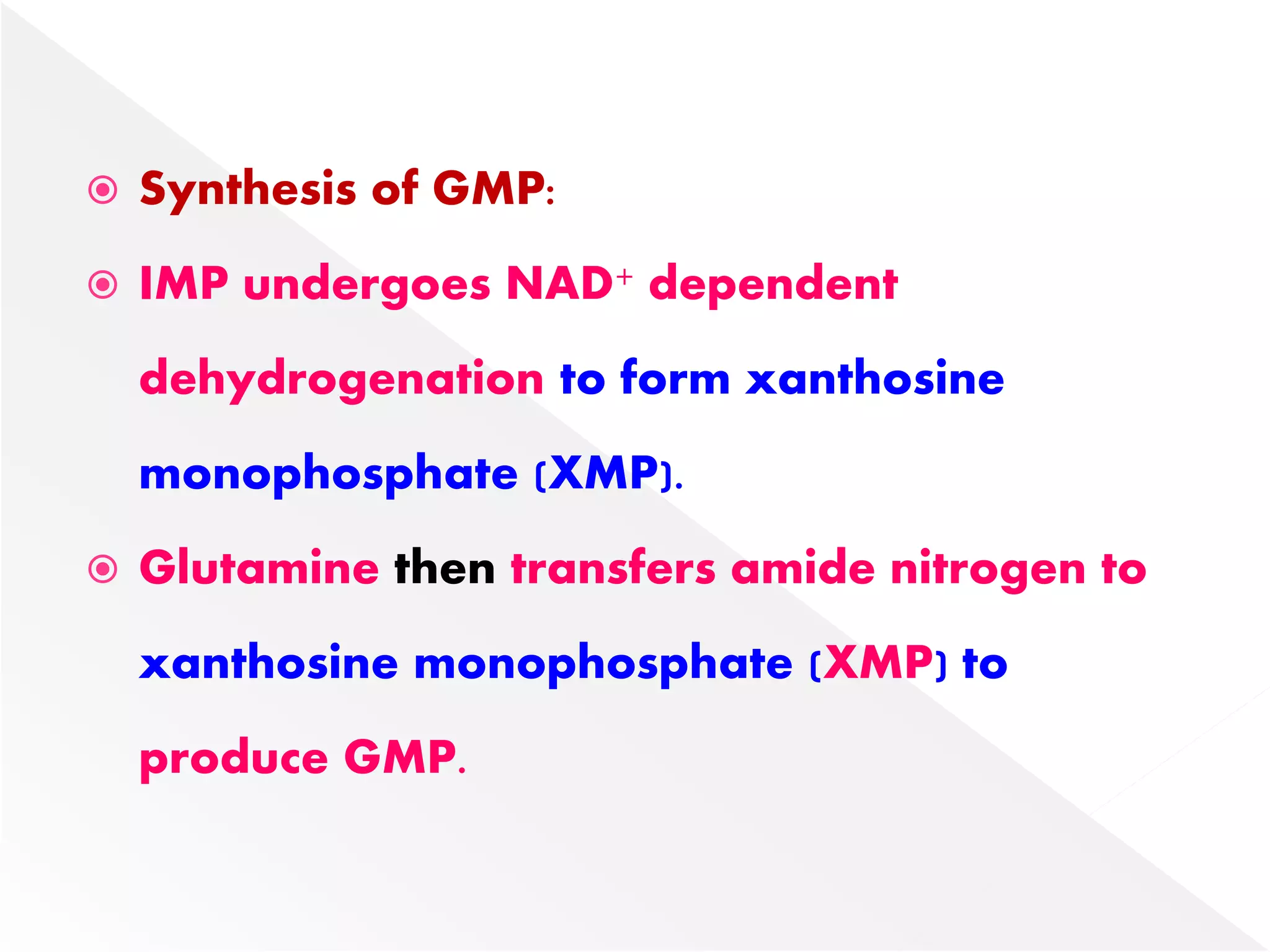
 IMP undergoes NAD+ dependent
dehydrogenation to form xanthosine
monophosphate (XMP).
 Glutamine then transfers amide nitrogen to
xanthosine monophosphate (XMP) to
produce GMP.
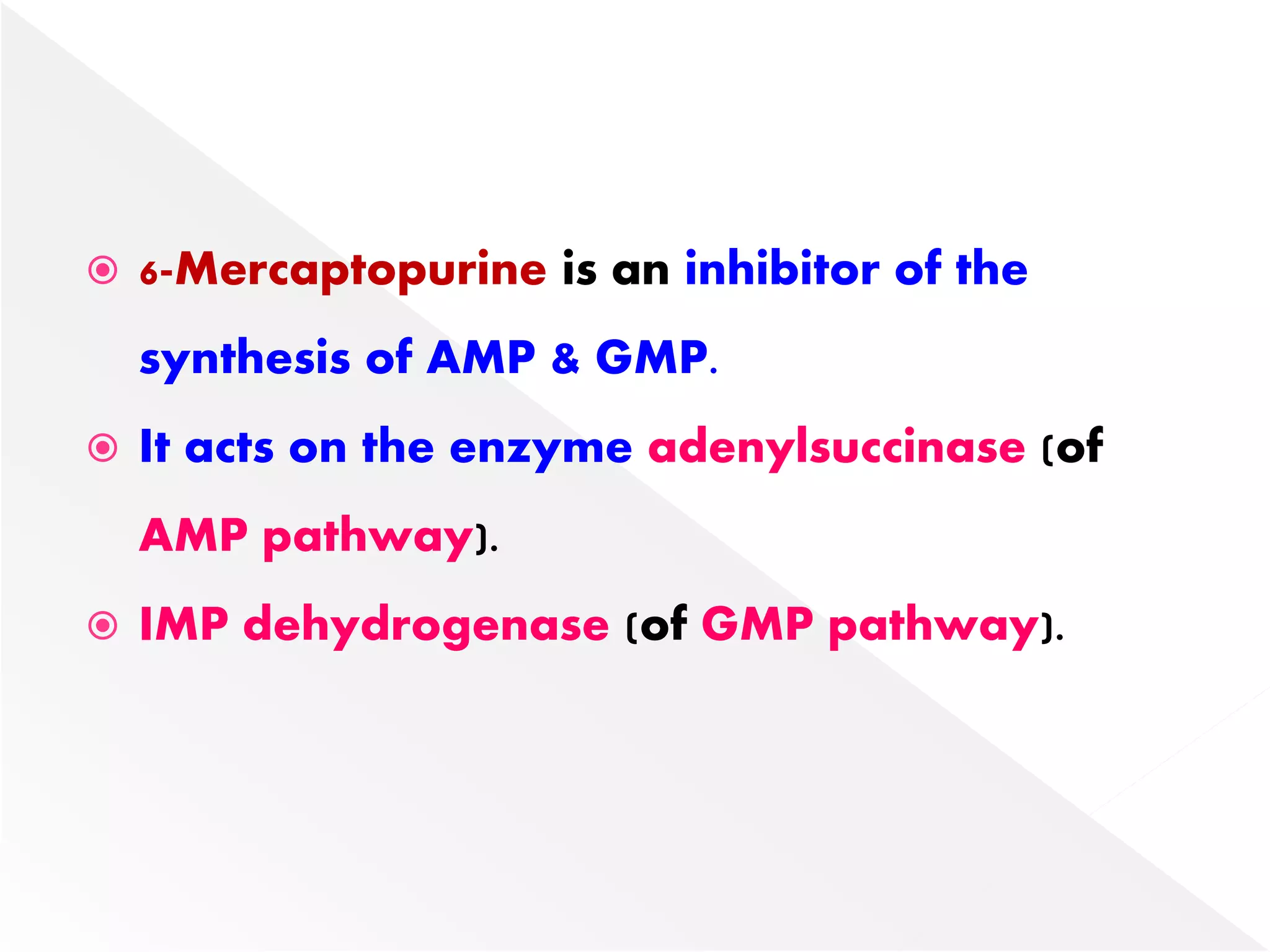
 6-Mercaptopurine is an inhibitor of the
synthesis of AMP & GMP.
 It acts on the enzyme adenylsuccinase (of
AMP pathway).
 IMP dehydrogenase (of GMP pathway).
IMP
Adenosylsuccinate Xanthosine monophosphate
Aspartate + GTP
GDP + Pi
AMP GMP
Adenylsuccinate
synthetase
NAD+
NADH + H+
IMP Dehydrogenase
Formate
Adenylsuccinase GMP Synthetase
Gluatamine + ATP + H2O
Gluatamate + AMP + Pi
6-Mercaptopurine
 The nucleoside monophosphates (AMP &
GMP) converted to the corresponding di &
triphosphates.
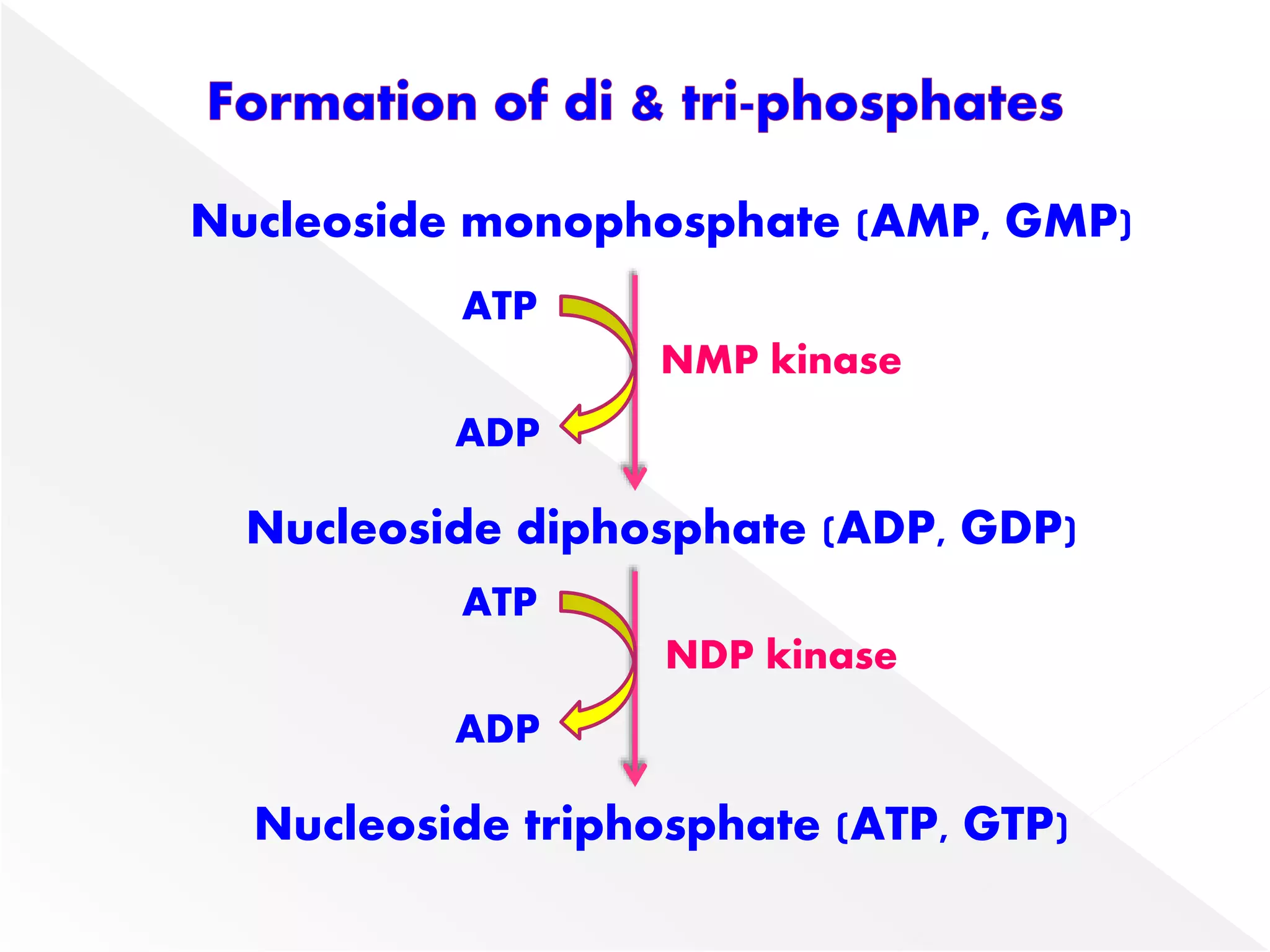
 This is achieved by the transfer of phosphate
group from ATP, catalysed by nucleoside
monophosphate (NMP) kinases & nucleoside
diphosphate (NDP) kinases.
Nucleoside monophosphate (AMP, GMP)
Nucleoside diphosphate (ADP, GDP)
Nucleoside triphosphate (ATP, GTP)
ATP
ADP
NMP kinase
NDP kinase
ATP
ADP
 Folic acid (THF) is essential for the synthesis
of purine nucleotides.
 Sulfonamides are the structural analogs of
paraaminobenzoic acid (PABA).
 These sulfa drugs can inhibit the synthesis
of folic acid by microorganisms.
 This indirectly reduces the synthesis of
purines & nucleic acids (DNA & RNA).
 The structural analogs of folic acid (e.g.
methotrexate), used to control cancer.
 They inhibit the synthesis of purine
nucleotides & nucleic acids.
 These inhibitors also affect the proliferation
of normally growing cells.
 Azaserine (diazo acetyl-L-Serine) is a
glutamine antagonist & inhibits reactions
involving glutamine.
 Other synthetic nucleotide analogues used
as anticancer agents are 6-thio guanine & 8-
aza guanine.
 This pathway ensures the recycling of purines
formed by degradation of nucleotides.
 Nucleosides & deoxy-nucleosides can also be
salvaged.
 The purines can be directly converted to the
corresponding nucleotides & this process is
known as ‘salvage pathway’.
 PRPP is the starting material in this pathway.
 It is also a substrate for de novo synthesis.
 The free purines are salvaged by two
different enzymes.
1. Adenine phospho ribosyl transferase
(APRTase).
2. Hypoxanthine guanine phosphoribosyl
transferase (HGPRTase).
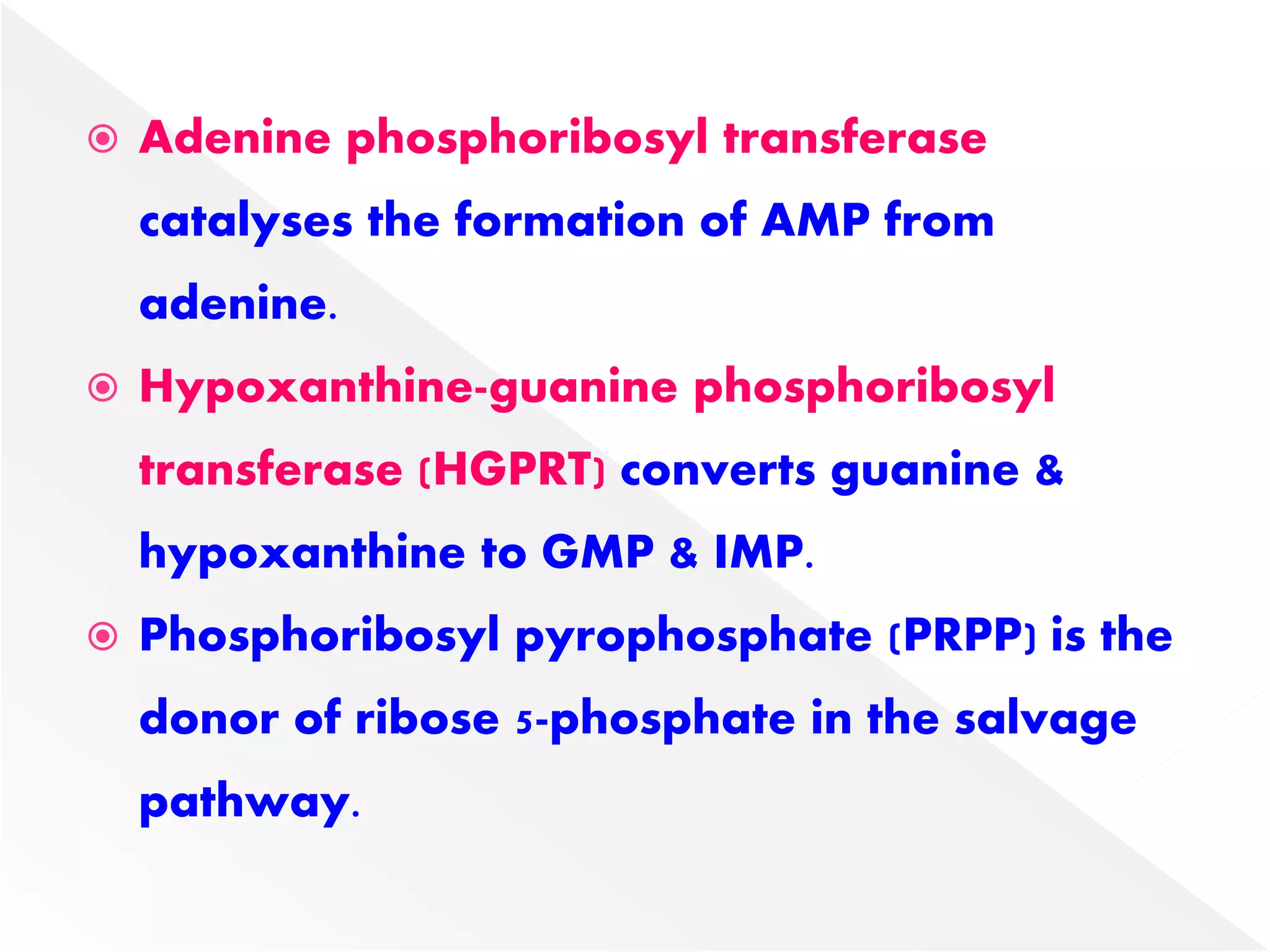
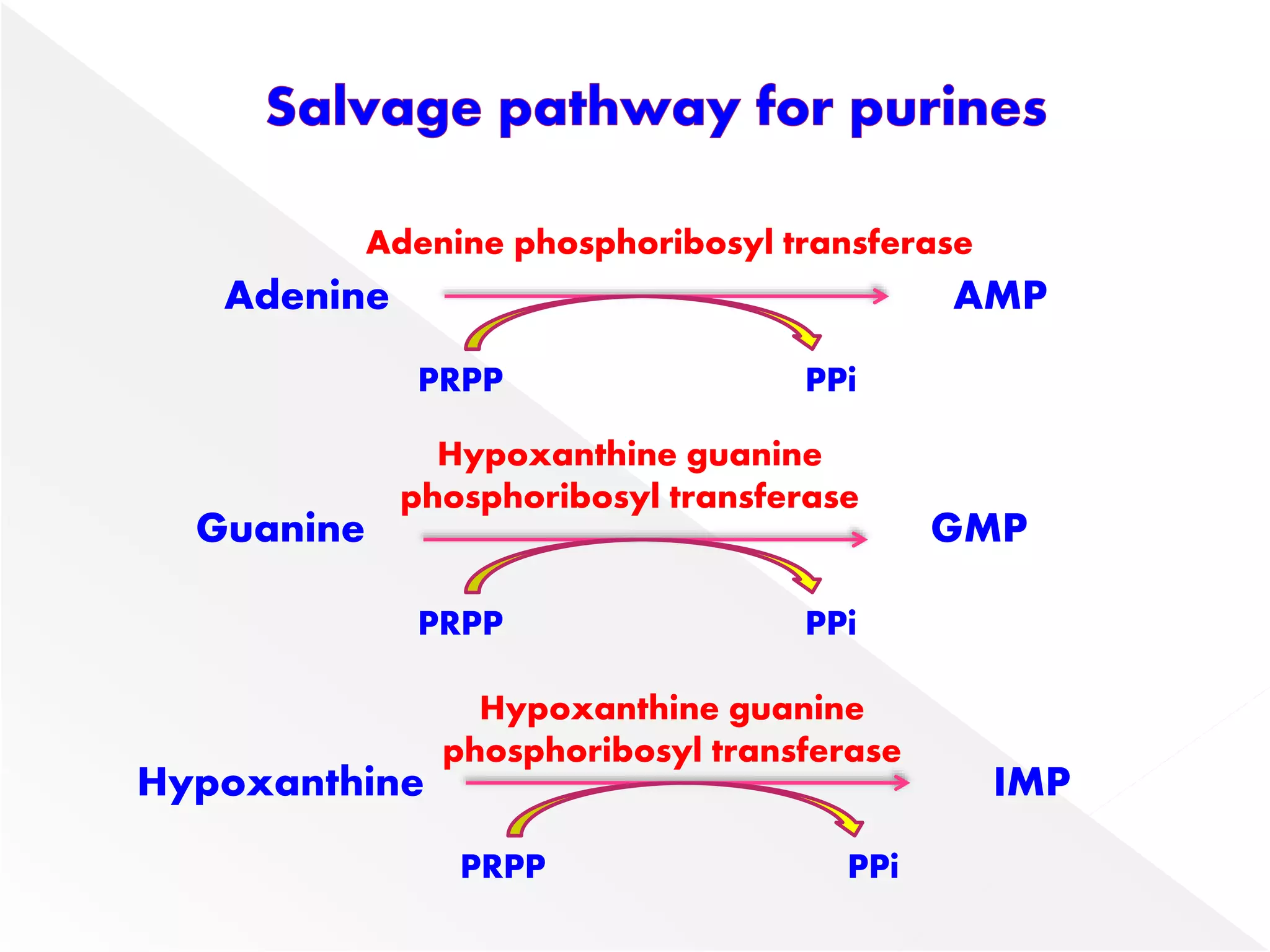
 Adenine phosphoribosyl transferase
catalyses the formation of AMP from
adenine.
 Hypoxanthine-guanine phosphoribosyl
transferase (HGPRT) converts guanine &
hypoxanthine to GMP & IMP.
 Phosphoribosyl pyrophosphate (PRPP) is the
donor of ribose 5-phosphate in the salvage
pathway.
Adenine
Guanine
Hypoxanthine
AMP
GMP
IMP
Adenine phosphoribosyl transferase
Hypoxanthine guanine
phosphoribosyl transferase
Hypoxanthine guanine
phosphoribosyl transferase
PRPP PPi
PRPP PPi
PRPP PPi
 The salvage pathway is particularly
important in certain tissues such as
erythrocytes & brain where de novo (a
new) synthesis of purine nucleotides is not
operative.
 A defect in the enzyme HGPRT causes Lesch
- Nyhan syndrome.
 The intracellular concentration of PRPP
regulates purine synthesis.
 This is dependent on the availability of
ribose 5-phosphate & the PRPP synthetase.
 PRPP glutamyl amidotransferase is
controlled by a feedback mechanism by
purine nucleotides.
 If AMP & GMP are available in adequate
amounts, their synthesis is turned off at the
amidotransferase reaction.
 Another important stage of regulation is in the
conversion of IMP to AMP & GMP.
 AMP inhibits adenylsuccinate synthetase while
GMP inhibits IMP dehydrogenase.
 AMP & GMP control their respective synthesis
from IMP by a feedback mechanism.
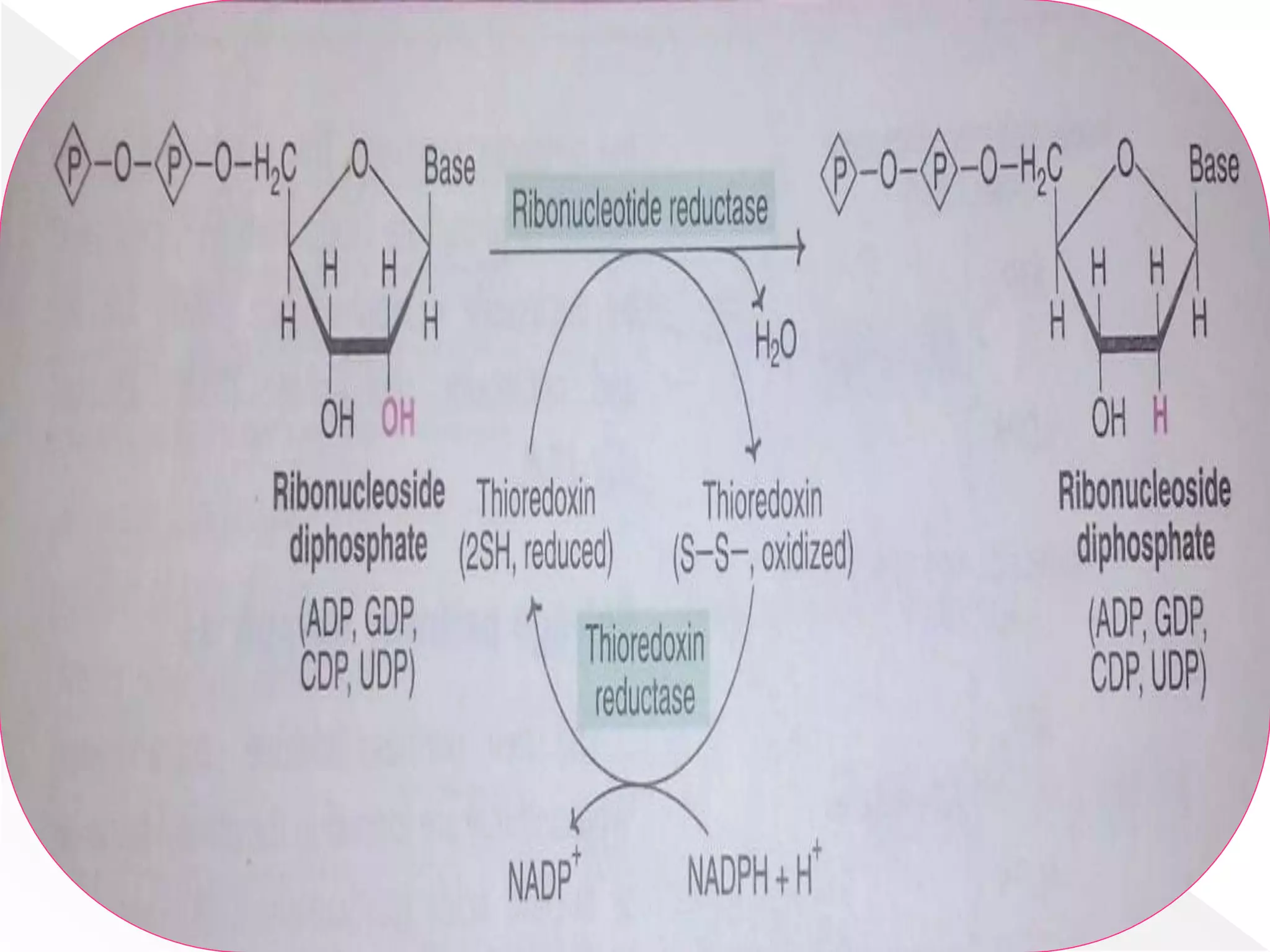
 The synthesis of purine & pyrimidine
deoxyribonucleotides occurs from
ribonucleotides by a reduction at the C2 of
ribose moiety.
 This reaction is catalyzed by a multisubunit
(two B1 & two B2 subunits) enzyme,
ribonucleotide reductase.
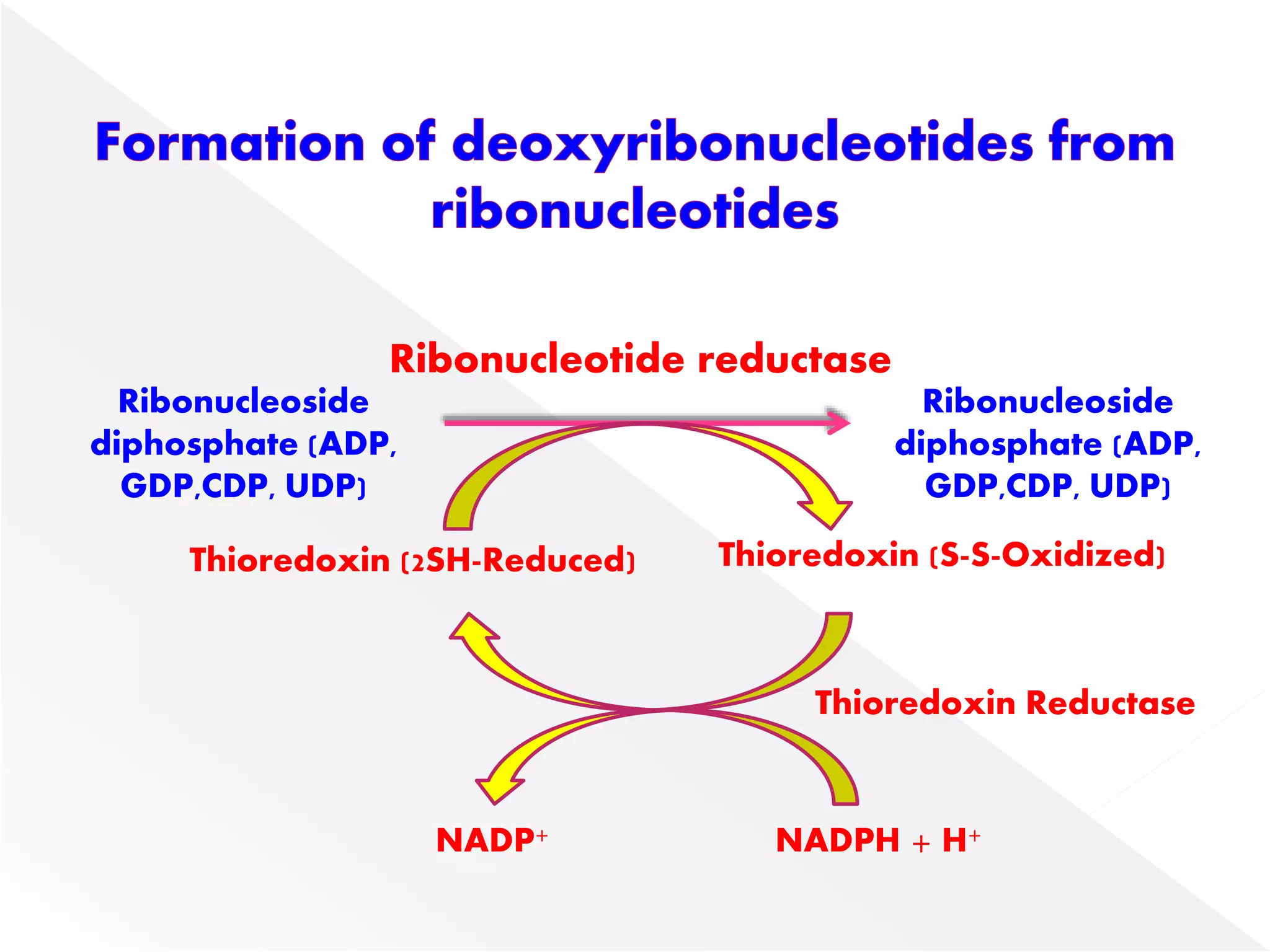
Ribonucleoside
diphosphate (ADP,
GDP,CDP, UDP)
Ribonucleoside
diphosphate (ADP,
GDP,CDP, UDP)
Ribonucleotide reductase
Thioredoxin (S-S-Oxidized)Thioredoxin (2SH-Reduced)
Thioredoxin Reductase
NADPH + H+NADP+
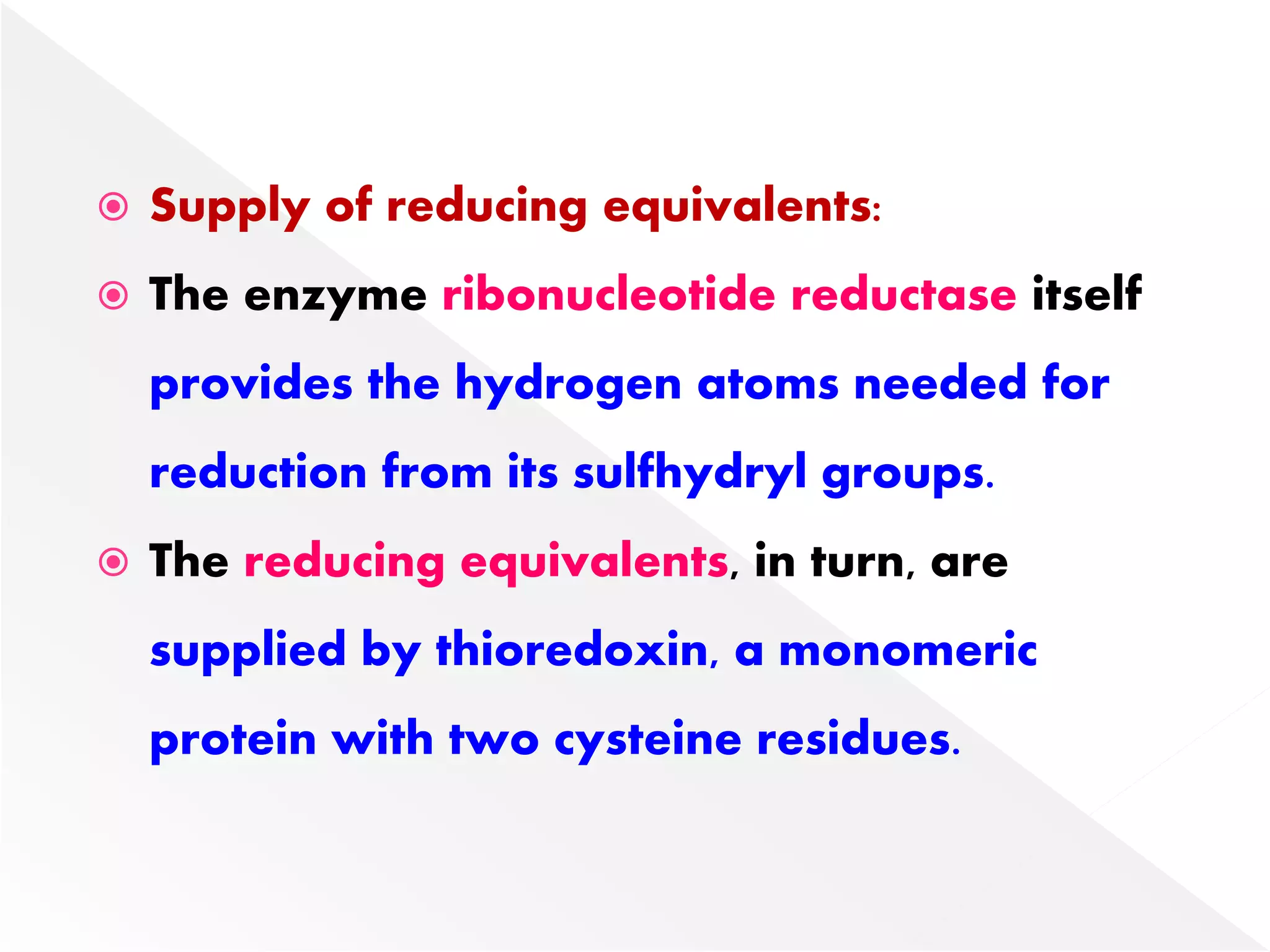
 Supply of reducing equivalents:
 The enzyme ribonucleotide reductase itself
provides the hydrogen atoms needed for
reduction from its sulfhydryl groups.
 The reducing equivalents, in turn, are
supplied by thioredoxin, a monomeric
protein with two cysteine residues.
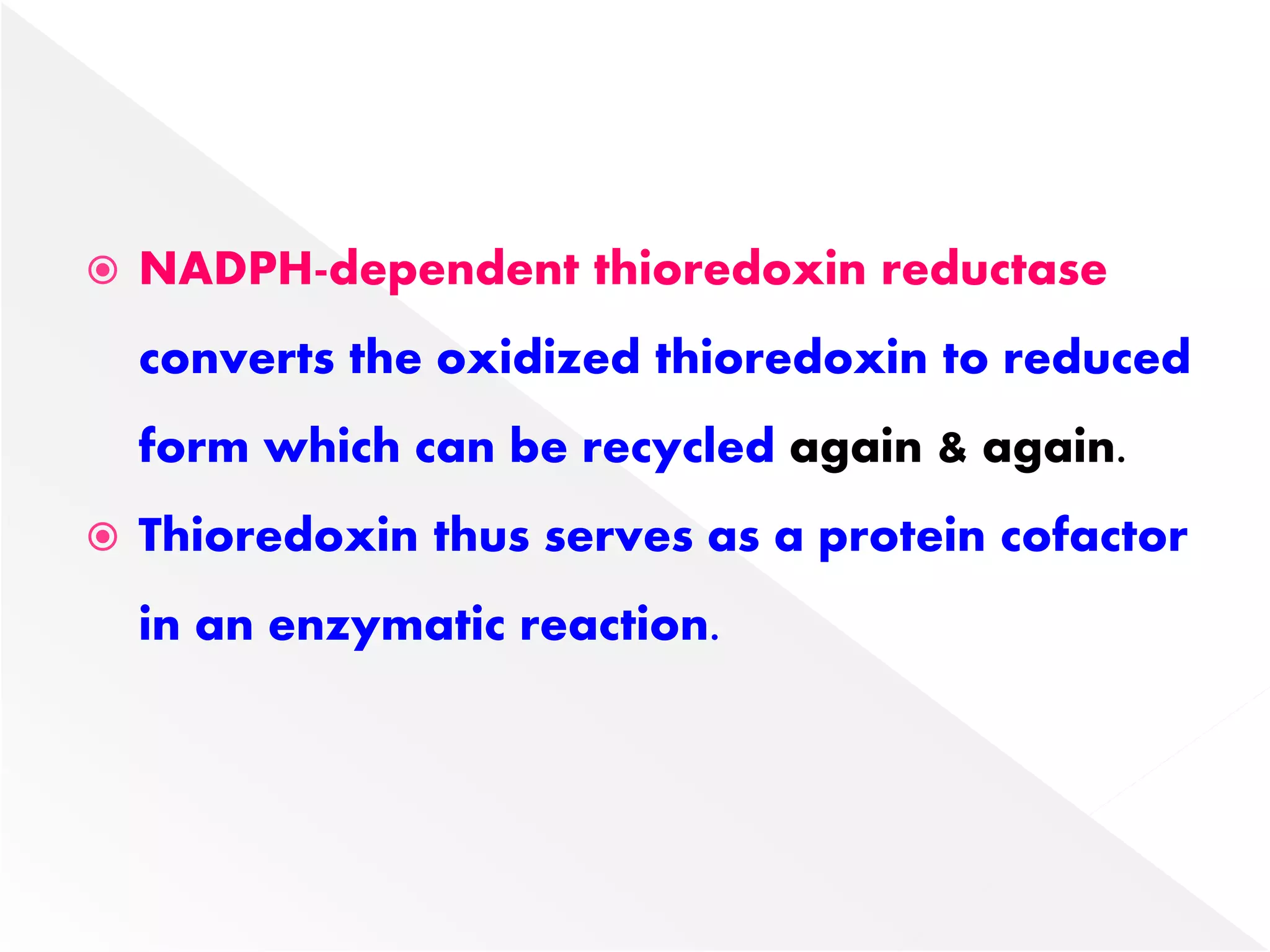
 NADPH-dependent thioredoxin reductase
converts the oxidized thioredoxin to reduced
form which can be recycled again & again.
 Thioredoxin thus serves as a protein cofactor
in an enzymatic reaction.
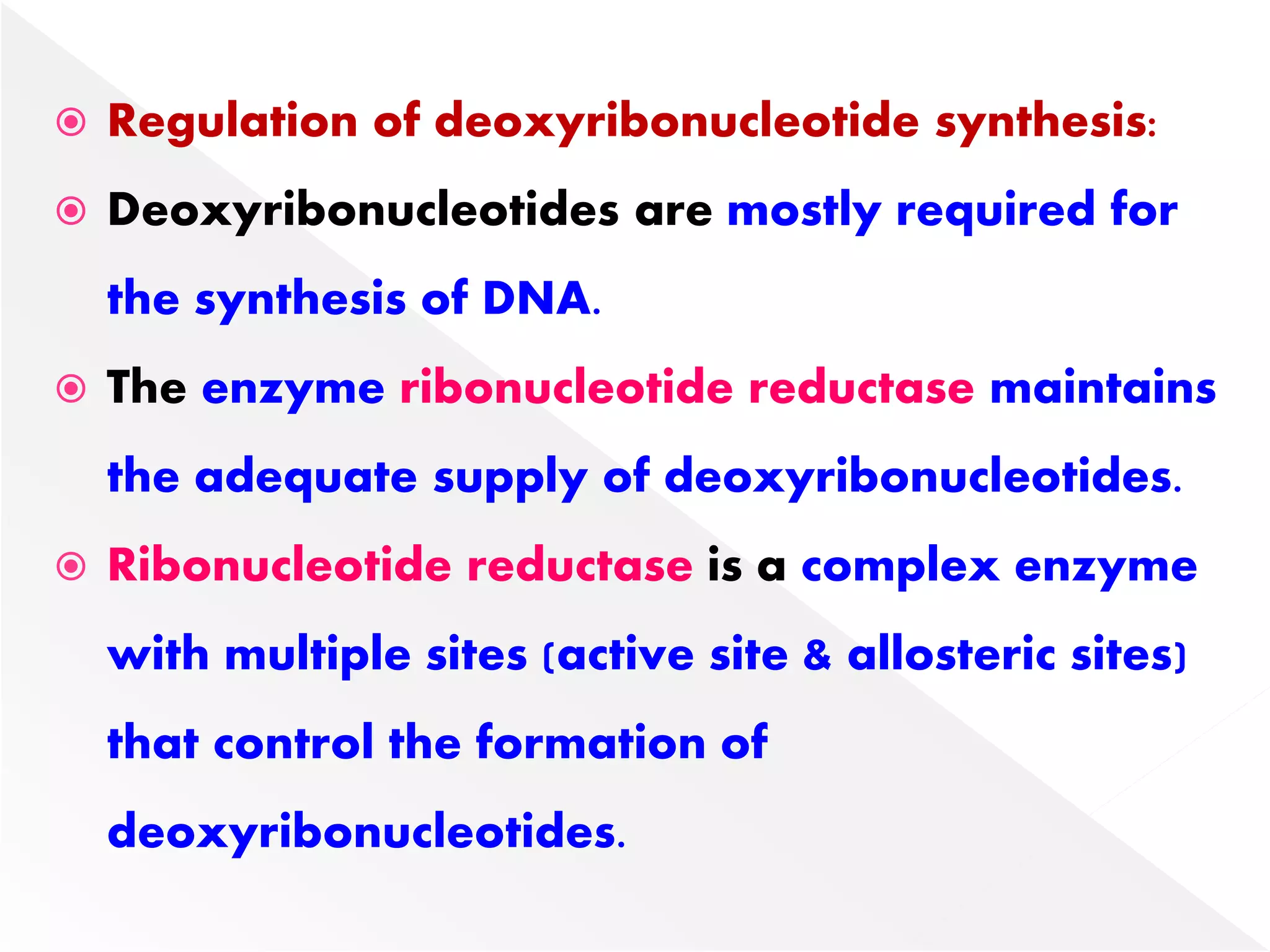
 Regulation of deoxyribonucleotide synthesis:
 Deoxyribonucleotides are mostly required for
the synthesis of DNA.
 The enzyme ribonucleotide reductase maintains
the adequate supply of deoxyribonucleotides.
 Ribonucleotide reductase is a complex enzyme
with multiple sites (active site & allosteric sites)
that control the formation of
deoxyribonucleotides.
 Textbook of Biochemistry - U Satyanarayana
 Textbook of Biochemistry - DM Vasudevan
BIOSYNTHESIS OF PURINE NUCLEOTIDES

BIOSYNTHESIS OF PURINE NUCLEOTIDES

  • 2.
     N1 ofpurine is derived from amino group of aspartate.  C2 & C8 from formate of N10 - formyl THF.  N3 & N9 are obtained from amide group of glutamine.  C4, C5 & N7 are contributed by glycine.  C6 directly comes from CO2.
  • 4.
     The purinesare built upon a pre-existing ribose 5-phosphate.  Liver is the major site for purine nucleotide synthesis.  Erythrocytes, polymorphonuclear leukocytes & brain cannot produce purines.
  • 5.
     Ribose 5-phosphate,of carbohydrate metabolism is the starting material for purine nucleotide synthesis.  It reacts with ATP to form phosphoribosyl pyrophosphate (PRPP).  Glutamine transfers its amide nitrogen to PRPP to replace pyrophosphate & produce 5- phosphoribosylamine.
  • 6.
     PRPP glutamylamidotransferase is controlled by feedback inhibition of nucleotides (IMP, AMP & GMP).  This reaction is the 'committed.  Phosphoribosylamine reacts with glycine in the presence of ATP to form glycinamide ribosyl 5-phosphate or glycinamide ribotide (GAR).  Catalyzed by synthetase.
  • 7.
     N10-Formyl tetrahydrofolatedonates the formyl group & the product formed is formylglycinamide ribosyl 5-phosphate.  The reaction is catalyzed by formyltransferase.  Glutamine transfers the second amido amino group to produce formylglycinamidine ribosyl 5-phosphate.  The reaction is catalyzed by synthetase.
  • 8.
     The imidazolering of the purine is closed in an ATP dependent reaction to yield 5- aminoimidazole ribosyl 5-phosphate.  The reaction is catalyzed by synthetase.  Incorporation of CO2 (carboxylation) occurs to yield aminoimidazole carboxylate ribosyl 5-phosphate.  The reaction is catalyzed by carboxylase.
  • 9.
     Does notrequire the vitamin biotin or ATP.  Aspartate condenses with the aminoimidazole carboxylate ribosyl 5- phosphate to form aminoimidazole 4- succinylcarboxamide ribosyl 5-phosphate.  The reaction is catalyzed by synthetase.
  • 10.
     Adenosuccinate lyasecleaves off fumarate & only the amino group of aspartate is retained to yield aminoimidazole 4-carboxamide ribosyl 5-phosphate.  N10-Formyl tetrahydrofolate donates a one- carbon moiety to produce 5- formaminoimidazole 4-carboxamide ribosyl 5- phosphate.  Catalyzed by formyltransferase.
  • 11.
     The finalreaction catalyzed by cyclohydrolase leads to ring closure with an elimination of water molecule.  The product obtained is inosine monophosphate (IMP), the parent purine nucleotide from which other purine nucleotides can be synthesized.
  • 14.
     Synthesis ofAMP:  Ionosine monophosphate (IMP) is the immediate precursor for the formation of AMP & GMP.  Aspartate condenses with IMP in the presence of GTP to produce adenylsuccinate which, on cleavage, forms AMP.
  • 15.
     Synthesis ofGMP:  IMP undergoes NAD+ dependent dehydrogenation to form xanthosine monophosphate (XMP).  Glutamine then transfers amide nitrogen to xanthosine monophosphate (XMP) to produce GMP.
  • 16.
     6-Mercaptopurine isan inhibitor of the synthesis of AMP & GMP.  It acts on the enzyme adenylsuccinase (of AMP pathway).  IMP dehydrogenase (of GMP pathway).
  • 18.
    IMP Adenosylsuccinate Xanthosine monophosphate Aspartate+ GTP GDP + Pi AMP GMP Adenylsuccinate synthetase NAD+ NADH + H+ IMP Dehydrogenase Formate Adenylsuccinase GMP Synthetase Gluatamine + ATP + H2O Gluatamate + AMP + Pi 6-Mercaptopurine
  • 19.
     The nucleosidemonophosphates (AMP & GMP) converted to the corresponding di & triphosphates.  This is achieved by the transfer of phosphate group from ATP, catalysed by nucleoside monophosphate (NMP) kinases & nucleoside diphosphate (NDP) kinases.
  • 20.
    Nucleoside monophosphate (AMP,GMP) Nucleoside diphosphate (ADP, GDP) Nucleoside triphosphate (ATP, GTP) ATP ADP NMP kinase NDP kinase ATP ADP
  • 21.
     Folic acid(THF) is essential for the synthesis of purine nucleotides.  Sulfonamides are the structural analogs of paraaminobenzoic acid (PABA).  These sulfa drugs can inhibit the synthesis of folic acid by microorganisms.
  • 22.
     This indirectlyreduces the synthesis of purines & nucleic acids (DNA & RNA).  The structural analogs of folic acid (e.g. methotrexate), used to control cancer.  They inhibit the synthesis of purine nucleotides & nucleic acids.  These inhibitors also affect the proliferation of normally growing cells.
  • 23.
     Azaserine (diazoacetyl-L-Serine) is a glutamine antagonist & inhibits reactions involving glutamine.  Other synthetic nucleotide analogues used as anticancer agents are 6-thio guanine & 8- aza guanine.
  • 24.
     This pathwayensures the recycling of purines formed by degradation of nucleotides.  Nucleosides & deoxy-nucleosides can also be salvaged.  The purines can be directly converted to the corresponding nucleotides & this process is known as ‘salvage pathway’.
  • 25.
     PRPP isthe starting material in this pathway.  It is also a substrate for de novo synthesis.  The free purines are salvaged by two different enzymes. 1. Adenine phospho ribosyl transferase (APRTase). 2. Hypoxanthine guanine phosphoribosyl transferase (HGPRTase).
  • 26.
     Adenine phosphoribosyltransferase catalyses the formation of AMP from adenine.  Hypoxanthine-guanine phosphoribosyl transferase (HGPRT) converts guanine & hypoxanthine to GMP & IMP.  Phosphoribosyl pyrophosphate (PRPP) is the donor of ribose 5-phosphate in the salvage pathway.
  • 27.
    Adenine Guanine Hypoxanthine AMP GMP IMP Adenine phosphoribosyl transferase Hypoxanthineguanine phosphoribosyl transferase Hypoxanthine guanine phosphoribosyl transferase PRPP PPi PRPP PPi PRPP PPi
  • 28.
     The salvagepathway is particularly important in certain tissues such as erythrocytes & brain where de novo (a new) synthesis of purine nucleotides is not operative.  A defect in the enzyme HGPRT causes Lesch - Nyhan syndrome.
  • 29.
     The intracellularconcentration of PRPP regulates purine synthesis.  This is dependent on the availability of ribose 5-phosphate & the PRPP synthetase.  PRPP glutamyl amidotransferase is controlled by a feedback mechanism by purine nucleotides.
  • 30.
     If AMP& GMP are available in adequate amounts, their synthesis is turned off at the amidotransferase reaction.  Another important stage of regulation is in the conversion of IMP to AMP & GMP.  AMP inhibits adenylsuccinate synthetase while GMP inhibits IMP dehydrogenase.  AMP & GMP control their respective synthesis from IMP by a feedback mechanism.
  • 31.
     The synthesisof purine & pyrimidine deoxyribonucleotides occurs from ribonucleotides by a reduction at the C2 of ribose moiety.  This reaction is catalyzed by a multisubunit (two B1 & two B2 subunits) enzyme, ribonucleotide reductase.
  • 32.
    Ribonucleoside diphosphate (ADP, GDP,CDP, UDP) Ribonucleoside diphosphate(ADP, GDP,CDP, UDP) Ribonucleotide reductase Thioredoxin (S-S-Oxidized)Thioredoxin (2SH-Reduced) Thioredoxin Reductase NADPH + H+NADP+
  • 34.
     Supply ofreducing equivalents:  The enzyme ribonucleotide reductase itself provides the hydrogen atoms needed for reduction from its sulfhydryl groups.  The reducing equivalents, in turn, are supplied by thioredoxin, a monomeric protein with two cysteine residues.
  • 35.
     NADPH-dependent thioredoxinreductase converts the oxidized thioredoxin to reduced form which can be recycled again & again.  Thioredoxin thus serves as a protein cofactor in an enzymatic reaction.

  • 36.
     Regulation ofdeoxyribonucleotide synthesis:  Deoxyribonucleotides are mostly required for the synthesis of DNA.  The enzyme ribonucleotide reductase maintains the adequate supply of deoxyribonucleotides.  Ribonucleotide reductase is a complex enzyme with multiple sites (active site & allosteric sites) that control the formation of deoxyribonucleotides.
  • 37.
     Textbook ofBiochemistry - U Satyanarayana  Textbook of Biochemistry - DM Vasudevan