 Definition
 Introduction and brief history
 Epidemiology
 Etiology
 Pathology
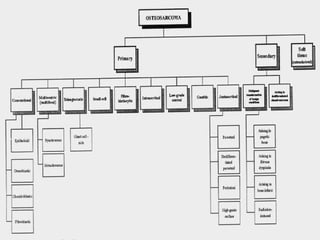
 Classification
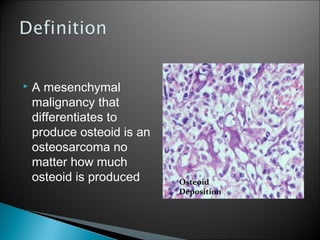
 A mesenchymal
malignancy that
differentiates to
produce osteoid is an
osteosarcoma no
matter how much
osteoid is produced Osteoid
Deposition
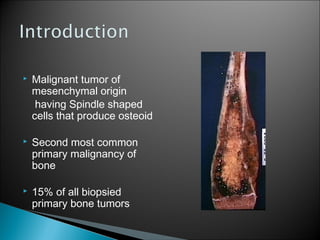
 Malignant tumor of
mesenchymal origin
having Spindle shaped
cells that produce osteoid
 Second most common
primary malignancy of
bone
 15% of all biopsied
primary bone tumors
 In 1805, the French surgeon Alexis Boyer first
used the term "osteosarcoma’’
 In 1847, the Baron Guillaume Dupuytren described
gross pathologic appearance of osteosarcoma
 Jaffe and Lichtenstein established histologic
criteria to diagnose common bone tumors
 In the 1970s, Dr Norman Jaffe used variety of
effective chemotherapeutic agents
 Dr William F. Enneking  introduced his surgical
staging system for musculoskeletal sarcomas.
 In the United States, the incidence of
osteosarcoma is 400 cases per year (4.8 per
million population <20 y).
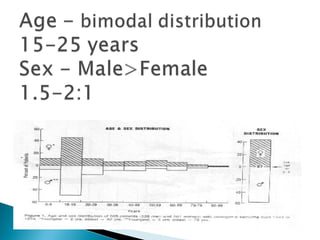
higher in blacks than in whites
higher in males than in females
 The overall 5-year survival rate is 63%
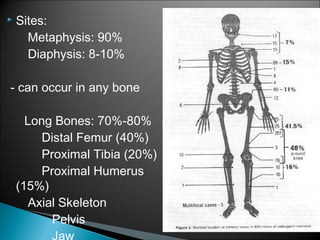
 Sites:
Metaphysis: 90%
Diaphysis: 8-10%
- can occur in any bone
Long Bones: 70%-80%
Distal Femur (40%)
Proximal Tibia (20%)
Proximal Humerus
(15%)
Axial Skeleton
Pelvis
 The exact cause of osteosarcoma is unknown
Risk factors –
 Rapid bone growth
 Environmental
 Genetic
 Pre-existing benign /malignant lesions
 Rapid bone growth
- increased incidence during the
adolescent growth spurt
- location in the metaphyseal area adjacent to the
growth plate (physis) of long bones
 Genetic
Li-Fraumeni syndrome (p53 mutation)
Rothmund-Thomson syndrome
Mutation of the RB gene (retinoblastoma)
 Environmental
Radiation – localised radiation >2000 rads
latent period -4 years to 40 years
alpha rays>beta rays
Chemicals – methylcholanthrene
acetylaminofluorene
beryllium compounds
Virus - RNA :mouse sarcoma virus
DNA :polyoma ,SV 40 virus
 Paget disease
 fibrous dysplasia
 enchondromatosis
 hereditary multiple
exostoses
 chondrosarcoma
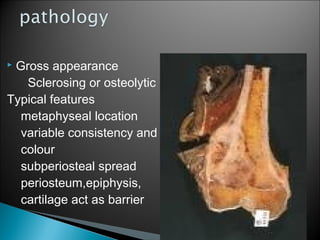
 Gross appearance
Sclerosing or osteolytic
Typical features
metaphyseal location
variable consistency and
colour
subperiosteal spread
periosteum,epiphysis,
cartilage act as barrier
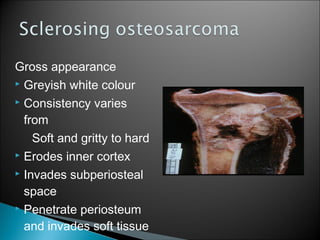
Gross appearance
 Greyish white colour
 Consistency varies
from
Soft and gritty to hard
 Erodes inner cortex
 Invades subperiosteal
space
 Penetrate periosteum
and invades soft tissue
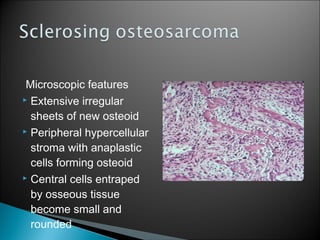
Microscopic features
 Extensive irregular
sheets of new osteoid
 Peripheral hypercellular
stroma with anaplastic
cells forming osteoid
 Central cells entraped
by osseous tissue
become small and
rounded
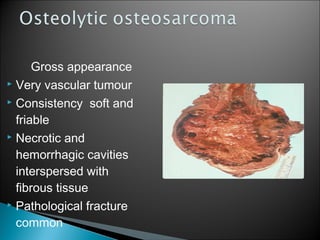
Gross appearance
 Very vascular tumour
 Consistency soft and
friable
 Necrotic and
hemorrhagic cavities
interspersed with
fibrous tissue
 Pathological fracture
common
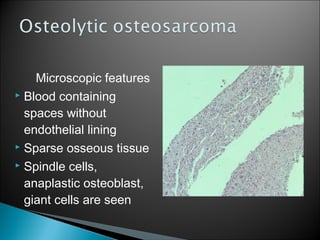
Microscopic features
 Blood containing
spaces without
endothelial lining
 Sparse osseous tissue
 Spindle cells,
anaplastic osteoblast,
giant cells are seen
 Anatomic location
 Degree of differentiation
 Multicentricity
 Etiology
 Histology
 Intramedullary (75%)
 Juxtacortical/Surface (7--10%)
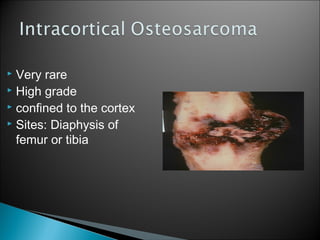
 Intracortical (.2%)
 conventional
Osteoblastic
Chondroblastic
Fibroblastic
Small-cell
Epithelioid
 Telangiectatic
 Well--differentiated
Juxtacortical Osteosarcoma
 Parosteal Osteosarcoma
 Periosteal Osteosarcoma
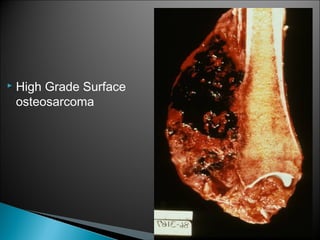
 High Grade Surface Osteosarcoma
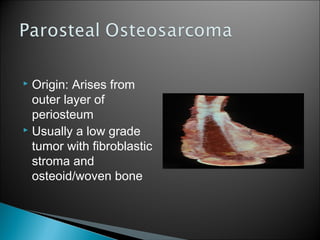
 Origin: Arises from
outer layer of
periosteum
 Usually a low grade
tumor with fibroblastic
stroma and
osteoid/woven bone
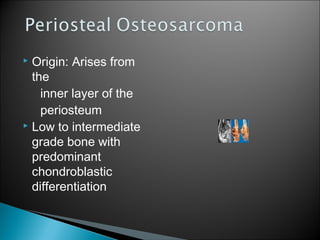
 Origin: Arises from
the
inner layer of the
periosteum
 Low to intermediate
grade bone with
predominant
chondroblastic
differentiation
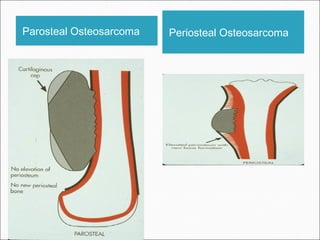
Parosteal Osteosarcoma Periosteal Osteosarcoma
 High Grade Surface
osteosarcoma
 Very rare
 High grade
 confined to the cortex
 Sites: Diaphysis of
femur or tibia
 Synchronous Osteosarcoma:
Lesions that affect multiple bones
discovered within 6 months of each other
 Metachronous Osteosarcoma:
Lesions involving multiple bones
discovered more than 6 months apart
 Malignant transformation of benign condition
Paget disease
fibrous dysplasia
bone infarct
 Arising in dedifferentiated chondrosarcoma
 A mesenchymal malignancy that differentiates to
produce osteoid bone
 Second most common primary malignant tumor of
bone
 Site - metaphysis of long bone
 Age – adolescent (15 – 25 years)
 Etiology not known
 Associated risk factors –
rapid bone growth in young
pre-existing bone lesion in old age
 Most common - Conventional Osteosarcoma
Thank you

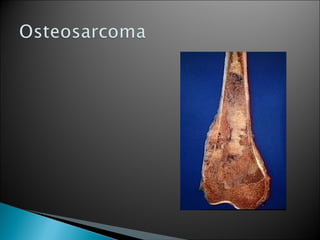
Osteosarcoma

  • 2.
     Definition  Introductionand brief history  Epidemiology  Etiology  Pathology  Classification
  • 3.
     A mesenchymal malignancythat differentiates to produce osteoid is an osteosarcoma no matter how much osteoid is produced Osteoid Deposition
  • 4.
     Malignant tumorof mesenchymal origin having Spindle shaped cells that produce osteoid  Second most common primary malignancy of bone  15% of all biopsied primary bone tumors
  • 5.
     In 1805,the French surgeon Alexis Boyer first used the term "osteosarcoma’’  In 1847, the Baron Guillaume Dupuytren described gross pathologic appearance of osteosarcoma  Jaffe and Lichtenstein established histologic criteria to diagnose common bone tumors
  • 6.
     In the1970s, Dr Norman Jaffe used variety of effective chemotherapeutic agents  Dr William F. Enneking  introduced his surgical staging system for musculoskeletal sarcomas.
  • 7.
     In theUnited States, the incidence of osteosarcoma is 400 cases per year (4.8 per million population <20 y). higher in blacks than in whites higher in males than in females  The overall 5-year survival rate is 63%
  • 9.
     Sites: Metaphysis: 90% Diaphysis:8-10% - can occur in any bone Long Bones: 70%-80% Distal Femur (40%) Proximal Tibia (20%) Proximal Humerus (15%) Axial Skeleton Pelvis
  • 10.
     The exactcause of osteosarcoma is unknown Risk factors –  Rapid bone growth  Environmental  Genetic  Pre-existing benign /malignant lesions
  • 11.
     Rapid bonegrowth - increased incidence during the adolescent growth spurt - location in the metaphyseal area adjacent to the growth plate (physis) of long bones  Genetic Li-Fraumeni syndrome (p53 mutation) Rothmund-Thomson syndrome Mutation of the RB gene (retinoblastoma)
  • 12.
     Environmental Radiation –localised radiation >2000 rads latent period -4 years to 40 years alpha rays>beta rays Chemicals – methylcholanthrene acetylaminofluorene beryllium compounds Virus - RNA :mouse sarcoma virus DNA :polyoma ,SV 40 virus
  • 13.
     Paget disease fibrous dysplasia  enchondromatosis  hereditary multiple exostoses  chondrosarcoma
  • 14.
     Gross appearance Sclerosingor osteolytic Typical features metaphyseal location variable consistency and colour subperiosteal spread periosteum,epiphysis, cartilage act as barrier
  • 15.
    Gross appearance  Greyishwhite colour  Consistency varies from Soft and gritty to hard  Erodes inner cortex  Invades subperiosteal space  Penetrate periosteum and invades soft tissue
  • 16.
    Microscopic features  Extensiveirregular sheets of new osteoid  Peripheral hypercellular stroma with anaplastic cells forming osteoid  Central cells entraped by osseous tissue become small and rounded
  • 17.
    Gross appearance  Veryvascular tumour  Consistency soft and friable  Necrotic and hemorrhagic cavities interspersed with fibrous tissue  Pathological fracture common
  • 18.
    Microscopic features  Bloodcontaining spaces without endothelial lining  Sparse osseous tissue  Spindle cells, anaplastic osteoblast, giant cells are seen
  • 19.
     Anatomic location Degree of differentiation  Multicentricity  Etiology  Histology
  • 20.
     Intramedullary (75%) Juxtacortical/Surface (7--10%)  Intracortical (.2%)
  • 21.
  • 22.
    Juxtacortical Osteosarcoma  ParostealOsteosarcoma  Periosteal Osteosarcoma  High Grade Surface Osteosarcoma
  • 23.
     Origin: Arisesfrom outer layer of periosteum  Usually a low grade tumor with fibroblastic stroma and osteoid/woven bone
  • 24.
     Origin: Arisesfrom the inner layer of the periosteum  Low to intermediate grade bone with predominant chondroblastic differentiation
  • 25.
  • 26.
     High GradeSurface osteosarcoma
  • 27.
     Very rare High grade  confined to the cortex  Sites: Diaphysis of femur or tibia
  • 28.
     Synchronous Osteosarcoma: Lesionsthat affect multiple bones discovered within 6 months of each other  Metachronous Osteosarcoma: Lesions involving multiple bones discovered more than 6 months apart
  • 29.
     Malignant transformationof benign condition Paget disease fibrous dysplasia bone infarct  Arising in dedifferentiated chondrosarcoma
  • 30.
     A mesenchymalmalignancy that differentiates to produce osteoid bone  Second most common primary malignant tumor of bone  Site - metaphysis of long bone  Age – adolescent (15 – 25 years)
  • 31.
     Etiology notknown  Associated risk factors – rapid bone growth in young pre-existing bone lesion in old age  Most common - Conventional Osteosarcoma
  • 33.