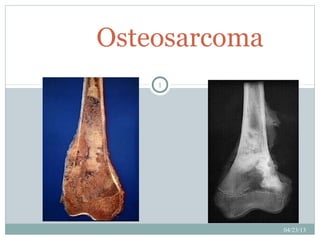
Osteosarcoma
    1


               04/23/13
Overview
                         2


Definition
Epidemiology
Pathogenesis                Parosteal osteosarcoma
Skeletal distribution       Periosteal osteosarcoma
Clinical presentation       High grade surface
Evaluation
                              osteosarcoma
High grade
 osteosarcoma
Definition
                          3

2nd most common primary bone tumor


Malignant tumor of mesenchymal origin


Spindle shaped cells that produce osteoid
Epidemiology
                        4

Any age
75% 12-25yrs
Modal incidence
Epidemiology
                        5

Primary vs secondary


Male : female


Li Fraunie syndrome
Pathogenesis
                         6

Unknown


Modal incidence correlates with rapid bone growth


Radiation exposure


Cancer survivors


Retinoblastoma
Skeletal distribution
          7
Classification
      8
Clinical Presentation
                                  9

Painful mass arising from bone


Trauma


Metastisize early in evolution
    20% clinically detectable mets at dx
Evaluation
                         10

Suspected diagnosis by hx and physical


Supported by xray
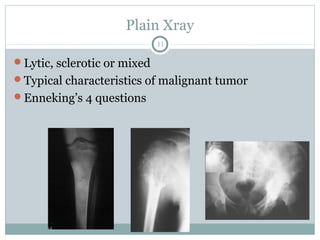
Plain Xray
                             11

Lytic, sclerotic or mixed
Typical characteristics of malignant tumor
Enneking’s 4 questions
Initial Evaluation
                          12

Define the extent of the disease


Locally
Systemically
Local
                   13

CT


MRI


+/- Angiogram
CT
14
MRI
 15
Angio
  16
Systemic
                17

Bone scan
CT Chest
lab
Classic High Grade Osteosarc
                         18

Age, sex
Presentation
Physical exam
Blood work
Plain films
    Site
    size
Differential Dx
                        19

Giant Cell Tumor
Aneursymal Bone Cyst
Ewings
Osteoblastoma
Metastasis
Lymphoma
Biopsy
                        20

Principles


Dx “high grade osteosarcoma”


Now What??
Chemotherapy
                         21

Micro metastasis


What we have learned pre chemo (1970’s)


Multi Institutional Osteosarcoma Study
Chemotherapy
                             22

Chemo cannot control clinically detectable disease


Radiation is ineffective


Local control is surgical
Chemotherapy
                      23


Best protocol is subject of ongoing trials


Drugs
  Doxorubicin
  Cisplatin
  Ifosfamide
  Methotrexate
  Cyclophosphamide


Side effects
Induction Chemotherapy
                         24

Arose in conjunction with development of limb
 sparing surgery

Increase survival


prognostic
Surgery
                          25

Limb salvage the norm


Now safer procedure


Wide surgical margin
Surgical options
                               26

Articular surface removed
  Osteoarticular allograft replacement
  Custom modular prosthesis
  Allograft prosthesis composite
  Allograft arthodesis


Segment of diaphysis missing
  Intercalary allograft
Surgery
                               27

Young patient with open growth plate
    Rotatioplasty
    Conventional amputation
28
Surgery
                          29


Indication for amputation
    Grossly displaced pathologic fracture
    Encasement of neurovascular bundle
    Tumor that enlarges during preop chemo and is adjacent
     to neurovascular bundle
Current Standard of Care
                                30

Pretreatment radiologic staging
Bx to confirm diagnosis
Preoperative chemotherapy
Repeat radiologic staging
    (access chemo response, finalize surgical tx plan)
Surgical resection with wide margin
Reconstruction using one of many technoques
Post op chemo based on preop response
Surface osteosarcoma
                        31

Parosteal


Periosteal


High grade surface osteosarcoma
Parosteal
                          32

5% of osteosarcomas
Posterior metaphysis of distal femur
Slow growing large ossified mass
Confused with osteochondroma
String sign
Low grade
treatment
Parosteal Osteosarcoma
          33
Parosteal Osteosarcoma
          34
Periosteal Osteosarcoma
                          35

Arises from surface of diaphysis
Characterized by bony spicule formation
 perpendicular to shaft
Sunburst
Low grade
Wide excision
High grade surface
                          36

Very rare
20-30’s
Appearance as parosteal but histology high grade
Tx as classic intermedullary

Osteosarcoma[2]

  • 1.
    Osteosarcoma 1 04/23/13
  • 2.
    Overview 2 Definition Epidemiology Pathogenesis Parosteal osteosarcoma Skeletal distribution Periosteal osteosarcoma Clinical presentation High grade surface Evaluation osteosarcoma High grade osteosarcoma
  • 3.
    Definition 3 2nd most common primary bone tumor Malignant tumor of mesenchymal origin Spindle shaped cells that produce osteoid
  • 4.
    Epidemiology 4 Any age 75% 12-25yrs Modal incidence
  • 5.
    Epidemiology 5 Primary vs secondary Male : female Li Fraunie syndrome
  • 6.
    Pathogenesis 6 Unknown Modal incidence correlates with rapid bone growth Radiation exposure Cancer survivors Retinoblastoma
  • 7.
  • 8.
  • 9.
    Clinical Presentation 9 Painful mass arising from bone Trauma Metastisize early in evolution  20% clinically detectable mets at dx
  • 10.
    Evaluation 10 Suspected diagnosis by hx and physical Supported by xray
  • 11.
    Plain Xray 11 Lytic, sclerotic or mixed Typical characteristics of malignant tumor Enneking’s 4 questions
  • 12.
    Initial Evaluation 12 Define the extent of the disease Locally Systemically
  • 13.
    Local 13 CT MRI +/- Angiogram
  • 14.
  • 15.
  • 16.
  • 17.
    Systemic 17 Bone scan CT Chest lab
  • 18.
    Classic High GradeOsteosarc 18 Age, sex Presentation Physical exam Blood work Plain films  Site  size
  • 19.
    Differential Dx 19 Giant Cell Tumor Aneursymal Bone Cyst Ewings Osteoblastoma Metastasis Lymphoma
  • 20.
    Biopsy 20 Principles Dx “high grade osteosarcoma” Now What??
  • 21.
    Chemotherapy 21 Micro metastasis What we have learned pre chemo (1970’s) Multi Institutional Osteosarcoma Study
  • 22.
    Chemotherapy 22 Chemo cannot control clinically detectable disease Radiation is ineffective Local control is surgical
  • 23.
    Chemotherapy 23 Best protocol is subject of ongoing trials Drugs  Doxorubicin  Cisplatin  Ifosfamide  Methotrexate  Cyclophosphamide Side effects
  • 24.
    Induction Chemotherapy 24 Arose in conjunction with development of limb sparing surgery Increase survival prognostic
  • 25.
    Surgery 25 Limb salvage the norm Now safer procedure Wide surgical margin
  • 26.
    Surgical options 26 Articular surface removed  Osteoarticular allograft replacement  Custom modular prosthesis  Allograft prosthesis composite  Allograft arthodesis Segment of diaphysis missing  Intercalary allograft
  • 27.
    Surgery 27 Young patient with open growth plate  Rotatioplasty  Conventional amputation
  • 28.
  • 29.
    Surgery 29 Indication for amputation  Grossly displaced pathologic fracture  Encasement of neurovascular bundle  Tumor that enlarges during preop chemo and is adjacent to neurovascular bundle
  • 30.
    Current Standard ofCare 30 Pretreatment radiologic staging Bx to confirm diagnosis Preoperative chemotherapy Repeat radiologic staging  (access chemo response, finalize surgical tx plan) Surgical resection with wide margin Reconstruction using one of many technoques Post op chemo based on preop response
  • 31.
    Surface osteosarcoma 31 Parosteal Periosteal High grade surface osteosarcoma
  • 32.
    Parosteal 32 5% of osteosarcomas Posterior metaphysis of distal femur Slow growing large ossified mass Confused with osteochondroma String sign Low grade treatment
  • 33.
  • 34.
  • 35.
    Periosteal Osteosarcoma 35 Arises from surface of diaphysis Characterized by bony spicule formation perpendicular to shaft Sunburst Low grade Wide excision
  • 36.
    High grade surface 36 Very rare 20-30’s Appearance as parosteal but histology high grade Tx as classic intermedullary