Our School
Presents……
Definition of Cell…
A cell is the
smallest unit
that is capable
of performing
life functions.
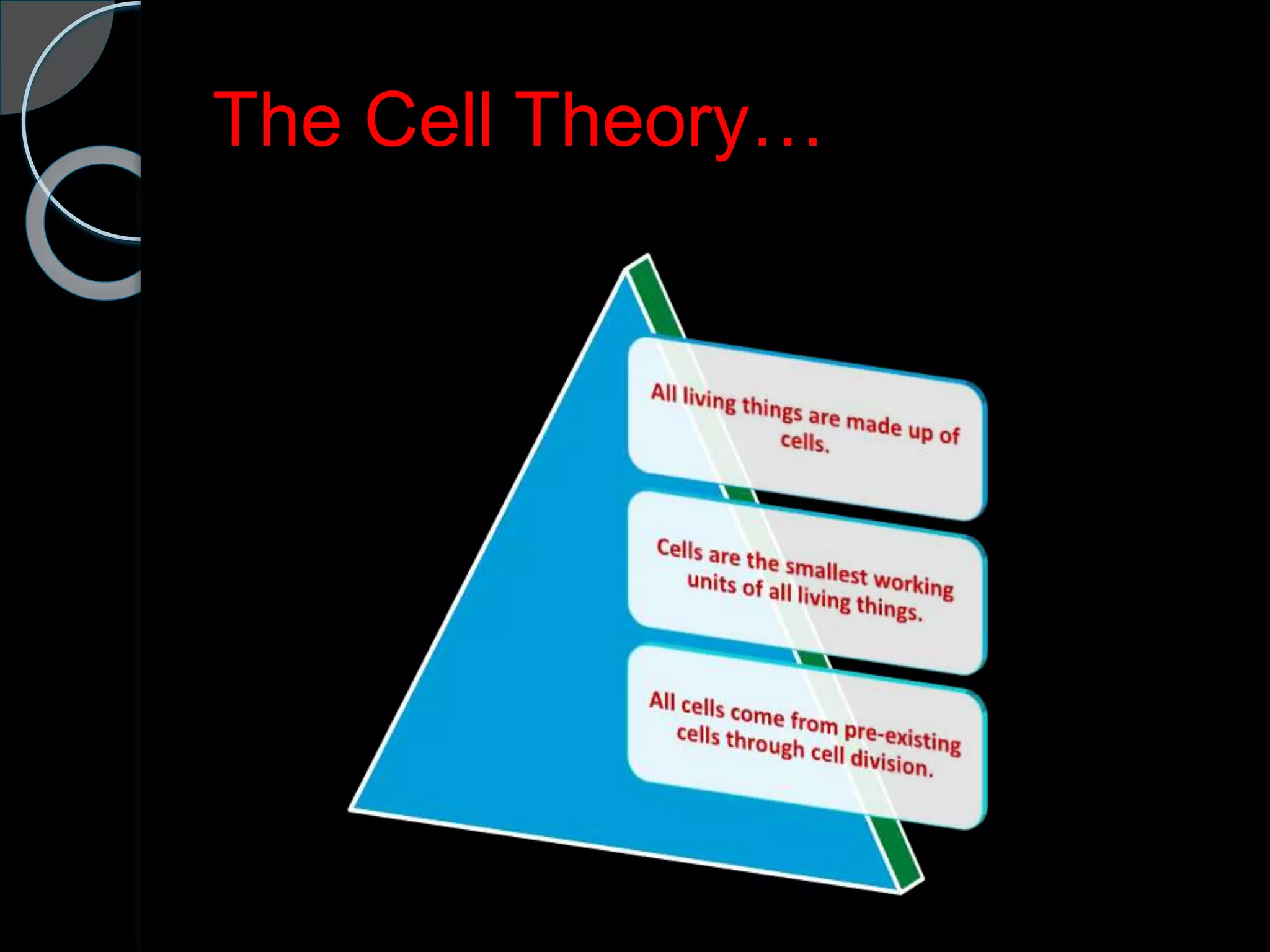
The Cell Theory…
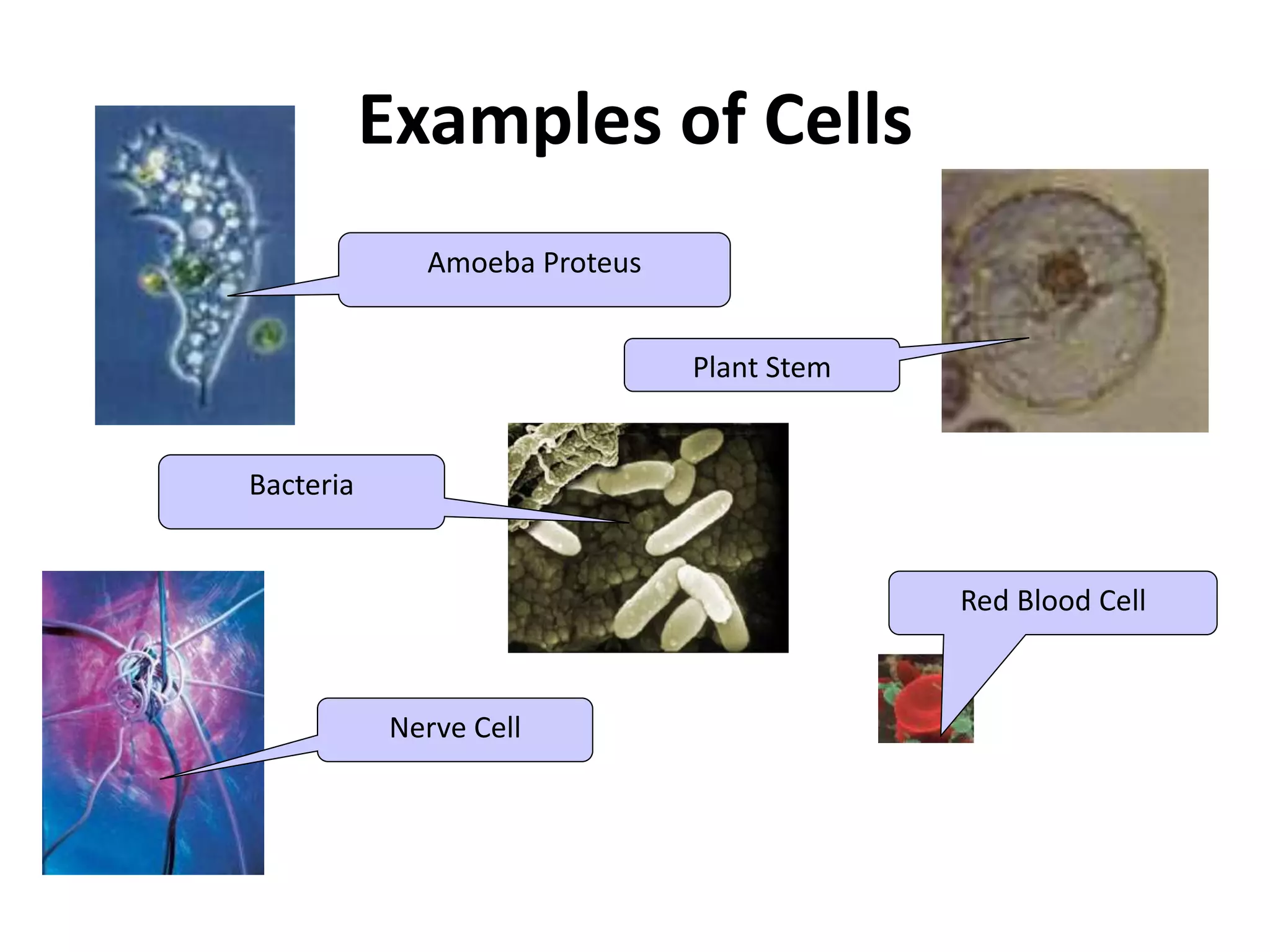
Examples of Cells
Amoeba Proteus
Plant Stem
Red Blood Cell
Nerve Cell
Bacteria
The Two Major Categories of
Cells….
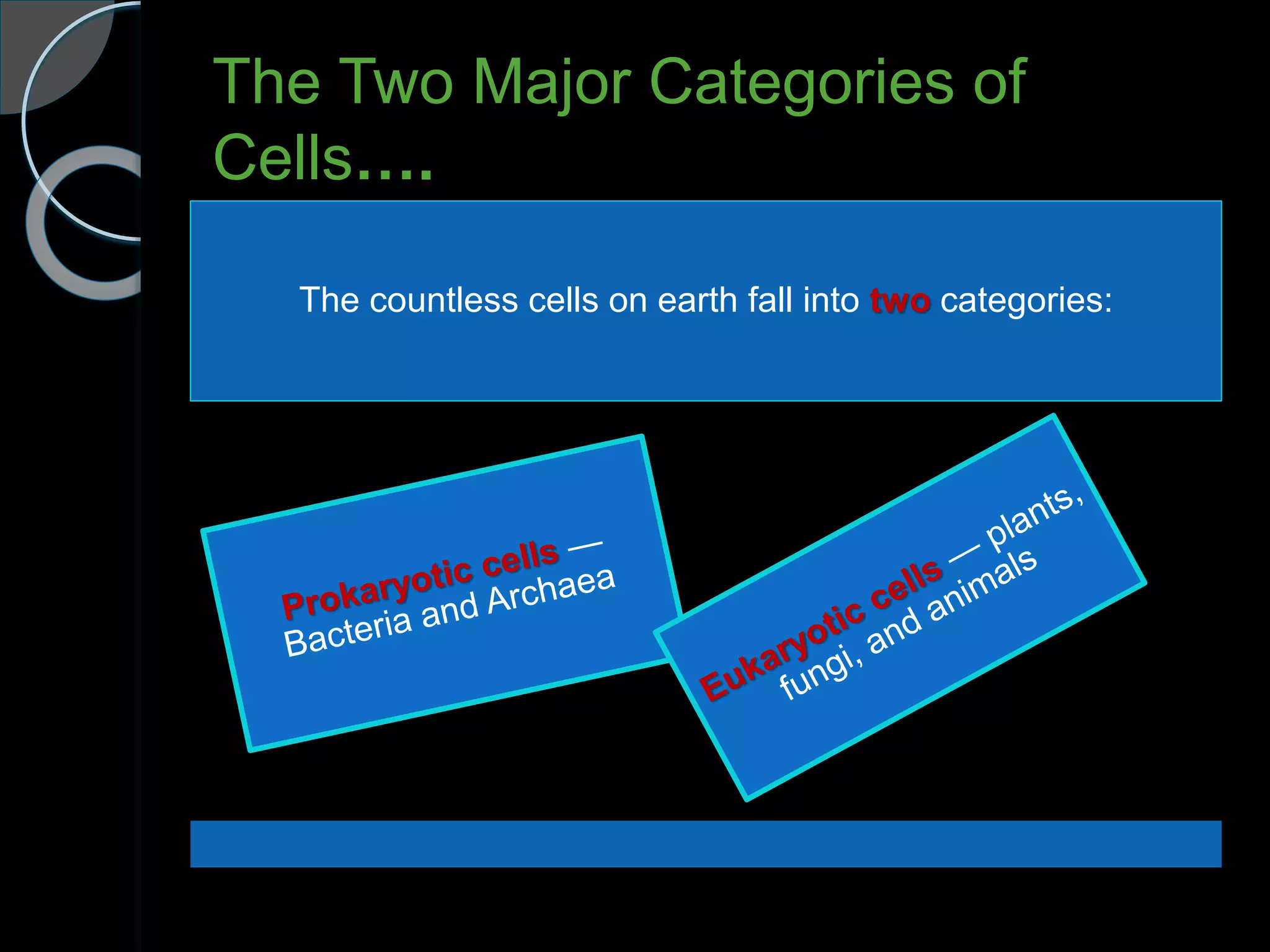
The countless cells on earth fall into two categories:
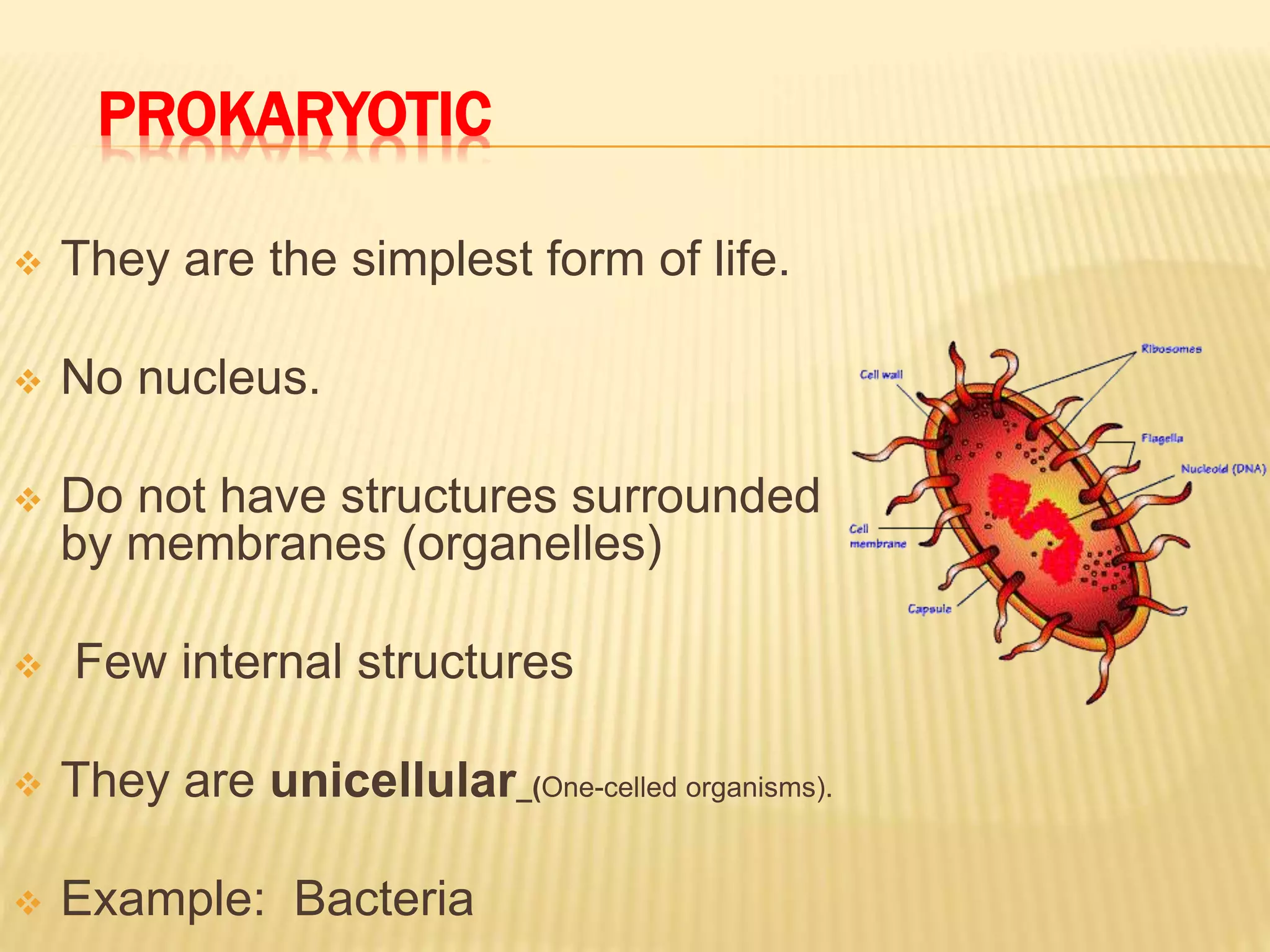
PROKARYOTIC
 They are the simplest form of life.
 No nucleus.
 Do not have structures surrounded
by membranes (organelles)
 Few internal structures
 They are unicellular_(One-celled organisms).
 Example: Bacteria
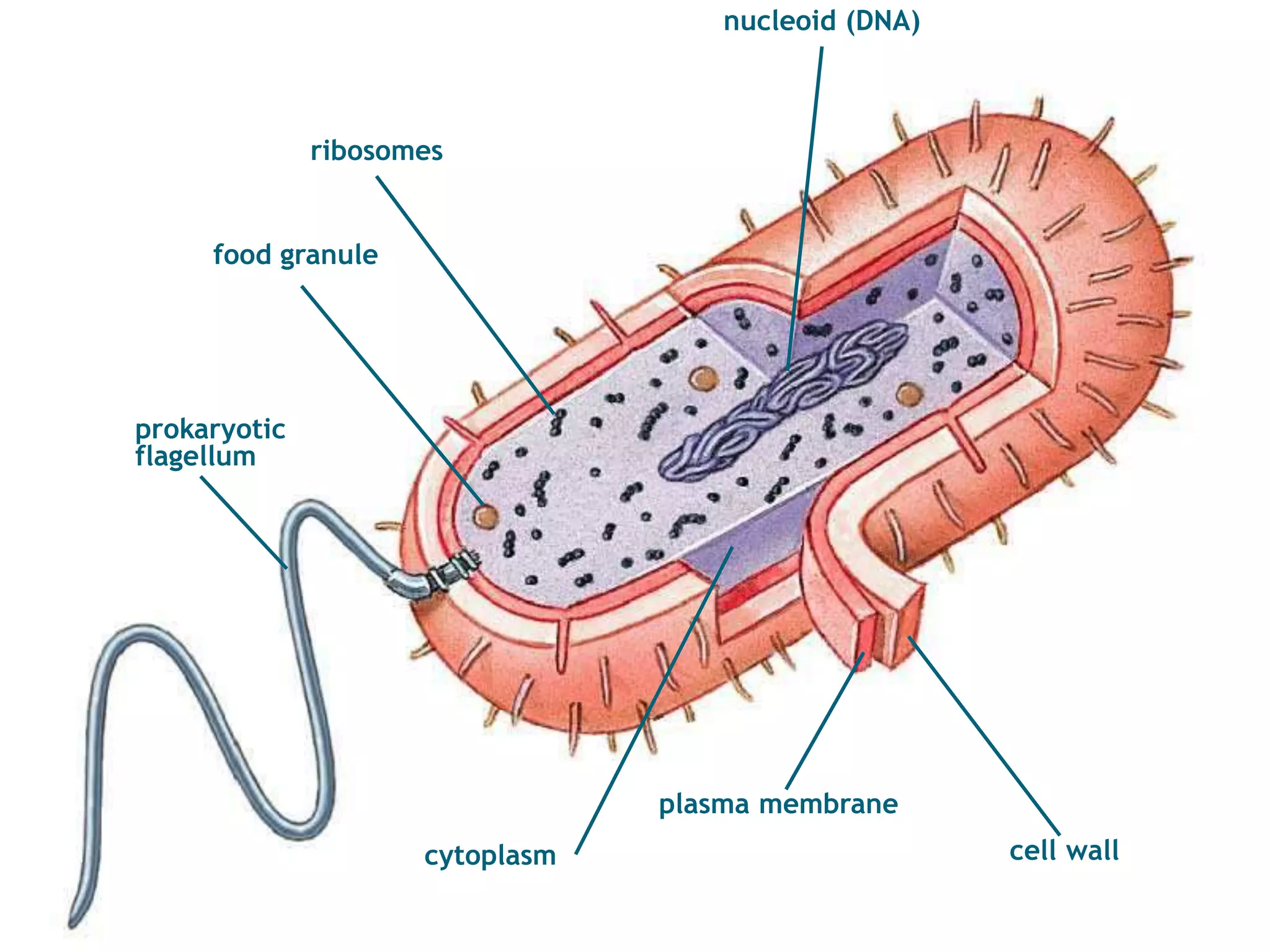
ribosomes
cell wall
plasma membrane
food granule
prokaryotic
flagellum
cytoplasm
nucleoid (DNA)
 are the most complex form of life.
 They have nucleus
 Contain organelles surrounded by membranes
 They are multicellular organisms (composed of
many cells).
 Most living organisms
 Examples: animals and plants.
Eukaryotic
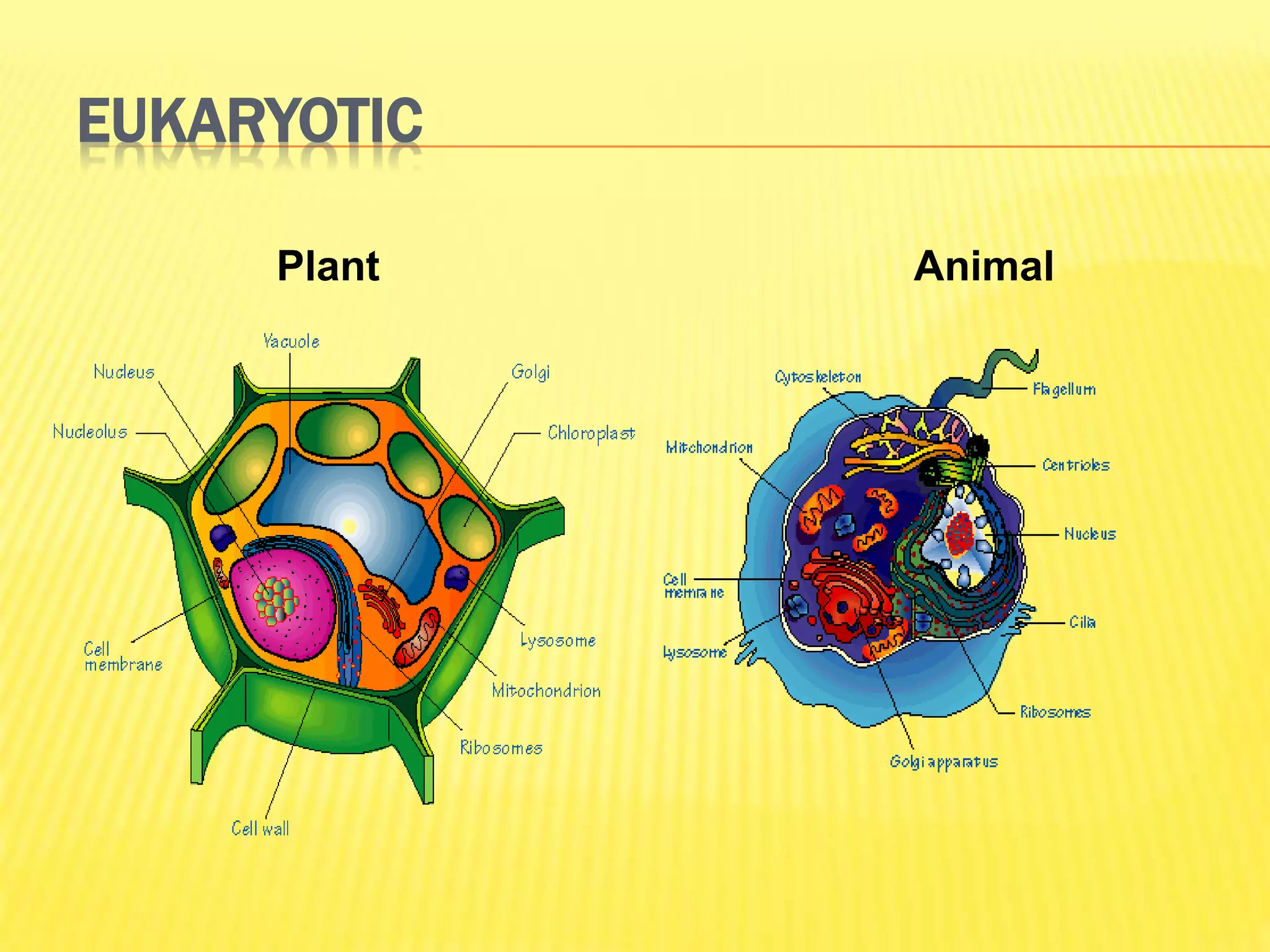
EUKARYOTIC
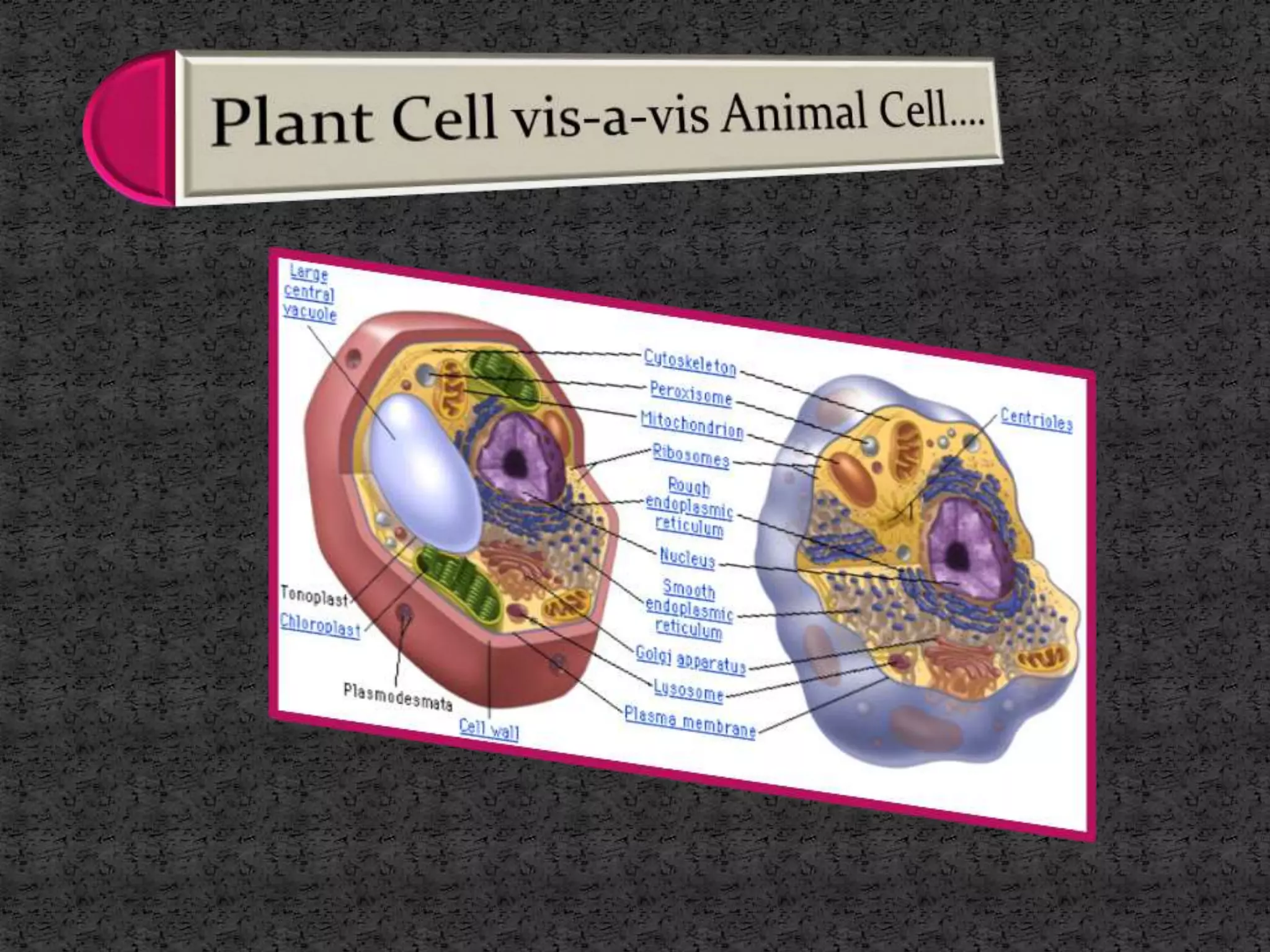
Plant Animal
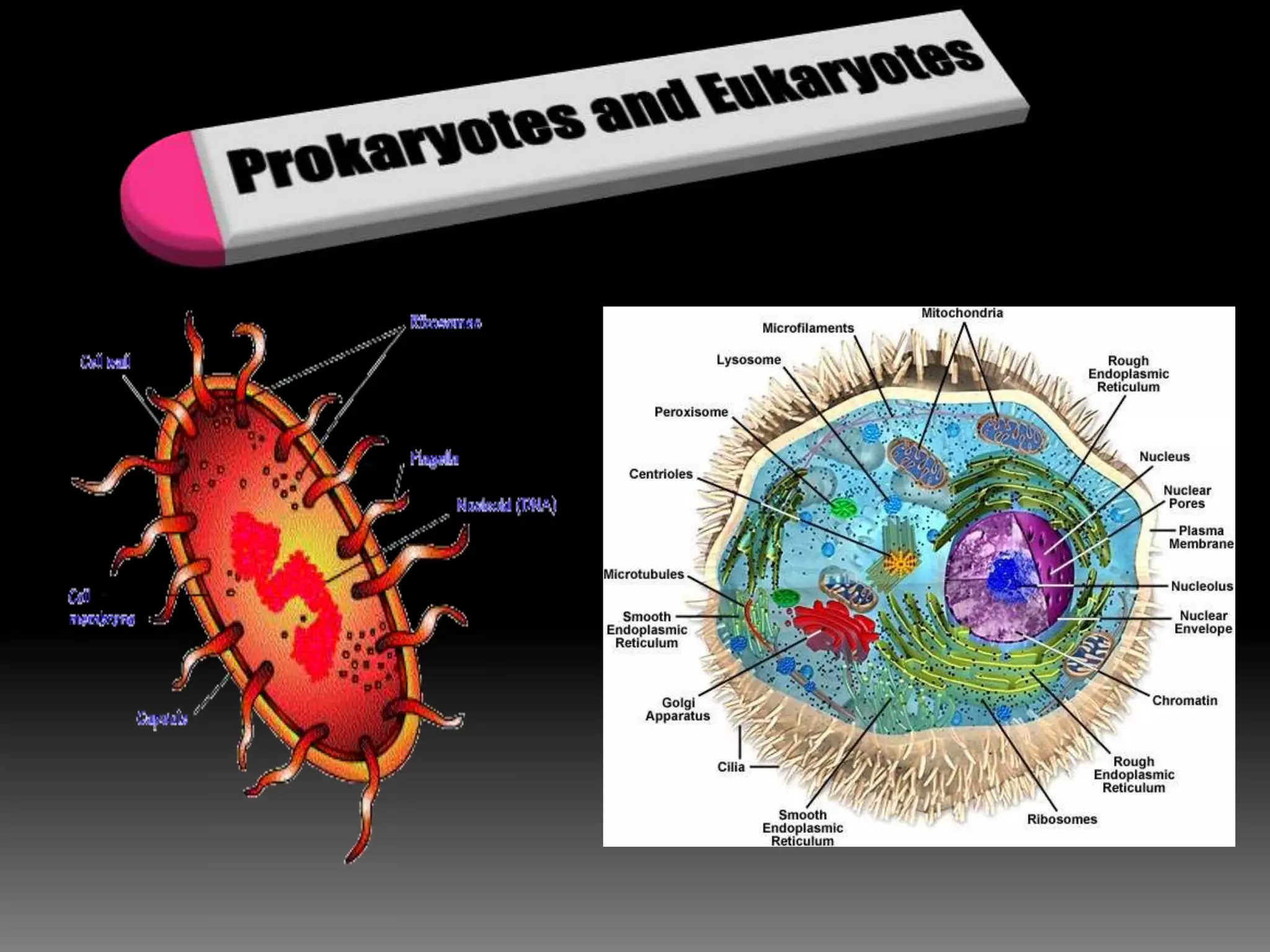
Prokaryotes & Eukaryotes…
 Similarities & differences
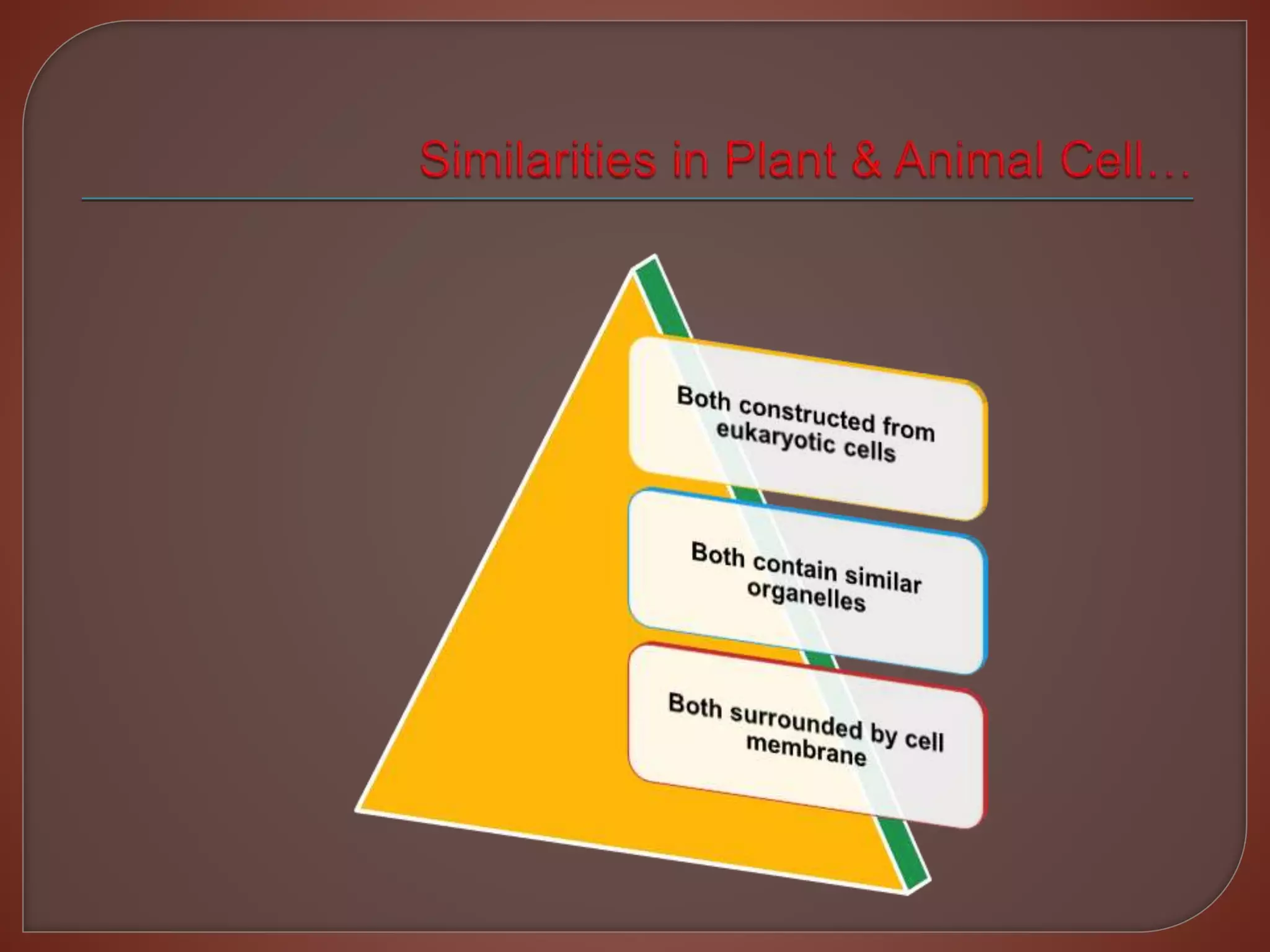
 Both surrounded by plasma membrane,
but very different
 Prokaryotes – Archaebacteria and
Eubacteria
 Eukaryotes – everything else
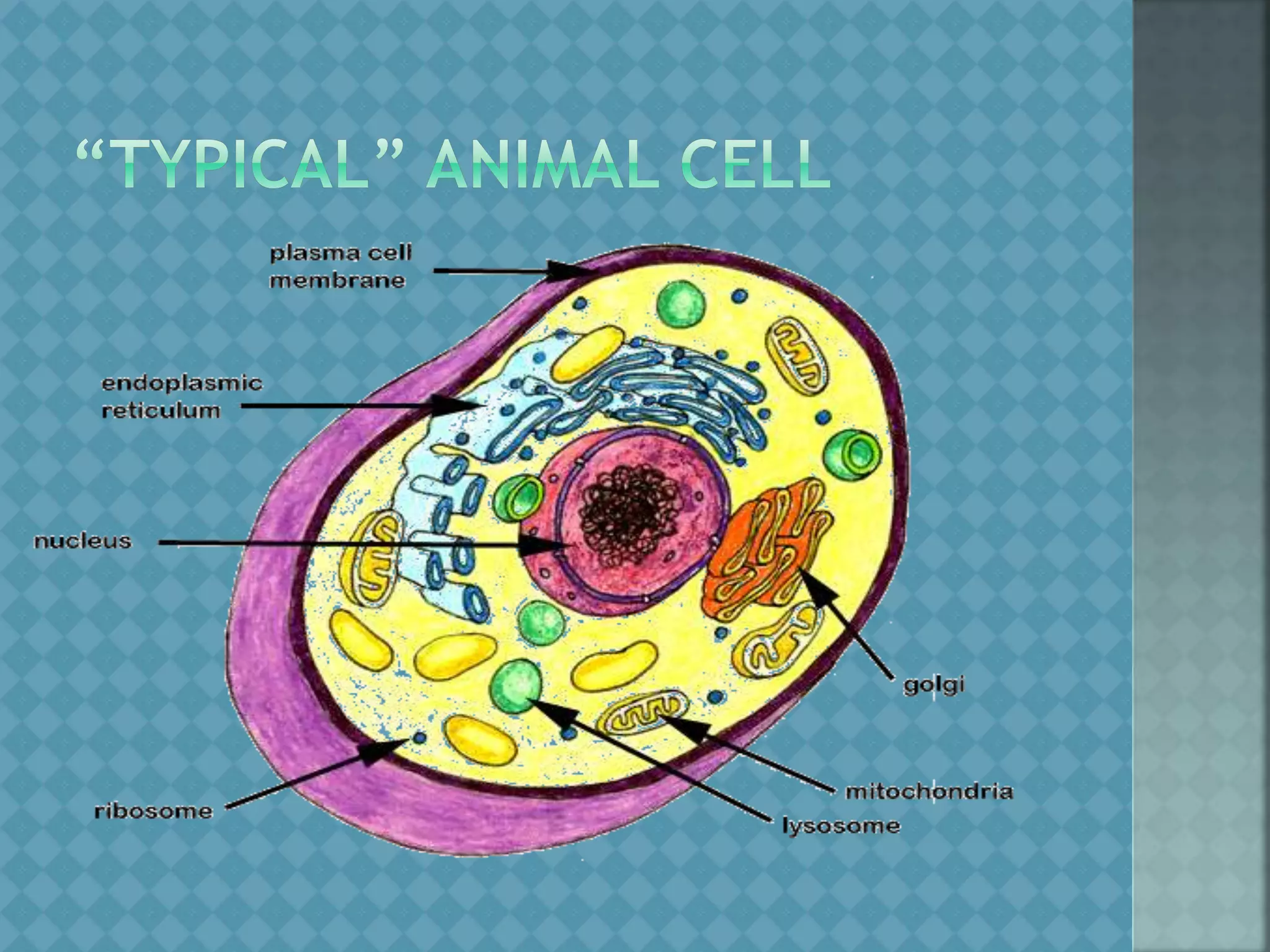
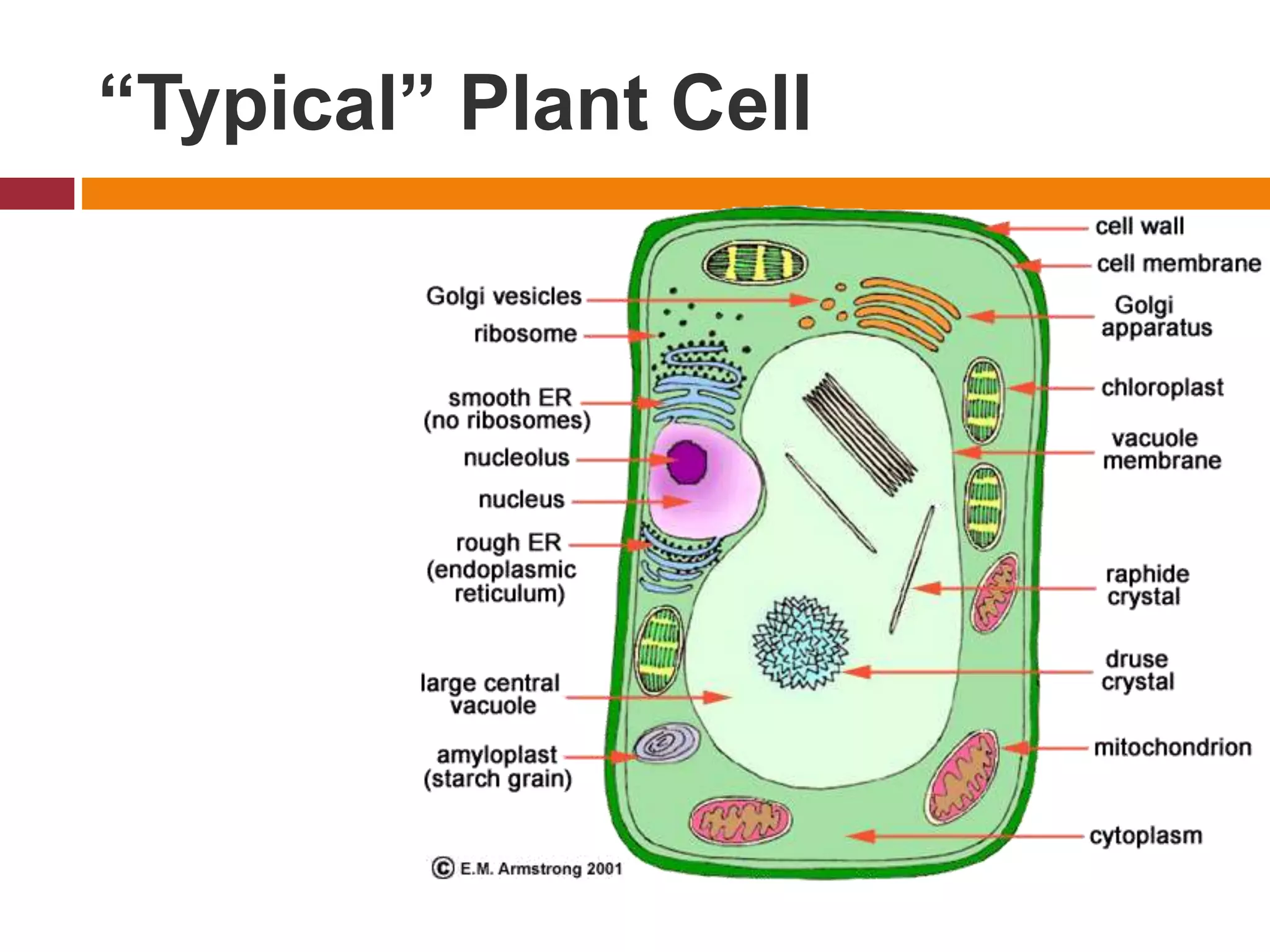
“Typical” Plant Cell
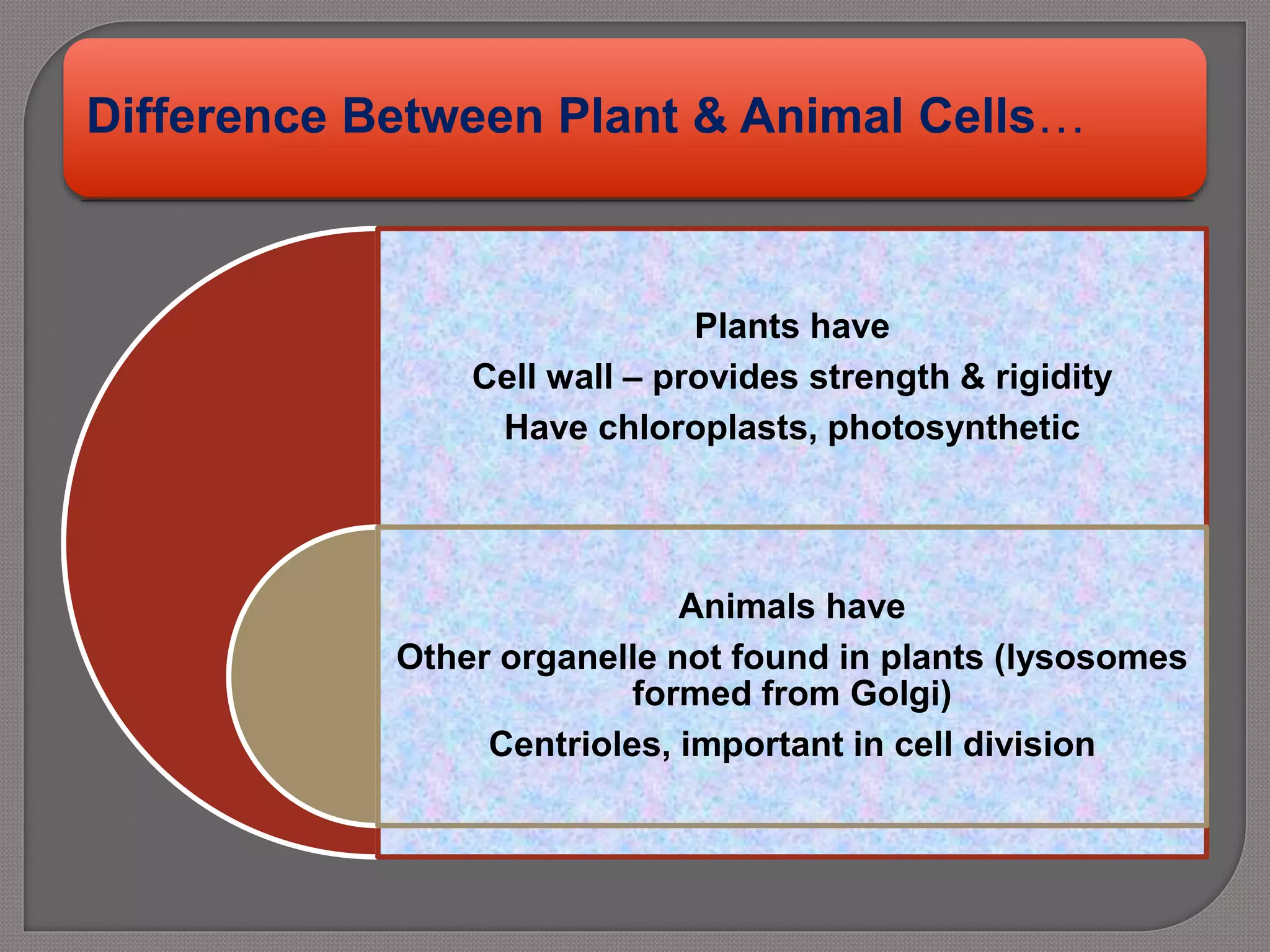
Difference Between Plant & Animal Cells…
Plants have
Cell wall – provides strength & rigidity
Have chloroplasts, photosynthetic
Animals have
Other organelle not found in plants (lysosomes
formed from Golgi)
Centrioles, important in cell division
 All living cells (eukaryotes and
prokaryotes) have cell membranes
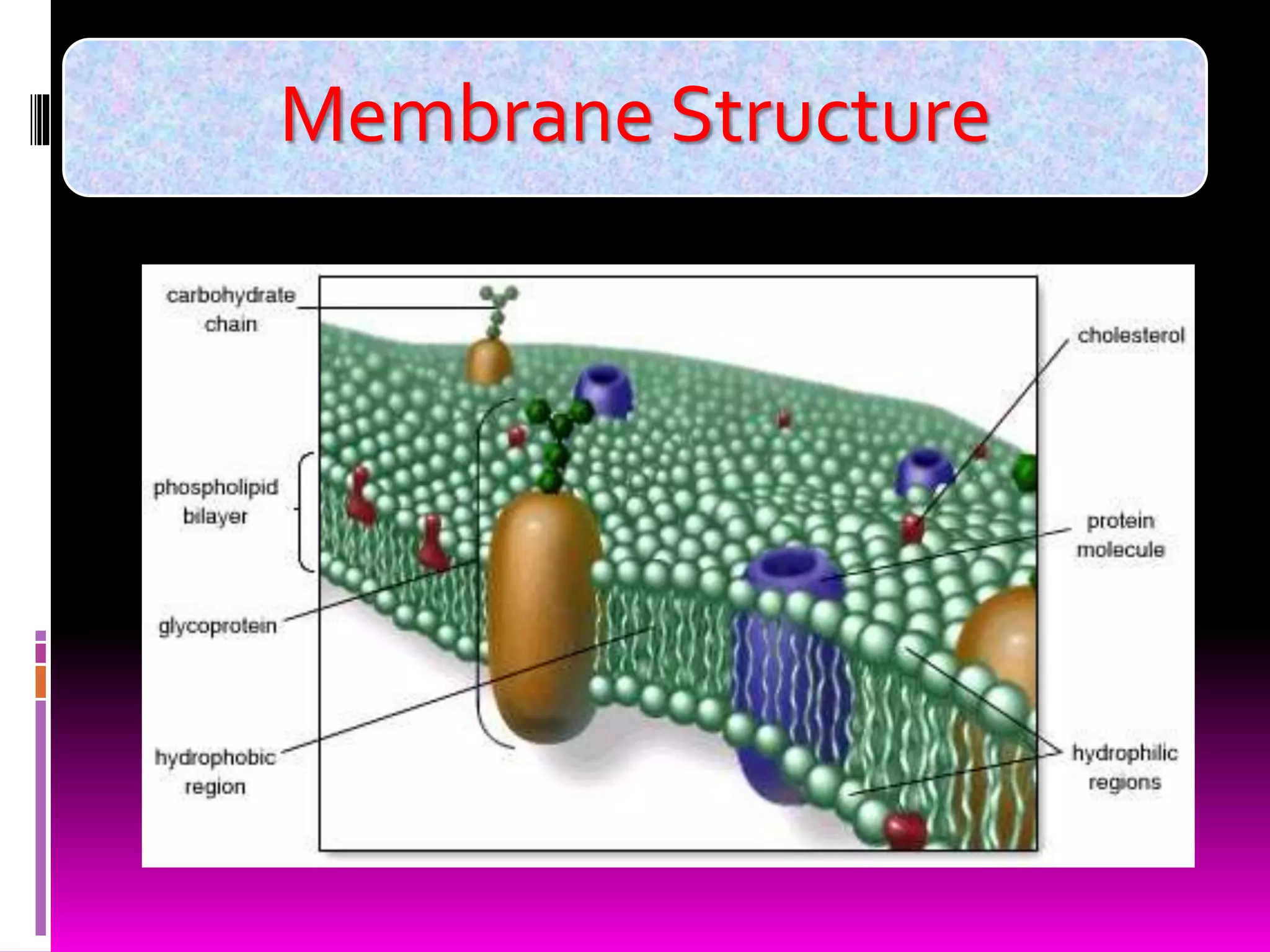
 Made mainly of phospholipids and proteins
▪ Animal cell membranes contain cholesterol
 Functions:
▪ Separate the cell from the external environment
▪ Controls passage in and out of cell
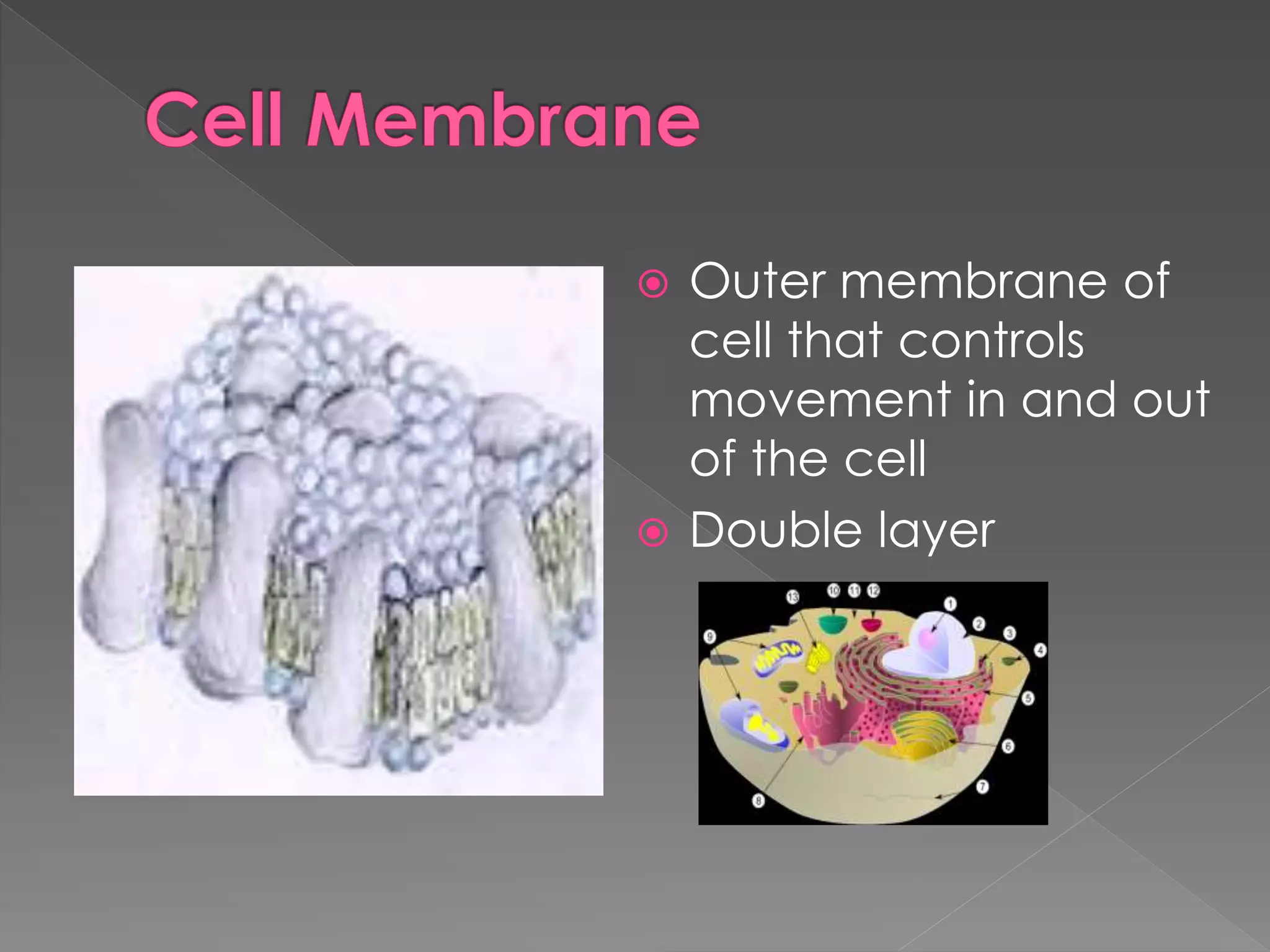
 Outer membrane of
cell that controls
movement in and out
of the cell
 Double layer
Membrane Structure
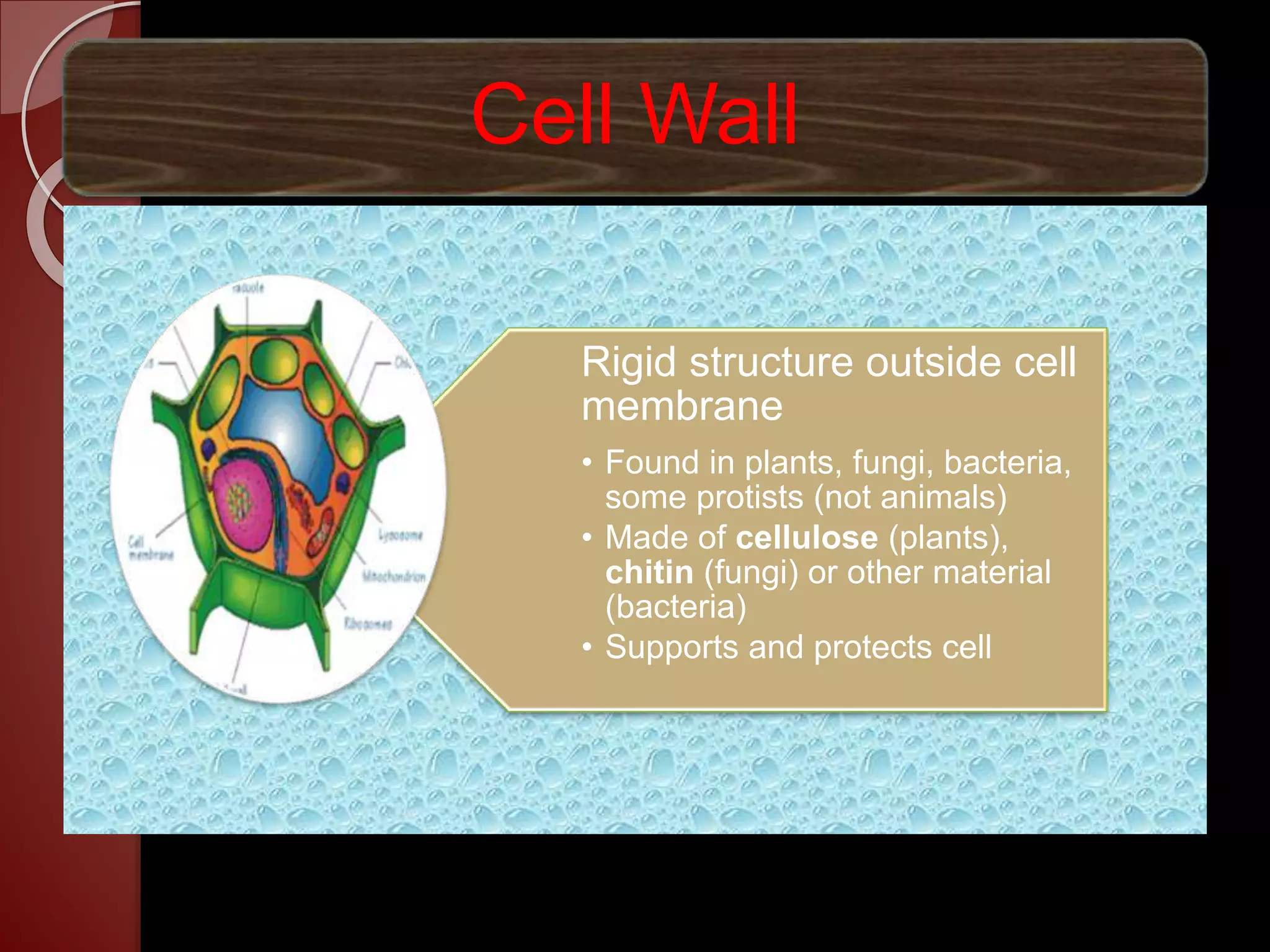
Cell Wall
Rigid structure outside cell
membrane
• Found in plants, fungi, bacteria,
some protists (not animals)
• Made of cellulose (plants),
chitin (fungi) or other material
(bacteria)
• Supports and protects cell
Inside the Cell
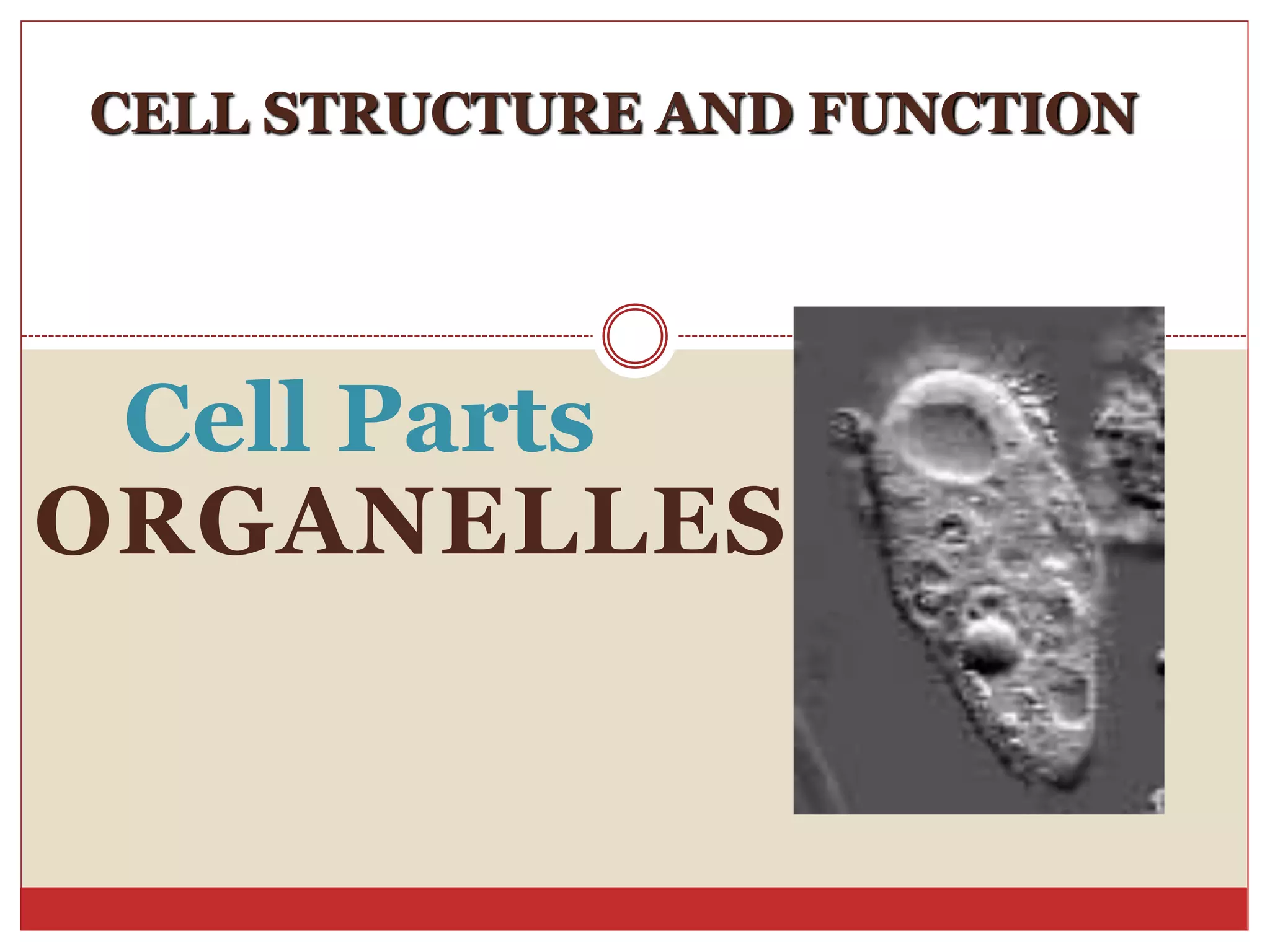
ORGANELLES
Cell Parts
CELL STRUCTURE AND FUNCTION
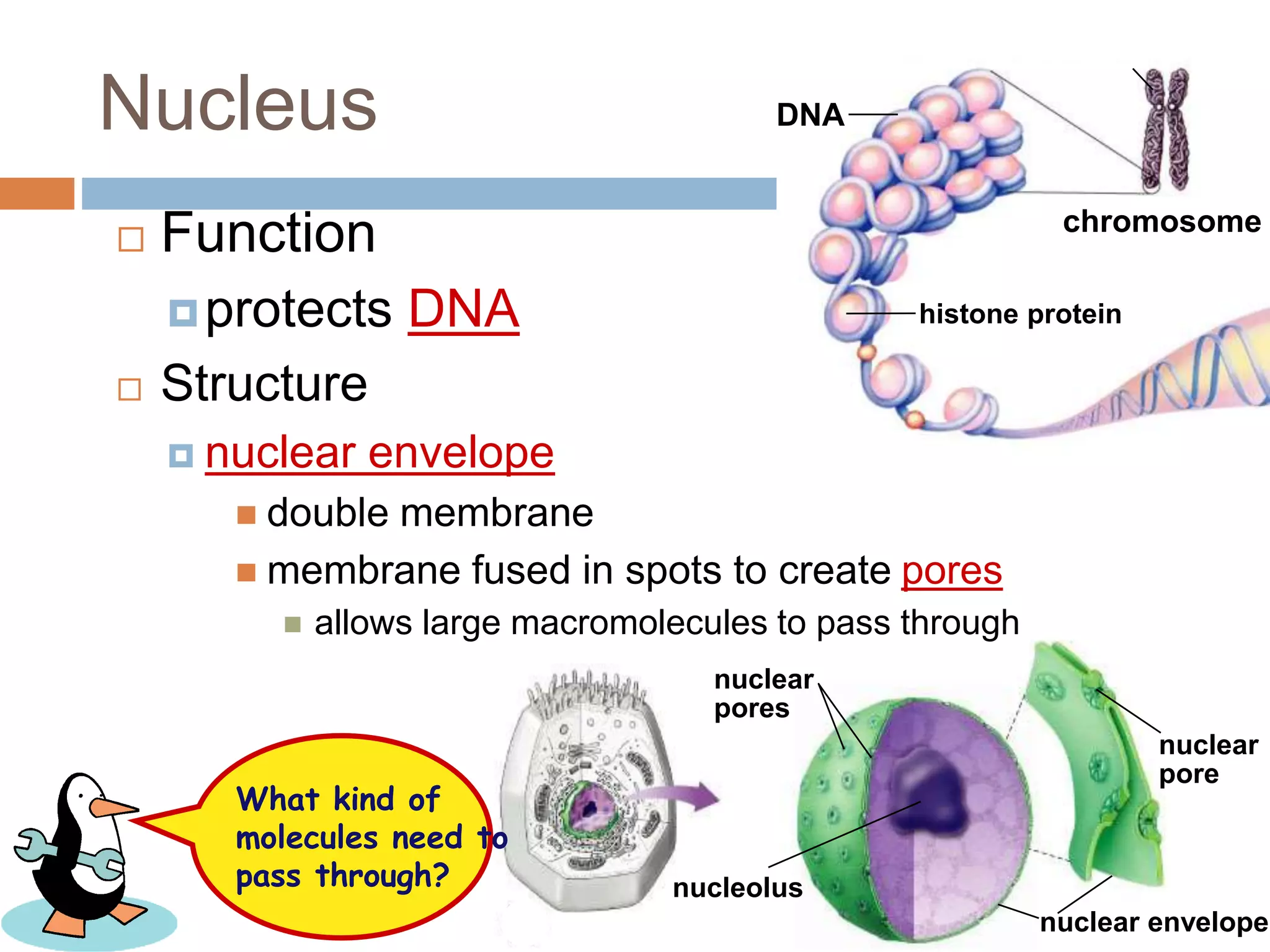
nuclear
pores
nuclear
pore
nuclear envelope
nucleolus
histone protein
chromosome
DNANucleus
 Function
protects DNA
 Structure
 nuclear envelope
 double membrane
 membrane fused in spots to create pores
 allows large macromolecules to pass through
What kind of
molecules need to
pass through?
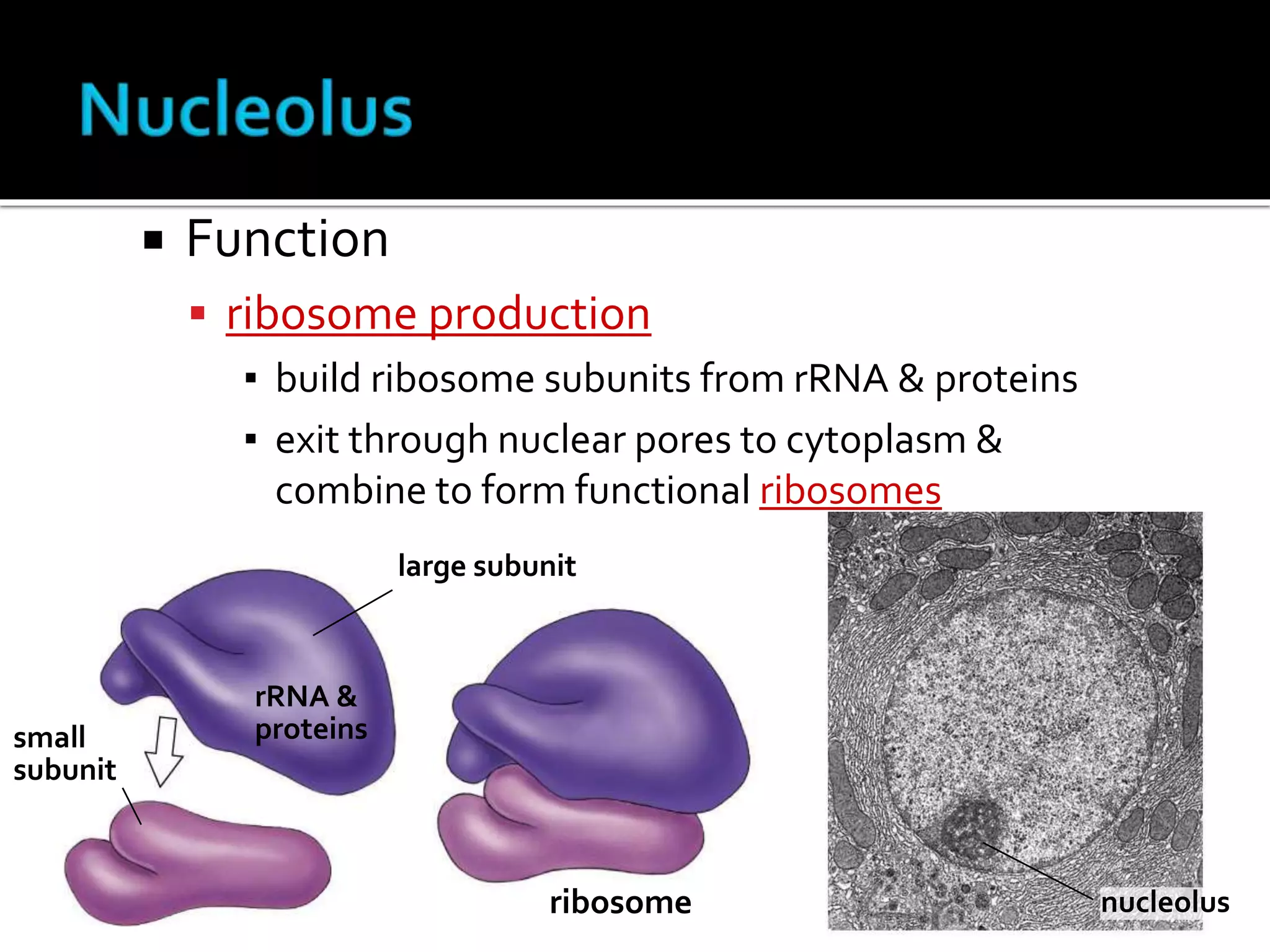
 Function
 ribosome production
▪ build ribosome subunits from rRNA & proteins
▪ exit through nuclear pores to cytoplasm &
combine to form functional ribosomes
small
subunit
large subunit
ribosome
rRNA &
proteins
nucleolus
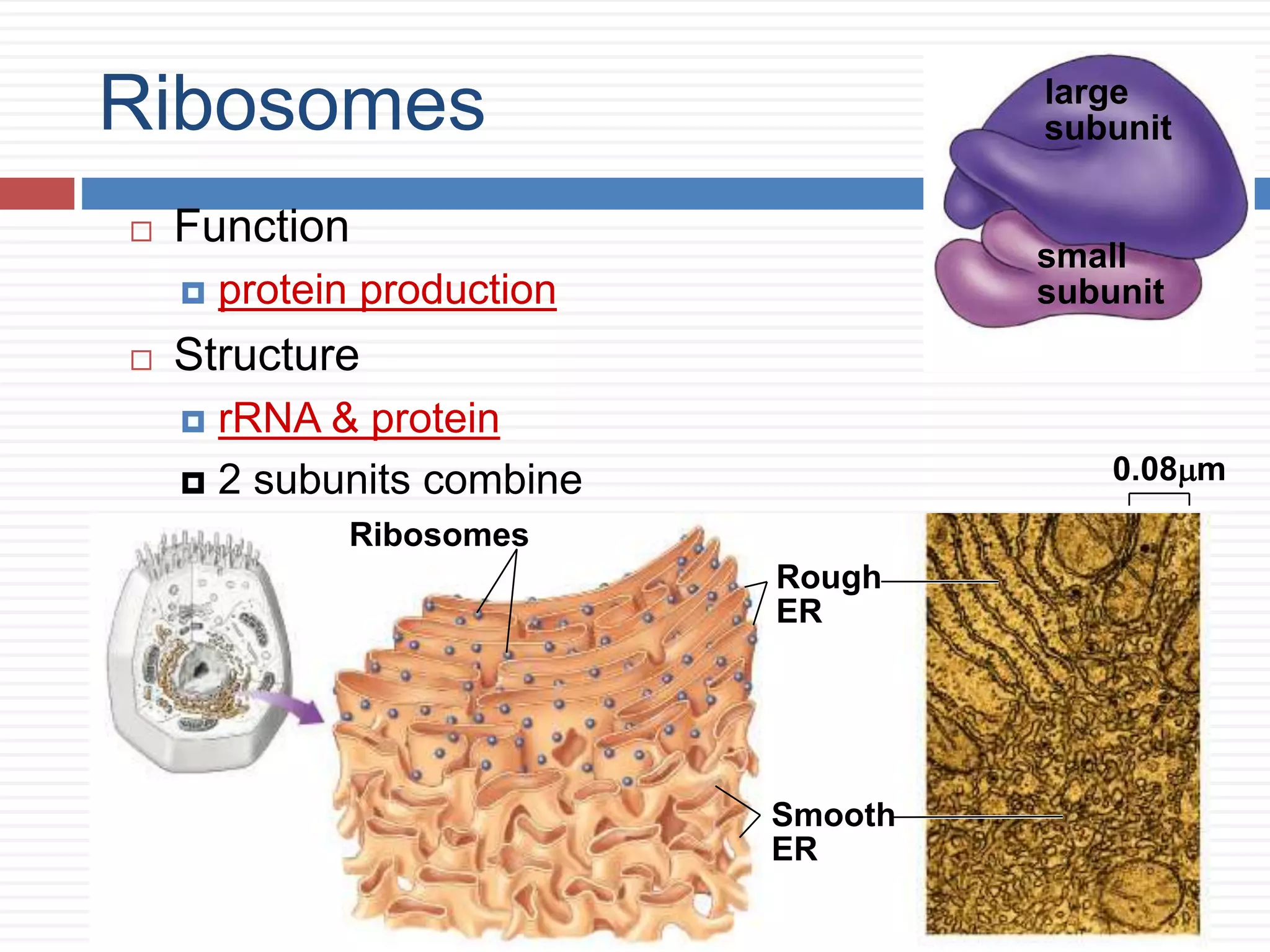
small
subunit
large
subunitRibosomes
 Function
 protein production
 Structure
 rRNA & protein
 2 subunits combine 0.08mm
Ribosomes
Rough
ER
Smooth
ER
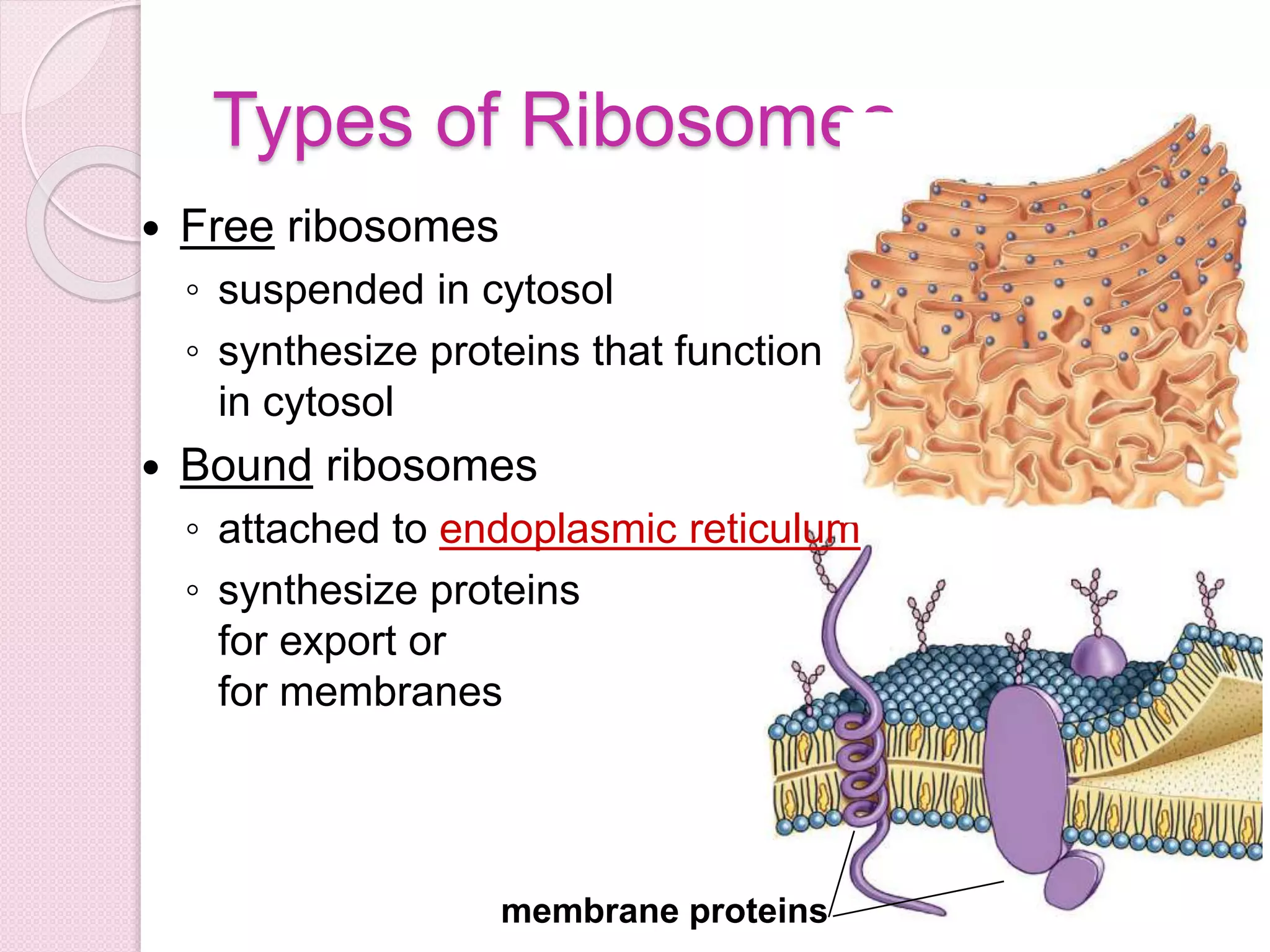
membrane proteins
Types of Ribosomes
 Free ribosomes
◦ suspended in cytosol
◦ synthesize proteins that function
in cytosol
 Bound ribosomes
◦ attached to endoplasmic reticulum
◦ synthesize proteins
for export or
for membranes
 Function
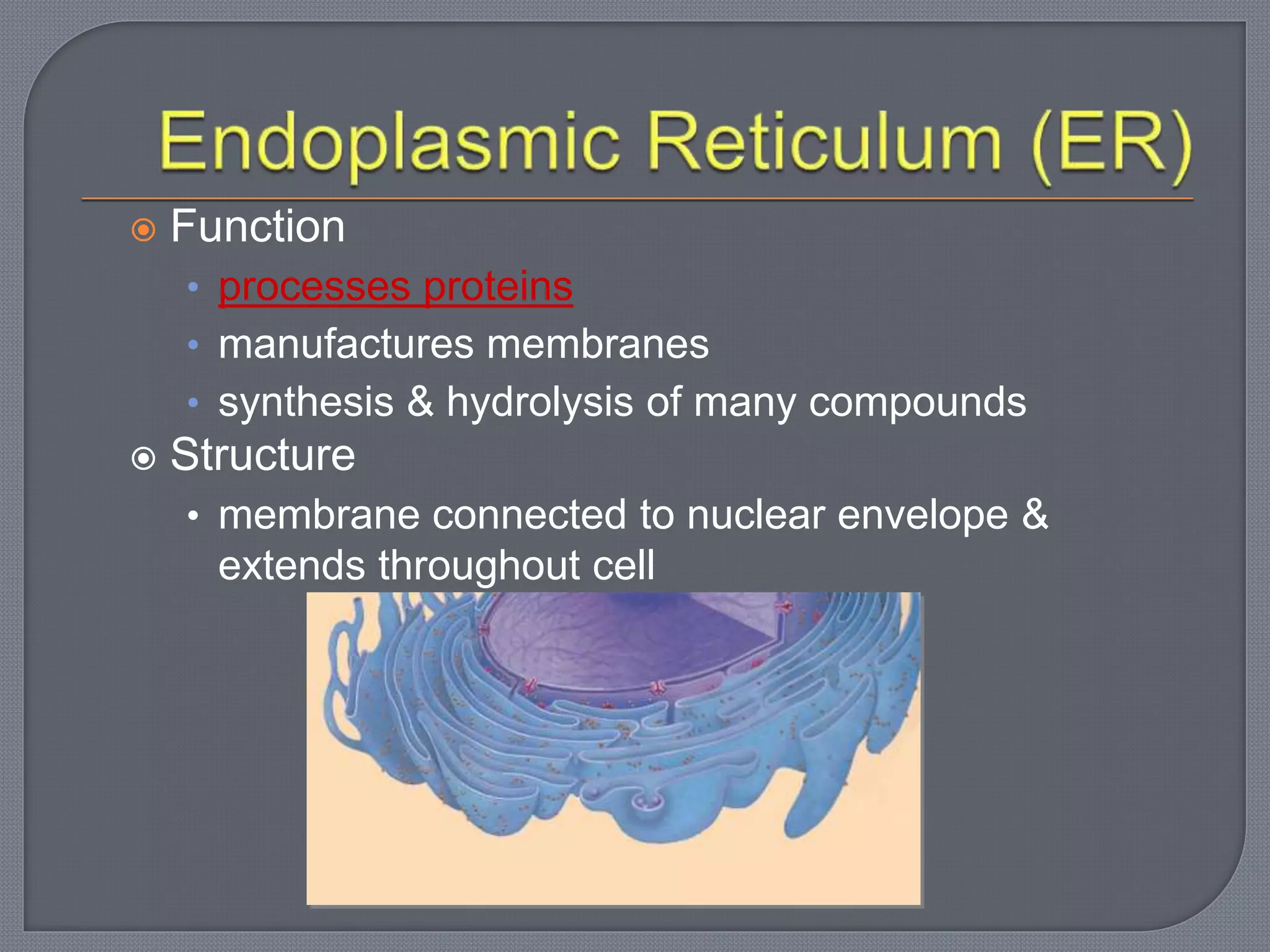
• processes proteins
• manufactures membranes
• synthesis & hydrolysis of many compounds
 Structure
• membrane connected to nuclear envelope &
extends throughout cell
Types of ER
 Rough ER (RER) –
 Has ribosomes attached
 Site of protein synthesis
 Smooth ER (SER)
 Complex molecules built here
 Continuous with RER
Membrane production
Many metabolic processes
• synthesis
 synthesize lipids
 oils, phospholipids, steroids & sex hormones
• hydrolysis
 hydrolyze glycogen into glucose
 in liver
 detoxify drugs & poisons
 in liver
 ex. alcohol & barbiturates
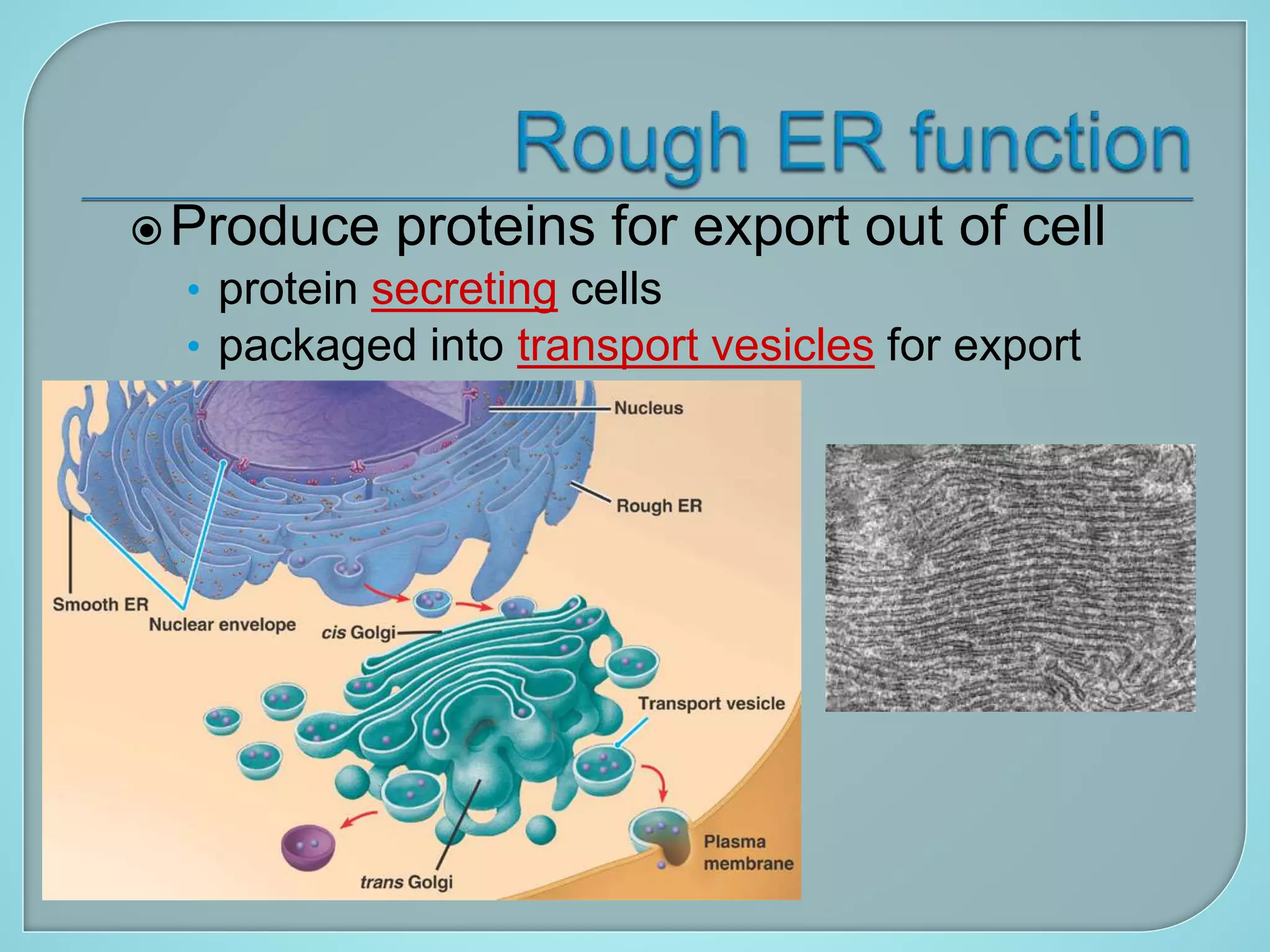
Produce proteins for export out of cell
• protein secreting cells
• packaged into transport vesicles for export
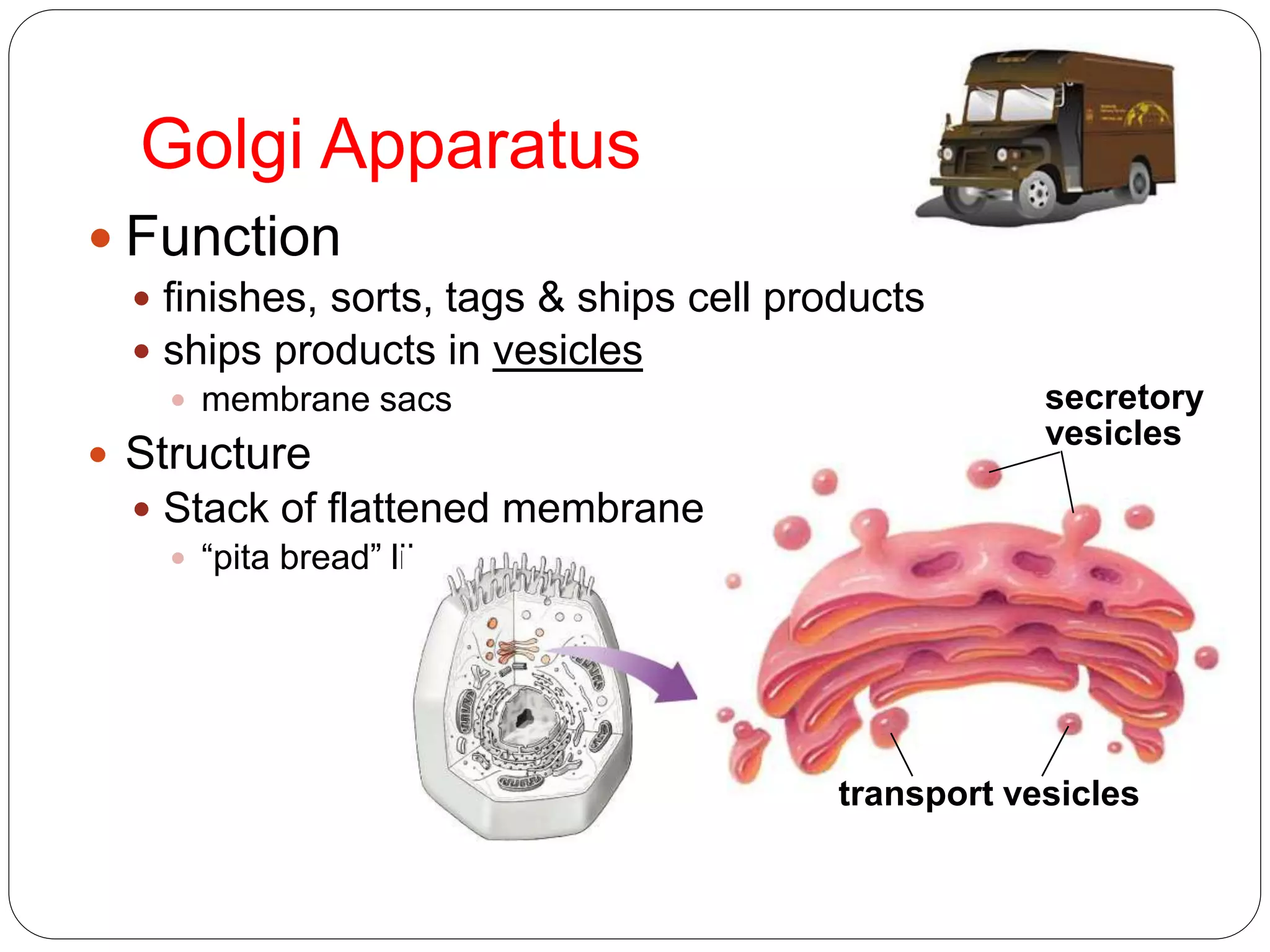
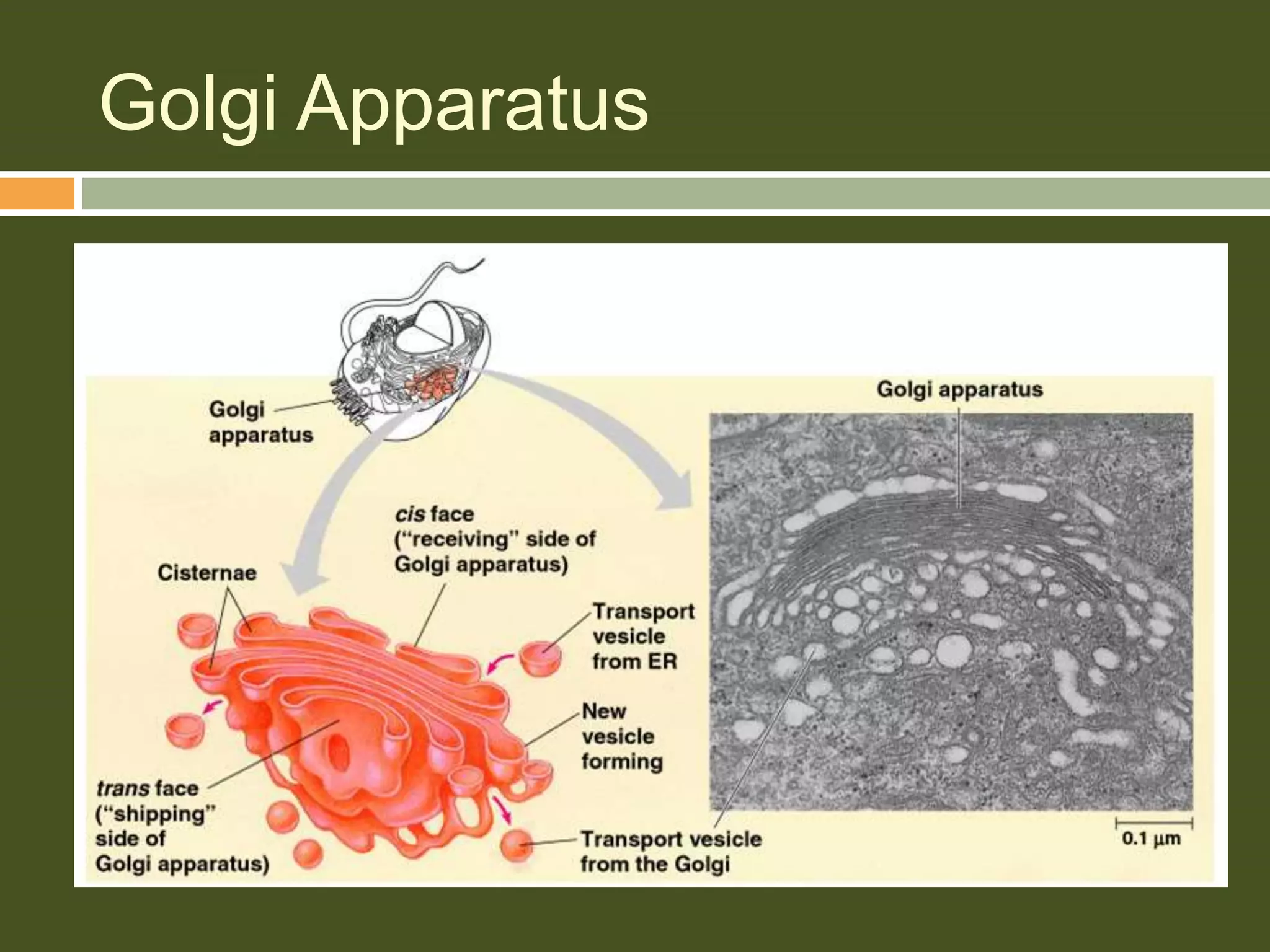
Golgi Apparatus
 Function
 finishes, sorts, tags & ships cell products
 ships products in vesicles
 membrane sacs
 Structure
 Stack of flattened membranes
 “pita bread” like
transport vesicles
secretory
vesicles
Golgi Apparatus
Vesicles Transport…
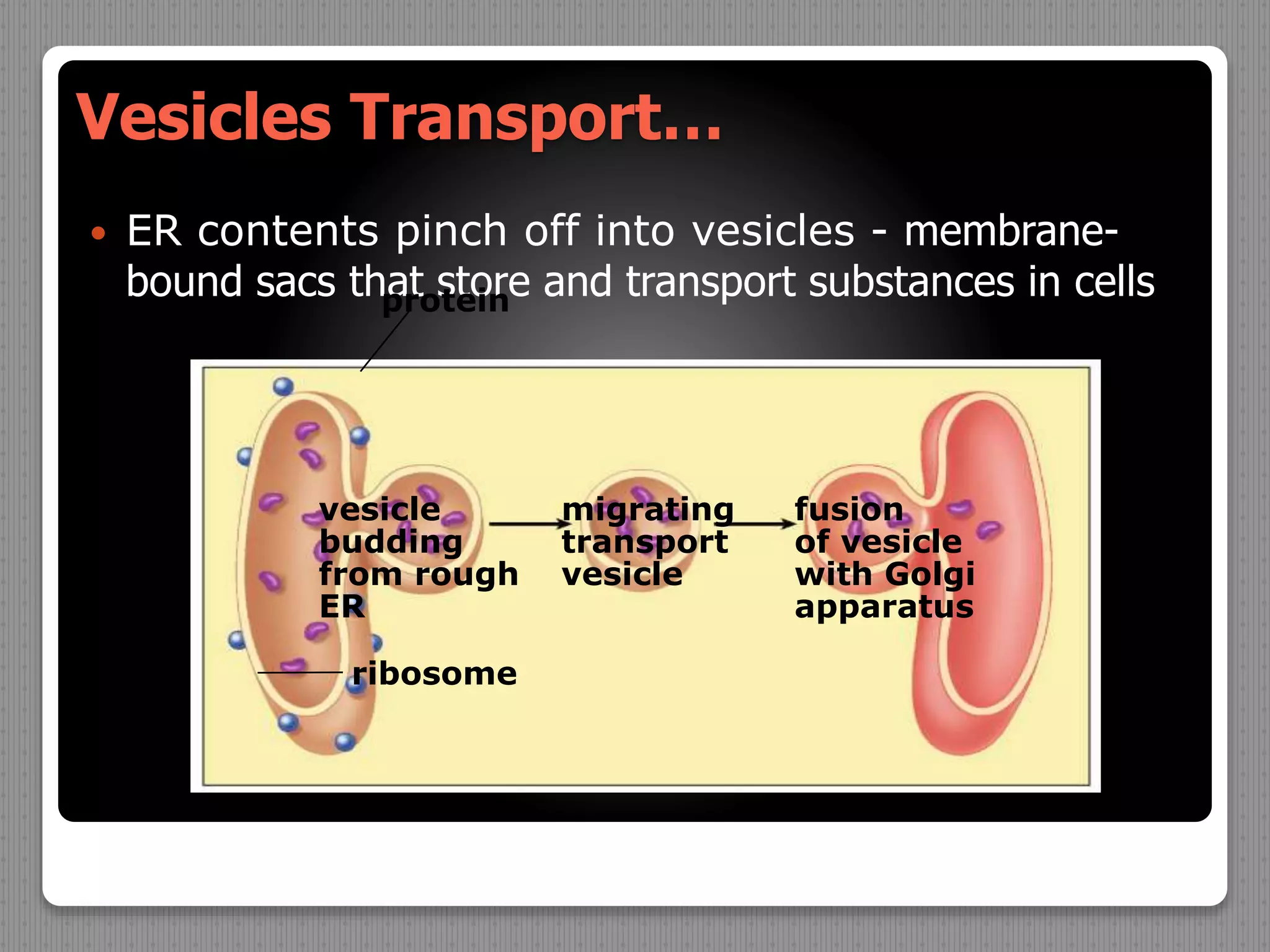
 ER contents pinch off into vesicles - membrane-
bound sacs that store and transport substances in cells
vesicle
budding
from rough
ER
fusion
of vesicle
with Golgi
apparatus
migrating
transport
vesicle
protein
ribosome
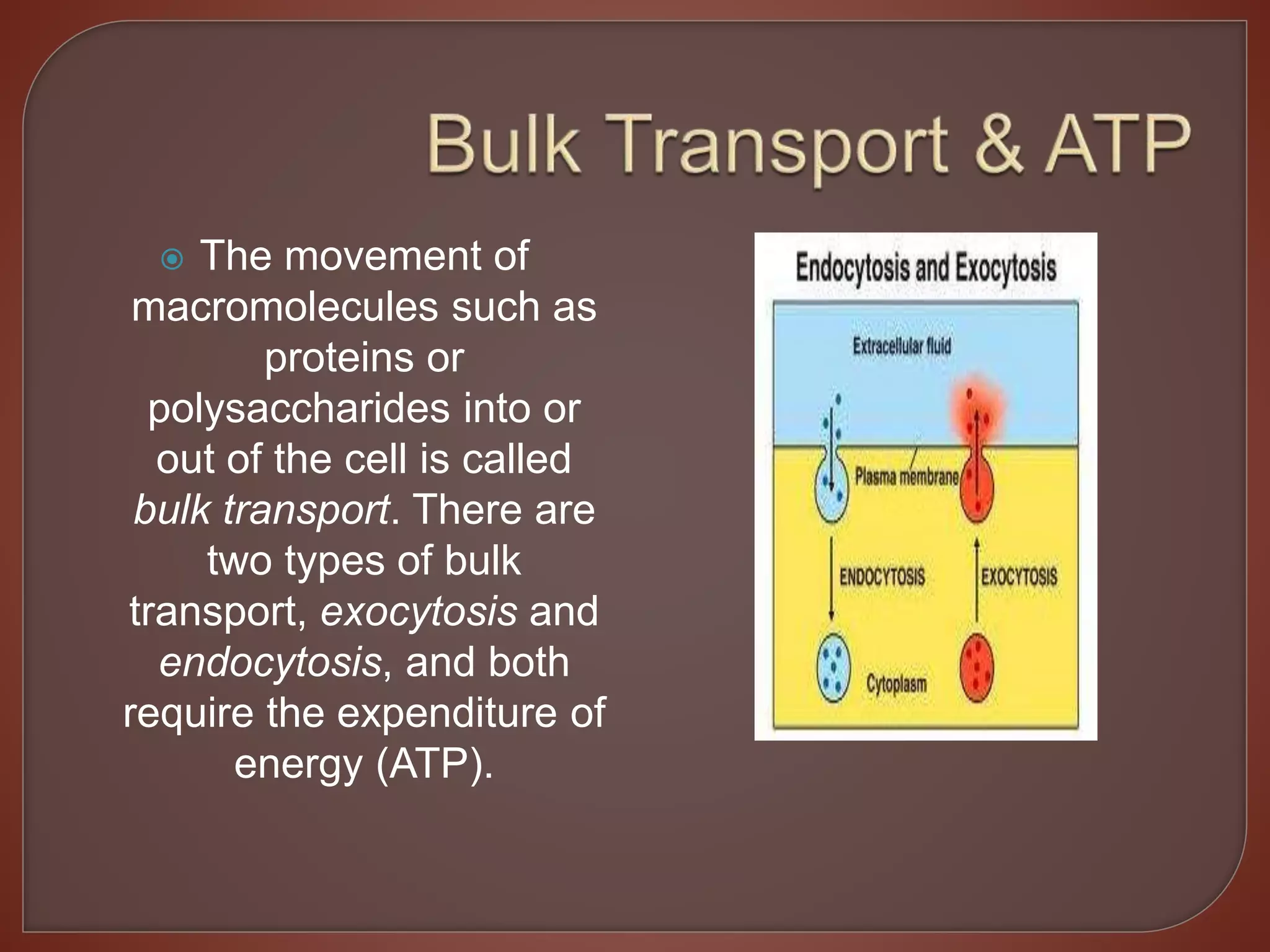
 The movement of
macromolecules such as
proteins or
polysaccharides into or
out of the cell is called
bulk transport. There are
two types of bulk
transport, exocytosis and
endocytosis, and both
require the expenditure of
energy (ATP).
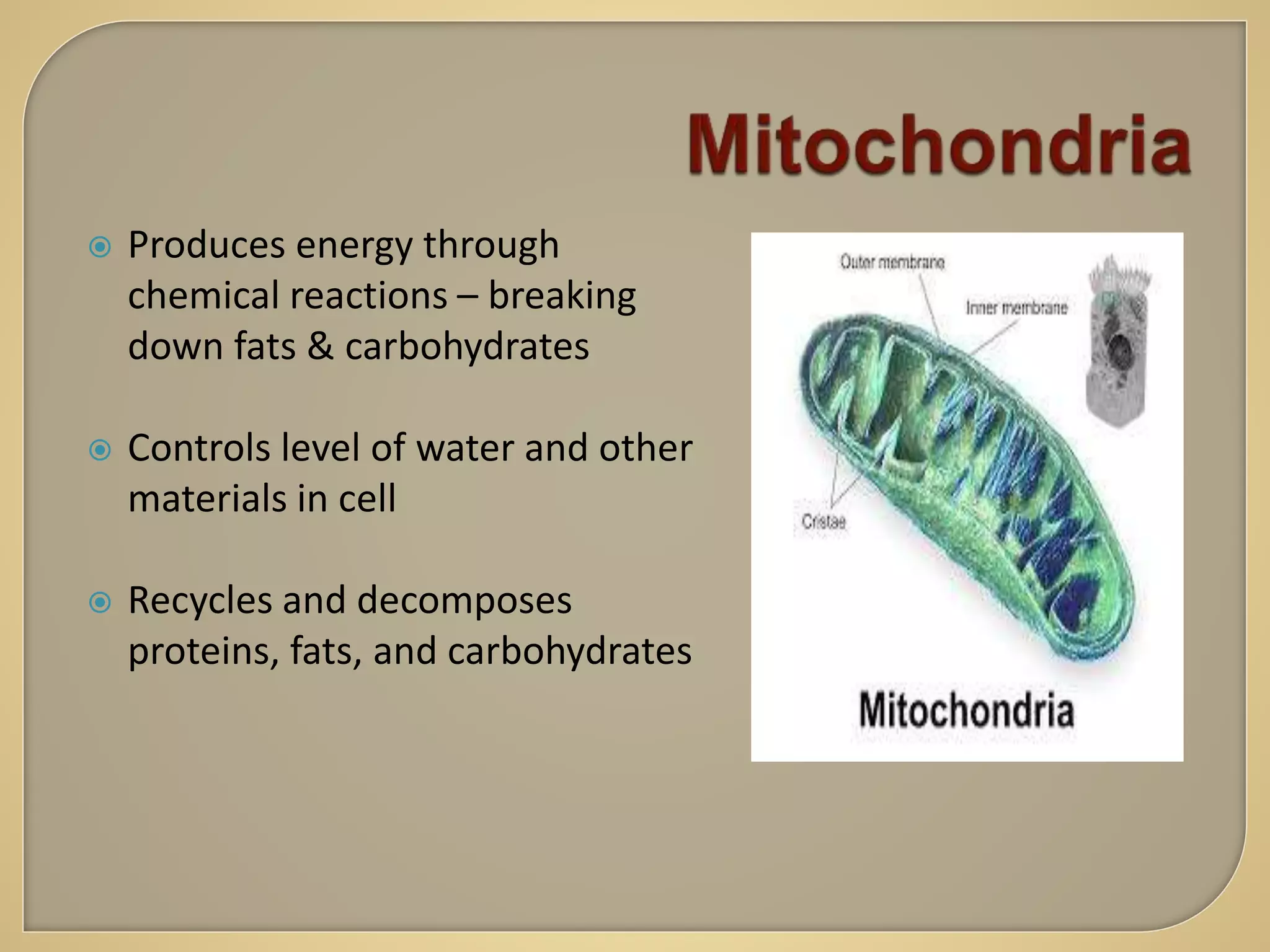
 Produces energy through
chemical reactions – breaking
down fats & carbohydrates
 Controls level of water and other
materials in cell
 Recycles and decomposes
proteins, fats, and carbohydrates
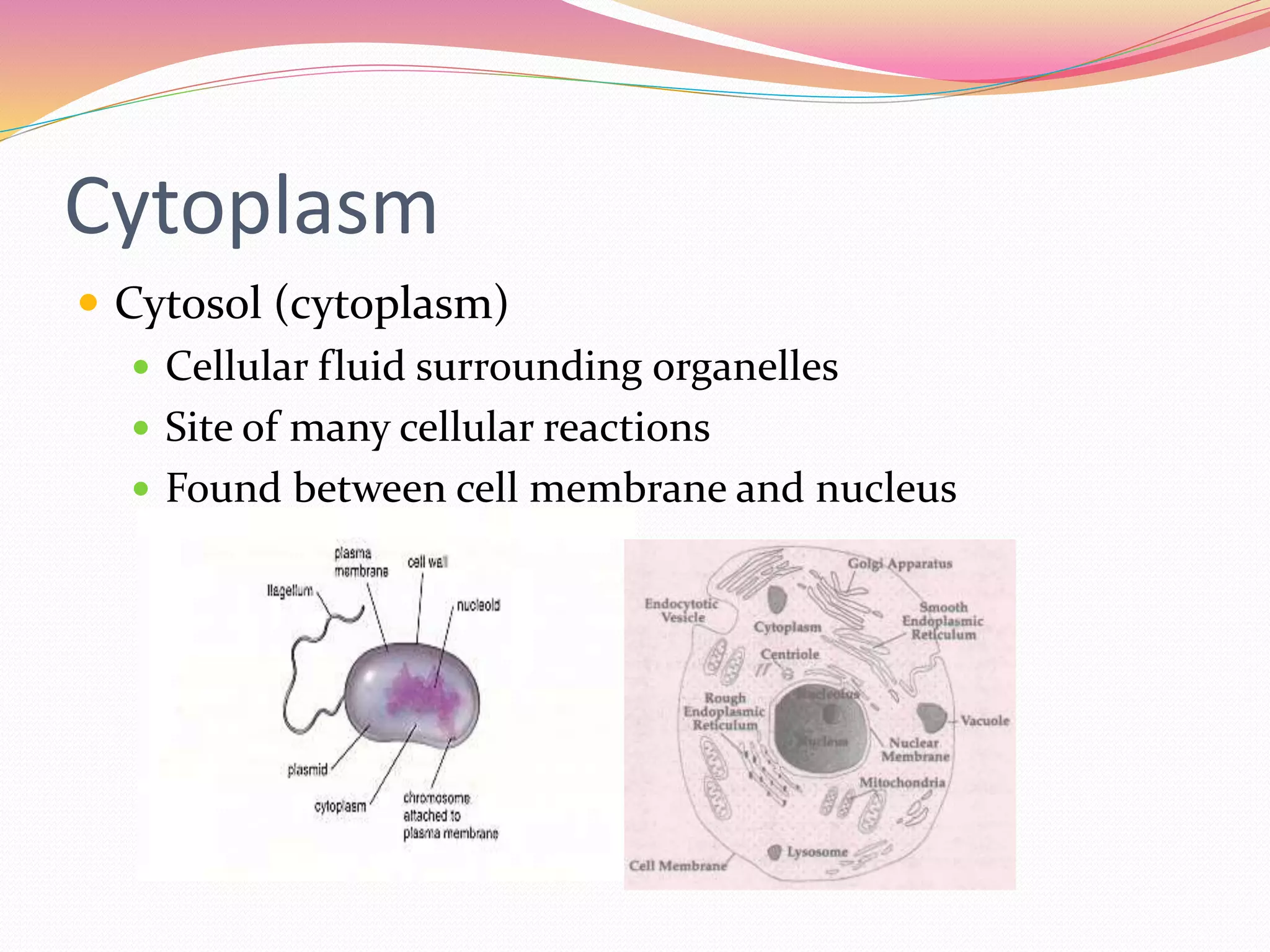
Cytoplasm
 Cytosol (cytoplasm)
 Cellular fluid surrounding organelles
 Site of many cellular reactions
 Found between cell membrane and nucleus
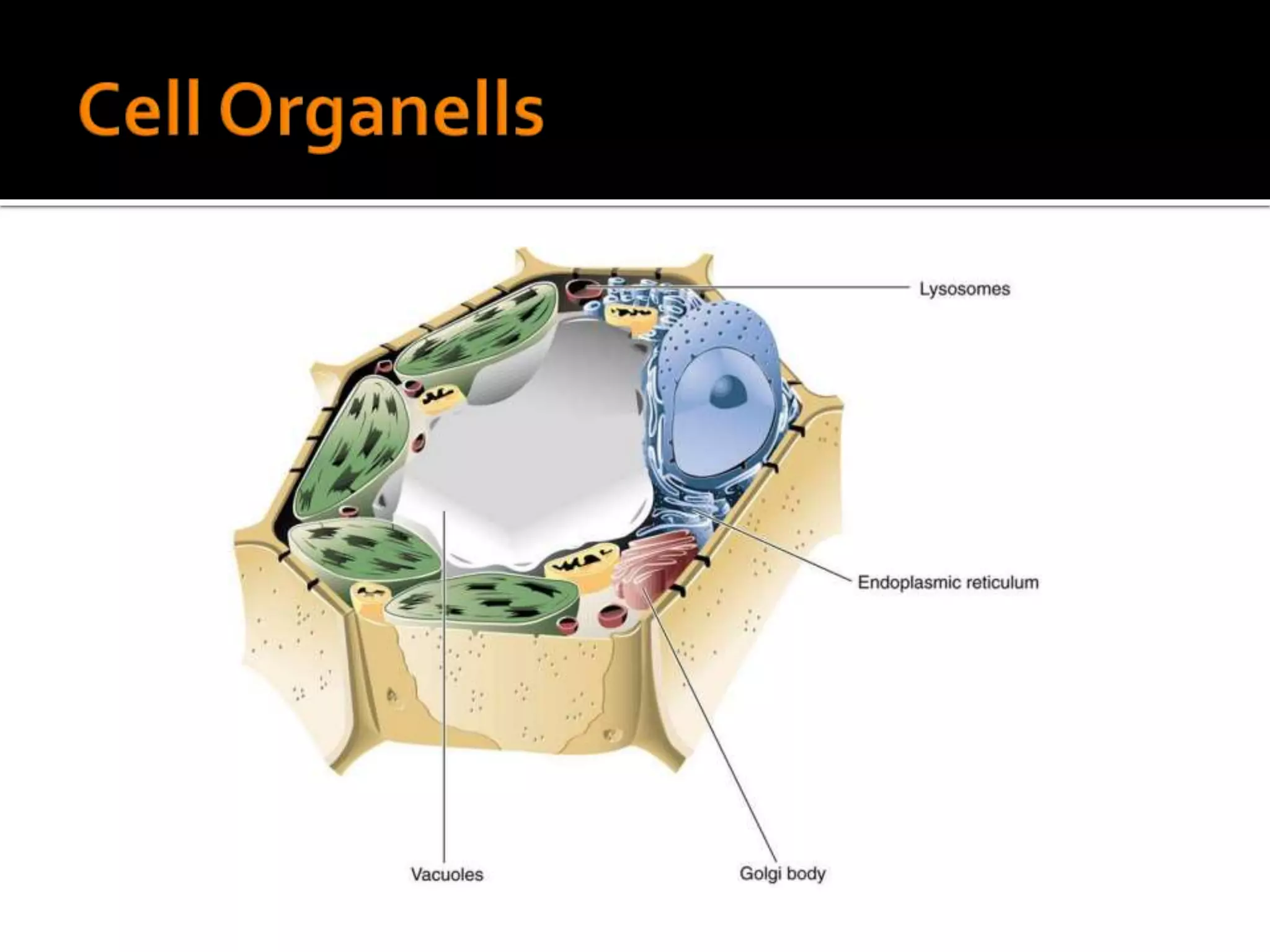
Lysosomes
 Lysosomes – special vesicles that store and transport
powerful digestive enzymes and other reactive
substances within a cell
 Double membrane protects cell from being digested
 Break down
Food particles
Unneeded proteins, carbohydrates, etc..
Disease-causing microorganisms
Vacuoles
 Large membranous storage sacs found
mainly in plants.
 Stores water, nutrients, waste products and
pigments
○ Give certain plants bright colors (beets,
carrots, flowers)
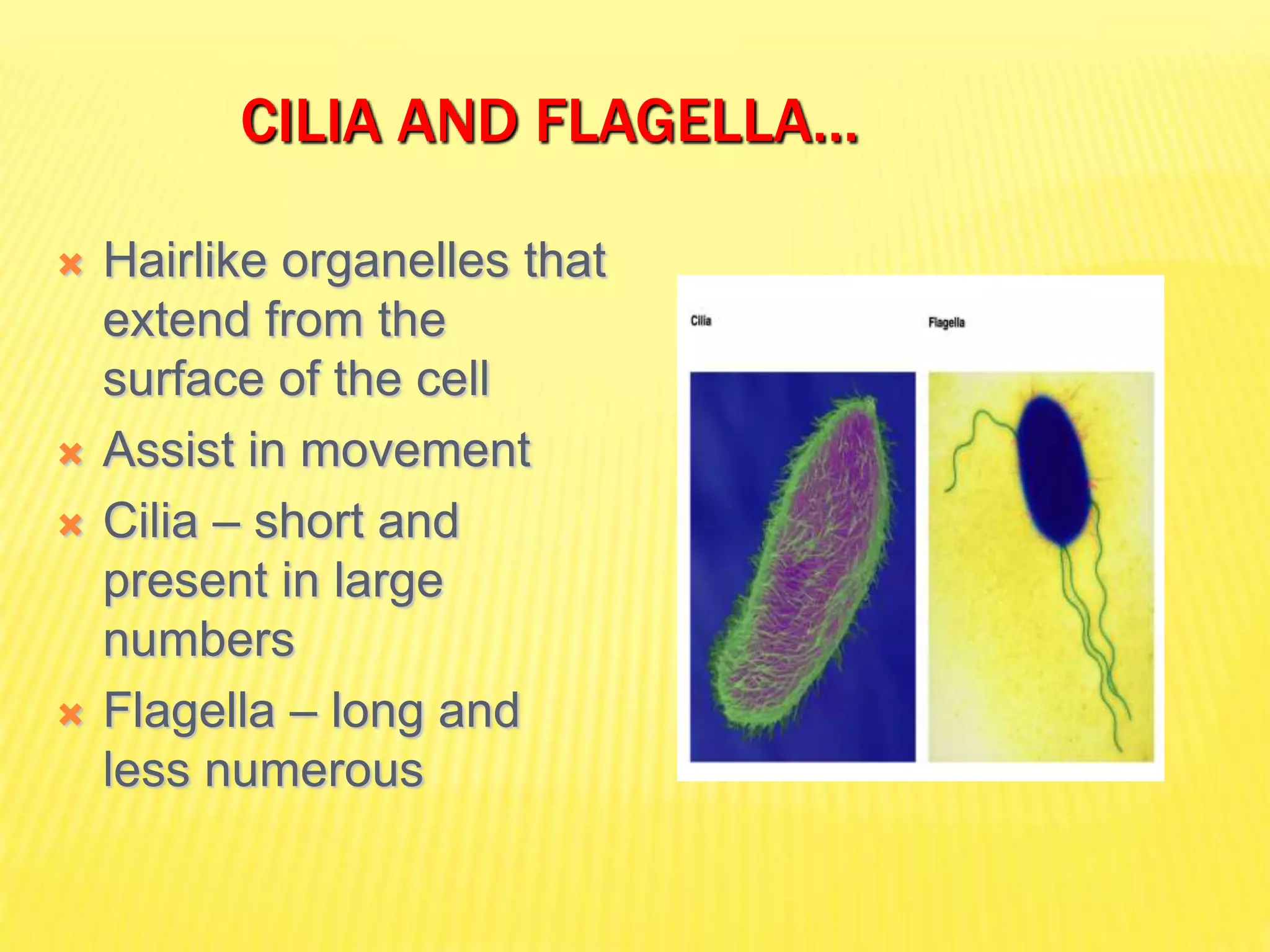
CILIA AND FLAGELLA…
 Hairlike organelles that
extend from the
surface of the cell
 Assist in movement
 Cilia – short and
present in large
numbers
 Flagella – long and
less numerous
Chromosomes…
 In nucleus
 Made of DNA
 Contain instructions
for traits &
characteristics
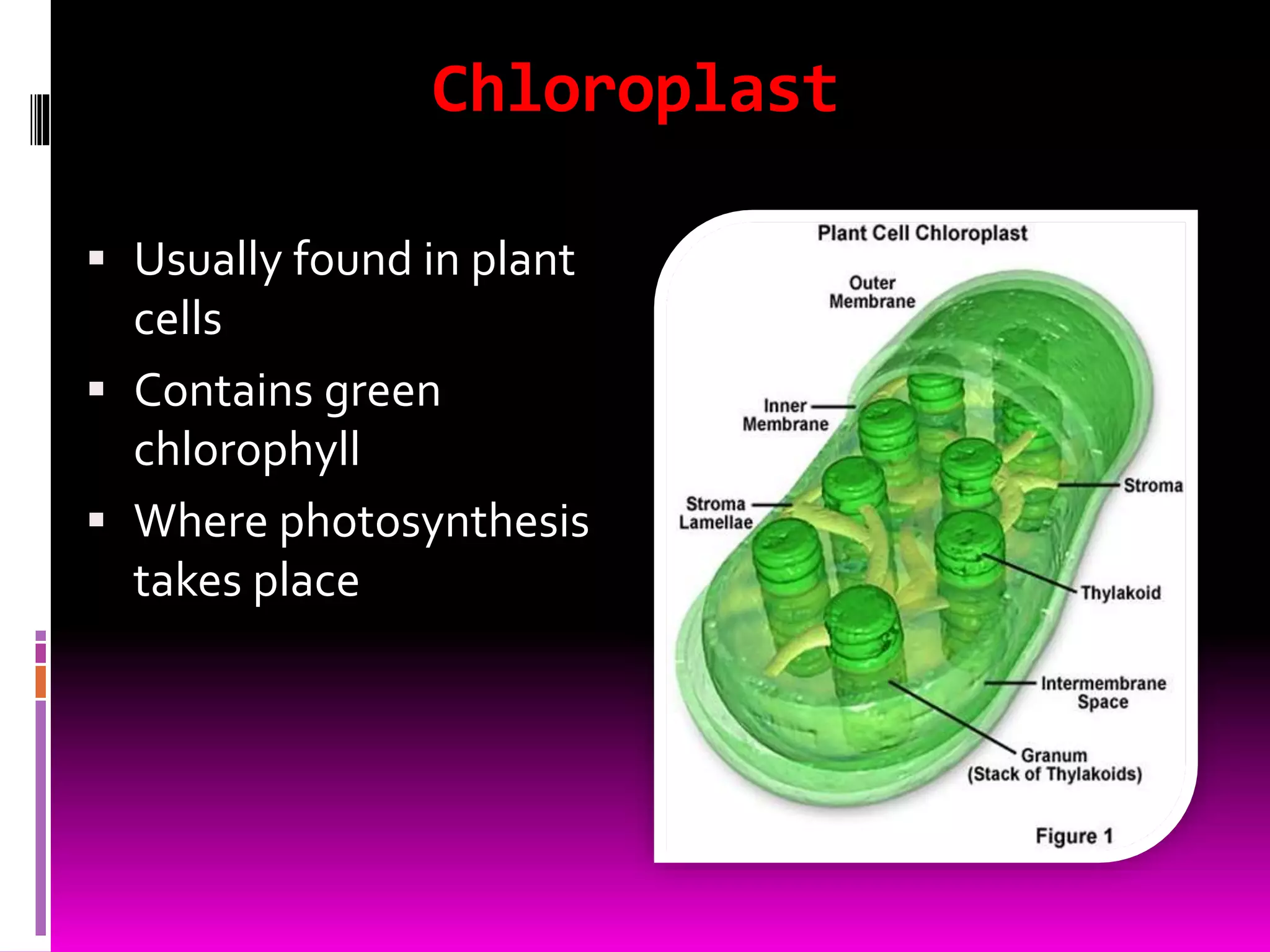
Chloroplast
 Usually found in plant
cells
 Contains green
chlorophyll
 Where photosynthesis
takes place
21/07/2014
video B.avi
21/07/2014
Any Questions!!
Thanks ...
ForgivingYourValuableTime…
Cell structure & functions for class 9 by Susanta Kumar Panda

Cell structure & functions for class 9 by Susanta Kumar Panda

  • 1.
  • 3.
  • 7.
    Definition of Cell… Acell is the smallest unit that is capable of performing life functions.
  • 8.
  • 9.
    Examples of Cells AmoebaProteus Plant Stem Red Blood Cell Nerve Cell Bacteria
  • 10.
    The Two MajorCategories of Cells…. The countless cells on earth fall into two categories:
  • 12.
    PROKARYOTIC  They arethe simplest form of life.  No nucleus.  Do not have structures surrounded by membranes (organelles)  Few internal structures  They are unicellular_(One-celled organisms).  Example: Bacteria
  • 13.
    ribosomes cell wall plasma membrane foodgranule prokaryotic flagellum cytoplasm nucleoid (DNA)
  • 14.
     are themost complex form of life.  They have nucleus  Contain organelles surrounded by membranes  They are multicellular organisms (composed of many cells).  Most living organisms  Examples: animals and plants. Eukaryotic
  • 15.
  • 16.
    Prokaryotes & Eukaryotes… Similarities & differences  Both surrounded by plasma membrane, but very different  Prokaryotes – Archaebacteria and Eubacteria  Eukaryotes – everything else
  • 18.
  • 20.
    Difference Between Plant& Animal Cells… Plants have Cell wall – provides strength & rigidity Have chloroplasts, photosynthetic Animals have Other organelle not found in plants (lysosomes formed from Golgi) Centrioles, important in cell division
  • 23.
     All livingcells (eukaryotes and prokaryotes) have cell membranes  Made mainly of phospholipids and proteins ▪ Animal cell membranes contain cholesterol  Functions: ▪ Separate the cell from the external environment ▪ Controls passage in and out of cell
  • 24.
     Outer membraneof cell that controls movement in and out of the cell  Double layer
  • 25.
  • 26.
    Cell Wall Rigid structureoutside cell membrane • Found in plants, fungi, bacteria, some protists (not animals) • Made of cellulose (plants), chitin (fungi) or other material (bacteria) • Supports and protects cell
  • 27.
  • 28.
  • 30.
    nuclear pores nuclear pore nuclear envelope nucleolus histone protein chromosome DNANucleus Function protects DNA  Structure  nuclear envelope  double membrane  membrane fused in spots to create pores  allows large macromolecules to pass through What kind of molecules need to pass through?
  • 31.
     Function  ribosomeproduction ▪ build ribosome subunits from rRNA & proteins ▪ exit through nuclear pores to cytoplasm & combine to form functional ribosomes small subunit large subunit ribosome rRNA & proteins nucleolus
  • 32.
    small subunit large subunitRibosomes  Function  proteinproduction  Structure  rRNA & protein  2 subunits combine 0.08mm Ribosomes Rough ER Smooth ER
  • 33.
    membrane proteins Types ofRibosomes  Free ribosomes ◦ suspended in cytosol ◦ synthesize proteins that function in cytosol  Bound ribosomes ◦ attached to endoplasmic reticulum ◦ synthesize proteins for export or for membranes
  • 34.
     Function • processesproteins • manufactures membranes • synthesis & hydrolysis of many compounds  Structure • membrane connected to nuclear envelope & extends throughout cell
  • 35.
    Types of ER Rough ER (RER) –  Has ribosomes attached  Site of protein synthesis  Smooth ER (SER)  Complex molecules built here  Continuous with RER
  • 36.
    Membrane production Many metabolicprocesses • synthesis  synthesize lipids  oils, phospholipids, steroids & sex hormones • hydrolysis  hydrolyze glycogen into glucose  in liver  detoxify drugs & poisons  in liver  ex. alcohol & barbiturates
  • 37.
    Produce proteins forexport out of cell • protein secreting cells • packaged into transport vesicles for export
  • 38.
    Golgi Apparatus  Function finishes, sorts, tags & ships cell products  ships products in vesicles  membrane sacs  Structure  Stack of flattened membranes  “pita bread” like transport vesicles secretory vesicles
  • 39.
  • 40.
    Vesicles Transport…  ERcontents pinch off into vesicles - membrane- bound sacs that store and transport substances in cells vesicle budding from rough ER fusion of vesicle with Golgi apparatus migrating transport vesicle protein ribosome
  • 41.
     The movementof macromolecules such as proteins or polysaccharides into or out of the cell is called bulk transport. There are two types of bulk transport, exocytosis and endocytosis, and both require the expenditure of energy (ATP).
  • 42.
     Produces energythrough chemical reactions – breaking down fats & carbohydrates  Controls level of water and other materials in cell  Recycles and decomposes proteins, fats, and carbohydrates
  • 43.
    Cytoplasm  Cytosol (cytoplasm) Cellular fluid surrounding organelles  Site of many cellular reactions  Found between cell membrane and nucleus
  • 44.
    Lysosomes  Lysosomes –special vesicles that store and transport powerful digestive enzymes and other reactive substances within a cell  Double membrane protects cell from being digested  Break down Food particles Unneeded proteins, carbohydrates, etc.. Disease-causing microorganisms
  • 45.
    Vacuoles  Large membranousstorage sacs found mainly in plants.  Stores water, nutrients, waste products and pigments ○ Give certain plants bright colors (beets, carrots, flowers)
  • 46.
    CILIA AND FLAGELLA… Hairlike organelles that extend from the surface of the cell  Assist in movement  Cilia – short and present in large numbers  Flagella – long and less numerous
  • 47.
    Chromosomes…  In nucleus Made of DNA  Contain instructions for traits & characteristics
  • 48.
    Chloroplast  Usually foundin plant cells  Contains green chlorophyll  Where photosynthesis takes place
  • 49.
  • 50.
  • 51.
  • 52.