 Pteridophytes in the broad interpretation of the
term are vascular plants (plants with xylem &
phloem) that reproduce & disperse via spores,
because they produce neither flowers nor
seeds, they are refered to as CRYPTOGAMS.
 The 305 genera & 13,000 species of
pteridophytes found throughout the world.
 The pteridophyte includes Clubmosses,SPike-
mosses, Quilworts,Horsetails,Ferns.
 Most pteridophytes are decorative. They
are grown for the unusually beautiful
foliage, often compact and graceful
appearence.
 They broadly divided into CLUBMOSSES,
HORSETAILS, FERNS.
 Pteridophytes are most commonly found in
damp or humid and shaded enviroment
 Clubmosses are a group of plants in
Lycopodiophyta, which are the most ancient group
of land plant.
 The clubmosses are structurally similar to the
earliest vascular plants, with small scale like
leaves,homosporous spores born in sporangia at the
base of leaves, branching stem and generally simple
form.
 eg-LYCOPODIUM
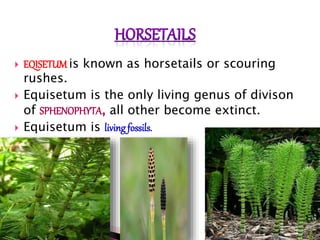
 EQISETUM is known as horsetails or scouring
rushes.
 Equisetum is the only living genus of divison
of SPHENOPHYTA, all other become extinct.
 Equisetum is living fossils.
 Ornamental ferns are following;
1. Adiantum (Maiden-hairfern)
(Family-Pteridaceae)
 Several species of this genus are very popular
House plants because of their graceful and
Delicate appearence, dense, bright green leaf.
 These are mostly tropical & temprate species.
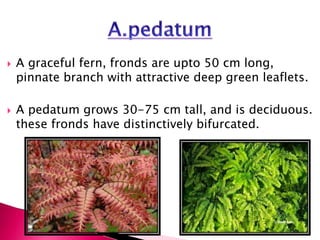
 A graceful fern, fronds are upto 50 cm long,
pinnate branch with attractive deep green leaflets.
 A pedatum grows 30-75 cm tall, and is deciduous.
these fronds have distinctively bifurcated.
 It is endogenous to Brazil.
 This species has several varieties with attractive
foliage including Goldelse,Ideal,Matador.
 Fronds dark green with many small, firm leaflets
having a wedge shaped base.
 A large genus of ferns contaning
about 200 species.
 Several species are grown for their
showy leaves
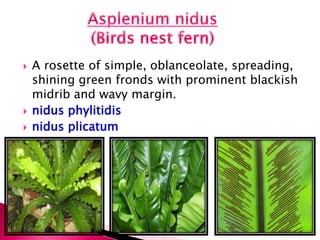
 A rosette of simple, oblanceolate, spreading,
shining green fronds with prominent blackish
midrib and wavy margin.
 nidus phylitidis
 nidus plicatum
 A small group of ferns. about 10 species of
asiatic origin.
(Holly fern, fish tail fern)
 Fronds many , spreading on all side, leaflets
gloosy, deep green, ovate.
 The genus have about 25 species, some of
which are hardy and have attractive
appearence.
 D. fijiensis also known as Rabbits-foot fern.
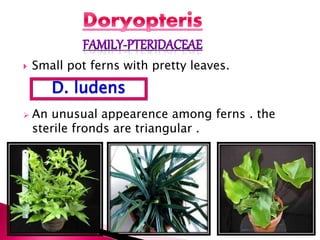
 Small pot ferns with pretty leaves.
 An unusual appearence among ferns . the
sterile fronds are triangular .
D. ludens
 The curving, feathery, bright green fronds.
nepherolepis are very attractive.
 it is the most popular and hardy house plant
among the ferns.
 a genus of 35 species widely dispersed over
the tropics.
 Long, arching pinnate fronds, yellowish
green, the segment widely spaced, broad and
forked towards the tip.
 These are also known as FISHTAIL FERN.
 Fronds have variously colour and shaped.
 Common name is Boston fern.
 species spreads rapidally by rhizomes and
runners and so not prefered over slower
cultivars.
 Boston fern are suitable for indoor house plant.
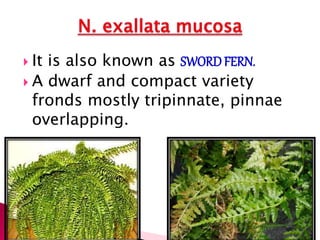
 It is also known as SWORDFERN.
 A dwarf and compact variety
fronds mostly tripinnate, pinnae
overlapping.
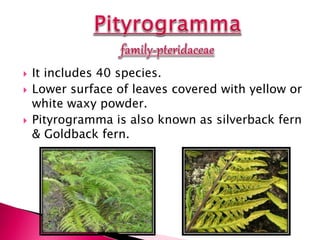
 It includes 40 species.
 Lower surface of leaves covered with yellow or
white waxy powder.
 Pityrogramma is also known as silverback fern
& Goldback fern.
 A showy fern with 3-pinnate
arching fronds, deep green in
colour densely covered with white
powder beneath.
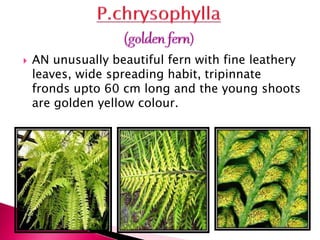
 AN unusually beautiful fern with fine leathery
leaves, wide spreading habit, tripinnate
fronds upto 60 cm long and the young shoots
are golden yellow colour.
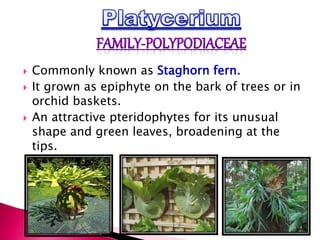
 Commonly known as Staghorn fern.
 It grown as epiphyte on the bark of trees or in
orchid baskets.
 An attractive pteridophytes for its unusual
shape and green leaves, broadening at the
tips.
 Platycerium bifurcatum is widely cultivated as
an ornamental plant for gardens.
 It may be grown outdoors in sheltered
locations, otherwise as a house plant.
 The specific epithet bifurcatum means
bifurcated or forked, referring to the fertile
fronds.
 Beautiful contrast between the rich brown
shield fronds and the whitish green fertile
fronds.
 Platycerium willinckii sometimes called java
staghorn, because it is native to java.
 A large group of with over 1100 species.
 Several species of polypodium are showy
foliage,plants for shady location in the
gardens or indoors.
 Ferns with stout rhizome, thick, yellow green,
gradually narrowed to both ends.
 The name of the genus is from the greek
word meaning many rows.
 About 225 species of tropical & temprate
regions, some of which do well in living
rooms.
 Showy specimen of spreading habit.
 Several species and varieties are grown for their
showy foliage.
 A low growing variety with small leathery fronds.
 The name of the genus is from greek means
WING.
 The ornamental pteridophytes are very important
for us;
 –Many ornamental plants are chosen
because they appeal to the sence of smell,in
addition to their visual appeal.
-Without plants we couldnot have
clean air to breath because plant create oxygen
during photosynthesis.
 Keeping ornamental pteridophytes has been
shown to improove the air quality to remove
the house air pollution like tobacco & other.
 Ornamental pteridophytes are used in landscapes
and throughout the home to beautify the
surroundings.
Ornamental Pteridophyte

Ornamental Pteridophyte

  • 2.
     Pteridophytes inthe broad interpretation of the term are vascular plants (plants with xylem & phloem) that reproduce & disperse via spores, because they produce neither flowers nor seeds, they are refered to as CRYPTOGAMS.  The 305 genera & 13,000 species of pteridophytes found throughout the world.  The pteridophyte includes Clubmosses,SPike- mosses, Quilworts,Horsetails,Ferns.
  • 3.
     Most pteridophytesare decorative. They are grown for the unusually beautiful foliage, often compact and graceful appearence.  They broadly divided into CLUBMOSSES, HORSETAILS, FERNS.  Pteridophytes are most commonly found in damp or humid and shaded enviroment
  • 4.
     Clubmosses area group of plants in Lycopodiophyta, which are the most ancient group of land plant.  The clubmosses are structurally similar to the earliest vascular plants, with small scale like leaves,homosporous spores born in sporangia at the base of leaves, branching stem and generally simple form.  eg-LYCOPODIUM
  • 5.
     EQISETUM isknown as horsetails or scouring rushes.  Equisetum is the only living genus of divison of SPHENOPHYTA, all other become extinct.  Equisetum is living fossils.
  • 6.
     Ornamental fernsare following; 1. Adiantum (Maiden-hairfern) (Family-Pteridaceae)  Several species of this genus are very popular House plants because of their graceful and Delicate appearence, dense, bright green leaf.  These are mostly tropical & temprate species.
  • 7.
     A gracefulfern, fronds are upto 50 cm long, pinnate branch with attractive deep green leaflets.  A pedatum grows 30-75 cm tall, and is deciduous. these fronds have distinctively bifurcated.
  • 8.
     It isendogenous to Brazil.  This species has several varieties with attractive foliage including Goldelse,Ideal,Matador.  Fronds dark green with many small, firm leaflets having a wedge shaped base.
  • 9.
     A largegenus of ferns contaning about 200 species.  Several species are grown for their showy leaves
  • 10.
     A rosetteof simple, oblanceolate, spreading, shining green fronds with prominent blackish midrib and wavy margin.  nidus phylitidis  nidus plicatum
  • 12.
     A smallgroup of ferns. about 10 species of asiatic origin. (Holly fern, fish tail fern)  Fronds many , spreading on all side, leaflets gloosy, deep green, ovate.
  • 13.
     The genushave about 25 species, some of which are hardy and have attractive appearence.  D. fijiensis also known as Rabbits-foot fern.
  • 14.
     Small potferns with pretty leaves.  An unusual appearence among ferns . the sterile fronds are triangular . D. ludens
  • 15.
     The curving,feathery, bright green fronds. nepherolepis are very attractive.  it is the most popular and hardy house plant among the ferns.  a genus of 35 species widely dispersed over the tropics.
  • 16.
     Long, archingpinnate fronds, yellowish green, the segment widely spaced, broad and forked towards the tip.  These are also known as FISHTAIL FERN.
  • 17.
     Fronds havevariously colour and shaped.  Common name is Boston fern.  species spreads rapidally by rhizomes and runners and so not prefered over slower cultivars.  Boston fern are suitable for indoor house plant.
  • 18.
     It isalso known as SWORDFERN.  A dwarf and compact variety fronds mostly tripinnate, pinnae overlapping.
  • 19.
     It includes40 species.  Lower surface of leaves covered with yellow or white waxy powder.  Pityrogramma is also known as silverback fern & Goldback fern.
  • 20.
     A showyfern with 3-pinnate arching fronds, deep green in colour densely covered with white powder beneath.
  • 21.
     AN unusuallybeautiful fern with fine leathery leaves, wide spreading habit, tripinnate fronds upto 60 cm long and the young shoots are golden yellow colour.
  • 22.
     Commonly knownas Staghorn fern.  It grown as epiphyte on the bark of trees or in orchid baskets.  An attractive pteridophytes for its unusual shape and green leaves, broadening at the tips.
  • 23.
     Platycerium bifurcatumis widely cultivated as an ornamental plant for gardens.  It may be grown outdoors in sheltered locations, otherwise as a house plant.  The specific epithet bifurcatum means bifurcated or forked, referring to the fertile fronds.
  • 24.
     Beautiful contrastbetween the rich brown shield fronds and the whitish green fertile fronds.  Platycerium willinckii sometimes called java staghorn, because it is native to java.
  • 25.
     A largegroup of with over 1100 species.  Several species of polypodium are showy foliage,plants for shady location in the gardens or indoors.  Ferns with stout rhizome, thick, yellow green, gradually narrowed to both ends.
  • 26.
     The nameof the genus is from the greek word meaning many rows.  About 225 species of tropical & temprate regions, some of which do well in living rooms.  Showy specimen of spreading habit.
  • 27.
     Several speciesand varieties are grown for their showy foliage.  A low growing variety with small leathery fronds.  The name of the genus is from greek means WING.
  • 28.
     The ornamentalpteridophytes are very important for us;  –Many ornamental plants are chosen because they appeal to the sence of smell,in addition to their visual appeal. -Without plants we couldnot have clean air to breath because plant create oxygen during photosynthesis.  Keeping ornamental pteridophytes has been shown to improove the air quality to remove the house air pollution like tobacco & other.
  • 29.
     Ornamental pteridophytesare used in landscapes and throughout the home to beautify the surroundings.