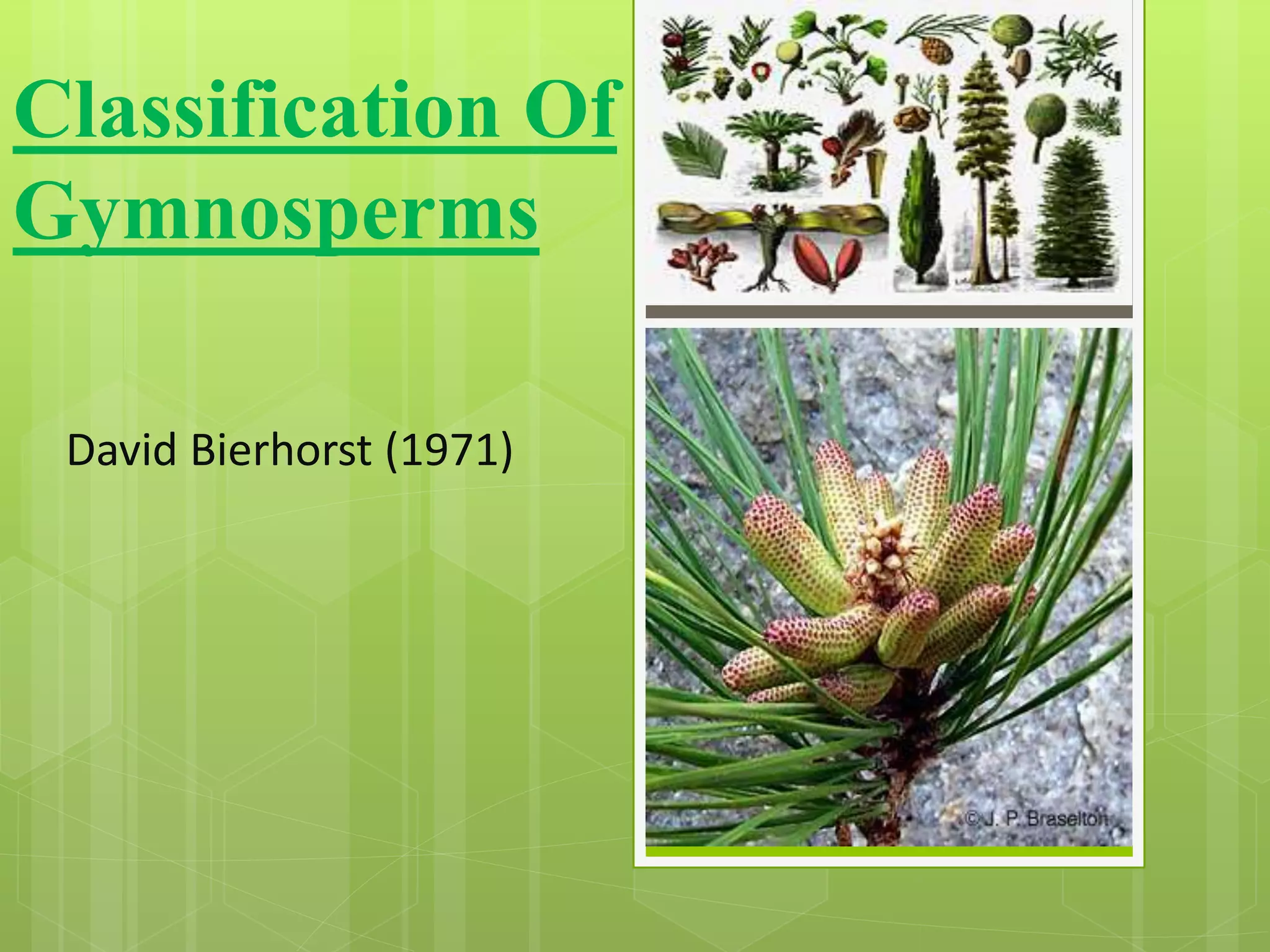
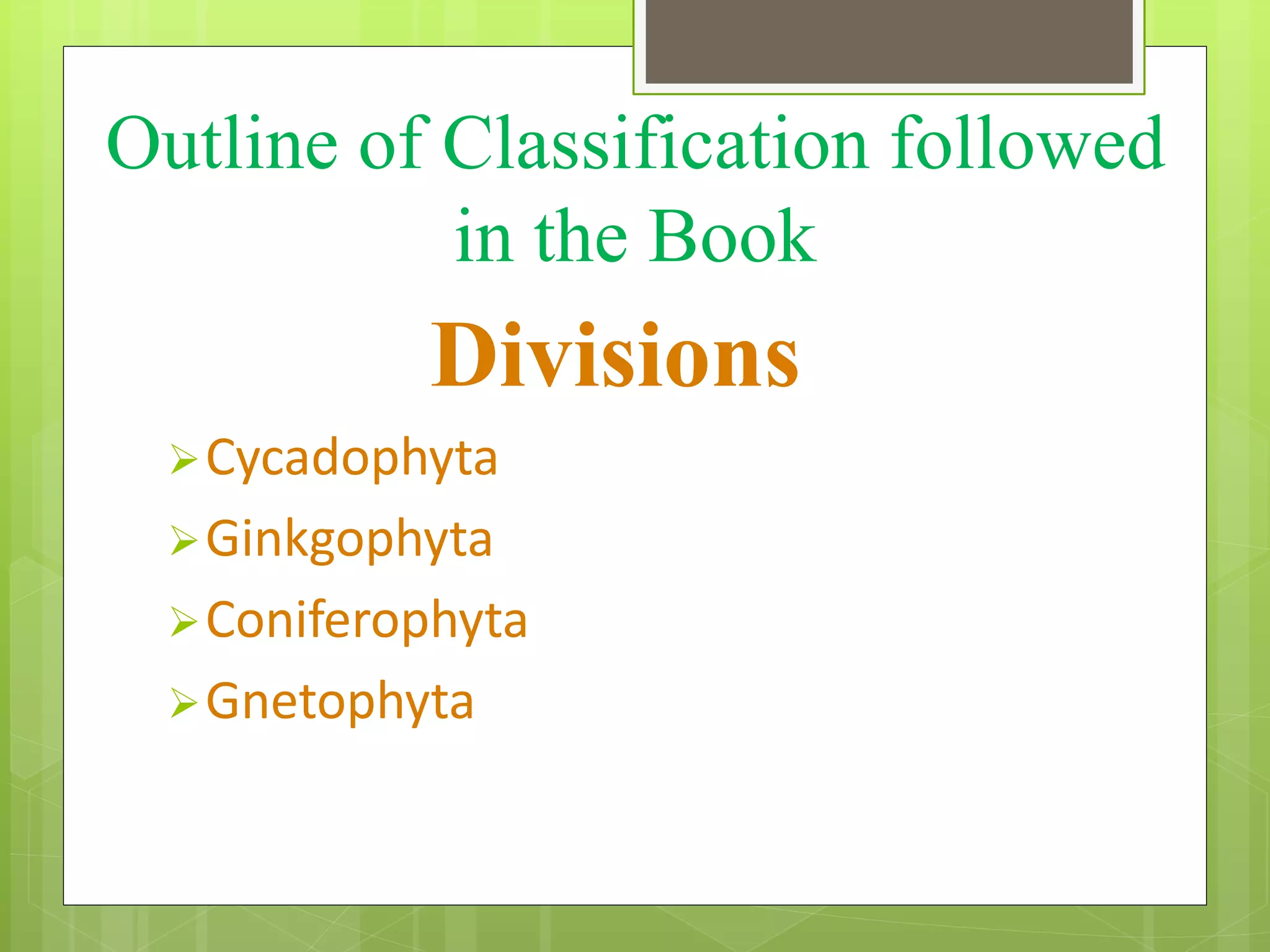
Classification Of
Gymnosperms
David Bierhorst (1971)
Outline of Classification followed
in the Book
Divisions
Cycadophyta
Ginkgophyta
Coniferophyta
Gnetophyta
Cycadophyta
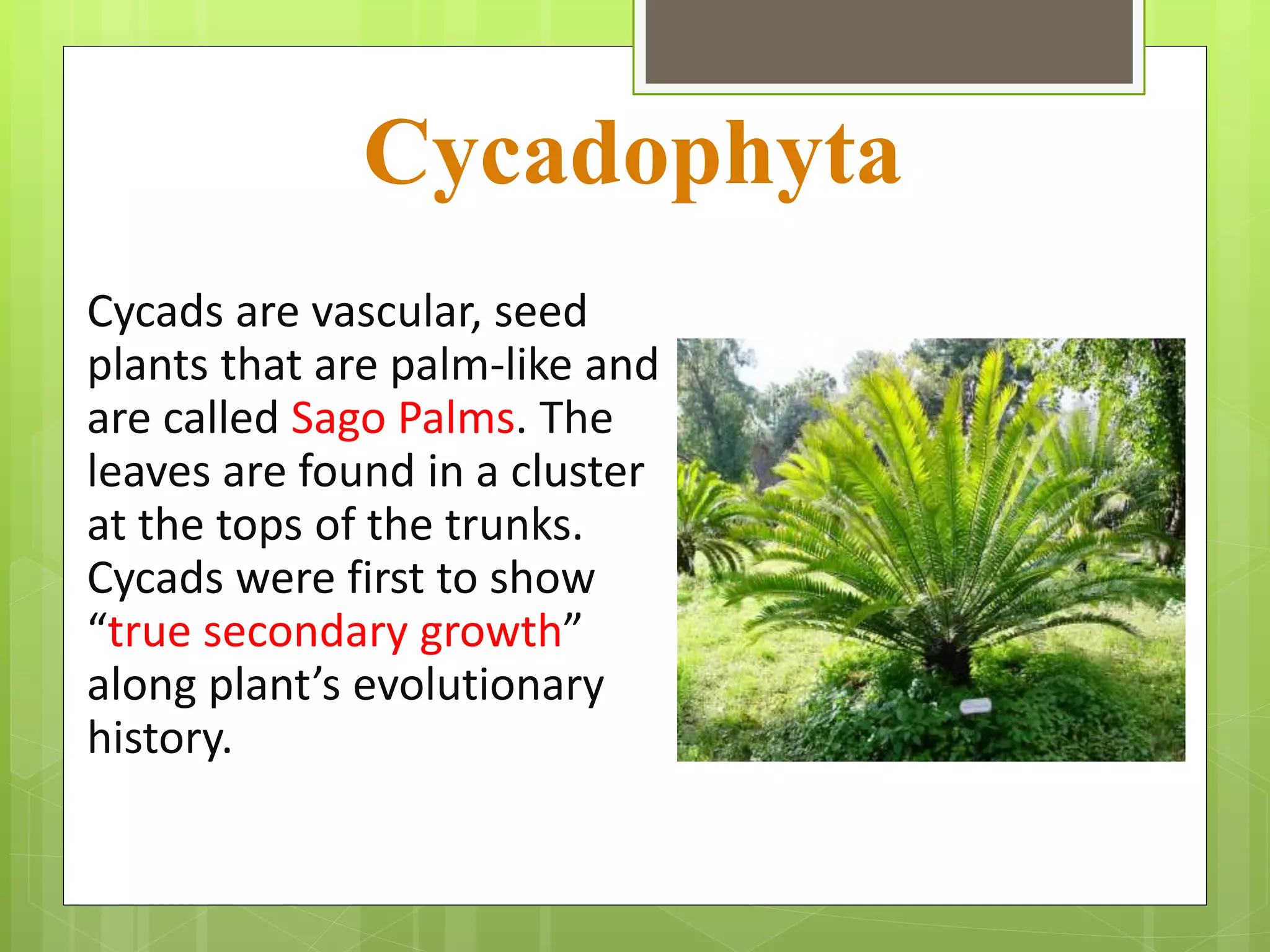
Cycads are vascular, seed
plants that are palm-like and
are called Sago Palms. The
leaves are found in a cluster
at the tops of the trunks.
Cycads were first to show
“true secondary growth”
along plant’s evolutionary
history.
Classes
 Pteridospermopsida
Extinct seed ferns.
 Cycadeoidopsida
Fossil members.
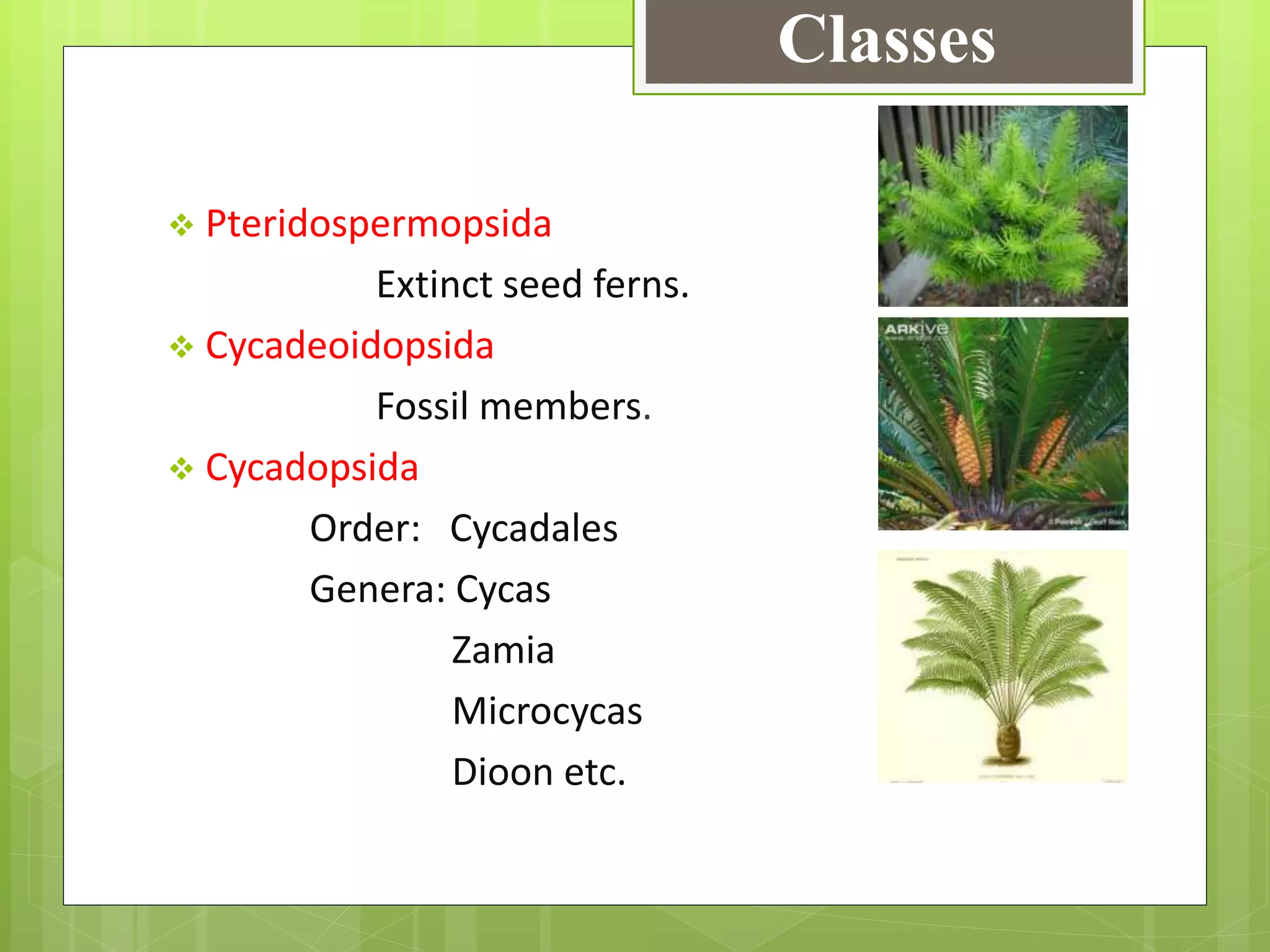
 Cycadopsida
Order: Cycadales
Genera: Cycas
Zamia
Microcycas
Dioon etc.
Ginkgophyta
Ginkgophyta is a plant
division of “non-flowering
trees”.
Habitat:
USA, Canada, China,
India, Japan, South Korea,
Singapore, Taiwan, Africa,
New Zealand, and many other
countries…..
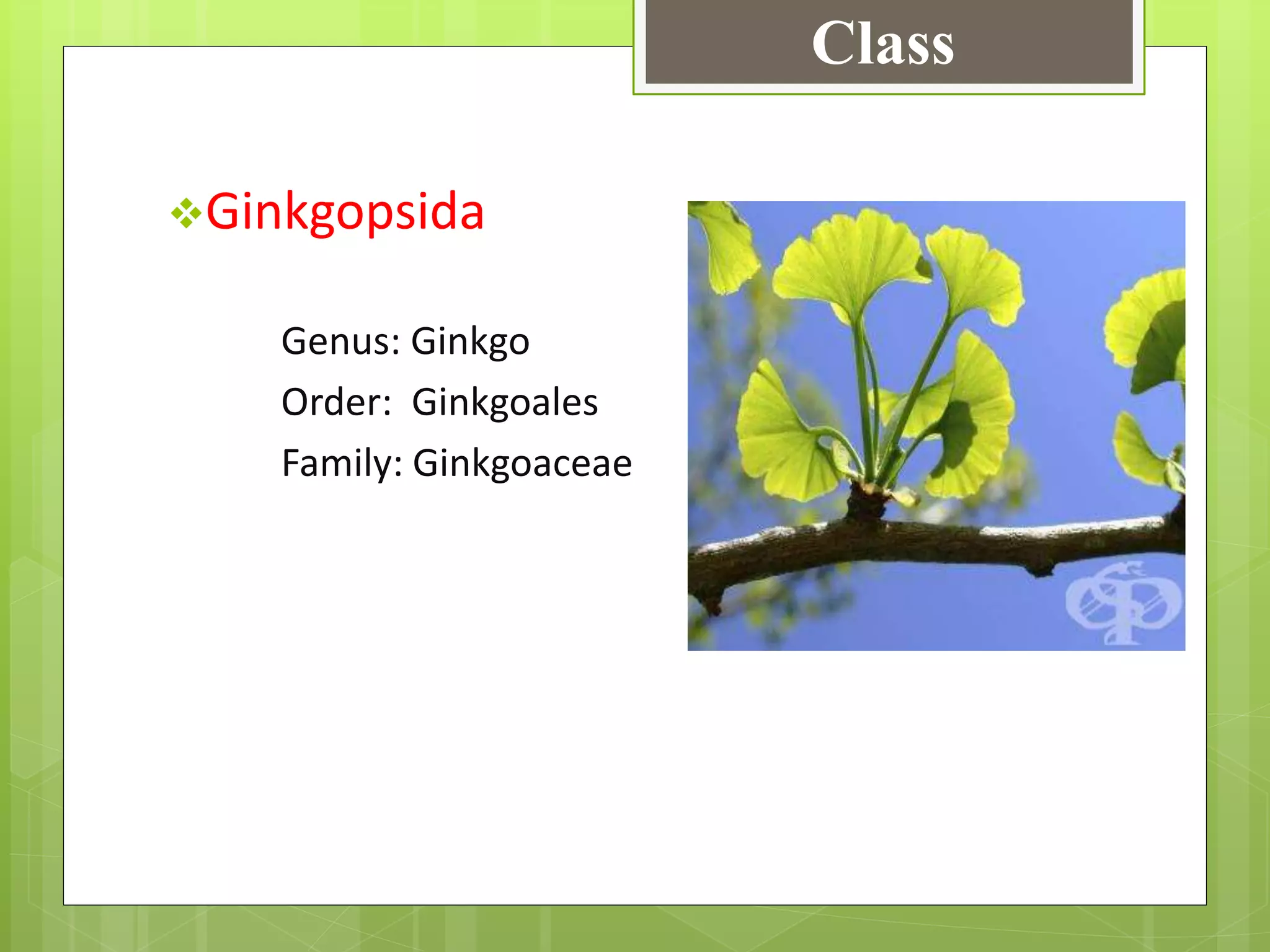
Class
Ginkgopsida
Genus: Ginkgo
Order: Ginkgoales
Family: Ginkgoaceae
Coniferophyta
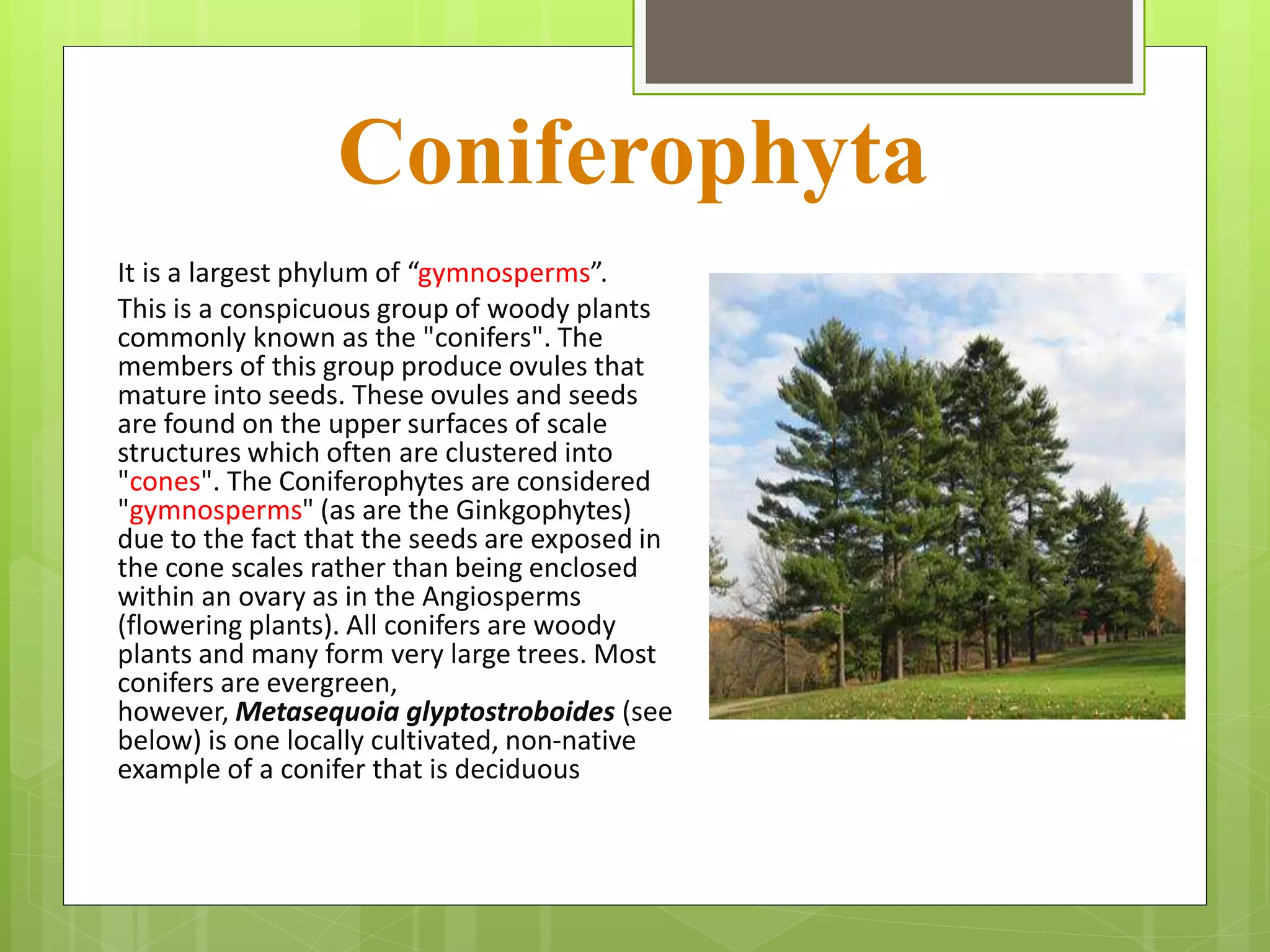
It is a largest phylum of “gymnosperms”.
This is a conspicuous group of woody plants
commonly known as the "conifers". The
members of this group produce ovules that
mature into seeds. These ovules and seeds
are found on the upper surfaces of scale
structures which often are clustered into
"cones". The Coniferophytes are considered
"gymnosperms" (as are the Ginkgophytes)
due to the fact that the seeds are exposed in
the cone scales rather than being enclosed
within an ovary as in the Angiosperms
(flowering plants). All conifers are woody
plants and many form very large trees. Most
conifers are evergreen,
however, Metasequoia glyptostroboides (see
below) is one locally cultivated, non-native
example of a conifer that is deciduous
Classes
 Cordaitopsida
Comprises of extinct plants
and represented by fossils.
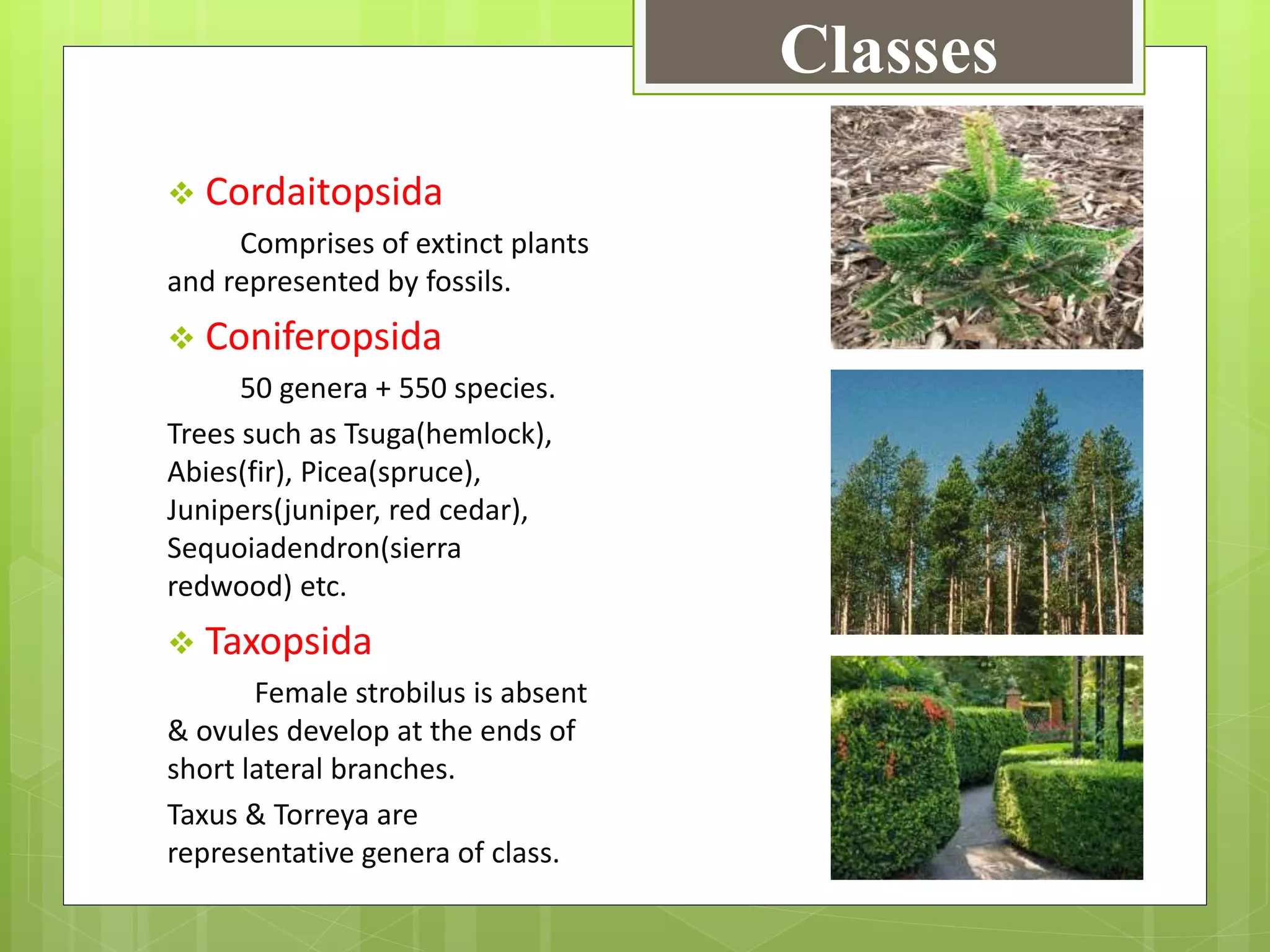
 Coniferopsida
50 genera + 550 species.
Trees such as Tsuga(hemlock),
Abies(fir), Picea(spruce),
Junipers(juniper, red cedar),
Sequoiadendron(sierra
redwood) etc.
 Taxopsida
Female strobilus is absent
& ovules develop at the ends of
short lateral branches.
Taxus & Torreya are
representative genera of class.
Gnetophyta
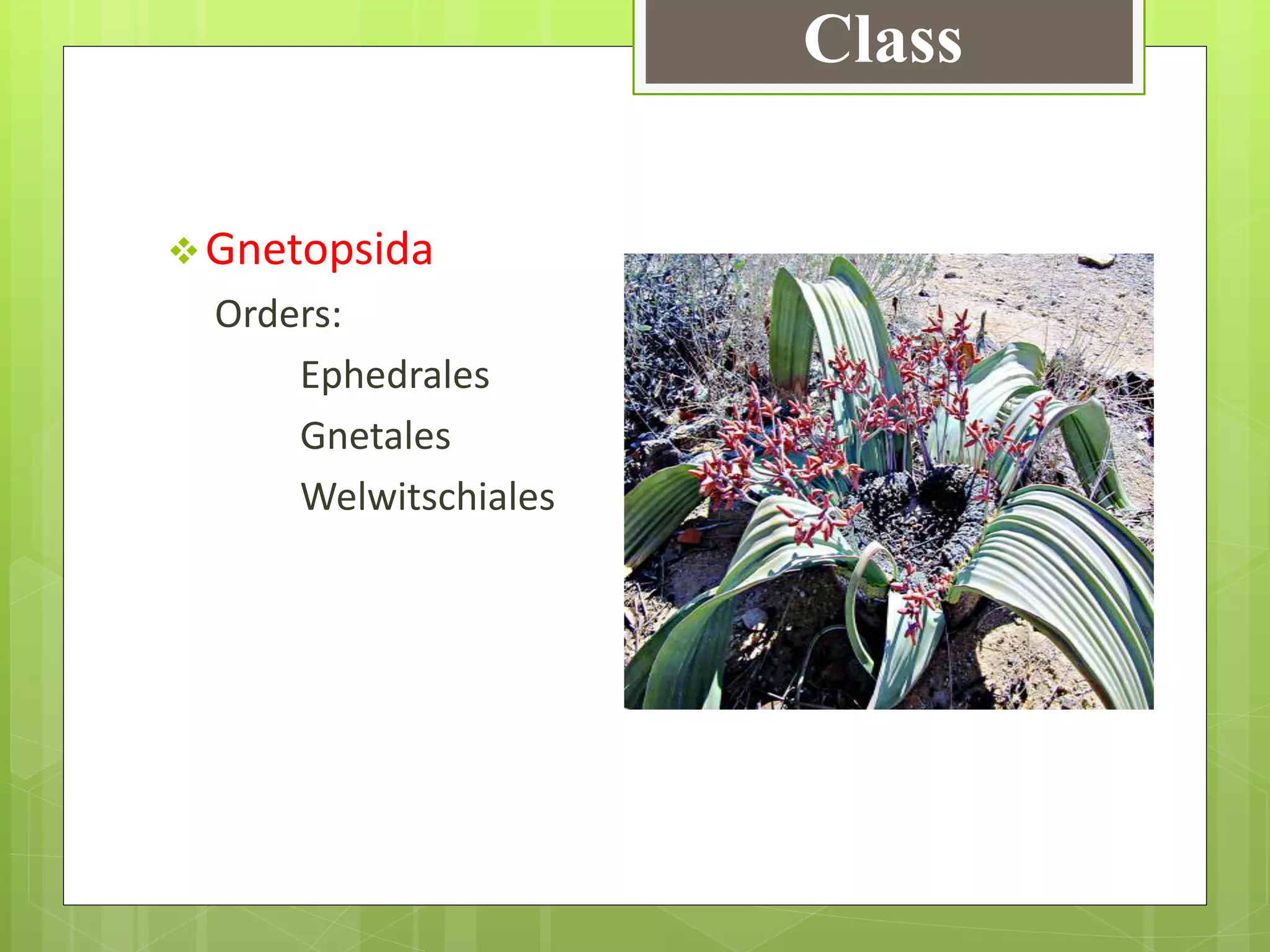
Class
Gnetopsida
Orders:
Ephedrales
Gnetales
Welwitschiales
Any Question

Classification of gymnosperms

  • 1.
  • 2.
    Outline of Classificationfollowed in the Book Divisions Cycadophyta Ginkgophyta Coniferophyta Gnetophyta
  • 3.
    Cycadophyta Cycads are vascular,seed plants that are palm-like and are called Sago Palms. The leaves are found in a cluster at the tops of the trunks. Cycads were first to show “true secondary growth” along plant’s evolutionary history.
  • 4.
    Classes  Pteridospermopsida Extinct seedferns.  Cycadeoidopsida Fossil members.  Cycadopsida Order: Cycadales Genera: Cycas Zamia Microcycas Dioon etc.
  • 5.
    Ginkgophyta Ginkgophyta is aplant division of “non-flowering trees”. Habitat: USA, Canada, China, India, Japan, South Korea, Singapore, Taiwan, Africa, New Zealand, and many other countries…..
  • 6.
  • 7.
    Coniferophyta It is alargest phylum of “gymnosperms”. This is a conspicuous group of woody plants commonly known as the "conifers". The members of this group produce ovules that mature into seeds. These ovules and seeds are found on the upper surfaces of scale structures which often are clustered into "cones". The Coniferophytes are considered "gymnosperms" (as are the Ginkgophytes) due to the fact that the seeds are exposed in the cone scales rather than being enclosed within an ovary as in the Angiosperms (flowering plants). All conifers are woody plants and many form very large trees. Most conifers are evergreen, however, Metasequoia glyptostroboides (see below) is one locally cultivated, non-native example of a conifer that is deciduous
  • 8.
    Classes  Cordaitopsida Comprises ofextinct plants and represented by fossils.  Coniferopsida 50 genera + 550 species. Trees such as Tsuga(hemlock), Abies(fir), Picea(spruce), Junipers(juniper, red cedar), Sequoiadendron(sierra redwood) etc.  Taxopsida Female strobilus is absent & ovules develop at the ends of short lateral branches. Taxus & Torreya are representative genera of class.
  • 9.
  • 10.
  • 11.