Introduction to
Pteridiophytes
Pteridiophytes, commonly known as ferns, are an ancient group of
vascular plants that have been around for over 350 million years. They are
diverse, ranging from small, delicate ferns to large, tree-like ferns, and
they play a vital role in many ecosystems.
prep by Zia
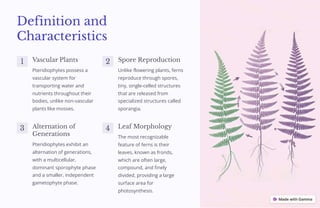
Definition and
Characteristics
1 Vascular Plants
Pteridiophytes possess a
vascular system for
transporting water and
nutrients throughout their
bodies, unlike non-vascular
plants like mosses.
2 Spore Reproduction
Unlike flowering plants, ferns
reproduce through spores,
tiny, single-celled structures
that are released from
specialized structures called
sporangia.
3 Alternation of
Generations
Pteridiophytes exhibit an
alternation of generations,
with a multicellular,
dominant sporophyte phase
and a smaller, independent
gametophyte phase.
4 Leaf Morphology
The most recognizable
feature of ferns is their
leaves, known as fronds,
which are often large,
compound, and finely
divided, providing a large
surface area for
photosynthesis.
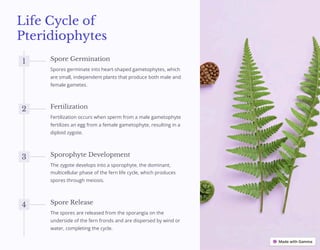
Life Cycle of
Pteridiophytes
1 Spore Germination
Spores germinate into heart-shaped gametophytes, which
are small, independent plants that produce both male and
female gametes.
2 Fertilization
Fertilization occurs when sperm from a male gametophyte
fertilizes an egg from a female gametophyte, resulting in a
diploid zygote.
3 Sporophyte Development
The zygote develops into a sporophyte, the dominant,
multicellular phase of the fern life cycle, which produces
spores through meiosis.
4 Spore Release
The spores are released from the sporangia on the
underside of the fern fronds and are dispersed by wind or
water, completing the cycle.
Diversity of Pteridiophytes
Class Polypodiopsida
The largest class of ferns, with over
10,000 species, including the familiar
tree ferns, maidenhair ferns, and
staghorn ferns.
Class Marattiopsida
A small class of ferns with only around
150 species, characterized by their
large, tropical fronds and underground
rhizomes.
Class Ophioglossopsida
The smallest class of ferns, with only
about 70 species, known for their
distinctive simple fronds and
underground rhizomes.
Ecological Importance
Soil Stabilization
Fern roots help bind soil
particles together, preventing
erosion and contributing to soil
fertility.
Habitat Provision
Fern fronds provide shelter and
food for a variety of animals,
including insects, amphibians,
and reptiles.
Biodiversity Support
Ferns are an integral part of
many ecosystems, contributing
to the overall biodiversity and
ecological balance.
Air Purification
Like all plants, ferns absorb
carbon dioxide and release
oxygen, helping to regulate
atmospheric gases.
Economic Importance
Ornamental Plants Ferns are popular ornamental
plants, used in gardens, homes,
and offices for their beauty and
aesthetic appeal.
Medicinal Uses Some fern species possess
medicinal properties, used in
traditional medicine for treating
various ailments.
Food Source In some cultures, ferns are used
as a food source, with their
young shoots and fronds
consumed as vegetables.
Threats and Conservation
1
Habitat Loss
Habitat destruction and degradation due to deforestation,
agriculture, and urbanization are major threats to fern
populations.
2
Climate Change
Climate change, including rising temperatures and altered
precipitation patterns, can impact fern distribution and
survival.
3
Over-Collection
Over-collection of ferns for ornamental purposes or
medicinal uses can deplete wild populations.
4
Conservation Efforts
Conservation efforts include habitat protection, sustainable
harvesting, and reintroduction programs to ensure the
survival of threatened fern species.
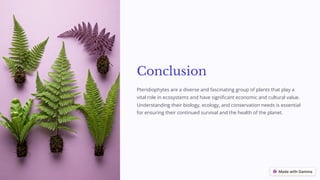
Conclusion
Pteridiophytes are a diverse and fascinating group of plants that play a
vital role in ecosystems and have significant economic and cultural value.
Understanding their biology, ecology, and conservation needs is essential
for ensuring their continued survival and the health of the planet.

Introduction-to-Pteridiophytes.pdf.. bbbba

  • 1.
    Introduction to Pteridiophytes Pteridiophytes, commonlyknown as ferns, are an ancient group of vascular plants that have been around for over 350 million years. They are diverse, ranging from small, delicate ferns to large, tree-like ferns, and they play a vital role in many ecosystems. prep by Zia
  • 2.
    Definition and Characteristics 1 VascularPlants Pteridiophytes possess a vascular system for transporting water and nutrients throughout their bodies, unlike non-vascular plants like mosses. 2 Spore Reproduction Unlike flowering plants, ferns reproduce through spores, tiny, single-celled structures that are released from specialized structures called sporangia. 3 Alternation of Generations Pteridiophytes exhibit an alternation of generations, with a multicellular, dominant sporophyte phase and a smaller, independent gametophyte phase. 4 Leaf Morphology The most recognizable feature of ferns is their leaves, known as fronds, which are often large, compound, and finely divided, providing a large surface area for photosynthesis.
  • 3.
    Life Cycle of Pteridiophytes 1Spore Germination Spores germinate into heart-shaped gametophytes, which are small, independent plants that produce both male and female gametes. 2 Fertilization Fertilization occurs when sperm from a male gametophyte fertilizes an egg from a female gametophyte, resulting in a diploid zygote. 3 Sporophyte Development The zygote develops into a sporophyte, the dominant, multicellular phase of the fern life cycle, which produces spores through meiosis. 4 Spore Release The spores are released from the sporangia on the underside of the fern fronds and are dispersed by wind or water, completing the cycle.
  • 4.
    Diversity of Pteridiophytes ClassPolypodiopsida The largest class of ferns, with over 10,000 species, including the familiar tree ferns, maidenhair ferns, and staghorn ferns. Class Marattiopsida A small class of ferns with only around 150 species, characterized by their large, tropical fronds and underground rhizomes. Class Ophioglossopsida The smallest class of ferns, with only about 70 species, known for their distinctive simple fronds and underground rhizomes.
  • 5.
    Ecological Importance Soil Stabilization Fernroots help bind soil particles together, preventing erosion and contributing to soil fertility. Habitat Provision Fern fronds provide shelter and food for a variety of animals, including insects, amphibians, and reptiles. Biodiversity Support Ferns are an integral part of many ecosystems, contributing to the overall biodiversity and ecological balance. Air Purification Like all plants, ferns absorb carbon dioxide and release oxygen, helping to regulate atmospheric gases.
  • 6.
    Economic Importance Ornamental PlantsFerns are popular ornamental plants, used in gardens, homes, and offices for their beauty and aesthetic appeal. Medicinal Uses Some fern species possess medicinal properties, used in traditional medicine for treating various ailments. Food Source In some cultures, ferns are used as a food source, with their young shoots and fronds consumed as vegetables.
  • 7.
    Threats and Conservation 1 HabitatLoss Habitat destruction and degradation due to deforestation, agriculture, and urbanization are major threats to fern populations. 2 Climate Change Climate change, including rising temperatures and altered precipitation patterns, can impact fern distribution and survival. 3 Over-Collection Over-collection of ferns for ornamental purposes or medicinal uses can deplete wild populations. 4 Conservation Efforts Conservation efforts include habitat protection, sustainable harvesting, and reintroduction programs to ensure the survival of threatened fern species.
  • 8.
    Conclusion Pteridiophytes are adiverse and fascinating group of plants that play a vital role in ecosystems and have significant economic and cultural value. Understanding their biology, ecology, and conservation needs is essential for ensuring their continued survival and the health of the planet.