OPHTHALMIC SURGERY INSTRUMENTS
– APPLICATIONS AND MECHANICS
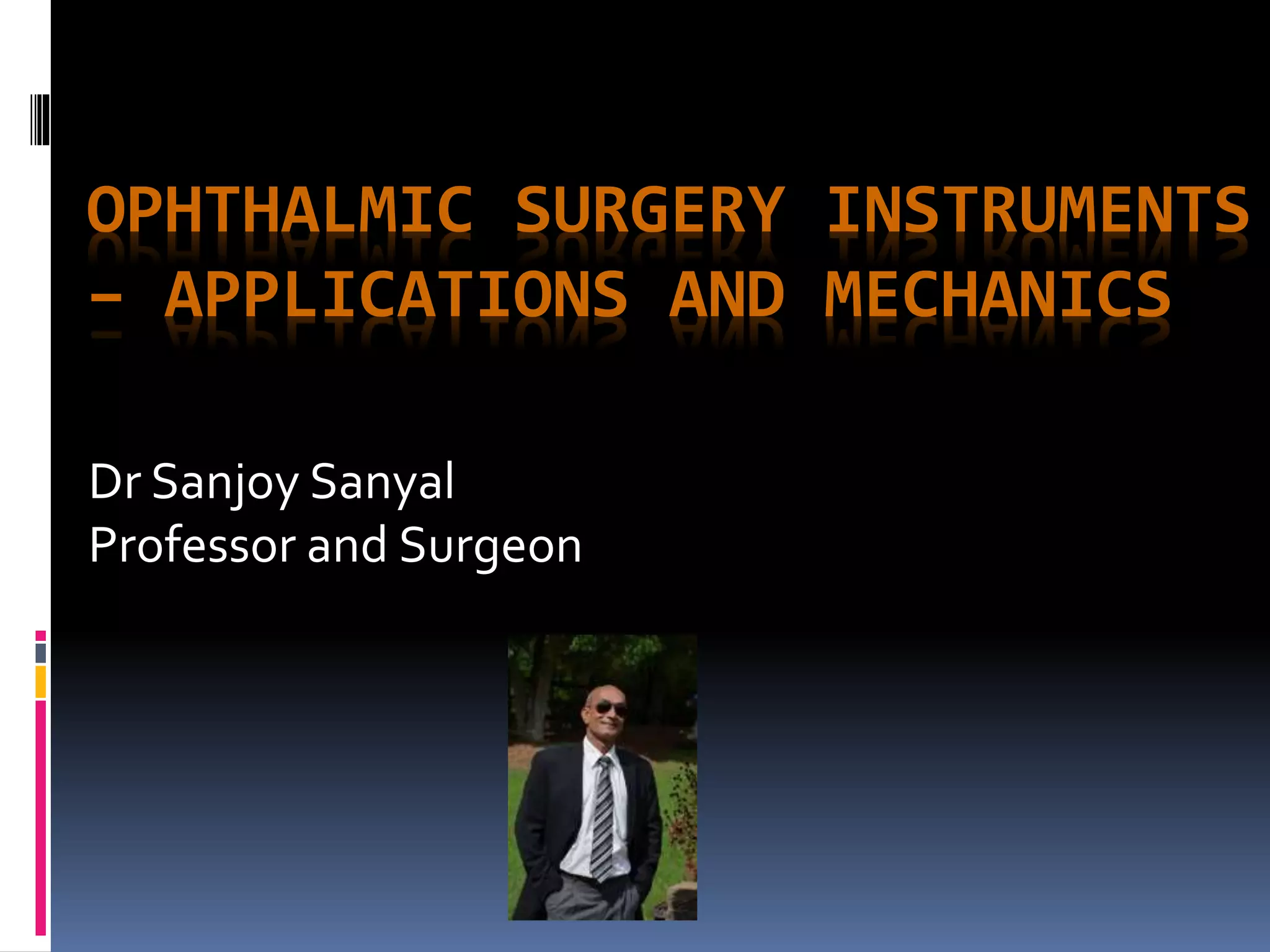
Dr Sanjoy Sanyal
Professor and Surgeon
Who Will Need This?
 Ophthalmic Residents inTraining
 Ophthalmic SurgeryTechnicians
 Ophthalmic OperatingTheater Assistants
 Ophthalmic Surgery Nurses
 Medical Students with interest in Ophthalmology
Foreword
 No specific order has been followed while describing the
instruments
 Cataract being very common, most instruments are related to
Cataract surgery
 Instruments were obtained from an Ophthalmologist’s clinic
and pictures were taken with the author’s Low-Res camera
 This is not a comprehensive list, not by a long shot! More such
presentations will follow in due course
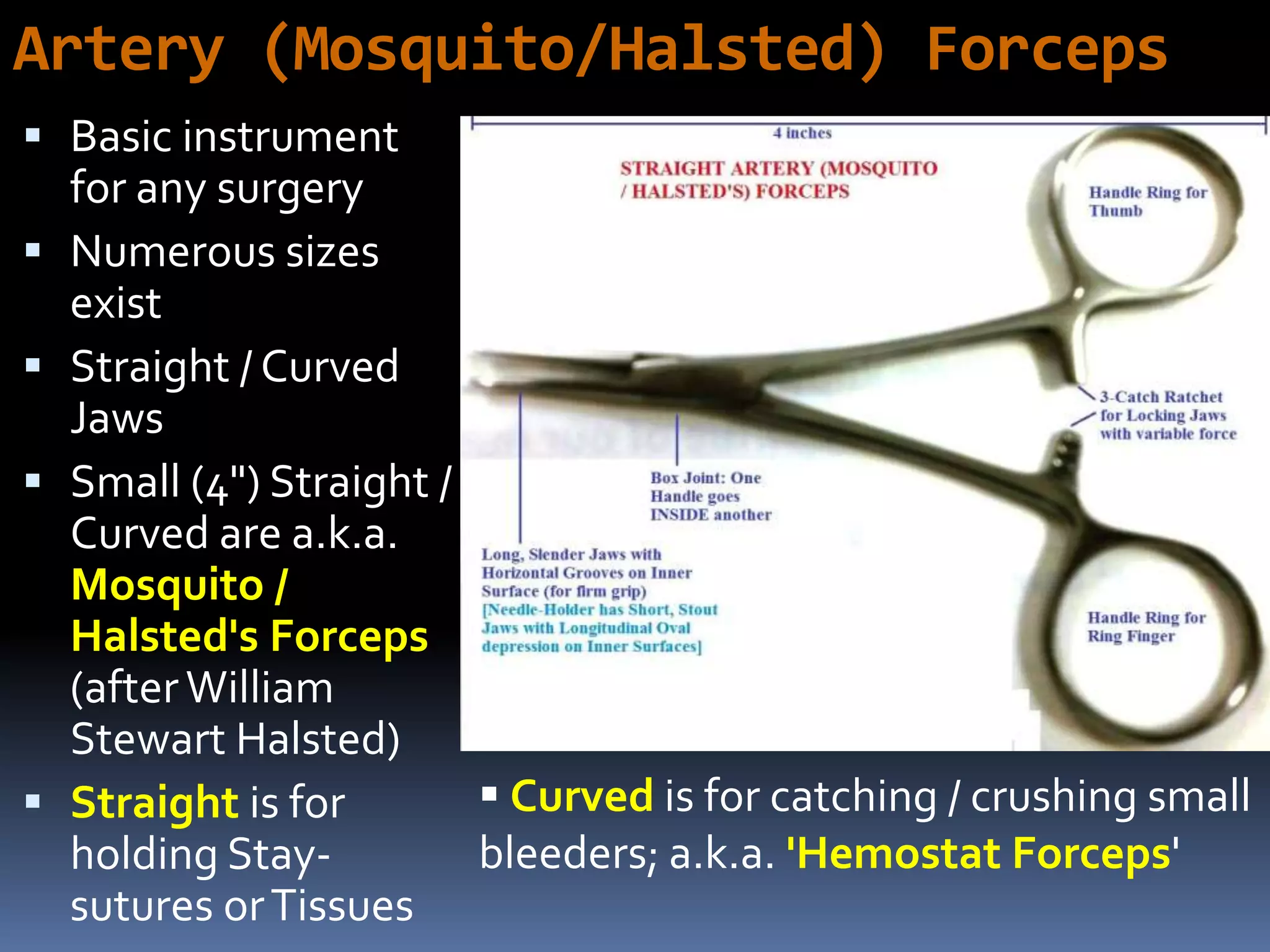
Artery (Mosquito/Halsted) Forceps
 Basic instrument
for any surgery
 Numerous sizes
exist
 Straight / Curved
Jaws
 Small (4") Straight /
Curved are a.k.a.
Mosquito /
Halsted's Forceps
(afterWilliam
Stewart Halsted)
 Straight is for
holding Stay-
sutures orTissues
 Curved is for catching / crushing small
bleeders; a.k.a. 'Hemostat Forceps'
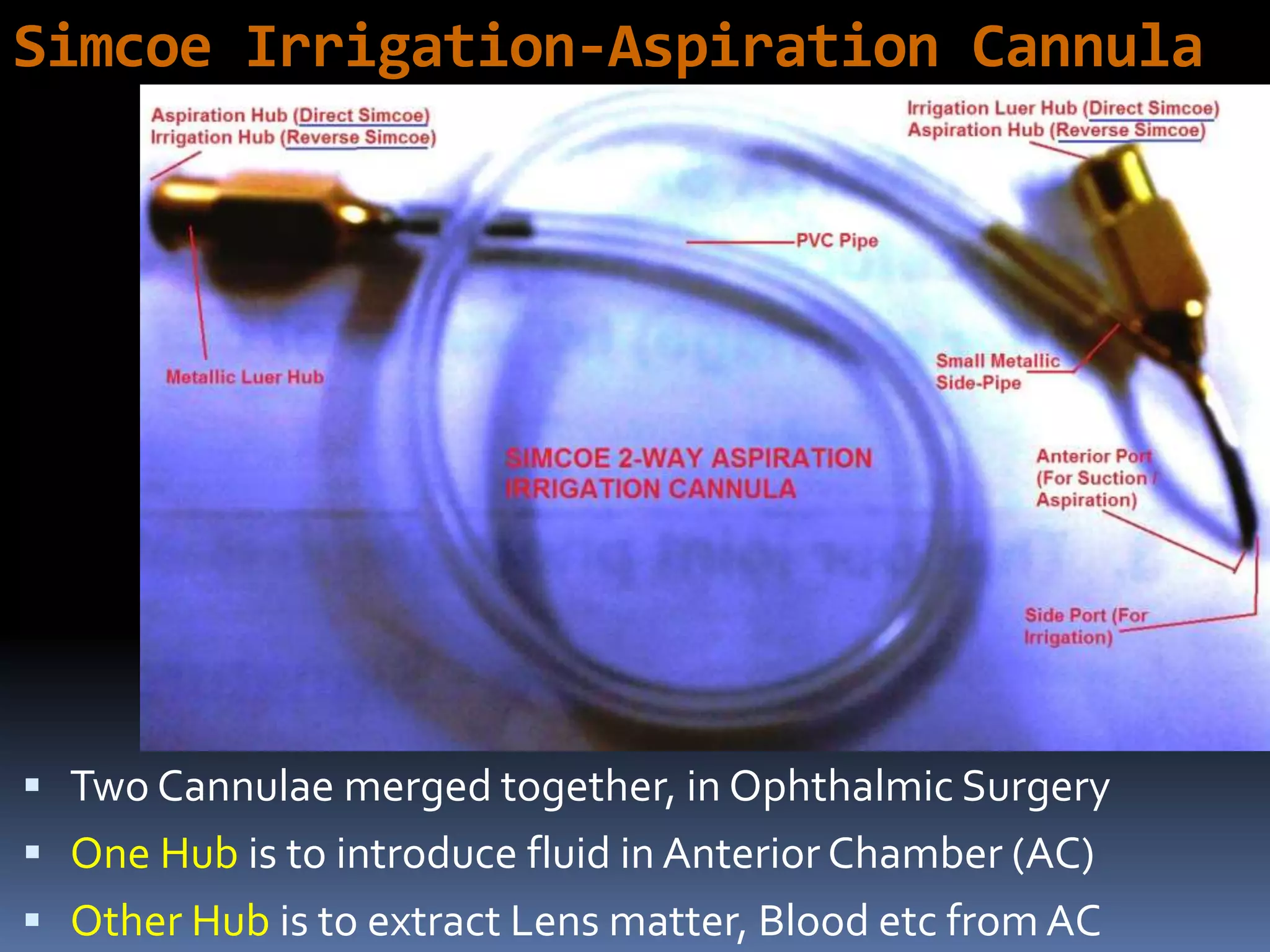
Simcoe Irrigation-Aspiration Cannula
 Two Cannulae merged together, in Ophthalmic Surgery
 One Hub is to introduce fluid in Anterior Chamber (AC)
 Other Hub is to extract Lens matter, Blood etc from AC
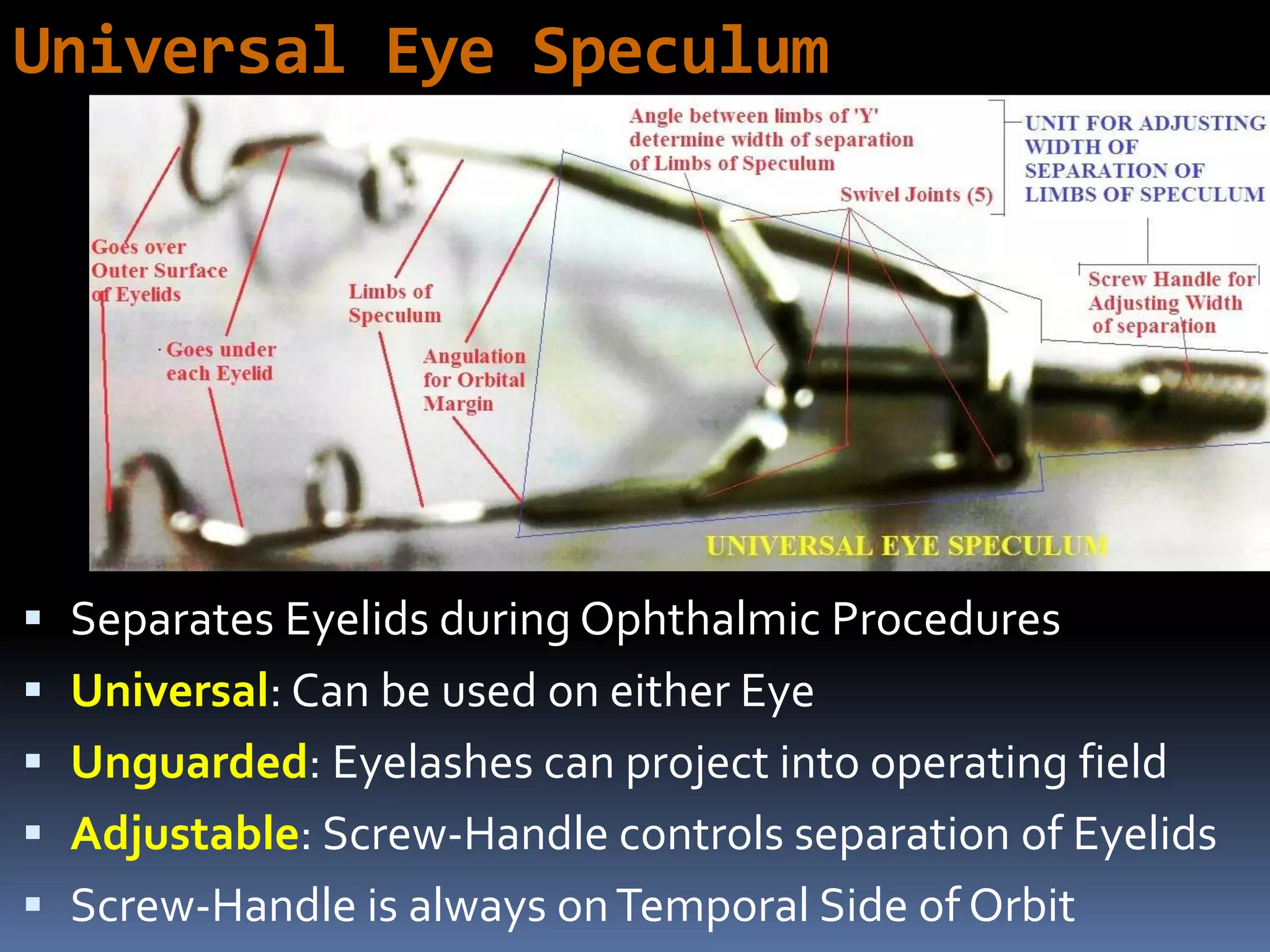
Universal Eye Speculum
 Separates Eyelids during Ophthalmic Procedures
 Universal: Can be used on either Eye
 Unguarded: Eyelashes can project into operating field
 Adjustable: Screw-Handle controls separation of Eyelids
 Screw-Handle is always onTemporal Side of Orbit
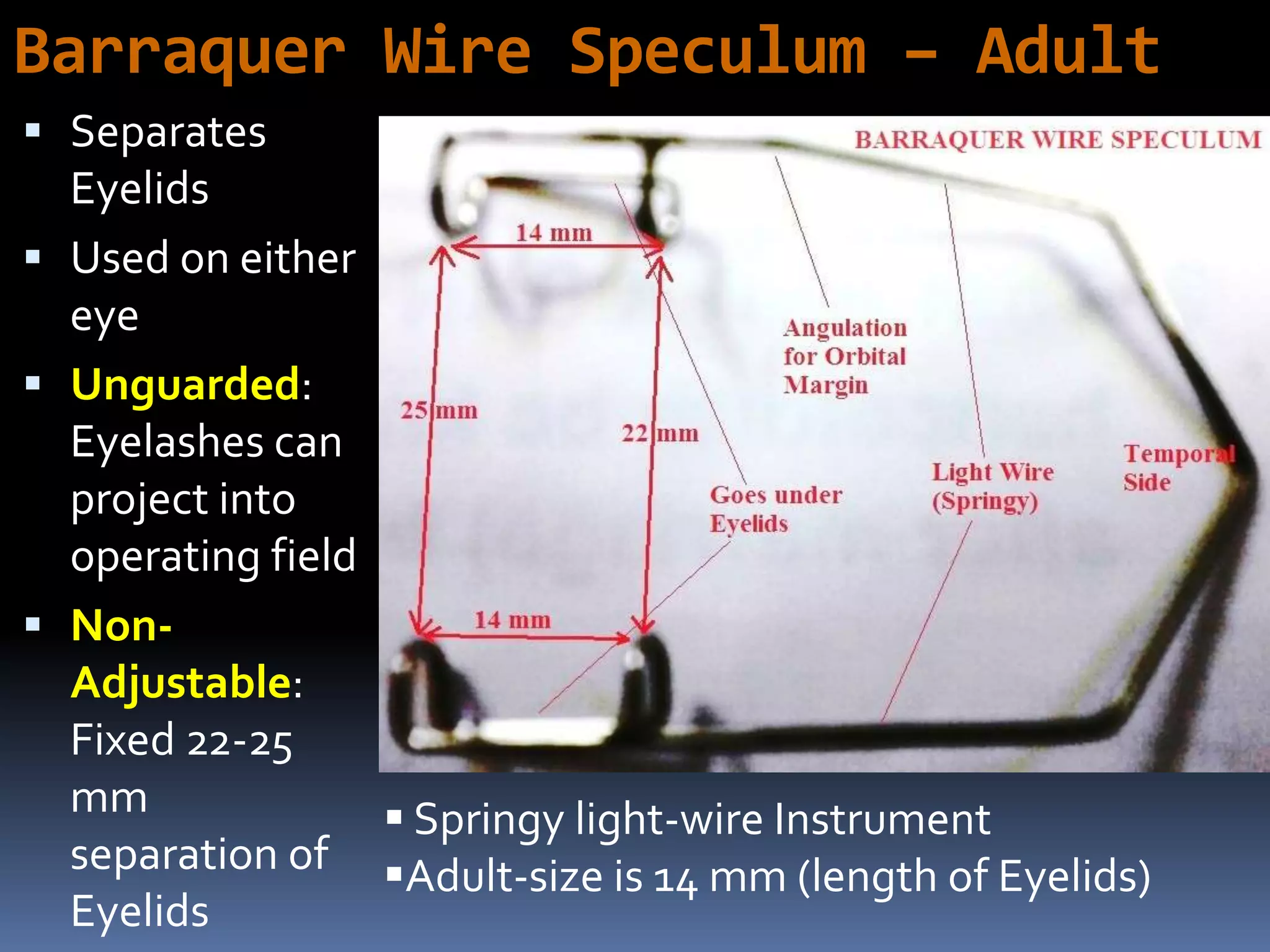
Barraquer Wire Speculum – Adult
 Separates
Eyelids
 Used on either
eye
 Unguarded:
Eyelashes can
project into
operating field
 Non-
Adjustable:
Fixed 22-25
mm
separation of
Eyelids
 Springy light-wire Instrument
Adult-size is 14 mm (length of Eyelids)
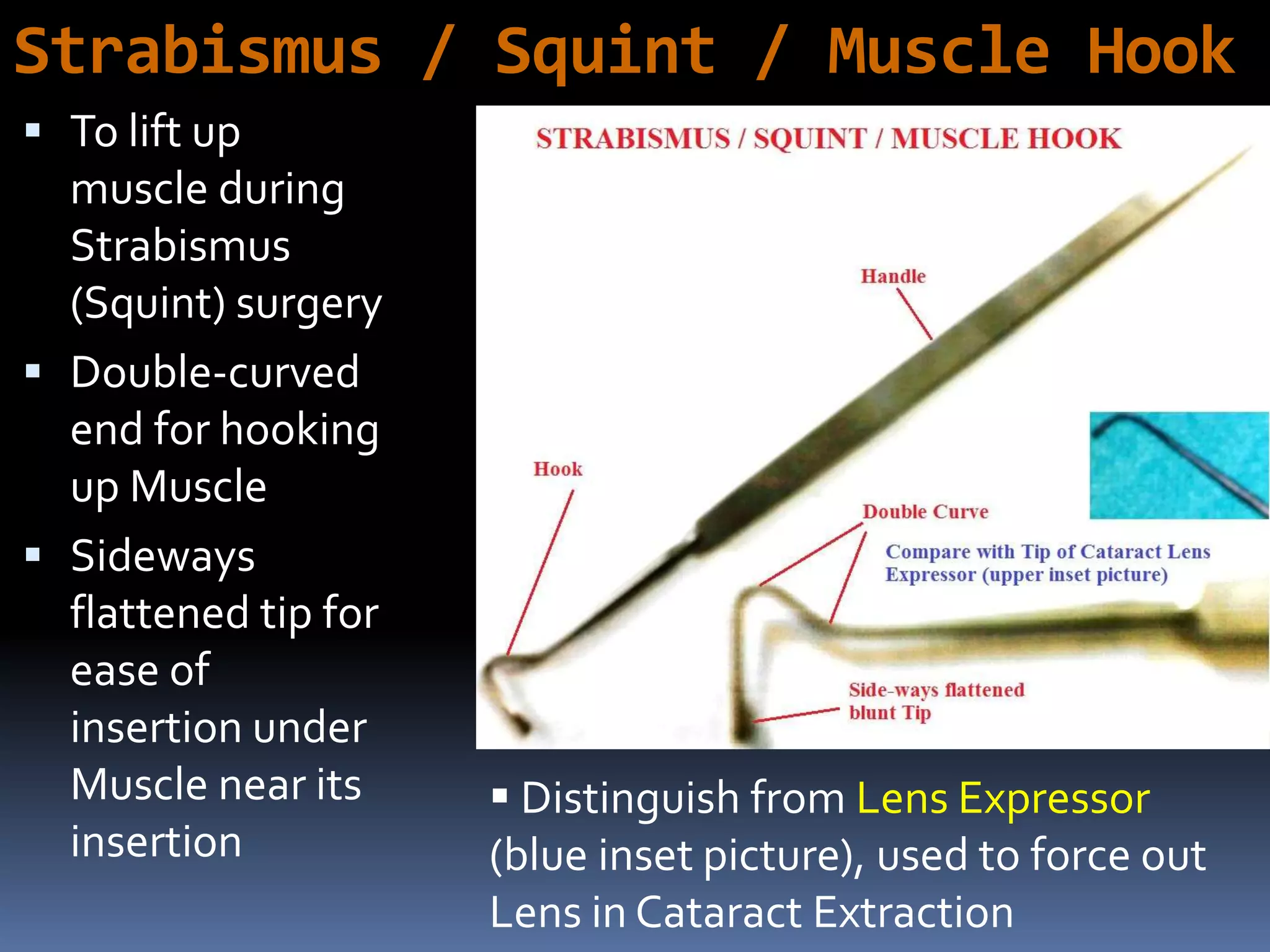
Strabismus / Squint / Muscle Hook
 To lift up
muscle during
Strabismus
(Squint) surgery
 Double-curved
end for hooking
up Muscle
 Sideways
flattened tip for
ease of
insertion under
Muscle near its
insertion
 Distinguish from Lens Expressor
(blue inset picture), used to force out
Lens in Cataract Extraction
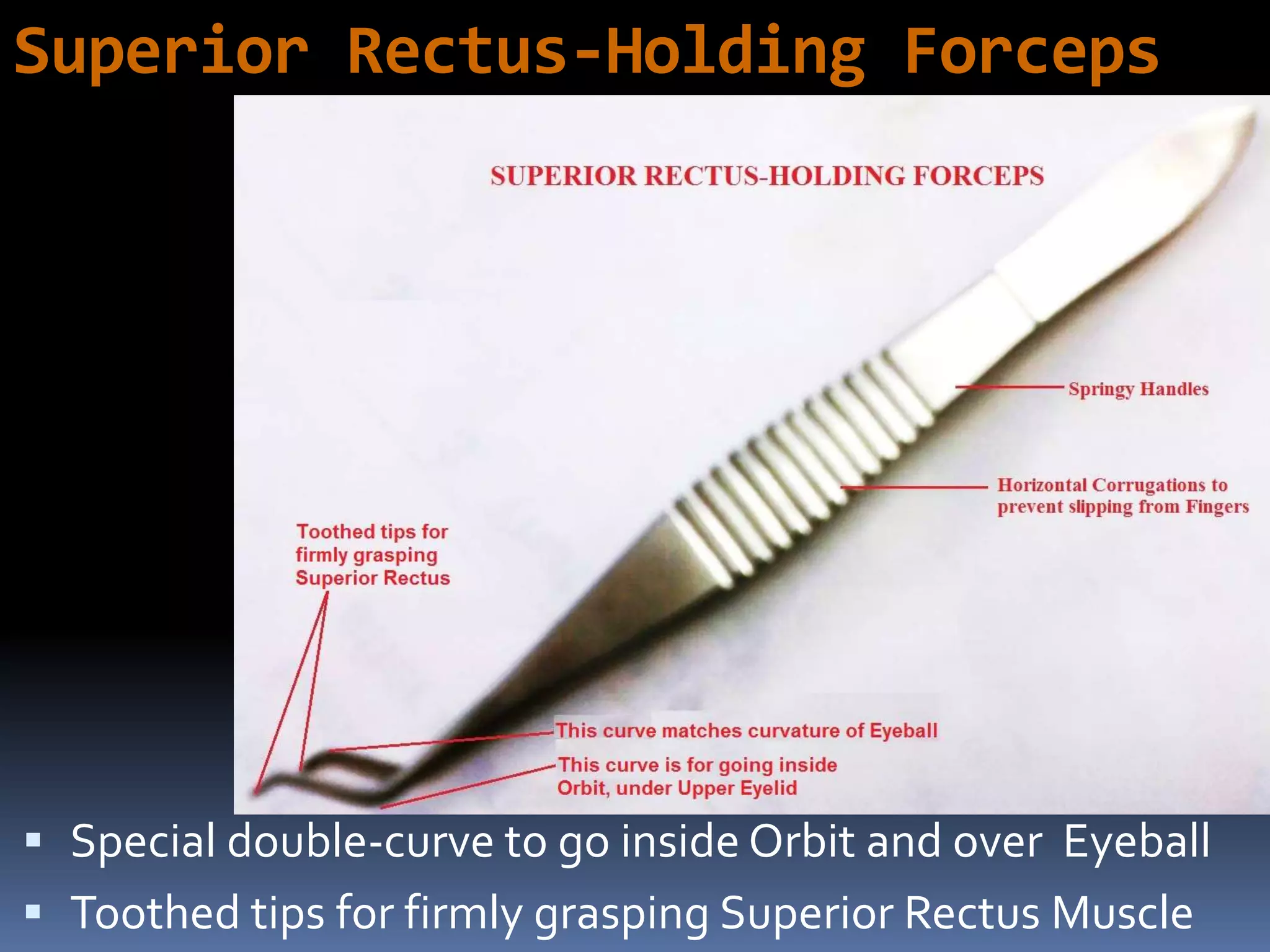
Superior Rectus-Holding Forceps
 Special double-curve to go inside Orbit and over Eyeball
 Toothed tips for firmly grasping Superior Rectus Muscle
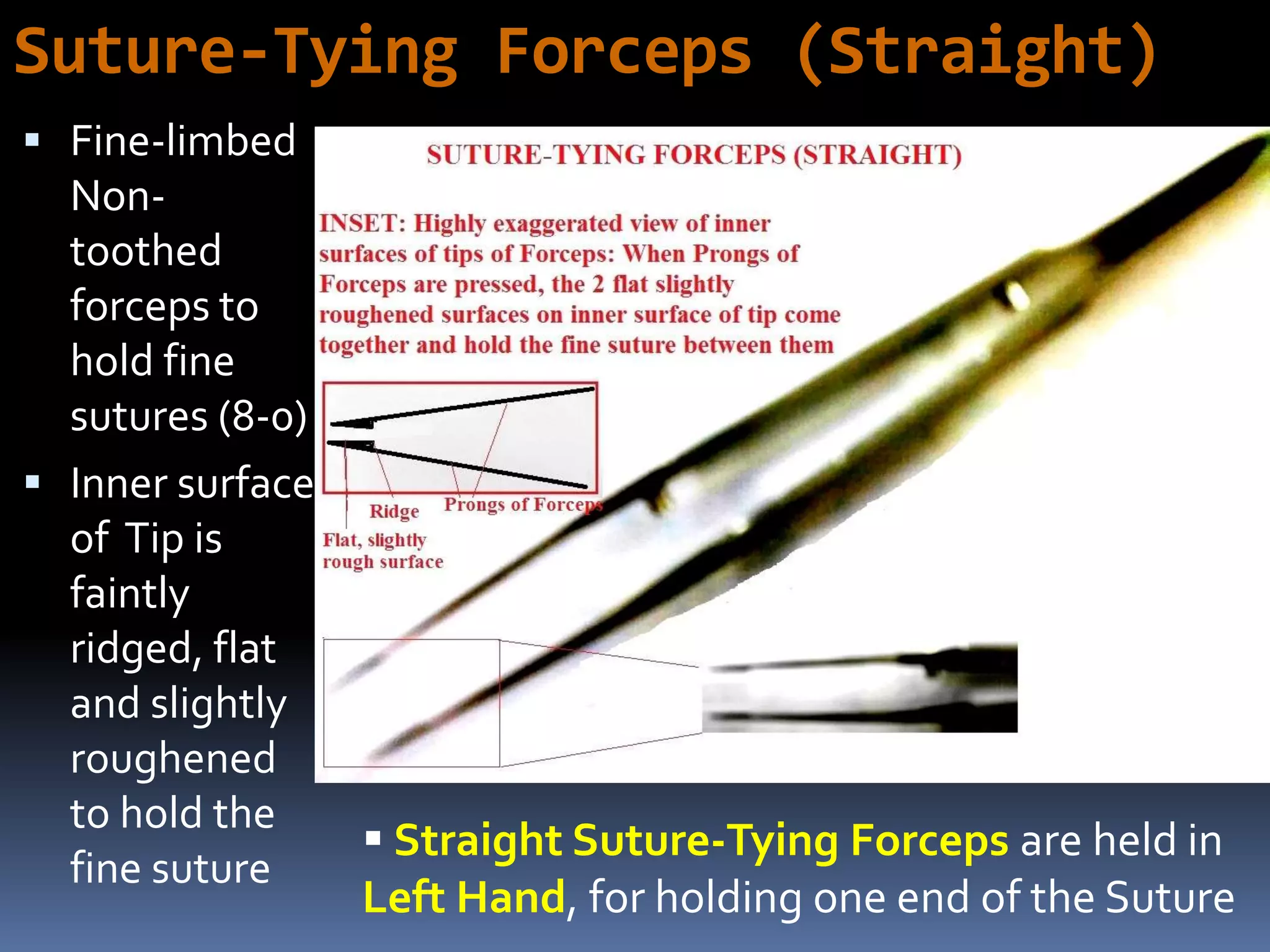
Suture-Tying Forceps (Straight)
 Fine-limbed
Non-
toothed
forceps to
hold fine
sutures (8-0)
 Inner surface
of Tip is
faintly
ridged, flat
and slightly
roughened
to hold the
fine suture
 Straight Suture-Tying Forceps are held in
Left Hand, for holding one end of the Suture
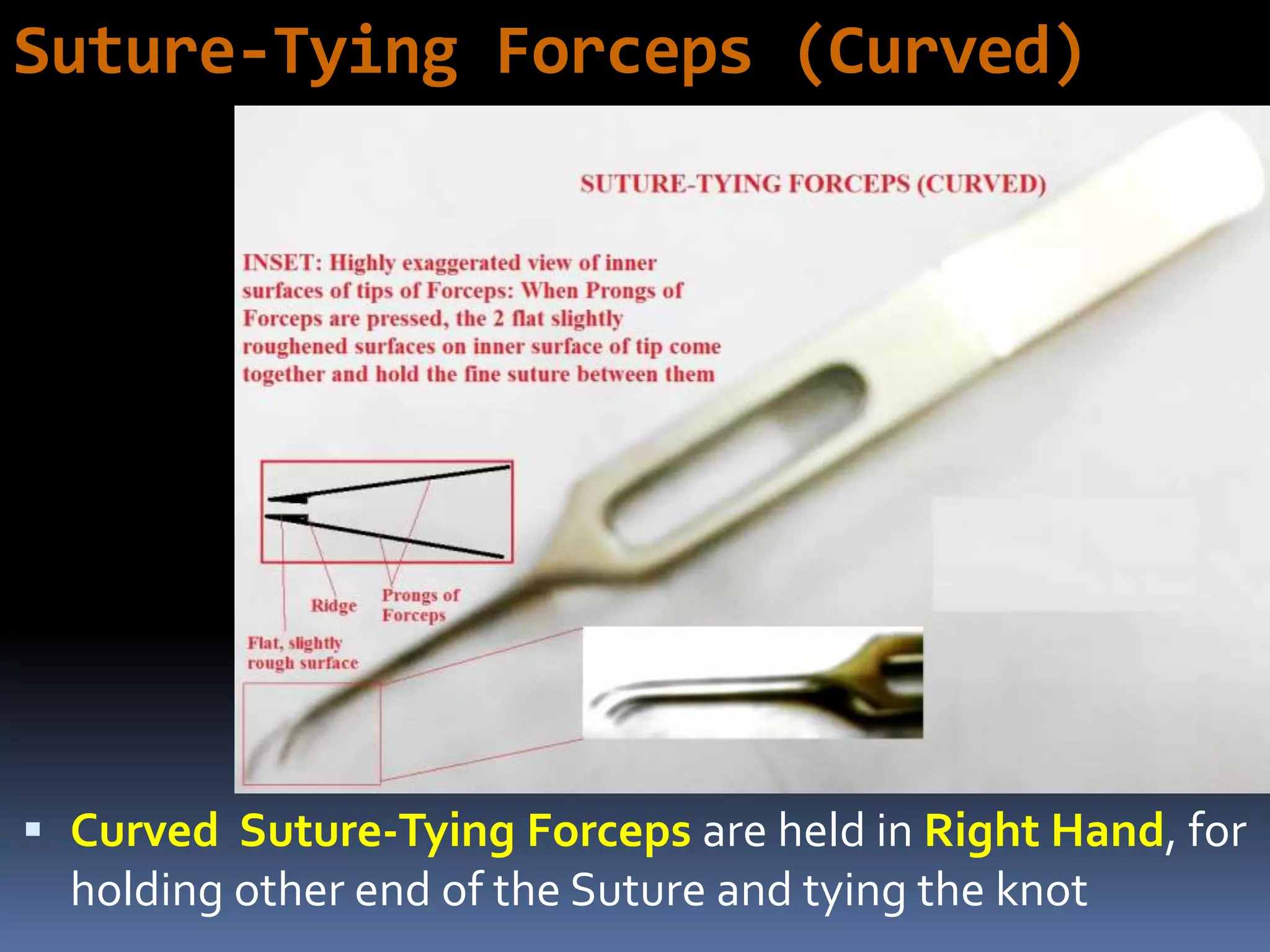
Suture-Tying Forceps (Curved)
 Curved Suture-Tying Forceps are held in Right Hand, for
holding other end of the Suture and tying the knot
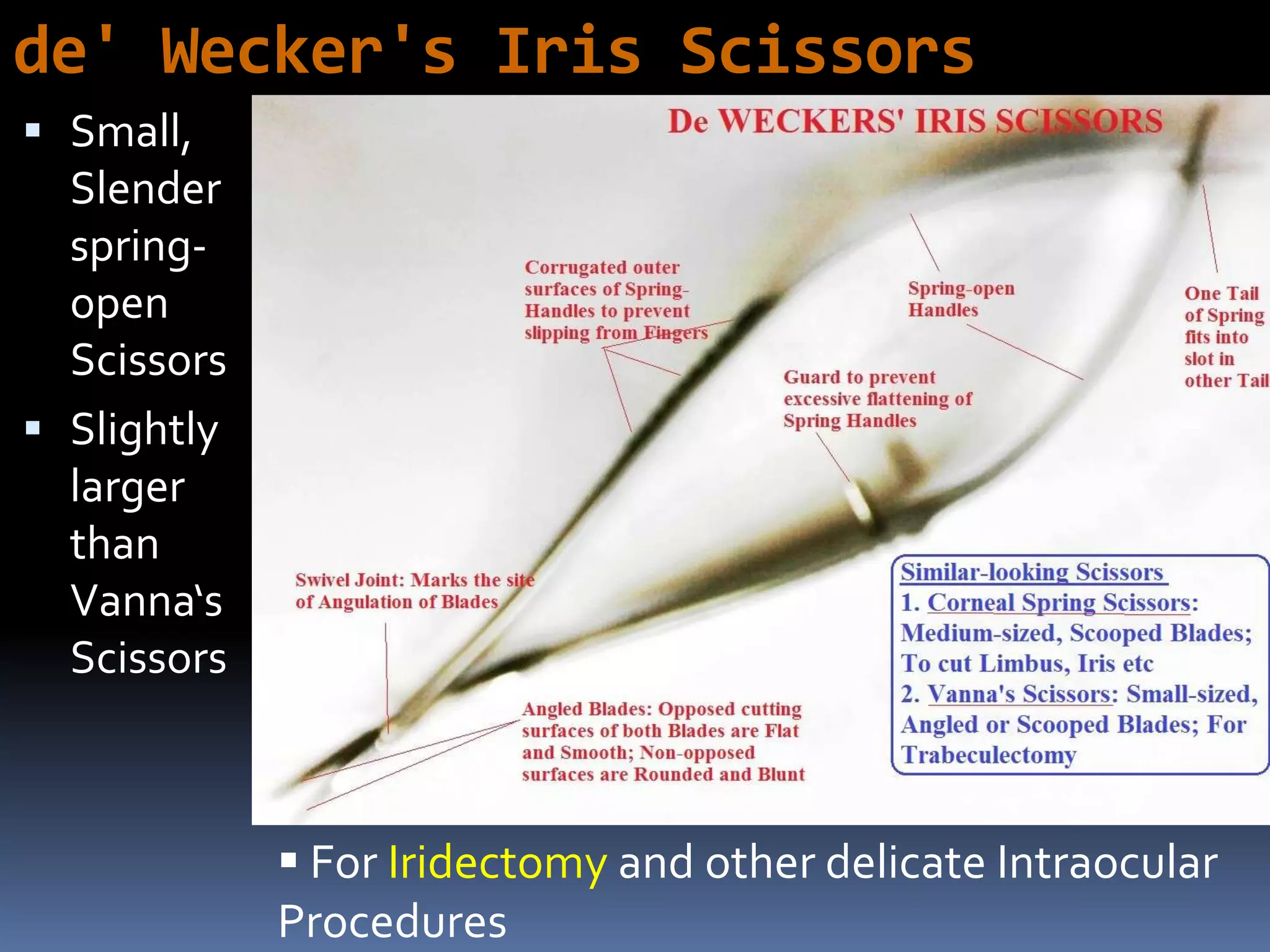
de' Wecker's Iris Scissors
 Small,
Slender
spring-
open
Scissors
 Slightly
larger
than
Vanna‘s
Scissors
 For Iridectomy and other delicate Intraocular
Procedures
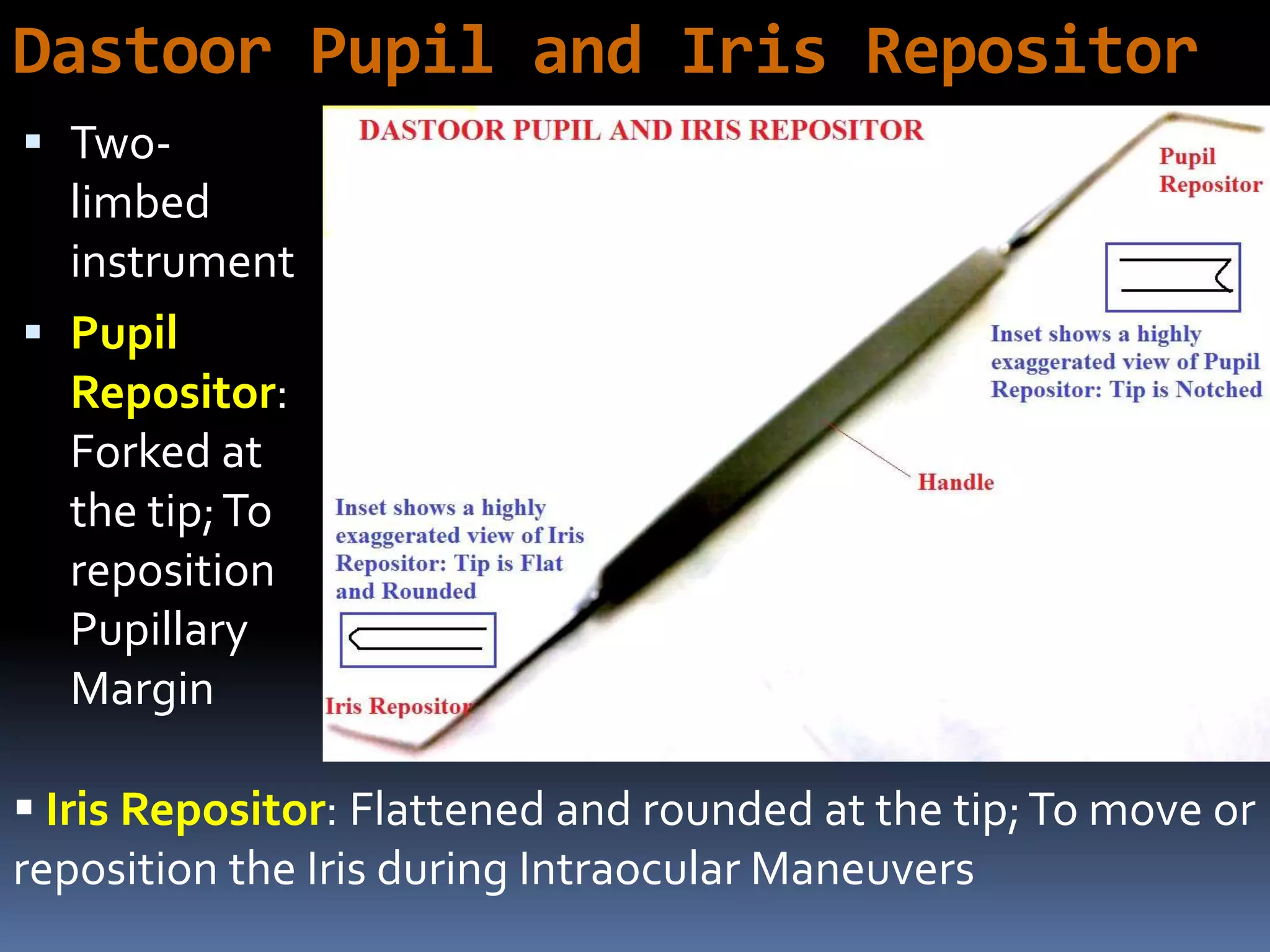
Dastoor Pupil and Iris Repositor
 Two-
limbed
instrument
 Pupil
Repositor:
Forked at
the tip;To
reposition
Pupillary
Margin
 Iris Repositor: Flattened and rounded at the tip;To move or
reposition the Iris during Intraocular Maneuvers
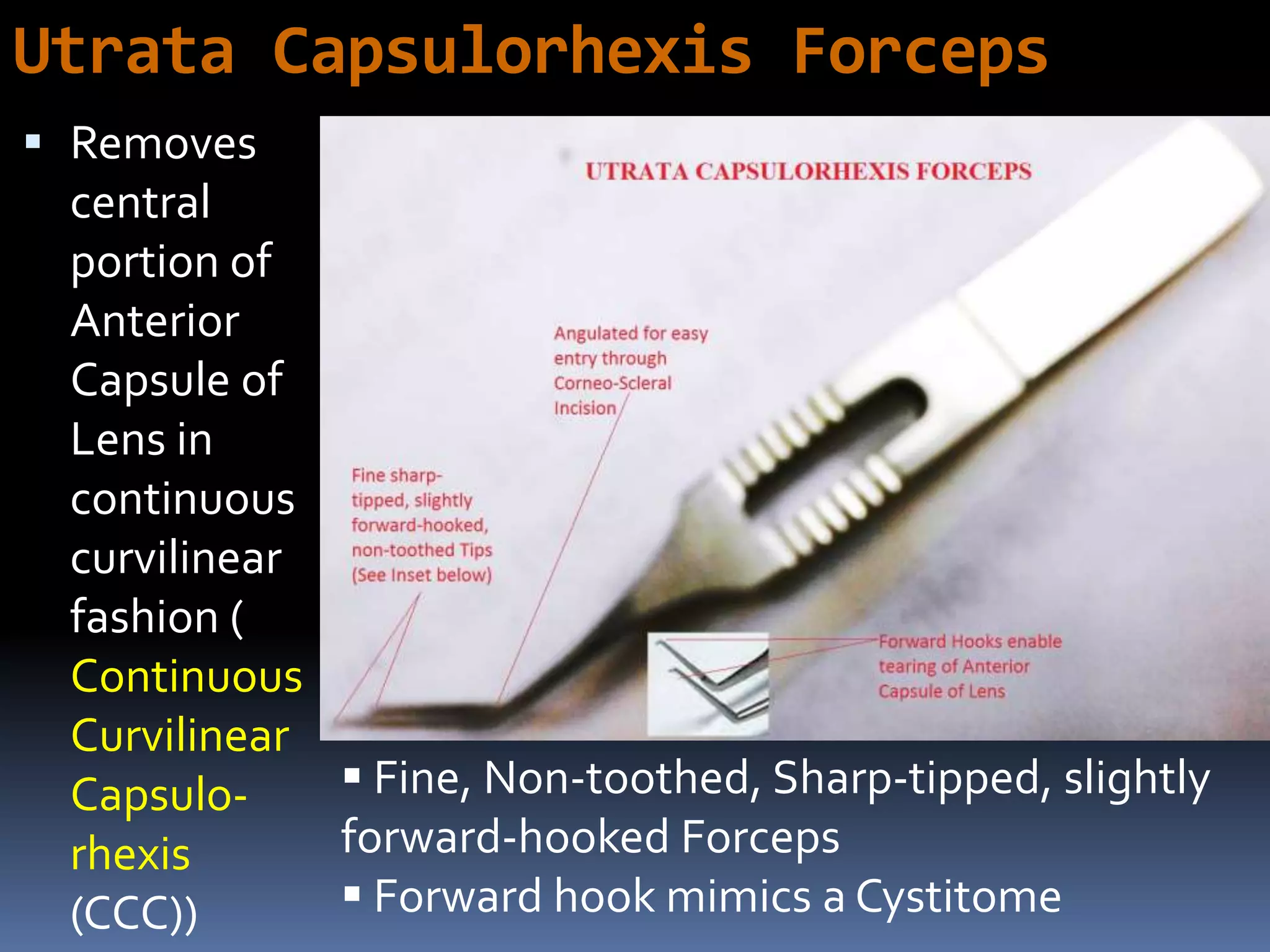
Utrata Capsulorhexis Forceps
 Removes
central
portion of
Anterior
Capsule of
Lens in
continuous
curvilinear
fashion (
Continuous
Curvilinear
Capsulo-
rhexis
(CCC))
 Fine, Non-toothed, Sharp-tipped, slightly
forward-hooked Forceps
 Forward hook mimics a Cystitome
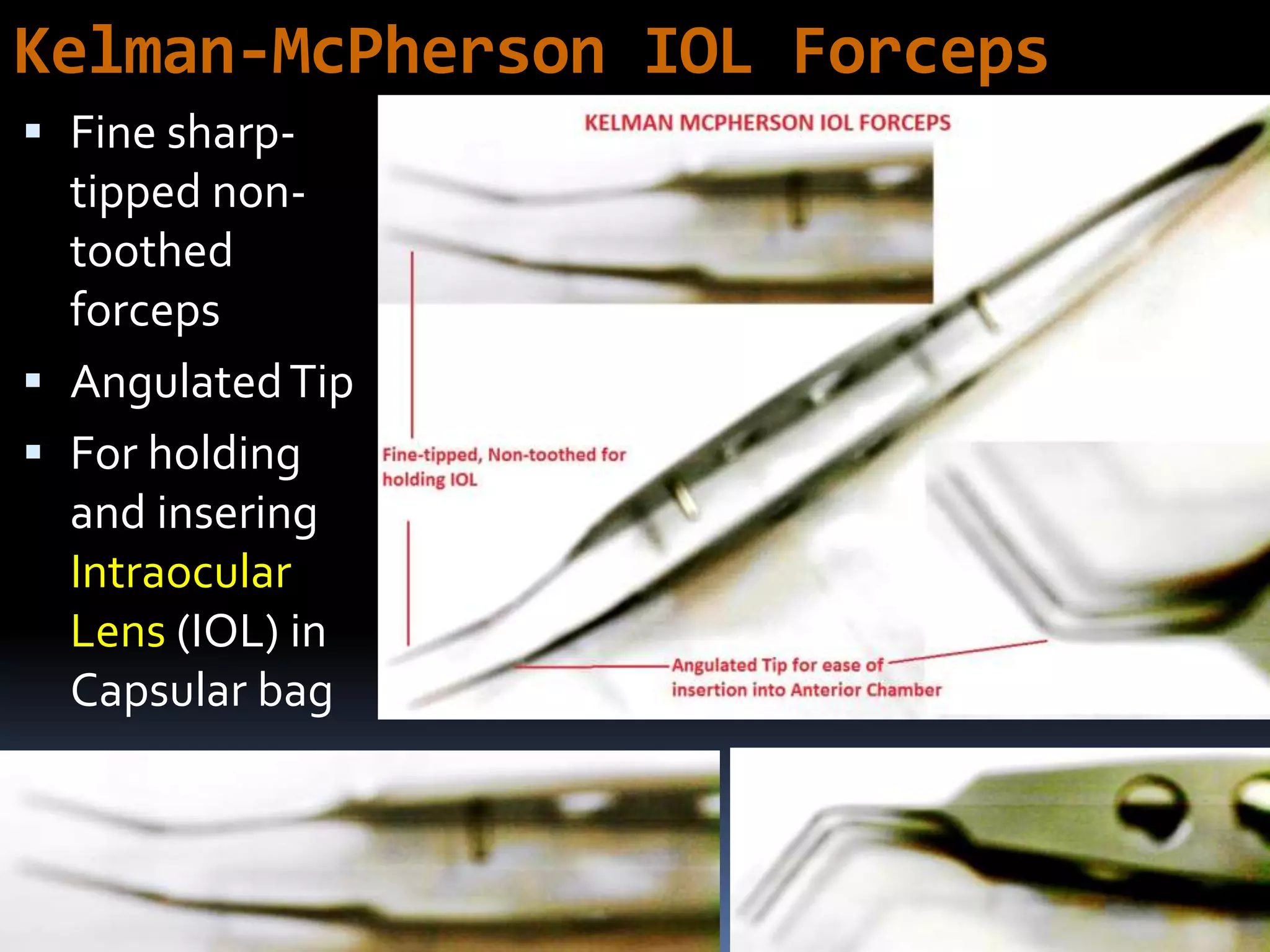
Kelman-McPherson IOL Forceps
 Fine sharp-
tipped non-
toothed
forceps
 AngulatedTip
 For holding
and inserting
Intraocular
Lens (IOL) in
Capsular bag
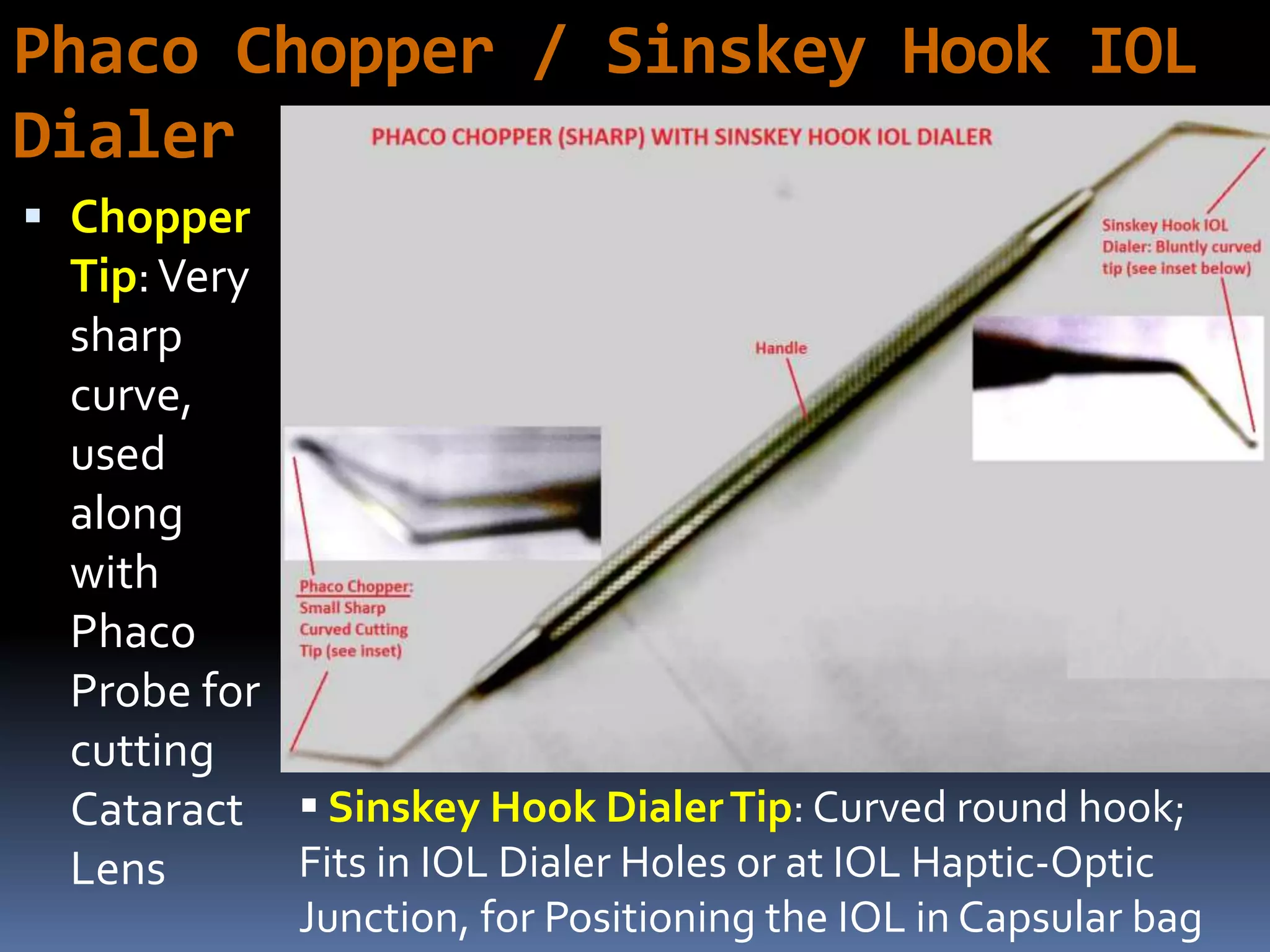
Phaco Chopper / Sinskey Hook IOL
Dialer
 Chopper
Tip:Very
sharp
curve,
used
along
with
Phaco
Probe for
cutting
Cataract
Lens
 Sinskey Hook DialerTip: Curved round hook;
Fits in IOL Dialer Holes or at IOL Haptic-Optic
Junction, for Positioning the IOL in Capsular bag
Thank you for
watching

Ophthalmic Surgery Instruments – Applications and Mechanics - Dr Sanjoy Sanyal

  • 1.
    OPHTHALMIC SURGERY INSTRUMENTS –APPLICATIONS AND MECHANICS Dr Sanjoy Sanyal Professor and Surgeon
  • 2.
    Who Will NeedThis?  Ophthalmic Residents inTraining  Ophthalmic SurgeryTechnicians  Ophthalmic OperatingTheater Assistants  Ophthalmic Surgery Nurses  Medical Students with interest in Ophthalmology Foreword  No specific order has been followed while describing the instruments  Cataract being very common, most instruments are related to Cataract surgery  Instruments were obtained from an Ophthalmologist’s clinic and pictures were taken with the author’s Low-Res camera  This is not a comprehensive list, not by a long shot! More such presentations will follow in due course
  • 3.
    Artery (Mosquito/Halsted) Forceps Basic instrument for any surgery  Numerous sizes exist  Straight / Curved Jaws  Small (4") Straight / Curved are a.k.a. Mosquito / Halsted's Forceps (afterWilliam Stewart Halsted)  Straight is for holding Stay- sutures orTissues  Curved is for catching / crushing small bleeders; a.k.a. 'Hemostat Forceps'
  • 4.
    Simcoe Irrigation-Aspiration Cannula Two Cannulae merged together, in Ophthalmic Surgery  One Hub is to introduce fluid in Anterior Chamber (AC)  Other Hub is to extract Lens matter, Blood etc from AC
  • 5.
    Universal Eye Speculum Separates Eyelids during Ophthalmic Procedures  Universal: Can be used on either Eye  Unguarded: Eyelashes can project into operating field  Adjustable: Screw-Handle controls separation of Eyelids  Screw-Handle is always onTemporal Side of Orbit
  • 6.
    Barraquer Wire Speculum– Adult  Separates Eyelids  Used on either eye  Unguarded: Eyelashes can project into operating field  Non- Adjustable: Fixed 22-25 mm separation of Eyelids  Springy light-wire Instrument Adult-size is 14 mm (length of Eyelids)
  • 7.
    Strabismus / Squint/ Muscle Hook  To lift up muscle during Strabismus (Squint) surgery  Double-curved end for hooking up Muscle  Sideways flattened tip for ease of insertion under Muscle near its insertion  Distinguish from Lens Expressor (blue inset picture), used to force out Lens in Cataract Extraction
  • 8.
    Superior Rectus-Holding Forceps Special double-curve to go inside Orbit and over Eyeball  Toothed tips for firmly grasping Superior Rectus Muscle
  • 9.
    Suture-Tying Forceps (Straight) Fine-limbed Non- toothed forceps to hold fine sutures (8-0)  Inner surface of Tip is faintly ridged, flat and slightly roughened to hold the fine suture  Straight Suture-Tying Forceps are held in Left Hand, for holding one end of the Suture
  • 10.
    Suture-Tying Forceps (Curved) Curved Suture-Tying Forceps are held in Right Hand, for holding other end of the Suture and tying the knot
  • 11.
    de' Wecker's IrisScissors  Small, Slender spring- open Scissors  Slightly larger than Vanna‘s Scissors  For Iridectomy and other delicate Intraocular Procedures
  • 12.
    Dastoor Pupil andIris Repositor  Two- limbed instrument  Pupil Repositor: Forked at the tip;To reposition Pupillary Margin  Iris Repositor: Flattened and rounded at the tip;To move or reposition the Iris during Intraocular Maneuvers
  • 13.
    Utrata Capsulorhexis Forceps Removes central portion of Anterior Capsule of Lens in continuous curvilinear fashion ( Continuous Curvilinear Capsulo- rhexis (CCC))  Fine, Non-toothed, Sharp-tipped, slightly forward-hooked Forceps  Forward hook mimics a Cystitome
  • 14.
    Kelman-McPherson IOL Forceps Fine sharp- tipped non- toothed forceps  AngulatedTip  For holding and inserting Intraocular Lens (IOL) in Capsular bag
  • 15.
    Phaco Chopper /Sinskey Hook IOL Dialer  Chopper Tip:Very sharp curve, used along with Phaco Probe for cutting Cataract Lens  Sinskey Hook DialerTip: Curved round hook; Fits in IOL Dialer Holes or at IOL Haptic-Optic Junction, for Positioning the IOL in Capsular bag
  • 16.