American History I
Portugal 
Prince Henry 
Established a route to 
India 
World leader 
Spain 
Gold, Glory, and God 
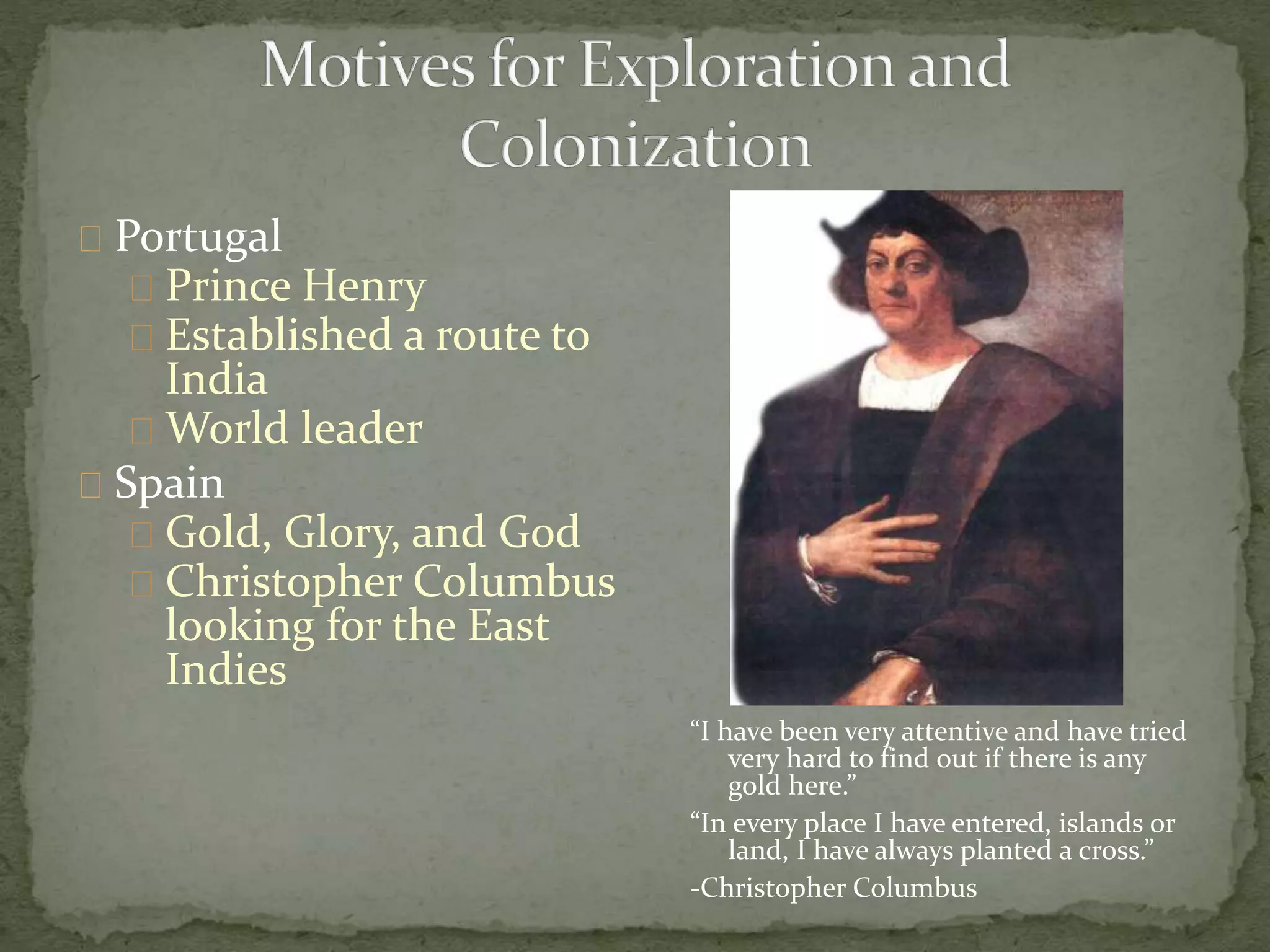
Christopher Columbus 
looking for the East 
Indies 
“I have been very attentive and have tried 
very hard to find out if there is any 
gold here.” 
“In every place I have entered, islands or 
land, I have always planted a cross.” 
-Christopher Columbus
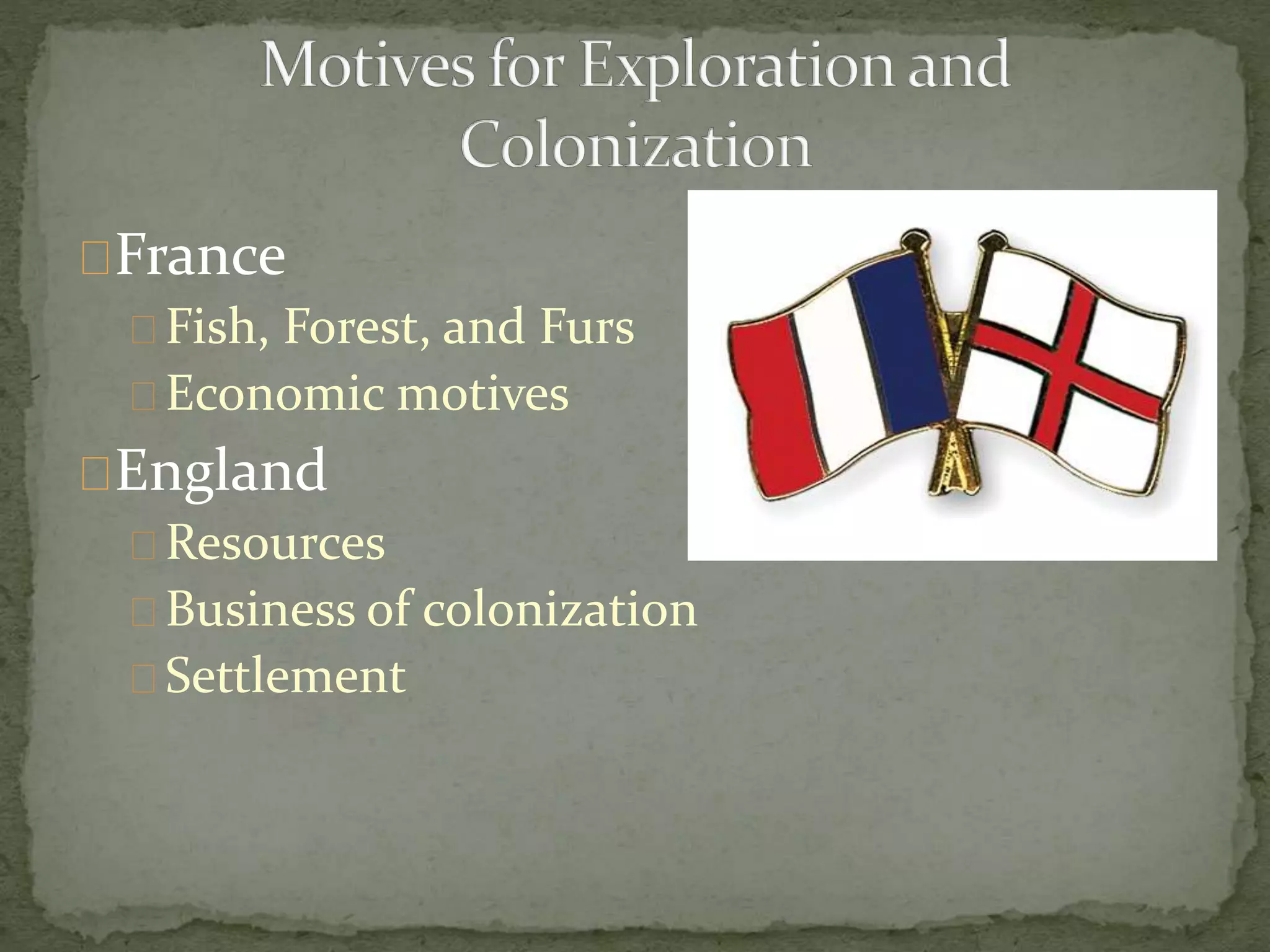
France 
Fish, Forest, and Furs 
Economic motives 
England 
Resources 
Business of colonization 
Settlement
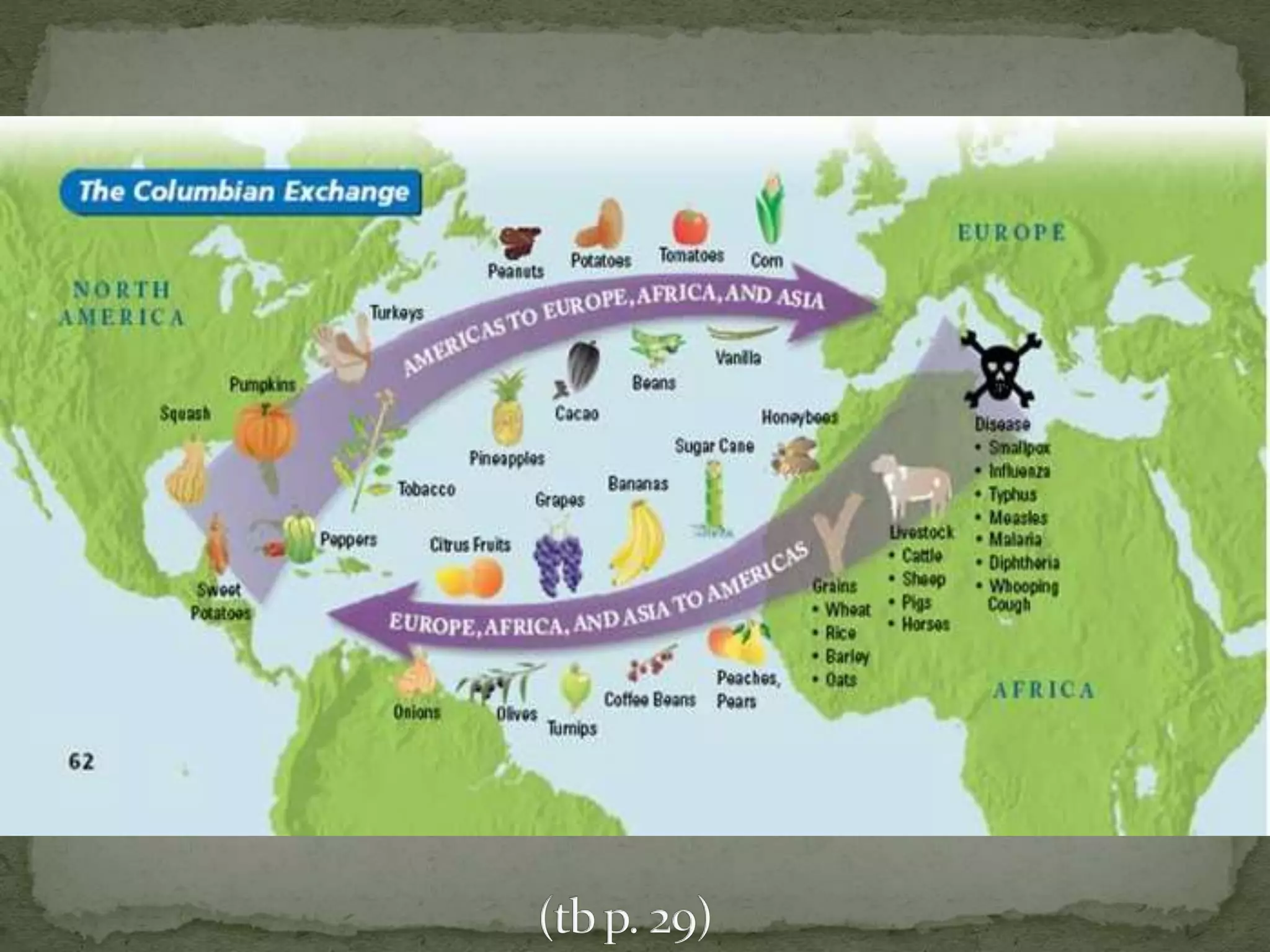
Exploration starts a global exchange and migration 
-Based on the voyages of Columbus and those after 
him 
-Western hemisphere  Eastern hemisphere 
-Includes plants, animals, disease, technology 
More food causes an explosion of population 
http://education-portal.com/academy/lesson/the-columbian- 
exchange-and-the-triangle-trade.html
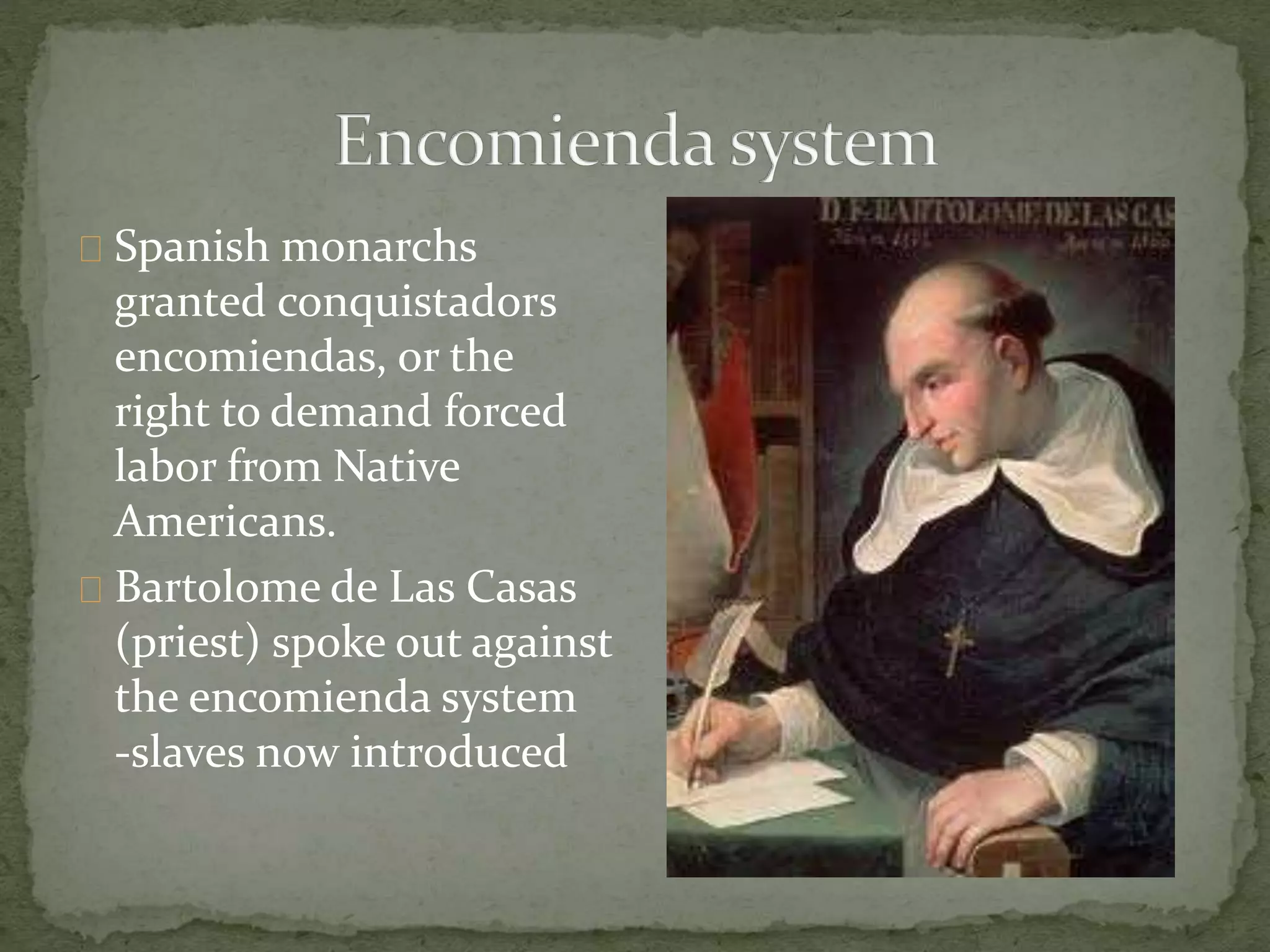
Spanish monarchs 
granted conquistadors 
encomiendas, or the 
right to demand forced 
labor from Native 
Americans. 
Bartolome de Las Casas 
(priest) spoke out against 
the encomienda system 
-slaves now introduced
What Is Mercantilism? 
Economic theory that a country should sell more 
goods to other countries than it buys
5 Parts to Mercantilism 
1. Try to get possession of as many precious metals as you 
can. 
2. Encourage foreign trade in preference to domestic 
trade (export more). 
3. Encourage those industries which change raw materials 
into exportable finished products. 
4. Encourage a large population, for you will need 
workmen for your factories and an agricultural 
community does not raise enough workmen. 
5. Let the State (the government) watch this process and 
interfere ONLY when it is necessary to do so.
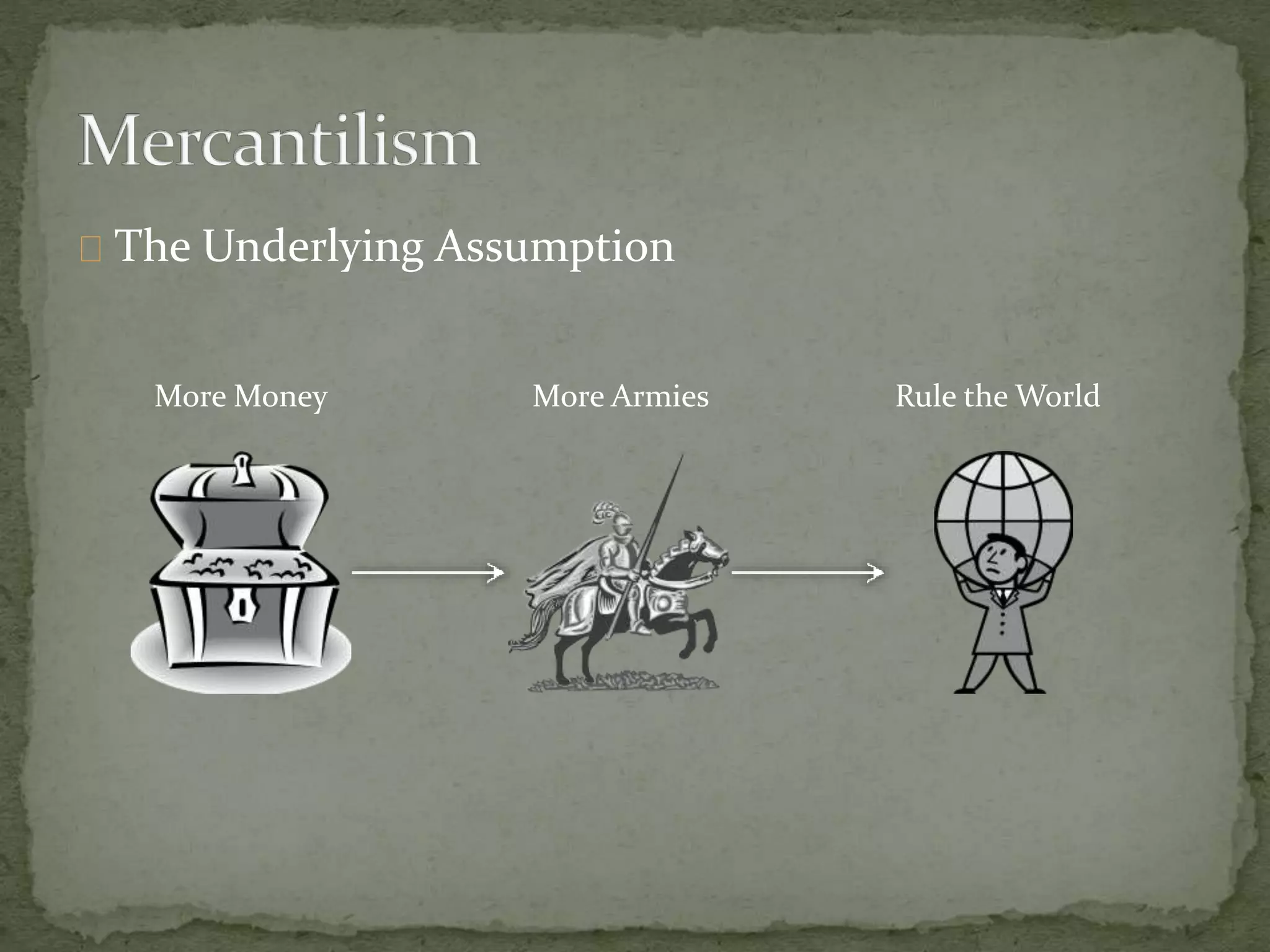
The Underlying Assumption 
More Money More Armies Rule the World
Role of Colonies 
colonies existed to benefit the mother country 
source of resources exported from the colonies to the 
mother country 
resources are made into finished products and sold to 
other nations or back to the colonies (market for 
manufactured goods) 
strict laws were frequently passed by the mother country 
to ensure that no one was cheating them out of money 
foreign trade by the colonies was often prohibited
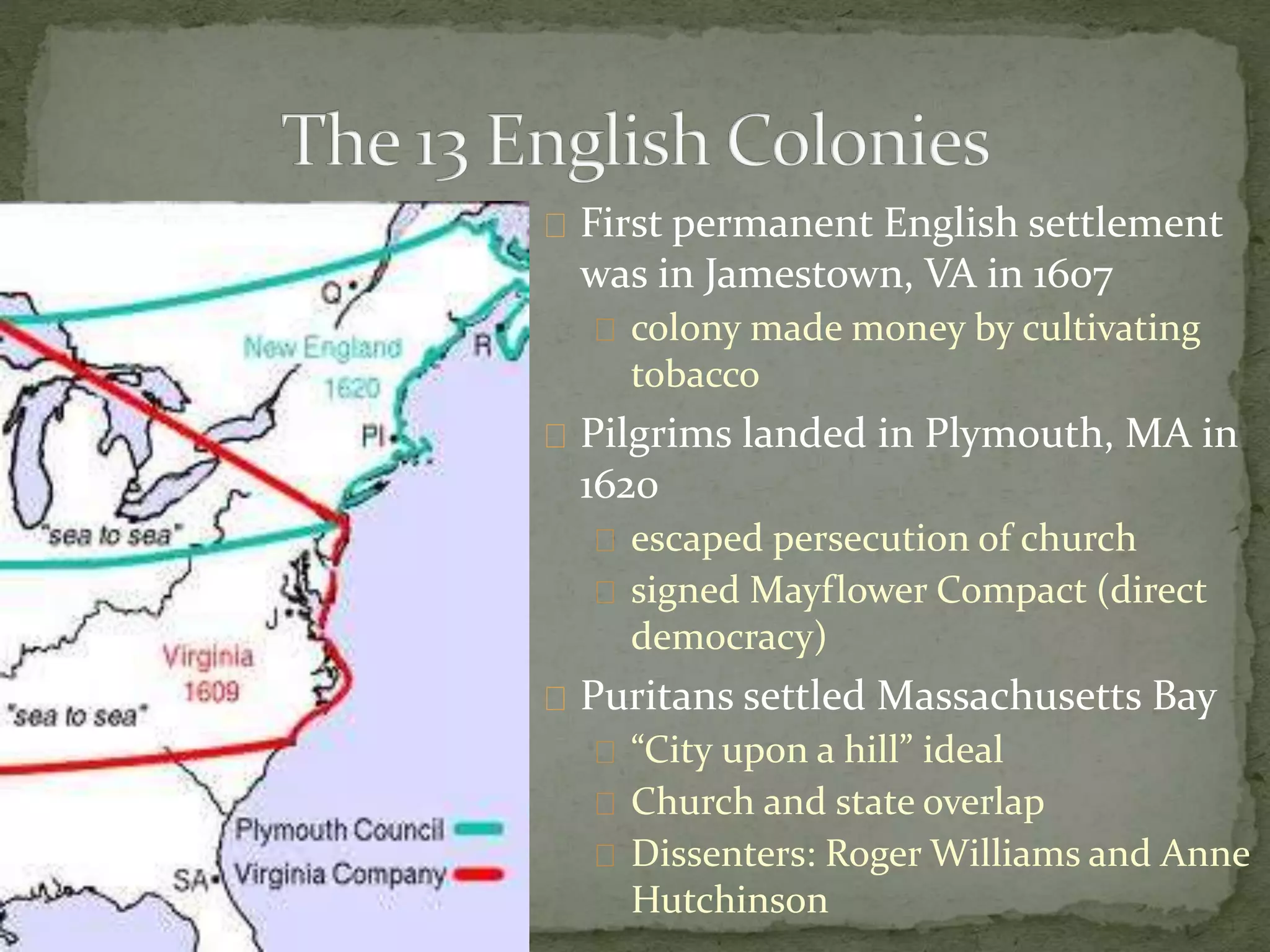
First permanent English settlement 
was in Jamestown, VA in 1607 
colony made money by cultivating 
tobacco 
Pilgrims landed in Plymouth, MA in 
1620 
escaped persecution of church 
signed Mayflower Compact (direct 
democracy) 
Puritans settled Massachusetts Bay 
“City upon a hill” ideal 
Church and state overlap 
Dissenters: Roger Williams and Anne 
Hutchinson
1. What factors contributed to the near failure of 
Jamestown? 
2. Why was tobacco so important to the Jamestown 
colony? 
3. How did the conditions of indentured servitude 
differ from those of the headright system? 
4. What factors led to the importation of African slaves 
to Virginia? 
5. Why were the colonists in conflict with the 
Powhatan?
1. What factors contributed to the near failure of 
Jamestown? 
Disease, unwillingness to work, and the hostile 
conditions of the Powhatan
2. Why was tobacco so important to the Jamestown 
colony? 
Tobacco became very popular in Europe and proved 
to be a highly profitable crop 
Cash Crop
3. How did the conditions of indentured servitude 
differ from those of the headright system? 
The headright system allowed settlers to purchase 
their own land. 
Indentured servants worked for a landowner for a 
limited period of time, usually four to seven years. 
They could be bought and sold by landowners until 
their debt was paid off
4. What factors led to the importation of African slaves 
to Virginia? 
As the number of indentured servants in the colony 
declined, colonists needed laborers to work their 
tobacco plantations. 
An increase in wealth enabled them to pay for more 
expensive African slaves.
5. Why were the colonists in conflict with the 
Powhatan? 
Settlers, still angry from Powhatan treatment during 
the “starving time,” began demanding tribute. 
Colonists kept moving further and further into 
Powhatan territory.
1. How were the Separatists different from other 
Puritans? 
2. Why did the Puritans leave England? 
3. Who could vote in the Massachusetts Bay colony? 
4. What two principles did Providence guarantee that 
Massachusetts Bay did not? 
5. How did Native Americans view land treaties?
1. How were the Separatists different from other 
Puritans? 
Separatists wanted to separate from the Anglican 
Church (the state church of England. 
Other Puritans wanted only to reform the Anglican 
Church from within
2. Why did the Puritans leave England? 
Some Puritans, such as the “Pilgrims” left to break 
with the church of England. 
Other Puritans left to escape political, social, and 
economic turmoil.
3. Who could vote in the Massachusetts Bay colony? 
Stockholders in the Massachusetts Bay Company and 
all adult males who belonged to the Puritan Church
4. What two principles did Providence guarantee that 
Massachusetts Bay did not? 
Separation of Church and State 
Religious Freedom
5. How did Native Americans view land treaties? 
Native Americans believed that land treaties were 
agreements to share not own the land, and for a 
limited period of time.
No country could trade with the colonies unless the 
goods were shipped in either colonial or English 
ships 
All vessels had to be operated by crews that were at 
least three-quarters English or colonial 
The colonies could export certain products only to 
England 
Almost all goods traded between the colonies and 
Europe first had to pass through an English port.
1. Why did Parliament pass the Navigation Acts? 
To tighten England’s control over colonial trade 
To protect against competition 
To increase England’s wealth
2. How did these Acts benefit England? 
Increased England’s wealth by creating and 
protecting jobs for English citizens 
Protected English access to certain colonial goods
3. How did these Acts benefit the colonies? 
Spurred a boom in the ship-building industry 
Led England to support colonial industries
4. How did the Acts hurt the colonies? 
Restricted trade
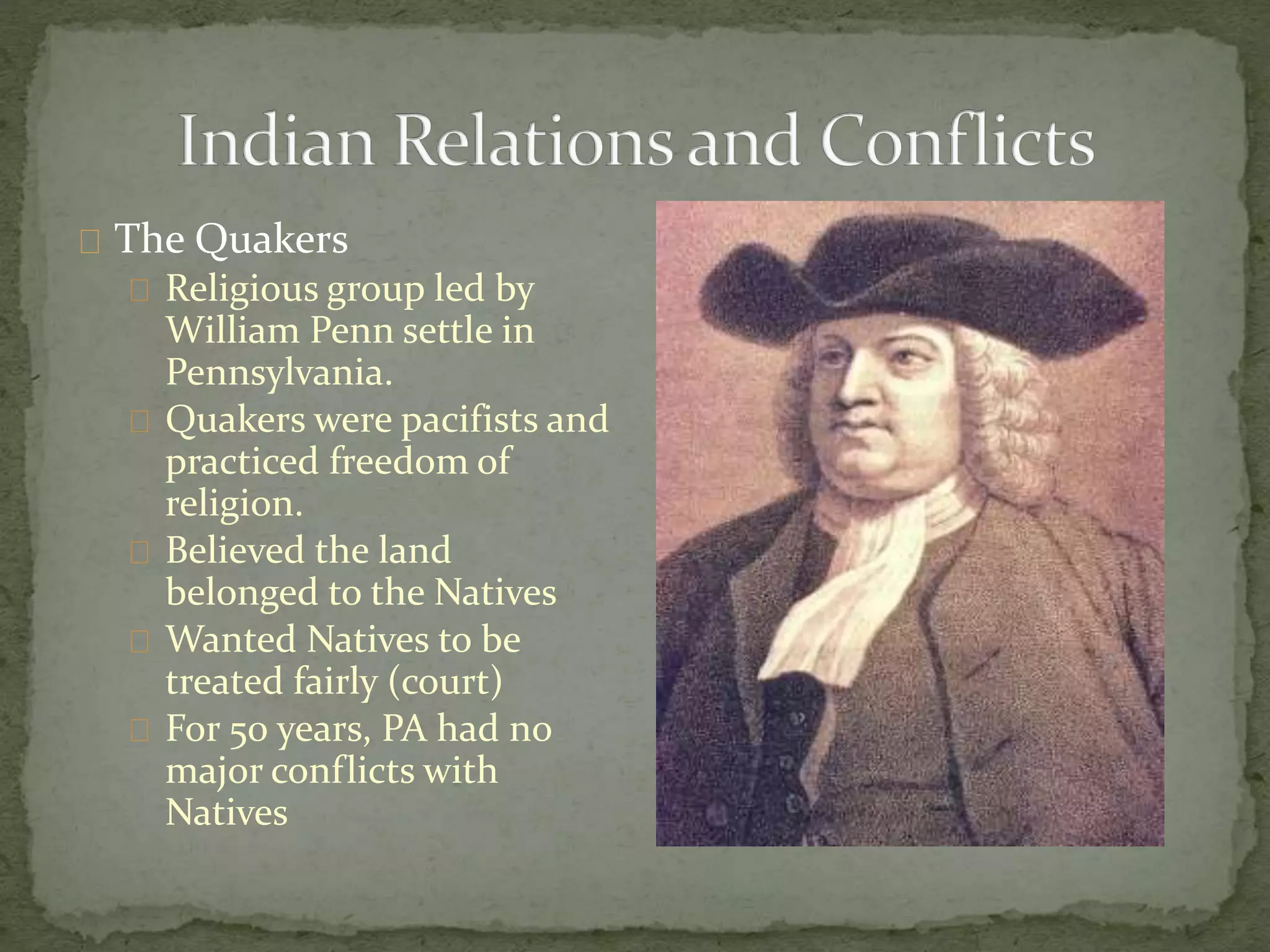
The Quakers 
Religious group led by 
William Penn settle in 
Pennsylvania. 
Quakers were pacifists and 
practiced freedom of 
religion. 
Believed the land 
belonged to the Natives 
Wanted Natives to be 
treated fairly (court) 
For 50 years, PA had no 
major conflicts with 
Natives
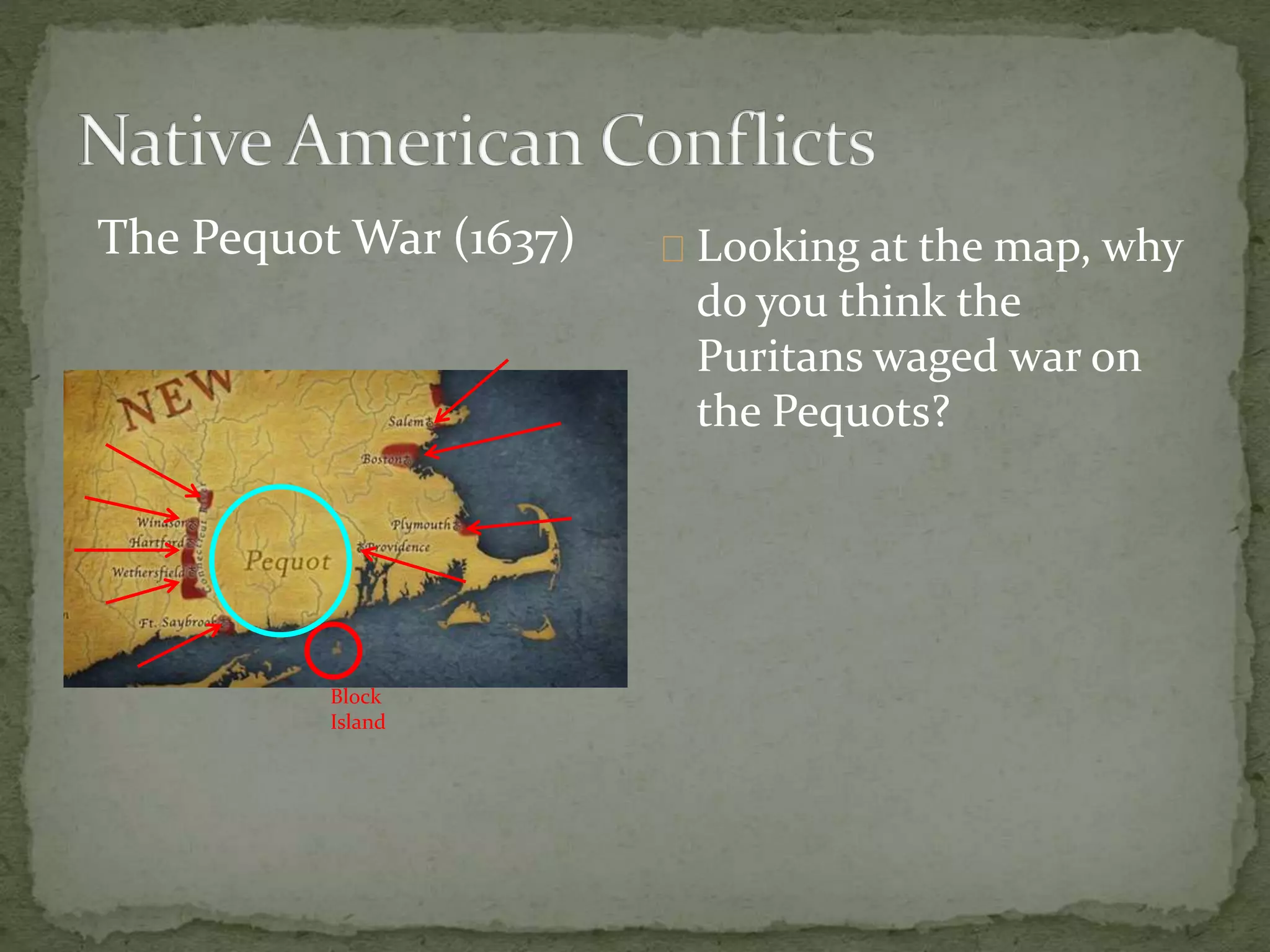
Looking at the map, why 
do you think the 
Puritans waged war on 
the Pequots? 
The Pequot War (1637) 
Block 
Island
The Pequot War (1637) 
a white trader, Indian-kidnapper, trouble maker was 
killed giving settlers an excuse to attack Natives 
Looking to avoid battle, colonists sought to terrorize 
Native-Americans by killing noncombatants (women 
and children) 
The Pequots were all but annihilated (and the 
Narragansetts on Block Island)
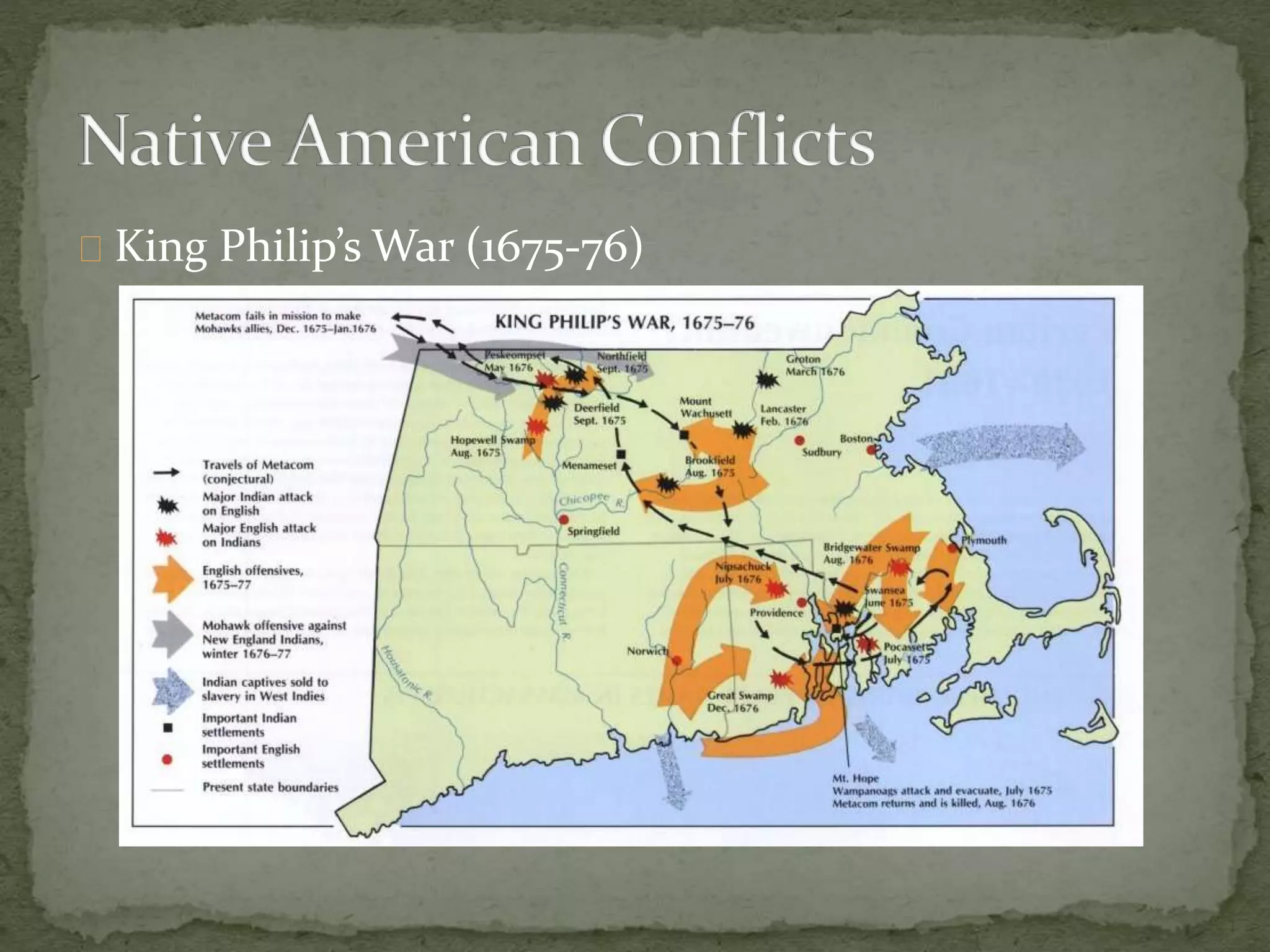
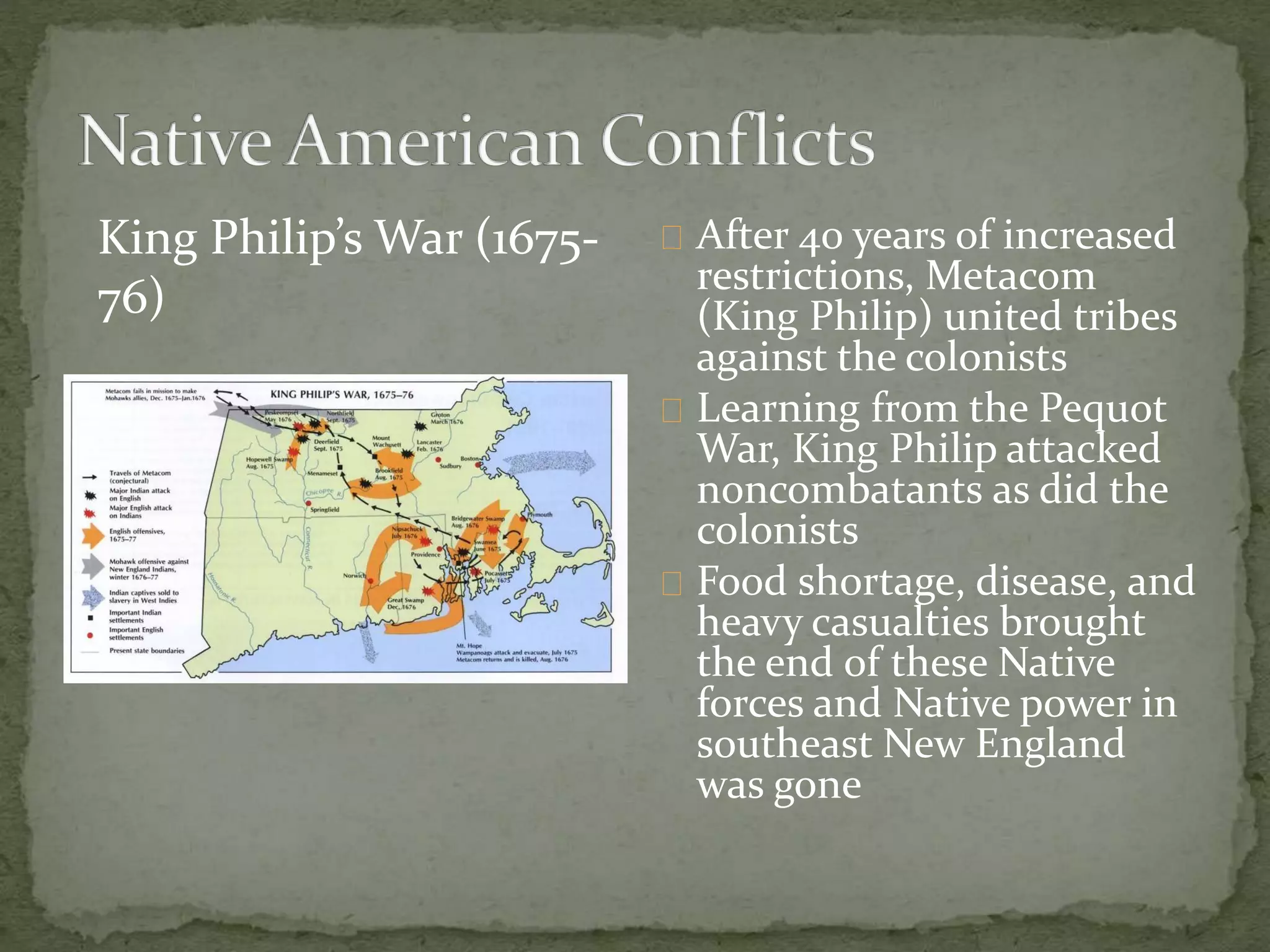
King Philip’s War (1675-76)
After 40 years of increased 
restrictions, Metacom 
(King Philip) united tribes 
against the colonists 
Learning from the Pequot 
War, King Philip attacked 
noncombatants as did the 
colonists 
Food shortage, disease, and 
heavy casualties brought 
the end of these Native 
forces and Native power in 
southeast New England 
was gone 
King Philip’s War (1675- 
76)
Bacon’s Rebellion (1676) 
Begins as a conflict between Virginia settlers on their 
western frontier and the Doeg and Susquehannock 
Indians 
Ultimately it became a political battle between the 
elite upper class, supported by Governor Berkley and 
the poor farmers, indentured servants, freemen, and 
slaves led by Nathaniel Bacon 
Bacon would lead his forces against Jamestown 
running Berkley off who would return 1 month later 
after Bacon dies.
Bacon’s Rebellion (1676) 
Berkley would be recalled to London to answer to the 
king for his failed policies 
Ultimately losing, Bacon is sometimes considered 
“The Torchbearer of the Revolution” 
the first struggle of common man v aristocrat 
frontier v tidewater 
defiance of a duly constituted authority 
This would be the same type of defiance that would 
spark the American Revolution 100 years later!
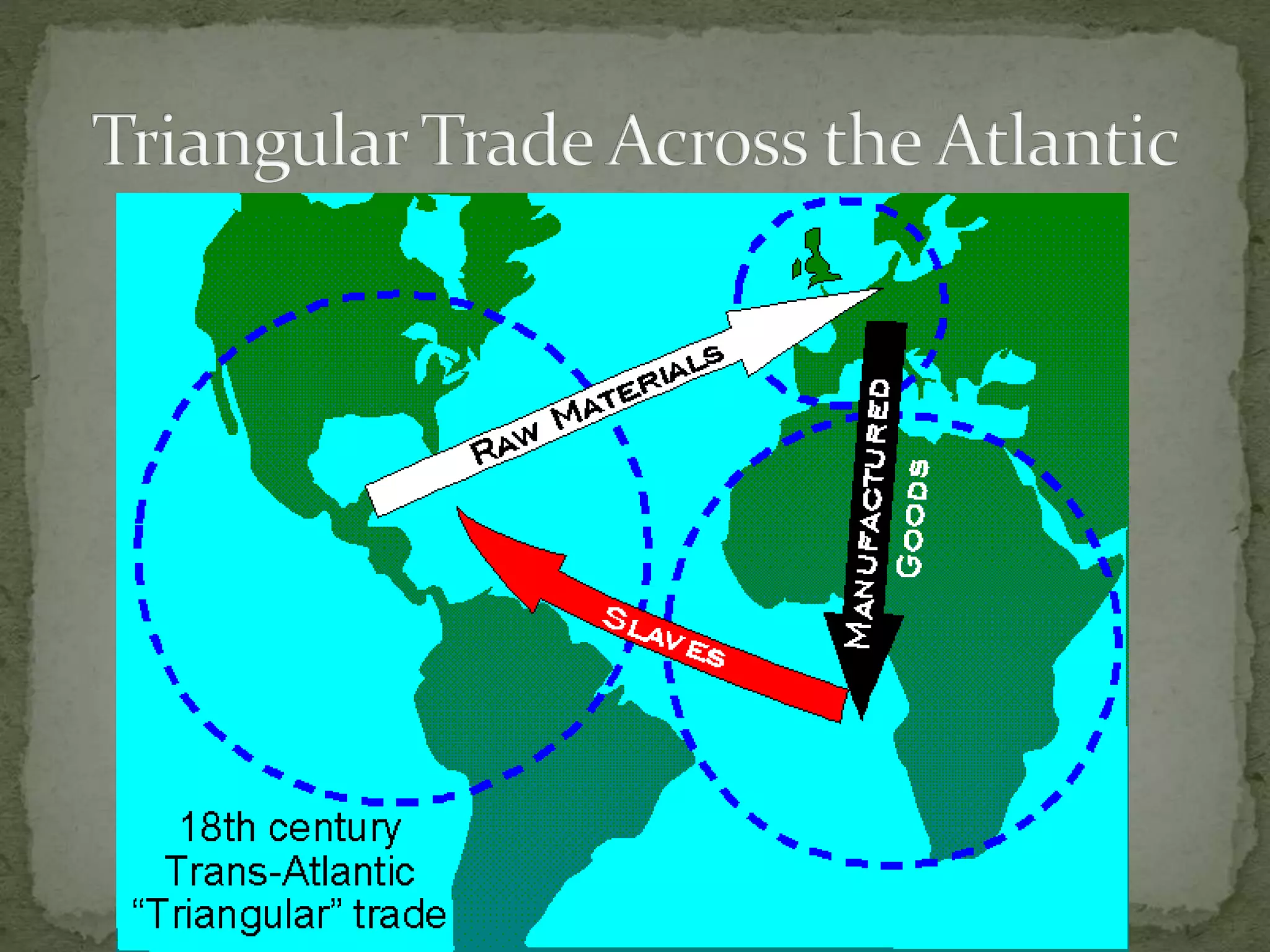
First leg: merchant ships brought European goods to 
Africa 
Middle Passage: European goods were traded for slaves 
and slaves were transported to the Americas 
Final Leg: Merchants sent goods to Europe to be 
manufactured 
Triangular trade was very profitable
Africans were kidnapped from their villages 
-tied together and forced to walk to port cities 
Once on the ships they were restrained below deck 
-disease, starvation, and suicide common 
-called floating coffins 
http://videos.howstuffworks.com/discovery/30011 
-assignment-discovery-the-middle-passage-video. 
htm
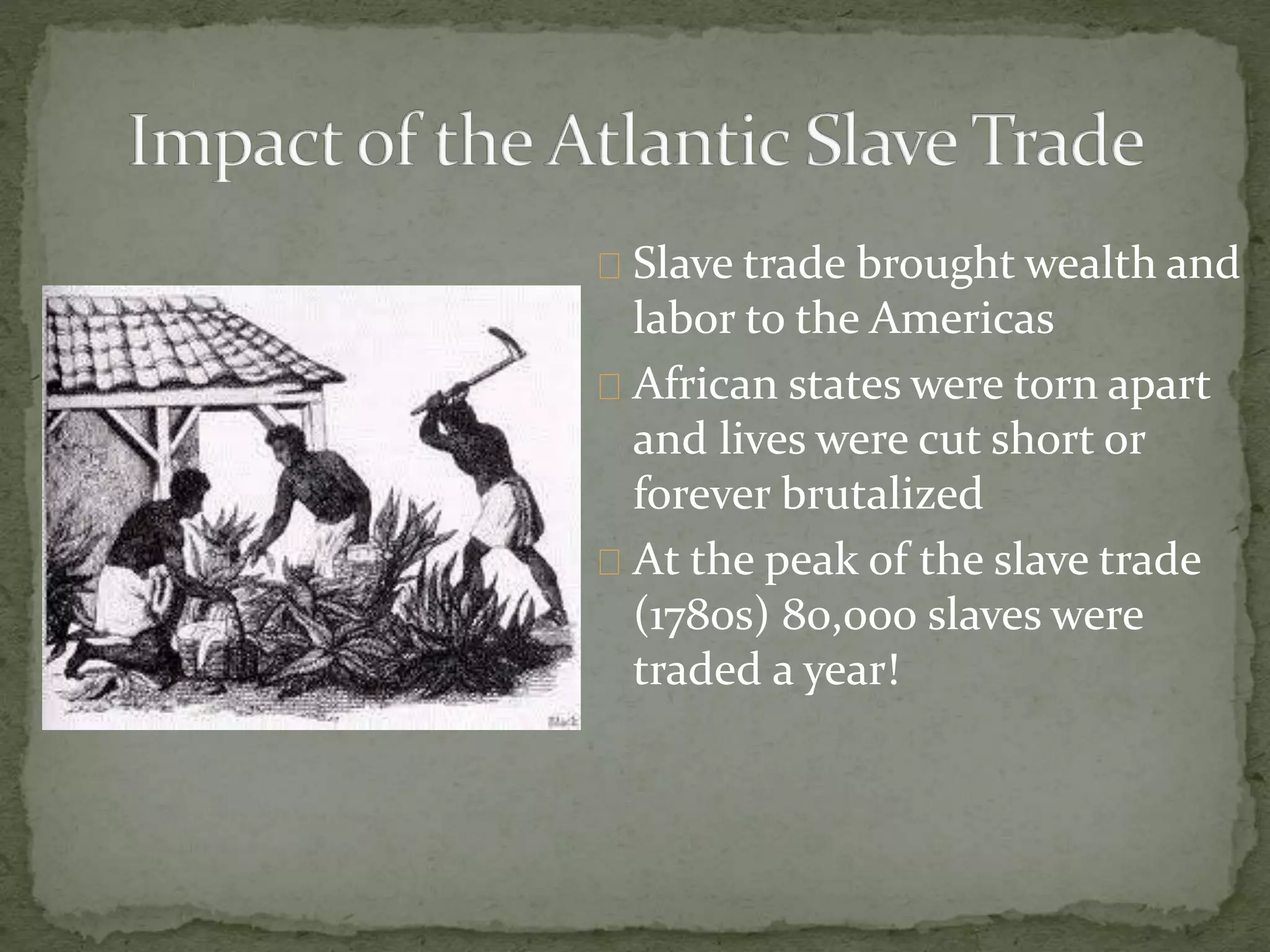
Slave trade brought wealth and 
labor to the Americas 
African states were torn apart 
and lives were cut short or 
forever brutalized 
At the peak of the slave trade 
(1780s) 80,000 slaves were 
traded a year!
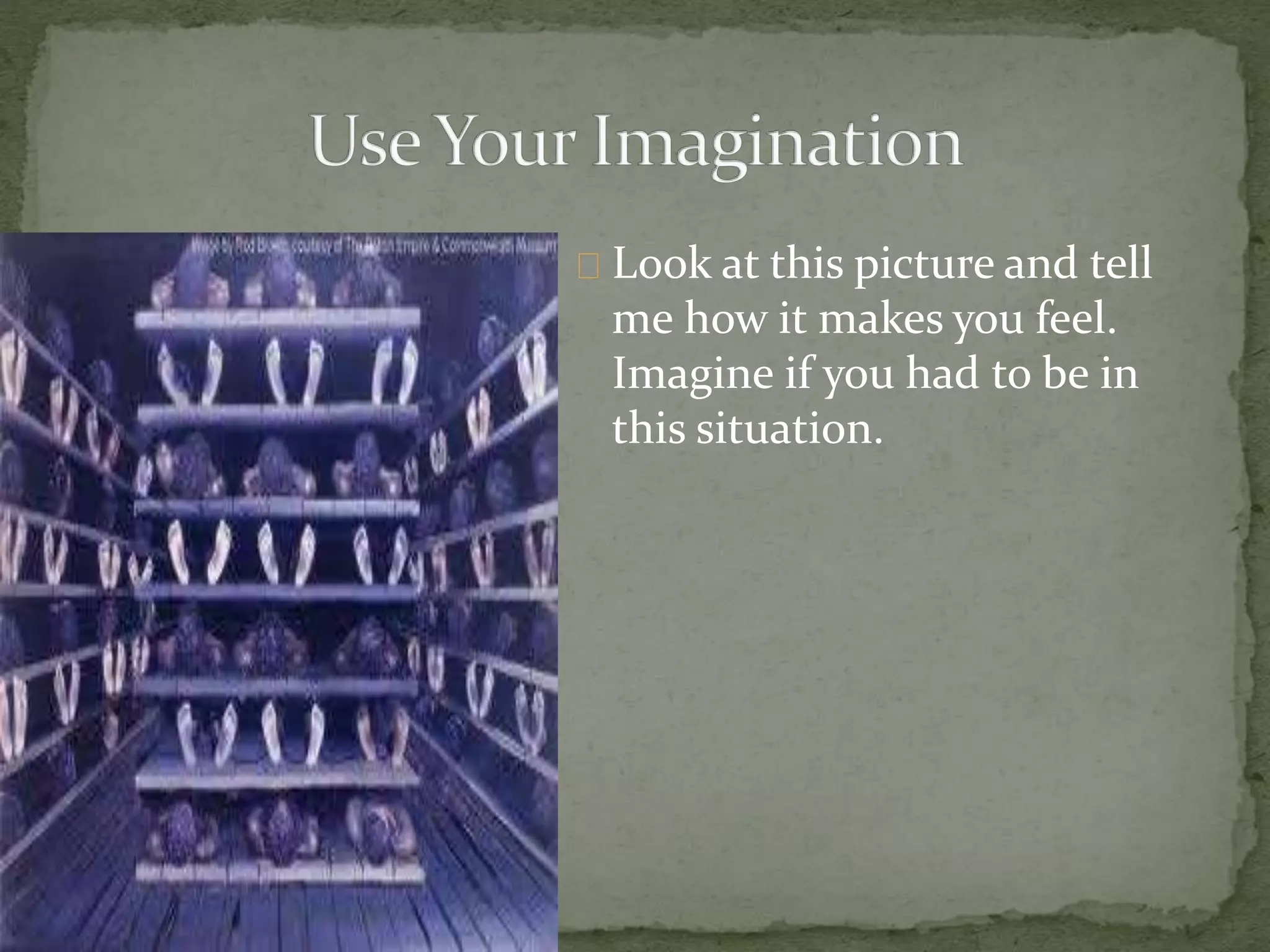
Look at this picture and tell 
me how it makes you feel. 
Imagine if you had to be in 
this situation.

Opening of the Colonies

  • 1.
  • 2.
    Portugal Prince Henry Established a route to India World leader Spain Gold, Glory, and God Christopher Columbus looking for the East Indies “I have been very attentive and have tried very hard to find out if there is any gold here.” “In every place I have entered, islands or land, I have always planted a cross.” -Christopher Columbus
  • 3.
    France Fish, Forest,and Furs Economic motives England Resources Business of colonization Settlement
  • 4.
    Exploration starts aglobal exchange and migration -Based on the voyages of Columbus and those after him -Western hemisphere  Eastern hemisphere -Includes plants, animals, disease, technology More food causes an explosion of population http://education-portal.com/academy/lesson/the-columbian- exchange-and-the-triangle-trade.html
  • 6.
    Spanish monarchs grantedconquistadors encomiendas, or the right to demand forced labor from Native Americans. Bartolome de Las Casas (priest) spoke out against the encomienda system -slaves now introduced
  • 7.
    What Is Mercantilism? Economic theory that a country should sell more goods to other countries than it buys
  • 8.
    5 Parts toMercantilism 1. Try to get possession of as many precious metals as you can. 2. Encourage foreign trade in preference to domestic trade (export more). 3. Encourage those industries which change raw materials into exportable finished products. 4. Encourage a large population, for you will need workmen for your factories and an agricultural community does not raise enough workmen. 5. Let the State (the government) watch this process and interfere ONLY when it is necessary to do so.
  • 9.
    The Underlying Assumption More Money More Armies Rule the World
  • 10.
    Role of Colonies colonies existed to benefit the mother country source of resources exported from the colonies to the mother country resources are made into finished products and sold to other nations or back to the colonies (market for manufactured goods) strict laws were frequently passed by the mother country to ensure that no one was cheating them out of money foreign trade by the colonies was often prohibited
  • 11.
    First permanent Englishsettlement was in Jamestown, VA in 1607 colony made money by cultivating tobacco Pilgrims landed in Plymouth, MA in 1620 escaped persecution of church signed Mayflower Compact (direct democracy) Puritans settled Massachusetts Bay “City upon a hill” ideal Church and state overlap Dissenters: Roger Williams and Anne Hutchinson
  • 12.
    1. What factorscontributed to the near failure of Jamestown? 2. Why was tobacco so important to the Jamestown colony? 3. How did the conditions of indentured servitude differ from those of the headright system? 4. What factors led to the importation of African slaves to Virginia? 5. Why were the colonists in conflict with the Powhatan?
  • 13.
    1. What factorscontributed to the near failure of Jamestown? Disease, unwillingness to work, and the hostile conditions of the Powhatan
  • 14.
    2. Why wastobacco so important to the Jamestown colony? Tobacco became very popular in Europe and proved to be a highly profitable crop Cash Crop
  • 15.
    3. How didthe conditions of indentured servitude differ from those of the headright system? The headright system allowed settlers to purchase their own land. Indentured servants worked for a landowner for a limited period of time, usually four to seven years. They could be bought and sold by landowners until their debt was paid off
  • 16.
    4. What factorsled to the importation of African slaves to Virginia? As the number of indentured servants in the colony declined, colonists needed laborers to work their tobacco plantations. An increase in wealth enabled them to pay for more expensive African slaves.
  • 17.
    5. Why werethe colonists in conflict with the Powhatan? Settlers, still angry from Powhatan treatment during the “starving time,” began demanding tribute. Colonists kept moving further and further into Powhatan territory.
  • 18.
    1. How werethe Separatists different from other Puritans? 2. Why did the Puritans leave England? 3. Who could vote in the Massachusetts Bay colony? 4. What two principles did Providence guarantee that Massachusetts Bay did not? 5. How did Native Americans view land treaties?
  • 19.
    1. How werethe Separatists different from other Puritans? Separatists wanted to separate from the Anglican Church (the state church of England. Other Puritans wanted only to reform the Anglican Church from within
  • 20.
    2. Why didthe Puritans leave England? Some Puritans, such as the “Pilgrims” left to break with the church of England. Other Puritans left to escape political, social, and economic turmoil.
  • 21.
    3. Who couldvote in the Massachusetts Bay colony? Stockholders in the Massachusetts Bay Company and all adult males who belonged to the Puritan Church
  • 22.
    4. What twoprinciples did Providence guarantee that Massachusetts Bay did not? Separation of Church and State Religious Freedom
  • 23.
    5. How didNative Americans view land treaties? Native Americans believed that land treaties were agreements to share not own the land, and for a limited period of time.
  • 24.
    No country couldtrade with the colonies unless the goods were shipped in either colonial or English ships All vessels had to be operated by crews that were at least three-quarters English or colonial The colonies could export certain products only to England Almost all goods traded between the colonies and Europe first had to pass through an English port.
  • 25.
    1. Why didParliament pass the Navigation Acts? To tighten England’s control over colonial trade To protect against competition To increase England’s wealth
  • 26.
    2. How didthese Acts benefit England? Increased England’s wealth by creating and protecting jobs for English citizens Protected English access to certain colonial goods
  • 27.
    3. How didthese Acts benefit the colonies? Spurred a boom in the ship-building industry Led England to support colonial industries
  • 28.
    4. How didthe Acts hurt the colonies? Restricted trade
  • 29.
    The Quakers Religiousgroup led by William Penn settle in Pennsylvania. Quakers were pacifists and practiced freedom of religion. Believed the land belonged to the Natives Wanted Natives to be treated fairly (court) For 50 years, PA had no major conflicts with Natives
  • 30.
    Looking at themap, why do you think the Puritans waged war on the Pequots? The Pequot War (1637) Block Island
  • 31.
    The Pequot War(1637) a white trader, Indian-kidnapper, trouble maker was killed giving settlers an excuse to attack Natives Looking to avoid battle, colonists sought to terrorize Native-Americans by killing noncombatants (women and children) The Pequots were all but annihilated (and the Narragansetts on Block Island)
  • 32.
  • 33.
    After 40 yearsof increased restrictions, Metacom (King Philip) united tribes against the colonists Learning from the Pequot War, King Philip attacked noncombatants as did the colonists Food shortage, disease, and heavy casualties brought the end of these Native forces and Native power in southeast New England was gone King Philip’s War (1675- 76)
  • 34.
    Bacon’s Rebellion (1676) Begins as a conflict between Virginia settlers on their western frontier and the Doeg and Susquehannock Indians Ultimately it became a political battle between the elite upper class, supported by Governor Berkley and the poor farmers, indentured servants, freemen, and slaves led by Nathaniel Bacon Bacon would lead his forces against Jamestown running Berkley off who would return 1 month later after Bacon dies.
  • 35.
    Bacon’s Rebellion (1676) Berkley would be recalled to London to answer to the king for his failed policies Ultimately losing, Bacon is sometimes considered “The Torchbearer of the Revolution” the first struggle of common man v aristocrat frontier v tidewater defiance of a duly constituted authority This would be the same type of defiance that would spark the American Revolution 100 years later!
  • 36.
    First leg: merchantships brought European goods to Africa Middle Passage: European goods were traded for slaves and slaves were transported to the Americas Final Leg: Merchants sent goods to Europe to be manufactured Triangular trade was very profitable
  • 38.
    Africans were kidnappedfrom their villages -tied together and forced to walk to port cities Once on the ships they were restrained below deck -disease, starvation, and suicide common -called floating coffins http://videos.howstuffworks.com/discovery/30011 -assignment-discovery-the-middle-passage-video. htm
  • 39.
    Slave trade broughtwealth and labor to the Americas African states were torn apart and lives were cut short or forever brutalized At the peak of the slave trade (1780s) 80,000 slaves were traded a year!
  • 40.
    Look at thispicture and tell me how it makes you feel. Imagine if you had to be in this situation.