CHLOROPLAST- DNA
(cpDNA)
PRESENTED BY:
Noopur Joshi
(M.Sc. I Semester)
DEPARTMENT:
Biotechnology
INTRODUCTION TO CHLOROPLAST
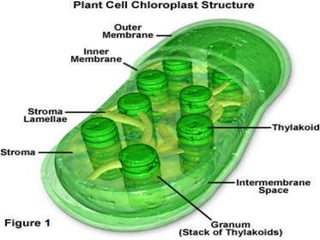
• Chloroplasts are the most widely distributed plastids
and one of the most important of all.
• Their shapes vary from filamentous, saucer shape to
discoid or club shaped.
• Generally, they measure 2-3µm in thickness & 5-
10µm in diameter, however this measure changes
with the specie.
• Their no. in a cell remains constant for a specie but
may also vary with the specie and within the specie.
CHLOROPLAST AS A
SEMI-AUTONOMOUS ORGANELLE
RIBOSOMES OF CHLOROPLAST:
Are smaller than the cytoplasmic ribosomes.
Are of 70S type and resemble to those of bacterial
ribosomes.
They consist of two ribosomal RNAs; 23S rRNA and
16S rRNA.
Polysomes have also been reported to be found in
the chloroplast.
Aminoacyl-tRNAs, aminoacyl-tRNA synthetases and
methionyl-tRNA are also found in chloroplast.
cpDNA:
Salient Features
• Ris and Plant(1962),first reported DNA molecules in
the chloroplast of Chlamydomonas.
• The DNA molecule here is genreally double helical,
• Average length: 45µm i.e. about 135,000 bp
• Replication of chloroplast DNA has been followed
with ³H-thymidine.
• Genetic maps of chloroplast DNA have been
successfully made by the use of restriction enzymes.
The chloroplast DNA (cpDNA) codes for following:
• Choloroplast mRNA
• Chloroplast rRNA
• Chloroplast tRNA
• Chloroplast ribosomal protiens
• Certain structural proteins of thyllakoid membranes.
• The larger subunits of C Dase enzyme which weighs
about 55,000D
• In higher plants, cpDNAs range in size from 120-
160kb .
• In algae: 85-292kb choloroplast genomes are found
where the cpDNa is circular.
• In 2 species of green algae of genus Acetabularia,
the cpDNAs appear to be huge; about 2000kb.
• The large single chloroplast of Chlamydomonas
reinhardtii contains about 200 copies of the cpDNA.
• All the chloroplast genomes analyzed till now
contain the same set of genes, but with these
arranged very differently on the cpDNAs
• Genes present on cpDNAs can be grouped into 2:
1) Those that encode for the components of
chloroplast protein biosynthetic apparatus:
RNA pol subunits,
 structural components of chloroplast ribosome
subunits
Set of tRNAs
2) Those specifying the components of the
photosynthetic machinery:-
 PS I
 PS II
 ETC
• The chloroplast genomes of higher plants are
about one-20th to one-30th the size of the genomes
of the prokaryotic genomes, from whcich they are
believed to have evolved( cyanobacteria).
• THUS, chloroplasts have lost much of the genetic
information of their ancestors, and have become
dependent much on nuclear genes of the host cell
for many essential components.
• Comparative studies of chloroplast genomes have
provided information about the evolutionary
relationship of plant and algal species.
• J.D.Palmer has distinguished 6 major lines of
chloroplast evolution.
• The chloroplast genomes present in different
evolutionary lines contain nearly the same genes
but in different arrangementson the cpDNA
molecules.
END

Chloroplast dna

  • 1.
    CHLOROPLAST- DNA (cpDNA) PRESENTED BY: NoopurJoshi (M.Sc. I Semester) DEPARTMENT: Biotechnology
  • 2.
    INTRODUCTION TO CHLOROPLAST •Chloroplasts are the most widely distributed plastids and one of the most important of all. • Their shapes vary from filamentous, saucer shape to discoid or club shaped. • Generally, they measure 2-3µm in thickness & 5- 10µm in diameter, however this measure changes with the specie. • Their no. in a cell remains constant for a specie but may also vary with the specie and within the specie.
  • 4.
  • 5.
    RIBOSOMES OF CHLOROPLAST: Aresmaller than the cytoplasmic ribosomes. Are of 70S type and resemble to those of bacterial ribosomes. They consist of two ribosomal RNAs; 23S rRNA and 16S rRNA. Polysomes have also been reported to be found in the chloroplast. Aminoacyl-tRNAs, aminoacyl-tRNA synthetases and methionyl-tRNA are also found in chloroplast.
  • 6.
  • 7.
    • Ris andPlant(1962),first reported DNA molecules in the chloroplast of Chlamydomonas. • The DNA molecule here is genreally double helical, • Average length: 45µm i.e. about 135,000 bp • Replication of chloroplast DNA has been followed with ³H-thymidine. • Genetic maps of chloroplast DNA have been successfully made by the use of restriction enzymes.
  • 8.
    The chloroplast DNA(cpDNA) codes for following: • Choloroplast mRNA • Chloroplast rRNA • Chloroplast tRNA • Chloroplast ribosomal protiens • Certain structural proteins of thyllakoid membranes. • The larger subunits of C Dase enzyme which weighs about 55,000D
  • 9.
    • In higherplants, cpDNAs range in size from 120- 160kb . • In algae: 85-292kb choloroplast genomes are found where the cpDNa is circular. • In 2 species of green algae of genus Acetabularia, the cpDNAs appear to be huge; about 2000kb. • The large single chloroplast of Chlamydomonas reinhardtii contains about 200 copies of the cpDNA.
  • 10.
    • All thechloroplast genomes analyzed till now contain the same set of genes, but with these arranged very differently on the cpDNAs • Genes present on cpDNAs can be grouped into 2: 1) Those that encode for the components of chloroplast protein biosynthetic apparatus: RNA pol subunits,  structural components of chloroplast ribosome subunits Set of tRNAs
  • 11.
    2) Those specifyingthe components of the photosynthetic machinery:-  PS I  PS II  ETC • The chloroplast genomes of higher plants are about one-20th to one-30th the size of the genomes of the prokaryotic genomes, from whcich they are believed to have evolved( cyanobacteria). • THUS, chloroplasts have lost much of the genetic information of their ancestors, and have become dependent much on nuclear genes of the host cell for many essential components.
  • 12.
    • Comparative studiesof chloroplast genomes have provided information about the evolutionary relationship of plant and algal species. • J.D.Palmer has distinguished 6 major lines of chloroplast evolution. • The chloroplast genomes present in different evolutionary lines contain nearly the same genes but in different arrangementson the cpDNA molecules.
  • 13.