Presented by: Parth Upadhyay
Shikha Karamchandani
Kajal Patel
Mukesh Makwana
Chirag Dabhi
Presented to: Dr. Darshana Dave
What is communication?
What is Non Verbal Communication?
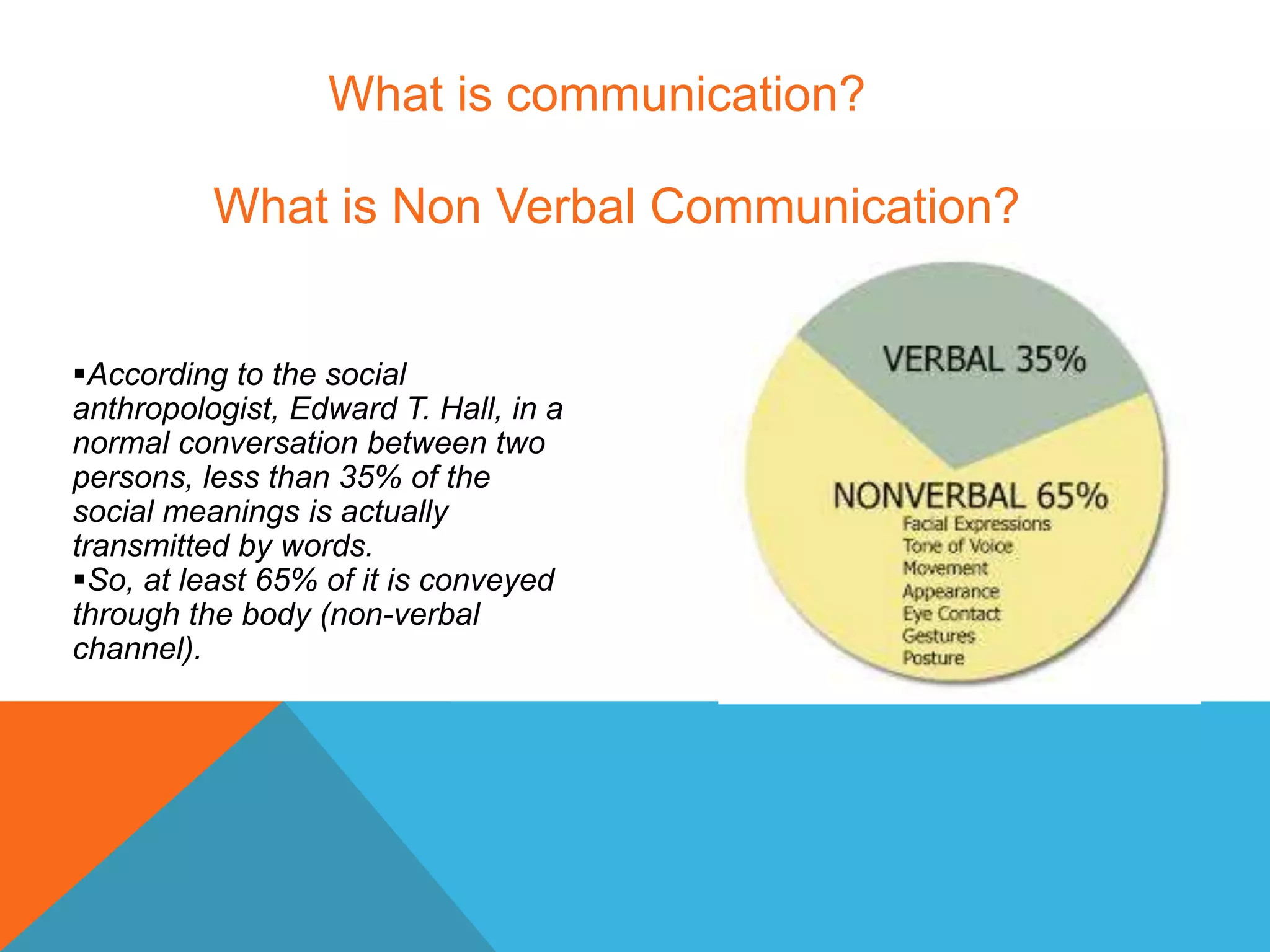
According to the social
anthropologist, Edward T. Hall, in a
normal conversation between two
persons, less than 35% of the
social meanings is actually
transmitted by words.
So, at least 65% of it is conveyed
through the body (non-verbal
channel).
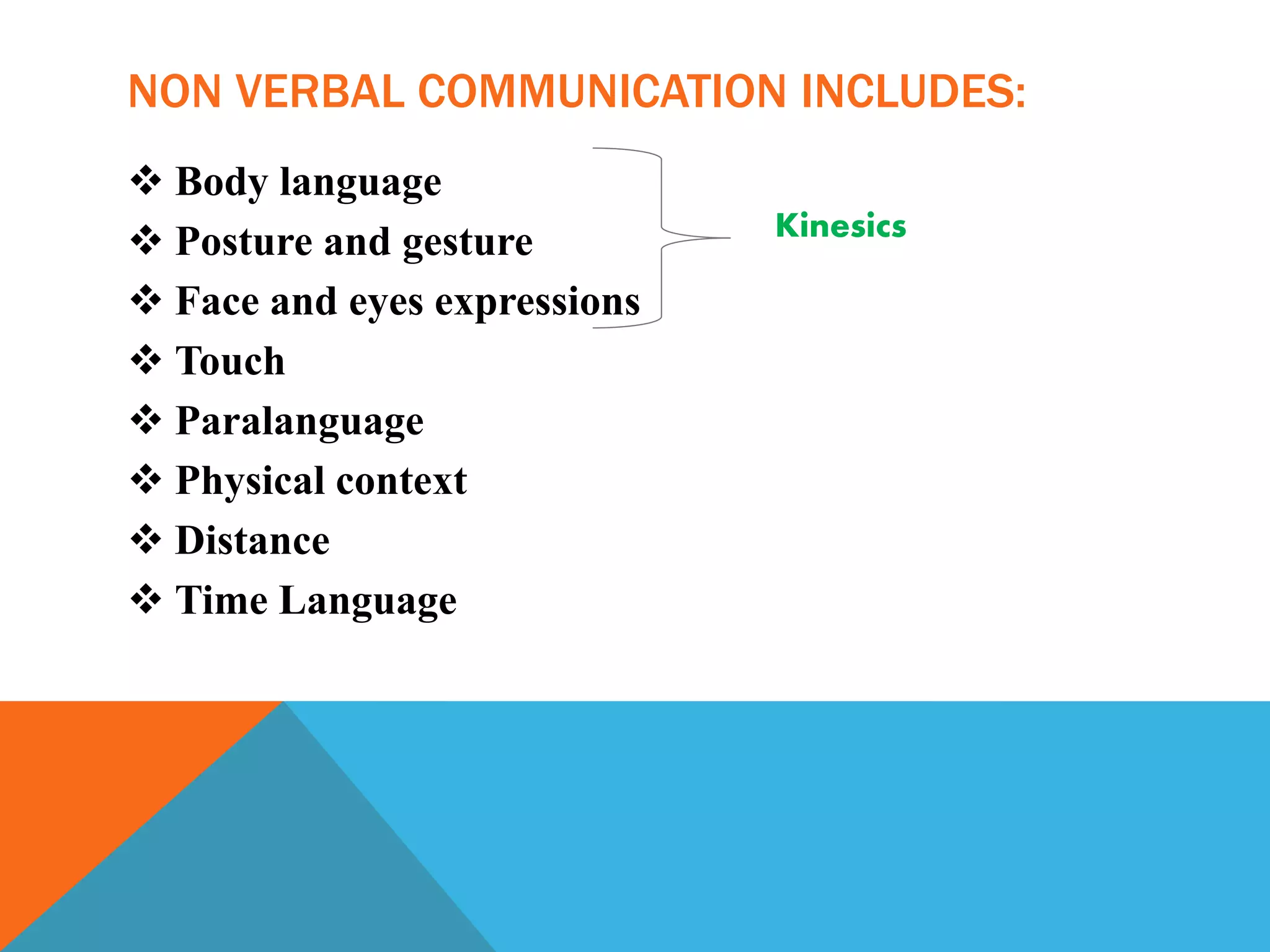
NON VERBAL COMMUNICATION INCLUDES:
 Body language
 Posture and gesture
 Face and eyes expressions
 Touch
 Paralanguage
 Physical context
 Distance
 Time Language
Kinesics
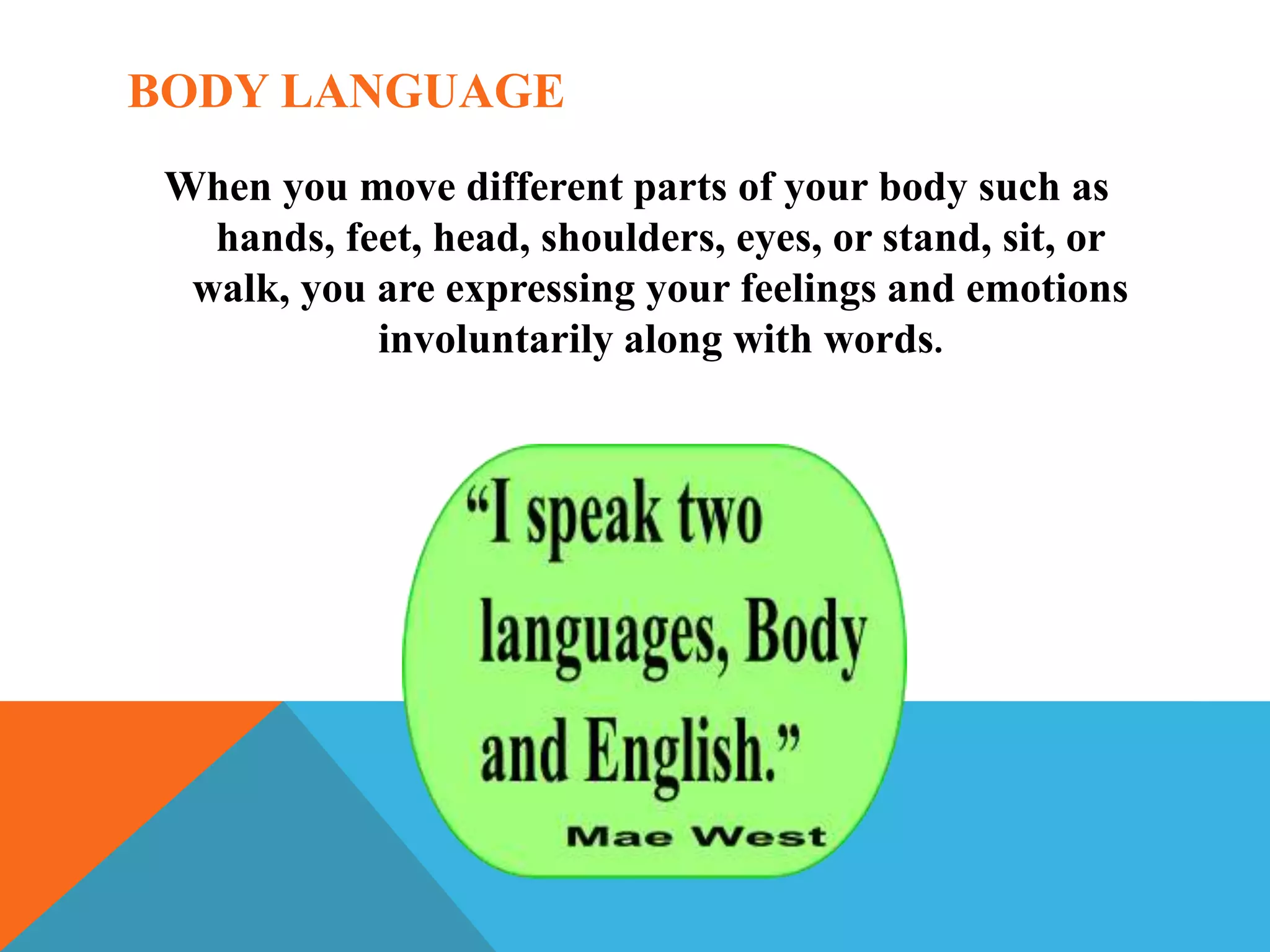
BODY LANGUAGE
When you move different parts of your body such as
hands, feet, head, shoulders, eyes, or stand, sit, or
walk, you are expressing your feelings and emotions
involuntarily along with words.
POSTURES AND GESTURES
Posture: A person’s general posture, even without specific gestures,
communicates meaning. The body position of an individual conveys
variety of messages. It is the position of the body or body parts.
TYPES OF GESTURES
FACE AND EYES EXPRESSIONS
The non-verbal messages sent by this channel are often the first to be noticed. But it
is difficult to interpret because of the tremendous complexity of possible
expressions. There are so many ways in which the eye brows, forehead, eyes, lips
and jaws can move.
TOUCH
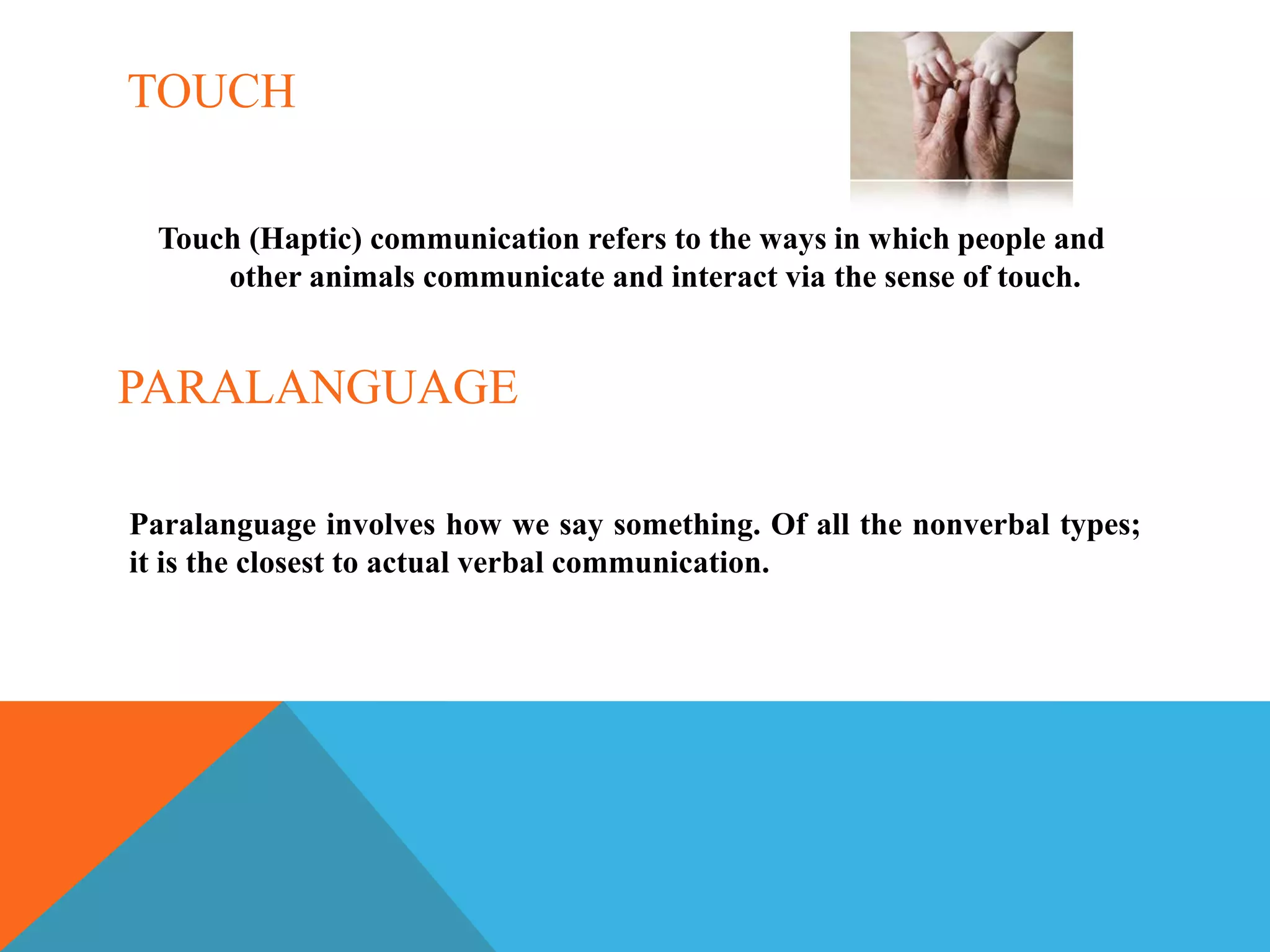
Touch (Haptic) communication refers to the ways in which people and
other animals communicate and interact via the sense of touch.
PARALANGUAGE
Paralanguage involves how we say something. Of all the nonverbal types;
it is the closest to actual verbal communication.
PHYSICAL CONTEXT
Physical context in nonverbal communication refers to how colour
and layout/design communicate.
There are three parts of physical context:
 Colour
 Layout and design
 Appearance
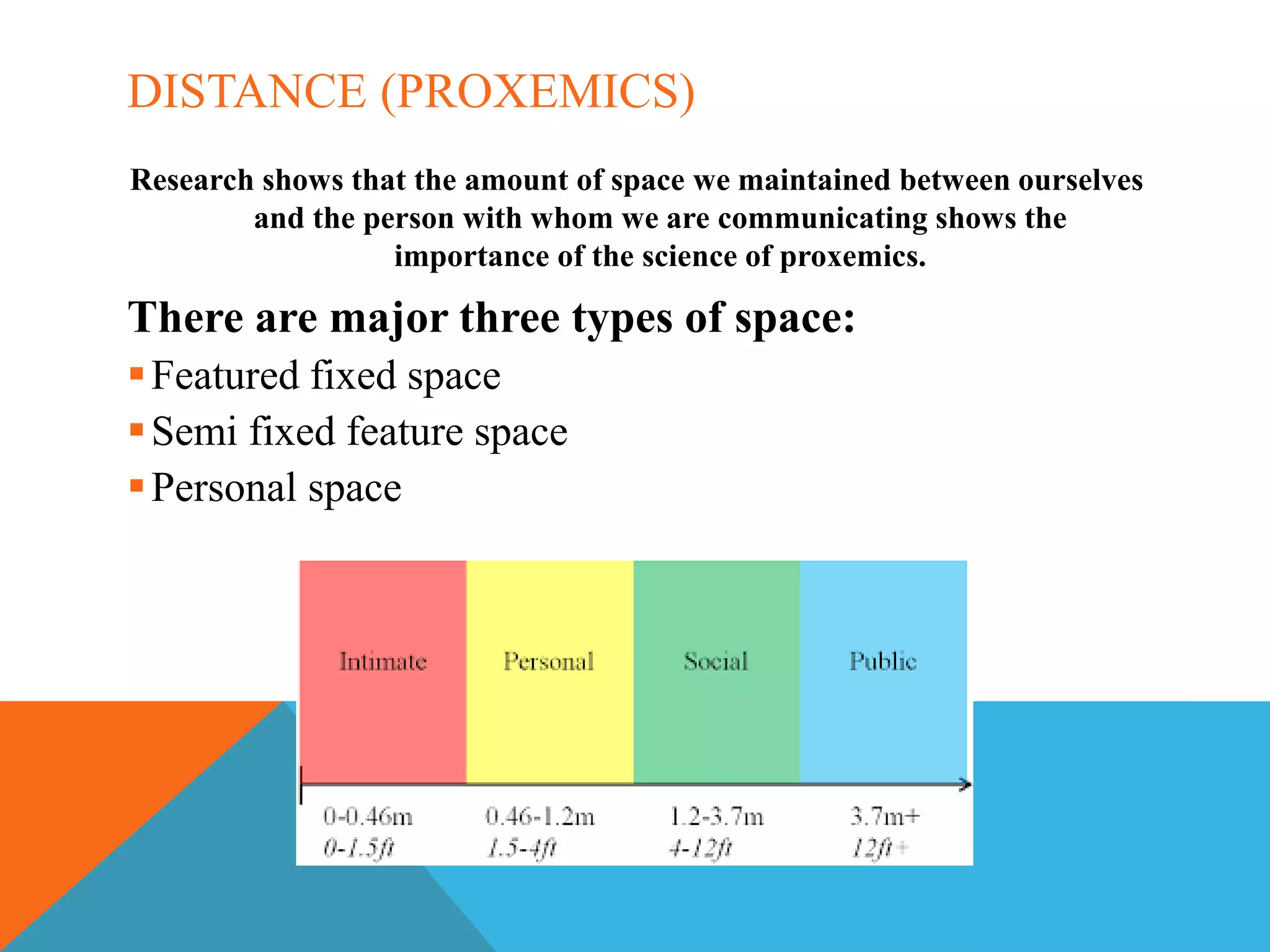
DISTANCE (PROXEMICS)
Research shows that the amount of space we maintained between ourselves
and the person with whom we are communicating shows the
importance of the science of proxemics.
There are major three types of space:
Featured fixed space
Semi fixed feature space
Personal space
TIME LANGUAGE
Time language involve the meaning we give to time , that’s is , how
we communicate
to others, what time means to us. In order to give
meaning to time , we must perceive it, filter it,
and symbolize about it.
JUST LOOK TO IT……………!!
ADVANTAGES OF NON-VERBAL COMMUNICATION:
 Easy presentation
 Help to illiterate people
 Help to handicapped people
 Attractive presentation
 Quick expression of message
DISADVANTAGES OF NON-VERBAL COMMUNICATION
 Vague and imprecise
 Culture-bound
 Long conversations are not possible
 Difficult to understand
 Lack of formality
 Distortion of information
WHAT DOES THIS MEAN?
o Dejected
o Disappointed o Confused o Trust
o Helping Hand
TIPS TO EFFECTIVE NON VERBAL COMMUNICATION
 Pay attention to nonverbal signals
 Look for incongruent behaviours
 Concentrate on your tone of voice when speaking
 Use good eye contact
 Ask questions about nonverbal communication
 Use signals to make communication more effective and meaningful
 Look at signals as a group
 Consider context
 Be aware that signals can be misread
 Practice
Non verbal communication

Non verbal communication

  • 1.
    Presented by: ParthUpadhyay Shikha Karamchandani Kajal Patel Mukesh Makwana Chirag Dabhi Presented to: Dr. Darshana Dave
  • 2.
    What is communication? Whatis Non Verbal Communication? According to the social anthropologist, Edward T. Hall, in a normal conversation between two persons, less than 35% of the social meanings is actually transmitted by words. So, at least 65% of it is conveyed through the body (non-verbal channel).
  • 3.
    NON VERBAL COMMUNICATIONINCLUDES:  Body language  Posture and gesture  Face and eyes expressions  Touch  Paralanguage  Physical context  Distance  Time Language Kinesics
  • 4.
    BODY LANGUAGE When youmove different parts of your body such as hands, feet, head, shoulders, eyes, or stand, sit, or walk, you are expressing your feelings and emotions involuntarily along with words.
  • 5.
    POSTURES AND GESTURES Posture:A person’s general posture, even without specific gestures, communicates meaning. The body position of an individual conveys variety of messages. It is the position of the body or body parts. TYPES OF GESTURES
  • 6.
    FACE AND EYESEXPRESSIONS The non-verbal messages sent by this channel are often the first to be noticed. But it is difficult to interpret because of the tremendous complexity of possible expressions. There are so many ways in which the eye brows, forehead, eyes, lips and jaws can move.
  • 7.
    TOUCH Touch (Haptic) communicationrefers to the ways in which people and other animals communicate and interact via the sense of touch. PARALANGUAGE Paralanguage involves how we say something. Of all the nonverbal types; it is the closest to actual verbal communication.
  • 8.
    PHYSICAL CONTEXT Physical contextin nonverbal communication refers to how colour and layout/design communicate. There are three parts of physical context:  Colour  Layout and design  Appearance
  • 9.
    DISTANCE (PROXEMICS) Research showsthat the amount of space we maintained between ourselves and the person with whom we are communicating shows the importance of the science of proxemics. There are major three types of space: Featured fixed space Semi fixed feature space Personal space
  • 10.
    TIME LANGUAGE Time languageinvolve the meaning we give to time , that’s is , how we communicate to others, what time means to us. In order to give meaning to time , we must perceive it, filter it, and symbolize about it.
  • 11.
    JUST LOOK TOIT……………!!
  • 12.
    ADVANTAGES OF NON-VERBALCOMMUNICATION:  Easy presentation  Help to illiterate people  Help to handicapped people  Attractive presentation  Quick expression of message
  • 13.
    DISADVANTAGES OF NON-VERBALCOMMUNICATION  Vague and imprecise  Culture-bound  Long conversations are not possible  Difficult to understand  Lack of formality  Distortion of information
  • 14.
    WHAT DOES THISMEAN? o Dejected o Disappointed o Confused o Trust o Helping Hand
  • 15.
    TIPS TO EFFECTIVENON VERBAL COMMUNICATION  Pay attention to nonverbal signals  Look for incongruent behaviours  Concentrate on your tone of voice when speaking  Use good eye contact  Ask questions about nonverbal communication  Use signals to make communication more effective and meaningful  Look at signals as a group  Consider context  Be aware that signals can be misread  Practice