Non-verbal
Communication
by Mr. Ronuel L. del Rosario
or Sir Shin 
What is Non-verbal Communication?
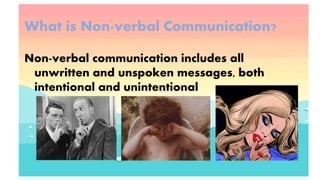
Non-verbal communication includes all
unwritten and unspoken messages, both
intentional and unintentional
NV Communication in everyday life!
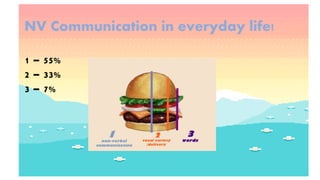
1 – 55%
2 – 33%
3 – 7%
Forms of NV Communication
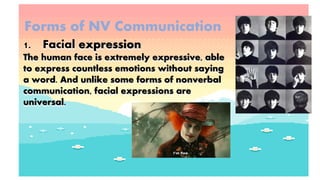
1. Facial expression
The human face is extremely expressive, able
to express countless emotions without saying
a word. And unlike some forms of nonverbal
communication, facial expressions are
universal.
Forms of NV Communication
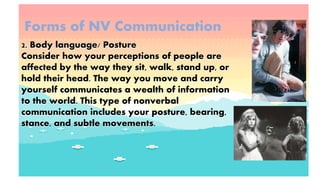
2. Body language/ Posture
Consider how your perceptions of people are
affected by the way they sit, walk, stand up, or
hold their head. The way you move and carry
yourself communicates a wealth of information
to the world. This type of nonverbal
communication includes your posture, bearing,
stance, and subtle movements.
Forms of NV Communication
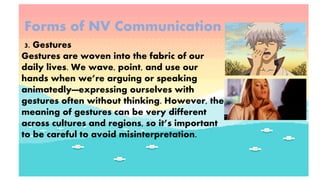
3. Gestures
Gestures are woven into the fabric of our
daily lives. We wave, point, and use our
hands when we’re arguing or speaking
animatedly—expressing ourselves with
gestures often without thinking. However, the
meaning of gestures can be very different
across cultures and regions, so it’s important
to be careful to avoid misinterpretation.
Forms of NV Communication
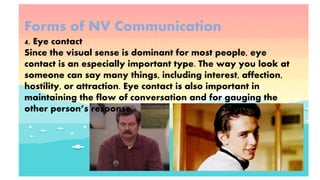
4. Eye contact
Since the visual sense is dominant for most people, eye
contact is an especially important type. The way you look at
someone can say many things, including interest, affection,
hostility, or attraction. Eye contact is also important in
maintaining the flow of conversation and for gauging the
other person’s response.
Forms of NV Communication
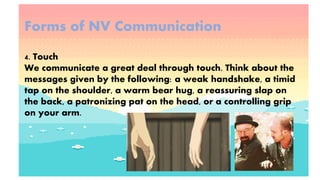
4. Touch
We communicate a great deal through touch. Think about the
messages given by the following: a weak handshake, a timid
tap on the shoulder, a warm bear hug, a reassuring slap on
the back, a patronizing pat on the head, or a controlling grip
on your arm.
Forms of NV Communication
5. Voice
It’s not just what you say, it’s how you say it. When we
speak, other people “read” our voices in addition to listening
to our words. Think about how someone's tone of voice, for
example, can indicate sarcasm, anger, affection, or
confidence.
Forms of NV Communication
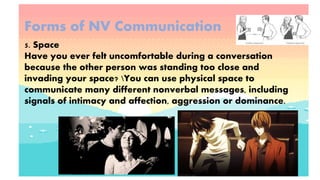
5. Space
Have you ever felt uncomfortable during a conversation
because the other person was standing too close and
invading your space? You can use physical space to
communicate many different nonverbal messages, including
signals of intimacy and affection, aggression or dominance.
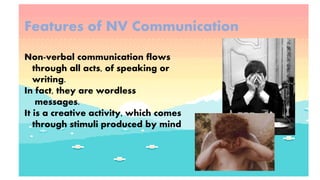
Features of NV Communication
Non-verbal communication flows
through all acts, of speaking or
writing.
In fact, they are wordless
messages.
It is a creative activity, which comes
through stimuli produced by mind
Verbal vs Non-verbal Communication
Although verbal communication is easier to
understand, non-verbal communication is
essential to understand not only a message,
but more importantly, the feelings behind the
message.
Any questions?
Non-Verbal Communication (w/ pictures)

Non-Verbal Communication (w/ pictures)

  • 1.
    Non-verbal Communication by Mr. RonuelL. del Rosario or Sir Shin 
  • 2.
    What is Non-verbalCommunication? Non-verbal communication includes all unwritten and unspoken messages, both intentional and unintentional
  • 3.
    NV Communication ineveryday life! 1 – 55% 2 – 33% 3 – 7%
  • 4.
    Forms of NVCommunication 1. Facial expression The human face is extremely expressive, able to express countless emotions without saying a word. And unlike some forms of nonverbal communication, facial expressions are universal.
  • 5.
    Forms of NVCommunication 2. Body language/ Posture Consider how your perceptions of people are affected by the way they sit, walk, stand up, or hold their head. The way you move and carry yourself communicates a wealth of information to the world. This type of nonverbal communication includes your posture, bearing, stance, and subtle movements.
  • 6.
    Forms of NVCommunication 3. Gestures Gestures are woven into the fabric of our daily lives. We wave, point, and use our hands when we’re arguing or speaking animatedly—expressing ourselves with gestures often without thinking. However, the meaning of gestures can be very different across cultures and regions, so it’s important to be careful to avoid misinterpretation.
  • 7.
    Forms of NVCommunication 4. Eye contact Since the visual sense is dominant for most people, eye contact is an especially important type. The way you look at someone can say many things, including interest, affection, hostility, or attraction. Eye contact is also important in maintaining the flow of conversation and for gauging the other person’s response.
  • 8.
    Forms of NVCommunication 4. Touch We communicate a great deal through touch. Think about the messages given by the following: a weak handshake, a timid tap on the shoulder, a warm bear hug, a reassuring slap on the back, a patronizing pat on the head, or a controlling grip on your arm.
  • 9.
    Forms of NVCommunication 5. Voice It’s not just what you say, it’s how you say it. When we speak, other people “read” our voices in addition to listening to our words. Think about how someone's tone of voice, for example, can indicate sarcasm, anger, affection, or confidence.
  • 10.
    Forms of NVCommunication 5. Space Have you ever felt uncomfortable during a conversation because the other person was standing too close and invading your space? You can use physical space to communicate many different nonverbal messages, including signals of intimacy and affection, aggression or dominance.
  • 11.
    Features of NVCommunication Non-verbal communication flows through all acts, of speaking or writing. In fact, they are wordless messages. It is a creative activity, which comes through stimuli produced by mind
  • 12.
    Verbal vs Non-verbalCommunication Although verbal communication is easier to understand, non-verbal communication is essential to understand not only a message, but more importantly, the feelings behind the message.
  • 13.