NONVERBAL COMMUNICATION
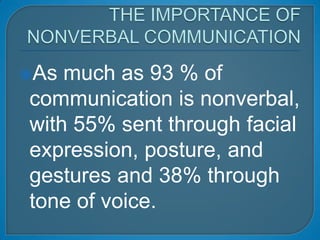
THE IMPORTANCE OF NONVERBAL COMMUNICATIONAs much as 93 % of communication is nonverbal, with 55% sent through facial expression, posture, and gestures and 38% through tone of voice.
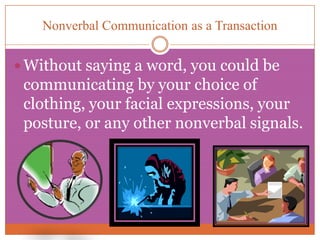
Nonverbal Communication as a TransactionWithout saying a word, you could be communicating by your choice of clothing, your facial expressions, your posture, or any other nonverbal signals.
They differ in  eight important ways:EnvironmentFeedbackContinuityChannelControlSensesStructureAcquisitionVERBAL AND NONVERBAL DIFFERENCES
HOW NONVERBAL COMMUNICATION WORKSNonverbal cues complement a verbal message by adding to its meaning.Nonverbal cues regulate verbal communication.Nonverbal messages can substitute for verbal messages.Nonverbal messages accent what you are saying.
CHARACTERISTICS OF NONVERBAL COMMUNICATIONIt is culturally determinedIt may conflict with verbal messagesNonverbal messages are largely unconciousIt shows your feelings and attitude
TYPES OF NONVERBAL COMMUNICATIONParalanguage- the way in which you say the words.Body Movement- also called as kinesics, is responsible for a lot of nonverbal communication.Eye Messages- sending messages through the eyes.Attractiveness- how something or somebody could attract.
Clothing- it gives immediate impression about your selfBody Adornment- physical changes that you made to your body.Touch- it could show interestTime- determining attitude of a person
IMPROVING YOUR NONVERBAL COMMUNICATIONBy means of videotaping

Nonverbal Communication

  • 1.
  • 2.
    THE IMPORTANCE OFNONVERBAL COMMUNICATIONAs much as 93 % of communication is nonverbal, with 55% sent through facial expression, posture, and gestures and 38% through tone of voice.
  • 3.
    Nonverbal Communication asa TransactionWithout saying a word, you could be communicating by your choice of clothing, your facial expressions, your posture, or any other nonverbal signals.
  • 4.
    They differ in eight important ways:EnvironmentFeedbackContinuityChannelControlSensesStructureAcquisitionVERBAL AND NONVERBAL DIFFERENCES
  • 5.
    HOW NONVERBAL COMMUNICATIONWORKSNonverbal cues complement a verbal message by adding to its meaning.Nonverbal cues regulate verbal communication.Nonverbal messages can substitute for verbal messages.Nonverbal messages accent what you are saying.
  • 6.
    CHARACTERISTICS OF NONVERBALCOMMUNICATIONIt is culturally determinedIt may conflict with verbal messagesNonverbal messages are largely unconciousIt shows your feelings and attitude
  • 7.
    TYPES OF NONVERBALCOMMUNICATIONParalanguage- the way in which you say the words.Body Movement- also called as kinesics, is responsible for a lot of nonverbal communication.Eye Messages- sending messages through the eyes.Attractiveness- how something or somebody could attract.
  • 8.
    Clothing- it givesimmediate impression about your selfBody Adornment- physical changes that you made to your body.Touch- it could show interestTime- determining attitude of a person
  • 9.
    IMPROVING YOUR NONVERBALCOMMUNICATIONBy means of videotaping