NON – PROJECTED  VISUAL
.Non-projected visuals can translate abstract ideas into a more realistic format.  They allow instruction to move down from the level of verbal symbols into a more concrete level. 
non-projected visuals are easy to use because they do not require any equipment.
inexpensive
can be used in many ways at all levels of instruction and disciplines.
use to stimulate creative expression such as telling or writing stories or composing poetry
use in testing and evaluationTypes of Visuals
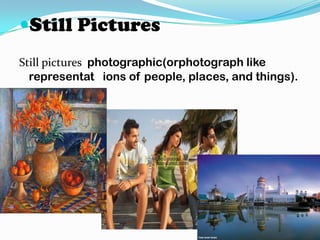
Still PicturesStill pictures  photographic(orphotograph like representat   ions of people, places, and things).
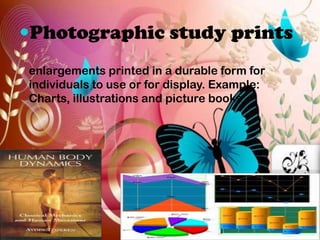
Photographic study prints 	enlargements printed in a durable form for individuals to use or for display. Example: Charts, illustrations and picture books
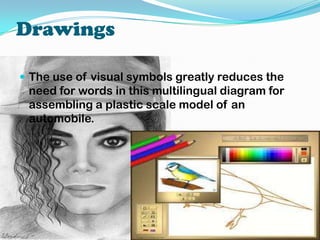
 Drawings	 The use of visual symbols greatly reduces the need for words in this multilingual diagram for assembling a plastic scale model of an automobile.
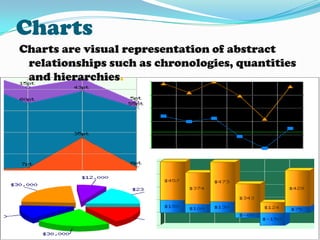
Charts							Charts are visual representation of abstract relationships such as chronologies, quantities and hierarchies.
TYPES OF CHART
Organizational chartsshows the structure or chain of command in the company.
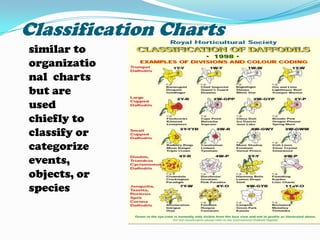
 Classification Charts	similar to organizational  charts but are used   chiefly to classify or categorize events, objects, or species
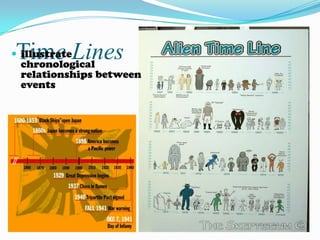
Time Lines 	illustrate chronological relationships between events
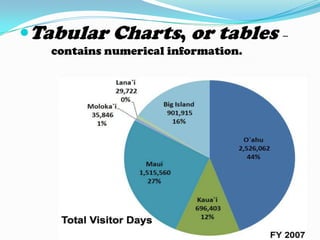
Tabular Charts, or tables–	contains numerical information.
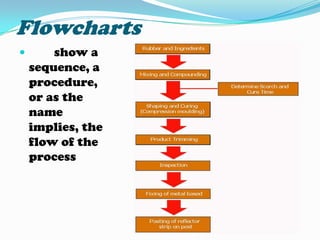
Flowchartsshow a sequence, a procedure, or as the name implies, the flow of the process
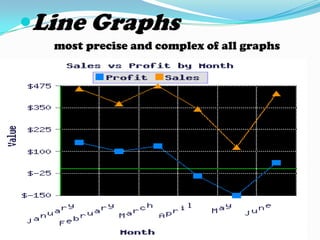
Graphs 		Graph provides a visual representation of numerical data.  They also illustrate relationships among units of the data and trends in the data.   		Data can be interpreted more quickly in graph form than in tabular form.  Graphs are also more visually interesting than tables.  
Types of Graphs
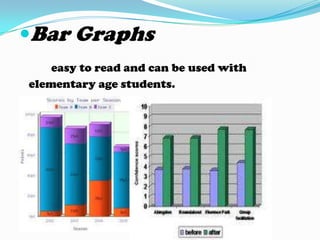
Bar Graphseasy to read and can be used with elementary age students.
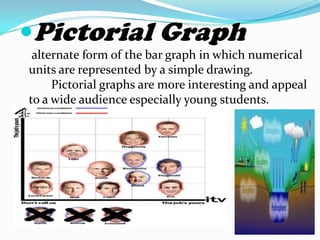
Pictorial Graphalternate form of the bar graph in which numerical units are represented by a simple drawing.   	Pictorial graphs are more interesting and appeal to a wide audience especially young students.
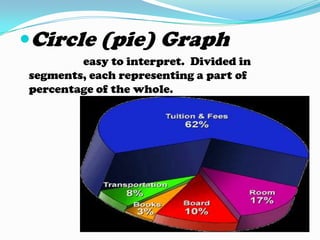
Circle (pie) Graph			easy to interpret.  Divided in segments, each representing a part of percentage of the whole.

Non – projected