GRAPHIC aid COMMUNICATION


        PRESENTED BY:-ISHMIT OBEROI
                      MJMC
Definitions:-

• Graphic communication as the name suggests is
  communication through graphics and graphic aids .
  It is the process of creating , producing, and
  distributing material incorporating words and
  images to convey data, concepts and emotions.
• Graphic aids present information in pictorial
  form or in other specific formats in order to
  consolidate, clarify or prove the written
  material they go with.
TYPES OF GRAPHIC AIDS
1.   PHOTOGRAPHS
2.   TIMELINES
3.   POSTERS
4.   CHARTS
5.   DIAGRAMS
6. DRAWINGS
7. MAPS
8. CARTOONS
9. COMICS
10. FLASH CARDS
11. GRAPHS
PHOTOGRAPHS
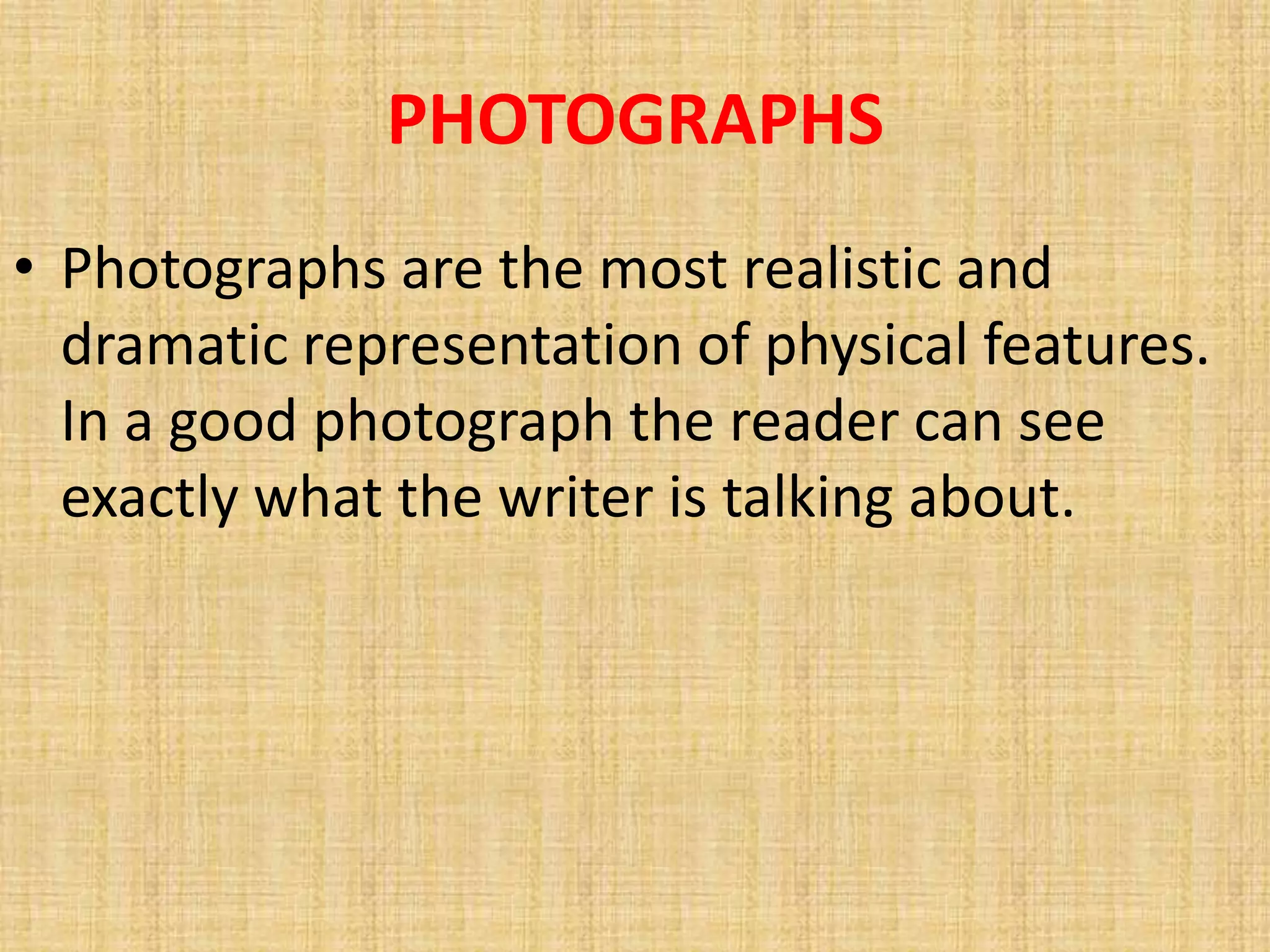
• Photographs are the most realistic and
  dramatic representation of physical features.
  In a good photograph the reader can see
  exactly what the writer is talking about.
Cheerful
face


           Angry face
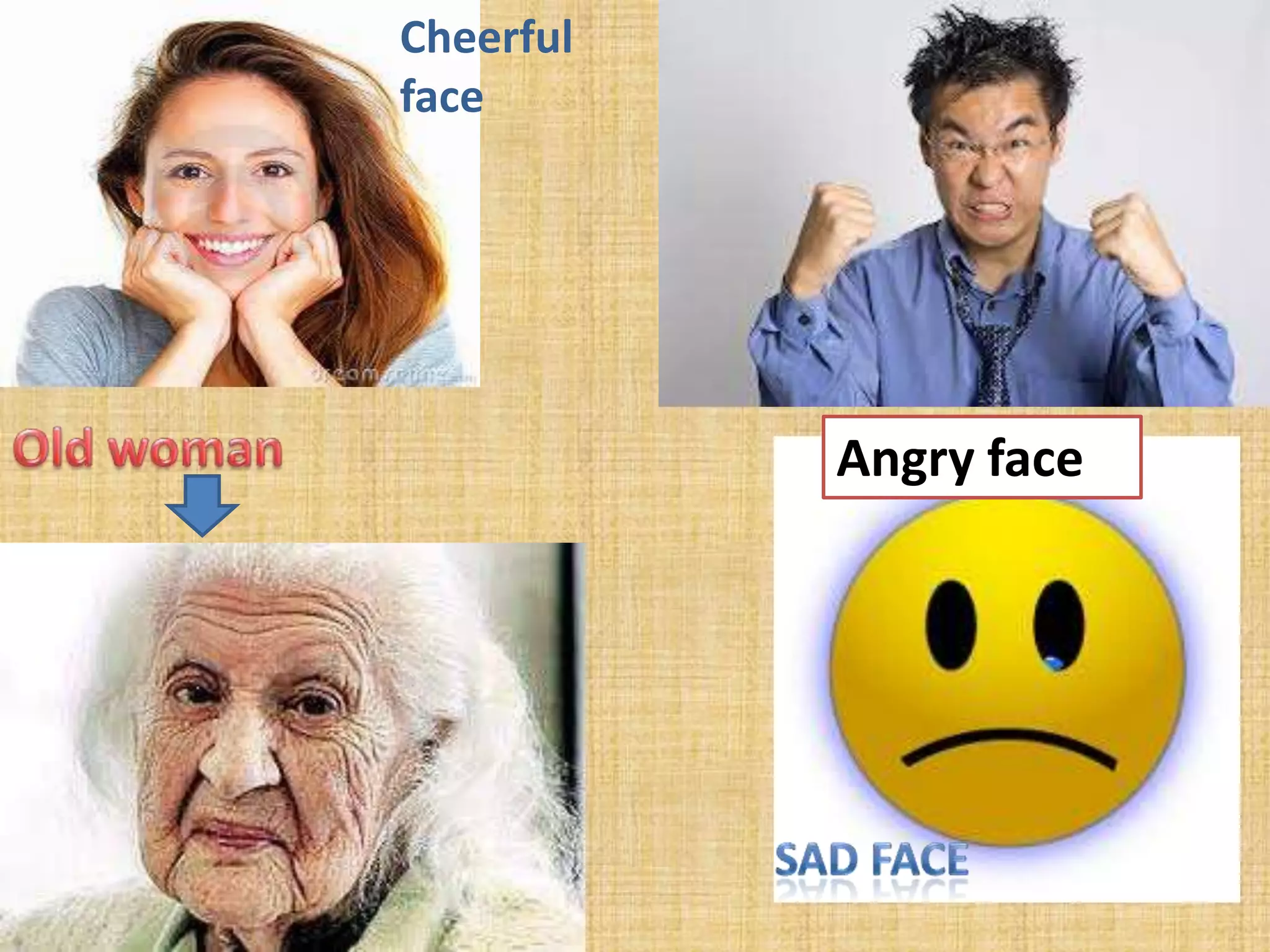
TIMELINE
• A timeline is a way of displaying a list of events in
  chronological order, sometimes described as a
  project artifact.
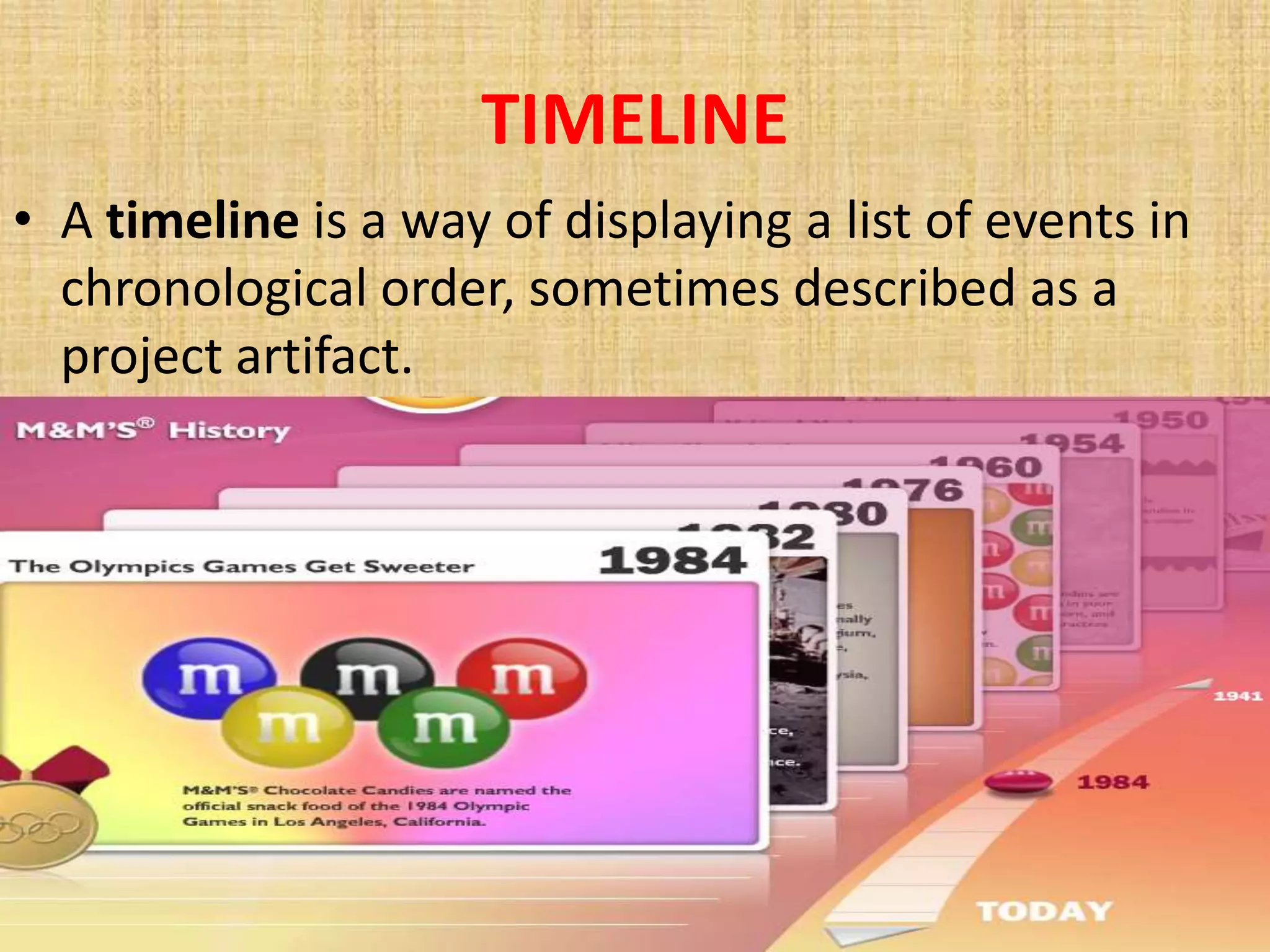
POSTERS
• A poster is any piece of printed paper designed to
  be attached to a wall or vertical surface. Typically
  posters include both textual and graphic
  elements, although a poster may be either wholly
  graphical or wholly text.
CHARTS
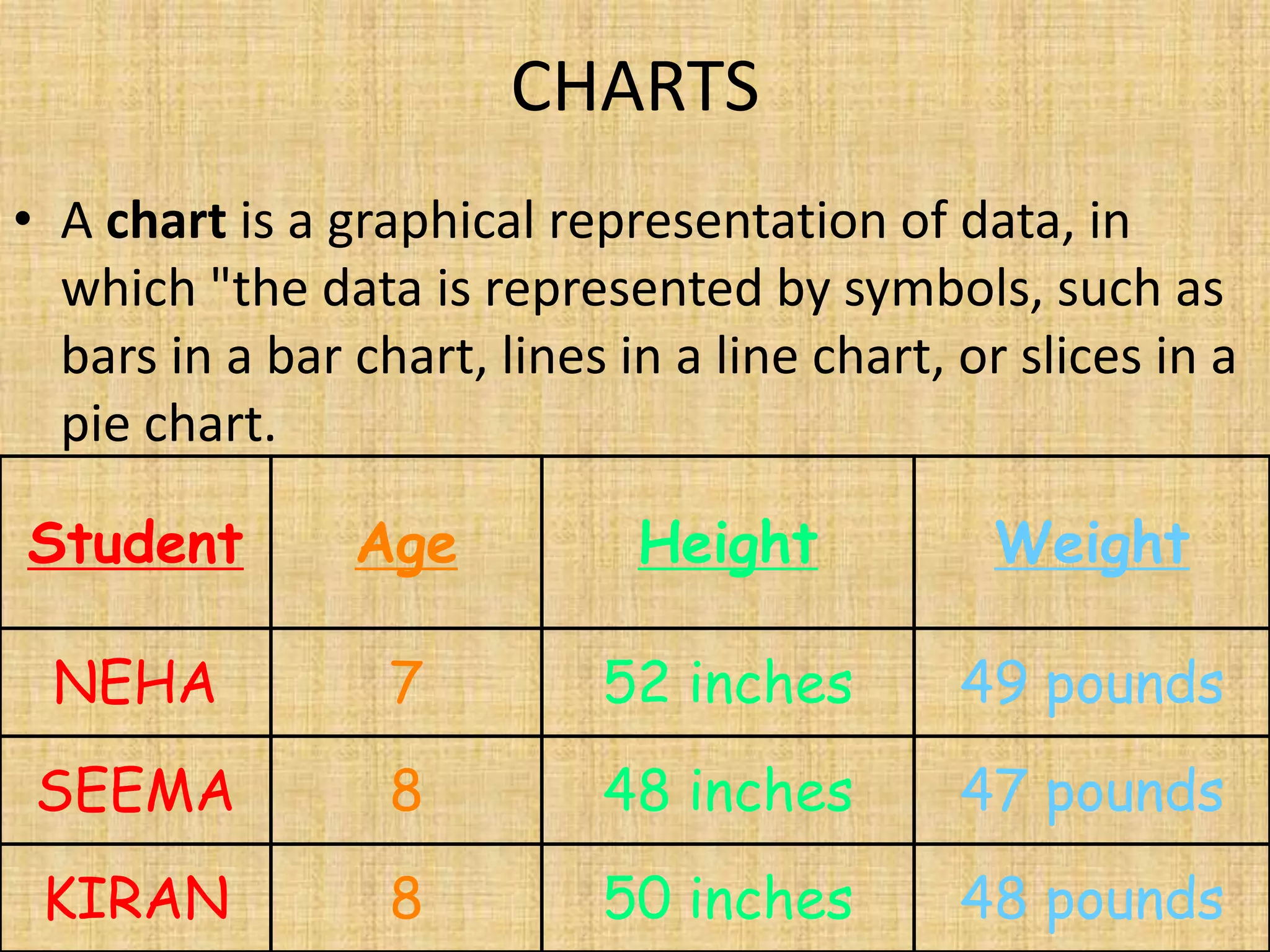
• A chart is a graphical representation of data, in
  which "the data is represented by symbols, such as
  bars in a bar chart, lines in a line chart, or slices in a
  pie chart.

Student         Age           Height            Weight

 NEHA             7         52 inches         49 pounds
 SEEMA            8         48 inches         47 pounds
 KIRAN            8         50 inches         48 pounds
DIAGRAMS
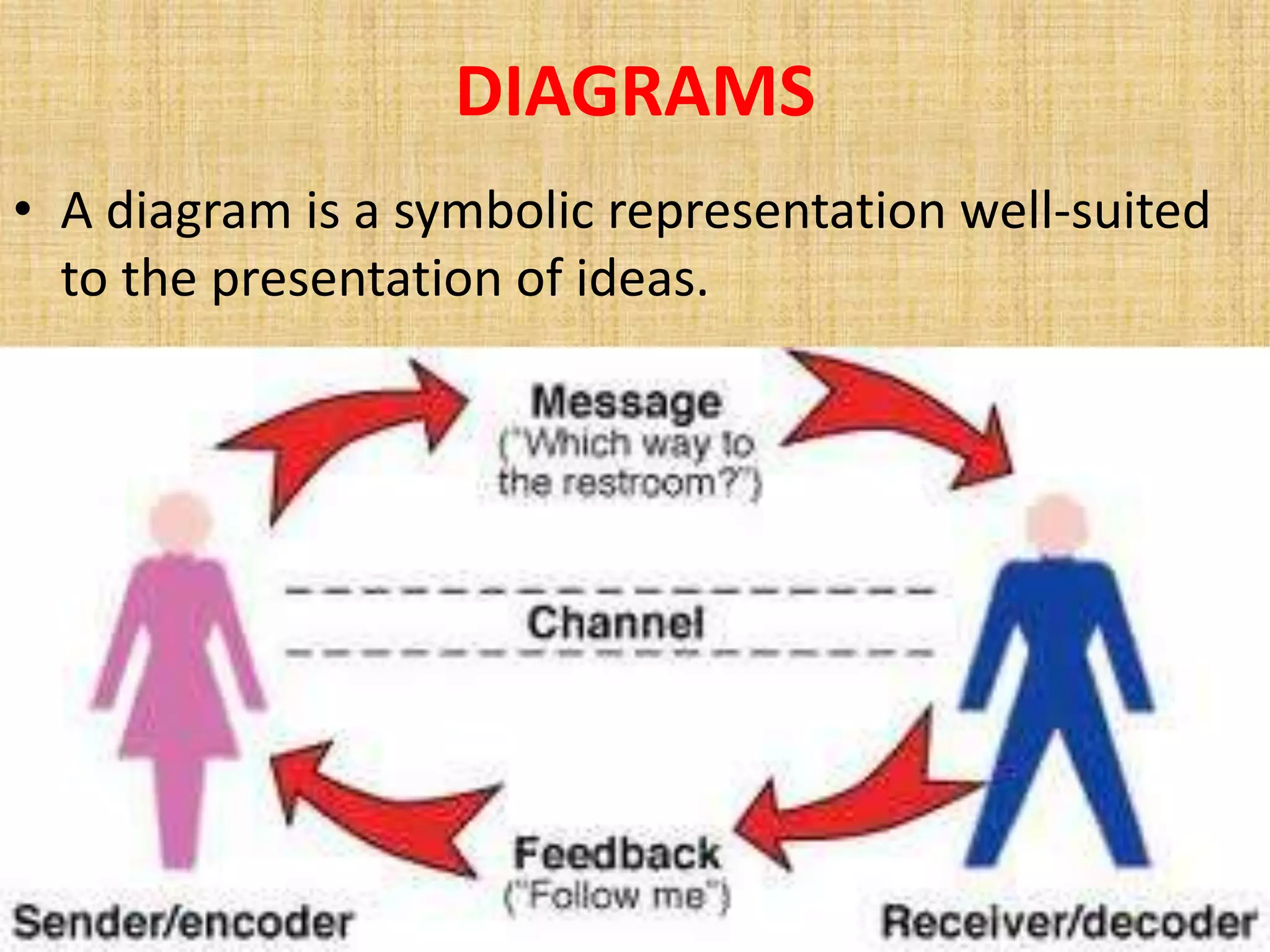
• A diagram is a symbolic representation well-suited
  to the presentation of ideas.
DRAWINGS
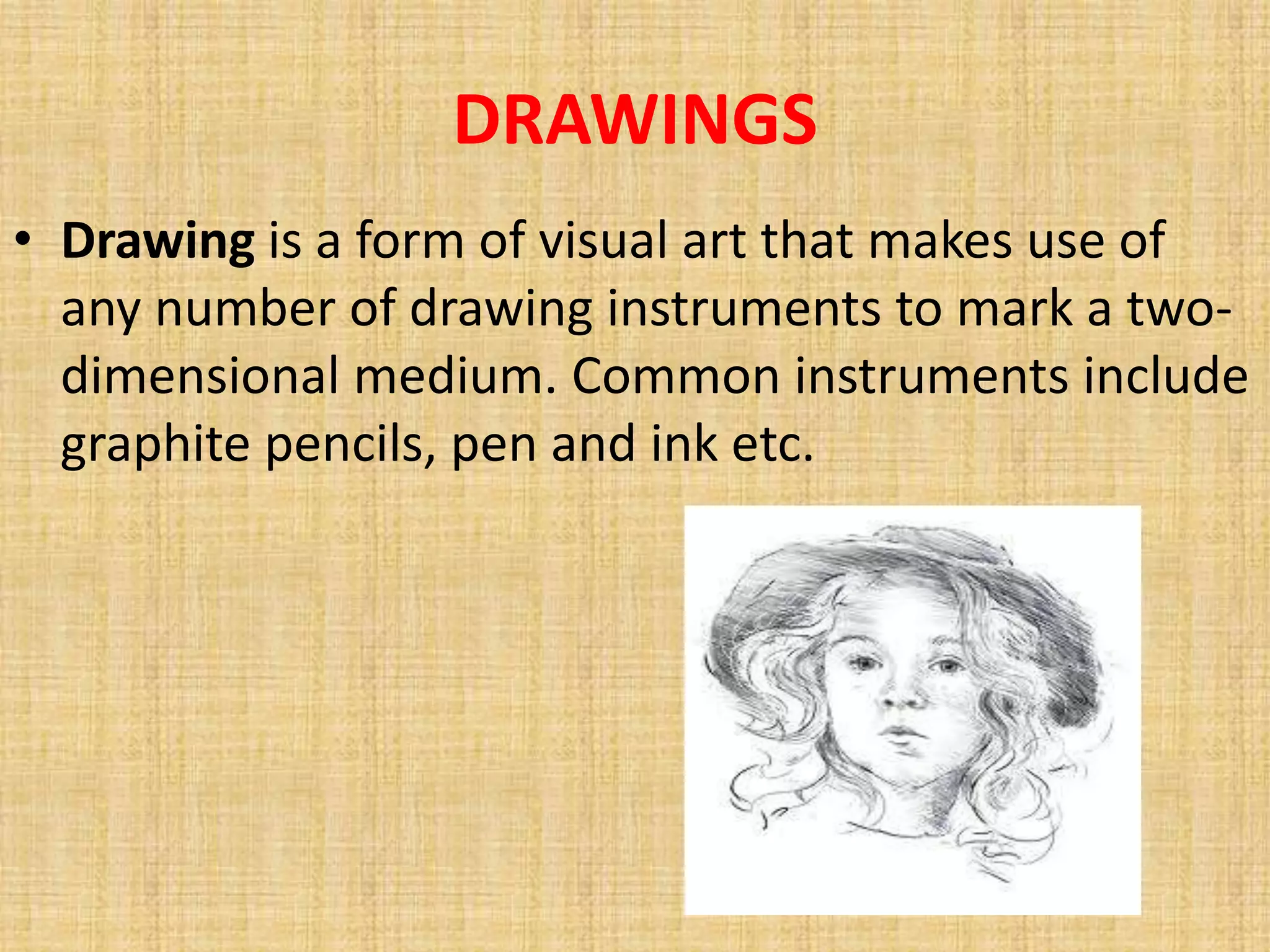
• Drawing is a form of visual art that makes use of
  any number of drawing instruments to mark a two-
  dimensional medium. Common instruments include
  graphite pencils, pen and ink etc.
MAPS
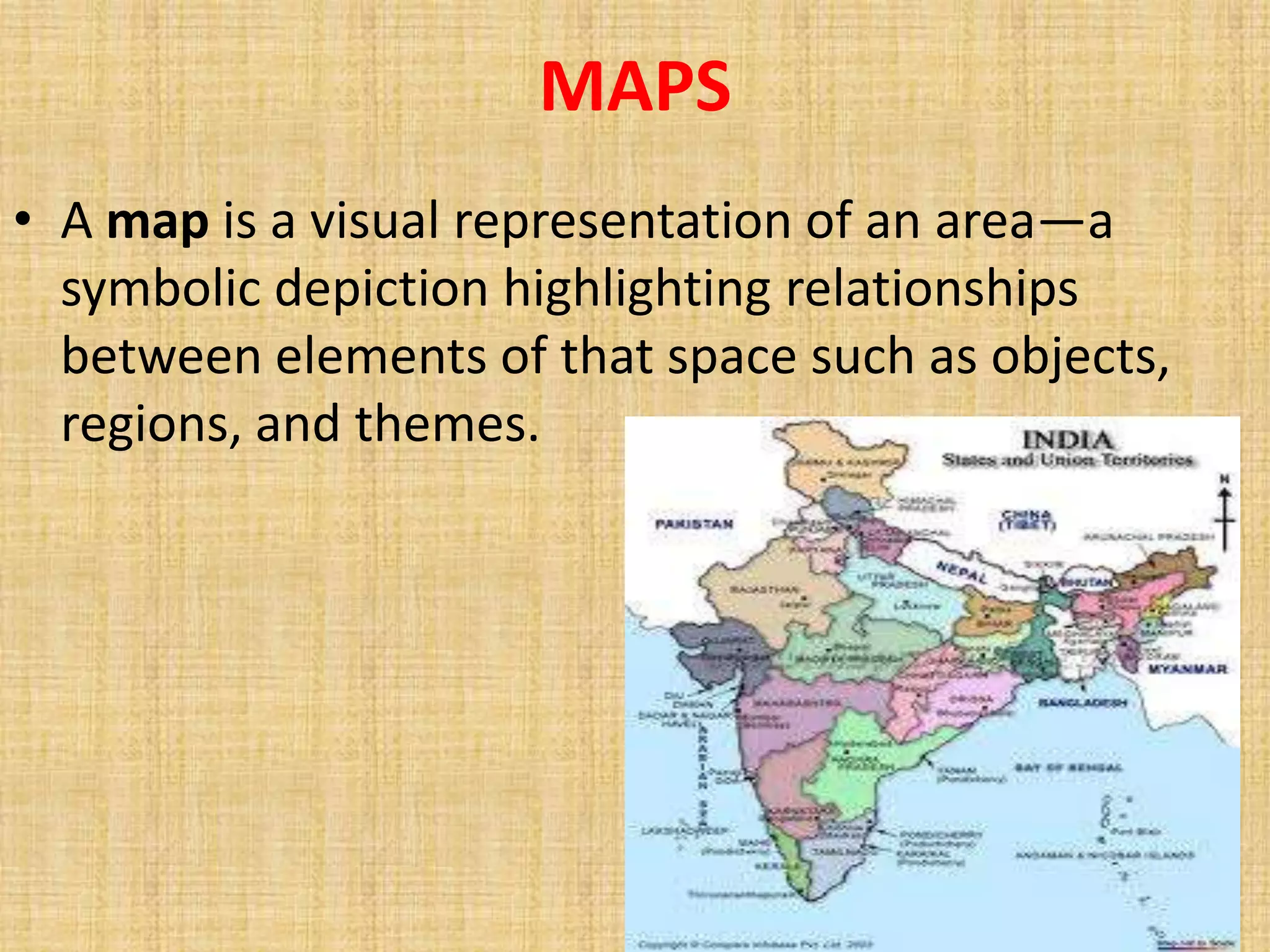
• A map is a visual representation of an area—a
  symbolic depiction highlighting relationships
  between elements of that space such as objects,
  regions, and themes.
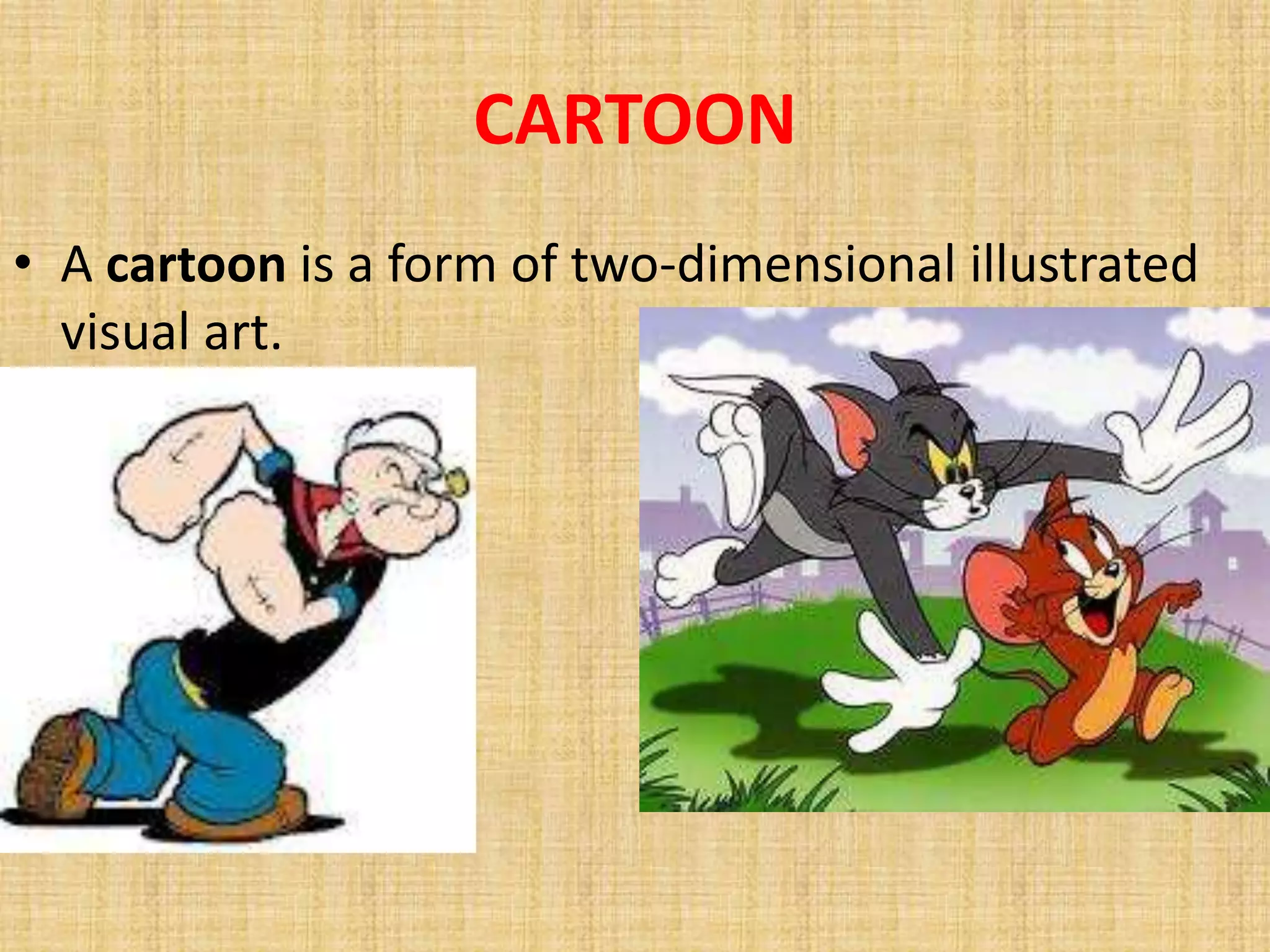
CARTOON
• A cartoon is a form of two-dimensional illustrated
  visual art.
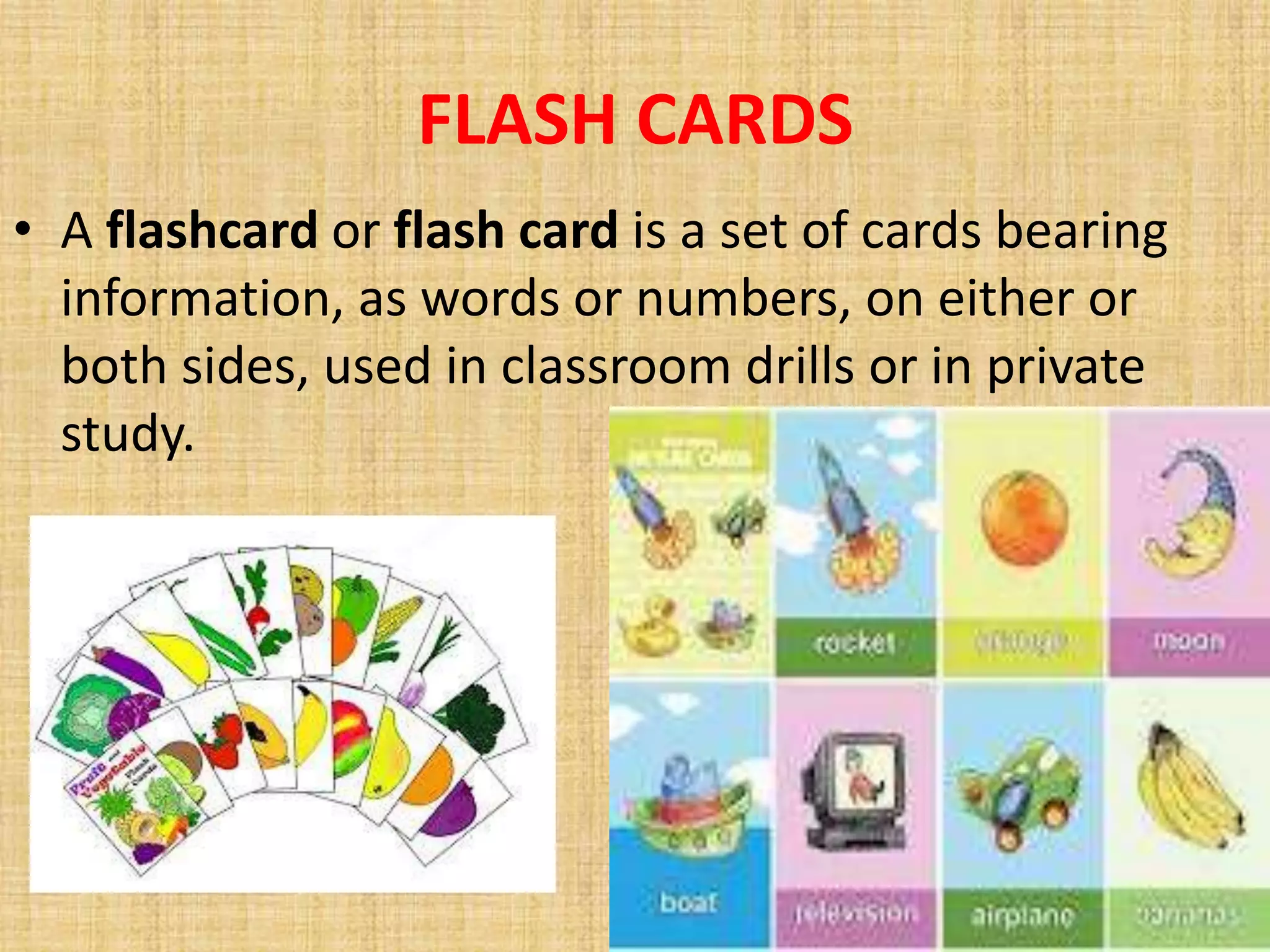
FLASH CARDS
• A flashcard or flash card is a set of cards bearing
  information, as words or numbers, on either or
  both sides, used in classroom drills or in private
  study.
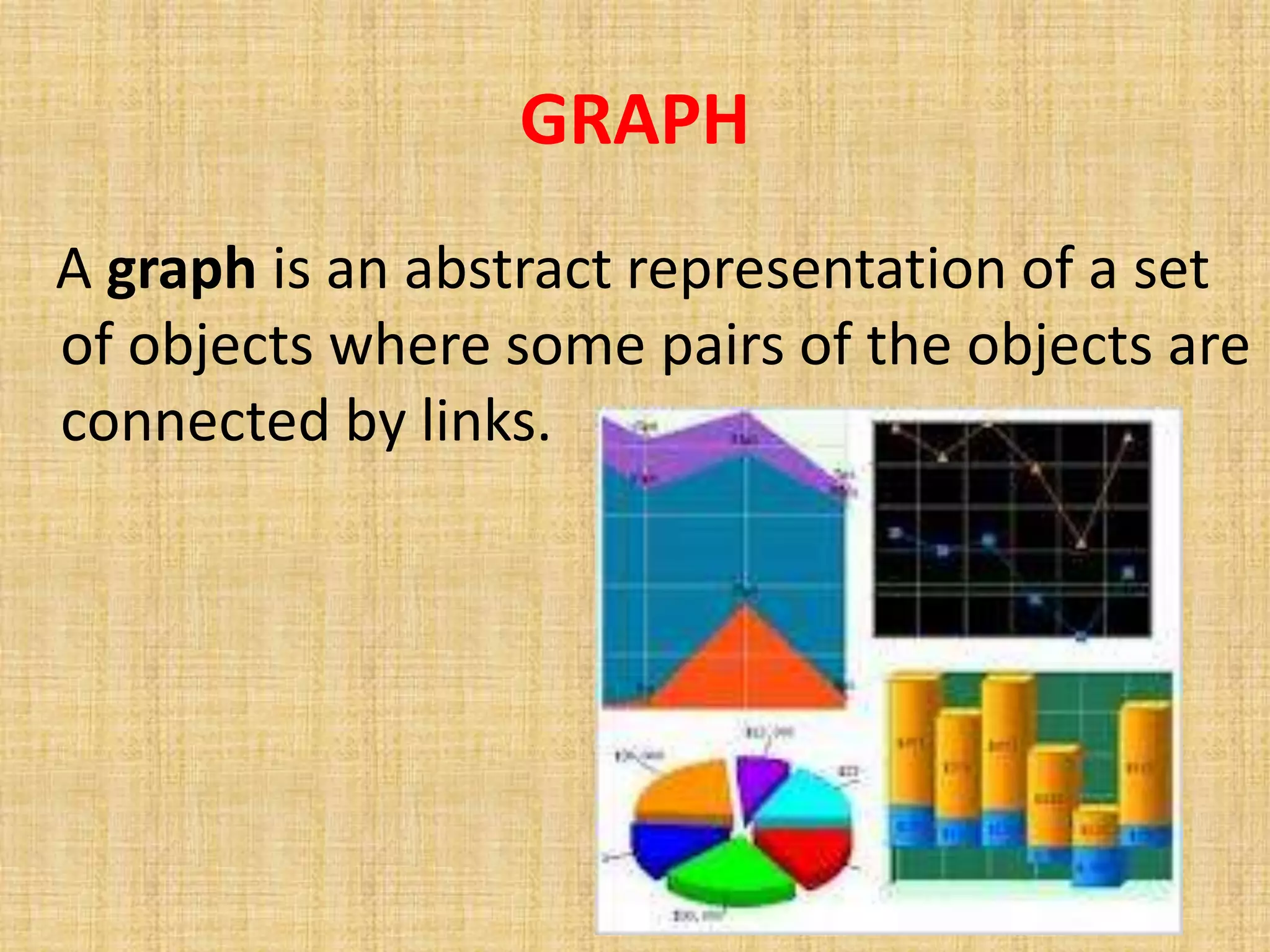
GRAPH
A graph is an abstract representation of a set
of objects where some pairs of the objects are
connected by links.
Five Types of Graphs
5 common types of graphic aids are:
•   Bar graphs
•   Line graphs
•   Pie charts
•   Flowcharts
•   Tables
Bar Graphs
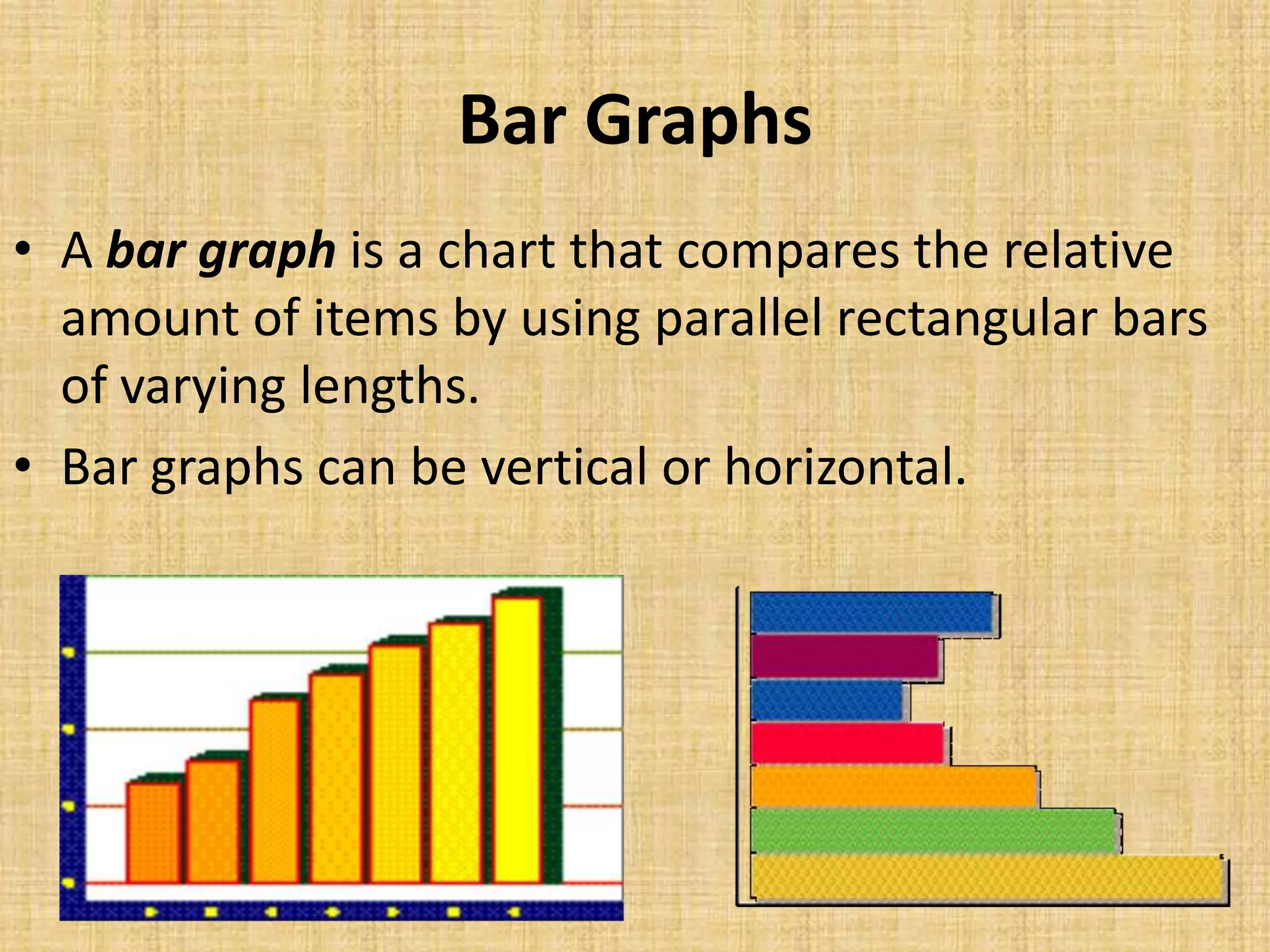
• A bar graph is a chart that compares the relative
  amount of items by using parallel rectangular bars
  of varying lengths.
• Bar graphs can be vertical or horizontal.
Line Graphs
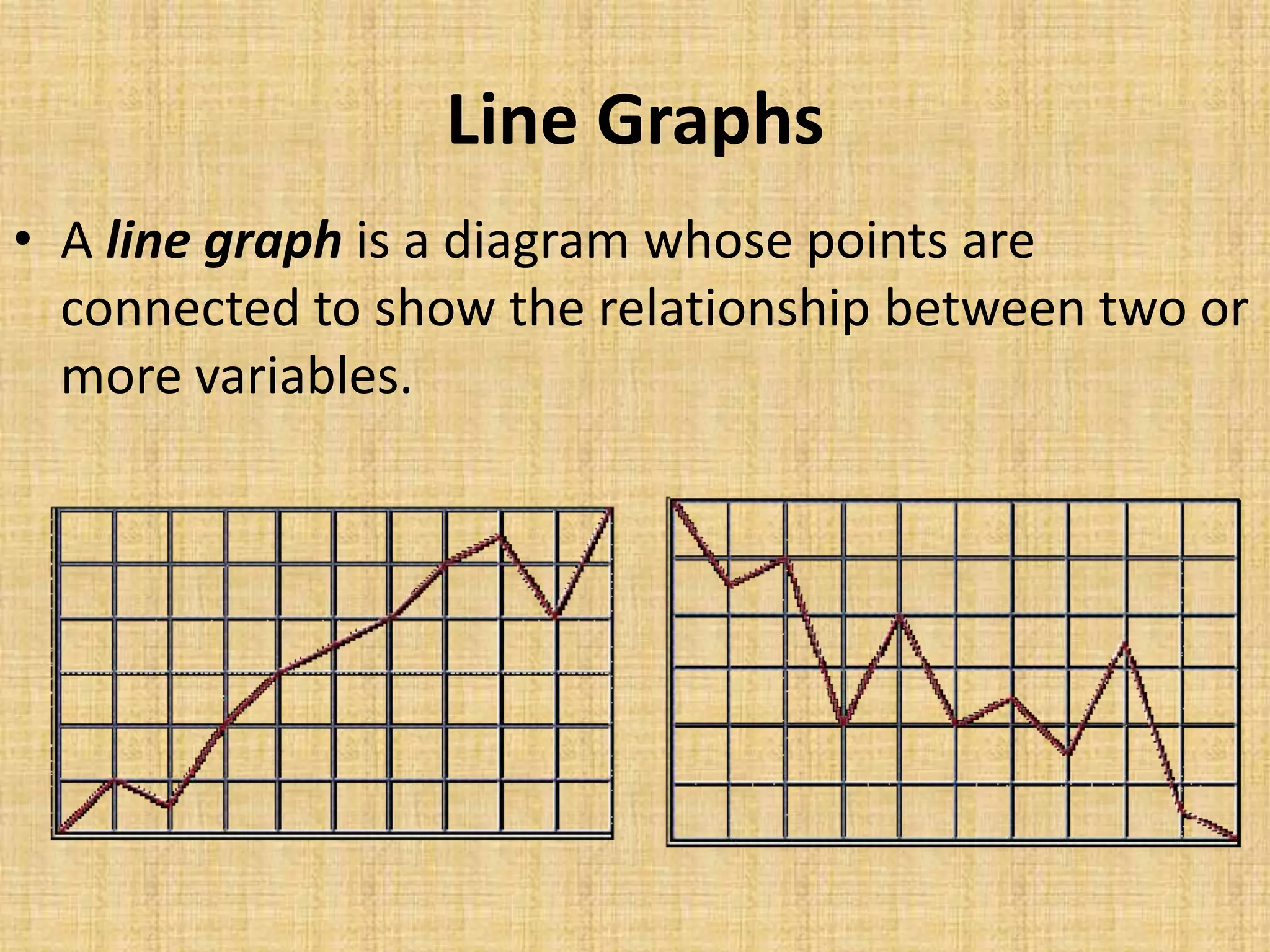
• A line graph is a diagram whose points are
  connected to show the relationship between two or
  more variables.
Pie Charts
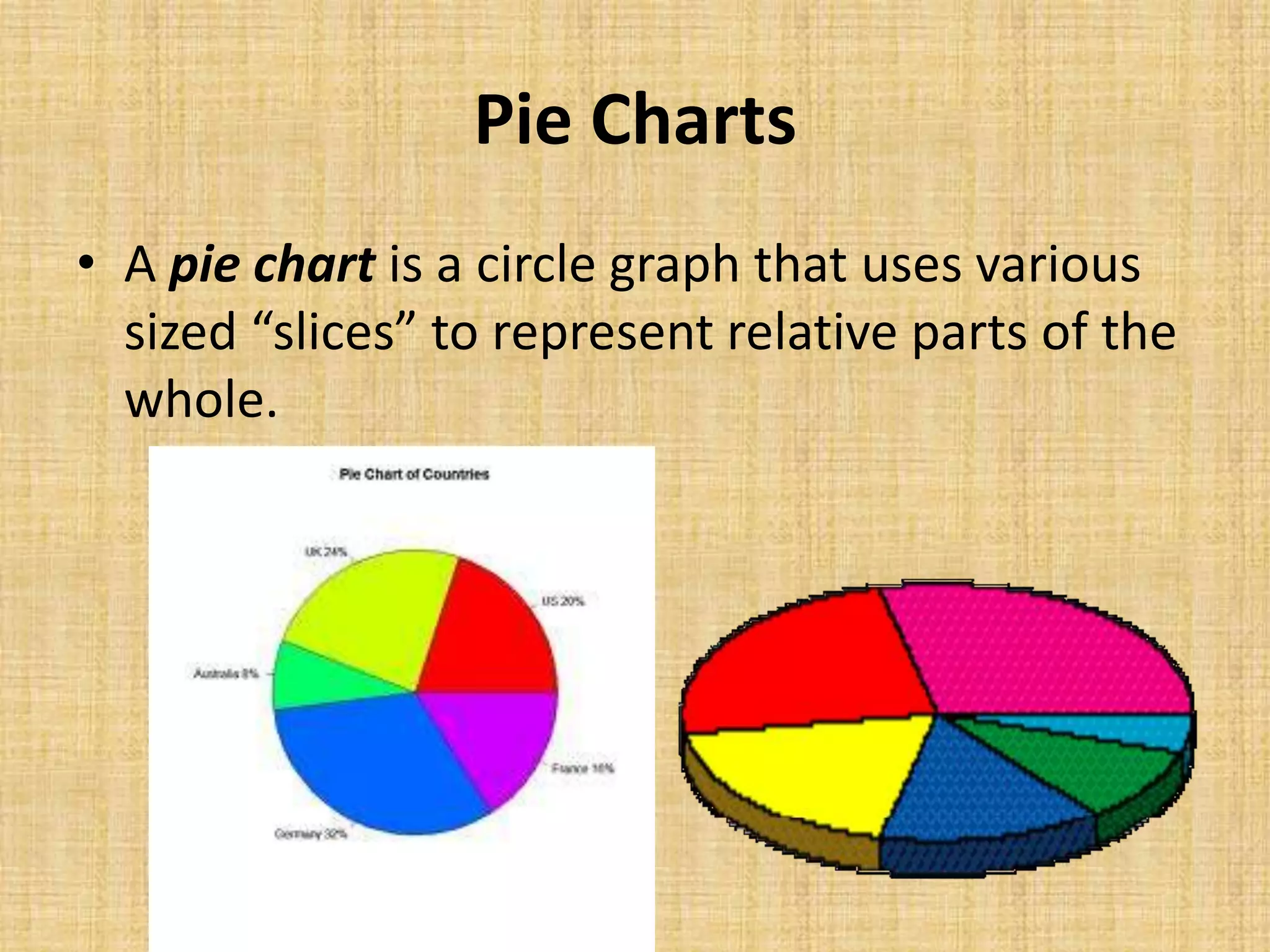
• A pie chart is a circle graph that uses various
  sized “slices” to represent relative parts of the
  whole.
Flowcharts
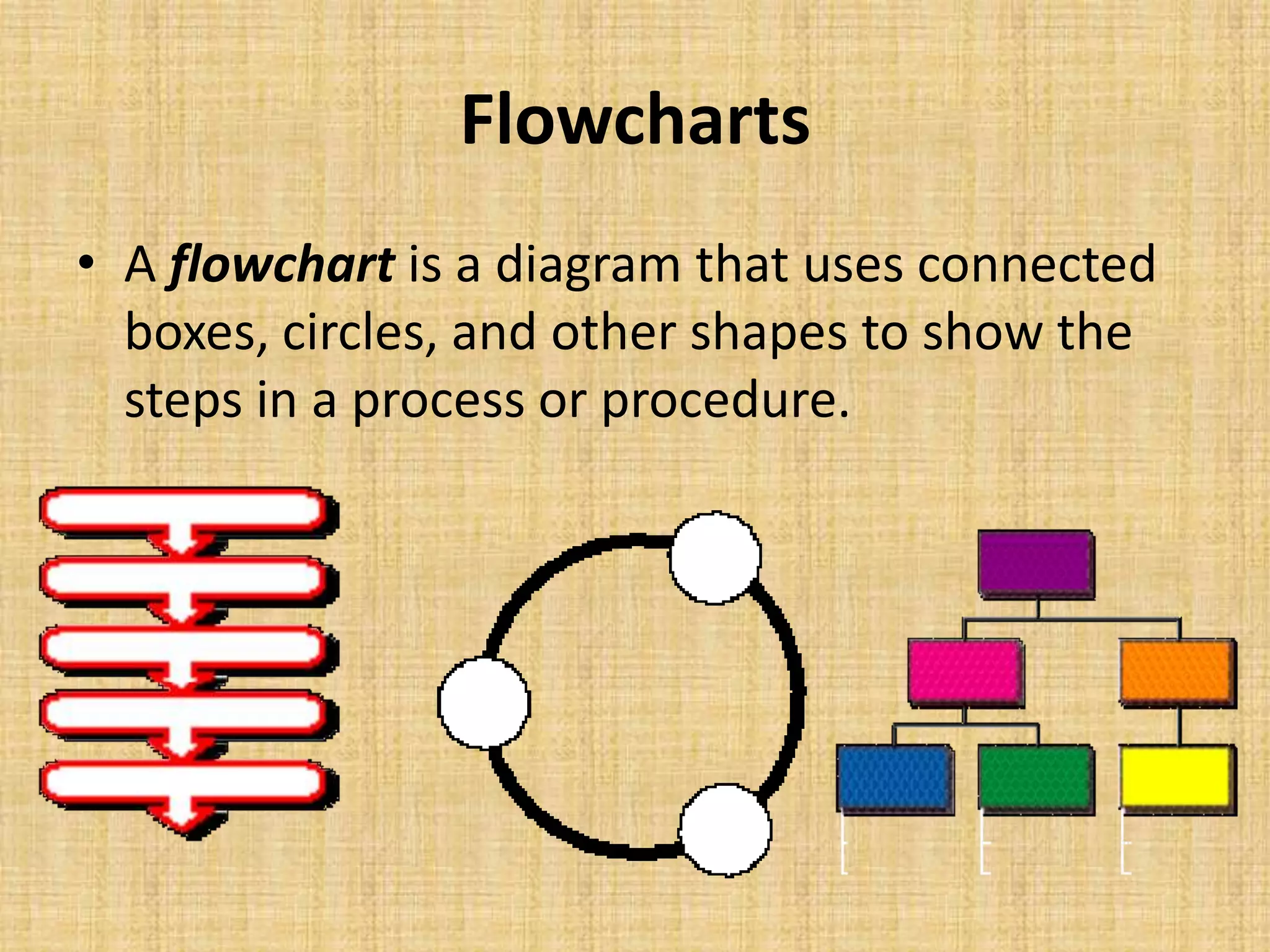
• A flowchart is a diagram that uses connected
  boxes, circles, and other shapes to show the
  steps in a process or procedure.
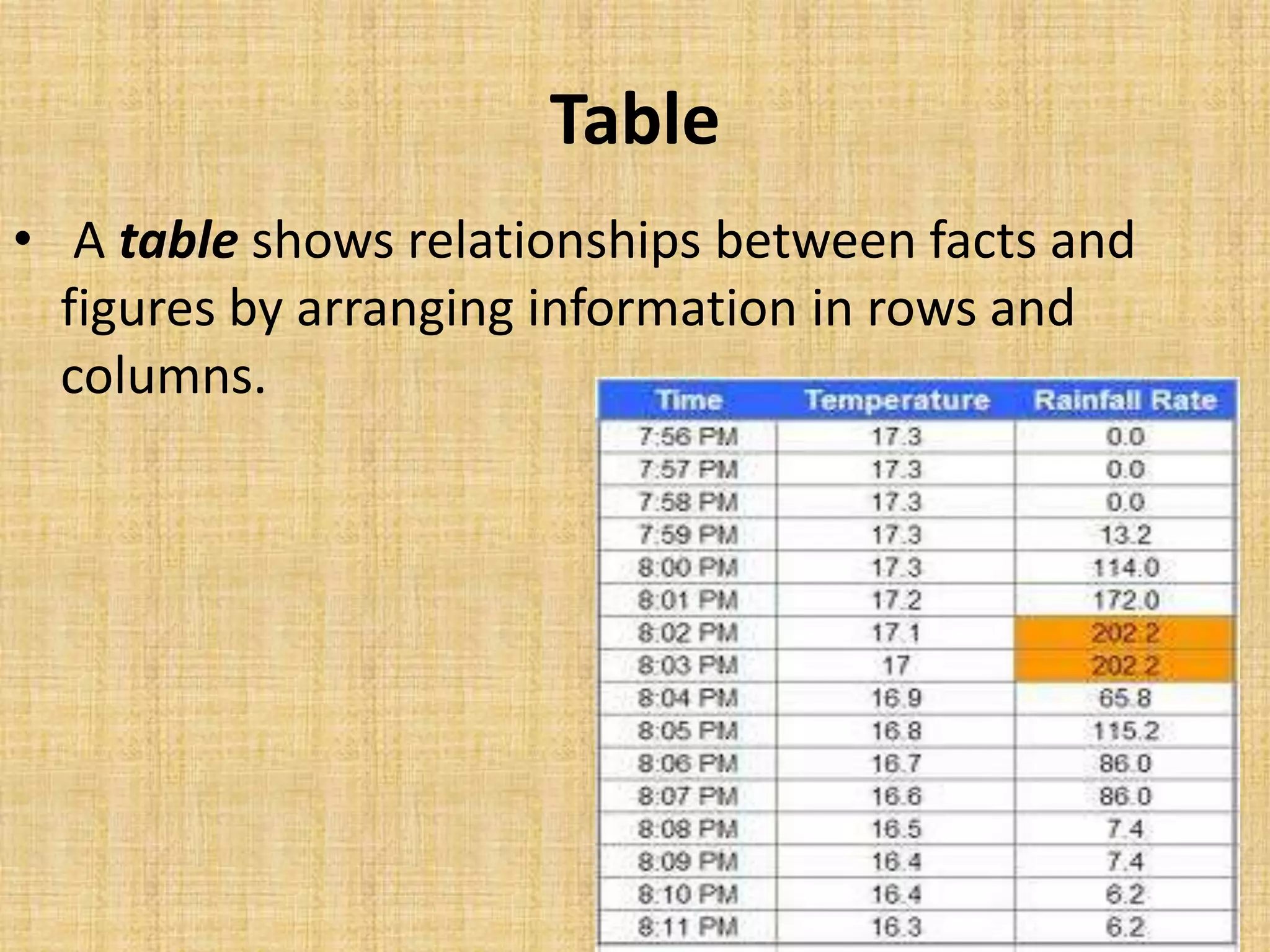
Table
• A table shows relationships between facts and
  figures by arranging information in rows and
  columns.
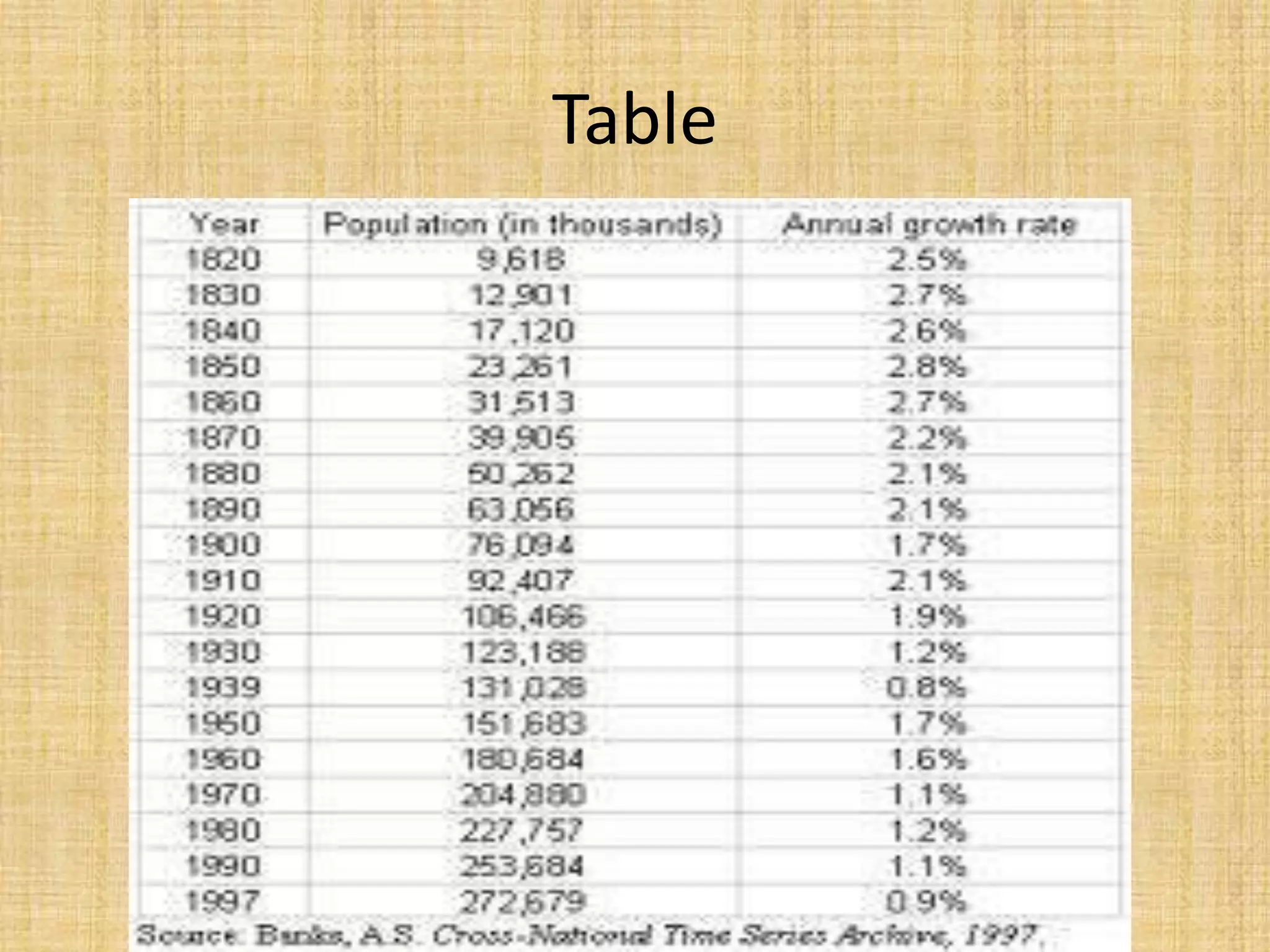
Table
BIBLIOGRAPHY
• www.wikipedia.com
• www.slideshare.net/GhettoClass/graphic-
  aidspresent
• en.wikipedia.org/wiki/Graphic_communication

Graphic communication

  • 1.
    GRAPHIC aid COMMUNICATION PRESENTED BY:-ISHMIT OBEROI MJMC
  • 2.
    Definitions:- • Graphic communicationas the name suggests is communication through graphics and graphic aids . It is the process of creating , producing, and distributing material incorporating words and images to convey data, concepts and emotions.
  • 3.
    • Graphic aidspresent information in pictorial form or in other specific formats in order to consolidate, clarify or prove the written material they go with.
  • 4.
    TYPES OF GRAPHICAIDS 1. PHOTOGRAPHS 2. TIMELINES 3. POSTERS 4. CHARTS 5. DIAGRAMS
  • 5.
    6. DRAWINGS 7. MAPS 8.CARTOONS 9. COMICS 10. FLASH CARDS 11. GRAPHS
  • 6.
    PHOTOGRAPHS • Photographs arethe most realistic and dramatic representation of physical features. In a good photograph the reader can see exactly what the writer is talking about.
  • 7.
    Cheerful face Angry face
  • 8.
    TIMELINE • A timelineis a way of displaying a list of events in chronological order, sometimes described as a project artifact.
  • 9.
    POSTERS • A posteris any piece of printed paper designed to be attached to a wall or vertical surface. Typically posters include both textual and graphic elements, although a poster may be either wholly graphical or wholly text.
  • 10.
    CHARTS • A chartis a graphical representation of data, in which "the data is represented by symbols, such as bars in a bar chart, lines in a line chart, or slices in a pie chart. Student Age Height Weight NEHA 7 52 inches 49 pounds SEEMA 8 48 inches 47 pounds KIRAN 8 50 inches 48 pounds
  • 11.
    DIAGRAMS • A diagramis a symbolic representation well-suited to the presentation of ideas.
  • 12.
    DRAWINGS • Drawing isa form of visual art that makes use of any number of drawing instruments to mark a two- dimensional medium. Common instruments include graphite pencils, pen and ink etc.
  • 13.
    MAPS • A mapis a visual representation of an area—a symbolic depiction highlighting relationships between elements of that space such as objects, regions, and themes.
  • 14.
    CARTOON • A cartoonis a form of two-dimensional illustrated visual art.
  • 15.
    FLASH CARDS • Aflashcard or flash card is a set of cards bearing information, as words or numbers, on either or both sides, used in classroom drills or in private study.
  • 16.
    GRAPH A graph isan abstract representation of a set of objects where some pairs of the objects are connected by links.
  • 17.
    Five Types ofGraphs 5 common types of graphic aids are: • Bar graphs • Line graphs • Pie charts • Flowcharts • Tables
  • 18.
    Bar Graphs • Abar graph is a chart that compares the relative amount of items by using parallel rectangular bars of varying lengths. • Bar graphs can be vertical or horizontal.
  • 19.
    Line Graphs • Aline graph is a diagram whose points are connected to show the relationship between two or more variables.
  • 20.
    Pie Charts • Apie chart is a circle graph that uses various sized “slices” to represent relative parts of the whole.
  • 21.
    Flowcharts • A flowchartis a diagram that uses connected boxes, circles, and other shapes to show the steps in a process or procedure.
  • 22.
    Table • A tableshows relationships between facts and figures by arranging information in rows and columns.
  • 23.
  • 24.
    BIBLIOGRAPHY • www.wikipedia.com • www.slideshare.net/GhettoClass/graphic- aidspresent • en.wikipedia.org/wiki/Graphic_communication