NEW CONSENSUS ON
NON-CIRRHOTIC PORTAL FIBROSIS
(NCPF)
GUIDE: DR.ATUL SHENDE
CANDIDATE:DR.SARATH MENON.R
DIVISION OF GASTROENTEROLOGY
MGM MEDICAL COLLEGE,INDORE
INTRODUCTION
 NON-CIRRHOTIC PORTAL HYPERTENSION
 NCPF
 CONCEPT & TERMINOLOGY
 NCPF vs EHPVO vs CIRRHOSIS
 CLINICAL PROFILE
 DIAGNOSIS
 MANAGEMENT
 PROGNOSIS
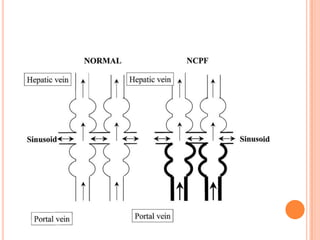
NON-CIRRHOTIC PORTAL HYPERTENSION
 Increase in portal pressure due to pre-sinusoidal (intra-
hepatic) or pre hepatic lesions
 Absence of cirrhosis
 Absence of hepatic venous outflow obstn.
 Vascular lesions
 WHVP(wedge hepatic venous pressure) is normal
 NCPF & EHPVO- 2 main causes
NCPF - DEFINITION
 Disease of uncertain etiology
 Portal fibrosis & invlv. small and med.portal veins
 Portal hypertension,splenomegaly,variceal bleed.
 Liver functions & stucture- normal
TERMINOLOGY
 Non –cirrhotic portal fibrosis by ICMR in 1969
 Idiopathic portal hypertension in Japan
 Hepato portal sclerosis in West
NCPF
 Indian subcontinent
 Low socio-economic status
 Age gp- 25-35 yrs
 No sex prediliction
ETIOLOGY
 Infections – bacterial inf. From gut.
- umblical sepsis,diarrhoea in
infancy & early childhood.
 chronic arsenicosis
 Auto- immune disorders
 Vinyl chloride
 Pro-thrombotic state (west)
 Exact etiology is still unknown
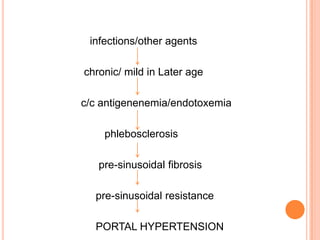
infections/other agents
chronic/ mild in Later age
c/c antigenenemia/endotoxemia
phlebosclerosis
pre-sinusoidal fibrosis
pre-sinusoidal resistance
PORTAL HYPERTENSION
CLINICAL PROFILE
 Age – 2nd and 3rd decades
 M=F
 Hemetemesis & malaena (well-tolerated)
 Feeling of lump
 Esophagial varices
 Gastric varices
 Portal gastropathy
 Transient ascites
NATURAL HISTORY
 Bleeding rate from varices high
 Mortality is low due to preserved liver functions.
 Transient ascites after bleed
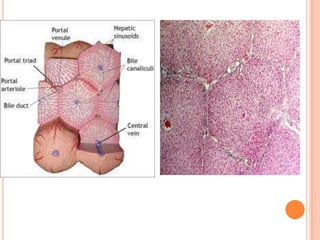
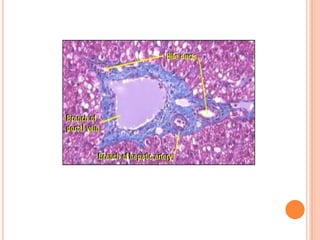
HISTOPATHOLOGY
 Liver size & structure normal
 Obliterative portovenopathy
-patchy & segmental subendothelial
thickening of med & small portal vein
- obliteration of small portal veins & emerg.
new abberant portal channels
INVESTIGATIONS
 LFT- normal or near normal
 Pancytopenia due to hypersplenism
 Bone marrow –hypercellular
 Coagulation profile and PLC- mild derranged
 Needle biopsy-
- absence of regenerative nodules
- small portal vein obliteration
- portal tract fibrosis
- perivenular fibrosis
- lack of hepatocellular injury
IMAGING
 Usg- porto splenic axis dilated & patent
- occ.thrombus in intrahepatic branch
- echogenic boundary of PV (wall thickness)
ENDOSCOPY
 Esophagial varices – 80-95%
 Varices are large at time of diagnosis
 Gastric varices
 Portal hypertensive gastropathy- rare
 Anorectal varices common
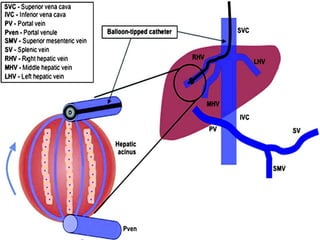
HEMODYNAMICS
 Wedge hepatic venous pressure is normal
(WHVP)
 Hepatic venous pressure gradient is normal
( WHFP- FHVP)
DIAGNOSTIC FEATURES
 Presence of mod- massive splenomegaly
 Evidence of portal hypertension,varices and /or
collaterals
 Patent speno-portal axis & hepatic veins on
ultrasound color doppler
 Normal or near normal liver functions
 Wedge hepatic venous pressure gradient- normal
 Liver histology- no cirrhosis & parenchymal
injury
OTHER FEATURES
 Absence of signs of CLD
 No decompensation except transient ascites
 Absence of serum markers of hep B &C
 No known etiology of liver disease
 USG – DILATED & THICKENED portal vein
with peripheral pruning & hyperechoic
areas.
DIFFERENTIAL DIAGNOSIS
 EHPVO
 Idiopathic portal hypertension( Japan)
 Incomplete septal cirrhosis
 Childs A compensated cirrhosis
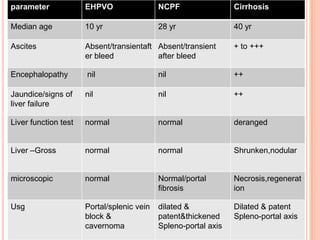
parameter EHPVO NCPF Cirrhosis
Median age 10 yr 28 yr 40 yr
Ascites Absent/transientaft
er bleed
Absent/transient
after bleed
+ to +++
Encephalopathy nil nil ++
Jaundice/signs of
liver failure
nil nil ++
Liver function test normal normal deranged
Liver –Gross normal normal Shrunken,nodular
microscopic normal Normal/portal
fibrosis
Necrosis,regenerat
ion
Usg Portal/splenic vein
block &
cavernoma
dilated &
patent&thickened
Spleno-portal axis
Dilated & patent
Spleno-portal axis
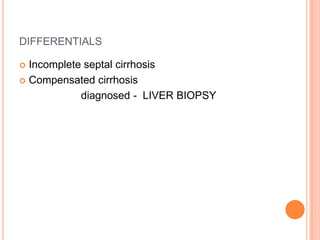
DIFFERENTIALS
 Incomplete septal cirrhosis
 Compensated cirrhosis
diagnosed - LIVER BIOPSY
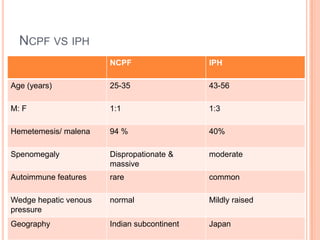
NCPF VS IPH
NCPF IPH
Age (years) 25-35 43-56
M: F 1:1 1:3
Hemetemesis/ malena 94 % 40%
Spenomegaly Dispropationate &
massive
moderate
Autoimmune features rare common
Wedge hepatic venous
pressure
normal Mildly raised
Geography Indian subcontinent Japan
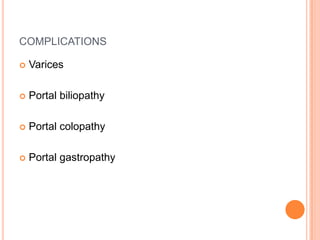
COMPLICATIONS
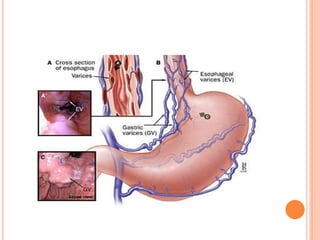
 Varices
 Portal biliopathy
 Portal colopathy
 Portal gastropathy
PORTAL BILIOPATHY
 Term introduced in 1992.
 Abnormalities of extra & intra hepatic bile ducts
with portal hypertension
- identation by paracholedochal collaterals
- localized strictures,angulation of duct
- displc. Duct,focal narrowing,dilations
 left hepatic duct (mc)
 Symptoms- abd.pain,jaundice,fever
 complication- cholangitis,choledocholithiasis
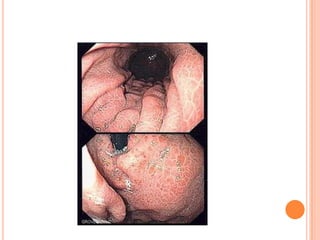
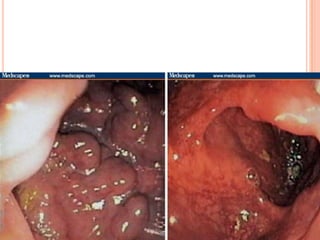
PORTAL HYPERTENSIVE GASTROPATHY
 Rare in NCPF
 Gastric mucosal & sub mucosal vascular ectasia
 Potential for acute & c/c bleeding
 endoscopy- mosaic or snake skin pattern mucosa
PORTAL COLOPATHY
 Enlarged hemorrhoids
 Rectal varices
 endoscopy- diffuse vascular ectasia
MANAGEMENT OF ACUTE BLEEDING
 General management (icu ) - I v fluids, NGT,
- blood transfusions
 Pharmocological therapy-
- octreotide,vasopressin
- efficacy in NCPF is not known
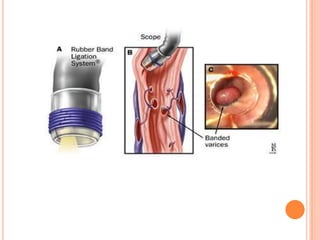
 Endoscopic therapy-
sclerotherapy & band ligation
80- 90% efficacy
band ligation (preffered)
 Combination therapy- more effective in acute bleed
- prevent rebleed
SCREENING
 All patients with moderative- massive
splenomegaly with NCPF should have a
screening endoscopy
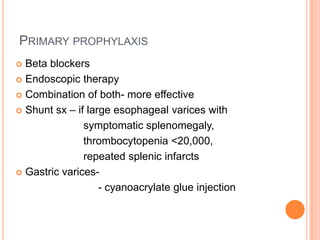
PRIMARY PROPHYLAXIS
 Beta blockers
 Endoscopic therapy
 Combination of both- more effective
 Shunt sx – if large esophageal varices with
symptomatic splenomegaly,
thrombocytopenia <20,000,
repeated splenic infarcts
 Gastric varices-
- cyanoacrylate glue injection
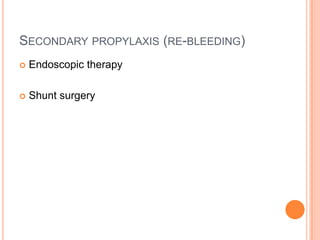
SECONDARY PROPYLAXIS (RE-BLEEDING)
 Endoscopic therapy
 Shunt surgery
MANAGEMENT OF SPECIAL SITUATIONS
 Hypersplenism- splenectomy in symptomatic
done with shunt sx.
 Portal biliopathy –
cholangitis & choledocholithiasis-
- biliary stenting,sphincterectomy,
stone extraction.
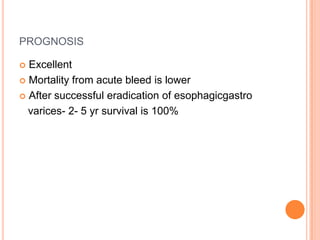
PROGNOSIS
 Excellent
 Mortality from acute bleed is lower
 After successful eradication of esophagicgastro
varices- 2- 5 yr survival is 100%
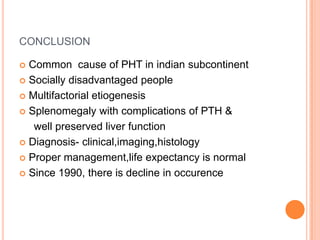
CONCLUSION
 Common cause of PHT in indian subcontinent
 Socially disadvantaged people
 Multifactorial etiogenesis
 Splenomegaly with complications of PTH &
well preserved liver function
 Diagnosis- clinical,imaging,histology
 Proper management,life expectancy is normal
 Since 1990, there is decline in occurence
New consensus on ncpf

New consensus on ncpf

  • 1.
    NEW CONSENSUS ON NON-CIRRHOTICPORTAL FIBROSIS (NCPF) GUIDE: DR.ATUL SHENDE CANDIDATE:DR.SARATH MENON.R DIVISION OF GASTROENTEROLOGY MGM MEDICAL COLLEGE,INDORE
  • 2.
    INTRODUCTION  NON-CIRRHOTIC PORTALHYPERTENSION  NCPF  CONCEPT & TERMINOLOGY  NCPF vs EHPVO vs CIRRHOSIS  CLINICAL PROFILE  DIAGNOSIS  MANAGEMENT  PROGNOSIS
  • 3.
    NON-CIRRHOTIC PORTAL HYPERTENSION Increase in portal pressure due to pre-sinusoidal (intra- hepatic) or pre hepatic lesions  Absence of cirrhosis  Absence of hepatic venous outflow obstn.  Vascular lesions  WHVP(wedge hepatic venous pressure) is normal  NCPF & EHPVO- 2 main causes
  • 6.
    NCPF - DEFINITION Disease of uncertain etiology  Portal fibrosis & invlv. small and med.portal veins  Portal hypertension,splenomegaly,variceal bleed.  Liver functions & stucture- normal
  • 7.
    TERMINOLOGY  Non –cirrhoticportal fibrosis by ICMR in 1969  Idiopathic portal hypertension in Japan  Hepato portal sclerosis in West
  • 8.
    NCPF  Indian subcontinent Low socio-economic status  Age gp- 25-35 yrs  No sex prediliction
  • 9.
    ETIOLOGY  Infections –bacterial inf. From gut. - umblical sepsis,diarrhoea in infancy & early childhood.  chronic arsenicosis  Auto- immune disorders  Vinyl chloride  Pro-thrombotic state (west)  Exact etiology is still unknown
  • 10.
    infections/other agents chronic/ mildin Later age c/c antigenenemia/endotoxemia phlebosclerosis pre-sinusoidal fibrosis pre-sinusoidal resistance PORTAL HYPERTENSION
  • 11.
    CLINICAL PROFILE  Age– 2nd and 3rd decades  M=F  Hemetemesis & malaena (well-tolerated)  Feeling of lump  Esophagial varices  Gastric varices  Portal gastropathy  Transient ascites
  • 12.
    NATURAL HISTORY  Bleedingrate from varices high  Mortality is low due to preserved liver functions.  Transient ascites after bleed
  • 13.
    HISTOPATHOLOGY  Liver size& structure normal  Obliterative portovenopathy -patchy & segmental subendothelial thickening of med & small portal vein - obliteration of small portal veins & emerg. new abberant portal channels
  • 14.
    INVESTIGATIONS  LFT- normalor near normal  Pancytopenia due to hypersplenism  Bone marrow –hypercellular  Coagulation profile and PLC- mild derranged  Needle biopsy- - absence of regenerative nodules - small portal vein obliteration - portal tract fibrosis - perivenular fibrosis - lack of hepatocellular injury
  • 15.
    IMAGING  Usg- portosplenic axis dilated & patent - occ.thrombus in intrahepatic branch - echogenic boundary of PV (wall thickness)
  • 17.
    ENDOSCOPY  Esophagial varices– 80-95%  Varices are large at time of diagnosis  Gastric varices  Portal hypertensive gastropathy- rare  Anorectal varices common
  • 18.
    HEMODYNAMICS  Wedge hepaticvenous pressure is normal (WHVP)  Hepatic venous pressure gradient is normal ( WHFP- FHVP)
  • 20.
    DIAGNOSTIC FEATURES  Presenceof mod- massive splenomegaly  Evidence of portal hypertension,varices and /or collaterals  Patent speno-portal axis & hepatic veins on ultrasound color doppler  Normal or near normal liver functions  Wedge hepatic venous pressure gradient- normal  Liver histology- no cirrhosis & parenchymal injury
  • 21.
    OTHER FEATURES  Absenceof signs of CLD  No decompensation except transient ascites  Absence of serum markers of hep B &C  No known etiology of liver disease  USG – DILATED & THICKENED portal vein with peripheral pruning & hyperechoic areas.
  • 22.
    DIFFERENTIAL DIAGNOSIS  EHPVO Idiopathic portal hypertension( Japan)  Incomplete septal cirrhosis  Childs A compensated cirrhosis
  • 23.
    parameter EHPVO NCPFCirrhosis Median age 10 yr 28 yr 40 yr Ascites Absent/transientaft er bleed Absent/transient after bleed + to +++ Encephalopathy nil nil ++ Jaundice/signs of liver failure nil nil ++ Liver function test normal normal deranged Liver –Gross normal normal Shrunken,nodular microscopic normal Normal/portal fibrosis Necrosis,regenerat ion Usg Portal/splenic vein block & cavernoma dilated & patent&thickened Spleno-portal axis Dilated & patent Spleno-portal axis
  • 24.
    DIFFERENTIALS  Incomplete septalcirrhosis  Compensated cirrhosis diagnosed - LIVER BIOPSY
  • 25.
    NCPF VS IPH NCPFIPH Age (years) 25-35 43-56 M: F 1:1 1:3 Hemetemesis/ malena 94 % 40% Spenomegaly Dispropationate & massive moderate Autoimmune features rare common Wedge hepatic venous pressure normal Mildly raised Geography Indian subcontinent Japan
  • 26.
    COMPLICATIONS  Varices  Portalbiliopathy  Portal colopathy  Portal gastropathy
  • 28.
    PORTAL BILIOPATHY  Termintroduced in 1992.  Abnormalities of extra & intra hepatic bile ducts with portal hypertension - identation by paracholedochal collaterals - localized strictures,angulation of duct - displc. Duct,focal narrowing,dilations  left hepatic duct (mc)  Symptoms- abd.pain,jaundice,fever  complication- cholangitis,choledocholithiasis
  • 29.
    PORTAL HYPERTENSIVE GASTROPATHY Rare in NCPF  Gastric mucosal & sub mucosal vascular ectasia  Potential for acute & c/c bleeding  endoscopy- mosaic or snake skin pattern mucosa
  • 31.
    PORTAL COLOPATHY  Enlargedhemorrhoids  Rectal varices  endoscopy- diffuse vascular ectasia
  • 33.
    MANAGEMENT OF ACUTEBLEEDING  General management (icu ) - I v fluids, NGT, - blood transfusions  Pharmocological therapy- - octreotide,vasopressin - efficacy in NCPF is not known  Endoscopic therapy- sclerotherapy & band ligation 80- 90% efficacy band ligation (preffered)  Combination therapy- more effective in acute bleed - prevent rebleed
  • 35.
    SCREENING  All patientswith moderative- massive splenomegaly with NCPF should have a screening endoscopy
  • 36.
    PRIMARY PROPHYLAXIS  Betablockers  Endoscopic therapy  Combination of both- more effective  Shunt sx – if large esophageal varices with symptomatic splenomegaly, thrombocytopenia <20,000, repeated splenic infarcts  Gastric varices- - cyanoacrylate glue injection
  • 37.
    SECONDARY PROPYLAXIS (RE-BLEEDING) Endoscopic therapy  Shunt surgery
  • 38.
    MANAGEMENT OF SPECIALSITUATIONS  Hypersplenism- splenectomy in symptomatic done with shunt sx.  Portal biliopathy – cholangitis & choledocholithiasis- - biliary stenting,sphincterectomy, stone extraction.
  • 39.
    PROGNOSIS  Excellent  Mortalityfrom acute bleed is lower  After successful eradication of esophagicgastro varices- 2- 5 yr survival is 100%
  • 40.
    CONCLUSION  Common causeof PHT in indian subcontinent  Socially disadvantaged people  Multifactorial etiogenesis  Splenomegaly with complications of PTH & well preserved liver function  Diagnosis- clinical,imaging,histology  Proper management,life expectancy is normal  Since 1990, there is decline in occurence

Editor's Notes