ATYPICAL PARKINSONISM
DR.SARATH MENON.R, MD(Med.),DNB(Med.),MNAMS
DM RESIDENT
DEPT. OF NEUROSCIENCES
AIMS,KOCHI
OUTLINE
 Classifications
 Red flag signs
 AP- syndromic approach
 Diagnostic criteria
 Phenotypic spectrum
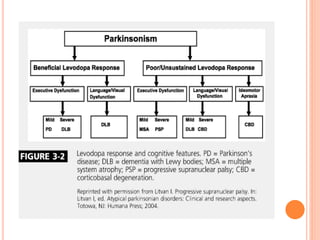
 Atypical AP or mimickers
 Investigations
 Novel biomarkers
 Treatment
 Future trends
INTRODUCTION
 Common problem in neurology outpatient
departments
 Wide variety of sporadic / heredodegenerative
syndromes
 Aetiologies vary widely
 80-85% -IPD
 Differentiation from other syndromes
 Very important in prognostication and management
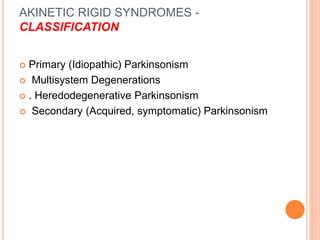
AKINETIC RIGID SYNDROMES -
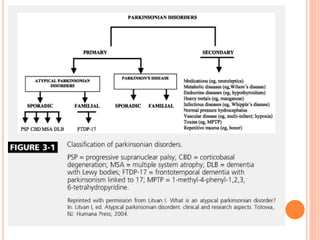
CLASSIFICATION
 Primary (Idiopathic) Parkinsonism
 Multisystem Degenerations
 . Heredodegenerative Parkinsonism
 Secondary (Acquired, symptomatic) Parkinsonism
 Primary Parkinsonism Parkinson’s Disease
 - Sporadic Parkinson’s Disease
 - Hereditary
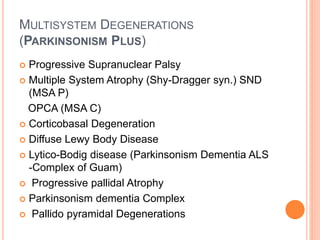
MULTISYSTEM DEGENERATIONS
(PARKINSONISM PLUS)
 Progressive Supranuclear Palsy
 Multiple System Atrophy (Shy-Dragger syn.) SND
(MSA P)
OPCA (MSA C)
 Corticobasal Degeneration
 Diffuse Lewy Body Disease
 Lytico-Bodig disease (Parkinsonism Dementia ALS
-Complex of Guam)
 Progressive pallidal Atrophy
 Parkinsonism dementia Complex
 Pallido pyramidal Degenerations
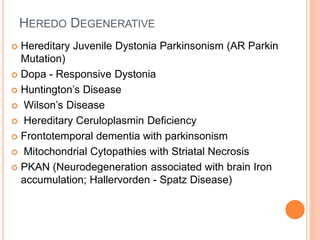
HEREDO DEGENERATIVE
 Hereditary Juvenile Dystonia Parkinsonism (AR Parkin
Mutation)
 Dopa - Responsive Dystonia
 Huntington’s Disease
 Wilson’s Disease
 Hereditary Ceruloplasmin Deficiency
 Frontotemporal dementia with parkinsonism
 Mitochondrial Cytopathies with Striatal Necrosis
 PKAN (Neurodegeneration associated with brain Iron
accumulation; Hallervorden - Spatz Disease)
 Spinocerebellar Degenerations (Eg: MJD)
 Gerstmann - Straussler - Scheinker Disease
 Familial Progressive Subcortical Gliosis
 Familial Basal Ganglia Calcification
 Lubag(X Linked dystonia - Parkinsonism)
 Ceroid Lipofuscinosis
 Neuroacanthocytosis
 Hereditary Haemochromatosis.
 Neuroferritinopathy
 Aceruloplasminemia
SECONDARY PARKINSONISM
 Infectious Post- encephalitic
 HIV; SSPE; Prion diseases
 Drugs
 Dopamine Receptor Blocking drugs, Reserpine, Tetrabenazine, Alpha
Methyl Dopa, Lithium, Flunarizine, Cinnarizine.
 Toxins
 MPTP, Carbon monoxide, Manganese, Mercury, Carbon
disulfide,Cyanide, Methanol.
 Vascular -Multi infarct; Binswangers disease.
 Trauma -Pugilistic Encephalopathy.
 Parathyroid abnormalities;
 Hypothyroidism;
 Brain Tumors
 Paraneoplastic
 NPH
 Psychogenic.
IDIOPATHIC PD
 UK Brain Bank Criteria
 bradykinesia and at least one of the following: rest
tremor, rigidity, or postural instability.
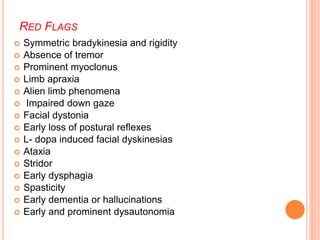
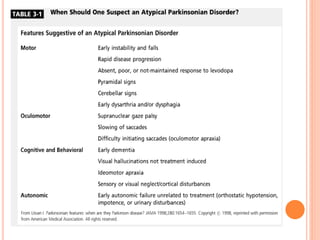
RED FLAGS
 Symmetric bradykinesia and rigidity
 Absence of tremor
 Prominent myoclonus
 Limb apraxia
 Alien limb phenomena
 Impaired down gaze
 Facial dystonia
 Early loss of postural reflexes
 L- dopa induced facial dyskinesias
 Ataxia
 Stridor
 Early dysphagia
 Spasticity
 Early dementia or hallucinations
 Early and prominent dysautonomia
MAJOR SYNDROMES
 PSP
 MSA
 CBGD
 DLBD
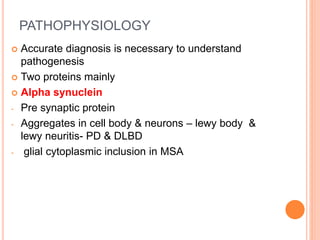
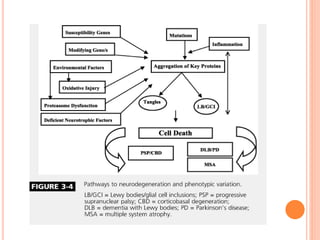
PATHOPHYSIOLOGY
 Accurate diagnosis is necessary to understand
pathogenesis
 Two proteins mainly
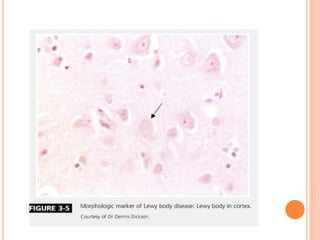
 Alpha synuclein
- Pre synaptic protein
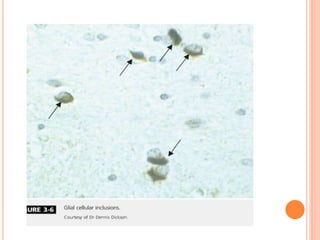
- Aggregates in cell body & neurons – lewy body &
lewy neuritis- PD & DLBD
- glial cytoplasmic inclusion in MSA
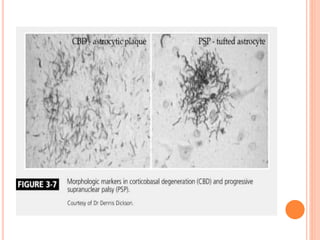
TAUPATHY
 4 repeat tau accumalates
 NFT & in glia
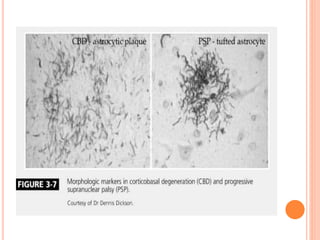
 Psp- astrocytic tufts
 CBD- astrocytic plaques
PROGRESSIVE SUPRANUCLEAR PALSY
 Steele et al—1964
 5% of parkinsonian pts
 Prevalence—4.9 / 100,000
 Incidence 1.7 (50-59yrs) to 14.7(80-89yrs)
 Commonly misdiagnosed as PD
 Insidious onset
 No pathologic proven cases have begun before the
age of 40.
 Tauopathy-4-repeat t, 4R tauopathy).
 always sporadic, few familial cases-
- MAPT (microtubuli associated protein t) gene mtn.
 Mitochondrial dysfunction & oxidative stress -
pathophysiology of PSP
Postural Instability & EP Features :
 Falls—backward
 Poor postural reflexes
 Rigidity –axial
 Dysarthria—spastic,
 Hypophonic
 ataxic
 Frontal release signs
 Pseudobulbar palsy
 L-DOPA UNRESPONSIVENESS
 Reduced blink rate and closure of eyelids due to eyelid
dystonia or levator inhibition ( apraxia of eyelid
opening)
 square wave-jerks
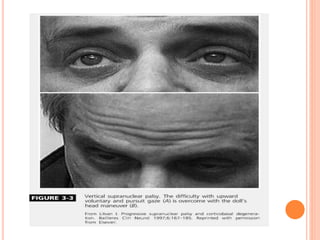
 on doll’s eye maneuver, there is improved range, as
vestibulo-ocular reflex is preserved
 Subcortical-type dementia
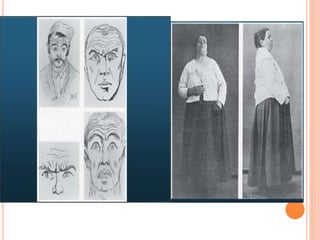
 Typical facies- “surprised look”
NINDS–SPSP DIAGNOSTIC CRITERIA FOR PSP
 Possible PSP
Mandatory inclusion criteria:
 gradually progressive disorder
 onset age 40 or later
 Either vertical supranuclear palsy or both slowing of
vertical saccades
 postural instability with falls within a year of disease onset
 no evidence of other diseases that could explain the
foregoing features, as indicated by exclusion criteria
Mandatory exclusion criteria:
 recent history of encephalitis
 alien limb syndrome
 cortical sensory deficits
 focal frontal or temporoparietal atrophy
 hallucinations or delusions unrelated to
dopaminergic therapy
 cortical dementia of Alzheimer type
 prominent, early cerebellar symptoms
 unexplained dysautonomia
Supportive features:
 symmetrical akinesia or rigidity
 proximal more than distal
 abnormal neck posture
 especially retrocollis
 poor or absent response of parkinsonism to levodopa
 early dysphagia and dysarthria
 early onset of cognitive impairment including two or
more of: apathy, impairment in abstract thought,
decreased verbal fluency, utilisation or imitation
behaviour, or frontal release signs
Probable PSP
Mandatory inclusion criteria
 gradually progressive disorder
 onset age 40 or later
 vertical supranuclear palsy
 prominent postural instability with falls within a year
of disease onset
 no evidence of other diseases that could explain
the foregoing features, as indicated by exclusion
criteria
Definite PSP
Mandatory inclusion criteria:
 clinically probable or possible PSP and
histopathological evidence of typical PSP
PHENOTYPIC SPECTRUM OF PROGRESSIVE
SUPRANUCLEAR PALSY
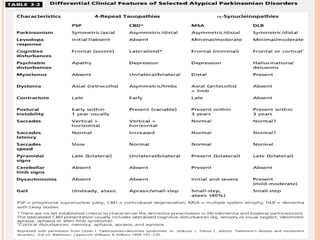
 typical PSP phenotype- Richardson syndrome
 PSP-p = PD at least at the initial stages, with asymmetric
parkinsonism, rest-tremor, better levodopa response, longer
mean survival
 pure akinesia with gait freezing (PSP-PAGF)

 corticobasal syndrome (PSP-CBS),
 frontotemporal dementia (PSP-FTD), progressive nonfluent
aphasia
 no clinical sign to predict PSP pathologic abnormality
accurately in the non-RS phenotypes
INVESTIGATIONS
 clinical diagnosis
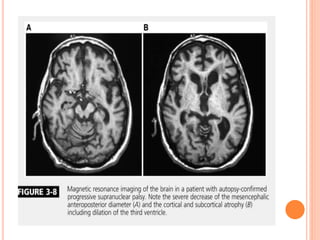
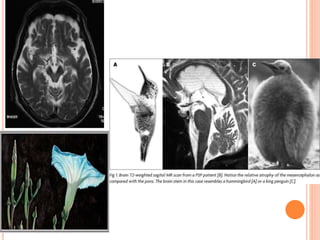
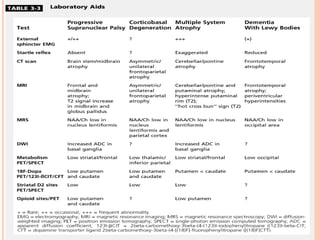
 MRI-
midbrain atrophy
Superior cerebellar peduncle atrophy.
“morning glory flower sign” and the “hummingbird sign” are
quite specific but show low sensitivity (50% and 68.4%,
respectively
 (DATscan) is abnormal in PD and all AP syndromes
 differentiate with PD, [123]meta-iodobenzylguanidine
(MIBG) and 123I-iodobenzamide (IBZM) SPECT may be
useful
 MIBG is abnormal in PD because of postganglionic
sympathetic denervation, but is typically normal in PSP.
 IBZM SPECT assessing the postsynaptic receptors is
abnormal in PSP and normal in PD
 IBZM SPECT is abnormal in all APs and therefore
cannot differentiate between PSP and other AP
 Novel diagnostic approaches and biomarkers
- csf tau protein
-neurofilament light chain
PATHOLOGY
 Neurofibrillary tangles are present in these areas.
 Tufted astrocytes (Gallyas-positive) -hallmark
feature of PSP that differentiates other 4R
tauopathies such as CBD (astrocytic plaques
RX
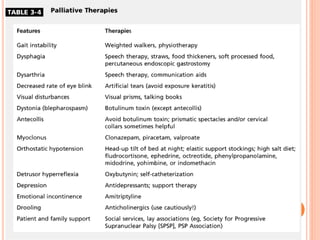
 no effective symptomatic or neuroprotective treatments
 A trial of levodopa (up to 1 g/d) and amantadine (up to 450 mg/d)
 Botulinum toxin injections can be used to treat levator inhibition.
 Serotonin reuptake inhibitors (SSRIs) may be used for apathy with no
clear benefit.
 A small study with Coenzyme Q10- no RCT study
 Recent large, double-blind studies with GSK-3b inhibitors (Tideglusib,
Davunetide) have failed to show any clinical effect.
 Tideglusib reduced the rate of brain atrophy in one study.
 Supportive measures such as physiotherapy, walking aids, speech
therapy and PEG
MULTIPLE SYSTEM ATROPHY :
 Sporadic neurodegenerative disorder clinically any
combination of parkinsonian, autonomic, cerebellar, or
pyramidal signs
 Pathologically–
cell loss, gliosis, and glial cytoplasmic inclusions in
several CNS structures.
 MSA is an a-synucleinopathy
 usually a sporadic disease; however, rarely, familial
cases - mutations in COQ2 gene
 Epidemiology :
 prevalence of MSA in four studies ranged from 1·9
to 4·9 cases per 100 000 people.
 similar to those of other well-known
neurodegenerative disorders such as Huntington’s
disease and motor neuron disease.
 no single environmental factor shown to increase
or to reduce risks of MSA
Clinical presentation :
 affects both men and women
 the sixth decade of life progresses with a mean
survival of 6–9 years.
 substantial variation of disease progression with
survival of more than 15 yrs.
main features –
 autonomic failure
 Parkinsonism
 cerebellar ataxia
 pyramidal signs in any combination.
TWO MAJOR MOTOR PRESENTATIONS
 distinguished clinically–
 Parkinsonian features predominate in 80% of
patients (MSA-P subtype),
 cerebellar ataxia is the main motor feature in 20%
of patients (MSA-C subtype).
 Both similar survival times.
 patients with MSA-P have a more rapid functional
deterioration than those with MSA-C
 MSA-P-associated parkinsonism :
 progressive akinesia and rigidity
 jerky postural tremor and tremor at rest.
 orofacial or craniocervical dystonia associated with a
characteristic quivering high-pitched dysarthria.
 Postural stability is compromised early on in the
disease course
 recurrent falls at disease onset are unusual in
contrast to psp.
 90% of the MSA-P pts- unresponsive to levodopa in
the long term.
 50% have levodopa-induced dyskinesia affecting
orofacial and neck muscles, without motor benefit.
 fully developed clinical picture of MSA-P evolves
within 5 years of disease onset, allowing a clinical
diagnosis during follow-up.
MSA –P RED FLAGS
 Early instability
 Rapid progression
 Pisa syndrome,camptocormia,contractures
 Bulbar dysfunction
 Respiratory dysfn- stridor,insp sighs
 Emotional incontinence
 2/6 – probable MSA-P – additional criteria
MSA-C :
 gait ataxia
 limb kinetic ataxia
 scanning dysarthria,
 cerebellar oculomotor disturbances.
 Most patients develop additional non-cerebellar
symptoms and signs
 may be indistinguishable from other patients with
idiopathic late onset cerebellar ataxia
 Dysautonomia :
 urogenital and orthostatic dysfunction.
 Early erectile dysfunction is nearly universal in men
with MSA
 Female- genital insensitivity
 urinary incontinence or retention are common early
in the course or as presenting symptoms
CONSENSUS STATEMENT FOR THE CLINICAL
DIAGNOSIS OF MSA
 clinical domains,
 features
 criteria used in the diagnosis of MSA
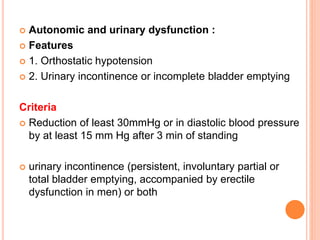
 Autonomic and urinary dysfunction :
 Features
 1. Orthostatic hypotension
 2. Urinary incontinence or incomplete bladder emptying
Criteria
 Reduction of least 30mmHg or in diastolic blood pressure
by at least 15 mm Hg after 3 min of standing
 urinary incontinence (persistent, involuntary partial or
total bladder emptying, accompanied by erectile
dysfunction in men) or both
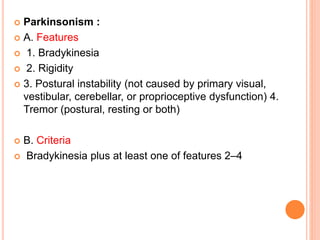
 Parkinsonism :
 A. Features
 1. Bradykinesia
 2. Rigidity
 3. Postural instability (not caused by primary visual,
vestibular, cerebellar, or proprioceptive dysfunction) 4.
Tremor (postural, resting or both)
 B. Criteria
 Bradykinesia plus at least one of features 2–4
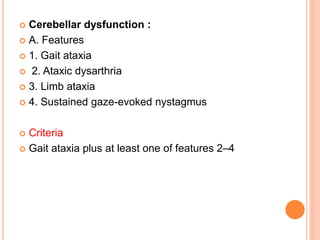
 Cerebellar dysfunction :
 A. Features
 1. Gait ataxia
 2. Ataxic dysarthria
 3. Limb ataxia
 4. Sustained gaze-evoked nystagmus
 Criteria
 Gait ataxia plus at least one of features 2–4
 Corticospinal tract dysfunction
 A. Features
 1. Extensor plantar responses with hyper-reflexia
 Criteria
 Corticospinal tract dysfunction in MSA: no
corticospinal tract features are used in defining the
diagnosis of MSA
 prominent and severe spasticity should raise
suspicion for an alternative diagnosis
Consensus statement: exclusion criteria for the
diagnosis of MSA :
 History
 Symptomatic onset under 30 years of age
 Family history of a similar disorder
 Systemic disease or other identifiable causes
 Hallucinations unrelated to medication
 DSM IV criteria for dementia
 Prominent slowing of vertical saccades or vertical
supranuclear gaze palsy
 Evidence of focal cortical dysfunction such as aphasia,
alien limb syndrome, and parietal dysfunction
 Laboratory investigation- Metabolic, molecular genetic
and imaging evidence of an alternative cause of
features
DIAGNOSTIC CLINICAL APPROACH
Motor signs
 Parkinsonism poorly responsive to levodopa
 Cerebellar ataxia
 Pyramidal signs
 Early instability and falls Within 3 years of disease
onset
 Rapid progression (wheelchair sign) despite
dopaminergic treatment within 5 years of disease
onset
 Orofacial dystonia or dyskinesias
 Atypical spontaneous or levodopa induced
dystonia
 dyskinesia mainly affecting orofacial muscles,
[resembling risus sardonicus of cephalic tetanus]
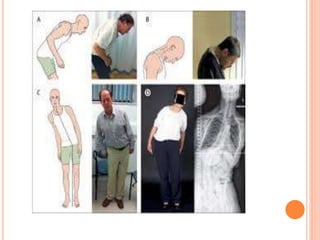
 Axial dystonia -Pisa syndrome (subacute axial
dystonia with a severe tonic lateral flexion of the
trunk, head, and neck)
 early severe camptocormia
 Disproportionate antecollis -Chin on chest, neck
can only be passively and forcibly extended to its
normal position with difficulty; despite severe
chronic neck flexion, flexion elsewhere is minor.
 Jerky tremor
 Irregular myoclonic postural or action tremor of the hands
or fingers
 Dysarthria-
- Atypical quivering, irregular and severely hypophonic or
slurring high pitched dysarthria,
- tends to develop earlier and be more severe than in PD
 notable dysphagia
Non-motor signs
 Severe dysautonomia
 Abnormal respiration
 Nocturnal (harsh or strained, high pitched inspiratory
sounds) or diurnal inspiratory stridor,
 involuntary deep inspiratory sighs and gasps, sleep
apnoea
 snoring increased from premorbid level
 newly arisen REM sleep behaviour disorder
 Emotional incontinence
“RED FLAGS’’
 RBD and autonomic failure- pre motor stage
 Early falls and postural instability can be seen- look for
eye signs & fronto-subcortical dysfunction for PSP
 L-dopa induced oro facial dystonia- MSA
 Raynaud phenomenon is a common in MSA
 Freezing of gait may be prominent, early, and severe,
causing diagnostic difficulties -PSP -PAGF phenotype
 dementia, it is considered a non supporting feature for
the diagnosis of MSA
 frank, prominent, early dementia should lead the clinician
to other diagnoses.
Investigations
 Autonomic function tests
 Cardiovascular function test-within in 2-3 ys
 Bladder function tests
 standard urine analysis will exclude infection.
 The residual volume –usg,cystometry ,UDS
IMAGING
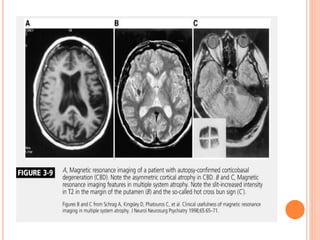
 MRI
- Hot cross burn sign- mcp/pons- MSA-c
- Putaminal rim- MSA-p
- DAT scan
- abnormal in all MSA, PSP, and PD
- MIBG scintigraphy
- abnormal in PD, normal in MSA
 IBZM SPECT is normal in PD,abnormal in MSA (but
also in PSP and CBD)
NOVEL BIOMARKERS
 Mollenhauer and colleagues-
CSF mean a-synuclein levels , not total t, or Ab42 levels
differentiated PD and MSA from neurologic controls (70%
sensitivity, 53% specificity)
 a-synuclein and phosphorylated t/total t could differentiate
PD from MSA -sensitivity of 90% & specificity of 71%
 Flt3 ligand, a cytokine
PD and MSA with a sensitivity of 99% and a specificity of
95%.
RX
 Symptomatic
 PD- L-dopa/ dopa agonists- cranio cervical dystonia
postural hypotension
Amantidine- gait disturbances
 Orthostatic hypotension-
high salt, fludrocortisone,midodrine
 Urinary dysfunction
- UDS- characterise nature
-Neurogenic bladder- Oxybutinin or Tolderotidne
 Erectile dysfunction-
- sildenafil
-intracavernosal inj. Or penile implants
 Emotional incontinence
- SSRI/TCA
RCT – Rasagiline and rifampicin- no effects
Promising studies
- IVIG
- Intrarterial/IV autologous stem cells
- Future
- Alpha synuclein targeting antibodies
CORTICOBASAL DEGENERATION :
sixth to eighth decades of life,
onset of symptoms at mean age 63 years (SD 7·7)
. sporadic disease
4–6% of parkinsonism,
Clinical presentations
 Five initial presentations
 The most common presentation (55%) -“useless
arm” (ie, a rigid, dystonic, akinetic, or apraxic arm),
 gait disorder (27%)
 prominent sensory symptoms
 isolated speech disturbance
 behavioural disturbance
 Clinical features
Motor
Limb clumsiness (asymmetric)
Bradykinesia/Akinesia (asymmetric)
Rigidity (asymmetric)
Tremor (action/postural)
Myoclonus
Limb dystonia (asymmetric)
Blepharospasm
Choreoathetoid movements
Speech abnormalities
Gait disorder
Higher cortical functions
 Apraxia (limb more common than orofacial, eyelid-
opening)
 Dementia
 Alien-limb phenomenon
 Aphasia
 Frontal-lobe-release signs
 Cortical sensory abnormalities
 Depression
 apathy
 Anxiety Irritability
 Disinhibition
 Delusions
 Obsessive compulsive disorder
DIAGNOSTIC CRITERIA FOR CORTICOBASAL
DEGENERATION
Inclusion criteria (one of A or B)
A) Rigidity (easily detectable without reinforcement) and
one cortical sign:
 apraxia (more than simple use of limb as object;
absence of cognitive or motor deficit sufficient to explain
disturbance)
 cortical sensory loss (preserved primary sensation,
asymmetric)
 alien-limb phenomenon (more than simple levitation)
B) Asymmetric rigidity, dystonia (focal in limb; present at
rest at onset),
 focal reflex myoclonus (spreads beyond stimulated digits
Exclusion criteria
 Early dementia (will exclude some patients with
corticobasal degeneration)
 Early vertical gaze palsy
 Rest tremor
 Severe autonomic disturbances
 Sustained responsiveness to levodopa
 Lesions on imaging studies indicate another
pathological process
PROPOSED CRITERIA FOR THE DIAGNOSIS OF
CORTICOBASAL DEGENERATION
Core features
 Insidious onset and progressive course
 No identifiable cause (eg, tumour, infarct)
 EPS – one of the follow
-focal or asymmetric appendicular rigidity
-lacking prominent and sustained l-dopa response
-focal or asymmetric appendicular dystonia
 Cortical dysfunction - at least one of the following
: focal or asymmetric ideomotor apraxia
alien-limb phenomena
cortical sensory loss visual or sensory hemineglect
constructional apraxia
focal or asymmetric myoclonus
apraxia of speech or nonfluent aphasia
Supportive investigations
 Variable degrees of focal or lateralised cognitive
dysfunction,
 with relative preservation of learning and memory
on neuropsychometric testing
 Focal or asymmetric atrophy on CT or MRI imaging,
typically in perifrontal cortex
 Focal or asymmetric hypoperfusion on SPECT or
PET, typically maximal in parietofrontal cortex with
or without basal ganglia involvement
NEUROPATHOLOGICAL CRITERIA
Core features
 Focal cortical neuronal loss
 Substantia nigra neuronal loss
 Cortical and striatal Gallyas/tau-positive neuronal and
glial lesions, especially astrocytic plaques and threads, in
both white and grey matter
Supportive features
 Cortical atrophy, commonly with superficial spongiosis
 Ballooned neurons, in atrophic cortices
 Tau-positive oligodendroglial coiled bodies
PHENOTYPIC SPECTRUM OF CORTICOBASAL
DEGENERATION
 Classic CBD phenotype- CBS
 CBD- present with FTD,RS,PPA,PCA
 AD,PSP,FTD present with CBS
 Symmetrical bilateral CBS- AD pathology/RS
 Early onset PSP – CBD pathology
 For which proposed clinical criteria applied
INVESTIGATIONS
 Imaging
asymmetric frontal, and parietal cortical atrophy becomes
evident with dilatation of the lateral ventricle
 EEG –
-normal at first
- show asymmetric slowing that is maximum over the
hemisphere contralateral to the more affected limb
 Dopamine transporter SPECT- abnormal
- differentiate them from those with Alzheimer’s and Pick’s
diseases (in whom this scan is typically normal) early in
the course of the disease.
 FDG-PET
- Asymmetric reduction in fronto parietal regions
RX
 Anecdotal
 L-dopa trial (upto 1 gm/d)/Amantadine- PD symptoms
 Valproate, Levetiracetam- myoclonus
 Botox inj- dystonic hand
 No trials with ACEI – dementia
 Palliative rx
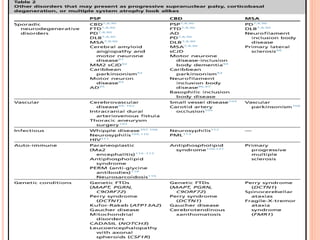
“CORTICO BASAL DEGENERATION-LOOKALIKE”
SYNDROMES
 atypical manifestations of PSP
 -progressive nonfluent aphasia FTD.
 Parkinson’s disease
 multiple-system atrophy
 Wilson’s disease
 progressive subcortical gliosis
 rigid-akinetic type Huntington’s disease
 atypical Pick’s disease
 parkinsonism– dementia–amyotrophic-lateral-sclerosis
complex
 prion related disease
 sudanophilic leukodystrophy
 neurofilament inclusion disease.
DEMENTIA WITH LEWY BODIES
Central feature (essential for a diagnosis of possible
or probable DLB)
 Dementia -progressive cognitive decline of sufficient
magnitude to interfere with normal social or
occupational function.
 Prominent or persistent memory impairmen- not occur
in the early stages ,usually evident with progression.
 Deficits on tests of attention, executive function, and
visuospatial ability may be especially prominent.
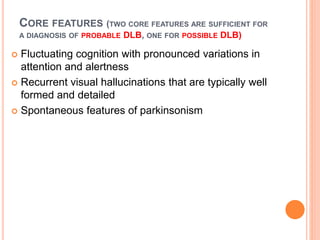
CORE FEATURES (TWO CORE FEATURES ARE SUFFICIENT FOR
A DIAGNOSIS OF PROBABLE DLB, ONE FOR POSSIBLE DLB)
 Fluctuating cognition with pronounced variations in
attention and alertness
 Recurrent visual hallucinations that are typically well
formed and detailed
 Spontaneous features of parkinsonism
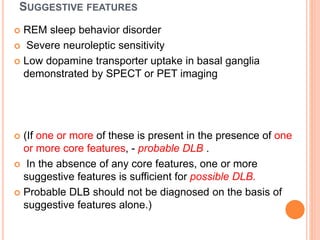
SUGGESTIVE FEATURES
 REM sleep behavior disorder
 Severe neuroleptic sensitivity
 Low dopamine transporter uptake in basal ganglia
demonstrated by SPECT or PET imaging
 (If one or more of these is present in the presence of one
or more core features, - probable DLB .
 In the absence of any core features, one or more
suggestive features is sufficient for possible DLB.
 Probable DLB should not be diagnosed on the basis of
suggestive features alone.)
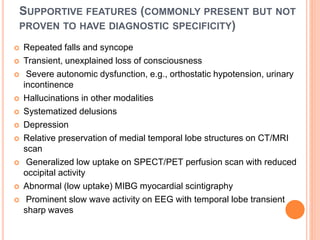
SUPPORTIVE FEATURES (COMMONLY PRESENT BUT NOT
PROVEN TO HAVE DIAGNOSTIC SPECIFICITY)
 Repeated falls and syncope
 Transient, unexplained loss of consciousness
 Severe autonomic dysfunction, e.g., orthostatic hypotension, urinary
incontinence
 Hallucinations in other modalities
 Systematized delusions
 Depression
 Relative preservation of medial temporal lobe structures on CT/MRI
scan
 Generalized low uptake on SPECT/PET perfusion scan with reduced
occipital activity
 Abnormal (low uptake) MIBG myocardial scintigraphy
 Prominent slow wave activity on EEG with temporal lobe transient
sharp waves
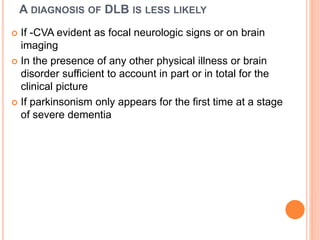
A DIAGNOSIS OF DLB IS LESS LIKELY
 If -CVA evident as focal neurologic signs or on brain
imaging
 In the presence of any other physical illness or brain
disorder sufficient to account in part or in total for the
clinical picture
 If parkinsonism only appears for the first time at a stage
of severe dementia
TEMPORAL SEQUENCE OF SYMPTOMS
 diagnosed when dementia occurs before or concurrently
with parkinsonism (if it is present).
 Parkinson disease dementia (PDD) - dementia that occurs
in the context of well-established Parkinson disease.
 In research studies in which distinction needs to be made
between DLB and PDD, the existing 1-year rule between
the onset of dementia and parkinsonism - DLB continues
to be recommended.
CLINICAL MANAGEMENT
 Motor parkinsonism-
-Levodopa at low doses & titrate up.
-Anticholinergics should be avoided.
 Neuropsychiatric symptoms.--cholinesterase inhibitors
(CHEIs) or atypical antipsychotic
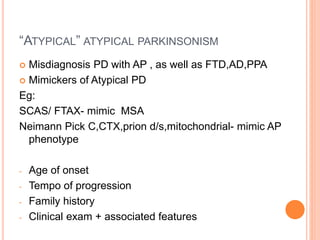
“ATYPICAL” ATYPICAL PARKINSONISM
 Misdiagnosis PD with AP , as well as FTD,AD,PPA
 Mimickers of Atypical PD
Eg:
SCAS/ FTAX- mimic MSA
Neimann Pick C,CTX,prion d/s,mitochondrial- mimic AP
phenotype
- Age of onset
- Tempo of progression
- Family history
- Clinical exam + associated features
SUMMARY
 Careful clinical examination
 Expanding phenotypic spectrum of AP & expanding
pathological spectrum of classic AP phenotypes –
diagnostic challenge
 AP mimickers
 Investigations may be supportive, but their sensitivity
and specificity are low.
 There are currently no biomarkers available.
 There are currently no neuroprotective treatments
available.
 symptomatic and supportive treatments with usually no
sustained effect.
 Further research required
THANK YOU

Atypical parkinsonism

  • 1.
    ATYPICAL PARKINSONISM DR.SARATH MENON.R,MD(Med.),DNB(Med.),MNAMS DM RESIDENT DEPT. OF NEUROSCIENCES AIMS,KOCHI
  • 2.
    OUTLINE  Classifications  Redflag signs  AP- syndromic approach  Diagnostic criteria  Phenotypic spectrum  Atypical AP or mimickers  Investigations  Novel biomarkers  Treatment  Future trends
  • 3.
    INTRODUCTION  Common problemin neurology outpatient departments  Wide variety of sporadic / heredodegenerative syndromes  Aetiologies vary widely  80-85% -IPD  Differentiation from other syndromes  Very important in prognostication and management
  • 4.
    AKINETIC RIGID SYNDROMES- CLASSIFICATION  Primary (Idiopathic) Parkinsonism  Multisystem Degenerations  . Heredodegenerative Parkinsonism  Secondary (Acquired, symptomatic) Parkinsonism
  • 5.
     Primary ParkinsonismParkinson’s Disease  - Sporadic Parkinson’s Disease  - Hereditary
  • 6.
    MULTISYSTEM DEGENERATIONS (PARKINSONISM PLUS) Progressive Supranuclear Palsy  Multiple System Atrophy (Shy-Dragger syn.) SND (MSA P) OPCA (MSA C)  Corticobasal Degeneration  Diffuse Lewy Body Disease  Lytico-Bodig disease (Parkinsonism Dementia ALS -Complex of Guam)  Progressive pallidal Atrophy  Parkinsonism dementia Complex  Pallido pyramidal Degenerations
  • 7.
    HEREDO DEGENERATIVE  HereditaryJuvenile Dystonia Parkinsonism (AR Parkin Mutation)  Dopa - Responsive Dystonia  Huntington’s Disease  Wilson’s Disease  Hereditary Ceruloplasmin Deficiency  Frontotemporal dementia with parkinsonism  Mitochondrial Cytopathies with Striatal Necrosis  PKAN (Neurodegeneration associated with brain Iron accumulation; Hallervorden - Spatz Disease)
  • 8.
     Spinocerebellar Degenerations(Eg: MJD)  Gerstmann - Straussler - Scheinker Disease  Familial Progressive Subcortical Gliosis  Familial Basal Ganglia Calcification  Lubag(X Linked dystonia - Parkinsonism)  Ceroid Lipofuscinosis  Neuroacanthocytosis  Hereditary Haemochromatosis.  Neuroferritinopathy  Aceruloplasminemia
  • 9.
    SECONDARY PARKINSONISM  InfectiousPost- encephalitic  HIV; SSPE; Prion diseases  Drugs  Dopamine Receptor Blocking drugs, Reserpine, Tetrabenazine, Alpha Methyl Dopa, Lithium, Flunarizine, Cinnarizine.  Toxins  MPTP, Carbon monoxide, Manganese, Mercury, Carbon disulfide,Cyanide, Methanol.  Vascular -Multi infarct; Binswangers disease.  Trauma -Pugilistic Encephalopathy.  Parathyroid abnormalities;  Hypothyroidism;  Brain Tumors  Paraneoplastic  NPH  Psychogenic.
  • 11.
    IDIOPATHIC PD  UKBrain Bank Criteria  bradykinesia and at least one of the following: rest tremor, rigidity, or postural instability.
  • 12.
    RED FLAGS  Symmetricbradykinesia and rigidity  Absence of tremor  Prominent myoclonus  Limb apraxia  Alien limb phenomena  Impaired down gaze  Facial dystonia  Early loss of postural reflexes  L- dopa induced facial dyskinesias  Ataxia  Stridor  Early dysphagia  Spasticity  Early dementia or hallucinations  Early and prominent dysautonomia
  • 14.
    MAJOR SYNDROMES  PSP MSA  CBGD  DLBD
  • 15.
    PATHOPHYSIOLOGY  Accurate diagnosisis necessary to understand pathogenesis  Two proteins mainly  Alpha synuclein - Pre synaptic protein - Aggregates in cell body & neurons – lewy body & lewy neuritis- PD & DLBD - glial cytoplasmic inclusion in MSA
  • 18.
    TAUPATHY  4 repeattau accumalates  NFT & in glia  Psp- astrocytic tufts  CBD- astrocytic plaques
  • 21.
    PROGRESSIVE SUPRANUCLEAR PALSY Steele et al—1964  5% of parkinsonian pts  Prevalence—4.9 / 100,000  Incidence 1.7 (50-59yrs) to 14.7(80-89yrs)  Commonly misdiagnosed as PD  Insidious onset  No pathologic proven cases have begun before the age of 40.
  • 22.
     Tauopathy-4-repeat t,4R tauopathy).  always sporadic, few familial cases- - MAPT (microtubuli associated protein t) gene mtn.  Mitochondrial dysfunction & oxidative stress - pathophysiology of PSP
  • 23.
    Postural Instability &EP Features :  Falls—backward  Poor postural reflexes  Rigidity –axial  Dysarthria—spastic,  Hypophonic  ataxic  Frontal release signs  Pseudobulbar palsy  L-DOPA UNRESPONSIVENESS
  • 24.
     Reduced blinkrate and closure of eyelids due to eyelid dystonia or levator inhibition ( apraxia of eyelid opening)  square wave-jerks  on doll’s eye maneuver, there is improved range, as vestibulo-ocular reflex is preserved  Subcortical-type dementia  Typical facies- “surprised look”
  • 27.
    NINDS–SPSP DIAGNOSTIC CRITERIAFOR PSP  Possible PSP Mandatory inclusion criteria:  gradually progressive disorder  onset age 40 or later  Either vertical supranuclear palsy or both slowing of vertical saccades  postural instability with falls within a year of disease onset  no evidence of other diseases that could explain the foregoing features, as indicated by exclusion criteria
  • 28.
    Mandatory exclusion criteria: recent history of encephalitis  alien limb syndrome  cortical sensory deficits  focal frontal or temporoparietal atrophy  hallucinations or delusions unrelated to dopaminergic therapy  cortical dementia of Alzheimer type  prominent, early cerebellar symptoms  unexplained dysautonomia
  • 29.
    Supportive features:  symmetricalakinesia or rigidity  proximal more than distal  abnormal neck posture  especially retrocollis  poor or absent response of parkinsonism to levodopa  early dysphagia and dysarthria  early onset of cognitive impairment including two or more of: apathy, impairment in abstract thought, decreased verbal fluency, utilisation or imitation behaviour, or frontal release signs
  • 30.
    Probable PSP Mandatory inclusioncriteria  gradually progressive disorder  onset age 40 or later  vertical supranuclear palsy  prominent postural instability with falls within a year of disease onset  no evidence of other diseases that could explain the foregoing features, as indicated by exclusion criteria
  • 31.
    Definite PSP Mandatory inclusioncriteria:  clinically probable or possible PSP and histopathological evidence of typical PSP
  • 32.
    PHENOTYPIC SPECTRUM OFPROGRESSIVE SUPRANUCLEAR PALSY  typical PSP phenotype- Richardson syndrome  PSP-p = PD at least at the initial stages, with asymmetric parkinsonism, rest-tremor, better levodopa response, longer mean survival  pure akinesia with gait freezing (PSP-PAGF)  corticobasal syndrome (PSP-CBS),  frontotemporal dementia (PSP-FTD), progressive nonfluent aphasia  no clinical sign to predict PSP pathologic abnormality accurately in the non-RS phenotypes
  • 33.
    INVESTIGATIONS  clinical diagnosis MRI- midbrain atrophy Superior cerebellar peduncle atrophy. “morning glory flower sign” and the “hummingbird sign” are quite specific but show low sensitivity (50% and 68.4%, respectively  (DATscan) is abnormal in PD and all AP syndromes
  • 34.
     differentiate withPD, [123]meta-iodobenzylguanidine (MIBG) and 123I-iodobenzamide (IBZM) SPECT may be useful  MIBG is abnormal in PD because of postganglionic sympathetic denervation, but is typically normal in PSP.  IBZM SPECT assessing the postsynaptic receptors is abnormal in PSP and normal in PD  IBZM SPECT is abnormal in all APs and therefore cannot differentiate between PSP and other AP  Novel diagnostic approaches and biomarkers - csf tau protein -neurofilament light chain
  • 37.
    PATHOLOGY  Neurofibrillary tanglesare present in these areas.  Tufted astrocytes (Gallyas-positive) -hallmark feature of PSP that differentiates other 4R tauopathies such as CBD (astrocytic plaques
  • 39.
    RX  no effectivesymptomatic or neuroprotective treatments  A trial of levodopa (up to 1 g/d) and amantadine (up to 450 mg/d)  Botulinum toxin injections can be used to treat levator inhibition.  Serotonin reuptake inhibitors (SSRIs) may be used for apathy with no clear benefit.  A small study with Coenzyme Q10- no RCT study  Recent large, double-blind studies with GSK-3b inhibitors (Tideglusib, Davunetide) have failed to show any clinical effect.  Tideglusib reduced the rate of brain atrophy in one study.  Supportive measures such as physiotherapy, walking aids, speech therapy and PEG
  • 40.
    MULTIPLE SYSTEM ATROPHY:  Sporadic neurodegenerative disorder clinically any combination of parkinsonian, autonomic, cerebellar, or pyramidal signs  Pathologically– cell loss, gliosis, and glial cytoplasmic inclusions in several CNS structures.  MSA is an a-synucleinopathy  usually a sporadic disease; however, rarely, familial cases - mutations in COQ2 gene
  • 41.
     Epidemiology : prevalence of MSA in four studies ranged from 1·9 to 4·9 cases per 100 000 people.  similar to those of other well-known neurodegenerative disorders such as Huntington’s disease and motor neuron disease.  no single environmental factor shown to increase or to reduce risks of MSA
  • 42.
    Clinical presentation : affects both men and women  the sixth decade of life progresses with a mean survival of 6–9 years.  substantial variation of disease progression with survival of more than 15 yrs. main features –  autonomic failure  Parkinsonism  cerebellar ataxia  pyramidal signs in any combination.
  • 43.
    TWO MAJOR MOTORPRESENTATIONS  distinguished clinically–  Parkinsonian features predominate in 80% of patients (MSA-P subtype),  cerebellar ataxia is the main motor feature in 20% of patients (MSA-C subtype).  Both similar survival times.  patients with MSA-P have a more rapid functional deterioration than those with MSA-C
  • 44.
     MSA-P-associated parkinsonism:  progressive akinesia and rigidity  jerky postural tremor and tremor at rest.  orofacial or craniocervical dystonia associated with a characteristic quivering high-pitched dysarthria.  Postural stability is compromised early on in the disease course  recurrent falls at disease onset are unusual in contrast to psp.
  • 45.
     90% ofthe MSA-P pts- unresponsive to levodopa in the long term.  50% have levodopa-induced dyskinesia affecting orofacial and neck muscles, without motor benefit.  fully developed clinical picture of MSA-P evolves within 5 years of disease onset, allowing a clinical diagnosis during follow-up.
  • 46.
    MSA –P REDFLAGS  Early instability  Rapid progression  Pisa syndrome,camptocormia,contractures  Bulbar dysfunction  Respiratory dysfn- stridor,insp sighs  Emotional incontinence  2/6 – probable MSA-P – additional criteria
  • 47.
    MSA-C :  gaitataxia  limb kinetic ataxia  scanning dysarthria,  cerebellar oculomotor disturbances.  Most patients develop additional non-cerebellar symptoms and signs  may be indistinguishable from other patients with idiopathic late onset cerebellar ataxia
  • 48.
     Dysautonomia : urogenital and orthostatic dysfunction.  Early erectile dysfunction is nearly universal in men with MSA  Female- genital insensitivity  urinary incontinence or retention are common early in the course or as presenting symptoms
  • 49.
    CONSENSUS STATEMENT FORTHE CLINICAL DIAGNOSIS OF MSA  clinical domains,  features  criteria used in the diagnosis of MSA
  • 50.
     Autonomic andurinary dysfunction :  Features  1. Orthostatic hypotension  2. Urinary incontinence or incomplete bladder emptying Criteria  Reduction of least 30mmHg or in diastolic blood pressure by at least 15 mm Hg after 3 min of standing  urinary incontinence (persistent, involuntary partial or total bladder emptying, accompanied by erectile dysfunction in men) or both
  • 51.
     Parkinsonism : A. Features  1. Bradykinesia  2. Rigidity  3. Postural instability (not caused by primary visual, vestibular, cerebellar, or proprioceptive dysfunction) 4. Tremor (postural, resting or both)  B. Criteria  Bradykinesia plus at least one of features 2–4
  • 52.
     Cerebellar dysfunction:  A. Features  1. Gait ataxia  2. Ataxic dysarthria  3. Limb ataxia  4. Sustained gaze-evoked nystagmus  Criteria  Gait ataxia plus at least one of features 2–4
  • 53.
     Corticospinal tractdysfunction  A. Features  1. Extensor plantar responses with hyper-reflexia  Criteria  Corticospinal tract dysfunction in MSA: no corticospinal tract features are used in defining the diagnosis of MSA  prominent and severe spasticity should raise suspicion for an alternative diagnosis
  • 54.
    Consensus statement: exclusioncriteria for the diagnosis of MSA :  History  Symptomatic onset under 30 years of age  Family history of a similar disorder  Systemic disease or other identifiable causes  Hallucinations unrelated to medication  DSM IV criteria for dementia  Prominent slowing of vertical saccades or vertical supranuclear gaze palsy  Evidence of focal cortical dysfunction such as aphasia, alien limb syndrome, and parietal dysfunction  Laboratory investigation- Metabolic, molecular genetic and imaging evidence of an alternative cause of features
  • 55.
    DIAGNOSTIC CLINICAL APPROACH Motorsigns  Parkinsonism poorly responsive to levodopa  Cerebellar ataxia  Pyramidal signs  Early instability and falls Within 3 years of disease onset  Rapid progression (wheelchair sign) despite dopaminergic treatment within 5 years of disease onset
  • 56.
     Orofacial dystoniaor dyskinesias  Atypical spontaneous or levodopa induced dystonia  dyskinesia mainly affecting orofacial muscles, [resembling risus sardonicus of cephalic tetanus]  Axial dystonia -Pisa syndrome (subacute axial dystonia with a severe tonic lateral flexion of the trunk, head, and neck)  early severe camptocormia  Disproportionate antecollis -Chin on chest, neck can only be passively and forcibly extended to its normal position with difficulty; despite severe chronic neck flexion, flexion elsewhere is minor.
  • 58.
     Jerky tremor Irregular myoclonic postural or action tremor of the hands or fingers  Dysarthria- - Atypical quivering, irregular and severely hypophonic or slurring high pitched dysarthria, - tends to develop earlier and be more severe than in PD  notable dysphagia
  • 59.
    Non-motor signs  Severedysautonomia  Abnormal respiration  Nocturnal (harsh or strained, high pitched inspiratory sounds) or diurnal inspiratory stridor,  involuntary deep inspiratory sighs and gasps, sleep apnoea  snoring increased from premorbid level  newly arisen REM sleep behaviour disorder  Emotional incontinence
  • 60.
    “RED FLAGS’’  RBDand autonomic failure- pre motor stage  Early falls and postural instability can be seen- look for eye signs & fronto-subcortical dysfunction for PSP  L-dopa induced oro facial dystonia- MSA  Raynaud phenomenon is a common in MSA  Freezing of gait may be prominent, early, and severe, causing diagnostic difficulties -PSP -PAGF phenotype  dementia, it is considered a non supporting feature for the diagnosis of MSA  frank, prominent, early dementia should lead the clinician to other diagnoses.
  • 61.
    Investigations  Autonomic functiontests  Cardiovascular function test-within in 2-3 ys  Bladder function tests  standard urine analysis will exclude infection.  The residual volume –usg,cystometry ,UDS
  • 62.
    IMAGING  MRI - Hotcross burn sign- mcp/pons- MSA-c - Putaminal rim- MSA-p - DAT scan - abnormal in all MSA, PSP, and PD - MIBG scintigraphy - abnormal in PD, normal in MSA  IBZM SPECT is normal in PD,abnormal in MSA (but also in PSP and CBD)
  • 64.
    NOVEL BIOMARKERS  Mollenhauerand colleagues- CSF mean a-synuclein levels , not total t, or Ab42 levels differentiated PD and MSA from neurologic controls (70% sensitivity, 53% specificity)  a-synuclein and phosphorylated t/total t could differentiate PD from MSA -sensitivity of 90% & specificity of 71%  Flt3 ligand, a cytokine PD and MSA with a sensitivity of 99% and a specificity of 95%.
  • 65.
    RX  Symptomatic  PD-L-dopa/ dopa agonists- cranio cervical dystonia postural hypotension Amantidine- gait disturbances  Orthostatic hypotension- high salt, fludrocortisone,midodrine  Urinary dysfunction - UDS- characterise nature -Neurogenic bladder- Oxybutinin or Tolderotidne  Erectile dysfunction- - sildenafil -intracavernosal inj. Or penile implants
  • 66.
     Emotional incontinence -SSRI/TCA RCT – Rasagiline and rifampicin- no effects Promising studies - IVIG - Intrarterial/IV autologous stem cells - Future - Alpha synuclein targeting antibodies
  • 67.
    CORTICOBASAL DEGENERATION : sixthto eighth decades of life, onset of symptoms at mean age 63 years (SD 7·7) . sporadic disease 4–6% of parkinsonism,
  • 68.
    Clinical presentations  Fiveinitial presentations  The most common presentation (55%) -“useless arm” (ie, a rigid, dystonic, akinetic, or apraxic arm),  gait disorder (27%)  prominent sensory symptoms  isolated speech disturbance  behavioural disturbance
  • 69.
     Clinical features Motor Limbclumsiness (asymmetric) Bradykinesia/Akinesia (asymmetric) Rigidity (asymmetric) Tremor (action/postural) Myoclonus Limb dystonia (asymmetric) Blepharospasm Choreoathetoid movements Speech abnormalities Gait disorder
  • 70.
    Higher cortical functions Apraxia (limb more common than orofacial, eyelid- opening)  Dementia  Alien-limb phenomenon  Aphasia  Frontal-lobe-release signs  Cortical sensory abnormalities  Depression  apathy  Anxiety Irritability  Disinhibition  Delusions  Obsessive compulsive disorder
  • 71.
    DIAGNOSTIC CRITERIA FORCORTICOBASAL DEGENERATION Inclusion criteria (one of A or B) A) Rigidity (easily detectable without reinforcement) and one cortical sign:  apraxia (more than simple use of limb as object; absence of cognitive or motor deficit sufficient to explain disturbance)  cortical sensory loss (preserved primary sensation, asymmetric)  alien-limb phenomenon (more than simple levitation) B) Asymmetric rigidity, dystonia (focal in limb; present at rest at onset),  focal reflex myoclonus (spreads beyond stimulated digits
  • 72.
    Exclusion criteria  Earlydementia (will exclude some patients with corticobasal degeneration)  Early vertical gaze palsy  Rest tremor  Severe autonomic disturbances  Sustained responsiveness to levodopa  Lesions on imaging studies indicate another pathological process
  • 73.
    PROPOSED CRITERIA FORTHE DIAGNOSIS OF CORTICOBASAL DEGENERATION Core features  Insidious onset and progressive course  No identifiable cause (eg, tumour, infarct)  EPS – one of the follow -focal or asymmetric appendicular rigidity -lacking prominent and sustained l-dopa response -focal or asymmetric appendicular dystonia  Cortical dysfunction - at least one of the following : focal or asymmetric ideomotor apraxia alien-limb phenomena cortical sensory loss visual or sensory hemineglect constructional apraxia focal or asymmetric myoclonus apraxia of speech or nonfluent aphasia
  • 74.
    Supportive investigations  Variabledegrees of focal or lateralised cognitive dysfunction,  with relative preservation of learning and memory on neuropsychometric testing  Focal or asymmetric atrophy on CT or MRI imaging, typically in perifrontal cortex  Focal or asymmetric hypoperfusion on SPECT or PET, typically maximal in parietofrontal cortex with or without basal ganglia involvement
  • 75.
    NEUROPATHOLOGICAL CRITERIA Core features Focal cortical neuronal loss  Substantia nigra neuronal loss  Cortical and striatal Gallyas/tau-positive neuronal and glial lesions, especially astrocytic plaques and threads, in both white and grey matter Supportive features  Cortical atrophy, commonly with superficial spongiosis  Ballooned neurons, in atrophic cortices  Tau-positive oligodendroglial coiled bodies
  • 76.
    PHENOTYPIC SPECTRUM OFCORTICOBASAL DEGENERATION  Classic CBD phenotype- CBS  CBD- present with FTD,RS,PPA,PCA  AD,PSP,FTD present with CBS  Symmetrical bilateral CBS- AD pathology/RS  Early onset PSP – CBD pathology  For which proposed clinical criteria applied
  • 77.
    INVESTIGATIONS  Imaging asymmetric frontal,and parietal cortical atrophy becomes evident with dilatation of the lateral ventricle  EEG – -normal at first - show asymmetric slowing that is maximum over the hemisphere contralateral to the more affected limb  Dopamine transporter SPECT- abnormal - differentiate them from those with Alzheimer’s and Pick’s diseases (in whom this scan is typically normal) early in the course of the disease.
  • 78.
     FDG-PET - Asymmetricreduction in fronto parietal regions
  • 79.
    RX  Anecdotal  L-dopatrial (upto 1 gm/d)/Amantadine- PD symptoms  Valproate, Levetiracetam- myoclonus  Botox inj- dystonic hand  No trials with ACEI – dementia  Palliative rx
  • 80.
    “CORTICO BASAL DEGENERATION-LOOKALIKE” SYNDROMES atypical manifestations of PSP  -progressive nonfluent aphasia FTD.  Parkinson’s disease  multiple-system atrophy  Wilson’s disease  progressive subcortical gliosis  rigid-akinetic type Huntington’s disease  atypical Pick’s disease  parkinsonism– dementia–amyotrophic-lateral-sclerosis complex  prion related disease  sudanophilic leukodystrophy  neurofilament inclusion disease.
  • 81.
    DEMENTIA WITH LEWYBODIES Central feature (essential for a diagnosis of possible or probable DLB)  Dementia -progressive cognitive decline of sufficient magnitude to interfere with normal social or occupational function.  Prominent or persistent memory impairmen- not occur in the early stages ,usually evident with progression.  Deficits on tests of attention, executive function, and visuospatial ability may be especially prominent.
  • 82.
    CORE FEATURES (TWOCORE FEATURES ARE SUFFICIENT FOR A DIAGNOSIS OF PROBABLE DLB, ONE FOR POSSIBLE DLB)  Fluctuating cognition with pronounced variations in attention and alertness  Recurrent visual hallucinations that are typically well formed and detailed  Spontaneous features of parkinsonism
  • 83.
    SUGGESTIVE FEATURES  REMsleep behavior disorder  Severe neuroleptic sensitivity  Low dopamine transporter uptake in basal ganglia demonstrated by SPECT or PET imaging  (If one or more of these is present in the presence of one or more core features, - probable DLB .  In the absence of any core features, one or more suggestive features is sufficient for possible DLB.  Probable DLB should not be diagnosed on the basis of suggestive features alone.)
  • 84.
    SUPPORTIVE FEATURES (COMMONLYPRESENT BUT NOT PROVEN TO HAVE DIAGNOSTIC SPECIFICITY)  Repeated falls and syncope  Transient, unexplained loss of consciousness  Severe autonomic dysfunction, e.g., orthostatic hypotension, urinary incontinence  Hallucinations in other modalities  Systematized delusions  Depression  Relative preservation of medial temporal lobe structures on CT/MRI scan  Generalized low uptake on SPECT/PET perfusion scan with reduced occipital activity  Abnormal (low uptake) MIBG myocardial scintigraphy  Prominent slow wave activity on EEG with temporal lobe transient sharp waves
  • 85.
    A DIAGNOSIS OFDLB IS LESS LIKELY  If -CVA evident as focal neurologic signs or on brain imaging  In the presence of any other physical illness or brain disorder sufficient to account in part or in total for the clinical picture  If parkinsonism only appears for the first time at a stage of severe dementia
  • 86.
    TEMPORAL SEQUENCE OFSYMPTOMS  diagnosed when dementia occurs before or concurrently with parkinsonism (if it is present).  Parkinson disease dementia (PDD) - dementia that occurs in the context of well-established Parkinson disease.  In research studies in which distinction needs to be made between DLB and PDD, the existing 1-year rule between the onset of dementia and parkinsonism - DLB continues to be recommended.
  • 87.
    CLINICAL MANAGEMENT  Motorparkinsonism- -Levodopa at low doses & titrate up. -Anticholinergics should be avoided.  Neuropsychiatric symptoms.--cholinesterase inhibitors (CHEIs) or atypical antipsychotic
  • 92.
    “ATYPICAL” ATYPICAL PARKINSONISM Misdiagnosis PD with AP , as well as FTD,AD,PPA  Mimickers of Atypical PD Eg: SCAS/ FTAX- mimic MSA Neimann Pick C,CTX,prion d/s,mitochondrial- mimic AP phenotype - Age of onset - Tempo of progression - Family history - Clinical exam + associated features
  • 94.
    SUMMARY  Careful clinicalexamination  Expanding phenotypic spectrum of AP & expanding pathological spectrum of classic AP phenotypes – diagnostic challenge  AP mimickers  Investigations may be supportive, but their sensitivity and specificity are low.  There are currently no biomarkers available.  There are currently no neuroprotective treatments available.  symptomatic and supportive treatments with usually no sustained effect.  Further research required
  • 95.