By
Dr.TosifAhmad
TMO-Pediatrics
Case Presentation
A 3-year-old boy who presents to the
pediatric unit with a 2- day history of
puffy eyes. He was initially prescribed
antihistamines by some one but these
have not helped. He is otherwise well.
He is on no other medication. There
is no family history of renal problems.
Examination
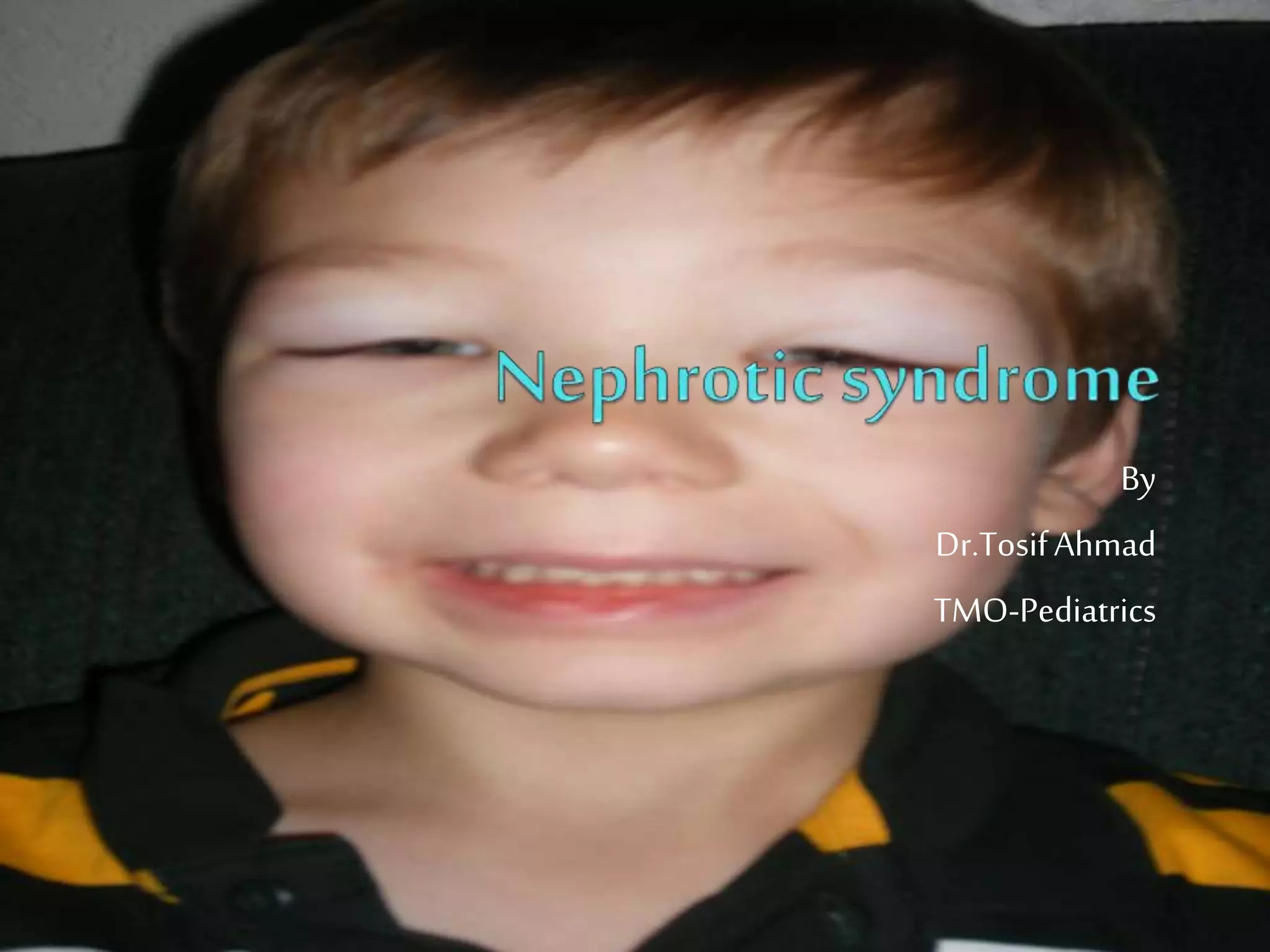
 He looks well and is apyrexial. He has puffy
eyes and pitting pedal oedema. Pulse is 112
beats/min, blood pressure is 103/70 mmHg
and capillary refill is 2 s. There is no
abdominal distension, tenderness or
organomegaly. However, his scrotum
appears oedematous. Respiratory rate is 28
breaths/min and there are no respiratory
signs.
INVESTIGATIONS
 Haemoglobin 13.2 g/dL
 White cell count 11.7 109/L
 Platelets 372 109/L
 Sodium 142 mmol/L
 Potassium 4.2 mmol/L
 Urea 6.3 mmol/L
 Creatinine 59 μmol
 Alkaline phosphatase 372 U/L
 Bilirubin 17 μmol/L (1 mg%)
 Alanine aminotransferase (ALT) 37 U/L
INVESTIGATIONS
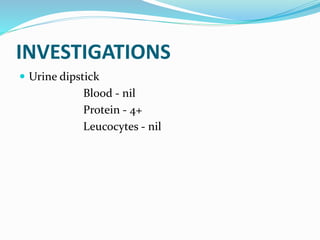
 Urine dipstick
Blood - nil
Protein - 4+
Leucocytes - nil
Diagnosis
Nephrotic syndrome
 Nephrotic syndrome, a manifestation of
Glomerular disease, is characterized by
nephrotic range proteinuria and the triad of
clinical findings associated with large
urinary losses of protein: hypoalbuminemia,
edema, and hyperlipidemia.
Nephrotic syndrome
 Nephrotic range proteinuria is defined as
protein excretion of > 40mg/m2/hr or a first
morning protein : creatinine ratio of > 2:1.
 The underlying abnormality in nephrotic
syndrome is an increased permeability of
the glomerular capillary wall, which leads to
massive proteinuria and hypoalbuminemia.
Nephrotic syndrome
 The annual incidence is 2-3 cases per
100,000 children per year in most western
countries and higher in under developed
countries.
Etiology
 Most children with nephrotic syndrome
have a form of primary or idiopathic
nephrotic syndrome. Glomerular lesions
associated with idiopathic nephrotic
syndrome include minimal change disease,
focal segmental glomerulosclerosis, and
membranoproliferative glomerulonephritis.
Etiology
 Nephrotic syndrome may also be secondary
to systemic disease such as SLE, HSP,
leukemia, lymphoma, hepatitis, HIV,
malaria and drugs.
Idiopathic Nephrotic Syndrome
 Approximately 90% of children with
nephrotic syndrome have idiopathic
nephrotic syndrome. Idiopathic nephrotic
syndrome is associated with primary
glomerular disease without evidence of a
specific systemic cause.
 Idiopathic nephrotic syndrome includes
multiple histologic types: minimal change
disease, mesangial proliferation, focal
segmental glomerulosclerosis, membranous
nephropathy, and membranoproliferative
glomerulonephritis.
CLINICAL MANIFESTATIONS
 The idiopathic nephrotic syndrome is more
common in boys than in girls (2 : 1) and
most commonly appears between the ages
of 2 and 6 yr. However, it has been reported
as early as 6 mo of age and throughout
adulthood.
 Children usually present with mild edema,
which is initially noted around the eyes and
in the lower extremities.
 With time, the edema becomes generalized,
with the development of ascites, pleural
effusions, and genital edema. Anorexia,
irritability, abdominal pain, and diarrhea are
common
 Important features of minimal change
idiopathic nephrotic syndrome are the
absence of hypertension and gross
hematuria.
Differential diagnosis
 Protein-losing enteropathy
 Hepatic failure
 Heart failure
 Acute or chronic glomerulonephritis
 Protein malnutrition
DIAGNOSIS
 Urinalysis reveals 3 + or 4 + proteinuria.
 A spot urine protein:creatinine ratio exceeds 2.0.
 Urinary protein excretion exceeds 40 mg/m 2 /hr.
 Serum albumin level is < 2.5 g/dL.
 Serum cholesterol and triglyceride levels are
elevated. Serum complement levels are normal.
DIAGNOSIS
 Children with features that make MCNS less
likely (gross hematuria, hypertension, renal
insufficiency, hypocomplementemia, or age
< 1 yr or > 8 yr) should be considered for
renal biopsy.
TREATMENT
 Supportive
 Prednisolone
 Cyclophosphamide
 Cyclosporine
 Tacrolimus
 Mycophenolate
TREATMENT
 A subset of patients relapse while on alternate-day
steroid therapy or within 28 days of completing a
successful course of prednisone therapy. Such
patients are termed steroid dependent. Patients
who respond well to prednisone therapy but
relapse ≥ 4 times in a 12-mo period are termed
frequent relapsers. Children who fail to respond
to prednisone therapy within 8 wk of therapy are
termed steroid resistant
TREATMENT
 Steroid-dependent patients, frequent
relapsers, and steroid resistant patients are
candidates for alternative therapies,
particularly if the child has severe
corticosteroid toxicity.
COMPLICATIONS
 Spontaneous bacterial peritonitis
 Sepsis
 Pneumonia
 Cellulitis
 Urinary tract infections
 Thromboembolic events.
 Pleural effusion, Pericardial effusion.
 Complications of treatment.
PROGNOSIS
 Child with steroid responsive nephrotic
syndrome is unlikely to develop chronic
kidney disease.
 Most children with steroid-responsive
nephrotic syndrome have repeated relapses,
which generally decrease in frequency as the
child grows older.
PROGNOSIS
 Children with steroid-resistant nephrotic
syndrome, most often caused by FSGS,
generally have a much poorer prognosis.
These children develop progressive renal
insufficiency, ultimately leading to end-
stage renal disease requiring dialysis or
kidney transplantation.
PROGNOSIS
 Nephrotic syndrome (massive proteinuria,
hypoalbuminemia, edema, and
hypercholesterolemia) has a poorer
prognosis when it occurs in the 1st yr of life,
when compared to nephrotic syndrome
manifesting in childhood.
Nephrotic syndrome

Nephrotic syndrome

  • 1.
  • 2.
    Case Presentation A 3-year-oldboy who presents to the pediatric unit with a 2- day history of puffy eyes. He was initially prescribed antihistamines by some one but these have not helped. He is otherwise well. He is on no other medication. There is no family history of renal problems.
  • 3.
    Examination  He lookswell and is apyrexial. He has puffy eyes and pitting pedal oedema. Pulse is 112 beats/min, blood pressure is 103/70 mmHg and capillary refill is 2 s. There is no abdominal distension, tenderness or organomegaly. However, his scrotum appears oedematous. Respiratory rate is 28 breaths/min and there are no respiratory signs.
  • 4.
    INVESTIGATIONS  Haemoglobin 13.2g/dL  White cell count 11.7 109/L  Platelets 372 109/L  Sodium 142 mmol/L  Potassium 4.2 mmol/L  Urea 6.3 mmol/L  Creatinine 59 μmol  Alkaline phosphatase 372 U/L  Bilirubin 17 μmol/L (1 mg%)  Alanine aminotransferase (ALT) 37 U/L
  • 5.
    INVESTIGATIONS  Urine dipstick Blood- nil Protein - 4+ Leucocytes - nil
  • 6.
  • 7.
    Nephrotic syndrome  Nephroticsyndrome, a manifestation of Glomerular disease, is characterized by nephrotic range proteinuria and the triad of clinical findings associated with large urinary losses of protein: hypoalbuminemia, edema, and hyperlipidemia.
  • 8.
    Nephrotic syndrome  Nephroticrange proteinuria is defined as protein excretion of > 40mg/m2/hr or a first morning protein : creatinine ratio of > 2:1.  The underlying abnormality in nephrotic syndrome is an increased permeability of the glomerular capillary wall, which leads to massive proteinuria and hypoalbuminemia.
  • 9.
    Nephrotic syndrome  Theannual incidence is 2-3 cases per 100,000 children per year in most western countries and higher in under developed countries.
  • 10.
    Etiology  Most childrenwith nephrotic syndrome have a form of primary or idiopathic nephrotic syndrome. Glomerular lesions associated with idiopathic nephrotic syndrome include minimal change disease, focal segmental glomerulosclerosis, and membranoproliferative glomerulonephritis.
  • 11.
    Etiology  Nephrotic syndromemay also be secondary to systemic disease such as SLE, HSP, leukemia, lymphoma, hepatitis, HIV, malaria and drugs.
  • 12.
    Idiopathic Nephrotic Syndrome Approximately 90% of children with nephrotic syndrome have idiopathic nephrotic syndrome. Idiopathic nephrotic syndrome is associated with primary glomerular disease without evidence of a specific systemic cause.
  • 13.
     Idiopathic nephroticsyndrome includes multiple histologic types: minimal change disease, mesangial proliferation, focal segmental glomerulosclerosis, membranous nephropathy, and membranoproliferative glomerulonephritis.
  • 14.
    CLINICAL MANIFESTATIONS  Theidiopathic nephrotic syndrome is more common in boys than in girls (2 : 1) and most commonly appears between the ages of 2 and 6 yr. However, it has been reported as early as 6 mo of age and throughout adulthood.
  • 15.
     Children usuallypresent with mild edema, which is initially noted around the eyes and in the lower extremities.  With time, the edema becomes generalized, with the development of ascites, pleural effusions, and genital edema. Anorexia, irritability, abdominal pain, and diarrhea are common
  • 16.
     Important featuresof minimal change idiopathic nephrotic syndrome are the absence of hypertension and gross hematuria.
  • 17.
    Differential diagnosis  Protein-losingenteropathy  Hepatic failure  Heart failure  Acute or chronic glomerulonephritis  Protein malnutrition
  • 18.
    DIAGNOSIS  Urinalysis reveals3 + or 4 + proteinuria.  A spot urine protein:creatinine ratio exceeds 2.0.  Urinary protein excretion exceeds 40 mg/m 2 /hr.  Serum albumin level is < 2.5 g/dL.  Serum cholesterol and triglyceride levels are elevated. Serum complement levels are normal.
  • 19.
    DIAGNOSIS  Children withfeatures that make MCNS less likely (gross hematuria, hypertension, renal insufficiency, hypocomplementemia, or age < 1 yr or > 8 yr) should be considered for renal biopsy.
  • 20.
    TREATMENT  Supportive  Prednisolone Cyclophosphamide  Cyclosporine  Tacrolimus  Mycophenolate
  • 21.
    TREATMENT  A subsetof patients relapse while on alternate-day steroid therapy or within 28 days of completing a successful course of prednisone therapy. Such patients are termed steroid dependent. Patients who respond well to prednisone therapy but relapse ≥ 4 times in a 12-mo period are termed frequent relapsers. Children who fail to respond to prednisone therapy within 8 wk of therapy are termed steroid resistant
  • 22.
    TREATMENT  Steroid-dependent patients,frequent relapsers, and steroid resistant patients are candidates for alternative therapies, particularly if the child has severe corticosteroid toxicity.
  • 23.
    COMPLICATIONS  Spontaneous bacterialperitonitis  Sepsis  Pneumonia  Cellulitis  Urinary tract infections  Thromboembolic events.  Pleural effusion, Pericardial effusion.  Complications of treatment.
  • 24.
    PROGNOSIS  Child withsteroid responsive nephrotic syndrome is unlikely to develop chronic kidney disease.  Most children with steroid-responsive nephrotic syndrome have repeated relapses, which generally decrease in frequency as the child grows older.
  • 25.
    PROGNOSIS  Children withsteroid-resistant nephrotic syndrome, most often caused by FSGS, generally have a much poorer prognosis. These children develop progressive renal insufficiency, ultimately leading to end- stage renal disease requiring dialysis or kidney transplantation.
  • 26.
    PROGNOSIS  Nephrotic syndrome(massive proteinuria, hypoalbuminemia, edema, and hypercholesterolemia) has a poorer prognosis when it occurs in the 1st yr of life, when compared to nephrotic syndrome manifesting in childhood.