Status Asthmaticus in Children Heinrich Werner Pediatric Critical Care University of Kentucky Children’s Hospital
Objectives The participant will increase his/her Awareness of rising morbidity/mortality of severe asthma in children Ability to define who is at risk for dying  Understanding of the pathologic, metabolic and biomechanical events Ability to predict respiratory failure and to determine the need for early transfer Ability to tailor the therapeutic regimen according to severity and progression of status asthmaticus
Status Asthmaticus in Children Epidemiology Pathophysiology Presentation and Assessment Treatment
Status Asthmaticus in Children Epidemiology Prevalence Morbidity Mortality Risk factors Pathophysiology Presentation and assessment Treatment
Prevalence The prevalence of pediatric asthma in the US is increasing Rate of self-reported asthma/1,000 population Mannino DM. MMWR 1998;47(1):1-27 : Epidemiology
Morbidity The morbidity of pediatric asthma in the US is increasing Hospital discharge rates for asthma MMWR  1996;45(17):350-3 : Epidemiology
Mortality The mortality of pediatric asthma in the US is increasing Rates of death in children from asthma Mannino. MMWR  1998;47(1):1-27 : Epidemiology
Risk factors for fatal asthma Medical Previous attack with rapid/severe deterioration or respiratory failure or seizure/loss of consciousness Psychosocial Denial, non-compliance Depression or other psychiatric disorder Dysfunctional family Inner city resident Ethnic Non-white child : Epidemiology
Status Asthmaticus in Children Epidemiology Pathophysiology Cytokines Airway pathology Autonomic nervous system Pulmonary mechanics Cardiopulmonary interactions Metabolism Presentation and assessment Treatment
Pathophysiology Asthma is primarily an inflammatory disease Mucous plugging Smooth muscle spasm Airway edema : Pathophysiology
Inflammatory cytokines Activated mast cells and lymphocytes produce pro-inflammatory cytokines (histamine, leukotrienes, PAF), which are increased in asthmatics’ airways and bloodstream : Pathophysiology
Irritable and damaged airway Hypersecretion Epithelial damage with exposed nerve endings Hypertrophy of goblet cells and mucus glands : Pathophysiology
Airway The irritable and inflamed airway is susceptible to obstruction triggered by Allergens Infections Irritants including smoke Exercise Emotional stress GE reflux Drugs Other factors : Pathophysiology
Autonomic nervous system Bronchodilation Bronchoconstriction Sympathetic Circulating catecholamines stimulate ß-receptors - Parasympathetic Vagal signals stimulate bronchodilating  M 2  - receptors Vagal signals stimulate bronchoconstricting M 3 -receptors Nonadrenergic-noncholinergic (NANC) Release of bronchodilating neurotransmitters (VIP, NO) Release of tachykinins (substance P, neurokinin A) : Pathophysiology
Lung mechanics Hyperinflation Obstructed small airways cause premature airway closure, leading to air trapping and hyperinflation Hypoxemia Inhomogeneous distribution of affected areas results in V/Q mismatch, mostly shunt : Pathophysiology
Severe airflow obstruction Incomplete exhalation Increased lung volume Increased elastic recoil pressure Increased expiratory flow Expanded small airways Decreased expiratory resistance Compensated: Hyperinflation, normocapnia Decreased expiratory resistance Decompensated:  Severe hyperinflation, hypercapnia Worsening airflow obstruction From text in :  Tuxen. Am Rev Respir Dis 1992;146:1136 : Pathophysiology
Cardiopulmonary interactions Left ventricular load Spontaneously breathing children with severe asthma have negative intrapleural pressure (as low as -35 cmH 2 O) during almost the entire respiratory cycle  Stalcup S. N Engl J Med 1977;297:592-6 Negative intrapleural pressure causes increased left ventricular afterload, resulting in risk for pulmonary edema Buda AJ. N Engl J Med 1979;301(9):453-9 : Pathophysiology
Cardiopulmonary interactions Right ventricular load Hypoxic pulmonary vasoconstriction and lung hyperinflation lead to increased right ventricular afterload Dawson CA. J Appl Physiol 1979;47(3):532-6 : Pathophysiology
Cardiopulmonary interactions Pulsus paradoxus P. paradoxus is the clinical correlate of cardiopulmonary interaction during asthma. It is defined as exaggeration of the normal inspiratory drop in systolic BP : normally < 5 mmHg, but > 10 mmHg in pulsus paradoxus. Expir Inspir Nl P. paradoxus Inspir Expir : Pathophysiology
Pulsus paradoxus correlates with severity All patients who presented with FEV 1  of < 20% (of their best FEV 1  while well) had pulsus paradoxus Pierson RN. J Appl Physiol 1972;32(3):391-6 : Pathophysiology
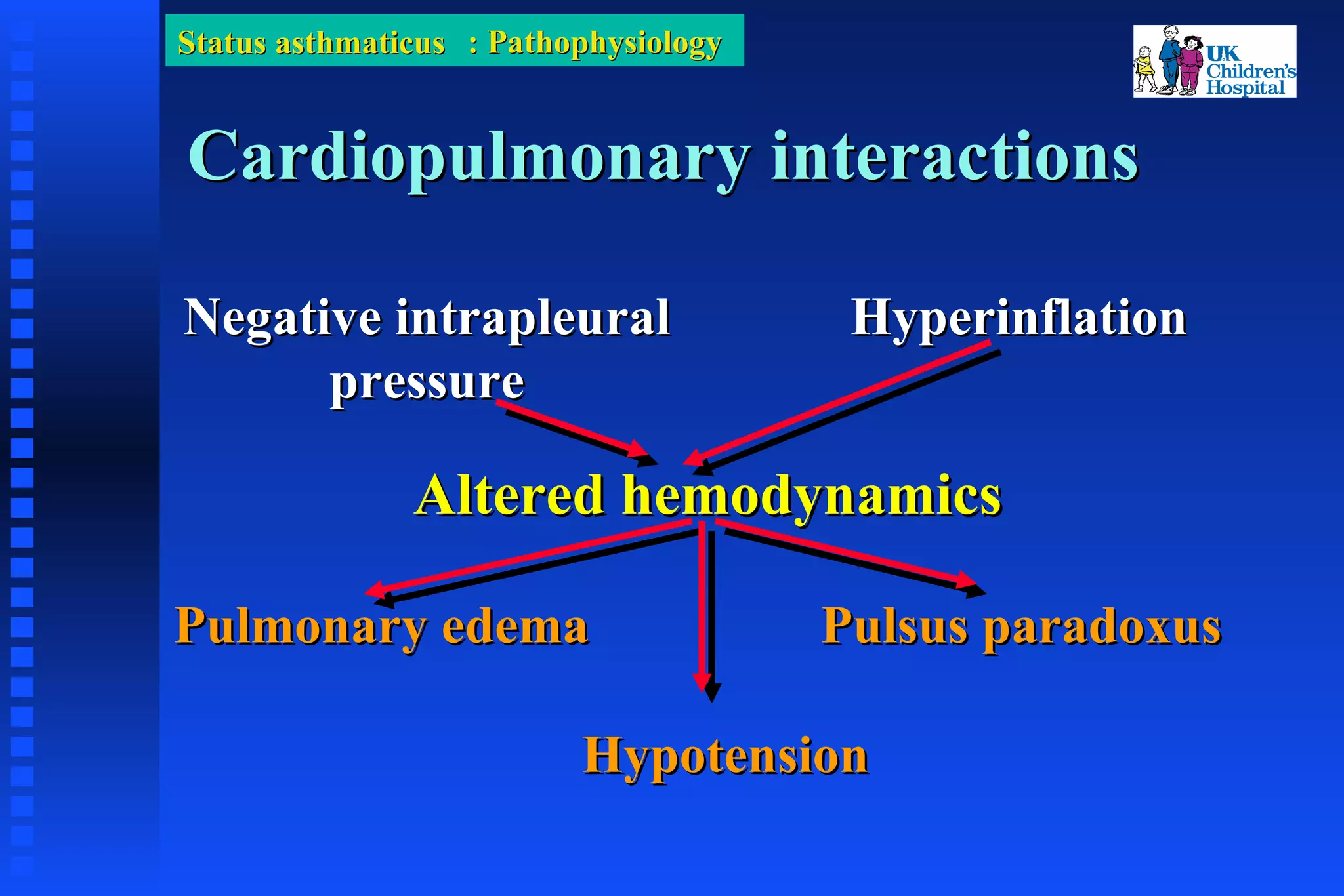
Cardiopulmonary interactions Negative intrapleural pressure Pulmonary edema Pulsus paradoxus Hyperinflation Hypotension Altered hemodynamics : Pathophysiology
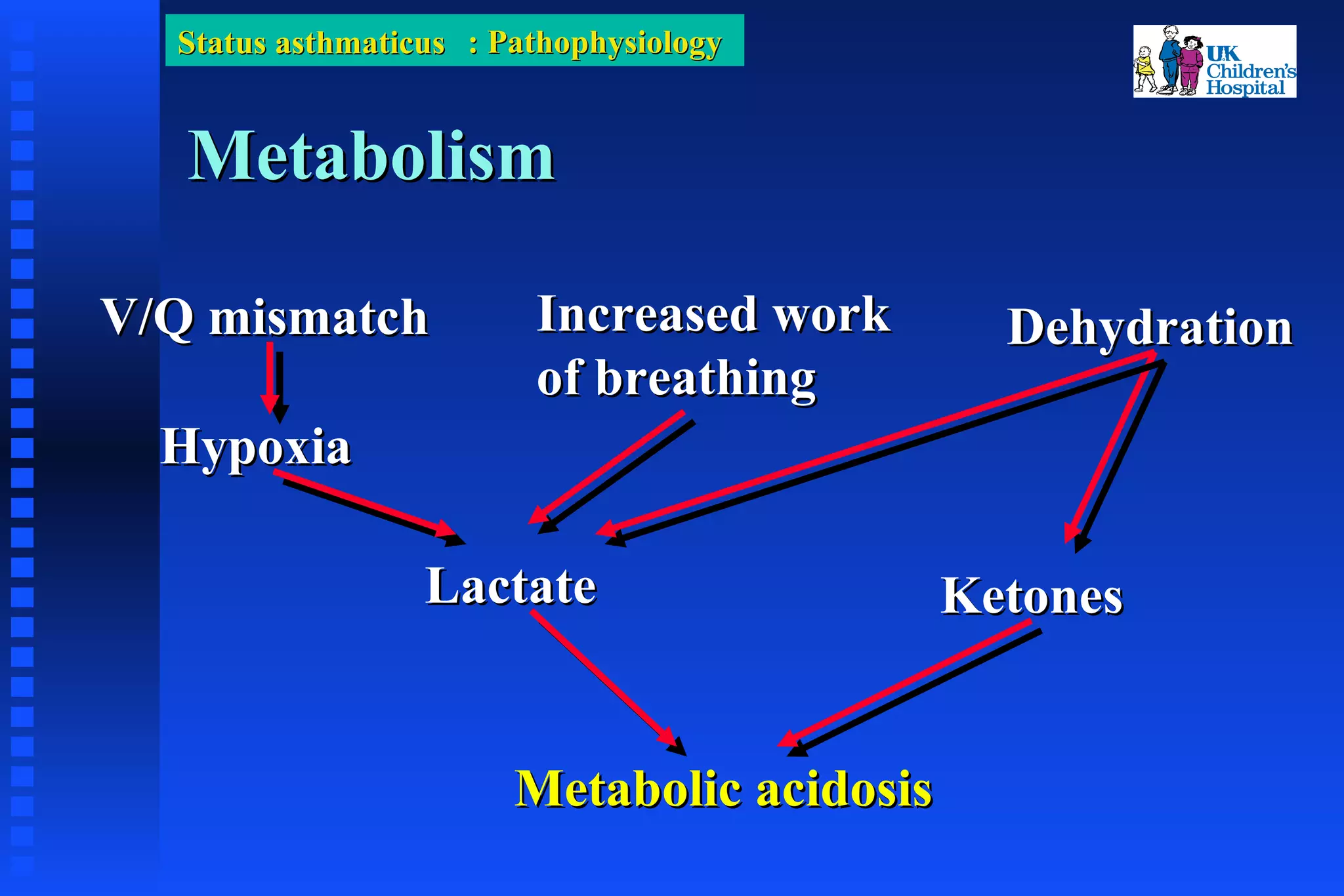
Metabolism V/Q mismatch Hypoxia Dehydration Lactate Ketones Metabolic acidosis Increased work of breathing : Pathophysiology
Presentation Cough  Wheezing  Increased work of breathing Anxiety  Restlessness Oxygen desaturation Audible wheezes : reasonable airflow “ Silent chest” : ominous! : Presentation
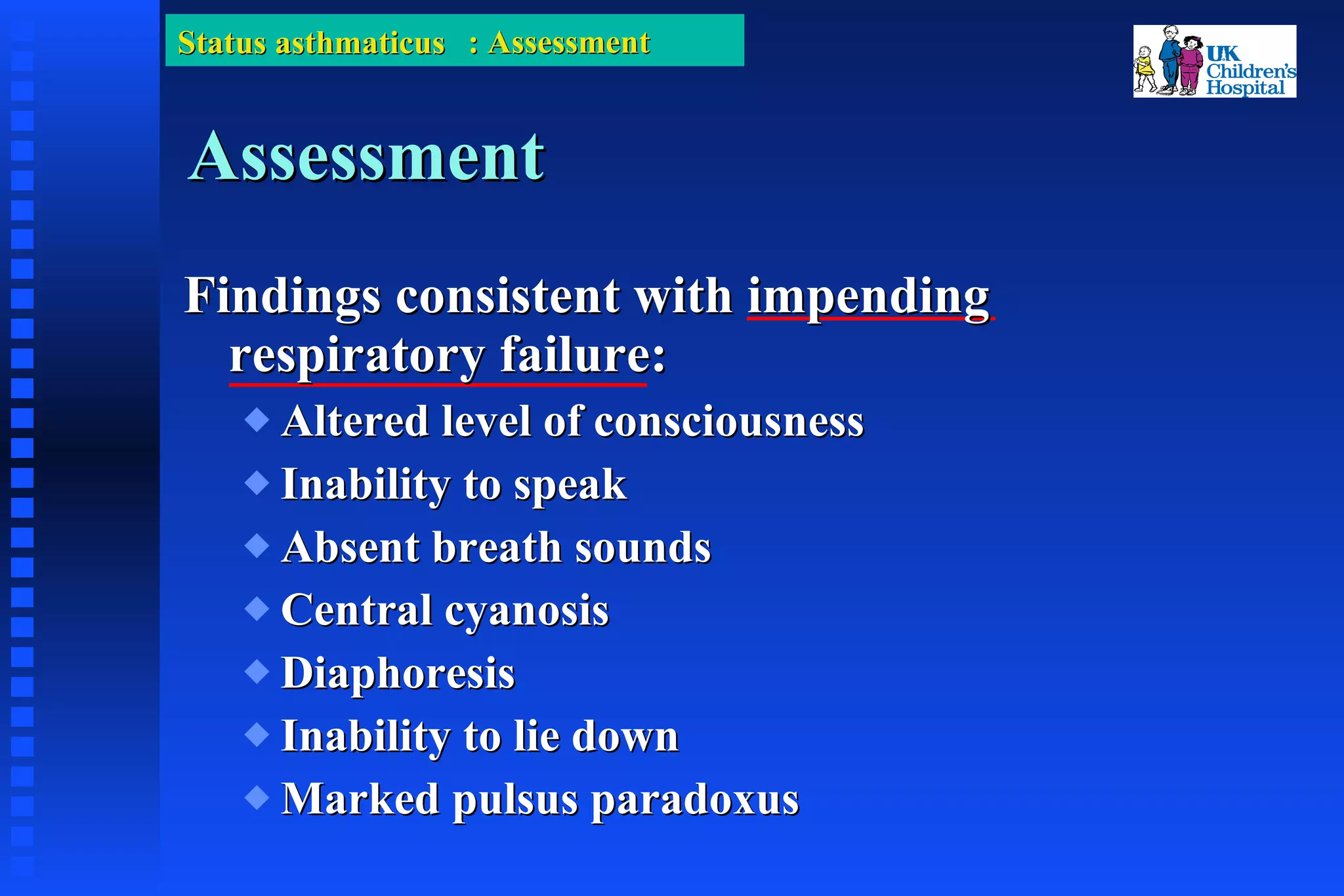
Assessment Findings consistent with impending respiratory failure: Altered level of consciousness Inability to speak Absent breath sounds Central cyanosis Diaphoresis Inability to lie down Marked pulsus paradoxus : Assessment
Clinical Asthma Score   0   1   2 Cyanosis or  None In air In 40% PaO 2 >70 in air < 70 in air < 70 in 40% Inspiratory B/S Nl Unequal or Absent decreased Expir wheezing None Moderate Marked Cerebral function Nl Depressed Coma Agitated Wood DW. Am J Dis Child 1972;123(3):227-8  5 = impending resp failure : Assessment
Chest X-Ray Not routinely indicated Exceptions: Patient is intubated/ventilated Suspected barotrauma Suspected pneumonia Other causes for wheezing are being suspected : Assessment
ABG Early status asthmaticus: hypoxemia, hypocarbia Late: hypercarbia Decision to intubate should not depend on ABG, but on clinical assessment Frequent ABGs are crucial in the ventilated asthmatic : Assessment
Status Asthmaticus in Children Epidemiology Pathophysiology Presentation and assessment Treatment Conventional General, ß-agonists, steroids, anticholinergics Advanced Mechanical ventilation, ketamine, inhalational anesthetics Unusual/Unproven Theophylline, magnesium, LTRAs,  heliox, bronchoscopy
Oxygen Deliver high flow oxygen, as severe asthma causes V/Q mismatch (shunt) Oxygen will not suppress respiratory drive in children with asthma Schiff M. Clin Chest Med 1980;1(1):85-9 : Treatment
Fluid Judicious use of IV fluid necessary Most asthmatics are dehydrated on presentations - rehydrate to  eu volemia Over hydration may lead to pulmonary edema SIADH may be common in severe asthma Baker JW. Mayo Clin Proc 1976;51(1):31-4 : Treatment
Antibiotics Most infections precipitating asthma  are viral Antibiotics are not routinely indicated Johnston SL. Pediatr Pulmonol Suppl 1999;18:141-3 ? : Treatment
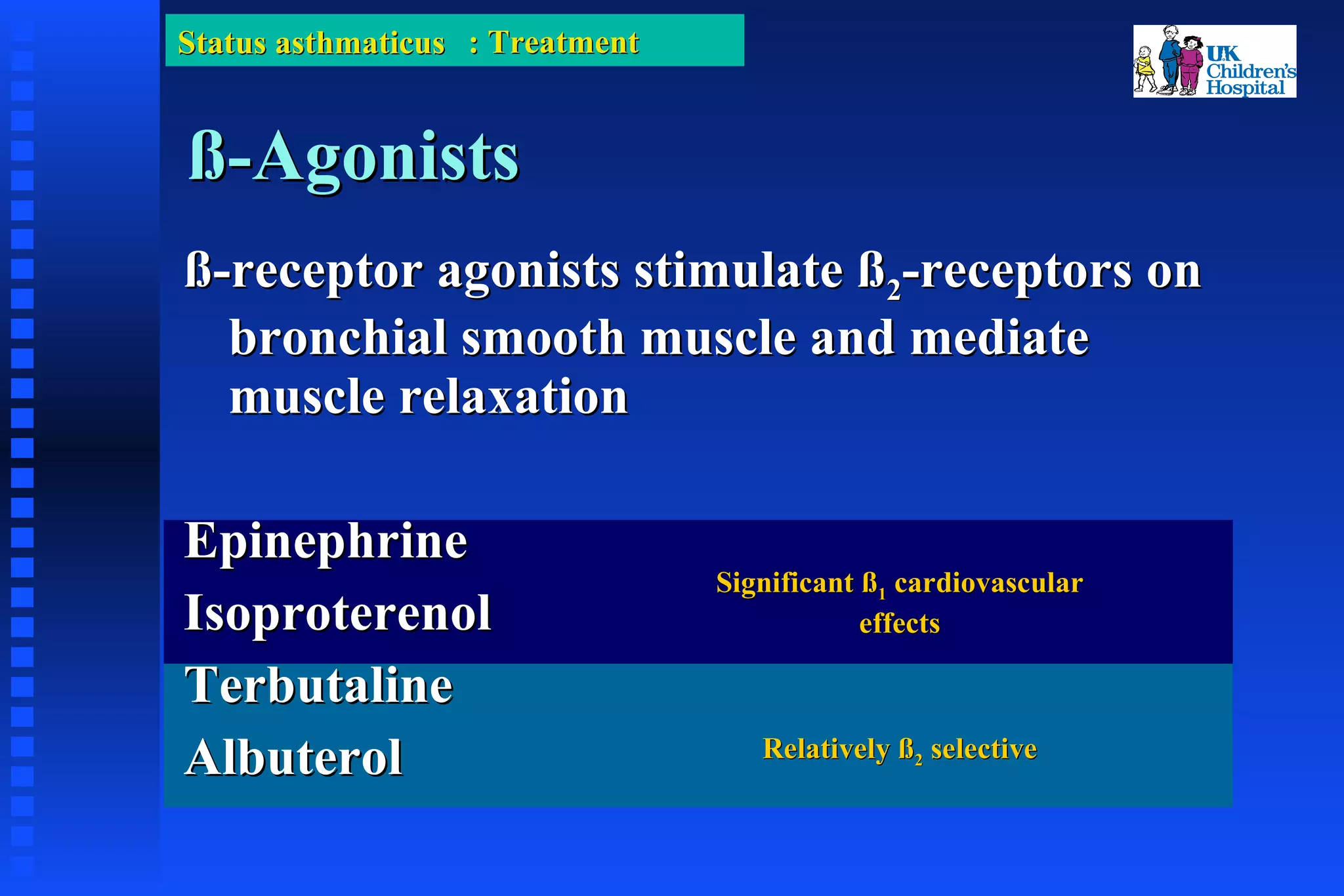
ß-Agonists ß-receptor agonists stimulate ß 2 -receptors on bronchial smooth muscle and mediate muscle relaxation Epinephrine Isoproterenol Terbutaline Albuterol Relatively ß 2  selective Significant ß 1  cardiovascular effects : Treatment
ß-Agonists Less than 10% of nebulized drug reach the lung under ideal conditions Bisgaard H. J Asthma 1997;34(6):443-67 Drug delivery depends on Breathing pattern Tidal volume Nebulizer type and gas flow : Treatment
ß -Agonists Delivery of nebulized drug Only particles between  m  are deposited in alveoli Correct gas flow rate is crucial Most devices require 10-12 L/min gas flow to generate correct particle size  : Treatment
ß -Agonists Continuous nebulization is superior to intermittent nebulization  More rapid improvement More cost effective More patient friendly Papo MC. Crit Care Med 1993;21:1479-86 Ackerman AD. Crit Care Med 1993;21:1422-4 : Treatment
ß -Agonists Dosage Intermittent nebulization 2.5 - 5 mg (0.5 - 1 ml of 0.5% solution), dilute with NS to 3 ml Prediluted: 2.5 mg as 3ml of 0.083% solution High dose: use up to undiluted 5% solution Continuous nebulization 4-40 mg/hr High dose: up to undiluted 5% solution (≈ 150 mg/hr) : Treatment
ß -Agonists Intravenous ß - Agonist Consider for patients with severe air flow limitation who remain unresponsive to nebulized albuterol Terbutaline is i.v. ß-agonist of choice in US  Dosage: 0.1 - 10   g/kg/min Stephanopoulos DE. Crit Care Med 1998;26(10):1744-8 : Treatment
ß -Agonists Side effects Tachycardia Agitation, tremor Hypokalemia  : Treatment
ß -Agonists Cardiac side effects Myocardial ischemia known to occur with i.v. isoproterenol No significant cardiovascular toxicity with i.v. terbutaline (prospective study in children with severe asthma) Chiang VW. J Pediatr 2000;137(1):73-7 Tachycardia (and tremor) show tachyphylaxis, bronchodilation does not Lipworth BJ. Am Rev Respir Dis 1989;140(3):586-92 : Treatment
Steroids Asthma is an inflammatory disease Steroids are a mandatory element of first line therapy regimen  (few exceptions only) Fanta CH: Am J Med 1983;74:845 Effect of i.v. hydrocortisone vs. placebo : Treatment
Steroids Hydrocortisone  4-8 mg/kg x 1, then  2-4 mg/kg q 6° Methylprednisolone  2 mg/kg x1, then 0.5-1 mg/kg q 4-6° : Treatment
Steroids Significant side effects Hyperglycemia Hypertension  Acute psychosis Unusual or unusually severe infections Steroids contraindicated with active or recent exposure to chickenpox Allergic reaction Reported with methylprednisolone, hydrocortisone and prednisone * *  Vanpee D. Ann Emerg Med 1998;32(6):754.  Kamm GL. Ann Pharmacother 1999;33(4):451-60. Schonwald   S. Am J Emerg Med 1999;17(6):583-5.  Judson MA. Chest 1995;107(2):563-5. : Treatment
Anticholinergics - Ipratropium Quaternary atropine derivative Not absorbed systemically Thus minimal cardiac effects (But you will find a fixed/dilated pupil if the nebulizer mask slips over an eye!) : Treatment
Anticholinergics Change in FEV 1  is significantly greater when ipratropium was added to ß-agonists (199 adults) Rebuck AS: Am J Med 1987;82:59 Highly significant improvement in pulmonary function when ipratropium was added to albuterol (128 children). Sickest asthmatics experienced greatest improvement Schuh S. J Pediatr 1995;126(4):639-45 : Treatment
Ipratropium Dose-Response Curve in Children (n=19, age 11-17 yrs) Dose (micrograms) Average increase in FEV 1  (over 4 hrs) Davis A: J Pediatr 1984;105:1002 : Treatment
Ipratropium Nebulize 250 - 500   g every 4-6 hours : Treatment Schuh S. J Pediatr 1995;126(4):639-45 Goodman and Gilman's. 9th ed. New York: McGraw-Hill; 1996
Intubation, Ventilation Absolute indications: Cardiac or respiratory arrest Severe hypoxia Rapid deterioration in mental state Respiratory acidosis does not dictate intubation : Treatment
Why hesitate to intubate the asthmatic child? Tracheal foreign body aggravates bronchospasm Positive pressure ventilation increases risk of barotrauma and hypotension Tuxen DV. Am Rev Respir Dis 1987;136(4):872-9 > 50% of morbidity/mortality during severe asthma occurs during or immediately after intubation Zimmerman JL. Crit Care Med 1993;21(11):1727-30 : Treatment
Intubation Preoxygenate, decompress stomach Sedate (consider ketamine) Neuromuscular blockade (may avoid large swings in airway/pleural pressure) Rapid orotracheal intubation (consider cuffed tube) : Treatment
Immediately after intubation Expect hypotension, circulatory depression Allow long expiratory time Avoid overzealous manual breaths Consider volume administration Consider pneumothorax Consider endotracheal tube obstruction (++ secretions) : Treatment
Mechanical ventilation Positive pressure ventilation worsens hyperinflation/risk of barotrauma Thoughtful strategies include: Pressure-limited ventilation, TV 8-12 ml/kg, short T i , rate 8-12/min (permissive hypercapnia) Cox RG. Pediatr Pulmonol 1991;11(2):120-6 Pressure support ventilation using PS=20-30 cmH 2 O (may decrease hyperinflation by allowing active exhalation) Wetzel RC. Crit Care Med 1996;24(9):1603-5 : Treatment
Ketamine Dissociative anesthetic with strong analgesic effect Direct bronchodilating action Useful for induction (2 mg/kg i.v.) as well as continuous infusion (0.5 - 2 mg/kg/hr) Induces bronchorrhea, emergence reaction : Treatment
Inhalational anesthetics Halothane, isoflurane have bronchodilating effect Halothane may cause hypotension, dysrhythmia Requires scavenging system, continuous gas analysis : Treatment
Theophylline Role in children with severe asthma remains controversial Narrow therapeutic range High risk of serious adverse effects Mechanism of effect in asthma remains unclear : Treatment
Theophylline May have a role in selected, critically ill children with asthma unresponsive to conventional therapy: Randomized, placebo-controlled, blinded trial (n=163) in children with severe status asthmaticus Theophylline group had greater improvement in PFTs and O 2  saturation No difference in length  of PICU stay Theophylline group had signifi- cantly more N/V Yung M. Arch Dis Child 1998;79(5):405-10. : Treatment
Magnesium Smooth-muscle relaxation by inhibition of calcium uptake (=bronchodilator) Dosage recommendation: 25 - 75 mg/kg i.v. over 20 minutes : Treatment
Magnesium  Several anecdotal reports Only one randomized pediatric trial  Randomized, placebo-controlled, blinded trial (n=31) in children with acute asthma in ER (MgSO 4  25 mg/kg i.v. for 20 min) Magnesium group had significantly greater improvement in FEV 1 /PEFR/FVC Magnesium group more likely to be discharged home No adverse effects Ciarallo L. J Pediatr 1996; 129 (6):809-14. : Treatment
Leukotriene receptor antagonists (LTRAs) Asthmatic children have increased leukotriene levels (blood, urine) during an attack. Level falls as attack resolves Sampson AP.  Ann N Y Acad Sci 1991;629:437-9. LTRA administration is associated with improvement in lung function in asthmatics Gaddy JN. Am Rev Respir Dis 1992;146(2):358-63.
LTRAs Steroid administration to asthmatics has little effect on leukotriene levels O'Shaughnessy KM.  Am Rev Respir Dis 1993;147(6 Pt 1):1472-6. Thus, LTRAs may offer additional benefits to asthmatics on steroids Reiss TF. Arch Intern Med 1998;158(11):1213-20.
Intravenous LTRAs in moderate to severe asthma A single dose of i.v. montelukast (Singulair ®) was associated with significant improvement in lung function compared to standard therapy Camargo CA, Jr. Am J Respir Crit Care Med 2003;167(4):528-33.
LTRAs – Remaining questions Will they offer added benefit in the acute, severe asthmatic child already on  ß-agonists, steroids, anticholinergics  ? More rapid improvement in lung function/clinical score? Reduced/shortened hospitalization? Fewer PICU admissions? Cost ? Adverse effects ?
Helium - Oxygen (Heliox) Helium lowers gas density (if at least 60% helium fraction) Reduces resistance during turbulent flow Renders turbulent flow less likely to occur : Treatment
Heliox Anecdotal reports of improved respiratory mechanics in non-intubated and intubated asthmatic children Prospective, randomized, blinded cross-over study of heliox in non-intubated children with severe asthma (n=11) : no effect on respiratory mechanics or asthma score Carter ER. Chest 1996;109(5):1256-61. : Treatment
Heliox Helium-oxygen (80:20) decreased pulsus paradoxus and increased PEFR in a controlled trial of adult patients Manthous CA. Am J Respir Crit Care Med 1995,151:310-314 Heliox may worsen dynamic hyperinflation Madison JM. Chest 1995,107:597-598 : Treatment
Bronchoscopy, bronchial lavage Marked mucus plugging may render bronchodilating and anti-inflammatory therapy ineffective “ Plastic bronchitis” has been described in asthmatic children Combined bronchoscopy/lavage has been used in desperately ill asthmatic children : Treatment
Summary Severe asthma in children is increasing in prevalence and mortality Aggressive treatment with ß-agonist, steroids and anticholinergic is warranted even in the sick-appearing child Avoid intubation if possible Mechanical ventilation will worsen bronchospasm and hyperinflation Use low morbidity approach to mechanical ventilation
Prevention Steps toward prevention 1. Identify patients as at risk 2. Tell them about their risks 3. Organize treatment plan 4. Facilitate access to continued care
Case Scenario (1) A 6 y o black male with previous history of asthma is admitted with severe respiratory distress. He is wheezing, RR is 40/min, HR 145/min. He sits upright, leans forward, has retractions and looks very anxious. He correctly tells you his name and phone #, but has to take a breath after every few words. Discuss your initial  therapeutic  approach.
Case Scenario (2) Which of the following are mandatory in this child with severe asthma?  (You may chose none, more than one or all) Arterial blood gas analysis (to detect onset of respiratory acidosis) Continuous pulse oximetry Chest radiograph (to rule out pneumomediastinum/ –thorax) Frequent determination of peak expiratory flow rate White blood cell count with differential (to assess need for antibiotics)
Case Scenario (3) Given his current presentation: does this child need to be intubated and mechanically ventilated? Discuss indications for intubation/mechanical ventilation in the child with severe status asthmaticus.
Case Scenario (4) When nebulizing drugs during status asthmaticus, the following statement about gas flow rates is CORRECT: A. The higher the gas flow rate through the nebulizer, the more particles will be deposited in the patient’s alveolar space B. Most devices require a gas flow rate of 10-12 L/min to generate optimal particle size C. Gas flow rates above 5 L/min should be avoided to maintain laminar flow in  the nebulizer output D. The nebulizer device should not be driven by 100% oxygen
Case Scenario (5) In addition to administration of continuously nebulized beta-agonist and intermittent anticholinergic agonist, which of the following is almost mandatory? Discuss pros and cons for each. A. Intravenous bolus of aminophylline, followed by infusion B. Intravenous corticosteroid C. Intravenous broad spectrum antibiotic D. Intravenous beta-agonist infusion E. Inhaled helium-oxygen mixture
Case Scenario (6) After 3 hours of therapy in the PICU, including high dose continuous albuterol, intermittent ipratropium, I.v. methylprednisolone as well as two infusions of magnesium sulfate, the child becomes obtunded. His O 2  saturations begin to drop below 85%. Is this an indication for intubation/mechanical ventilation? If so, describe your approach to intubating this child. How to prepare? Drugs? ETT size, route? Anticipated problems / complications? Initial pattern of ventilation?
Case Scenario (7) After you connect the child to the ventilator, he develops marked arterial hypotension. What is your differential diagnosis? What should you do?
Suggested Reading (part 1): 1. Laitinen LA, Heino M, Laitinen A, et al. Damage of airway epithelium and bronchial reactivity in patients with asthma. Am Rev Respir Dis 1985;131(4):599-606. 2. Beakes DE. The use of anticholinergics in asthma. J Asthma 1997;34(5):357-68. 3. Barnes PJ. Beta-adrenergic receptors and their regulation. Am J Respir Crit Care Med 1995;152(3):838-60. 4. Miro A, Pinsky M. Cardiopulmonary Interactions. In: Fuhrman B, Zimmerman J, editors. Pediatric Critical Care. Second ed. St. Louis: Mosby; 1998. p. 250-60. 5. Stalcup SA, Mellins RB. Mechanical forces producing pulmonary edema and acute asthma. N Engl J Med 1977;297(11):592-6. 6. Rebuck AS, Pengelly LD. Development of pulsus paradoxus in the presence of airway obstruction. N Engl J Med 1973;288(2):66-9. 7. Papo MC, Frank J, Thompson AE. A prospective, randomized study of continuous versus intermittent nebulized albuterol for severe status asthmaticus in children. Crit Care Med 1993;21:1479-86. 8. Katz RW, Kelly HW, Crowley MR, et al. Safety of continuous nebulized albuterol for bronchospasm in infants and children [published erratum appears in Pediatrics 1994 Feb;93(2):A28]. Pediatrics 1993;92(5):666-9. 9. Schuh S, Johnson DW, Callahan S, et al. Efficacy of frequent nebulized ipratropium bromide added to frequent high-dose albuterol therapy in severe childhood asthma. J Pediatr 1995;126(4):639-45. 10. Fanta CH, Rossing TH, McFadden ER. Glucocorticoids in acute asthma: A critical controlled trial. Am J Med 1983;74:845-51.
Suggested Reading (part 2): 11 . Klein-Gitelman MS, Pachman LM. Intravenous corticosteroids: adverse reactions are more variable than expected in children. J Rheumatol 1998;25(10):1995-2002. 12. Stephanopoulos DE, Monge R, Schell KH, et al. Continuous intravenous terbutaline for pediatric status asthmaticus. Crit Care Med 1998;26(10):1744-8. 13. Chiang VW, Burns JP, Rifai N, et al. Cardiac toxicity of intravenous terbutaline for the treatment of severe asthma in children: a prospective assessment. J Pediatr 2000;137(1):73-7. 14. Ciarallo L, Sauer AH, Shannon MW. Intravenous magnesium therapy for moderate to severe pediatric asthma: results of a randomized, placebo-controlled trial. J Pediatr 1996;129(6):809-14. 15. Pabon H, Monem G, Kissoon N. Safety and efficacy of magnesium sulfate infusions in children with status asthmaticus. Pediatr Emerg Care 1994;10:200-3. 16. Yung M, South M. Randomised controlled trial of aminophylline for severe acute asthma. Arch Dis Child 1998;79(5):405-10. 17. Tuxen DV, Lane S. The effects of ventilatory pattern on hyperinflation, airway pressures, and circulation in mechanical ventilation of patients with severe airflow obstruction. Am Rev Respir Dis 1987;136(4):872-9. 18. Wetzel RC. Pressure-support ventilation in children with severe asthma. Crit Care Med 1996;24(9):1603-5. 19. Ibsen LM, Bratton SL. Current therapies for severe asthma exacerbations in children. New Horiz 1999;7(3):312-25. 20. Werner HA. Status asthmaticus in children: a review. Chest 2001;119(6):1913-29.

Status Asthmaticus In Children

  • 1.
    Status Asthmaticus inChildren Heinrich Werner Pediatric Critical Care University of Kentucky Children’s Hospital
  • 2.
    Objectives The participantwill increase his/her Awareness of rising morbidity/mortality of severe asthma in children Ability to define who is at risk for dying Understanding of the pathologic, metabolic and biomechanical events Ability to predict respiratory failure and to determine the need for early transfer Ability to tailor the therapeutic regimen according to severity and progression of status asthmaticus
  • 3.
    Status Asthmaticus inChildren Epidemiology Pathophysiology Presentation and Assessment Treatment
  • 4.
    Status Asthmaticus inChildren Epidemiology Prevalence Morbidity Mortality Risk factors Pathophysiology Presentation and assessment Treatment
  • 5.
    Prevalence The prevalenceof pediatric asthma in the US is increasing Rate of self-reported asthma/1,000 population Mannino DM. MMWR 1998;47(1):1-27 : Epidemiology
  • 6.
    Morbidity The morbidityof pediatric asthma in the US is increasing Hospital discharge rates for asthma MMWR 1996;45(17):350-3 : Epidemiology
  • 7.
    Mortality The mortalityof pediatric asthma in the US is increasing Rates of death in children from asthma Mannino. MMWR 1998;47(1):1-27 : Epidemiology
  • 8.
    Risk factors forfatal asthma Medical Previous attack with rapid/severe deterioration or respiratory failure or seizure/loss of consciousness Psychosocial Denial, non-compliance Depression or other psychiatric disorder Dysfunctional family Inner city resident Ethnic Non-white child : Epidemiology
  • 9.
    Status Asthmaticus inChildren Epidemiology Pathophysiology Cytokines Airway pathology Autonomic nervous system Pulmonary mechanics Cardiopulmonary interactions Metabolism Presentation and assessment Treatment
  • 10.
    Pathophysiology Asthma isprimarily an inflammatory disease Mucous plugging Smooth muscle spasm Airway edema : Pathophysiology
  • 11.
    Inflammatory cytokines Activatedmast cells and lymphocytes produce pro-inflammatory cytokines (histamine, leukotrienes, PAF), which are increased in asthmatics’ airways and bloodstream : Pathophysiology
  • 12.
    Irritable and damagedairway Hypersecretion Epithelial damage with exposed nerve endings Hypertrophy of goblet cells and mucus glands : Pathophysiology
  • 13.
    Airway The irritableand inflamed airway is susceptible to obstruction triggered by Allergens Infections Irritants including smoke Exercise Emotional stress GE reflux Drugs Other factors : Pathophysiology
  • 14.
    Autonomic nervous systemBronchodilation Bronchoconstriction Sympathetic Circulating catecholamines stimulate ß-receptors - Parasympathetic Vagal signals stimulate bronchodilating M 2 - receptors Vagal signals stimulate bronchoconstricting M 3 -receptors Nonadrenergic-noncholinergic (NANC) Release of bronchodilating neurotransmitters (VIP, NO) Release of tachykinins (substance P, neurokinin A) : Pathophysiology
  • 15.
    Lung mechanics HyperinflationObstructed small airways cause premature airway closure, leading to air trapping and hyperinflation Hypoxemia Inhomogeneous distribution of affected areas results in V/Q mismatch, mostly shunt : Pathophysiology
  • 16.
    Severe airflow obstructionIncomplete exhalation Increased lung volume Increased elastic recoil pressure Increased expiratory flow Expanded small airways Decreased expiratory resistance Compensated: Hyperinflation, normocapnia Decreased expiratory resistance Decompensated: Severe hyperinflation, hypercapnia Worsening airflow obstruction From text in : Tuxen. Am Rev Respir Dis 1992;146:1136 : Pathophysiology
  • 17.
    Cardiopulmonary interactions Leftventricular load Spontaneously breathing children with severe asthma have negative intrapleural pressure (as low as -35 cmH 2 O) during almost the entire respiratory cycle Stalcup S. N Engl J Med 1977;297:592-6 Negative intrapleural pressure causes increased left ventricular afterload, resulting in risk for pulmonary edema Buda AJ. N Engl J Med 1979;301(9):453-9 : Pathophysiology
  • 18.
    Cardiopulmonary interactions Rightventricular load Hypoxic pulmonary vasoconstriction and lung hyperinflation lead to increased right ventricular afterload Dawson CA. J Appl Physiol 1979;47(3):532-6 : Pathophysiology
  • 19.
    Cardiopulmonary interactions Pulsusparadoxus P. paradoxus is the clinical correlate of cardiopulmonary interaction during asthma. It is defined as exaggeration of the normal inspiratory drop in systolic BP : normally < 5 mmHg, but > 10 mmHg in pulsus paradoxus. Expir Inspir Nl P. paradoxus Inspir Expir : Pathophysiology
  • 20.
    Pulsus paradoxus correlateswith severity All patients who presented with FEV 1 of < 20% (of their best FEV 1 while well) had pulsus paradoxus Pierson RN. J Appl Physiol 1972;32(3):391-6 : Pathophysiology
  • 21.
    Cardiopulmonary interactions Negativeintrapleural pressure Pulmonary edema Pulsus paradoxus Hyperinflation Hypotension Altered hemodynamics : Pathophysiology
  • 22.
    Metabolism V/Q mismatchHypoxia Dehydration Lactate Ketones Metabolic acidosis Increased work of breathing : Pathophysiology
  • 23.
    Presentation Cough Wheezing Increased work of breathing Anxiety Restlessness Oxygen desaturation Audible wheezes : reasonable airflow “ Silent chest” : ominous! : Presentation
  • 24.
    Assessment Findings consistentwith impending respiratory failure: Altered level of consciousness Inability to speak Absent breath sounds Central cyanosis Diaphoresis Inability to lie down Marked pulsus paradoxus : Assessment
  • 25.
    Clinical Asthma Score 0 1 2 Cyanosis or None In air In 40% PaO 2 >70 in air < 70 in air < 70 in 40% Inspiratory B/S Nl Unequal or Absent decreased Expir wheezing None Moderate Marked Cerebral function Nl Depressed Coma Agitated Wood DW. Am J Dis Child 1972;123(3):227-8  5 = impending resp failure : Assessment
  • 26.
    Chest X-Ray Notroutinely indicated Exceptions: Patient is intubated/ventilated Suspected barotrauma Suspected pneumonia Other causes for wheezing are being suspected : Assessment
  • 27.
    ABG Early statusasthmaticus: hypoxemia, hypocarbia Late: hypercarbia Decision to intubate should not depend on ABG, but on clinical assessment Frequent ABGs are crucial in the ventilated asthmatic : Assessment
  • 28.
    Status Asthmaticus inChildren Epidemiology Pathophysiology Presentation and assessment Treatment Conventional General, ß-agonists, steroids, anticholinergics Advanced Mechanical ventilation, ketamine, inhalational anesthetics Unusual/Unproven Theophylline, magnesium, LTRAs, heliox, bronchoscopy
  • 29.
    Oxygen Deliver highflow oxygen, as severe asthma causes V/Q mismatch (shunt) Oxygen will not suppress respiratory drive in children with asthma Schiff M. Clin Chest Med 1980;1(1):85-9 : Treatment
  • 30.
    Fluid Judicious useof IV fluid necessary Most asthmatics are dehydrated on presentations - rehydrate to eu volemia Over hydration may lead to pulmonary edema SIADH may be common in severe asthma Baker JW. Mayo Clin Proc 1976;51(1):31-4 : Treatment
  • 31.
    Antibiotics Most infectionsprecipitating asthma are viral Antibiotics are not routinely indicated Johnston SL. Pediatr Pulmonol Suppl 1999;18:141-3 ? : Treatment
  • 32.
    ß-Agonists ß-receptor agonistsstimulate ß 2 -receptors on bronchial smooth muscle and mediate muscle relaxation Epinephrine Isoproterenol Terbutaline Albuterol Relatively ß 2 selective Significant ß 1 cardiovascular effects : Treatment
  • 33.
    ß-Agonists Less than10% of nebulized drug reach the lung under ideal conditions Bisgaard H. J Asthma 1997;34(6):443-67 Drug delivery depends on Breathing pattern Tidal volume Nebulizer type and gas flow : Treatment
  • 34.
    ß -Agonists Deliveryof nebulized drug Only particles between  m  are deposited in alveoli Correct gas flow rate is crucial Most devices require 10-12 L/min gas flow to generate correct particle size : Treatment
  • 35.
    ß -Agonists Continuousnebulization is superior to intermittent nebulization More rapid improvement More cost effective More patient friendly Papo MC. Crit Care Med 1993;21:1479-86 Ackerman AD. Crit Care Med 1993;21:1422-4 : Treatment
  • 36.
    ß -Agonists DosageIntermittent nebulization 2.5 - 5 mg (0.5 - 1 ml of 0.5% solution), dilute with NS to 3 ml Prediluted: 2.5 mg as 3ml of 0.083% solution High dose: use up to undiluted 5% solution Continuous nebulization 4-40 mg/hr High dose: up to undiluted 5% solution (≈ 150 mg/hr) : Treatment
  • 37.
    ß -Agonists Intravenousß - Agonist Consider for patients with severe air flow limitation who remain unresponsive to nebulized albuterol Terbutaline is i.v. ß-agonist of choice in US Dosage: 0.1 - 10  g/kg/min Stephanopoulos DE. Crit Care Med 1998;26(10):1744-8 : Treatment
  • 38.
    ß -Agonists Sideeffects Tachycardia Agitation, tremor Hypokalemia : Treatment
  • 39.
    ß -Agonists Cardiacside effects Myocardial ischemia known to occur with i.v. isoproterenol No significant cardiovascular toxicity with i.v. terbutaline (prospective study in children with severe asthma) Chiang VW. J Pediatr 2000;137(1):73-7 Tachycardia (and tremor) show tachyphylaxis, bronchodilation does not Lipworth BJ. Am Rev Respir Dis 1989;140(3):586-92 : Treatment
  • 40.
    Steroids Asthma isan inflammatory disease Steroids are a mandatory element of first line therapy regimen (few exceptions only) Fanta CH: Am J Med 1983;74:845 Effect of i.v. hydrocortisone vs. placebo : Treatment
  • 41.
    Steroids Hydrocortisone 4-8 mg/kg x 1, then 2-4 mg/kg q 6° Methylprednisolone 2 mg/kg x1, then 0.5-1 mg/kg q 4-6° : Treatment
  • 42.
    Steroids Significant sideeffects Hyperglycemia Hypertension Acute psychosis Unusual or unusually severe infections Steroids contraindicated with active or recent exposure to chickenpox Allergic reaction Reported with methylprednisolone, hydrocortisone and prednisone * * Vanpee D. Ann Emerg Med 1998;32(6):754. Kamm GL. Ann Pharmacother 1999;33(4):451-60. Schonwald S. Am J Emerg Med 1999;17(6):583-5. Judson MA. Chest 1995;107(2):563-5. : Treatment
  • 43.
    Anticholinergics - IpratropiumQuaternary atropine derivative Not absorbed systemically Thus minimal cardiac effects (But you will find a fixed/dilated pupil if the nebulizer mask slips over an eye!) : Treatment
  • 44.
    Anticholinergics Change inFEV 1 is significantly greater when ipratropium was added to ß-agonists (199 adults) Rebuck AS: Am J Med 1987;82:59 Highly significant improvement in pulmonary function when ipratropium was added to albuterol (128 children). Sickest asthmatics experienced greatest improvement Schuh S. J Pediatr 1995;126(4):639-45 : Treatment
  • 45.
    Ipratropium Dose-Response Curvein Children (n=19, age 11-17 yrs) Dose (micrograms) Average increase in FEV 1 (over 4 hrs) Davis A: J Pediatr 1984;105:1002 : Treatment
  • 46.
    Ipratropium Nebulize 250- 500  g every 4-6 hours : Treatment Schuh S. J Pediatr 1995;126(4):639-45 Goodman and Gilman's. 9th ed. New York: McGraw-Hill; 1996
  • 47.
    Intubation, Ventilation Absoluteindications: Cardiac or respiratory arrest Severe hypoxia Rapid deterioration in mental state Respiratory acidosis does not dictate intubation : Treatment
  • 48.
    Why hesitate tointubate the asthmatic child? Tracheal foreign body aggravates bronchospasm Positive pressure ventilation increases risk of barotrauma and hypotension Tuxen DV. Am Rev Respir Dis 1987;136(4):872-9 > 50% of morbidity/mortality during severe asthma occurs during or immediately after intubation Zimmerman JL. Crit Care Med 1993;21(11):1727-30 : Treatment
  • 49.
    Intubation Preoxygenate, decompressstomach Sedate (consider ketamine) Neuromuscular blockade (may avoid large swings in airway/pleural pressure) Rapid orotracheal intubation (consider cuffed tube) : Treatment
  • 50.
    Immediately after intubationExpect hypotension, circulatory depression Allow long expiratory time Avoid overzealous manual breaths Consider volume administration Consider pneumothorax Consider endotracheal tube obstruction (++ secretions) : Treatment
  • 51.
    Mechanical ventilation Positivepressure ventilation worsens hyperinflation/risk of barotrauma Thoughtful strategies include: Pressure-limited ventilation, TV 8-12 ml/kg, short T i , rate 8-12/min (permissive hypercapnia) Cox RG. Pediatr Pulmonol 1991;11(2):120-6 Pressure support ventilation using PS=20-30 cmH 2 O (may decrease hyperinflation by allowing active exhalation) Wetzel RC. Crit Care Med 1996;24(9):1603-5 : Treatment
  • 52.
    Ketamine Dissociative anestheticwith strong analgesic effect Direct bronchodilating action Useful for induction (2 mg/kg i.v.) as well as continuous infusion (0.5 - 2 mg/kg/hr) Induces bronchorrhea, emergence reaction : Treatment
  • 53.
    Inhalational anesthetics Halothane,isoflurane have bronchodilating effect Halothane may cause hypotension, dysrhythmia Requires scavenging system, continuous gas analysis : Treatment
  • 54.
    Theophylline Role inchildren with severe asthma remains controversial Narrow therapeutic range High risk of serious adverse effects Mechanism of effect in asthma remains unclear : Treatment
  • 55.
    Theophylline May havea role in selected, critically ill children with asthma unresponsive to conventional therapy: Randomized, placebo-controlled, blinded trial (n=163) in children with severe status asthmaticus Theophylline group had greater improvement in PFTs and O 2 saturation No difference in length of PICU stay Theophylline group had signifi- cantly more N/V Yung M. Arch Dis Child 1998;79(5):405-10. : Treatment
  • 56.
    Magnesium Smooth-muscle relaxationby inhibition of calcium uptake (=bronchodilator) Dosage recommendation: 25 - 75 mg/kg i.v. over 20 minutes : Treatment
  • 57.
    Magnesium Severalanecdotal reports Only one randomized pediatric trial Randomized, placebo-controlled, blinded trial (n=31) in children with acute asthma in ER (MgSO 4 25 mg/kg i.v. for 20 min) Magnesium group had significantly greater improvement in FEV 1 /PEFR/FVC Magnesium group more likely to be discharged home No adverse effects Ciarallo L. J Pediatr 1996; 129 (6):809-14. : Treatment
  • 58.
    Leukotriene receptor antagonists(LTRAs) Asthmatic children have increased leukotriene levels (blood, urine) during an attack. Level falls as attack resolves Sampson AP. Ann N Y Acad Sci 1991;629:437-9. LTRA administration is associated with improvement in lung function in asthmatics Gaddy JN. Am Rev Respir Dis 1992;146(2):358-63.
  • 59.
    LTRAs Steroid administrationto asthmatics has little effect on leukotriene levels O'Shaughnessy KM. Am Rev Respir Dis 1993;147(6 Pt 1):1472-6. Thus, LTRAs may offer additional benefits to asthmatics on steroids Reiss TF. Arch Intern Med 1998;158(11):1213-20.
  • 60.
    Intravenous LTRAs inmoderate to severe asthma A single dose of i.v. montelukast (Singulair ®) was associated with significant improvement in lung function compared to standard therapy Camargo CA, Jr. Am J Respir Crit Care Med 2003;167(4):528-33.
  • 61.
    LTRAs – Remainingquestions Will they offer added benefit in the acute, severe asthmatic child already on ß-agonists, steroids, anticholinergics ? More rapid improvement in lung function/clinical score? Reduced/shortened hospitalization? Fewer PICU admissions? Cost ? Adverse effects ?
  • 62.
    Helium - Oxygen(Heliox) Helium lowers gas density (if at least 60% helium fraction) Reduces resistance during turbulent flow Renders turbulent flow less likely to occur : Treatment
  • 63.
    Heliox Anecdotal reportsof improved respiratory mechanics in non-intubated and intubated asthmatic children Prospective, randomized, blinded cross-over study of heliox in non-intubated children with severe asthma (n=11) : no effect on respiratory mechanics or asthma score Carter ER. Chest 1996;109(5):1256-61. : Treatment
  • 64.
    Heliox Helium-oxygen (80:20)decreased pulsus paradoxus and increased PEFR in a controlled trial of adult patients Manthous CA. Am J Respir Crit Care Med 1995,151:310-314 Heliox may worsen dynamic hyperinflation Madison JM. Chest 1995,107:597-598 : Treatment
  • 65.
    Bronchoscopy, bronchial lavageMarked mucus plugging may render bronchodilating and anti-inflammatory therapy ineffective “ Plastic bronchitis” has been described in asthmatic children Combined bronchoscopy/lavage has been used in desperately ill asthmatic children : Treatment
  • 66.
    Summary Severe asthmain children is increasing in prevalence and mortality Aggressive treatment with ß-agonist, steroids and anticholinergic is warranted even in the sick-appearing child Avoid intubation if possible Mechanical ventilation will worsen bronchospasm and hyperinflation Use low morbidity approach to mechanical ventilation
  • 67.
    Prevention Steps towardprevention 1. Identify patients as at risk 2. Tell them about their risks 3. Organize treatment plan 4. Facilitate access to continued care
  • 68.
    Case Scenario (1)A 6 y o black male with previous history of asthma is admitted with severe respiratory distress. He is wheezing, RR is 40/min, HR 145/min. He sits upright, leans forward, has retractions and looks very anxious. He correctly tells you his name and phone #, but has to take a breath after every few words. Discuss your initial therapeutic approach.
  • 69.
    Case Scenario (2)Which of the following are mandatory in this child with severe asthma? (You may chose none, more than one or all) Arterial blood gas analysis (to detect onset of respiratory acidosis) Continuous pulse oximetry Chest radiograph (to rule out pneumomediastinum/ –thorax) Frequent determination of peak expiratory flow rate White blood cell count with differential (to assess need for antibiotics)
  • 70.
    Case Scenario (3)Given his current presentation: does this child need to be intubated and mechanically ventilated? Discuss indications for intubation/mechanical ventilation in the child with severe status asthmaticus.
  • 71.
    Case Scenario (4)When nebulizing drugs during status asthmaticus, the following statement about gas flow rates is CORRECT: A. The higher the gas flow rate through the nebulizer, the more particles will be deposited in the patient’s alveolar space B. Most devices require a gas flow rate of 10-12 L/min to generate optimal particle size C. Gas flow rates above 5 L/min should be avoided to maintain laminar flow in the nebulizer output D. The nebulizer device should not be driven by 100% oxygen
  • 72.
    Case Scenario (5)In addition to administration of continuously nebulized beta-agonist and intermittent anticholinergic agonist, which of the following is almost mandatory? Discuss pros and cons for each. A. Intravenous bolus of aminophylline, followed by infusion B. Intravenous corticosteroid C. Intravenous broad spectrum antibiotic D. Intravenous beta-agonist infusion E. Inhaled helium-oxygen mixture
  • 73.
    Case Scenario (6)After 3 hours of therapy in the PICU, including high dose continuous albuterol, intermittent ipratropium, I.v. methylprednisolone as well as two infusions of magnesium sulfate, the child becomes obtunded. His O 2 saturations begin to drop below 85%. Is this an indication for intubation/mechanical ventilation? If so, describe your approach to intubating this child. How to prepare? Drugs? ETT size, route? Anticipated problems / complications? Initial pattern of ventilation?
  • 74.
    Case Scenario (7)After you connect the child to the ventilator, he develops marked arterial hypotension. What is your differential diagnosis? What should you do?
  • 75.
    Suggested Reading (part1): 1. Laitinen LA, Heino M, Laitinen A, et al. Damage of airway epithelium and bronchial reactivity in patients with asthma. Am Rev Respir Dis 1985;131(4):599-606. 2. Beakes DE. The use of anticholinergics in asthma. J Asthma 1997;34(5):357-68. 3. Barnes PJ. Beta-adrenergic receptors and their regulation. Am J Respir Crit Care Med 1995;152(3):838-60. 4. Miro A, Pinsky M. Cardiopulmonary Interactions. In: Fuhrman B, Zimmerman J, editors. Pediatric Critical Care. Second ed. St. Louis: Mosby; 1998. p. 250-60. 5. Stalcup SA, Mellins RB. Mechanical forces producing pulmonary edema and acute asthma. N Engl J Med 1977;297(11):592-6. 6. Rebuck AS, Pengelly LD. Development of pulsus paradoxus in the presence of airway obstruction. N Engl J Med 1973;288(2):66-9. 7. Papo MC, Frank J, Thompson AE. A prospective, randomized study of continuous versus intermittent nebulized albuterol for severe status asthmaticus in children. Crit Care Med 1993;21:1479-86. 8. Katz RW, Kelly HW, Crowley MR, et al. Safety of continuous nebulized albuterol for bronchospasm in infants and children [published erratum appears in Pediatrics 1994 Feb;93(2):A28]. Pediatrics 1993;92(5):666-9. 9. Schuh S, Johnson DW, Callahan S, et al. Efficacy of frequent nebulized ipratropium bromide added to frequent high-dose albuterol therapy in severe childhood asthma. J Pediatr 1995;126(4):639-45. 10. Fanta CH, Rossing TH, McFadden ER. Glucocorticoids in acute asthma: A critical controlled trial. Am J Med 1983;74:845-51.
  • 76.
    Suggested Reading (part2): 11 . Klein-Gitelman MS, Pachman LM. Intravenous corticosteroids: adverse reactions are more variable than expected in children. J Rheumatol 1998;25(10):1995-2002. 12. Stephanopoulos DE, Monge R, Schell KH, et al. Continuous intravenous terbutaline for pediatric status asthmaticus. Crit Care Med 1998;26(10):1744-8. 13. Chiang VW, Burns JP, Rifai N, et al. Cardiac toxicity of intravenous terbutaline for the treatment of severe asthma in children: a prospective assessment. J Pediatr 2000;137(1):73-7. 14. Ciarallo L, Sauer AH, Shannon MW. Intravenous magnesium therapy for moderate to severe pediatric asthma: results of a randomized, placebo-controlled trial. J Pediatr 1996;129(6):809-14. 15. Pabon H, Monem G, Kissoon N. Safety and efficacy of magnesium sulfate infusions in children with status asthmaticus. Pediatr Emerg Care 1994;10:200-3. 16. Yung M, South M. Randomised controlled trial of aminophylline for severe acute asthma. Arch Dis Child 1998;79(5):405-10. 17. Tuxen DV, Lane S. The effects of ventilatory pattern on hyperinflation, airway pressures, and circulation in mechanical ventilation of patients with severe airflow obstruction. Am Rev Respir Dis 1987;136(4):872-9. 18. Wetzel RC. Pressure-support ventilation in children with severe asthma. Crit Care Med 1996;24(9):1603-5. 19. Ibsen LM, Bratton SL. Current therapies for severe asthma exacerbations in children. New Horiz 1999;7(3):312-25. 20. Werner HA. Status asthmaticus in children: a review. Chest 2001;119(6):1913-29.

Editor's Notes

  • #6 It appears that asthma incidence has been increasing especially in young children (0-4 years).
  • #7 The same goes for asthma morbidity
  • #9 Above are the known risk factors. It has to be remembered though that up to one third of children who die from asthma have only had mild asthma before, and had not been classified as “high risk” until then See: Robertson CF, Rubinfeld AR, Bowes G. Pediatric asthma deaths in Victoria: the mild are at risk. Pediatr Pulmonol 1992;13(2):95-100.
  • #17 The severe airflow obstruction in asthma results in incomplete exhalation already prior to intubation. Progressive dynamic hyperinflation (DHI) develops, and end-expiratory lung volume reaches a new equilibrium above functional residual capacity (FRC) . The increased lung volume increases pulmonary elastic recoil pressure (thus increasing expiratory flow) and expands small airways (thus decreasing expiratory resistance). Therefore, lung volume will rise until a point is reached where the entire inspired tidal volume can be expired during the available exhalation time . This process however becomes maladaptive in severe asthma, such that hyperinflation required to maintain normocapnia can not be achieved, as it would exceed total lung capacity . Hypercapnia and eventually respiratory failure ensue.
  • #35 Detailed, but nice reference for this can be found at Dolovich MA. Influence of inspiratory flow rate, particle size, and airway caliber on aerosolized drug delivery to the lung. Respir Care 2000;45(6):597-608.
  • #47 The traditional teaching has been to give ipratropium every 6 hours, due to its long duration of action (Goodman and Gilman). However, a recent study by Schuh seemed to suggest that several doses of ipratropium at 20 minute intervals caused greater improvement when compared to a single dose. In this double-blinded, three armed trial the investigators administered ipratropium to asthmatic children and compared between 250 micrograms given three times within an hour, 250 micrograms as a single dose and placebo. The group receiving three doses experienced the greatest improvement in pulmonary function. It has not been shown that higher doses than 500 micrograms are necessary. It may be beneficial to start treatment with three doses of ipratropium every twenty minutes, and then repeat it every four to six hours.
  • #48 Another, relative indication would be the child with massive increase in work of breathing, who is not improving and begins to tire out
  • #69 Should include immediate administration of high flow oxygen. Start inhaled beta agonist. Start intravenous access.
  • #70 ABG - Painful intervention, changes respiratory pattern and likely then will not reflect true baseline. How will the result alter therapy in the unintubated asthmatic? Arterial pCO2 is no longer an indication for intubating the asthmatic child - even the presence of hypercarbia does not dictate intubation. ABGs are not helpful in the unintubated asthmatic without clinical signs of respiratory failure. They are however mandatory in the ventilated asthmatic. Oximetry - no comment necessary. Essential. CXR - Not necessary unless clinical suspicion of air leak, or after intubation. Not very helpful in differentiating atelectasis from pneumonia. PFR - Frequent determination is probably not very helpful in the very acute presentation of the severely ill asthmatic. May be helpful to get a baseline, and then follow occasionally to assess treatment. WBC - not helpful. They all have elevated WBC, and WBC will not help to distinguish between stress, steroid effect, viral or bacterial infection
  • #71 Cardiac or respiratory arrest Severe hypoxia Rapid deterioration in mental state (Obvious exhaustion in the presence of severely increased work of breathing) Respiratory acidosis does not dictate intubation
  • #72 The correct answer is B The higher the gas flow rate, the smaller will be the particle size. Only particles between  m  are deposited in alveoli, this is achieved by a gas flow rate of 10-12 L/min for moist commercially available nebulizers.
  • #73 The correct answer is B Steroids should be avoided if the patient has recently been exposed to chickenpox and is non-immune, or currently has active chickenpox. All others can be considered, but are not first line treatments.
  • #74 Rapid change in mental state, as well as marked oxygenation failure, should be considered as indications to intubate. Ketamine plus anticholinergic is considered by many to be ideal induction drug. Strongly consider rapid acting NMB agent, such as rocuronium or succinylcholine. Anticipate hypotension after intubation, most often secondary to dynamic hyperinflation. Consider pneumothorax. Avoid rapid breaths. Use short inspiratory time, long expiratory time, low rate.
  • #75 Dynamic hyperinflation with marked decrease of venous return Pneumothorax/ Tension pneumothorax Obstructed ETT where plug is acting as valve Initial maneuver should be disconnection from ventilator circuit. If dynamic hyperinflation was the cause, disconnection will allow more complete exhalation with improvement in venous return and thus in arterial blood pressure. Hypotension due to tension ptx does not improve with interruption of mech ventilation. Give volume in either case.