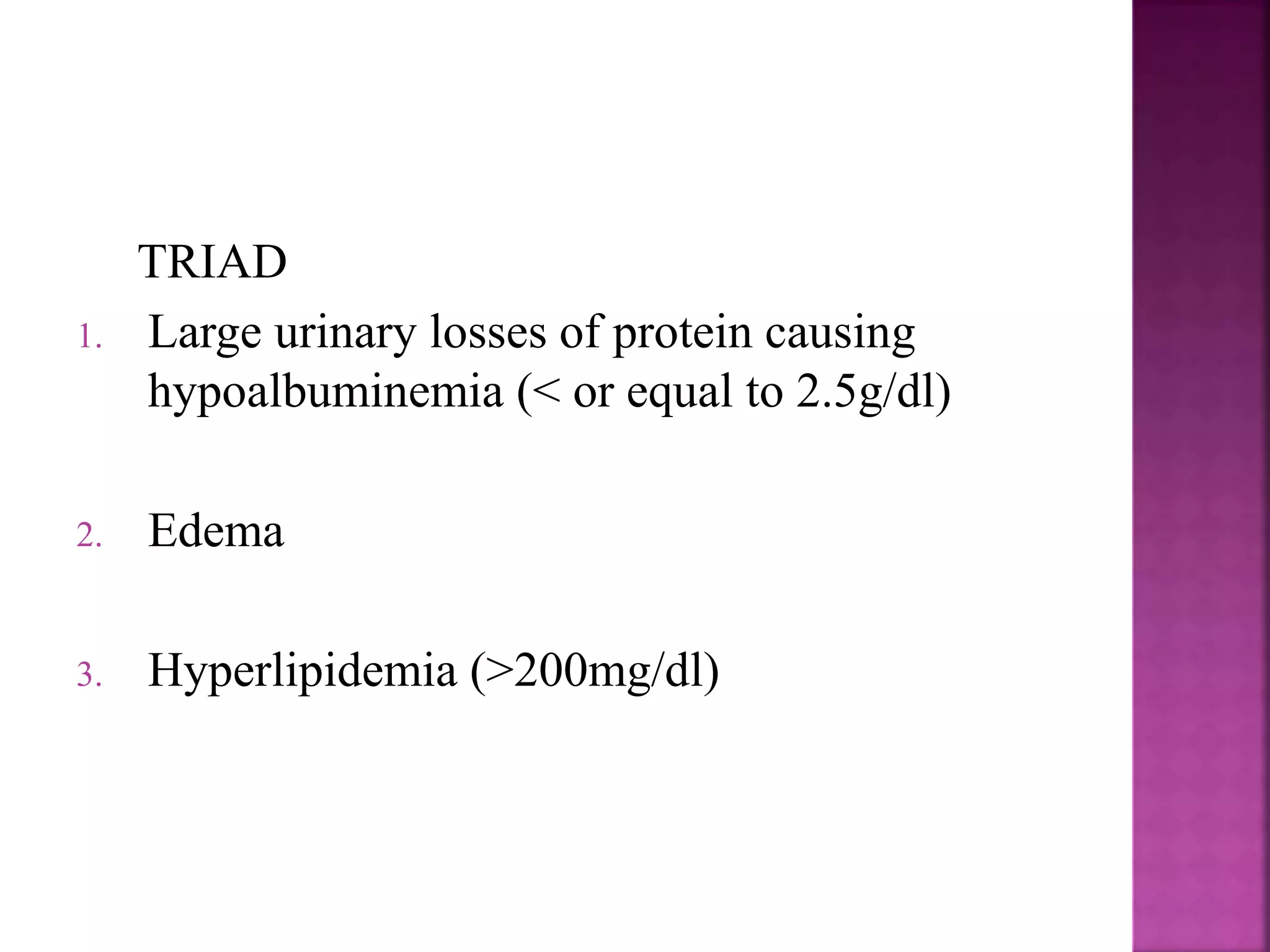
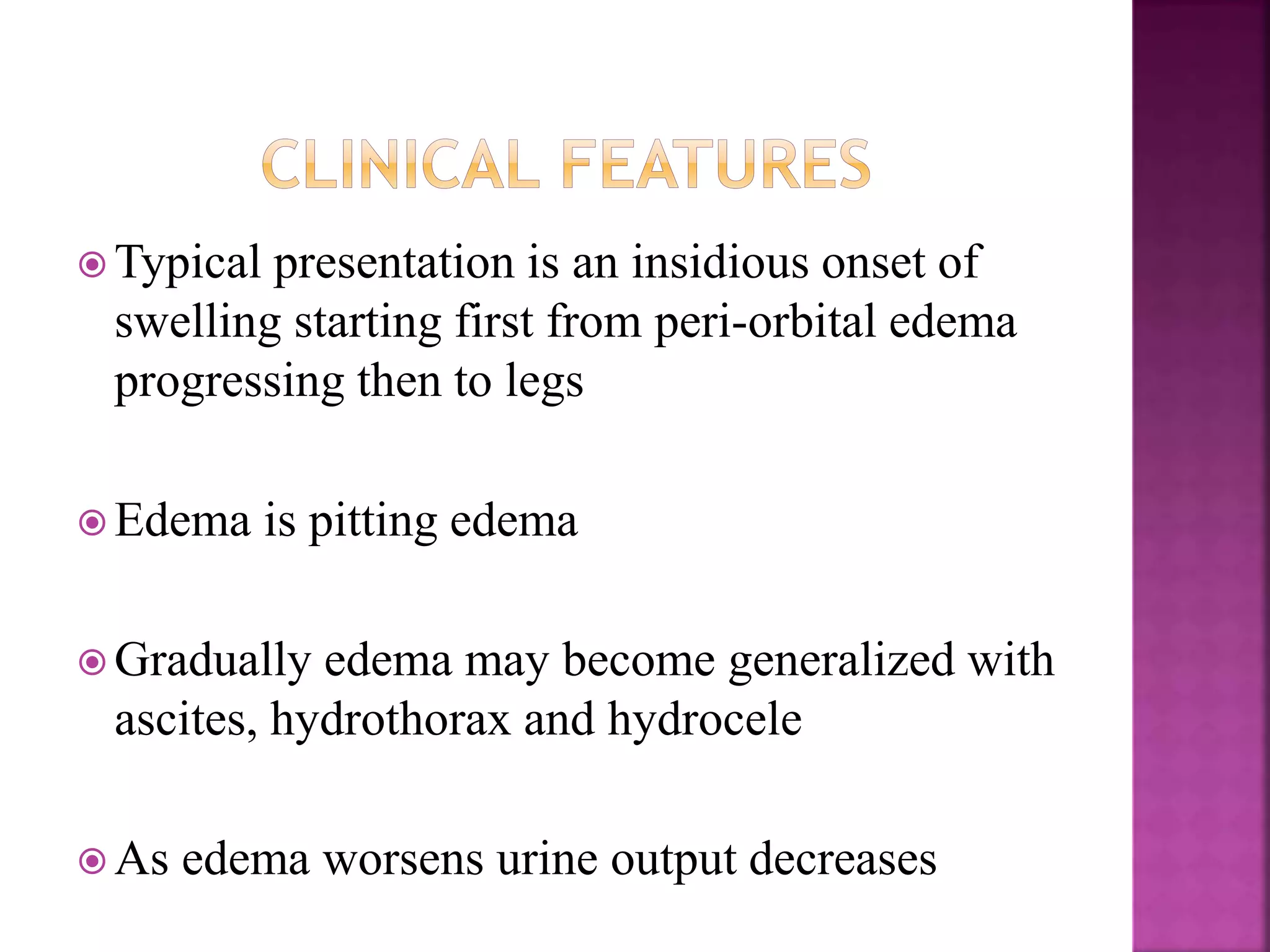
This document discusses nephrotic syndrome in children. It defines nephrotic syndrome as having proteinuria >3.5g/24hr or a urine protein to creatinine ratio >2. It most commonly presents with edema, hypoalbuminemia, and hyperlipidemia. The majority of cases are idiopathic and minimal change disease is the most common pathology. Treatment involves corticosteroids, which are effective in 80% of children. Relapses may occur and persistent disease may require additional immunosuppressive therapies. Management also includes treating infections, hyperlipidemia, thrombosis, and growth issues associated with long-term steroid use.







![Nephrotic_Syndrome[1].pptx](https://cdn.slidesharecdn.com/ss_thumbnails/nephroticsyndrome1-220824090858-5a841ab2-thumbnail.jpg?width=640&height=640&fit=bounds)


