NEOCLASSICISM
1780-1840
Came from theGreek word “neos” meaning NEW and
Latin word “classicus” which means FIRST CLASS
Western movement in decorative and visual arts
Applies to literature, theater, music and architecture
“Age of Enlightenment”
CHARACTERISTIC
Portrayal of Romanhistory
Formal composition
Use of diagonals to show peak of emotion or
movement
Local color
Over lighting
Classic geo-structure
5.
How did theNEOCLASSIC movement in
arts came about?
JACQUES – LOUISDAVID
1748-1825
French painter
Subjects were more of history
Famous art works:
1.The Death of Marat
2.Napoleon Crossing the Alps
3.Oath of Horatii
JEAN AUGUSTINE-DOMINIQUE INGRES
1780-1867,France
Pupil of Jacques Louis-David
His paintings are usually nudes, portraits and
mythological themes
One of the great exemplars of academic art
One of the finest Old Masters of his era
Famous artwork:
1.Portrait of Napoleon on the Imperial Throne
2.The Apotheosis of Homer
SCULPTURES
Artists looked toRoman styles during the
time of Alexander the Great for inspiration as
well as to mimic their styles
18.
ANTONIO CANOVA
1757-1822, Italy
Wasa prolific Italian sculptor who became famous for
his marble sculptures that delicately rendered nude
flesh
He opened the idea for portraying discrete sexual
pleasures by using pure contours with his mythological
compositions
Famous works:
1. Psyche Awakened by Cupid’s Kiss
2. Washington
Type of NEOCLASSICALArchitecture
Temple style
Palladian style
Classical block style
26.
TEMPLE STYLE
Based onAncient temples
Features peristyle (continuous line of columns
around a building}
Examples of temple style building:
1. Pantheon, Paris
2. British Museum, London
3. La Madeleine de Paris
PALLADIAN STYLE
Based onAndrea Palladio’s style of villa
construction
Features balustrade along the edge of the roof
There are vertical supports within a balustrade
known as “balusters” or “spindles”
Classical method of crowning a building that has a
flat or low lying roof
31.
Palladian Style
One ofthe famous artist is:
Robert Adam (1728-1792)
1.Designed two well known American
Civic buildings
2.The White House and the United States
Capitol
CLASSICAL BLOCK STYLE
Featuresa rectangular or square plan with a
flat roof and an exteriors rich in classical detail
Classical block aesthetic was also known as
“Beaux –Arts style”
Classical block architecture also flourished in
the United States
34.
CLASSICAL BLOCK STYLE
FamousArchitects:
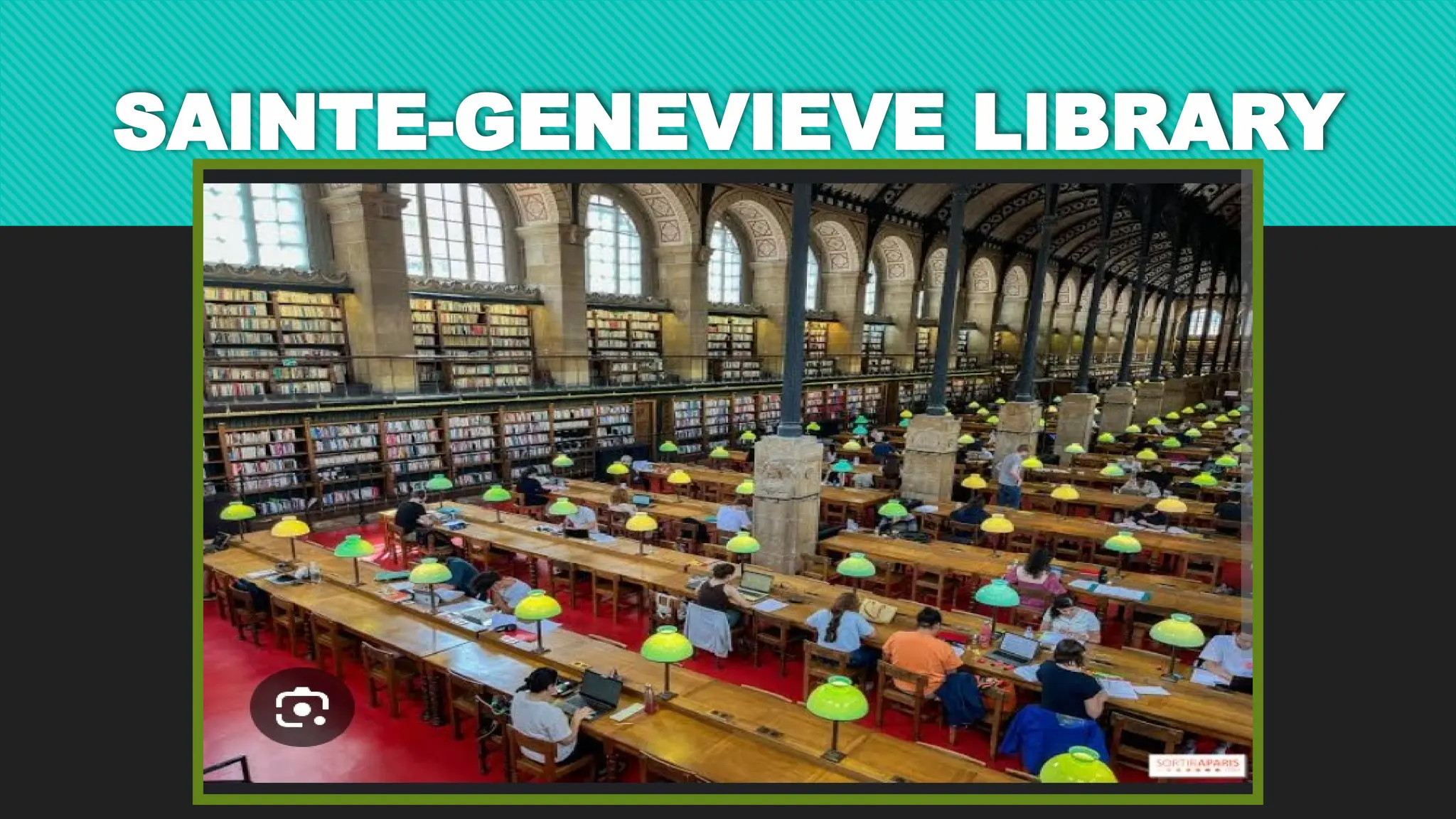
1. Henri Labrouste
- His masterpiece is the Library of
Sainte- Genevieve
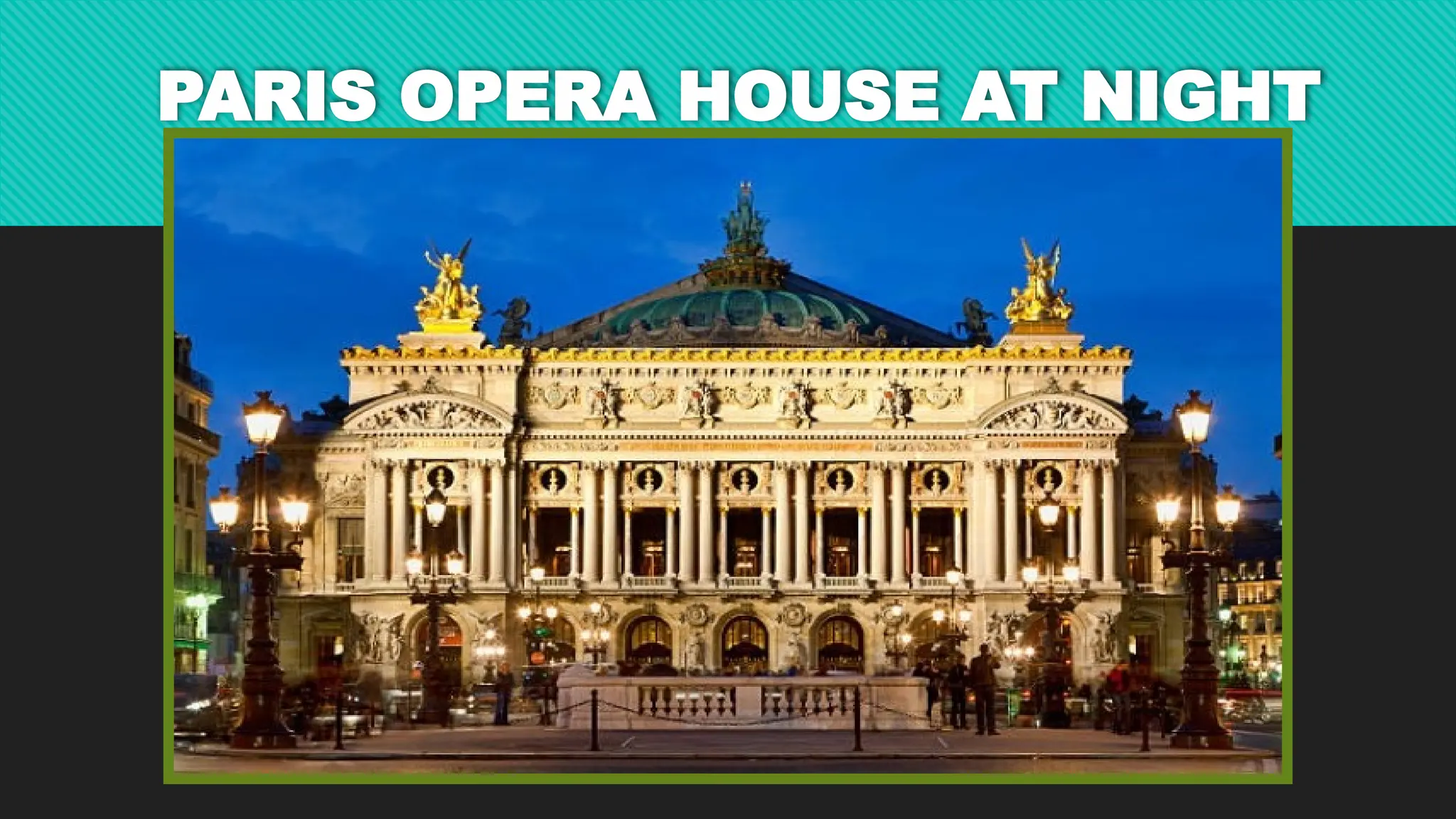
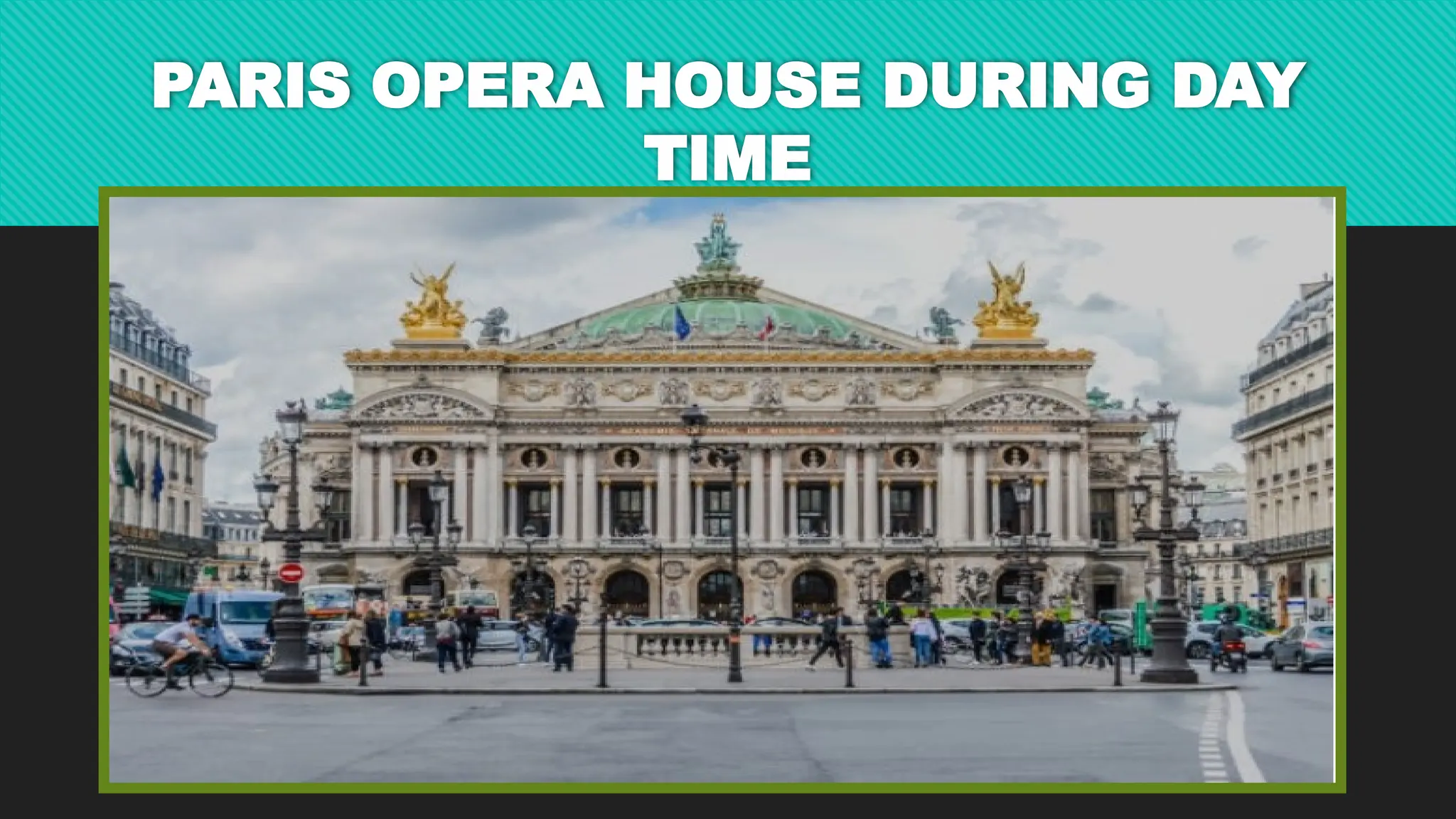
2. Charles Garnier
- Designed the most famous classical
block of all which is the Palais Garnier
35.
Henri Labrouste
He wasa French architect from the famous
“Ecole des Beaux-Arts” school of
architecture
He became noted for his use of iron-frame
construction and was one of the first to
realize the importance of its use
He was born in May 11, 1801 in Paris France
CHARLES GARNIER
He wasborn in November 6, 1825 in Paris, France
He was a French architect of the “Beaux –Arts”
style, designed the most famous classical block
which is the Palais Garnier or the Paris Opera
House
He was admitted to the Ecole des Beaux Arts in
1842 and was awarded the Grand Prix de Rome in
1848 to study in Italy
ROMANTICISM
1800 - 1810
Expressionof emotion, both subtle and
stormy
Distinctive themes longing for history,
supernatural elements, social injustices and
nature
43.
CHARACTERISTIC
Shows the heightof action
Emotional extremes
Celebrated nature as out of control
Dramatic compositions
Heightened sensation
ROMANTICISM FAMOUS ARTIST
1.JEAN LOUIS THEODORE GERICAULT
First French master
Leader of the French realistic school
His masterpieces were energetic and power
He was a French painter and lithographer
His best-known painting is the Raft of the Medusa and
he was one of the pioneers of the Romantic movement
2. JEAN AUGUSTINE-DOMINIQUEINGRES
1780-1867, FRANCE
Pupil of Jacques Louis-David
His paintings are usually nudes, portraits and
mythological themes
One of the great exemplars of academic art
One of the finest Old Masters of his era
Famous artwork:
1.Portrait of Napoleon on the Imperial Throne
2.The Apotheosis of Homer