Chapter 12:
CHAPTER TWELVE: CONFLICTS
AND NEGOTIATION
Coming up with win-win solutions
LEARNING OBJECTIVES
1. Describe the characteristics of conflicts
2. Compare negotiation with other forms of conflict resolution
3. Contrast "win-lose" with "win-win" negotiations
4. Identify key elements in any negotiation
5. Identify common strategies used in negotiations
This class is worth at least $100,000 over
your lifetime.
Describe yourself as a negotiator
1. I’m awful. I let people step all over me and never get what I want.
2. I’m not terrible, but not really very good at it. I have so much learn about doing
it more effectively.
3. I’m so-so, but I am pretty uncomfortable is negotiating.
4. I am pretty good, but I could be a lot better.
5. I am a master negotiator. I know how to negotiate effectively and frequently
negotiate good solutions to conflicts.
What word or impressions come to
your mind when you hear
negotiation?
Why do pharmacists need to be
good negotiators?
The ability to negotiate effectively with others is
an essential skill for pharmacists. The better
pharmacists negotiate conflicts, the more
successful they will be in furthering their personal
interests and those of patients.
So much of life is a negotiation - so even if you're
not in business, you have opportunities to practice
all around you.
Kevin O'Leary
WHAT IS A CONFLICT?
Conflicts are struggles between parties
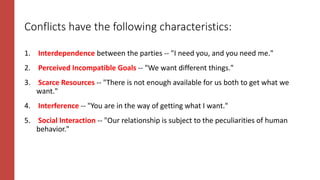
Conflicts have the following characteristics:
1. Interdependence between the parties -- "I need you, and you need me."
2. Perceived Incompatible Goals -- "We want different things."
3. Scarce Resources -- "There is not enough available for us both to get what we
want."
4. Interference -- "You are in the way of getting what I want."
5. Social Interaction -- "Our relationship is subject to the peculiarities of human
behavior."
COMMON RESPONSES TO CONFLICT
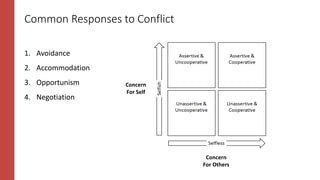
There many ways of responding to conflict and
each is situation-specific
Most responses differ by the degree to which
parties involved in the conflict focus on their own
concerns (i.e., are selfish) and the concerns of the
other party (i.e., are selfless)
Common Responses to Conflict
1. Avoidance
2. Accommodation
3. Opportunism
4. Negotiation
Concern
For Others
Concern
For Self
1
NEGOTIATING TO RESOLVE CONFLICTS
Everyone negotiates. We negotiate whenever we
interact with others.
Sometimes we just don't realize it.
The most dangerous negotiation is the one you
don't know you're in.
Christopher Voss
Negotiation is the process of resolving conflicts
between individuals or parties through dialogue
and problem-solving
We negotiate whenever we engage in the give-and
-take of disagreements between individuals with
conflicting goals
MISCONCEPTIONS ABOUT NEGOTIATION
One common misconception is that negotiation is
about winning and losing
Another misconception is that the very process
of negotiating damages relationships
There is a mistaken assumption that hardball
tactics are needed where individuals need to
argue, act rudely, and be pushy
Otherwise, they will end up losing the negotiation
In reality, negotiation can be about finding ways
where both sides win. It can be conducted in a
respectful, cooperative, and professional manner.
In fact, it can actually enhance relationships by
resolving conflicts in ways that enhance trust and
commitment.
TYPES OF NEGOTIATIONS
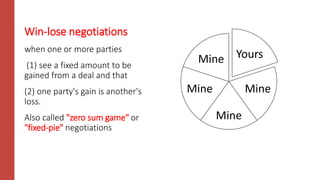
Win-lose negotiations
when one or more parties
(1) see a fixed amount to be
gained from a deal and that
(2) one party's gain is another's
loss.
Also called "zero sum game" or
"fixed-pie" negotiations
Yours
Mine
Mine
Mine
Mine
Zero-sum thinking in politics
Ideology encourages zero-sum thinking across the full range of the political spectrum.
“I am talking about a war being waged by some of the wealthiest and most powerful
people against working families, against the disappearing and shrinking middle class
of our country. The billionaires of America are on the warpath.”
–Bernie Sanders
“[Mexican immigrants] are taking our jobs. They’re taking our manufacturing jobs.
They’re taking our money. They’re killing us.”
–Donald Trump
“I win, You lose thinking” in politics makes it hard to come up with solutions for climate
change, income inequality, healthcare reform, and other major issues facing the nation.
https://advances.sciencemag.org/content/5/12/eaay3761/tab-article-info
Win-win negotiations
an alternative to win-lose conflicts where parties focus on making
certain that both sides are satisfied
Win-win negotiators see conflicts as an opportunity to solve problems
and build relationships
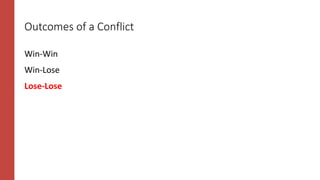
Outcomes of a Conflict
Win-Win
Win-Lose
Lose-Lose
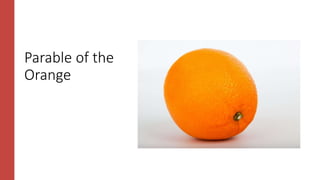
Parable of the
Orange
Win-win is a belief in the Third Alternative. It's not
your way or my way; it's a better way, a higher
way.
Stephen Covey
Win-Win Solutions Require…
Cooperation
Trust
Imagination
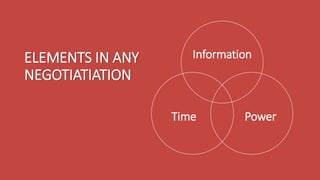
ELEMENTS IN ANY
NEGOTIATIATION
Information
PowerTime
POWER
Power
Power is the capacity to influence
We have many sources of power
Perception is reality. If your negotiating partners think you have power, then you
do
Sources of negotiating power
BATNA
Authority
Attitude
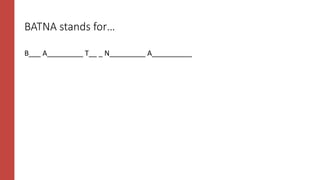
BATNA stands for…
B___ A_________ T__ _ N_________ A__________
BATNA is what happens if we cannot
come to a negotiated agreement
Example: You are employed as a
pharmacist and looking for a new
job. What is your BATNA?
TIME
Time refers to the period over which a
negotiation takes place
The end of this time period, the deadline, is
where most things in a negotiation get
done -- the closer the deadline, the more
motivated that parties will be to act
Time
Impatience is self-imposed time pressure
• Leads to rash decisions
• Can be exploited in negotiations
Deadlines increase pressure for action
The side that feels most constrained by time limits is more likely to
make concessions
Time Strategies
When you want to avoiding deadlines
• Let partners know if you are not ready to make a decision (e.g., need more
information)
• Communicate when you will be ready if you can
• Walk away if you are not ready (What is the worst that can happen?)
• Use a quick decision as a point of negotiation (“I will agree right now if
you….”)
• Renegotiate if there is mutual desire to come to an agreement
INFORMATION
i
Information
About ourselves
About the individual with whom we negotiate
About what is on the table
Information about OURSELVES
“What are my personal and career goals?”
• “Must haves” versus “Nice to haves”
“What are my concerns as a negotiator?”
• “What is my deadline?”
• “What personal pressures and anxieties do I have?”
• “How do I feel about the person with whom I am negotiating?”
• “What personal habits and tendencies should I control in this negotiation?”
Setting Objectives
Must haves
• Deal killers
Would likes
• Important but not essential
Tradeables
• Used to establish reciprocity
Understanding and controlling our
physical responses to conflict is important
in negotiating
The most difficult thing in any negotiation, almost,
is making sure that you strip it of the emotion and
deal with the facts. And there was a considerable
challenge to that here and understandably so.
Howard Baker
What feelings do you have prior to
or during a conflict?
Controlling Emotions
Prepare as much as possible
Detach yourself emotionally from the situation
• Care, but not T-H-A-T much *
Reframe situations
*Source: Herb Cohen. Negotiate This!
Information about the INDIVIDUALS WITH WHOM WE
NEGOTIATE
Interests & concerns?
Time constraints and deadlines?
By whom & how will their decisions be made?
Negotiating style & experience?
Limits of their negotiating authority?
Incentives to make this deal?
Track record for honesty and integrity?
Information about WHAT IS ON THE TABLE
Issues
Interests
Positions
Positional bargaining
Avoid bargaining over positions
Positional bargaining locks people into a specific stance
Quickly becomes a contest of wills instead of a problem solving process
The best move you can make in negotiation is to
think of an incentive the other person hasn't even
thought of - and then meet it.
Eli Broad
Identify shared interests
“We both want to be happy with the outcome.”
“We both want to maintain a good working relationship.”
Identify interests that aren’t shared – just different
You want to travel and have fun outside of work. Your boss wants you to show up
when needed and work hard.
Your boss loves the job. He is defined by it. You care about the job, but it does not
define you.
Obtaining information
Listen more and talk less
Pose non-threatening questions
Restate what you heard and ask for any clarification
Rely on your personal and professional networks
Reciprocate with information of your own
NEGOTIATING STEPS
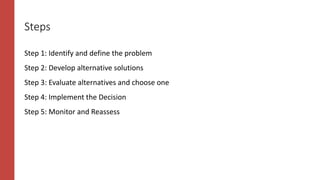
Steps
Step 1: Identify and define the problem
Step 2: Develop alternative solutions
Step 3: Evaluate alternatives and choose one
Step 4: Implement the Decision
Step 5: Monitor and Reassess
Principles of Negotiation
Separate the people from the problem
Agree on what will makes a good negotiated solution
• We can agree that you would like…. And I would like…..
• The procedure we will use is…….
Summary
Negotiations depend on the situation being faced and the outcome
desired
Win-lose negotiations are an option when the pharmacist is not interested in
developing or maintaining a long-term relationship with the other party
A compromise might be the only option when parties are unable or unwilling to
come to an agreement that is satisfactory for both
But the ideal outcome for any negotiation is one where both sides win
Conflict is good in a negotiation process... it's the
clash of two ideas, which then, all being well,
produces a third idea.
Luke Roberts

Negotiating and conflict management

  • 1.
    Chapter 12: CHAPTER TWELVE:CONFLICTS AND NEGOTIATION Coming up with win-win solutions
  • 2.
    LEARNING OBJECTIVES 1. Describethe characteristics of conflicts 2. Compare negotiation with other forms of conflict resolution 3. Contrast "win-lose" with "win-win" negotiations 4. Identify key elements in any negotiation 5. Identify common strategies used in negotiations
  • 3.
    This class isworth at least $100,000 over your lifetime.
  • 4.
    Describe yourself asa negotiator 1. I’m awful. I let people step all over me and never get what I want. 2. I’m not terrible, but not really very good at it. I have so much learn about doing it more effectively. 3. I’m so-so, but I am pretty uncomfortable is negotiating. 4. I am pretty good, but I could be a lot better. 5. I am a master negotiator. I know how to negotiate effectively and frequently negotiate good solutions to conflicts.
  • 5.
    What word orimpressions come to your mind when you hear negotiation?
  • 6.
    Why do pharmacistsneed to be good negotiators?
  • 7.
    The ability tonegotiate effectively with others is an essential skill for pharmacists. The better pharmacists negotiate conflicts, the more successful they will be in furthering their personal interests and those of patients.
  • 8.
    So much oflife is a negotiation - so even if you're not in business, you have opportunities to practice all around you. Kevin O'Leary
  • 9.
    WHAT IS ACONFLICT?
  • 10.
    Conflicts are strugglesbetween parties
  • 11.
    Conflicts have thefollowing characteristics: 1. Interdependence between the parties -- "I need you, and you need me." 2. Perceived Incompatible Goals -- "We want different things." 3. Scarce Resources -- "There is not enough available for us both to get what we want." 4. Interference -- "You are in the way of getting what I want." 5. Social Interaction -- "Our relationship is subject to the peculiarities of human behavior."
  • 12.
  • 13.
    There many waysof responding to conflict and each is situation-specific
  • 14.
    Most responses differby the degree to which parties involved in the conflict focus on their own concerns (i.e., are selfish) and the concerns of the other party (i.e., are selfless)
  • 15.
    Common Responses toConflict 1. Avoidance 2. Accommodation 3. Opportunism 4. Negotiation Concern For Others Concern For Self 1
  • 16.
  • 17.
    Everyone negotiates. Wenegotiate whenever we interact with others. Sometimes we just don't realize it.
  • 18.
    The most dangerousnegotiation is the one you don't know you're in. Christopher Voss
  • 19.
    Negotiation is theprocess of resolving conflicts between individuals or parties through dialogue and problem-solving
  • 20.
    We negotiate wheneverwe engage in the give-and -take of disagreements between individuals with conflicting goals
  • 21.
  • 22.
    One common misconceptionis that negotiation is about winning and losing
  • 23.
    Another misconception isthat the very process of negotiating damages relationships
  • 24.
    There is amistaken assumption that hardball tactics are needed where individuals need to argue, act rudely, and be pushy Otherwise, they will end up losing the negotiation
  • 25.
    In reality, negotiationcan be about finding ways where both sides win. It can be conducted in a respectful, cooperative, and professional manner. In fact, it can actually enhance relationships by resolving conflicts in ways that enhance trust and commitment.
  • 26.
  • 27.
    Win-lose negotiations when oneor more parties (1) see a fixed amount to be gained from a deal and that (2) one party's gain is another's loss. Also called "zero sum game" or "fixed-pie" negotiations Yours Mine Mine Mine Mine
  • 28.
    Zero-sum thinking inpolitics Ideology encourages zero-sum thinking across the full range of the political spectrum. “I am talking about a war being waged by some of the wealthiest and most powerful people against working families, against the disappearing and shrinking middle class of our country. The billionaires of America are on the warpath.” –Bernie Sanders “[Mexican immigrants] are taking our jobs. They’re taking our manufacturing jobs. They’re taking our money. They’re killing us.” –Donald Trump “I win, You lose thinking” in politics makes it hard to come up with solutions for climate change, income inequality, healthcare reform, and other major issues facing the nation. https://advances.sciencemag.org/content/5/12/eaay3761/tab-article-info
  • 29.
    Win-win negotiations an alternativeto win-lose conflicts where parties focus on making certain that both sides are satisfied Win-win negotiators see conflicts as an opportunity to solve problems and build relationships
  • 30.
    Outcomes of aConflict Win-Win Win-Lose Lose-Lose
  • 31.
  • 32.
    Win-win is abelief in the Third Alternative. It's not your way or my way; it's a better way, a higher way. Stephen Covey
  • 33.
  • 34.
  • 35.
  • 36.
    Power Power is thecapacity to influence We have many sources of power Perception is reality. If your negotiating partners think you have power, then you do
  • 37.
    Sources of negotiatingpower BATNA Authority Attitude
  • 38.
    BATNA stands for… B___A_________ T__ _ N_________ A__________
  • 39.
    BATNA is whathappens if we cannot come to a negotiated agreement
  • 40.
    Example: You areemployed as a pharmacist and looking for a new job. What is your BATNA?
  • 41.
  • 42.
    Time refers tothe period over which a negotiation takes place
  • 43.
    The end ofthis time period, the deadline, is where most things in a negotiation get done -- the closer the deadline, the more motivated that parties will be to act
  • 44.
    Time Impatience is self-imposedtime pressure • Leads to rash decisions • Can be exploited in negotiations Deadlines increase pressure for action The side that feels most constrained by time limits is more likely to make concessions
  • 45.
    Time Strategies When youwant to avoiding deadlines • Let partners know if you are not ready to make a decision (e.g., need more information) • Communicate when you will be ready if you can • Walk away if you are not ready (What is the worst that can happen?) • Use a quick decision as a point of negotiation (“I will agree right now if you….”) • Renegotiate if there is mutual desire to come to an agreement
  • 46.
  • 47.
    Information About ourselves About theindividual with whom we negotiate About what is on the table
  • 48.
    Information about OURSELVES “Whatare my personal and career goals?” • “Must haves” versus “Nice to haves” “What are my concerns as a negotiator?” • “What is my deadline?” • “What personal pressures and anxieties do I have?” • “How do I feel about the person with whom I am negotiating?” • “What personal habits and tendencies should I control in this negotiation?”
  • 49.
    Setting Objectives Must haves •Deal killers Would likes • Important but not essential Tradeables • Used to establish reciprocity
  • 50.
    Understanding and controllingour physical responses to conflict is important in negotiating
  • 51.
    The most difficultthing in any negotiation, almost, is making sure that you strip it of the emotion and deal with the facts. And there was a considerable challenge to that here and understandably so. Howard Baker
  • 52.
    What feelings doyou have prior to or during a conflict?
  • 53.
    Controlling Emotions Prepare asmuch as possible Detach yourself emotionally from the situation • Care, but not T-H-A-T much * Reframe situations *Source: Herb Cohen. Negotiate This!
  • 54.
    Information about theINDIVIDUALS WITH WHOM WE NEGOTIATE Interests & concerns? Time constraints and deadlines? By whom & how will their decisions be made? Negotiating style & experience? Limits of their negotiating authority? Incentives to make this deal? Track record for honesty and integrity?
  • 55.
    Information about WHATIS ON THE TABLE Issues Interests Positions
  • 56.
    Positional bargaining Avoid bargainingover positions Positional bargaining locks people into a specific stance Quickly becomes a contest of wills instead of a problem solving process
  • 57.
    The best moveyou can make in negotiation is to think of an incentive the other person hasn't even thought of - and then meet it. Eli Broad
  • 58.
    Identify shared interests “Weboth want to be happy with the outcome.” “We both want to maintain a good working relationship.”
  • 59.
    Identify interests thataren’t shared – just different You want to travel and have fun outside of work. Your boss wants you to show up when needed and work hard. Your boss loves the job. He is defined by it. You care about the job, but it does not define you.
  • 60.
    Obtaining information Listen moreand talk less Pose non-threatening questions Restate what you heard and ask for any clarification Rely on your personal and professional networks Reciprocate with information of your own
  • 61.
  • 62.
    Steps Step 1: Identifyand define the problem Step 2: Develop alternative solutions Step 3: Evaluate alternatives and choose one Step 4: Implement the Decision Step 5: Monitor and Reassess
  • 63.
    Principles of Negotiation Separatethe people from the problem Agree on what will makes a good negotiated solution • We can agree that you would like…. And I would like….. • The procedure we will use is…….
  • 64.
    Summary Negotiations depend onthe situation being faced and the outcome desired Win-lose negotiations are an option when the pharmacist is not interested in developing or maintaining a long-term relationship with the other party A compromise might be the only option when parties are unable or unwilling to come to an agreement that is satisfactory for both But the ideal outcome for any negotiation is one where both sides win
  • 65.
    Conflict is goodin a negotiation process... it's the clash of two ideas, which then, all being well, produces a third idea. Luke Roberts

Editor's Notes

  • #31 Win-lose in sports, games Lose-lose in war and polarized politics