Negotiating to WIN-WIN
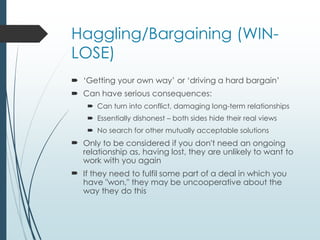
Haggling/Bargaining (WIN-
LOSE)
 ‘Getting your own way’ or ‘driving a hard bargain’
 Can have serious consequences:
 Can turn into conflict, damaging long-term relationships
 Essentially dishonest – both sides hide their real views
 No search for other mutually acceptable solutions
 Only to be considered if you don't need an ongoing
relationship as, having lost, they are unlikely to want to
work with you again
 If they need to fulfil some part of a deal in which you
have "won," they may be uncooperative about the
way they do this
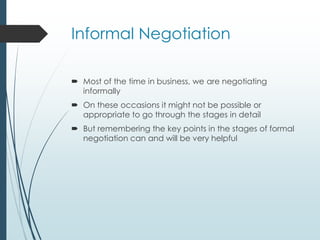
Informal Negotiation
 Most of the time in business, we are negotiating
informally
 On these occasions it might not be possible or
appropriate to go through the stages in detail
 But remembering the key points in the stages of formal
negotiation can and will be very helpful
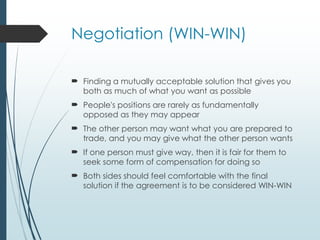
Negotiation (WIN-WIN)
 Finding a mutually acceptable solution that gives you
both as much of what you want as possible
 People's positions are rarely as fundamentally
opposed as they may appear
 The other person may want what you are prepared to
trade, and you may give what the other person wants
 If one person must give way, then it is fair for them to
seek some form of compensation for doing so
 Both sides should feel comfortable with the final
solution if the agreement is to be considered WIN-WIN
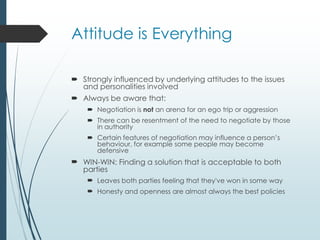
Attitude is Everything
 Strongly influenced by underlying attitudes to the issues
and personalities involved
 Always be aware that:
 Negotiation is not an arena for an ego trip or aggression
 There can be resentment of the need to negotiate by those
in authority
 Certain features of negotiation may influence a person’s
behaviour, for example some people may become
defensive
 WIN-WIN: Finding a solution that is acceptable to both
parties
 Leaves both parties feeling that they've won in some way
 Honesty and openness are almost always the best policies
Emotions
 Stay calm! Displays of emotion are inappropriate
because they can undermine negotiation, because
they bring a manipulative aspect to them
 Emotion can be an important subject of discussion
because people's emotional needs must be met
 If emotion is not discussed where it needs to be, then
any agreement reached can be unsatisfactory and
temporary
 Be as detached as possible when discussing your own
emotions – perhaps discuss them as if they belong to
someone else
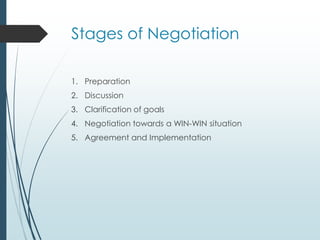
Stages of Negotiation
1. Preparation
2. Discussion
3. Clarification of goals
4. Negotiation towards a WIN-WIN situation
5. Agreement and Implementation
Preparation (1)
 Goal:
 What do you want to get out of this? What do you think
the other person wants?
 Trade:
 What do you and the other person have that you can
trade? What do you each have that the other wants?
What are you each comfortable giving away?
 Alternatives:
 If you don't reach agreement, how much does it matter?
Will it cut you out of future opportunities? What
alternatives do you have? What alternatives might the
other person have?
Preparation (2)
 Relationship:
 What is the history of the relationship? Could or should this
history impact the negotiation? Will there be any hidden
issues? How will you handle these?
 Outcome:
 What outcome will people be expecting from this
negotiation? What has the outcome been in the past, and
what precedents have been set?
 Power:
 Who has what power in the relationship? Who stands to lose
the most? What power does the other person have to deliver
what you hope for?
 Solutions:
 What possible compromises might there be?
Discussion
 Each side puts forward the case as they see it
 Each side should have an equal opportunity to
present their case
 It is helpful to take notes in case there is need for
further clarification
 Key skills during this stage are questioning, listening
and clarifying
 Listen carefully: it is so easy to say too much and listen
too little
Clarification of Goals
 From the discussion, the goals, interests and viewpoints
of both sides of the disagreement need to be clarified
 It is helpful to list these in order of priority
 Through this clarification it is often possible to identify
or establish common ground
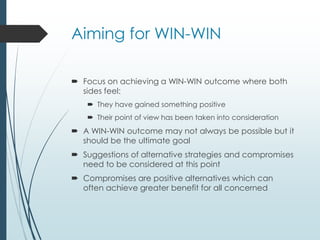
Aiming for WIN-WIN
 Focus on achieving a WIN-WIN outcome where both
sides feel:
 They have gained something positive
 Their point of view has been taken into consideration
 A WIN-WIN outcome may not always be possible but it
should be the ultimate goal
 Suggestions of alternative strategies and compromises
need to be considered at this point
 Compromises are positive alternatives which can
often achieve greater benefit for all concerned
Agreement
 Agreement can be achieved once understanding of
both sides’ viewpoints and interests have been
considered
 It is essential to keep an open mind in order to achieve
a solution
 Any agreement needs to be made perfectly clear so
that both sides know what has been decided
 From the agreement a course of action needs to be
implemented to carry through the decision
Failure to Agree
 If agreement cannot be reached, then a further
meeting is called for
 This avoids heated discussion or argument, which not
only wastes valuable time but can also damage future
working relationships
 At the subsequent meeting, the stages should be
repeated
 Any new ideas or interests should be taken into
account and the situation looked at afresh
 At this stage it may also be helpful to look at other
alternative solutions and/or bring in another person to
mediate
Thank You

Negotiation (Valley at Work)

  • 1.
  • 2.
    Haggling/Bargaining (WIN- LOSE)  ‘Gettingyour own way’ or ‘driving a hard bargain’  Can have serious consequences:  Can turn into conflict, damaging long-term relationships  Essentially dishonest – both sides hide their real views  No search for other mutually acceptable solutions  Only to be considered if you don't need an ongoing relationship as, having lost, they are unlikely to want to work with you again  If they need to fulfil some part of a deal in which you have "won," they may be uncooperative about the way they do this
  • 3.
    Informal Negotiation  Mostof the time in business, we are negotiating informally  On these occasions it might not be possible or appropriate to go through the stages in detail  But remembering the key points in the stages of formal negotiation can and will be very helpful
  • 4.
    Negotiation (WIN-WIN)  Findinga mutually acceptable solution that gives you both as much of what you want as possible  People's positions are rarely as fundamentally opposed as they may appear  The other person may want what you are prepared to trade, and you may give what the other person wants  If one person must give way, then it is fair for them to seek some form of compensation for doing so  Both sides should feel comfortable with the final solution if the agreement is to be considered WIN-WIN
  • 5.
    Attitude is Everything Strongly influenced by underlying attitudes to the issues and personalities involved  Always be aware that:  Negotiation is not an arena for an ego trip or aggression  There can be resentment of the need to negotiate by those in authority  Certain features of negotiation may influence a person’s behaviour, for example some people may become defensive  WIN-WIN: Finding a solution that is acceptable to both parties  Leaves both parties feeling that they've won in some way  Honesty and openness are almost always the best policies
  • 6.
    Emotions  Stay calm!Displays of emotion are inappropriate because they can undermine negotiation, because they bring a manipulative aspect to them  Emotion can be an important subject of discussion because people's emotional needs must be met  If emotion is not discussed where it needs to be, then any agreement reached can be unsatisfactory and temporary  Be as detached as possible when discussing your own emotions – perhaps discuss them as if they belong to someone else
  • 7.
    Stages of Negotiation 1.Preparation 2. Discussion 3. Clarification of goals 4. Negotiation towards a WIN-WIN situation 5. Agreement and Implementation
  • 8.
    Preparation (1)  Goal: What do you want to get out of this? What do you think the other person wants?  Trade:  What do you and the other person have that you can trade? What do you each have that the other wants? What are you each comfortable giving away?  Alternatives:  If you don't reach agreement, how much does it matter? Will it cut you out of future opportunities? What alternatives do you have? What alternatives might the other person have?
  • 9.
    Preparation (2)  Relationship: What is the history of the relationship? Could or should this history impact the negotiation? Will there be any hidden issues? How will you handle these?  Outcome:  What outcome will people be expecting from this negotiation? What has the outcome been in the past, and what precedents have been set?  Power:  Who has what power in the relationship? Who stands to lose the most? What power does the other person have to deliver what you hope for?  Solutions:  What possible compromises might there be?
  • 10.
    Discussion  Each sideputs forward the case as they see it  Each side should have an equal opportunity to present their case  It is helpful to take notes in case there is need for further clarification  Key skills during this stage are questioning, listening and clarifying  Listen carefully: it is so easy to say too much and listen too little
  • 11.
    Clarification of Goals From the discussion, the goals, interests and viewpoints of both sides of the disagreement need to be clarified  It is helpful to list these in order of priority  Through this clarification it is often possible to identify or establish common ground
  • 12.
    Aiming for WIN-WIN Focus on achieving a WIN-WIN outcome where both sides feel:  They have gained something positive  Their point of view has been taken into consideration  A WIN-WIN outcome may not always be possible but it should be the ultimate goal  Suggestions of alternative strategies and compromises need to be considered at this point  Compromises are positive alternatives which can often achieve greater benefit for all concerned
  • 13.
    Agreement  Agreement canbe achieved once understanding of both sides’ viewpoints and interests have been considered  It is essential to keep an open mind in order to achieve a solution  Any agreement needs to be made perfectly clear so that both sides know what has been decided  From the agreement a course of action needs to be implemented to carry through the decision
  • 14.
    Failure to Agree If agreement cannot be reached, then a further meeting is called for  This avoids heated discussion or argument, which not only wastes valuable time but can also damage future working relationships  At the subsequent meeting, the stages should be repeated  Any new ideas or interests should be taken into account and the situation looked at afresh  At this stage it may also be helpful to look at other alternative solutions and/or bring in another person to mediate
  • 15.