negotiation N The is for ... claire huang  09KM904W justin jojo bello  08BN946R
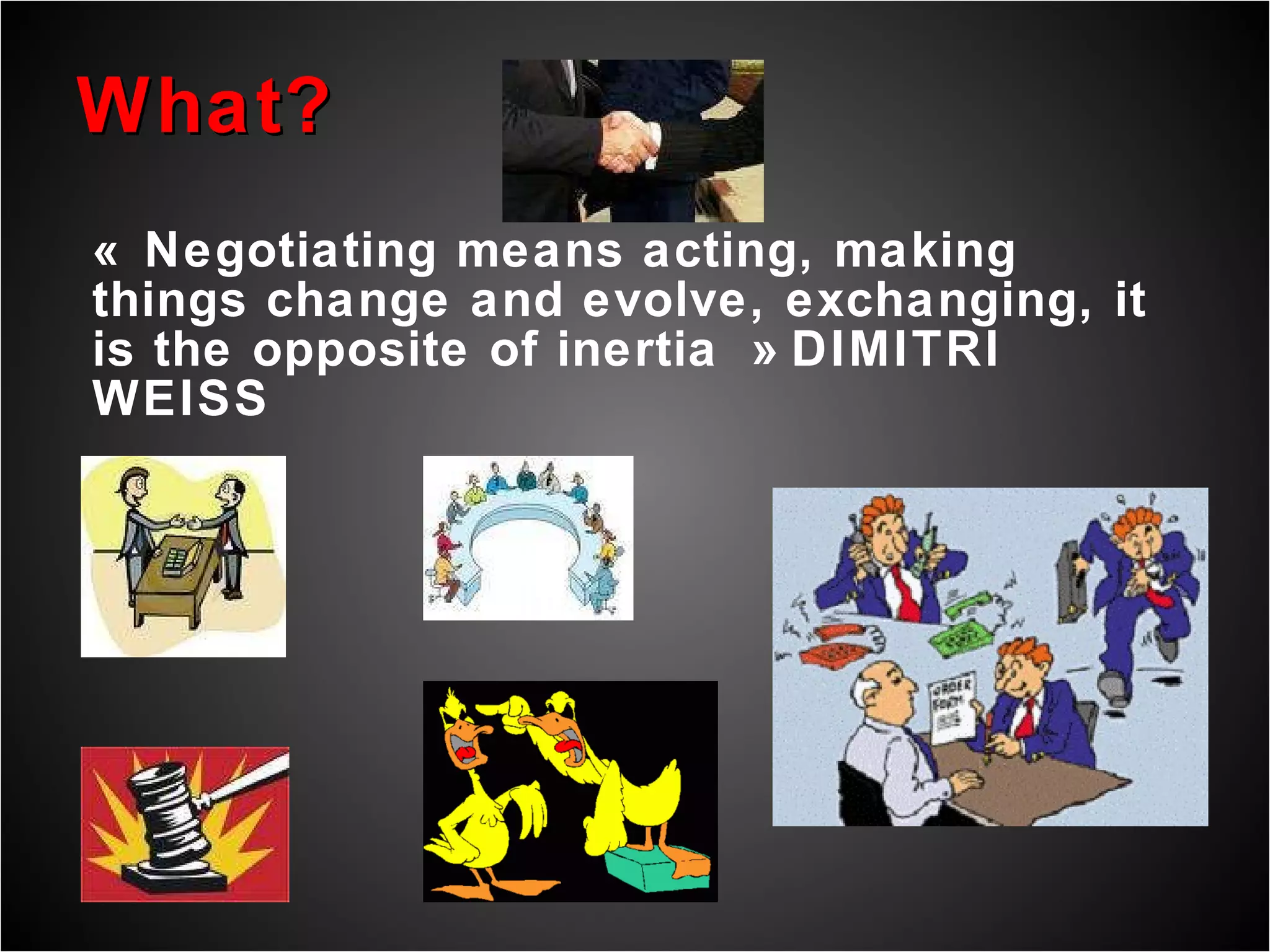
What? « Negotiating means acting, making things change and evolve, exchanging, it is the opposite of inertia » DIMITRI WEISS
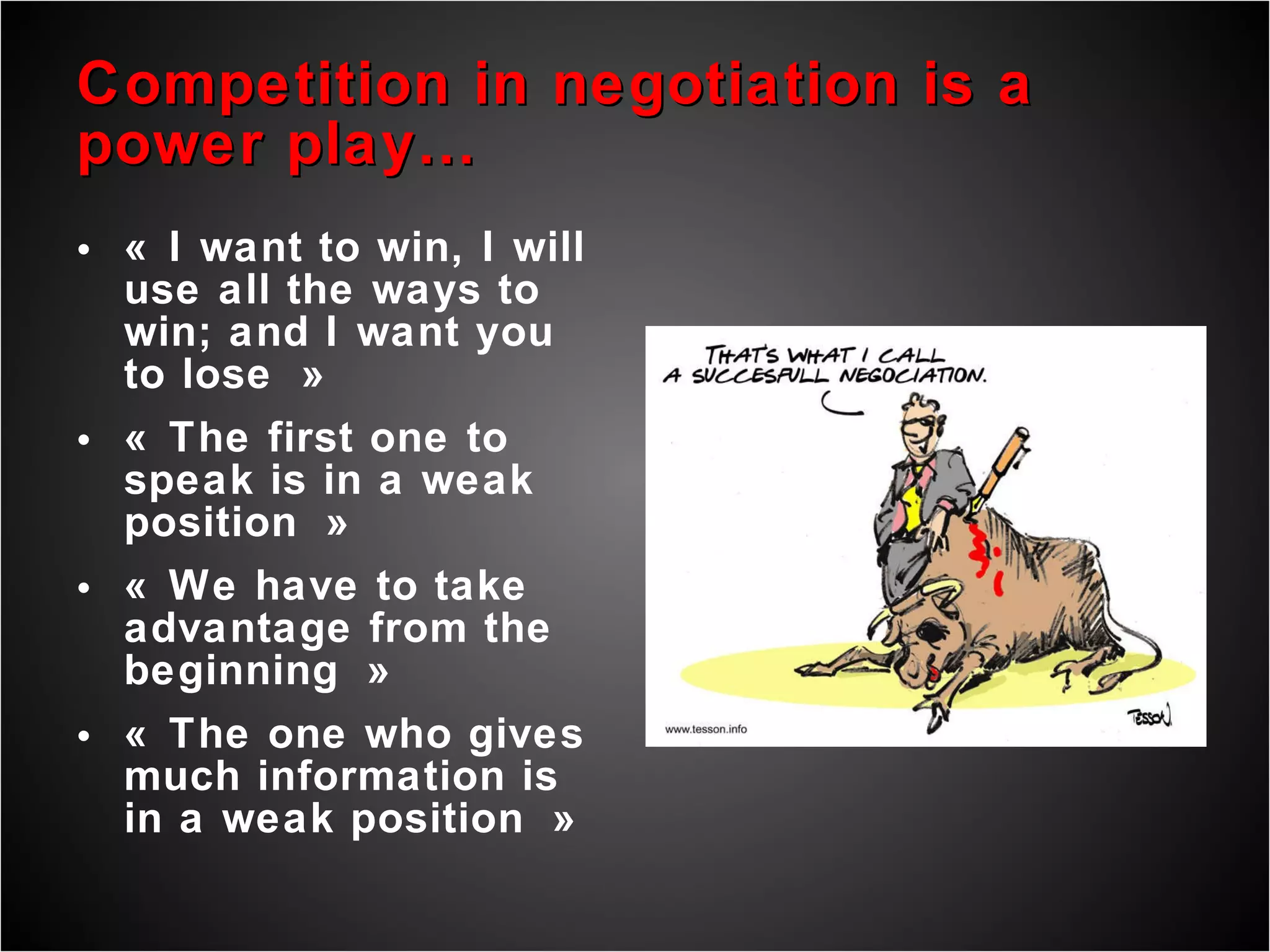
Competition in negotiation is a power play… « I want to win, I will use all the ways to win; and I want you to lose » « The first one to speak is in a weak position » « We have to take advantage from the beginning » « The one who gives much information is in a weak position »
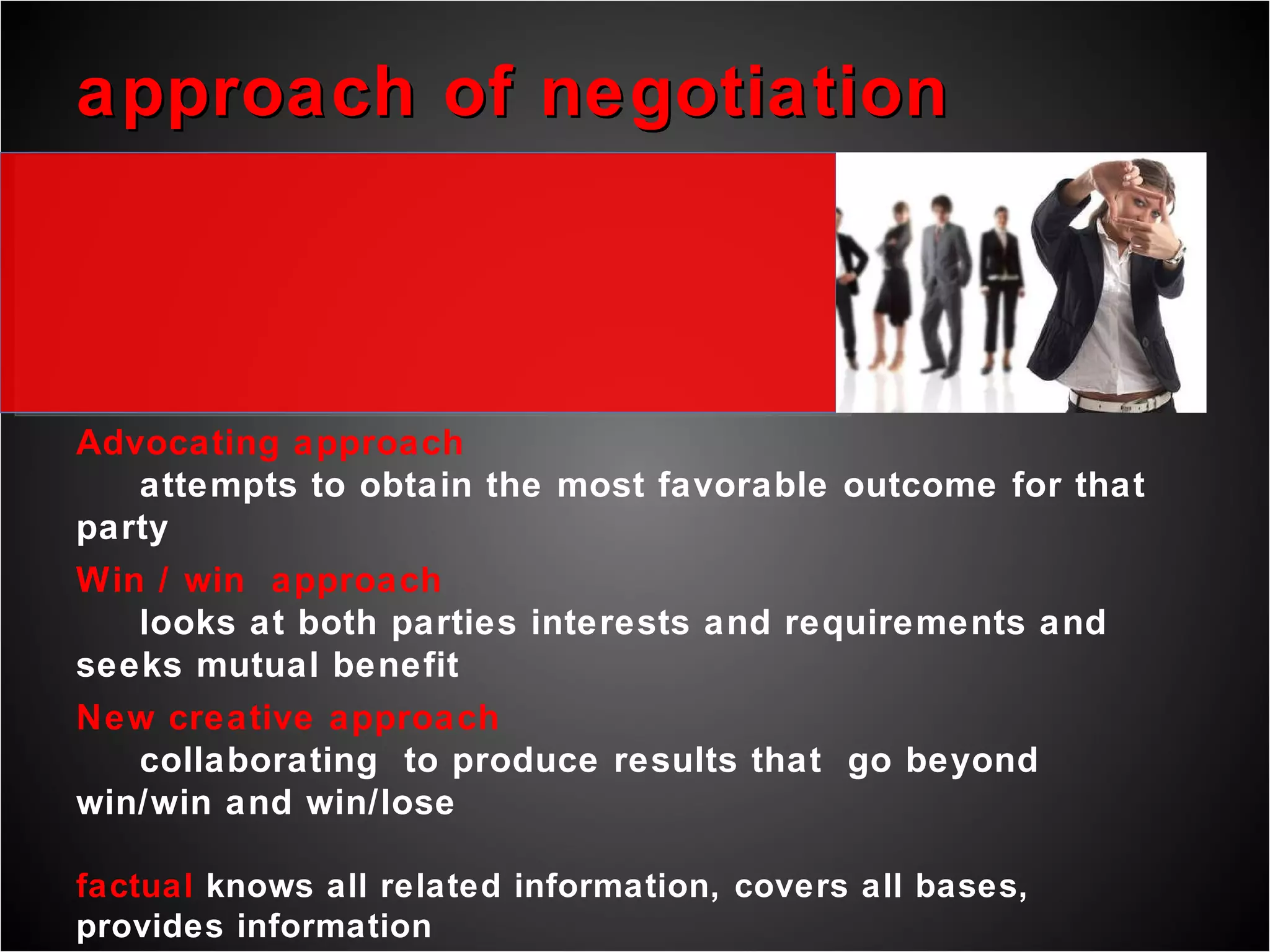
approach of negotiation Advocating approach attempts to obtain the most favorable outcome for that party Win / win  approach looks at both parties interests and requirements and seeks mutual benefit New creative approach collaborating  to produce results that  go beyond win/win and win/lose  factual  knows all related information, covers all bases, provides information   relational  establish relationships, builds trust and perceives other party’s position   intuitive  unexpected solutions or approach, anticipates progress, sees big picture   logical  sets rules, develops an agenda, argues logically than emotionally, adapts
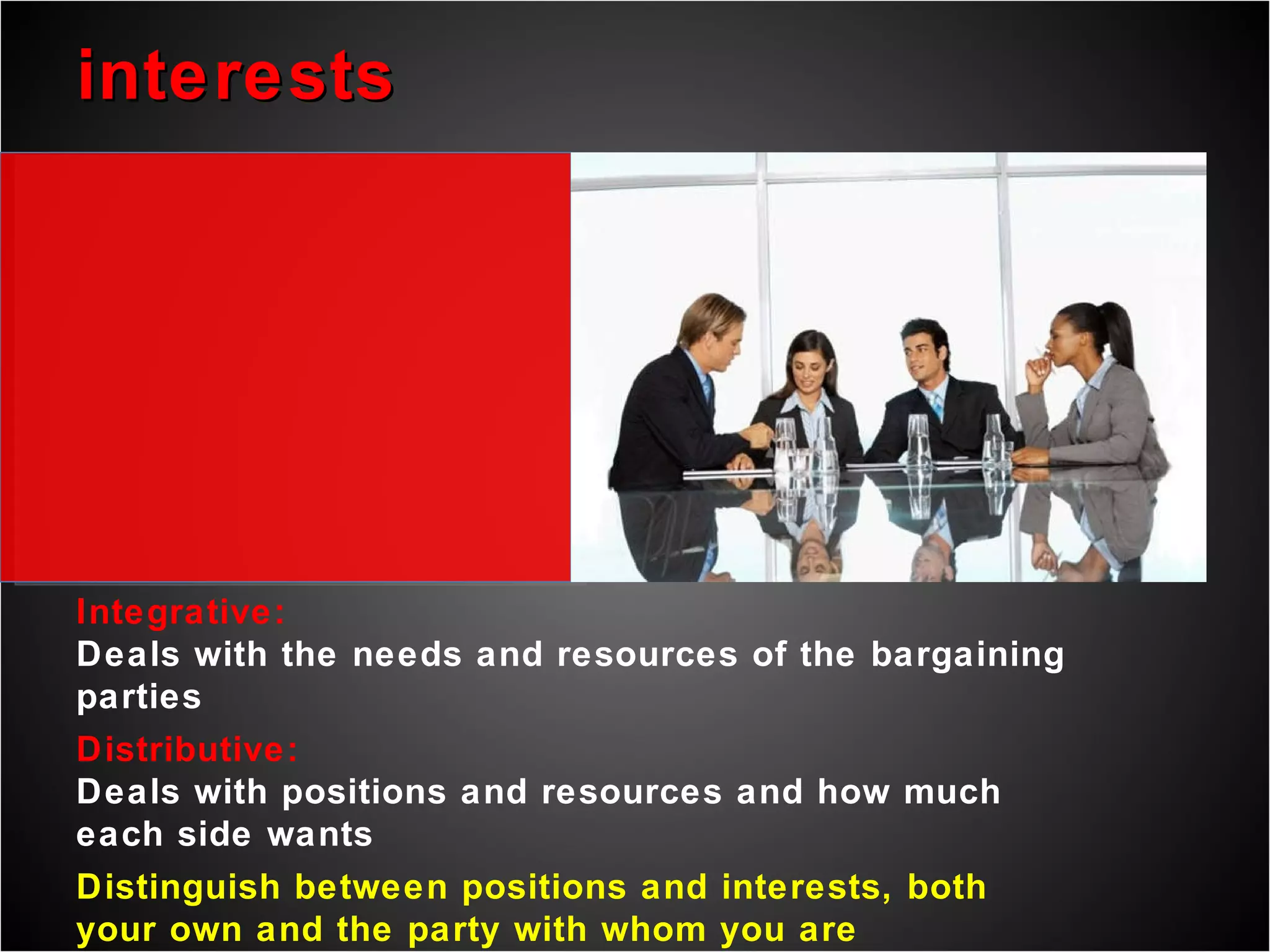
interests Integrative:  Deals with the needs and resources of the bargaining parties Distributive:  Deals with positions and resources and how much each side wants  Distinguish between positions and interests, both your own and the party with whom you are negotiating.
process Preparation of negotiations set clear objectives anticipate claims and reactions of the other party develop  strategy Discussion of the problem read and understand the problem listen  and focus on the other party ask the right questions Propose solutions summarize, analyze, offer suggestions or solutions  Negotiate a compromise keep your goals in mind make sure new proposals (concession) fit your limitations Finalization formulation of agreement preparation of implementation review the experience of the negotiation
preparation Set objectives Parties frame the problem & recognize that they have a common problem that they share an interest in solving Anticipate Define the issues to be discussed and analyze the conflict situation  Strategize Research and consultation with experts, prioritize their goals and positions  and evaluate possible tradeoffs.  identify the concerns, desires, and fears of the goals  understand needs, know priorities, identify boundaries  count resources, develop walk-away position
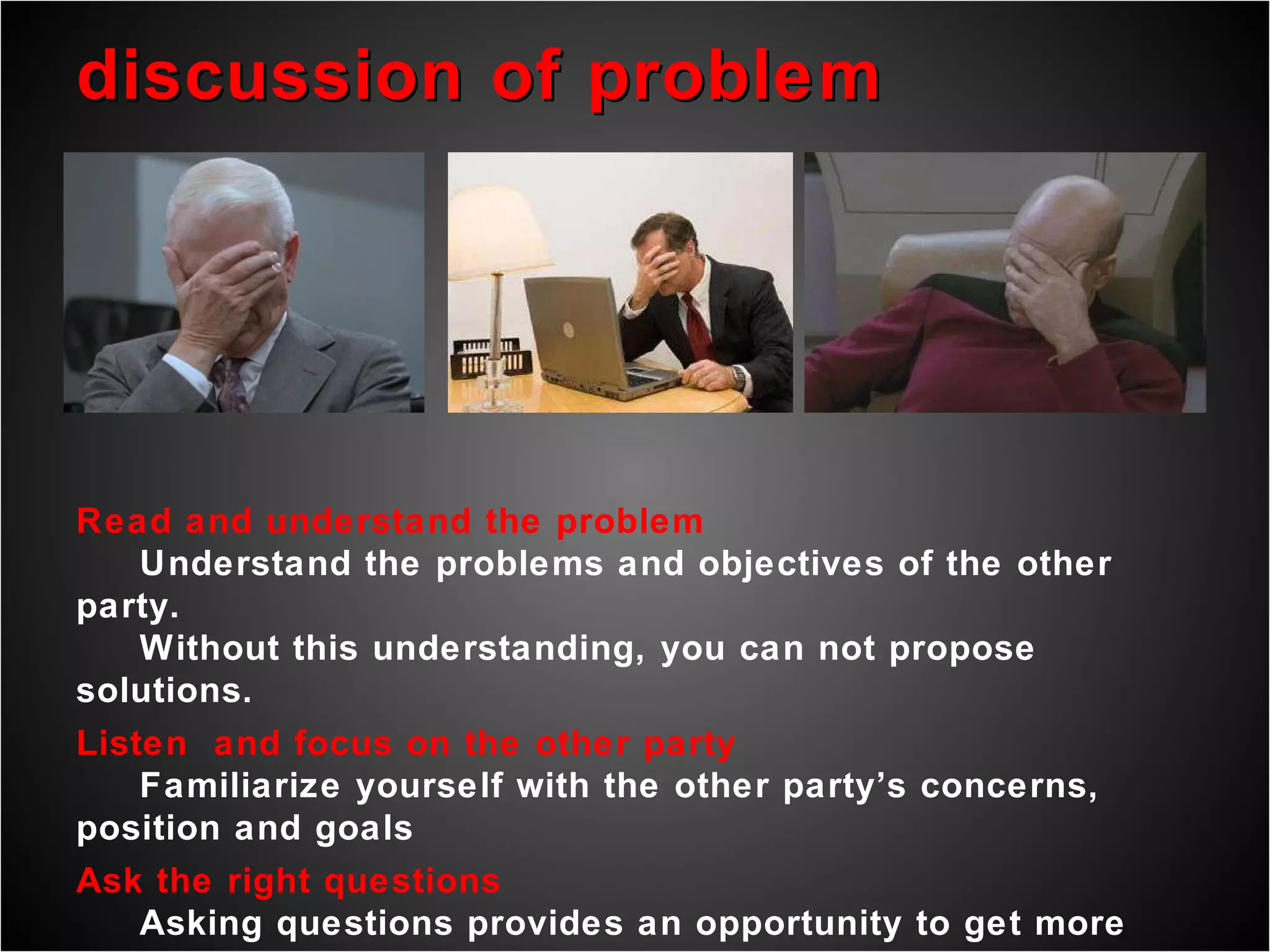
discussion of problem Read and understand the problem Understand the problems and objectives of the other party. Without this understanding, you can not propose solutions. Listen  and focus on the other party Familiarize yourself with the other party’s concerns, position and goals Ask the right questions Asking questions provides an opportunity to get more information and ensure that  the given information is understood.  Asking questions considers the arguments of the other party.
solutions Propose solutions In order to propose solutions, you should be able to  summarize  what has been said,  analyze  the consequences, and be able to  offer  suggestions or solutions based on analysis.
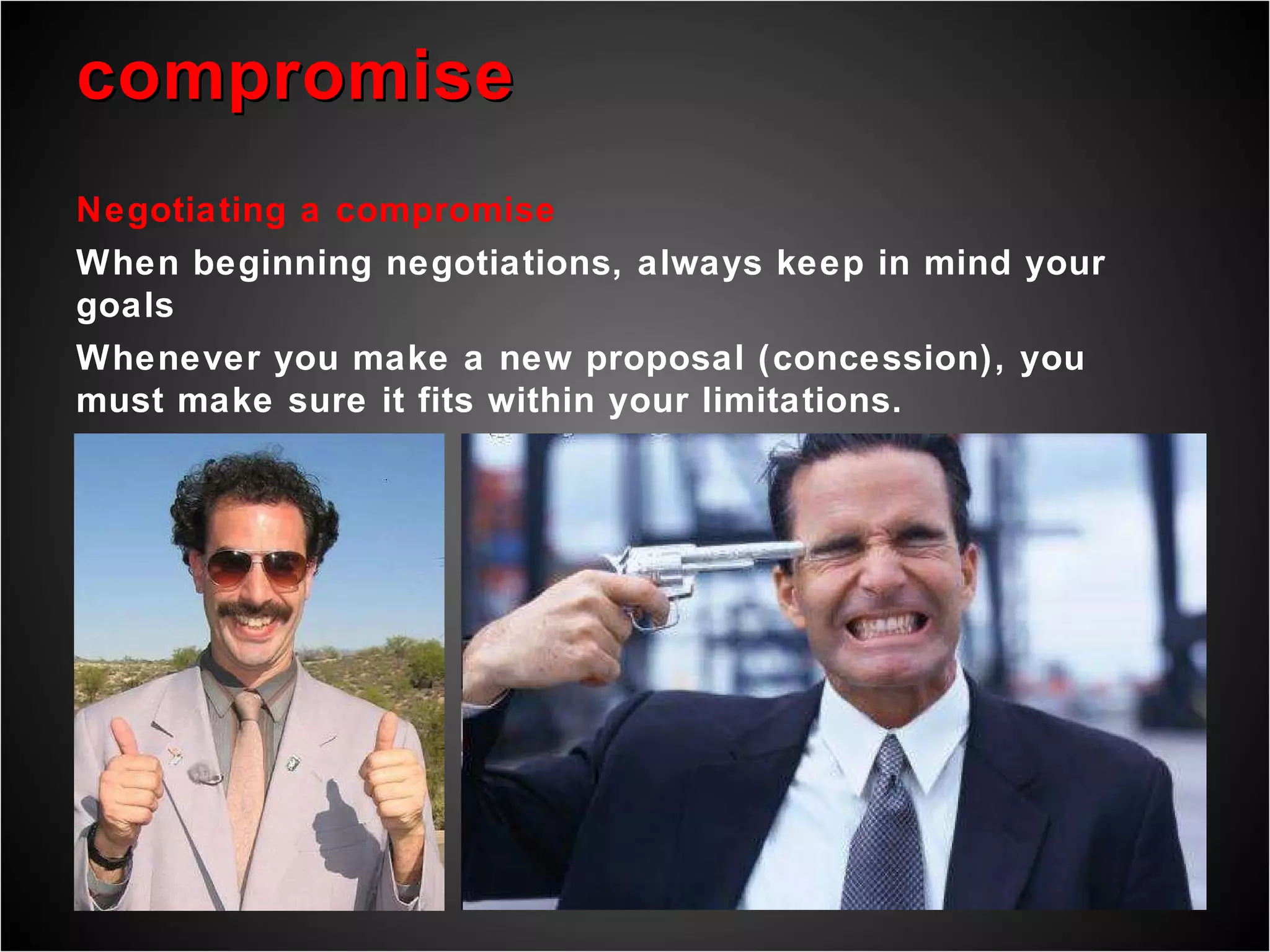
compromise Negotiating a compromise When beginning negotiations, always keep in mind your goals Whenever you make a new proposal (concession), you must make sure it fits within your limitations.
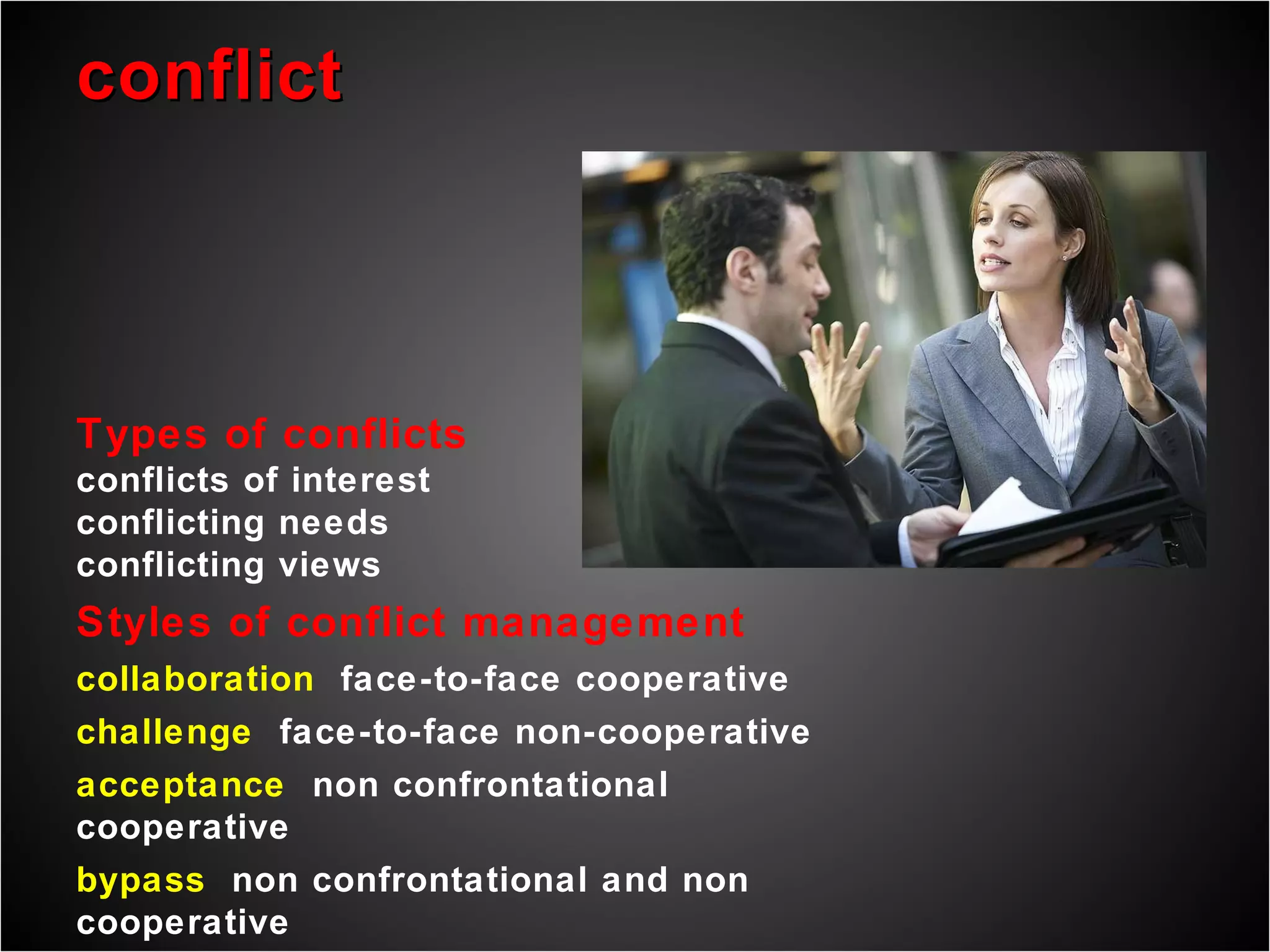
conflict Types of conflicts conflicts of interest conflicting needs conflicting views Styles of conflict management collaboration  face-to-face cooperative challenge  face-to-face non-cooperative acceptance  non confrontational cooperative bypass  non confrontational and non cooperative compromise  incorporates elements of other styles
agreement Finalization formulation of agreement all aspects have been accepted, in particular: dates for implementation, review , finalization, and the definition of terms preparation of implementation an agreement is managed once implemented. implementation programs are incorporated into the bargaining agreement which will define what needs to be done, when, and by whom  review the experience of the negotiation after closing, lessons must be learned.  What went wrong?  What went well?  What was learned? These lessons will help for the next negotiation
strategies Prepare for: you and your team members defining the rules of the meeting submission of opinions on the issues to be addressed obtain a briefing on the views of the other party Decide: who will lead the discussion who will check the facts who asks questions who will answer questions from the other party who will reduce tension and show interest in others who will take notes Separate  personality of the person and problem to solve Broaden  your horizons. Do not be limited to one solution Look  for a solution, not a confrontation Organize  a constructive meeting
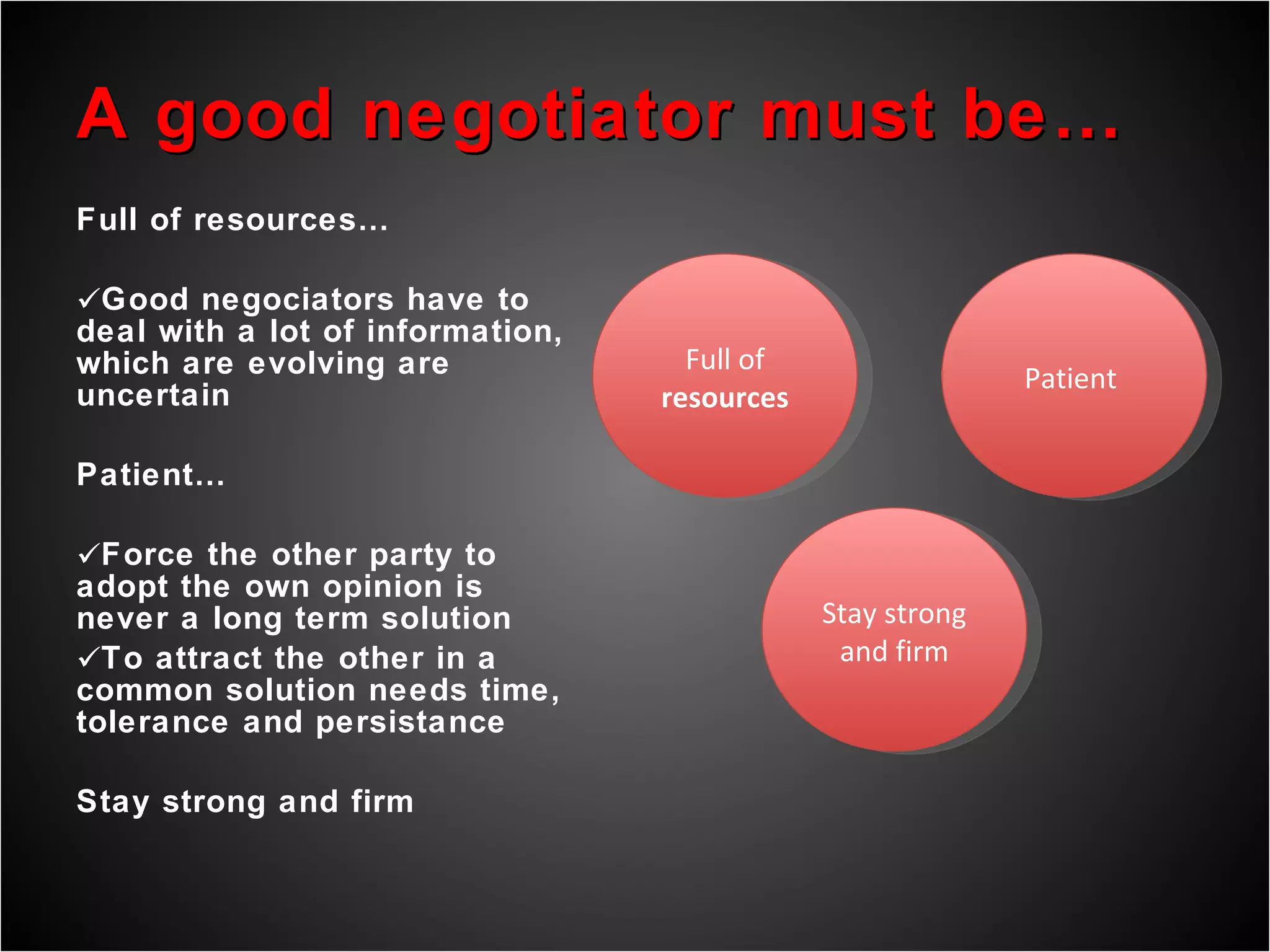
A good negotiator must be… Full of resources… Good negociators have to deal with a lot of information, which are evolving are uncertain Patient… Force the other party to adopt the own opinion is never a long term solution To attract the other in a common solution needs time, tolerance and persistance Stay strong and firm  Full of  resources Patient  Stay strong and firm
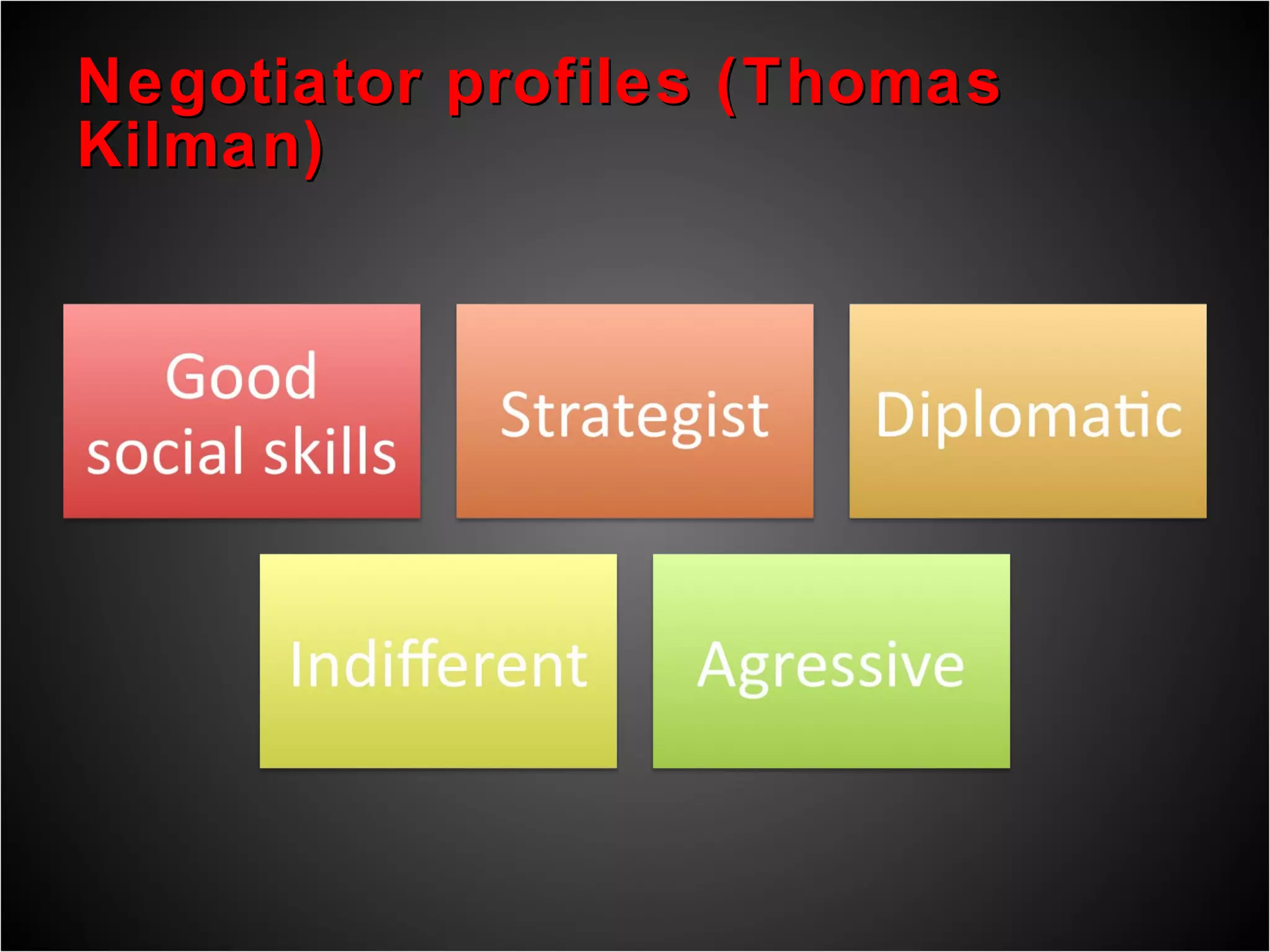
Negotiator profiles (Thomas Kilman)
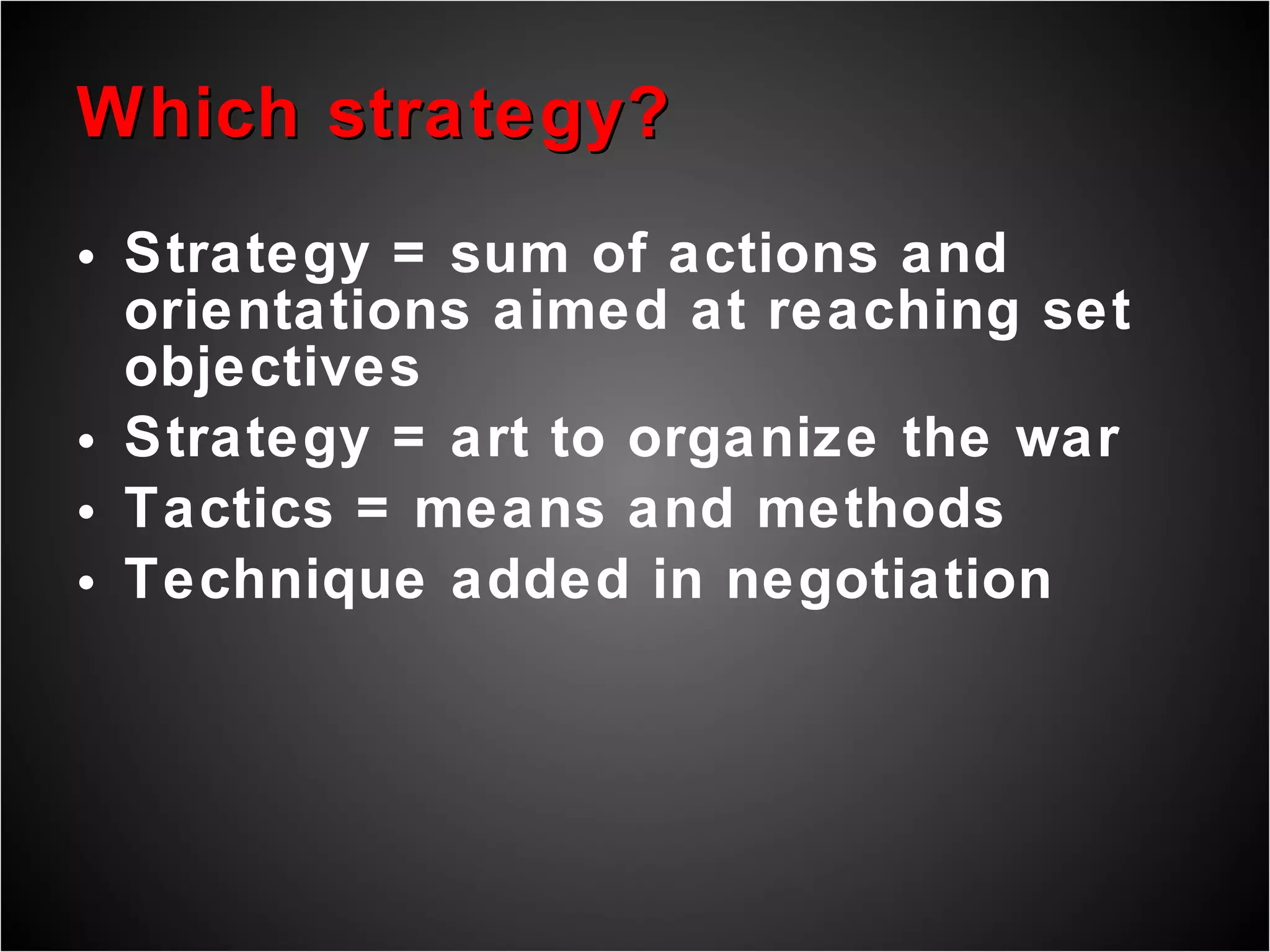
Which strategy?  Strategy = sum of actions and orientations aimed at reaching set objectives  Strategy = art to organize the war Tactics = means and methods Technique added in negotiation
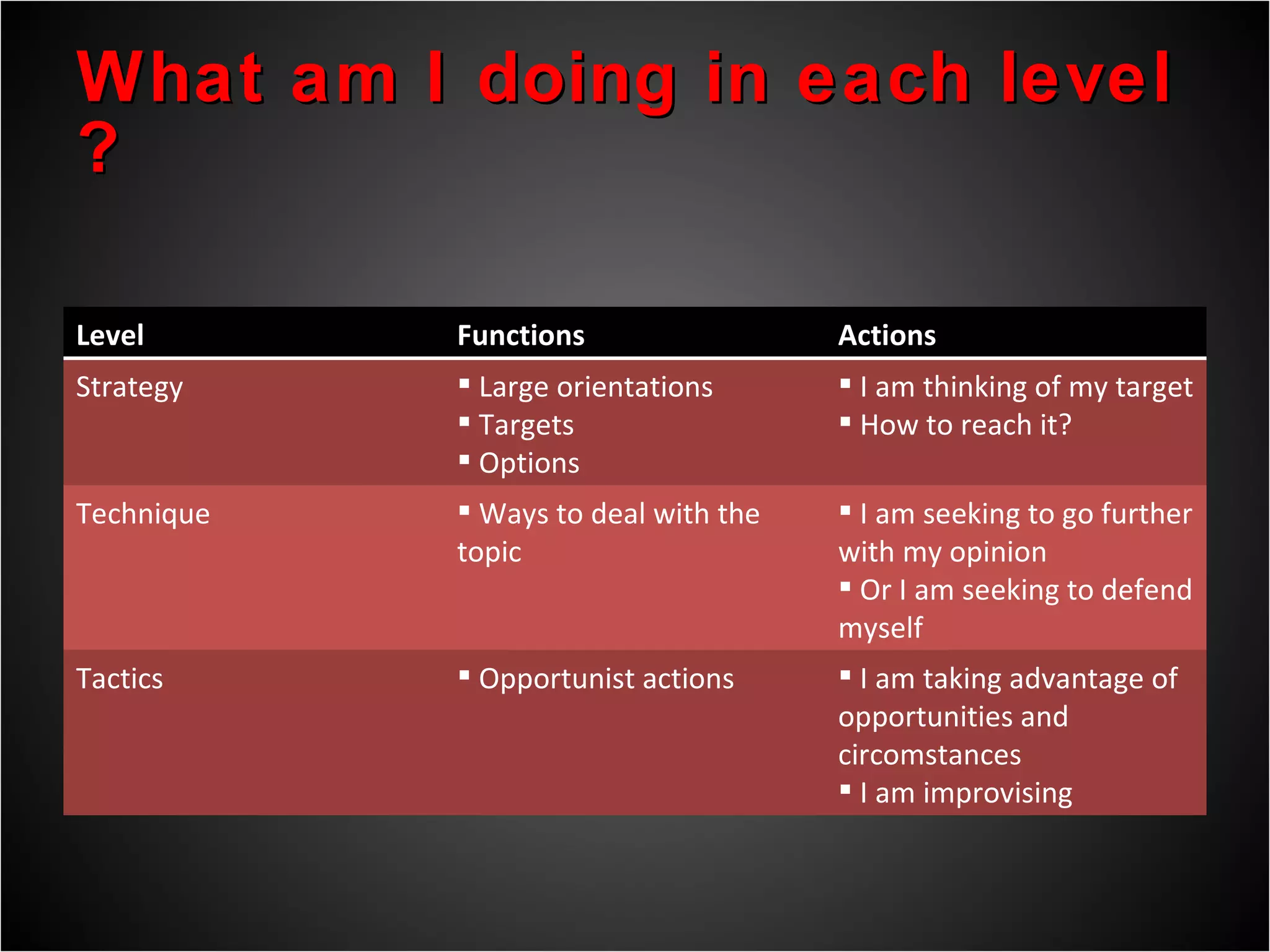
What am I doing in each level ?  Level Functions Actions Strategy Large orientations Targets Options I am thinking of my target How to reach it?  Technique Ways to deal with the topic I am seeking to go further with my opinion Or I am seeking to defend myself Tactics Opportunist actions I am taking advantage of opportunities and circomstances I am improvising
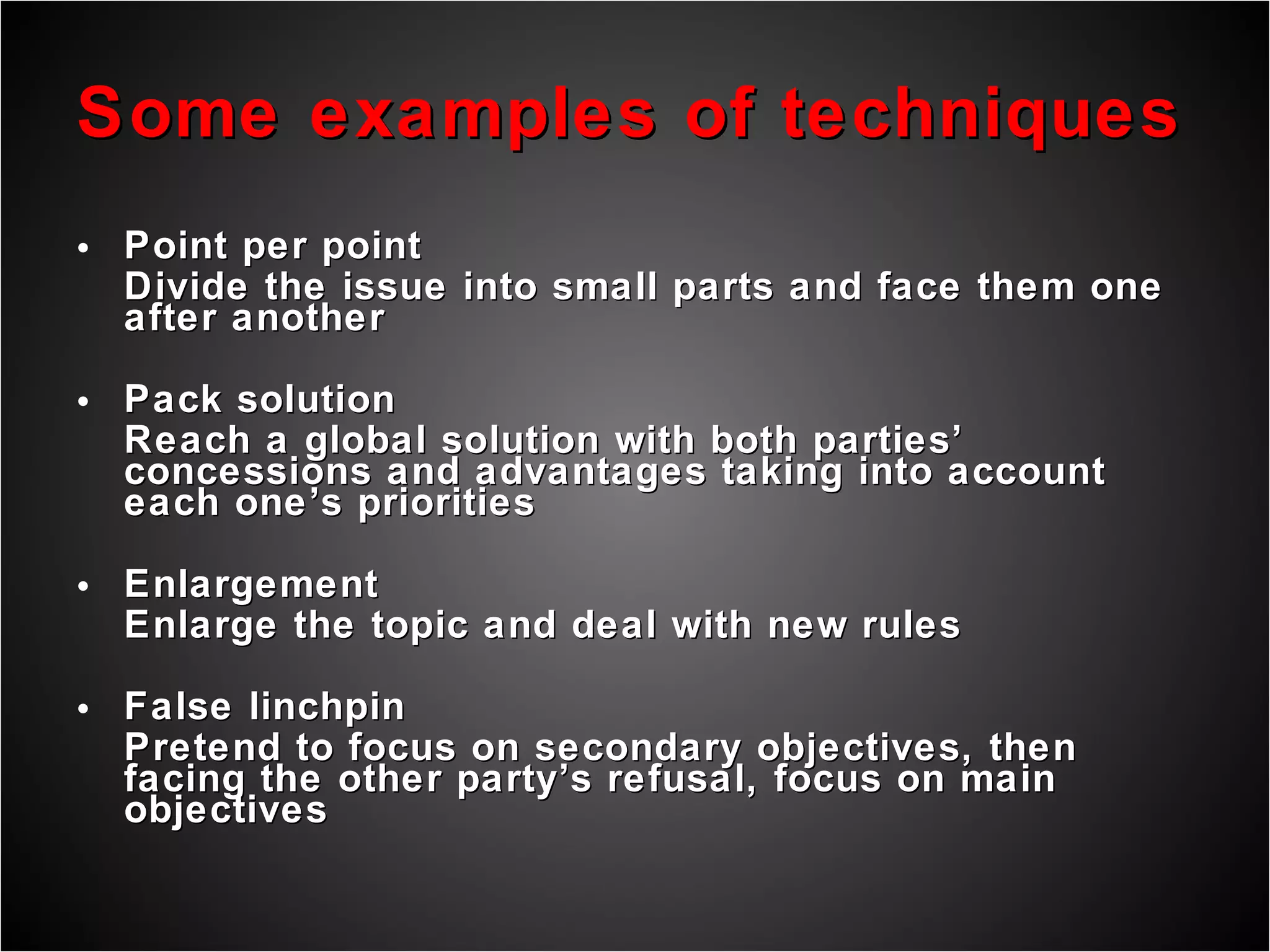
Some examples of techniques Point per point Divide the issue into small parts and face them one after another Pack solution Reach a global solution with both parties’ concessions and advantages taking into account each one’s priorities Enlargement Enlarge the topic and deal with new rules False linchpin Pretend to focus on secondary objectives, then facing the other party’s refusal, focus on main objectives
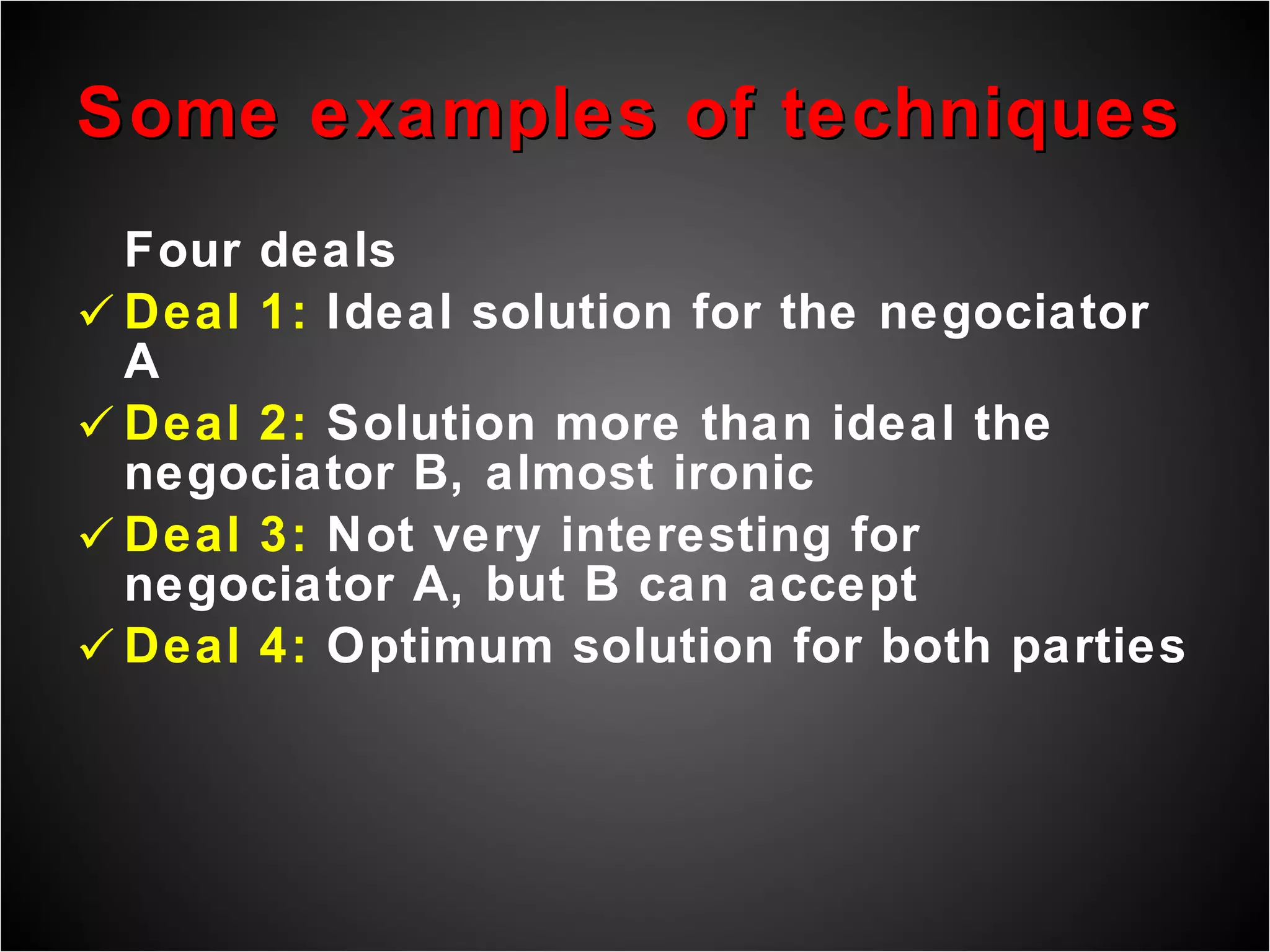
Some examples of techniques Four deals  Deal 1:  Ideal solution for the negociator A Deal 2:  Solution more than ideal the negociator B, almost ironic Deal 3:  Not very interesting for negociator A, but B can accept Deal 4:  Optimum solution for both parties
IN THE END…
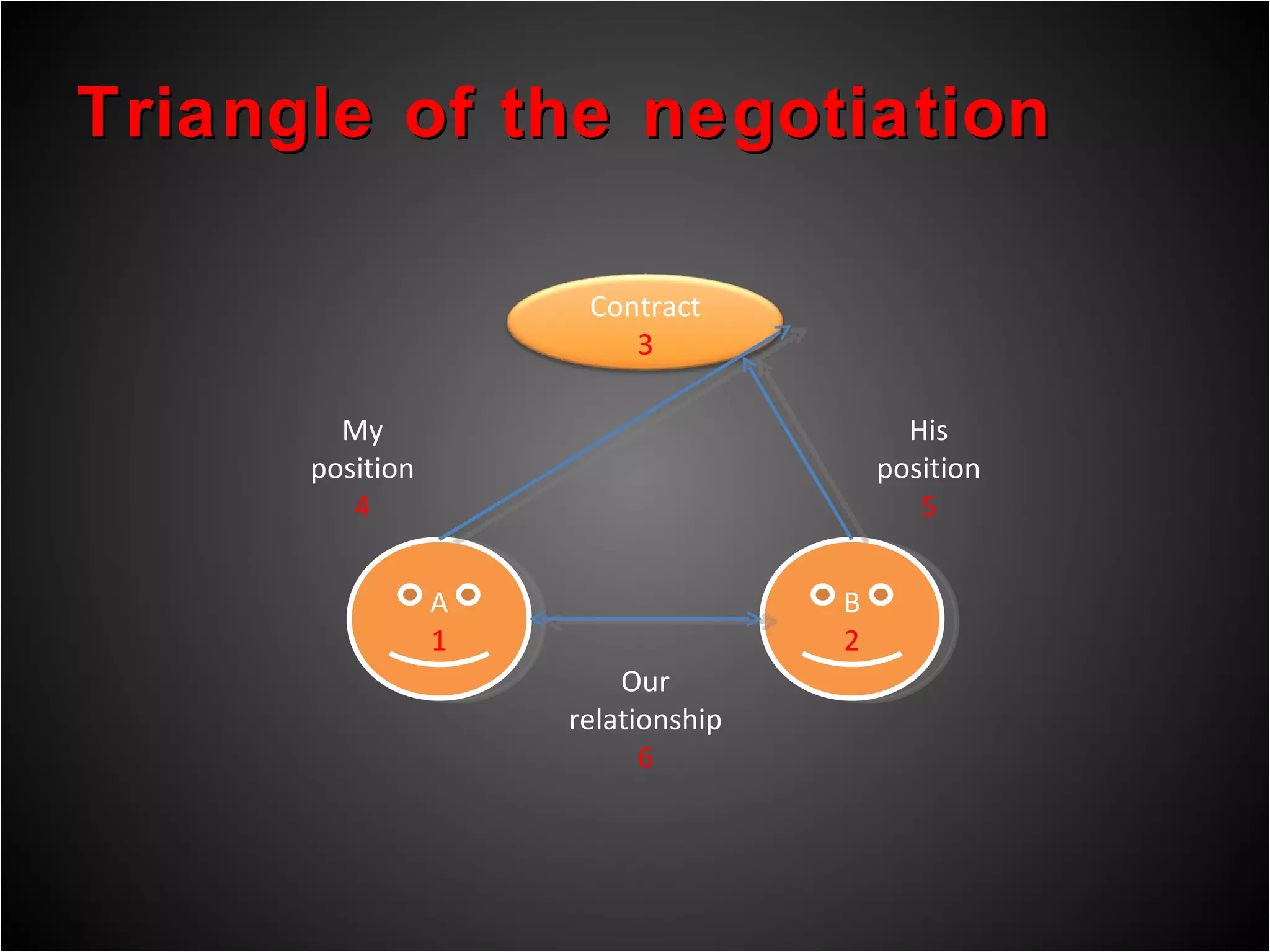
Triangle of the negotiation B 2 A 1 My position 4 His position 5 Our relationship 6 Contract 3
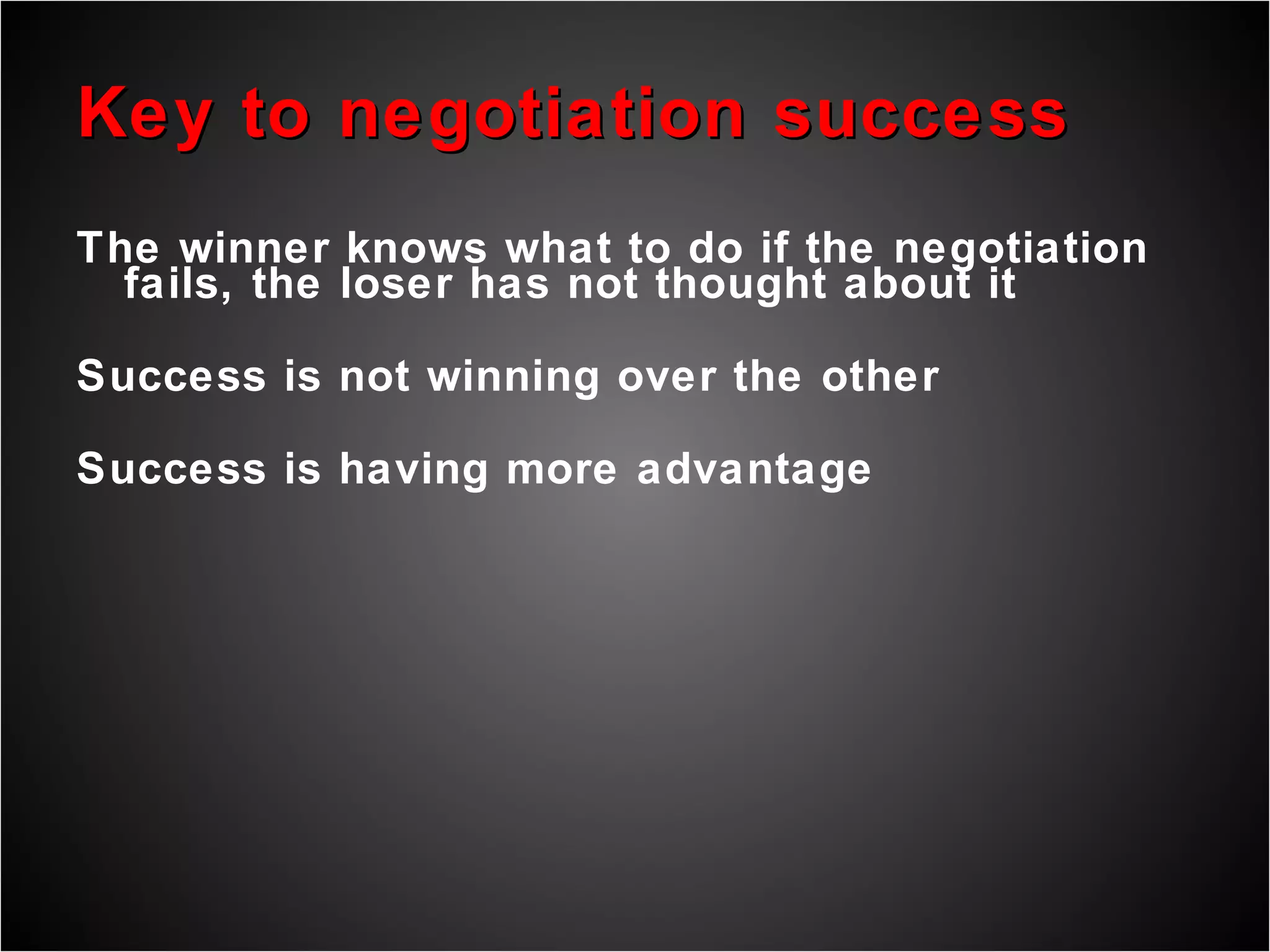
Key to negotiation success The winner knows what to do if the negotiation fails, the loser has not thought about it Success is not winning over the other Success is having more advantage
any questions? no? The F is for ... savings (thank you)

The final negotiation

  • 1.
    negotiation N Theis for ... claire huang 09KM904W justin jojo bello 08BN946R
  • 2.
    What? « Negotiating meansacting, making things change and evolve, exchanging, it is the opposite of inertia » DIMITRI WEISS
  • 3.
    Competition in negotiationis a power play… « I want to win, I will use all the ways to win; and I want you to lose » « The first one to speak is in a weak position » « We have to take advantage from the beginning » « The one who gives much information is in a weak position »
  • 4.
    approach of negotiationAdvocating approach attempts to obtain the most favorable outcome for that party Win / win approach looks at both parties interests and requirements and seeks mutual benefit New creative approach collaborating to produce results that go beyond win/win and win/lose factual knows all related information, covers all bases, provides information relational establish relationships, builds trust and perceives other party’s position intuitive unexpected solutions or approach, anticipates progress, sees big picture logical sets rules, develops an agenda, argues logically than emotionally, adapts
  • 5.
    interests Integrative: Deals with the needs and resources of the bargaining parties Distributive: Deals with positions and resources and how much each side wants Distinguish between positions and interests, both your own and the party with whom you are negotiating.
  • 6.
    process Preparation ofnegotiations set clear objectives anticipate claims and reactions of the other party develop strategy Discussion of the problem read and understand the problem listen and focus on the other party ask the right questions Propose solutions summarize, analyze, offer suggestions or solutions Negotiate a compromise keep your goals in mind make sure new proposals (concession) fit your limitations Finalization formulation of agreement preparation of implementation review the experience of the negotiation
  • 7.
    preparation Set objectivesParties frame the problem & recognize that they have a common problem that they share an interest in solving Anticipate Define the issues to be discussed and analyze the conflict situation Strategize Research and consultation with experts, prioritize their goals and positions and evaluate possible tradeoffs. identify the concerns, desires, and fears of the goals understand needs, know priorities, identify boundaries count resources, develop walk-away position
  • 8.
    discussion of problemRead and understand the problem Understand the problems and objectives of the other party. Without this understanding, you can not propose solutions. Listen and focus on the other party Familiarize yourself with the other party’s concerns, position and goals Ask the right questions Asking questions provides an opportunity to get more information and ensure that the given information is understood. Asking questions considers the arguments of the other party.
  • 9.
    solutions Propose solutionsIn order to propose solutions, you should be able to summarize what has been said, analyze the consequences, and be able to offer suggestions or solutions based on analysis.
  • 10.
    compromise Negotiating acompromise When beginning negotiations, always keep in mind your goals Whenever you make a new proposal (concession), you must make sure it fits within your limitations.
  • 11.
    conflict Types ofconflicts conflicts of interest conflicting needs conflicting views Styles of conflict management collaboration face-to-face cooperative challenge face-to-face non-cooperative acceptance non confrontational cooperative bypass non confrontational and non cooperative compromise incorporates elements of other styles
  • 12.
    agreement Finalization formulationof agreement all aspects have been accepted, in particular: dates for implementation, review , finalization, and the definition of terms preparation of implementation an agreement is managed once implemented. implementation programs are incorporated into the bargaining agreement which will define what needs to be done, when, and by whom review the experience of the negotiation after closing, lessons must be learned. What went wrong? What went well? What was learned? These lessons will help for the next negotiation
  • 13.
    strategies Prepare for:you and your team members defining the rules of the meeting submission of opinions on the issues to be addressed obtain a briefing on the views of the other party Decide: who will lead the discussion who will check the facts who asks questions who will answer questions from the other party who will reduce tension and show interest in others who will take notes Separate personality of the person and problem to solve Broaden your horizons. Do not be limited to one solution Look for a solution, not a confrontation Organize a constructive meeting
  • 14.
    A good negotiatormust be… Full of resources… Good negociators have to deal with a lot of information, which are evolving are uncertain Patient… Force the other party to adopt the own opinion is never a long term solution To attract the other in a common solution needs time, tolerance and persistance Stay strong and firm Full of resources Patient Stay strong and firm
  • 15.
  • 16.
    Which strategy? Strategy = sum of actions and orientations aimed at reaching set objectives Strategy = art to organize the war Tactics = means and methods Technique added in negotiation
  • 17.
    What am Idoing in each level ? Level Functions Actions Strategy Large orientations Targets Options I am thinking of my target How to reach it? Technique Ways to deal with the topic I am seeking to go further with my opinion Or I am seeking to defend myself Tactics Opportunist actions I am taking advantage of opportunities and circomstances I am improvising
  • 18.
    Some examples oftechniques Point per point Divide the issue into small parts and face them one after another Pack solution Reach a global solution with both parties’ concessions and advantages taking into account each one’s priorities Enlargement Enlarge the topic and deal with new rules False linchpin Pretend to focus on secondary objectives, then facing the other party’s refusal, focus on main objectives
  • 19.
    Some examples oftechniques Four deals Deal 1: Ideal solution for the negociator A Deal 2: Solution more than ideal the negociator B, almost ironic Deal 3: Not very interesting for negociator A, but B can accept Deal 4: Optimum solution for both parties
  • 20.
  • 21.
    Triangle of thenegotiation B 2 A 1 My position 4 His position 5 Our relationship 6 Contract 3
  • 22.
    Key to negotiationsuccess The winner knows what to do if the negotiation fails, the loser has not thought about it Success is not winning over the other Success is having more advantage
  • 23.
    any questions? no?The F is for ... savings (thank you)