
Chapter 11:
HOW PROFESSIONALS CAN
INCREASE MUTUAL TRUST
Strategies for developing and
maintaining trust
LEARNING OBJECTIVES
1. Discuss the role of trust in professional relationships
2. Identify determinants of trust in relationships using the CREDOS framework
3. Suggest strategies to develop and maintain trust in professional relationships
TRUST DEFINED
Trust between individuals is a crucial
component of strong professional
relationships
Trust is confidence in a partner’s…
Reliability
• Do you keep your promises?
• Are you consistent day in and out?
Integrity
• Do you act ethically?
• Do you act in the best interests of others?
Benefits of Trust
Partners are more likely to:
• Cooperate
• Communicate Effectively
• Engage in Productive Conflict
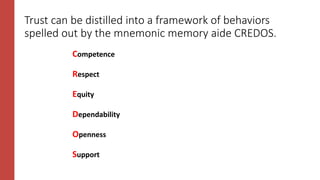
Trust can be distilled into a framework of behaviors
spelled out by the mnemonic memory aide CREDOS.
Competence
Respect
Equity
Dependability
Openness
Support
COMPETENCE
Ability of each partner to effectively fulfill expected role responsibilities
and obligations
In every relationship, you have roles
expected of you
Expectations vary depending on the type of
relationship and the individuals involved
To be seen as competent you must
1. identify what your partner expects of you
2. negotiate an agreement about expectations of competency
3. develop and consistently maintain competency
RESPECT
Treating individual with politeness, kindness, and admiration for their
personal qualities, achievements, or status
Respect
Acceptance
for diversity
Politeness
Not talking
behind
one’s back
Seeking to
understand
Assuming
good
intentions
Tolerance
Kindness
Honesty
Behaviors and approaches
associated with showing
respect for others
What is deemed as respectful behavior
varies on the relationship
Behaviors acceptable between friends or
classmates may be unacceptable between
coworkers or professionals
“Professionalism is displayed in the way pharmacists conduct themselves in
professional situations. This definition implies a demeanor that is created
through a combination of behaviors, including courtesy and politeness when
dealing with patients, peers, and other health care professionals. Pharmacists
should consistently display respect for others and maintain appropriate
boundaries of privacy and discretion.
Whether dealing with patients or interacting with others on a health care team,
it is important to possess and display an empathetic manner.”
(Chalmers, R.K., “Contemporary issues: professionalism in pharmacy,” Tomorrow’s Pharmacist, (March), 10-12(1997).)
The choice to respect
or disrespect
Every time we
interact with
people, we face a
choice
Treat a person as
a human being
with hopes,
problems, fears,
capabilities, and
weaknesses
Treat a person as
an object who is
in the way of what
you want to do or
accomplish
Leadership and Self-Deception: Getting Out of the Box. San Francisco: Berrett-Koehler, 2000.
respect or disrespect
MUSC Standards of Behavior
Adopting the 10/5 way –
• the idea is if you're within 10 feet of someone you're to acknowledge them
• And if you're within five feet of them, you're to say hello
You can show respect by treating your partner as a human
being
This seems obvious but some relationships degrade into
an us-versus-them perspective (e.g., employee versus
management)
Treat all of your partners, even adversaries, as human
beings
EQUITY
Being fair to partners
Types of equity, fairness, justice
Distributive – fairness in what people receive, in terms of workload,
money, attention, & other desirable things; My salary is the same as
yours.
Procedural – fairness in the procedures used to distribute desirable
things, as in the idea of fair play; Your salary is more than mine because
your are my boss and bosses have additional responsibilities and
concerns.
To be seen as fair you should:
1. Agree upon “fair” procedures (as early as possible – try not to wait
until a conflict arises)
2. Agree upon “fair” outcomes (as early as possible)
3. Respectfully work out disagreements as they come up
Also realize….
What we perceive is fair is not typically
objective and it revolves around our own
self-interest, biases, and personal values
DEPENDABILITY (RELIABILITY)
Consistent behavior day-after-day
Dependability requires that promises be
kept, no matter how small, and that tasks
are completed when promised
Excuses are inadequate to prevent broken trust. Each
excuse chips away at trust between partners.
Common excuses that damage trust
1. You never told me to do that
2. I did not understand what you wanted
3. I forgot
4. I don’t know how
5. That's not my job
OPENNESS
A way of communicating in which partners are transparent and do not
hide things
Being open requires judgment about what information to share and
what to keep confidential.
Rule of thumb:
• Keep individuals informed when information affects their job or life
(e.g., “There may be layoffs coming.”)
• Do not share when it doesn’t (e.g., gossip)
• If there is a disagreement about what needs to be shared, have a
two-way conversation about it
SUPPORT
When people show approval for their partners and help them to be
successful
How does support differ from respect?
• Respect is a feeling of admiration that is shown by behaviors. The goal of
behaviors is to make it clear that a partner is respected.
• Support is to act in ways that enhance a partner’s ability to be successful. The
goal is to give them help and approval necessary to succeed.
Summary
Trust is essential for developing committed relationships
The CREDOS Framework helps you diagnose the extent and strength of
trust
And suggest strategies for increasing trust

How professionals can increase mutual trust

  • 1.
    Chapter 11: HOW PROFESSIONALSCAN INCREASE MUTUAL TRUST Strategies for developing and maintaining trust
  • 2.
    LEARNING OBJECTIVES 1. Discussthe role of trust in professional relationships 2. Identify determinants of trust in relationships using the CREDOS framework 3. Suggest strategies to develop and maintain trust in professional relationships
  • 3.
  • 4.
    Trust between individualsis a crucial component of strong professional relationships
  • 5.
    Trust is confidencein a partner’s… Reliability • Do you keep your promises? • Are you consistent day in and out? Integrity • Do you act ethically? • Do you act in the best interests of others?
  • 6.
    Benefits of Trust Partnersare more likely to: • Cooperate • Communicate Effectively • Engage in Productive Conflict
  • 7.
    Trust can bedistilled into a framework of behaviors spelled out by the mnemonic memory aide CREDOS. Competence Respect Equity Dependability Openness Support
  • 8.
    COMPETENCE Ability of eachpartner to effectively fulfill expected role responsibilities and obligations
  • 9.
    In every relationship,you have roles expected of you Expectations vary depending on the type of relationship and the individuals involved
  • 10.
    To be seenas competent you must 1. identify what your partner expects of you 2. negotiate an agreement about expectations of competency 3. develop and consistently maintain competency
  • 11.
    RESPECT Treating individual withpoliteness, kindness, and admiration for their personal qualities, achievements, or status
  • 12.
    Respect Acceptance for diversity Politeness Not talking behind one’sback Seeking to understand Assuming good intentions Tolerance Kindness Honesty Behaviors and approaches associated with showing respect for others
  • 13.
    What is deemedas respectful behavior varies on the relationship Behaviors acceptable between friends or classmates may be unacceptable between coworkers or professionals
  • 14.
    “Professionalism is displayedin the way pharmacists conduct themselves in professional situations. This definition implies a demeanor that is created through a combination of behaviors, including courtesy and politeness when dealing with patients, peers, and other health care professionals. Pharmacists should consistently display respect for others and maintain appropriate boundaries of privacy and discretion. Whether dealing with patients or interacting with others on a health care team, it is important to possess and display an empathetic manner.” (Chalmers, R.K., “Contemporary issues: professionalism in pharmacy,” Tomorrow’s Pharmacist, (March), 10-12(1997).)
  • 15.
    The choice torespect or disrespect Every time we interact with people, we face a choice Treat a person as a human being with hopes, problems, fears, capabilities, and weaknesses Treat a person as an object who is in the way of what you want to do or accomplish Leadership and Self-Deception: Getting Out of the Box. San Francisco: Berrett-Koehler, 2000. respect or disrespect
  • 16.
    MUSC Standards ofBehavior Adopting the 10/5 way – • the idea is if you're within 10 feet of someone you're to acknowledge them • And if you're within five feet of them, you're to say hello
  • 17.
    You can showrespect by treating your partner as a human being This seems obvious but some relationships degrade into an us-versus-them perspective (e.g., employee versus management) Treat all of your partners, even adversaries, as human beings
  • 18.
  • 19.
    Types of equity,fairness, justice Distributive – fairness in what people receive, in terms of workload, money, attention, & other desirable things; My salary is the same as yours. Procedural – fairness in the procedures used to distribute desirable things, as in the idea of fair play; Your salary is more than mine because your are my boss and bosses have additional responsibilities and concerns.
  • 20.
    To be seenas fair you should: 1. Agree upon “fair” procedures (as early as possible – try not to wait until a conflict arises) 2. Agree upon “fair” outcomes (as early as possible) 3. Respectfully work out disagreements as they come up
  • 21.
    Also realize…. What weperceive is fair is not typically objective and it revolves around our own self-interest, biases, and personal values
  • 22.
  • 23.
    Dependability requires thatpromises be kept, no matter how small, and that tasks are completed when promised
  • 24.
    Excuses are inadequateto prevent broken trust. Each excuse chips away at trust between partners. Common excuses that damage trust 1. You never told me to do that 2. I did not understand what you wanted 3. I forgot 4. I don’t know how 5. That's not my job
  • 25.
    OPENNESS A way ofcommunicating in which partners are transparent and do not hide things
  • 26.
    Being open requiresjudgment about what information to share and what to keep confidential. Rule of thumb: • Keep individuals informed when information affects their job or life (e.g., “There may be layoffs coming.”) • Do not share when it doesn’t (e.g., gossip) • If there is a disagreement about what needs to be shared, have a two-way conversation about it
  • 27.
    SUPPORT When people showapproval for their partners and help them to be successful
  • 28.
    How does supportdiffer from respect? • Respect is a feeling of admiration that is shown by behaviors. The goal of behaviors is to make it clear that a partner is respected. • Support is to act in ways that enhance a partner’s ability to be successful. The goal is to give them help and approval necessary to succeed.
  • 29.
    Summary Trust is essentialfor developing committed relationships The CREDOS Framework helps you diagnose the extent and strength of trust And suggest strategies for increasing trust

Editor's Notes

  • #6 Non-opportunistic