



Chapter 3:
Situational Leadership
Best Leadership Style? It Depends.
Job interview question. What do you
say to “What is your leadership style?”
LEARNING OBJECTIVES
1. Describe what is situational leadership
2. Explain the primary situational variables that influence what leadership styles to
employ
3. Compare how directive and supportive behaviors differ
4. Define six basic leadership styles that are applied in situational leadership
5. Contrast the relative effectiveness of each of the six leadership styles in different
situations
6. Describe the characteristics of adaptive leadership
7. Make a case for developing multiple leadership styles in leading change in pharmacy
practice
WHAT IS SITUATIONAL LEADERSHIP?
Situational leadership is a group of theories that
highlight the role of context in effective leadership.
According to these theories, the greatest predictor of
leadership effectiveness and success is the situation
faced by leaders and how leaders react to those
situations
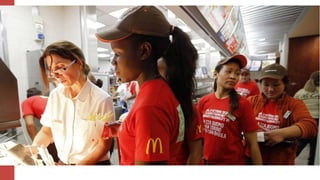
SITUATIONS
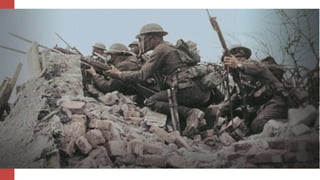
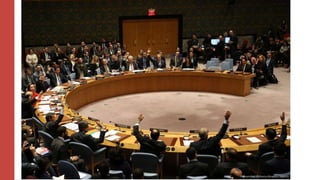
The following pictures illustrate a situations that might require vastly
different behaviors by leaders.
Behaviors that might be wildly successful in one
situation might be catastrophic in others
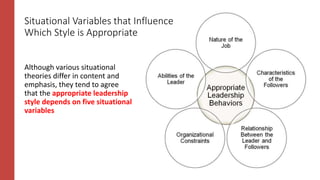
Although various situational
theories differ in content and
emphasis, they tend to agree
that the appropriate leadership
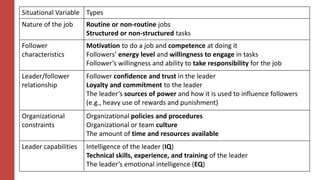
style depends on five situational
variables
Situational Variables that Influence
Which Style is Appropriate
Situational Variable Types
Nature of the job Routine or non-routine jobs
Structured or non-structured tasks
Follower
characteristics
Motivation to do a job and competence at doing it
Followers’ energy level and willingness to engage in tasks
Follower’s willingness and ability to take responsibility for the job
Leader/follower
relationship
Follower confidence and trust in the leader
Loyalty and commitment to the leader
The leader’s sources of power and how it is used to influence followers
(e.g., heavy use of rewards and punishment)
Organizational
constraints
Organizational policies and procedures
Organizational or team culture
The amount of time and resources available
Leader capabilities Intelligence of the leader (IQ)
Technical skills, experience, and training of the leader
The leader’s emotional intelligence (EQ)
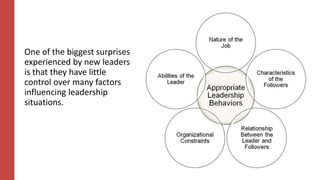
One of the biggest surprises
experienced by new leaders
is that they have little
control over many factors
influencing leadership
situations.
Rather than being able to change the situation, they
need to adapt their leadership to the circumstances.
Otherwise failure will occur.
STYLES OF LEADERSHIP
Google “leadership style”
What did you find?
How many leadership styles are there?
What theories are situational?
You probably found between 3 and 10 leadership
styles and numerous situational theories
Leadership styles are patterns of behavior adopted
by a leader to influence change
Leadership theories differ on what patterns they
consider most important
Styles differ based upon how they direct and
motivate people, and by the types of relationships
they have with team members
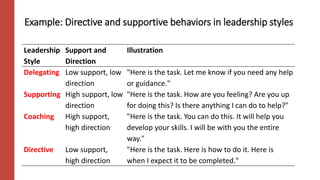
Example: Directive and supportive behaviors in leadership styles
Leadership
Style
Support and
Direction
Illustration
Delegating Low support, low
direction
"Here is the task. Let me know if you need any help
or guidance."
Supporting High support, low
direction
"Here is the task. How are you feeling? Are you up
for doing this? Is there anything I can do to help?"
Coaching High support,
high direction
"Here is the task. You can do this. It will help you
develop your skills. I will be with you the entire
way."
Directive Low support,
high direction
"Here is the task. Here is how to do it. Here is
when I expect it to be completed."
When you compare leadership frameworks, you
see similarities between them although they
might use different terms for the same concepts
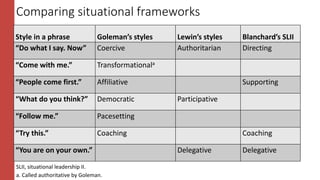
Style in a phrase Goleman’s styles Lewin’s styles Blanchard’s SLII
“Do what I say. Now” Coercive Authoritarian Directing
“Come with me.” Transformationala
“People come first.” Affiliative Supporting
“What do you think?” Democratic Participative
“Follow me.” Pacesetting
“Try this.” Coaching Coaching
“You are on your own.” Delegative Delegative
Comparing situational frameworks
SLII, situational leadership II.
a. Called authoritative by Goleman.
GOLEMAN’S SIX BASIC STYLES OF
LEADERSHIP
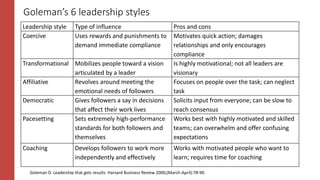
Goleman’s 6 leadership styles
Leadership style Type of influence Pros and cons
Coercive Uses rewards and punishments to
demand immediate compliance
Motivates quick action; damages
relationships and only encourages
compliance
Transformational Mobilizes people toward a vision
articulated by a leader
Is highly motivational; not all leaders are
visionary
Affiliative Revolves around meeting the
emotional needs of followers
Focuses on people over the task; can neglect
task
Democratic Gives followers a say in decisions
that affect their work lives
Solicits input from everyone; can be slow to
reach consensus
Pacesetting Sets extremely high-performance
standards for both followers and
themselves
Works best with highly motivated and skilled
teams; can overwhelm and offer confusing
expectations
Coaching Develops followers to work more
independently and effectively
Works with motivated people who want to
learn; requires time for coaching
Goleman D. Leadership that gets results. Harvard Business Review 2000;(March-April):78-90.
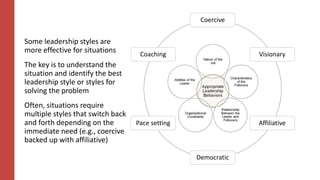
Coercive
Visionary
Affiliative
Democratic
Pace setting
Coaching
Some leadership styles are
more effective for situations
The key is to understand the
situation and identify the best
leadership style or styles for
solving the problem
Often, situations require
multiple styles that switch back
and forth depending on the
immediate need (e.g., coercive
backed up with affiliative)
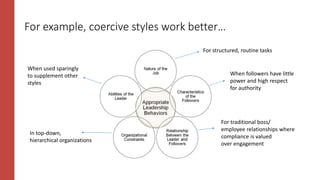
For example, coercive styles work better…
When followers have little
power and high respect
for authority
In top-down,
hierarchical organizations
For traditional boss/
employee relationships where
compliance is valued
over engagement
For structured, routine tasks
When used sparingly
to supplement other
styles
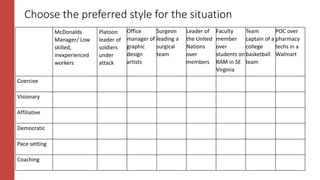
McDonalds
Manager/ Low
skilled,
inexperienced
workers
Platoon
leader of
soldiers
under
attack
Office
manager of
graphic
design
artists
Surgeon
leading a
surgical
team
Leader of
the United
Nations
over
members
Faculty
member
over
students on
RAM in SE
Virginia
Team
captain of a
college
basketball
team
POC over
pharmacy
techs in a
Walmart
Coercive
Visionary
Affiliative
Democratic
Pace setting
Coaching
Choose the preferred style for the situation
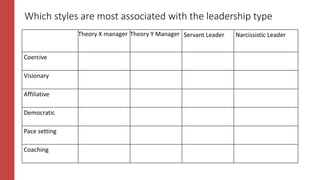
Which styles are most associated with the leadership type
Theory X manager Theory Y Manager Servant Leader Narcissistic Leader
Coercive
Visionary
Affiliative
Democratic
Pace setting
Coaching
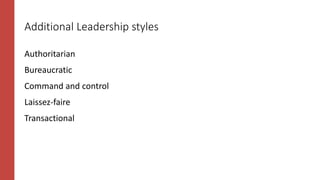
Additional Leadership styles
Authoritarian
Bureaucratic
Command and control
Laissez-faire
Transactional
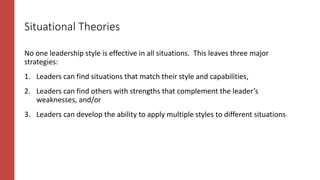
Situational Theories
No one leadership style is effective in all situations. This leaves three major
strategies:
1. Leaders can find situations that match their style and capabilities,
2. Leaders can find others with strengths that complement the leader’s
weaknesses, and/or
3. Leaders can develop the ability to apply multiple styles to different situations
ADAPTIVE LEADERSHIP (New and upcoming)
Leadership as a process, not the application of styles
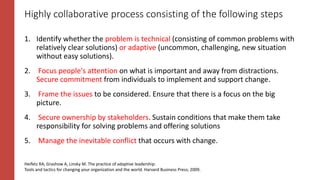
Highly collaborative process consisting of the following steps
1. Identify whether the problem is technical (consisting of common problems with
relatively clear solutions) or adaptive (uncommon, challenging, new situation
without easy solutions).
2. Focus people's attention on what is important and away from distractions.
Secure commitment from individuals to implement and support change.
3. Frame the issues to be considered. Ensure that there is a focus on the big
picture.
4. Secure ownership by stakeholders. Sustain conditions that make them take
responsibility for solving problems and offering solutions
5. Manage the inevitable conflict that occurs with change.
Heifetz RA, Grashow A, Linsky M. The practice of adaptive leadership:
Tools and tactics for changing your organization and the world. Harvard Business Press; 2009.
Summary
If you only have one leadership style, you are limited to how well you
can adapt to situations
Ability to read a situation and apply the right style is critical for
successful leadership

Situational leadership

  • 1.
    Chapter 3: Situational Leadership BestLeadership Style? It Depends.
  • 2.
    Job interview question.What do you say to “What is your leadership style?”
  • 3.
    LEARNING OBJECTIVES 1. Describewhat is situational leadership 2. Explain the primary situational variables that influence what leadership styles to employ 3. Compare how directive and supportive behaviors differ 4. Define six basic leadership styles that are applied in situational leadership 5. Contrast the relative effectiveness of each of the six leadership styles in different situations 6. Describe the characteristics of adaptive leadership 7. Make a case for developing multiple leadership styles in leading change in pharmacy practice
  • 4.
  • 5.
    Situational leadership isa group of theories that highlight the role of context in effective leadership.
  • 6.
    According to thesetheories, the greatest predictor of leadership effectiveness and success is the situation faced by leaders and how leaders react to those situations
  • 7.
    SITUATIONS The following picturesillustrate a situations that might require vastly different behaviors by leaders.
  • 15.
    Behaviors that mightbe wildly successful in one situation might be catastrophic in others
  • 16.
    Although various situational theoriesdiffer in content and emphasis, they tend to agree that the appropriate leadership style depends on five situational variables Situational Variables that Influence Which Style is Appropriate
  • 17.
    Situational Variable Types Natureof the job Routine or non-routine jobs Structured or non-structured tasks Follower characteristics Motivation to do a job and competence at doing it Followers’ energy level and willingness to engage in tasks Follower’s willingness and ability to take responsibility for the job Leader/follower relationship Follower confidence and trust in the leader Loyalty and commitment to the leader The leader’s sources of power and how it is used to influence followers (e.g., heavy use of rewards and punishment) Organizational constraints Organizational policies and procedures Organizational or team culture The amount of time and resources available Leader capabilities Intelligence of the leader (IQ) Technical skills, experience, and training of the leader The leader’s emotional intelligence (EQ)
  • 18.
    One of thebiggest surprises experienced by new leaders is that they have little control over many factors influencing leadership situations.
  • 19.
    Rather than beingable to change the situation, they need to adapt their leadership to the circumstances. Otherwise failure will occur.
  • 20.
  • 21.
  • 22.
    What did youfind? How many leadership styles are there? What theories are situational?
  • 23.
    You probably foundbetween 3 and 10 leadership styles and numerous situational theories
  • 24.
    Leadership styles arepatterns of behavior adopted by a leader to influence change Leadership theories differ on what patterns they consider most important
  • 25.
    Styles differ basedupon how they direct and motivate people, and by the types of relationships they have with team members
  • 26.
    Example: Directive andsupportive behaviors in leadership styles Leadership Style Support and Direction Illustration Delegating Low support, low direction "Here is the task. Let me know if you need any help or guidance." Supporting High support, low direction "Here is the task. How are you feeling? Are you up for doing this? Is there anything I can do to help?" Coaching High support, high direction "Here is the task. You can do this. It will help you develop your skills. I will be with you the entire way." Directive Low support, high direction "Here is the task. Here is how to do it. Here is when I expect it to be completed."
  • 27.
    When you compareleadership frameworks, you see similarities between them although they might use different terms for the same concepts
  • 28.
    Style in aphrase Goleman’s styles Lewin’s styles Blanchard’s SLII “Do what I say. Now” Coercive Authoritarian Directing “Come with me.” Transformationala “People come first.” Affiliative Supporting “What do you think?” Democratic Participative “Follow me.” Pacesetting “Try this.” Coaching Coaching “You are on your own.” Delegative Delegative Comparing situational frameworks SLII, situational leadership II. a. Called authoritative by Goleman.
  • 29.
    GOLEMAN’S SIX BASICSTYLES OF LEADERSHIP
  • 30.
    Goleman’s 6 leadershipstyles Leadership style Type of influence Pros and cons Coercive Uses rewards and punishments to demand immediate compliance Motivates quick action; damages relationships and only encourages compliance Transformational Mobilizes people toward a vision articulated by a leader Is highly motivational; not all leaders are visionary Affiliative Revolves around meeting the emotional needs of followers Focuses on people over the task; can neglect task Democratic Gives followers a say in decisions that affect their work lives Solicits input from everyone; can be slow to reach consensus Pacesetting Sets extremely high-performance standards for both followers and themselves Works best with highly motivated and skilled teams; can overwhelm and offer confusing expectations Coaching Develops followers to work more independently and effectively Works with motivated people who want to learn; requires time for coaching Goleman D. Leadership that gets results. Harvard Business Review 2000;(March-April):78-90.
  • 31.
    Coercive Visionary Affiliative Democratic Pace setting Coaching Some leadershipstyles are more effective for situations The key is to understand the situation and identify the best leadership style or styles for solving the problem Often, situations require multiple styles that switch back and forth depending on the immediate need (e.g., coercive backed up with affiliative)
  • 32.
    For example, coercivestyles work better… When followers have little power and high respect for authority In top-down, hierarchical organizations For traditional boss/ employee relationships where compliance is valued over engagement For structured, routine tasks When used sparingly to supplement other styles
  • 33.
    McDonalds Manager/ Low skilled, inexperienced workers Platoon leader of soldiers under attack Office managerof graphic design artists Surgeon leading a surgical team Leader of the United Nations over members Faculty member over students on RAM in SE Virginia Team captain of a college basketball team POC over pharmacy techs in a Walmart Coercive Visionary Affiliative Democratic Pace setting Coaching Choose the preferred style for the situation
  • 34.
    Which styles aremost associated with the leadership type Theory X manager Theory Y Manager Servant Leader Narcissistic Leader Coercive Visionary Affiliative Democratic Pace setting Coaching
  • 35.
  • 36.
    Situational Theories No oneleadership style is effective in all situations. This leaves three major strategies: 1. Leaders can find situations that match their style and capabilities, 2. Leaders can find others with strengths that complement the leader’s weaknesses, and/or 3. Leaders can develop the ability to apply multiple styles to different situations
  • 37.
    ADAPTIVE LEADERSHIP (Newand upcoming) Leadership as a process, not the application of styles
  • 38.
    Highly collaborative processconsisting of the following steps 1. Identify whether the problem is technical (consisting of common problems with relatively clear solutions) or adaptive (uncommon, challenging, new situation without easy solutions). 2. Focus people's attention on what is important and away from distractions. Secure commitment from individuals to implement and support change. 3. Frame the issues to be considered. Ensure that there is a focus on the big picture. 4. Secure ownership by stakeholders. Sustain conditions that make them take responsibility for solving problems and offering solutions 5. Manage the inevitable conflict that occurs with change. Heifetz RA, Grashow A, Linsky M. The practice of adaptive leadership: Tools and tactics for changing your organization and the world. Harvard Business Press; 2009.
  • 39.
    Summary If you onlyhave one leadership style, you are limited to how well you can adapt to situations Ability to read a situation and apply the right style is critical for successful leadership