INTRODUCTION TO MARKETING
DAVID HOLDFORD, R.PH., M.S., PH.D.
PROFESSOR, VIRGINIA COMMONWEALTH
UNIVERSITY SCHOOL OF PHARMACY
The First Steps to Making a Difference in Pharmacy
Practice
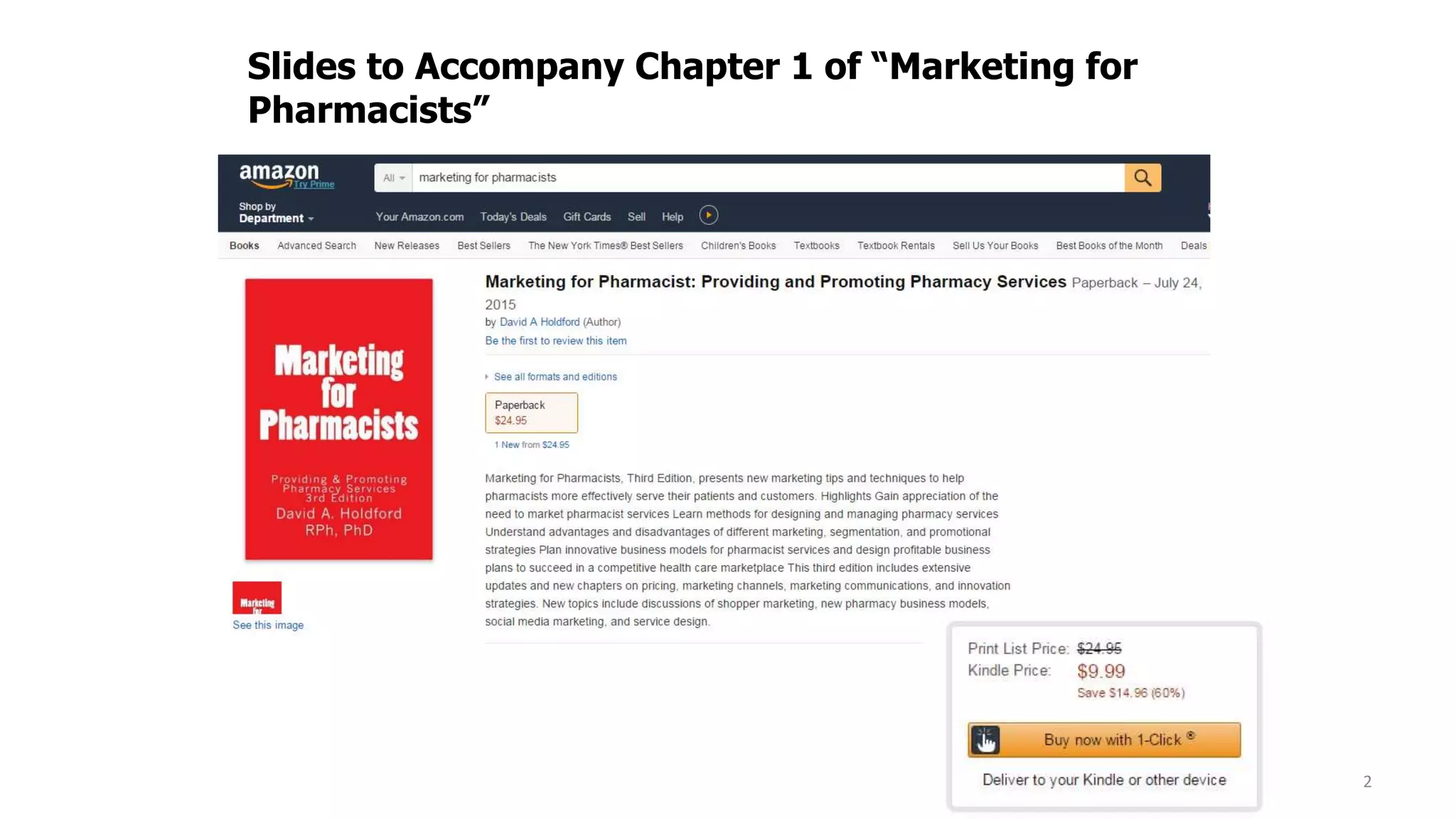
Slides to Accompany Chapter 1 of “Marketing for
Pharmacists”
2
Learning Objectives
Define the term “marketing”
Explain what it means to have a marketing mindset
Contrast transactional marketing with relationship marketing
Discuss some misconceptions surrounding the concept of marketing
Suggest reasons why pharmacists need to market themselves and their services
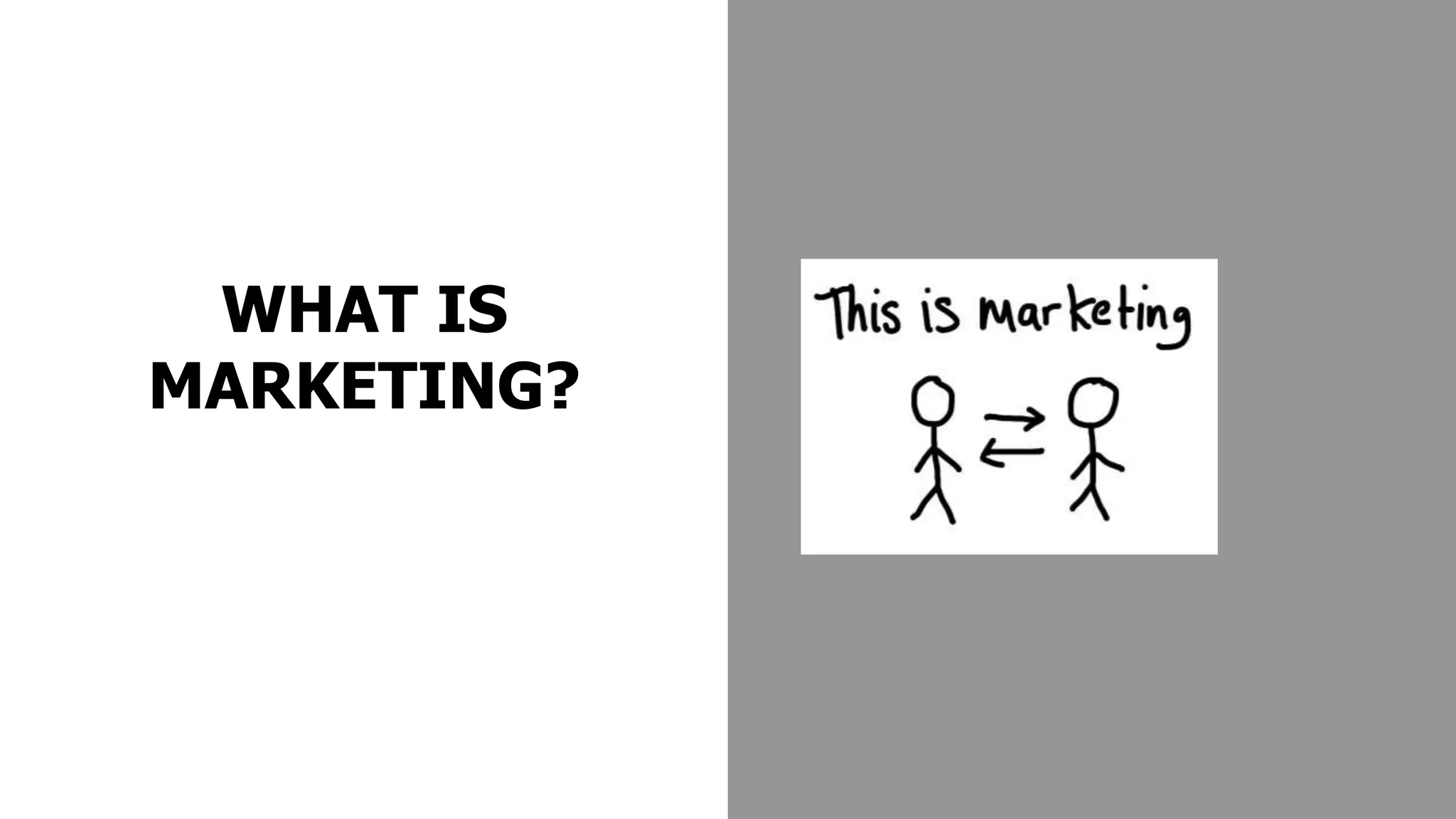
WHAT IS MARKETING?
WHAT IS
MARKETING?
Marketing is about solving problems
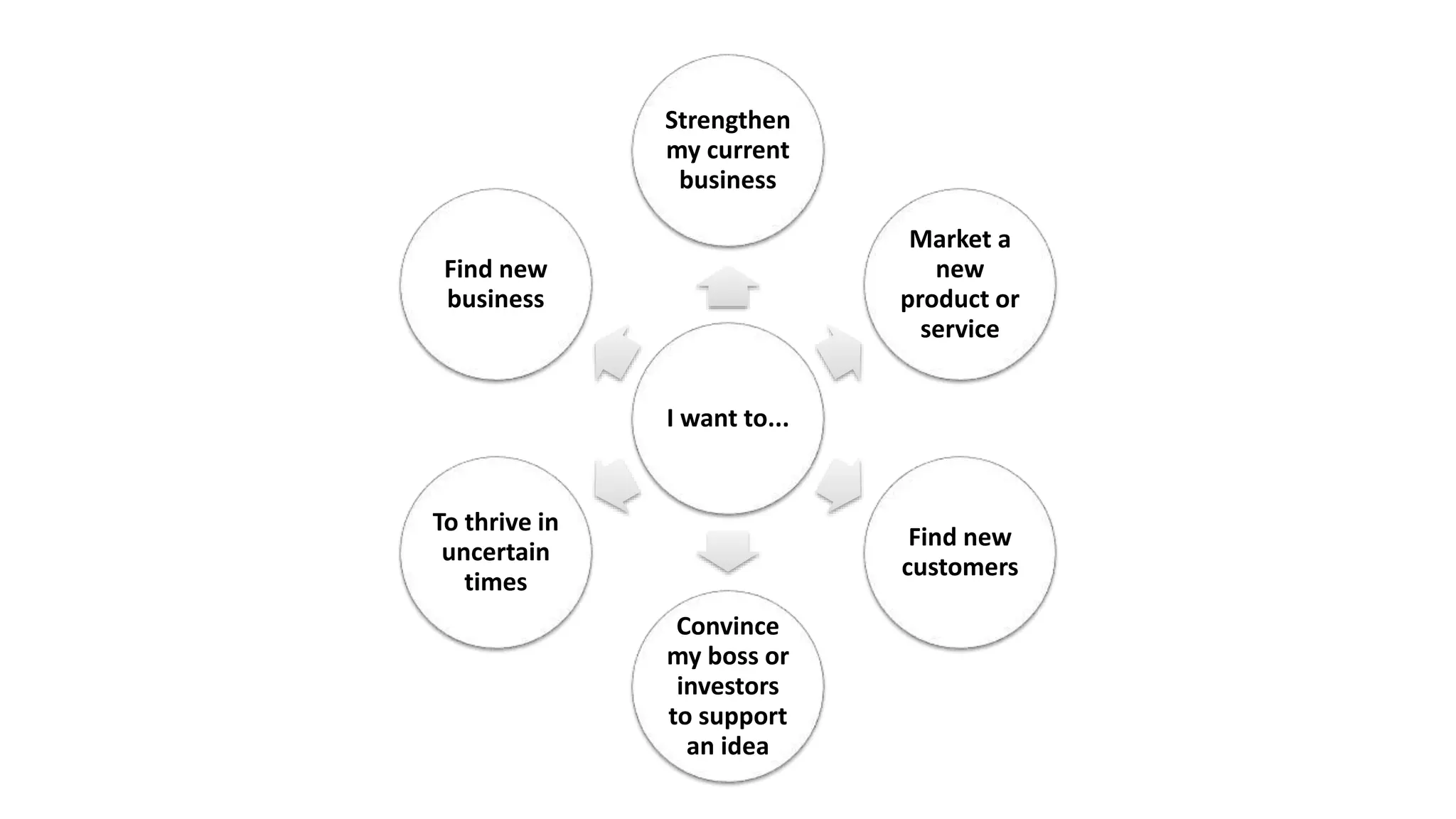
I want to...
Strengthen
my current
business
Market a
new
product or
service
Find new
customers
Convince
my boss or
investors
to support
an idea
To thrive in
uncertain
times
Find new
business
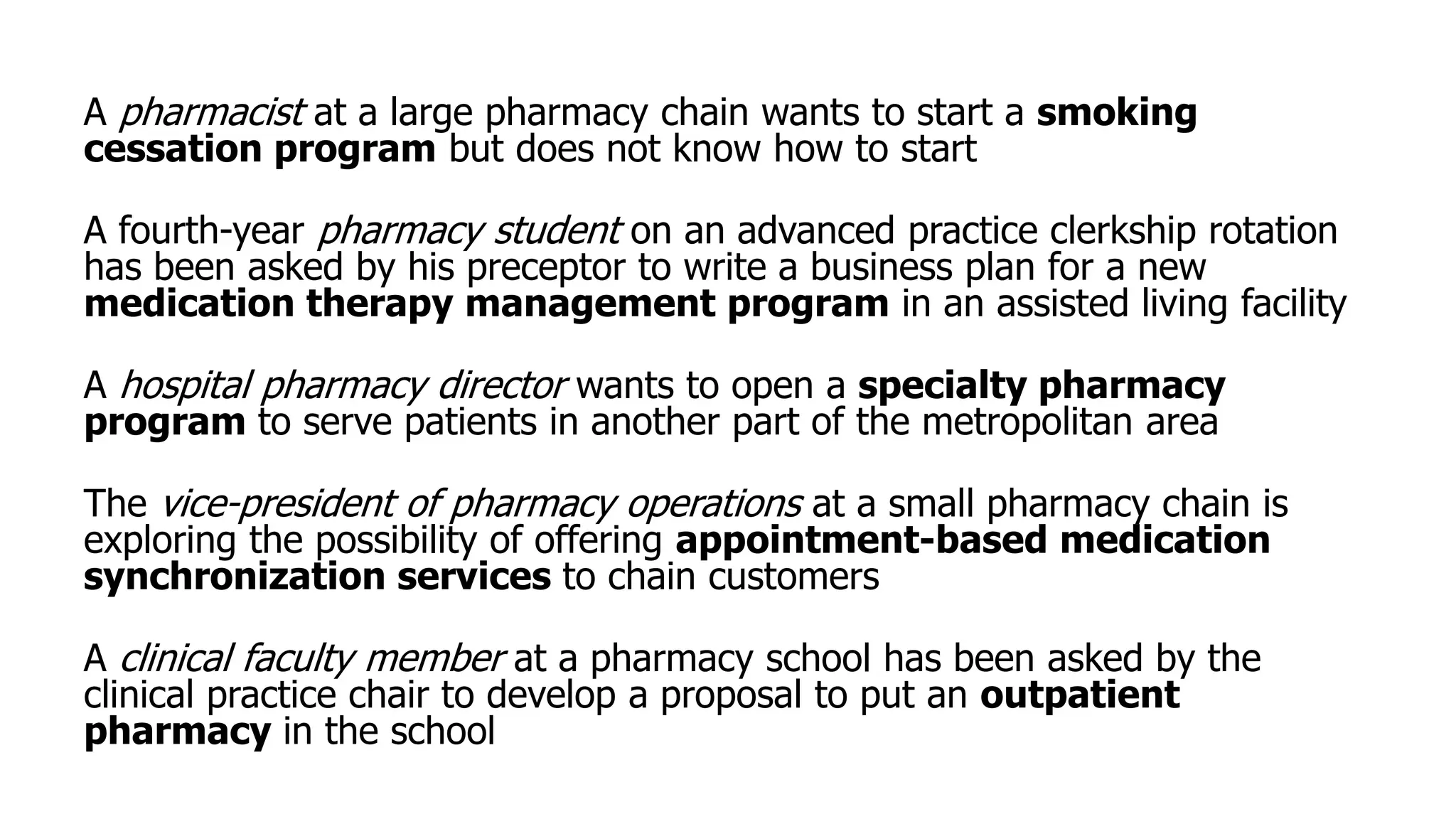
A pharmacist at a large pharmacy chain wants to start a smoking
cessation program but does not know how to start
A fourth-year pharmacy student on an advanced practice clerkship rotation
has been asked by his preceptor to write a business plan for a new
medication therapy management program in an assisted living facility
A hospital pharmacy director wants to open a specialty pharmacy
program to serve patients in another part of the metropolitan area
The vice-president of pharmacy operations at a small pharmacy chain is
exploring the possibility of offering appointment-based medication
synchronization services to chain customers
A clinical faculty member at a pharmacy school has been asked by the
clinical practice chair to develop a proposal to put an outpatient
pharmacy in the school
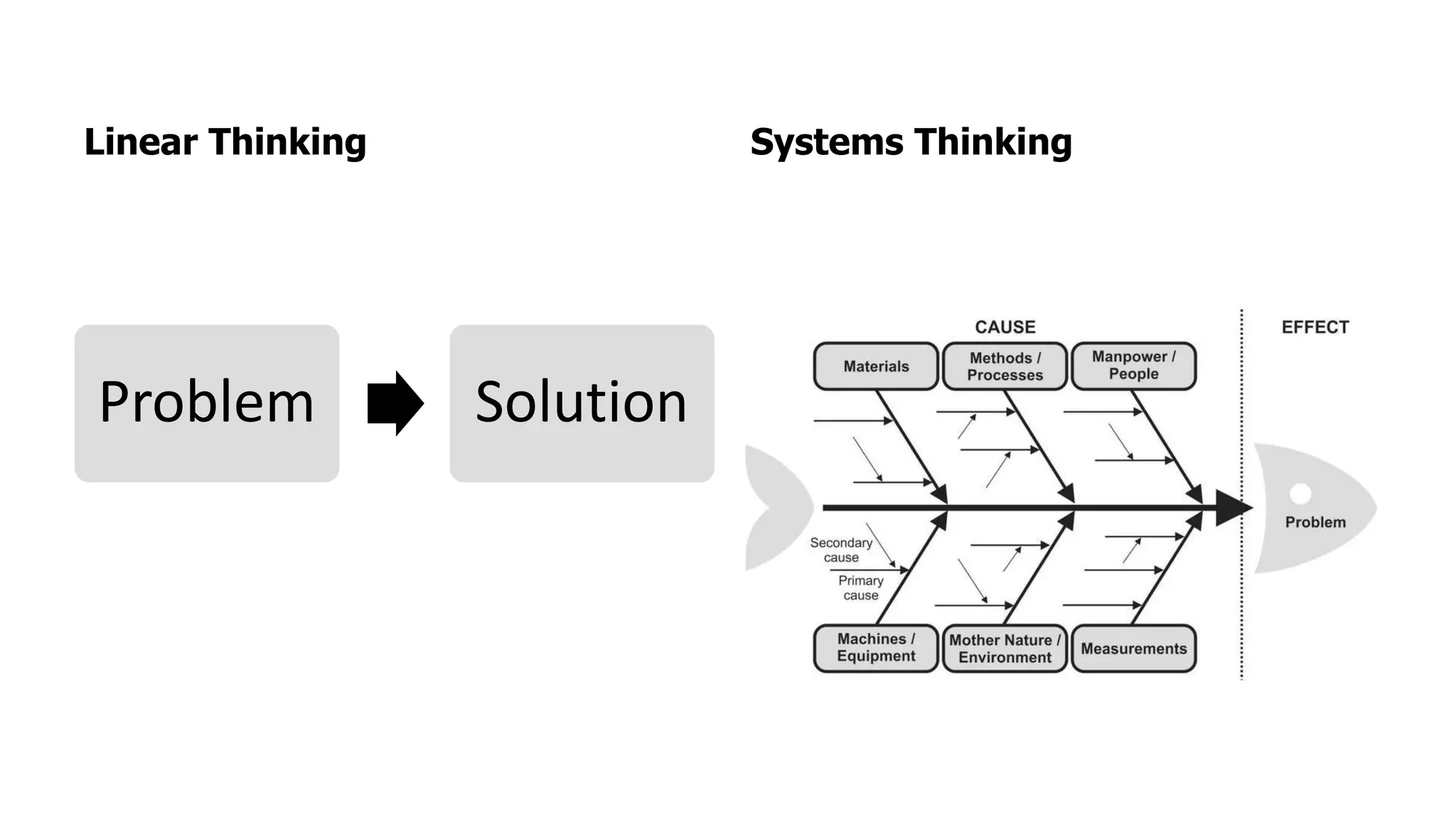
Linear Thinking
Problem Solution
Systems Thinking
WHAT IS A MARKETING MINDSET?
10
A MARKETING MINDSET IS AN APPROACH TO
SOLVING PROBLEMS THAT PUTS THE CUSTOMER
FIRST AND USES THE MARKETING PROCESS TO
ADDRESS CUSTOMER NEEDS
11
Mental Models (Mindsets)
Deeply ingrained assumptions and generalizations that
influence our understanding of the world and our reactions to it
Examples:
– KISS
– 80/20 rule
– Seek win-win solutions
– Keep your head down, work hard, and you will be rewarded
Mental Models Vary by Individual
Contrast how an individual with a student mindset will
approach a problem compared to one with the mindset of a
• Professional
• Scientist
• Marketer
Mental Models
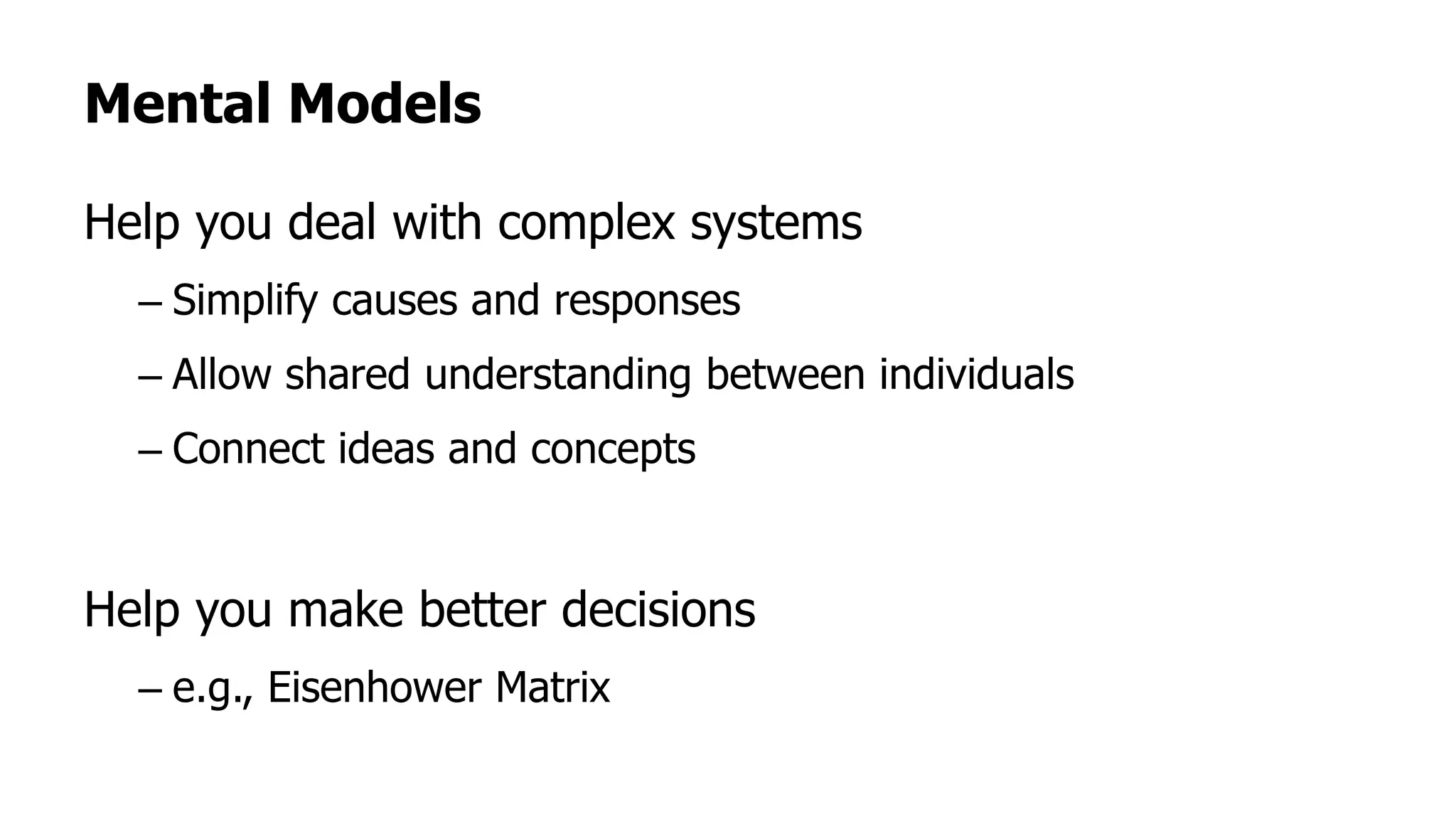
Help you deal with complex systems
– Simplify causes and responses
– Allow shared understanding between individuals
– Connect ideas and concepts
Help you make better decisions
– e.g., Eisenhower Matrix
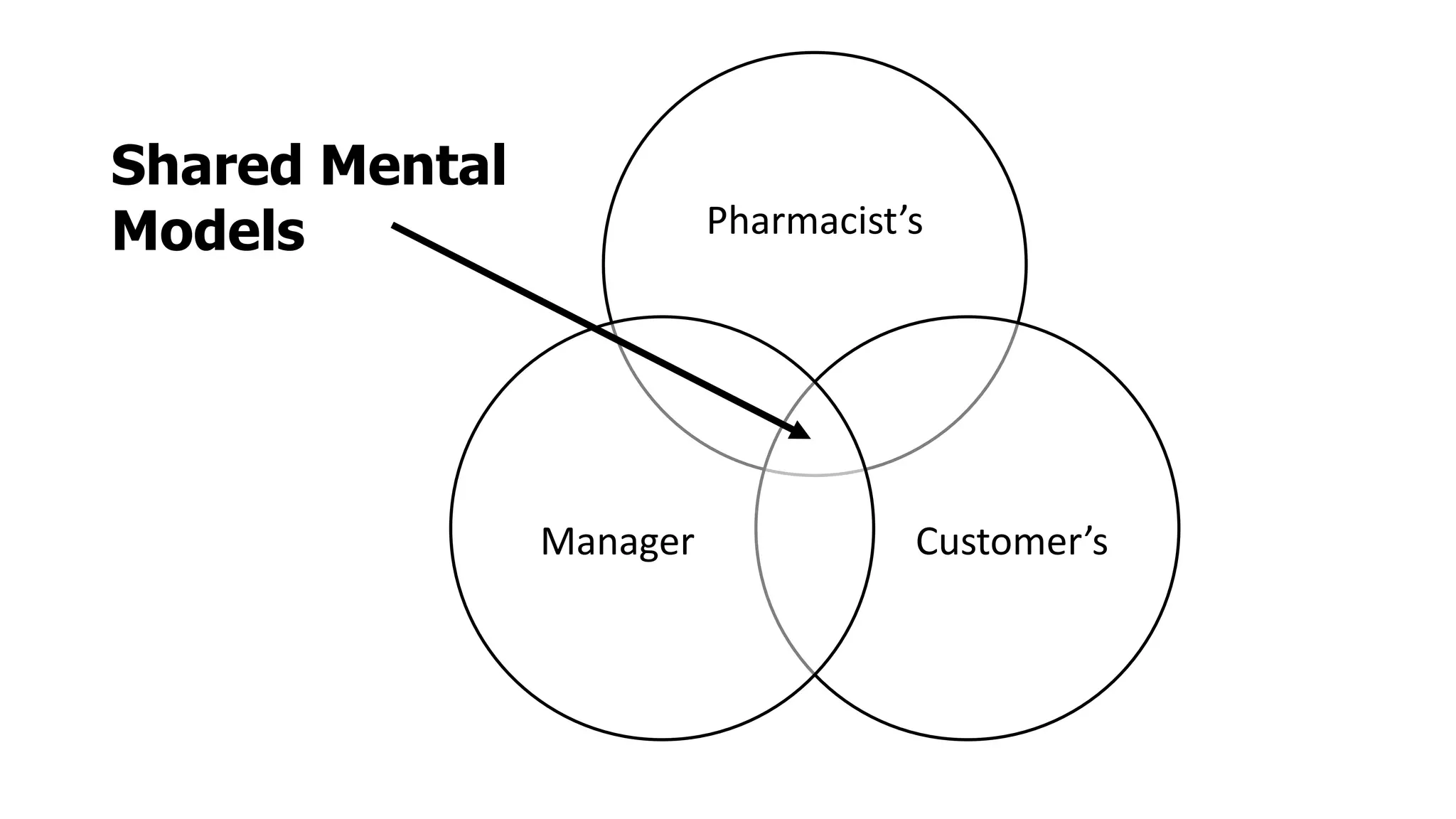
Pharmacist’s
Customer’sManager
Shared Mental
Models
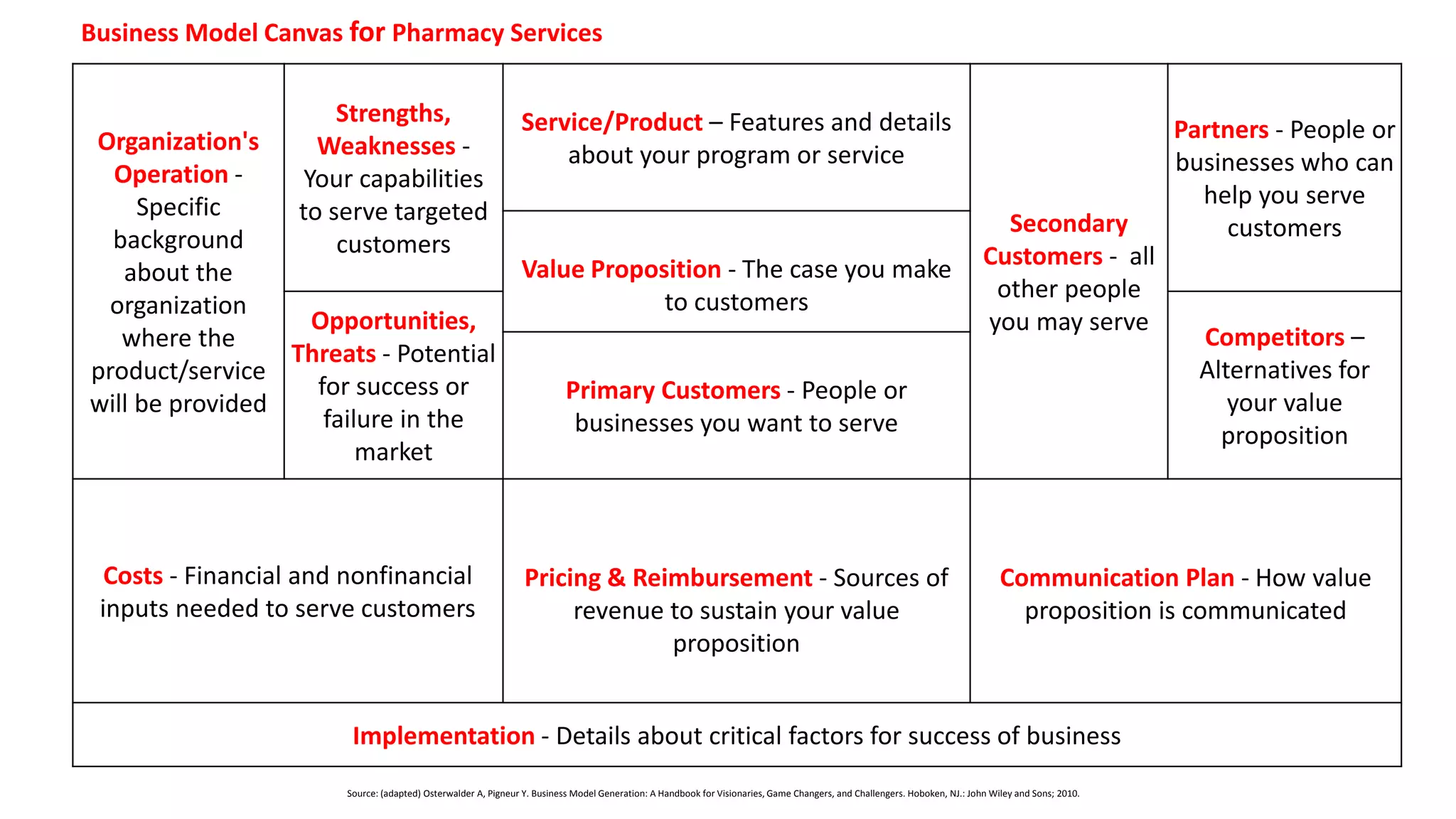
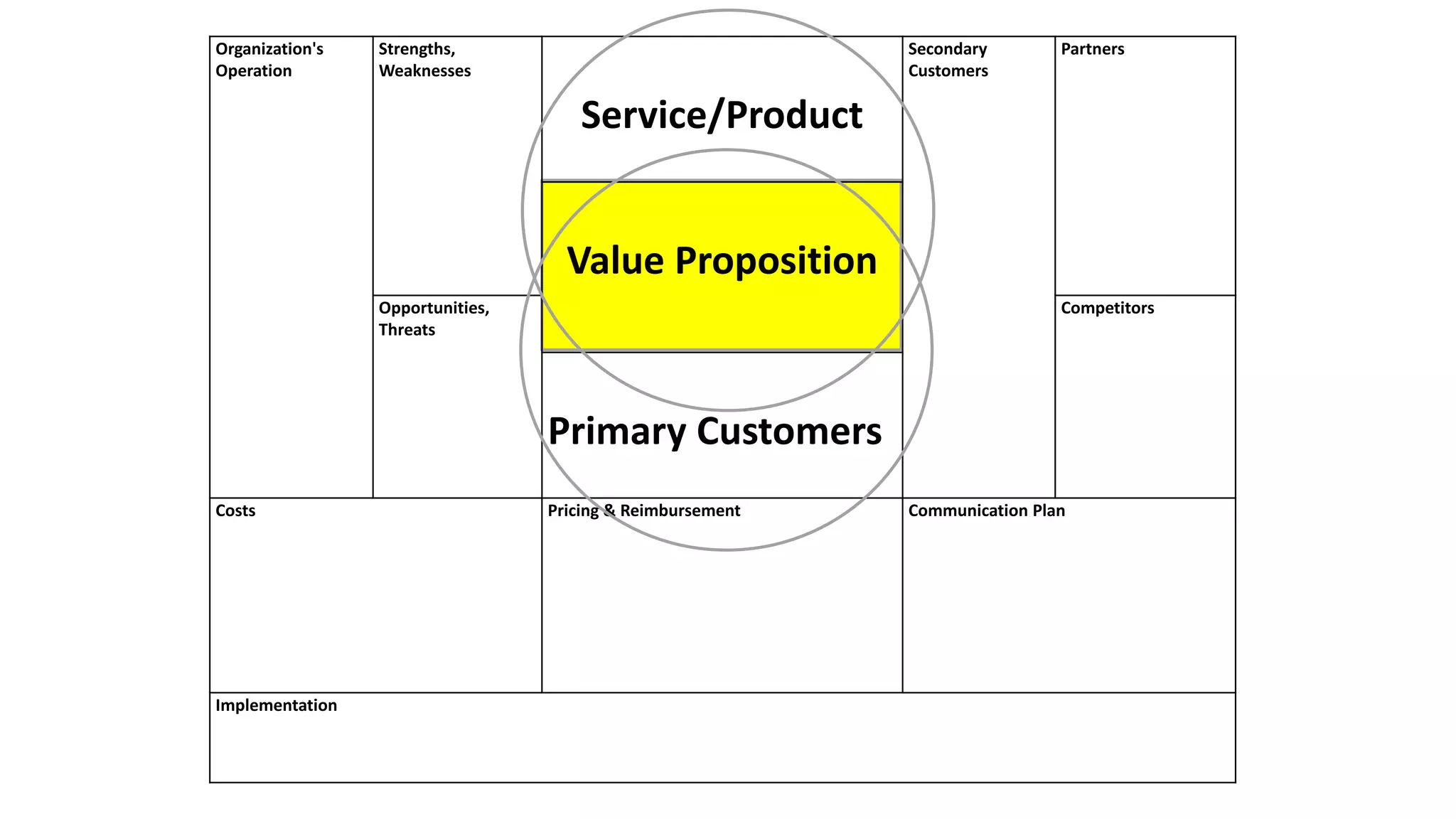
THE BUSINESS MODEL OPERATIONALIZES
THE MARKETING PROCESS
AND PROVIDES A SHARED MENTAL MODEL FOR
Organization's
Operation -
Specific
background
about the
organization
where the
product/service
will be provided
Strengths,
Weaknesses -
Your capabilities
to serve targeted
customers
Service/Product – Features and details
about your program or service
Secondary
Customers - all
other people
you may serve
Partners - People or
businesses who can
help you serve
customers
Value Proposition - The case you make
to customers
Opportunities,
Threats - Potential
for success or
failure in the
market
Competitors –
Alternatives for
your value
proposition
Primary Customers - People or
businesses you want to serve
Costs - Financial and nonfinancial
inputs needed to serve customers
Pricing & Reimbursement - Sources of
revenue to sustain your value
proposition
Communication Plan - How value
proposition is communicated
Implementation - Details about critical factors for success of business
Source: (adapted) Osterwalder A, Pigneur Y. Business Model Generation: A Handbook for Visionaries, Game Changers, and Challengers. Hoboken, NJ.: John Wiley and Sons; 2010.
Business Model Canvas for Pharmacy Services
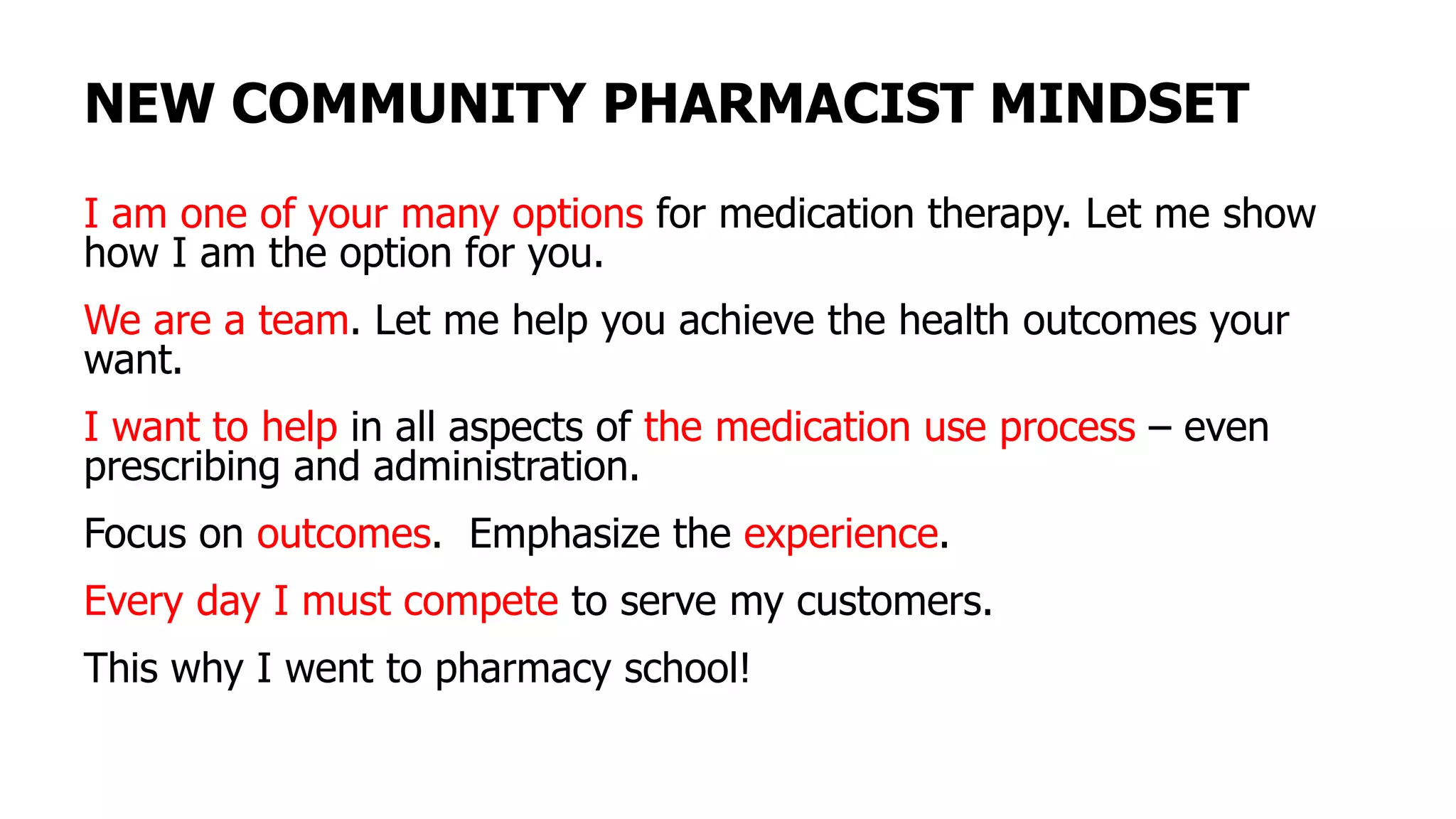
NEW COMMUNITY PHARMACIST MINDSET
I am one of your many options for medication therapy. Let me show
how I am the option for you.
We are a team. Let me help you achieve the health outcomes your
want.
I want to help in all aspects of the medication use process – even
prescribing and administration.
Focus on outcomes. Emphasize the experience.
Every day I must compete to serve my customers.
This why I went to pharmacy school!
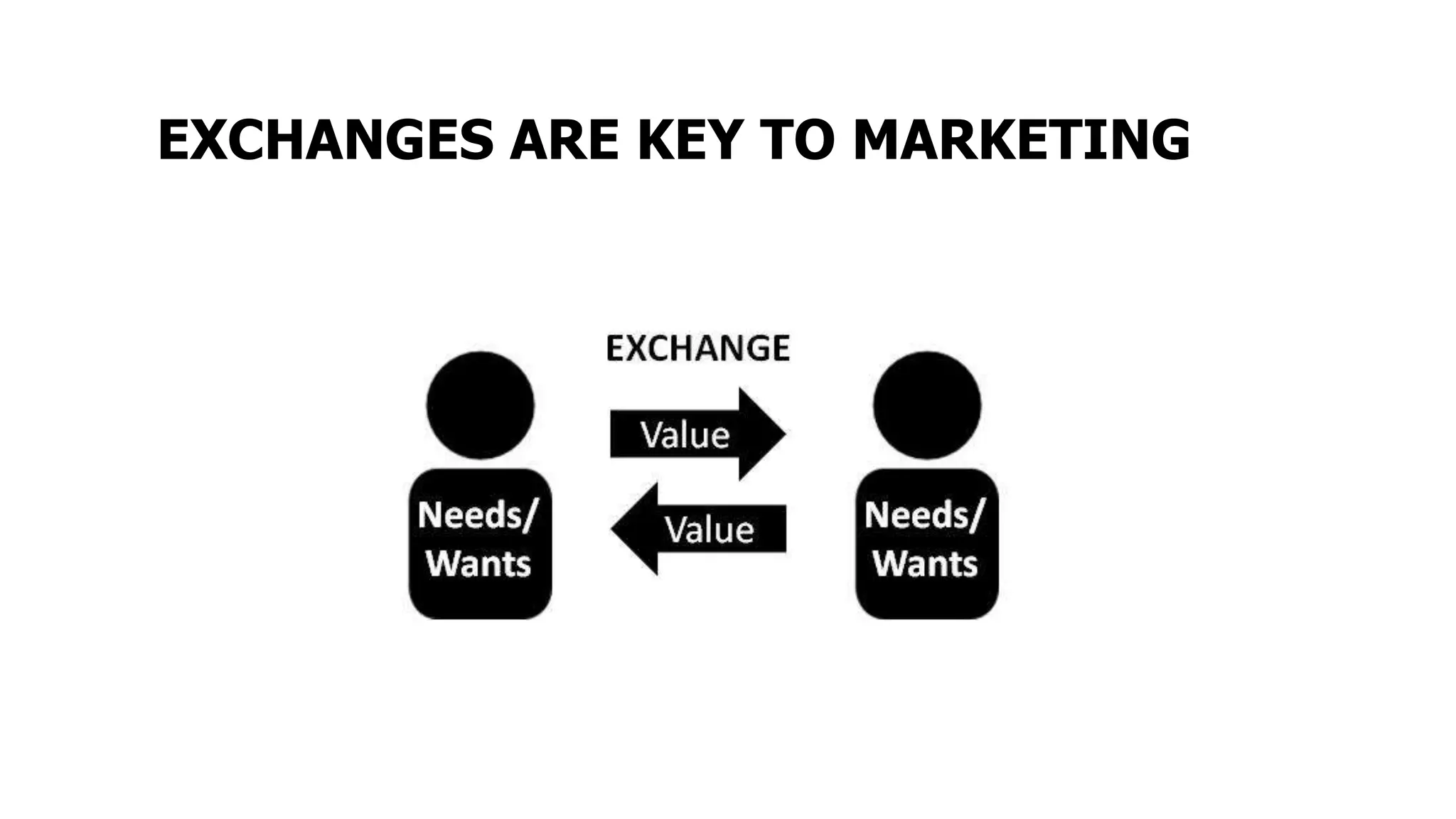
EXCHANGES ARE KEY TO MARKETING
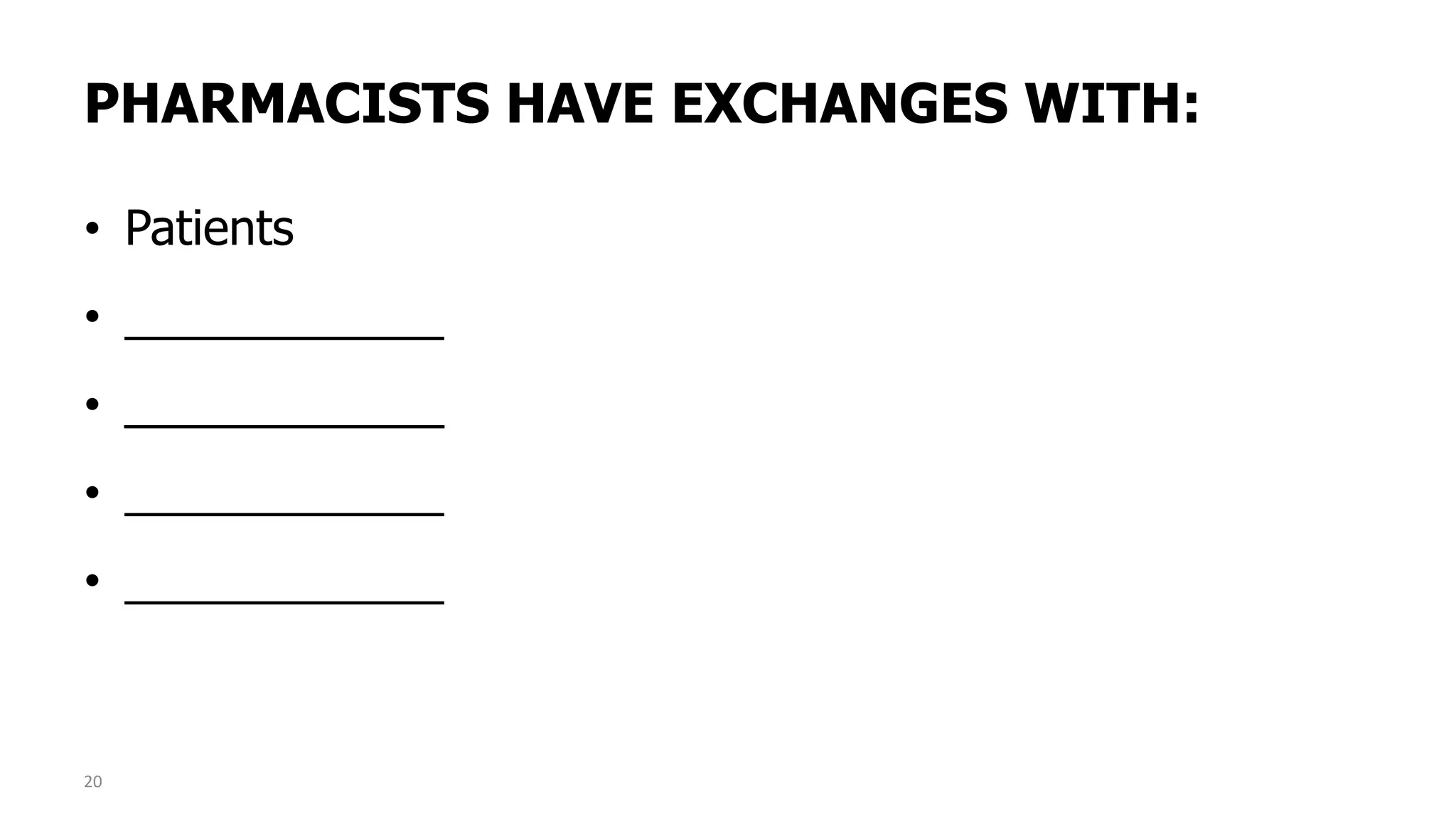
PHARMACISTS HAVE EXCHANGES WITH:
• Patients
• ____________
• ____________
• ____________
• ____________
20
Organization's
Operation
Strengths,
Weaknesses
Service/Product
Secondary
Customers
Partners
Value Proposition
Opportunities,
Threats
Competitors
Primary Customers
Costs Pricing & Reimbursement Communication Plan
Implementation
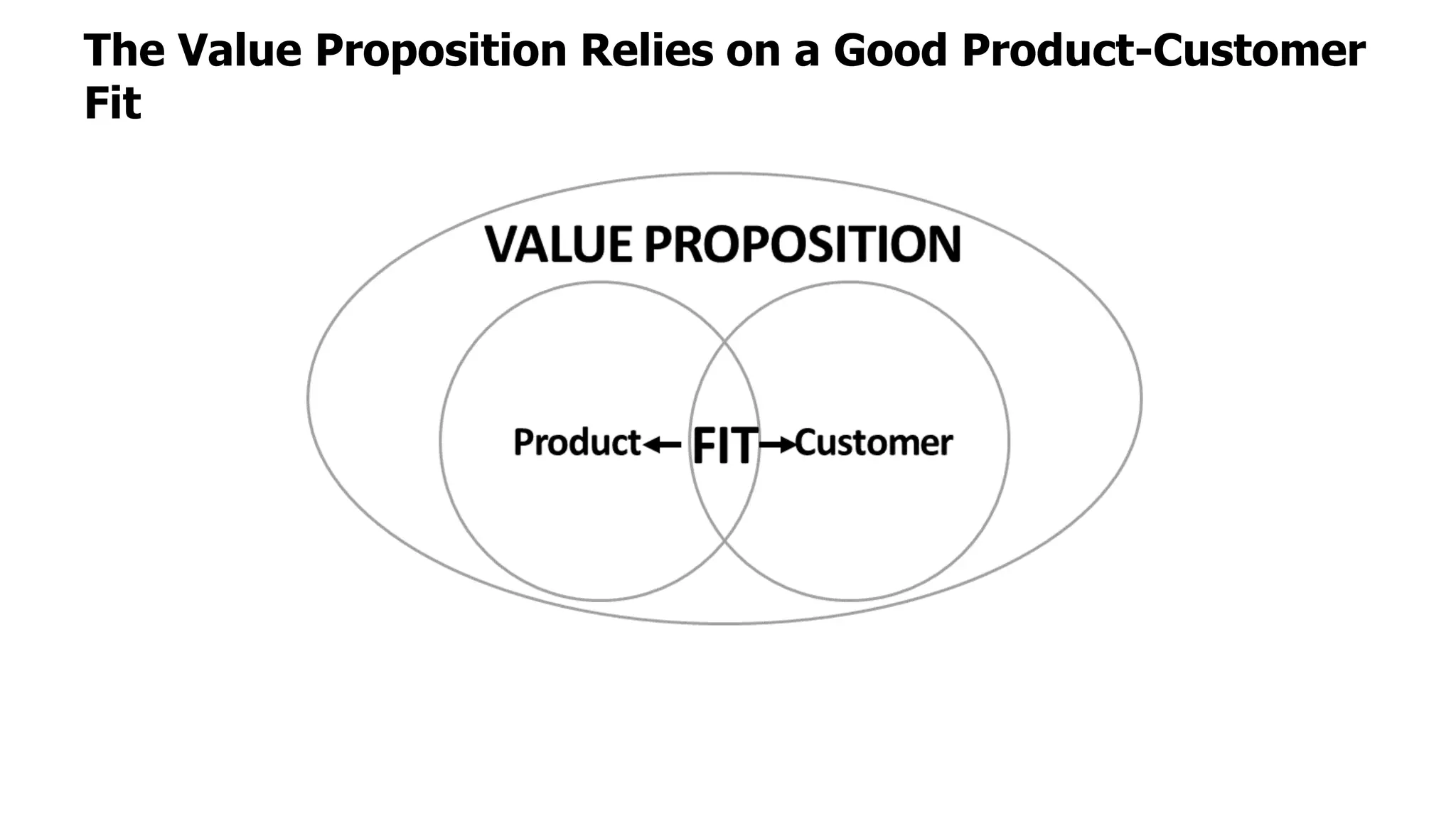
The Value Proposition Relies on a Good Product-Customer
Fit
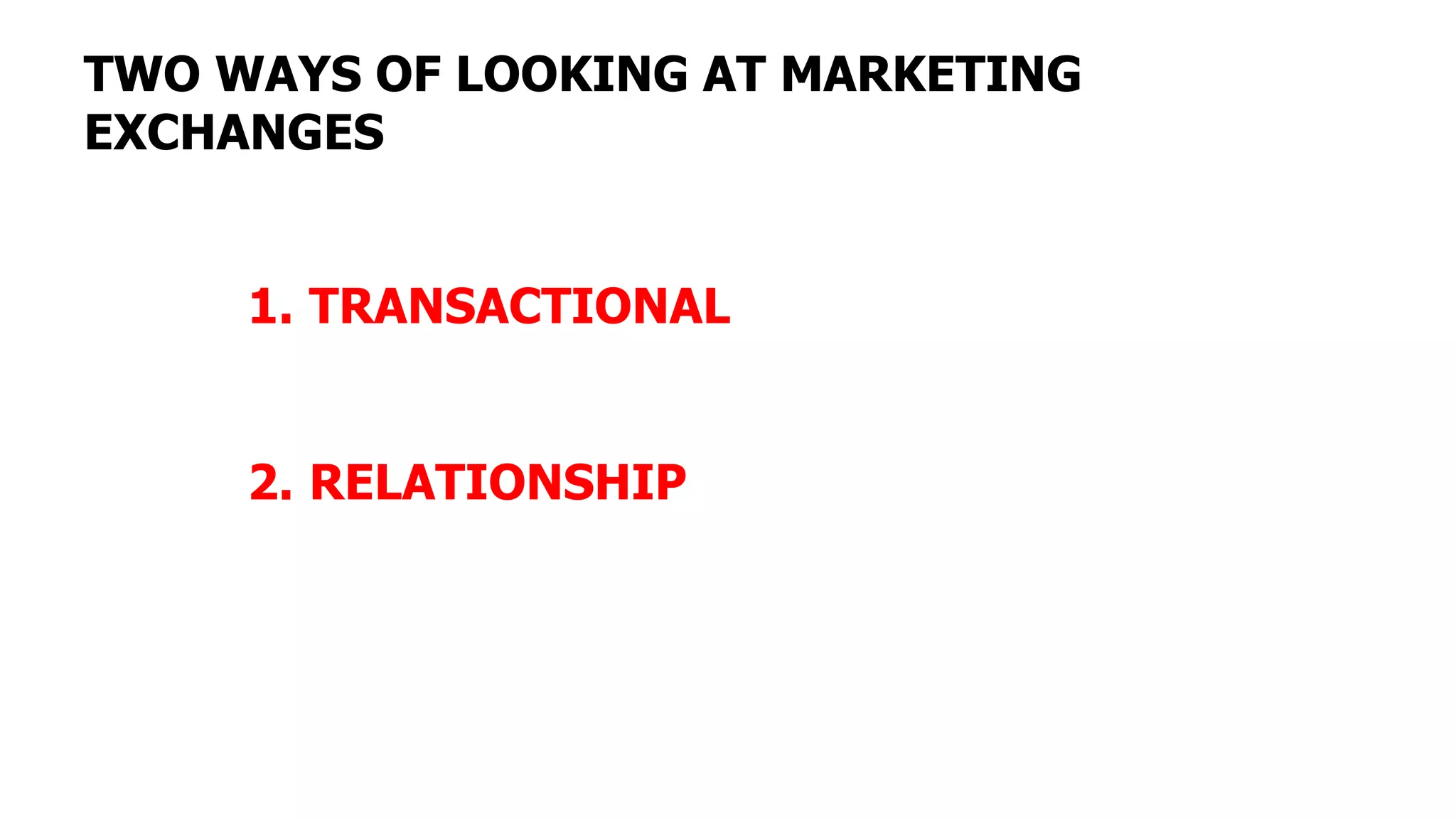
TWO WAYS OF LOOKING AT MARKETING
EXCHANGES
1. TRANSACTIONAL
2. RELATIONSHIP
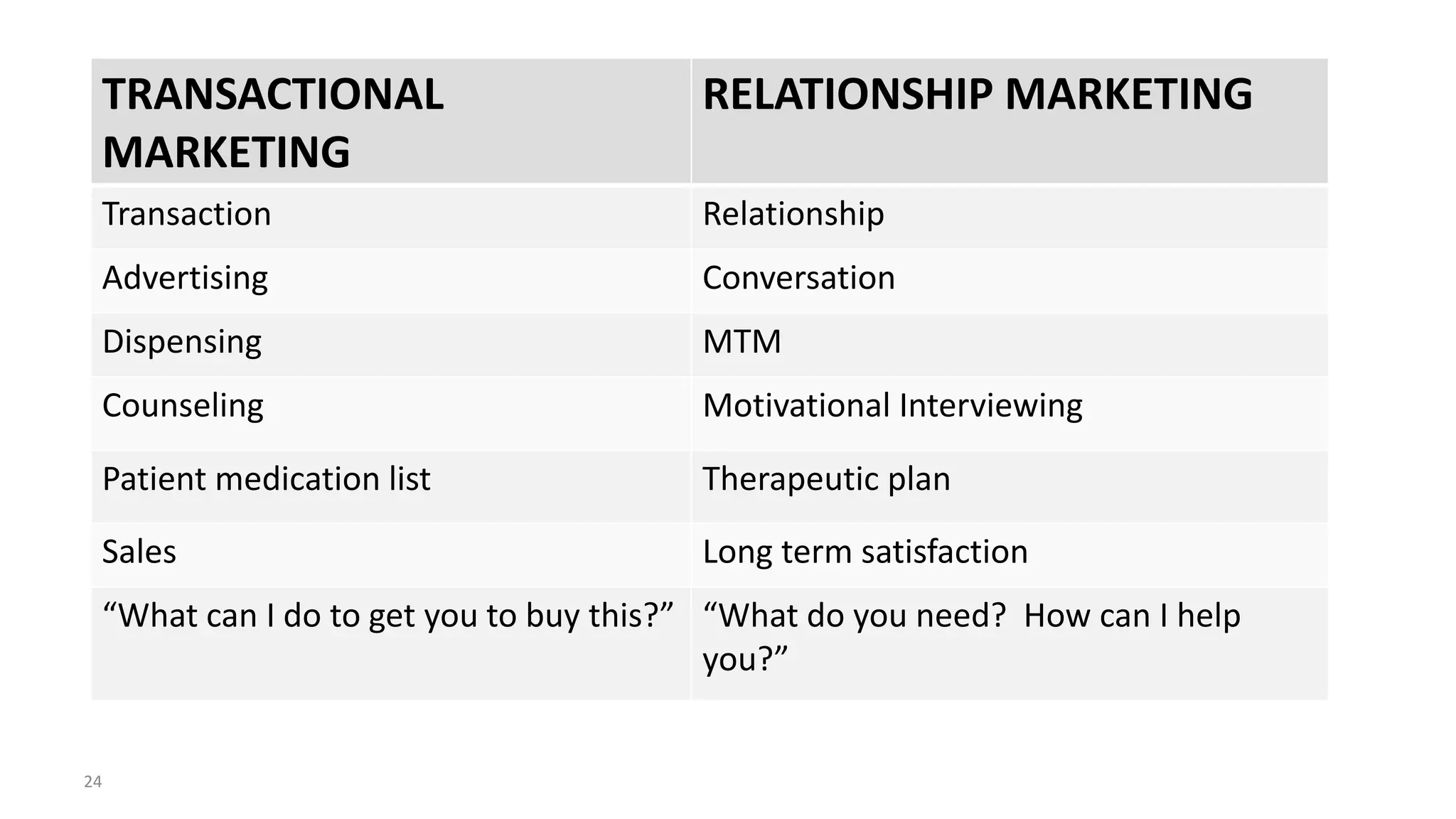
TRANSACTIONAL
MARKETING
RELATIONSHIP MARKETING
Transaction Relationship
Advertising Conversation
Dispensing MTM
Counseling Motivational Interviewing
Patient medication list Therapeutic plan
Sales Long term satisfaction
“What can I do to get you to buy this?” “What do you need? How can I help
you?”
24
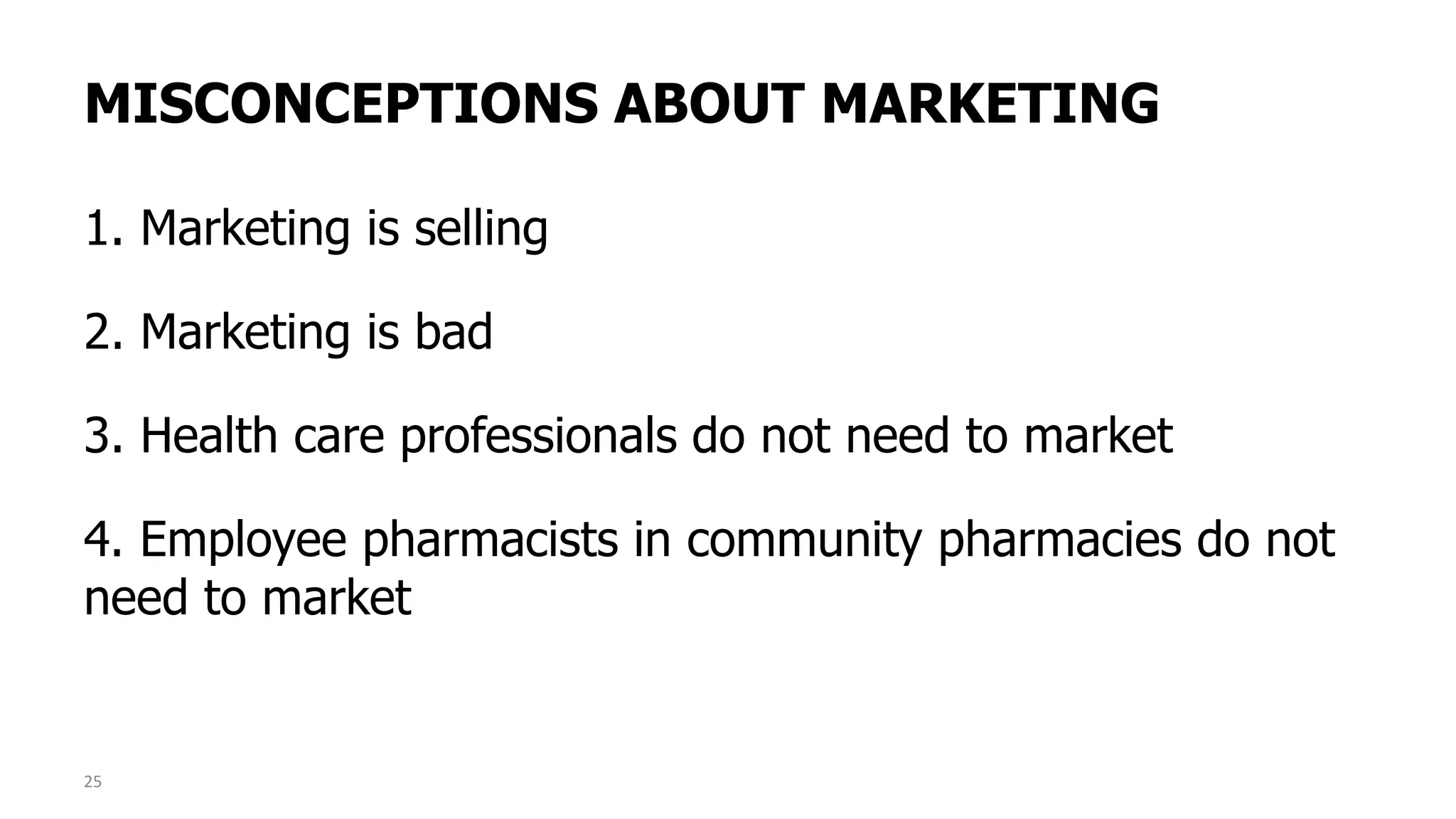
MISCONCEPTIONS ABOUT MARKETING
1. Marketing is selling
2. Marketing is bad
3. Health care professionals do not need to market
4. Employee pharmacists in community pharmacies do not
need to market
25
MISCONCEPTIONS ABOUT MARKETING
26
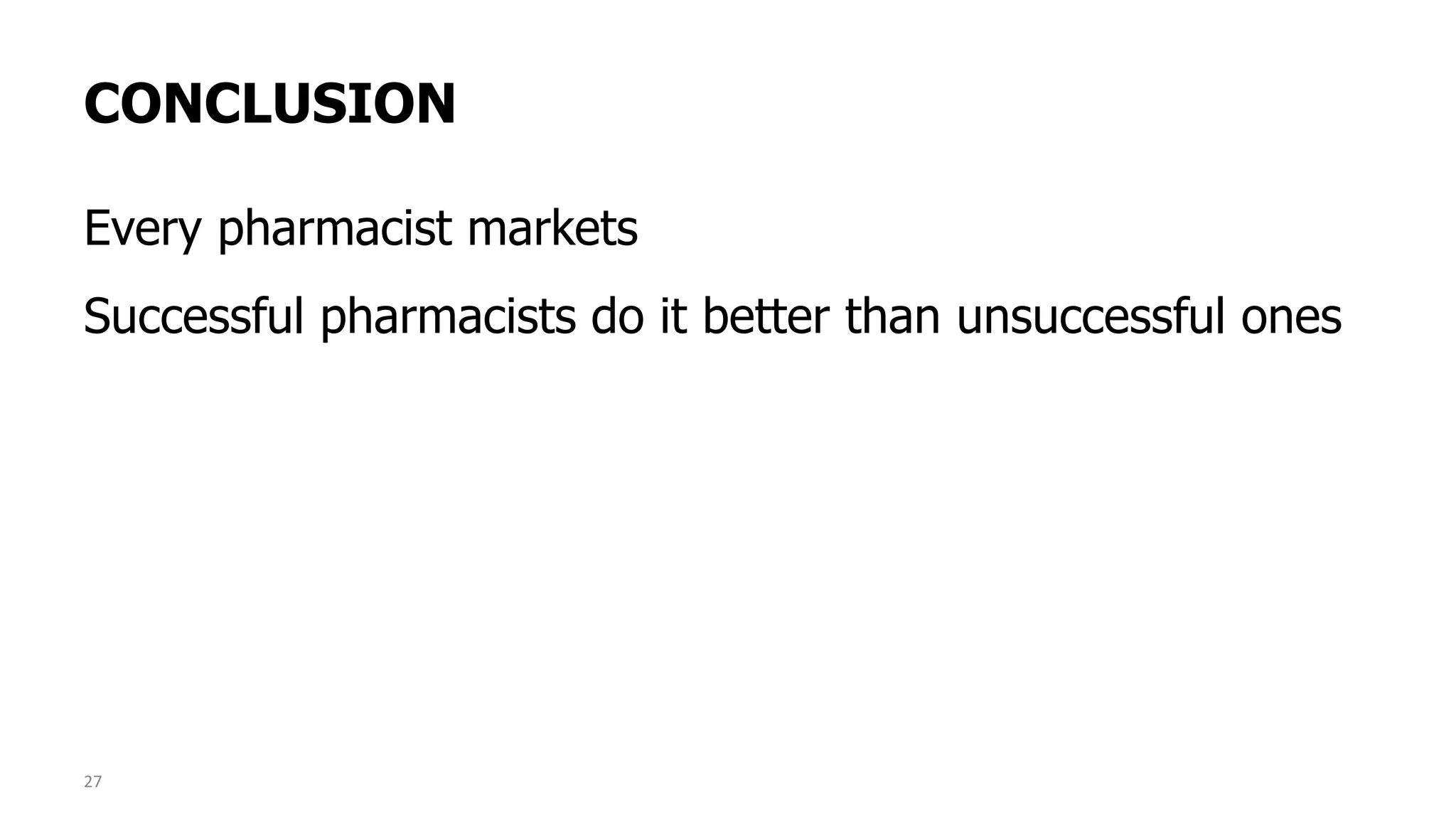
CONCLUSION
Every pharmacist markets
Successful pharmacists do it better than unsuccessful ones
27

Chapter 1 intro to marketing

  • 1.
    INTRODUCTION TO MARKETING DAVIDHOLDFORD, R.PH., M.S., PH.D. PROFESSOR, VIRGINIA COMMONWEALTH UNIVERSITY SCHOOL OF PHARMACY The First Steps to Making a Difference in Pharmacy Practice
  • 2.
    Slides to AccompanyChapter 1 of “Marketing for Pharmacists” 2
  • 3.
    Learning Objectives Define theterm “marketing” Explain what it means to have a marketing mindset Contrast transactional marketing with relationship marketing Discuss some misconceptions surrounding the concept of marketing Suggest reasons why pharmacists need to market themselves and their services
  • 4.
  • 5.
  • 6.
    Marketing is aboutsolving problems
  • 7.
    I want to... Strengthen mycurrent business Market a new product or service Find new customers Convince my boss or investors to support an idea To thrive in uncertain times Find new business
  • 8.
    A pharmacist ata large pharmacy chain wants to start a smoking cessation program but does not know how to start A fourth-year pharmacy student on an advanced practice clerkship rotation has been asked by his preceptor to write a business plan for a new medication therapy management program in an assisted living facility A hospital pharmacy director wants to open a specialty pharmacy program to serve patients in another part of the metropolitan area The vice-president of pharmacy operations at a small pharmacy chain is exploring the possibility of offering appointment-based medication synchronization services to chain customers A clinical faculty member at a pharmacy school has been asked by the clinical practice chair to develop a proposal to put an outpatient pharmacy in the school
  • 9.
  • 10.
    WHAT IS AMARKETING MINDSET? 10
  • 11.
    A MARKETING MINDSETIS AN APPROACH TO SOLVING PROBLEMS THAT PUTS THE CUSTOMER FIRST AND USES THE MARKETING PROCESS TO ADDRESS CUSTOMER NEEDS 11
  • 12.
    Mental Models (Mindsets) Deeplyingrained assumptions and generalizations that influence our understanding of the world and our reactions to it Examples: – KISS – 80/20 rule – Seek win-win solutions – Keep your head down, work hard, and you will be rewarded
  • 13.
    Mental Models Varyby Individual Contrast how an individual with a student mindset will approach a problem compared to one with the mindset of a • Professional • Scientist • Marketer
  • 14.
    Mental Models Help youdeal with complex systems – Simplify causes and responses – Allow shared understanding between individuals – Connect ideas and concepts Help you make better decisions – e.g., Eisenhower Matrix
  • 15.
  • 16.
    THE BUSINESS MODELOPERATIONALIZES THE MARKETING PROCESS AND PROVIDES A SHARED MENTAL MODEL FOR
  • 17.
    Organization's Operation - Specific background about the organization wherethe product/service will be provided Strengths, Weaknesses - Your capabilities to serve targeted customers Service/Product – Features and details about your program or service Secondary Customers - all other people you may serve Partners - People or businesses who can help you serve customers Value Proposition - The case you make to customers Opportunities, Threats - Potential for success or failure in the market Competitors – Alternatives for your value proposition Primary Customers - People or businesses you want to serve Costs - Financial and nonfinancial inputs needed to serve customers Pricing & Reimbursement - Sources of revenue to sustain your value proposition Communication Plan - How value proposition is communicated Implementation - Details about critical factors for success of business Source: (adapted) Osterwalder A, Pigneur Y. Business Model Generation: A Handbook for Visionaries, Game Changers, and Challengers. Hoboken, NJ.: John Wiley and Sons; 2010. Business Model Canvas for Pharmacy Services
  • 18.
    NEW COMMUNITY PHARMACISTMINDSET I am one of your many options for medication therapy. Let me show how I am the option for you. We are a team. Let me help you achieve the health outcomes your want. I want to help in all aspects of the medication use process – even prescribing and administration. Focus on outcomes. Emphasize the experience. Every day I must compete to serve my customers. This why I went to pharmacy school!
  • 19.
    EXCHANGES ARE KEYTO MARKETING
  • 20.
    PHARMACISTS HAVE EXCHANGESWITH: • Patients • ____________ • ____________ • ____________ • ____________ 20
  • 21.
  • 22.
    The Value PropositionRelies on a Good Product-Customer Fit
  • 23.
    TWO WAYS OFLOOKING AT MARKETING EXCHANGES 1. TRANSACTIONAL 2. RELATIONSHIP
  • 24.
    TRANSACTIONAL MARKETING RELATIONSHIP MARKETING Transaction Relationship AdvertisingConversation Dispensing MTM Counseling Motivational Interviewing Patient medication list Therapeutic plan Sales Long term satisfaction “What can I do to get you to buy this?” “What do you need? How can I help you?” 24
  • 25.
    MISCONCEPTIONS ABOUT MARKETING 1.Marketing is selling 2. Marketing is bad 3. Health care professionals do not need to market 4. Employee pharmacists in community pharmacies do not need to market 25
  • 26.
  • 27.
    CONCLUSION Every pharmacist markets Successfulpharmacists do it better than unsuccessful ones 27