Interfaces
 A peripheral sends and/or receives data at a certain speed and using a
certain format.
 The CPU and/or the device receives data at a certain speed and using a
certain format.
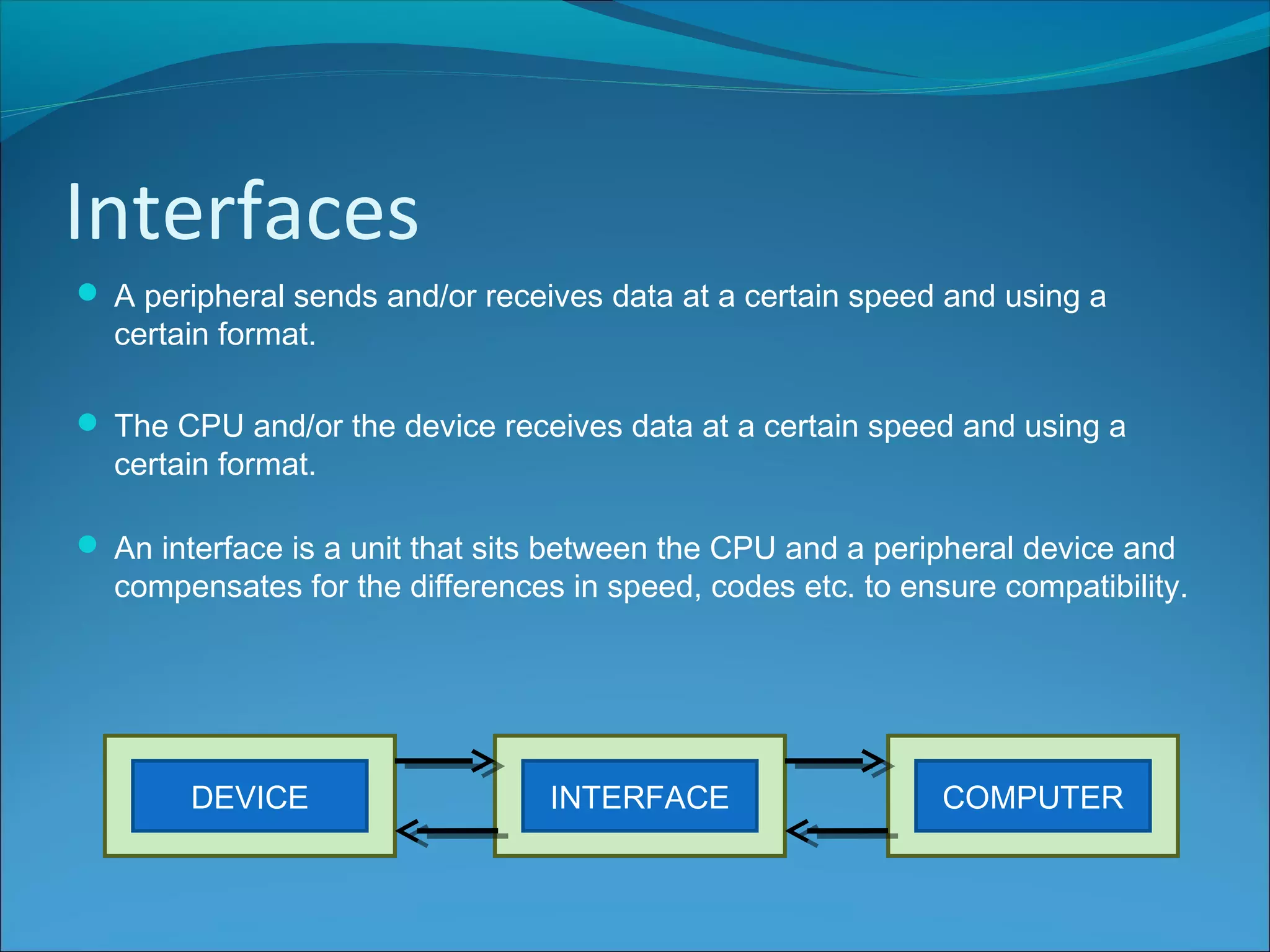
 An interface is a unit that sits between the CPU and a peripheral device and
compensates for the differences in speed, codes etc. to ensure compatibility.
COMPUTERDEVICE INTERFACE
Status Information
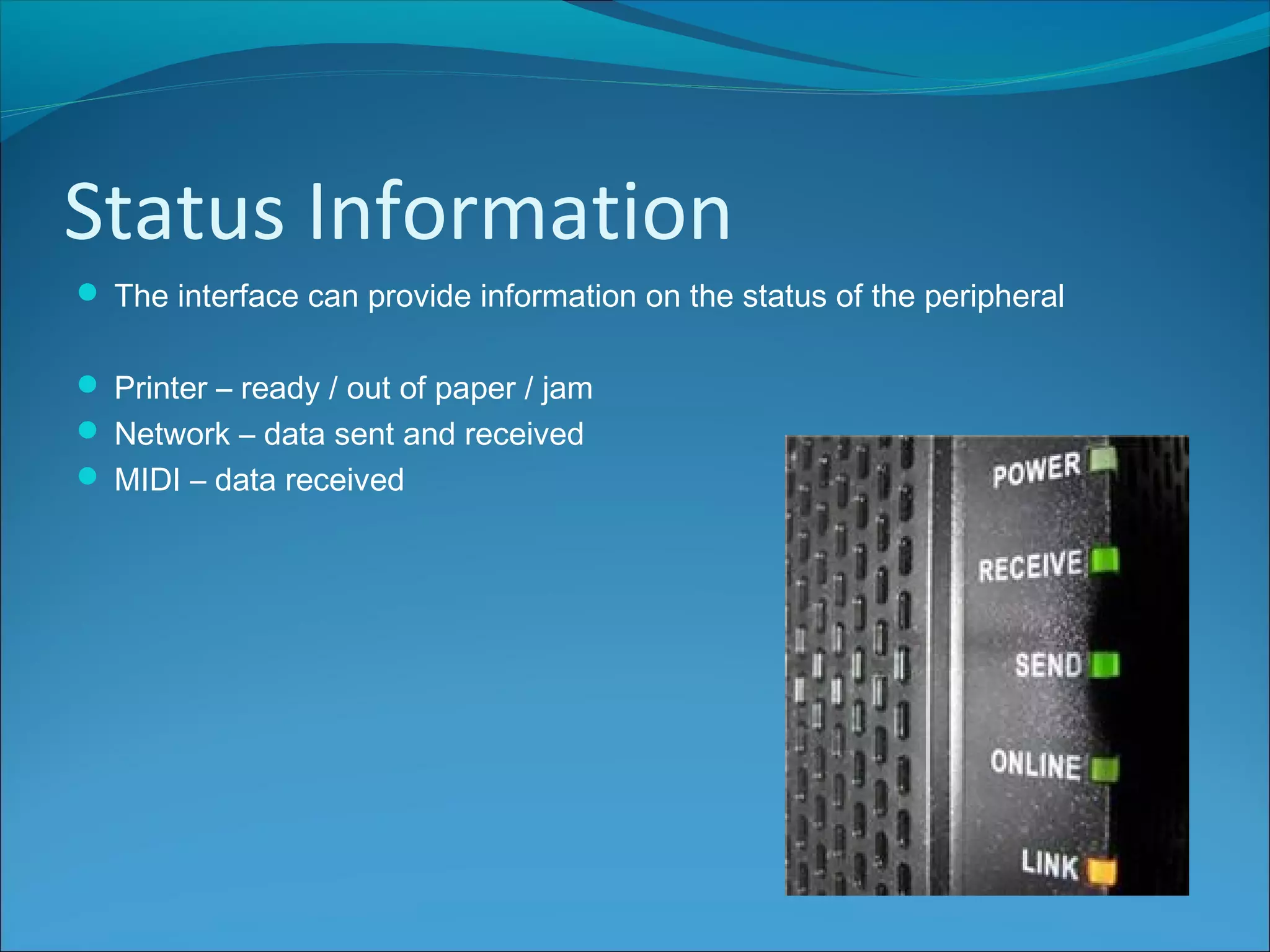
 The interface can provide information on the status of the peripheral
 Printer – ready / out of paper / jam
 Network – data sent and received
 MIDI – data received
Data Conversion
 A CPU will work with data using different formats and speeds than
peripherals
 For example, the processor will be able to send data to the printer at a speed
faster than printer can handle it
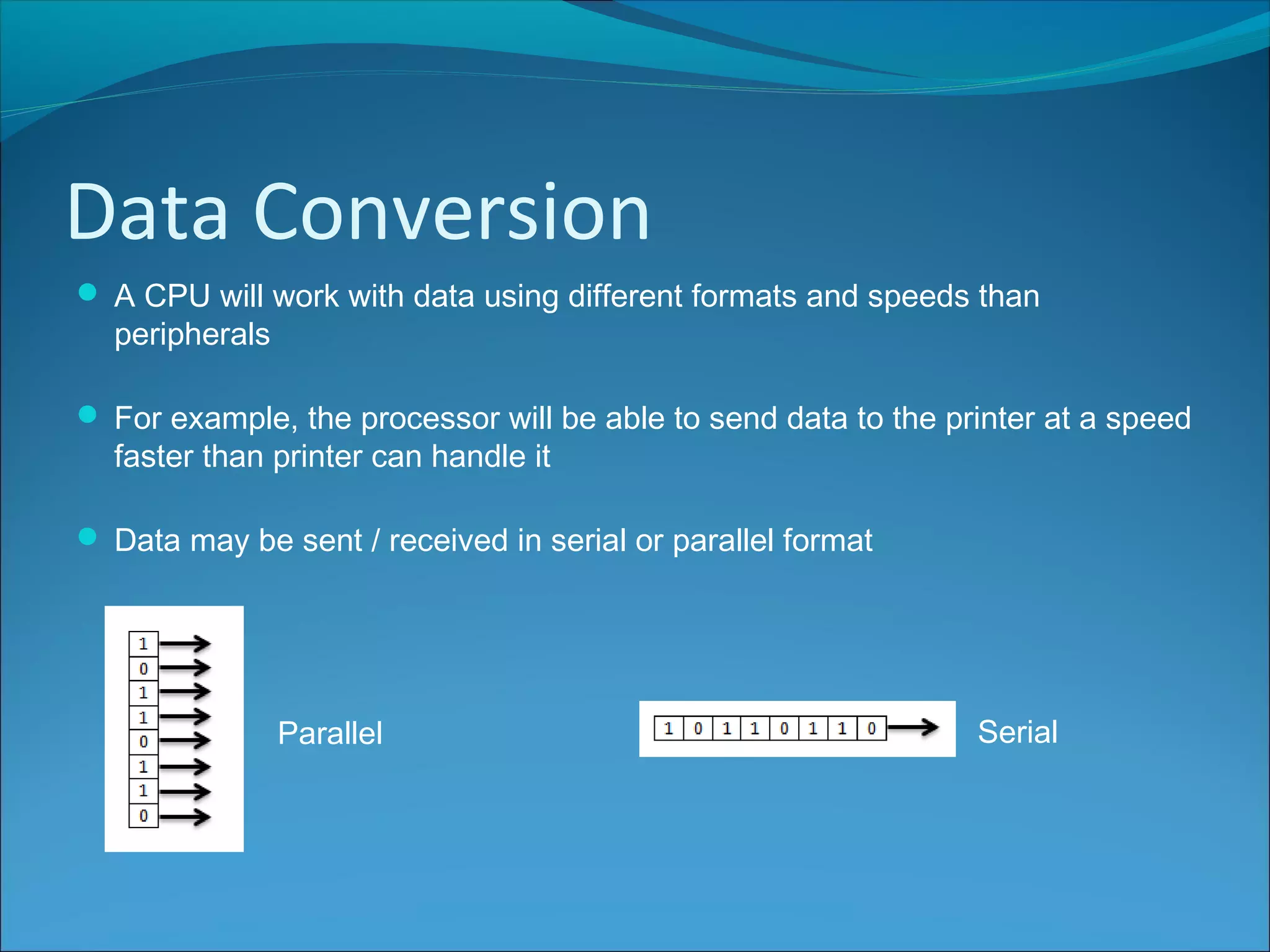
 Data may be sent / received in serial or parallel format
Parallel Serial
Protocol
The processor and peripheral require a set of rules so that they know how to
communicate with each other. These rules are known as a protocol.
The protocol will include:
the type of error checking to be used
data compression method, if any
how the sending device will indicate that it has finished sending a message
how the receiving device will indicate that it has received a message
Data Storage
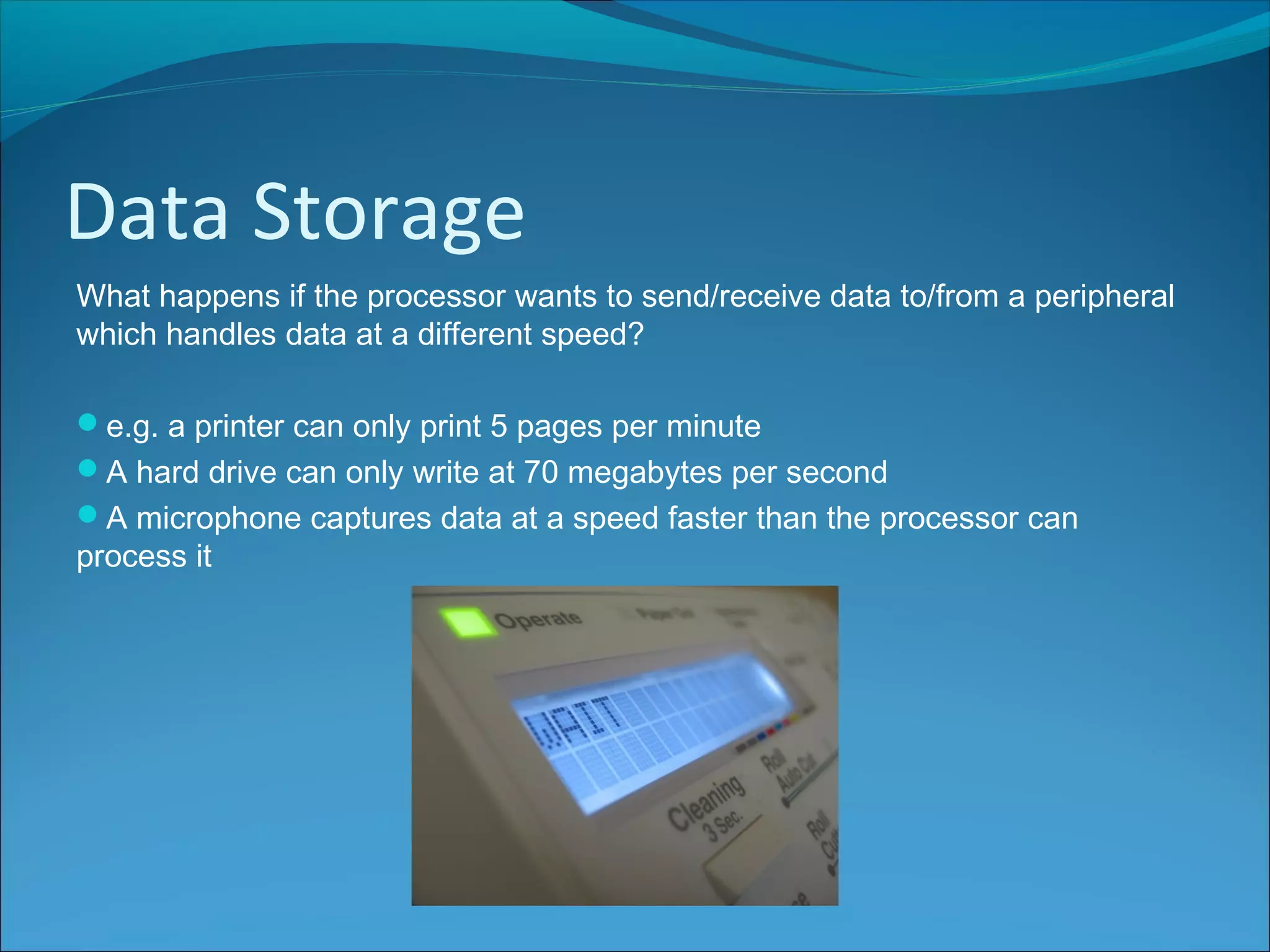
What happens if the processor wants to send/receive data to/from a peripheral
which handles data at a different speed?
e.g. a printer can only print 5 pages per minute
A hard drive can only write at 70 megabytes per second
A microphone captures data at a speed faster than the processor can
process it
Data Storage
What happens if the processor wants to send/receive data to/from a peripheral
which handles data at a different speed?
e.g. a printer can only print 5 pages per minute
A hard drive can only write at 70 megabytes per second
A microphone captures data at a speed faster than the processor can
process it
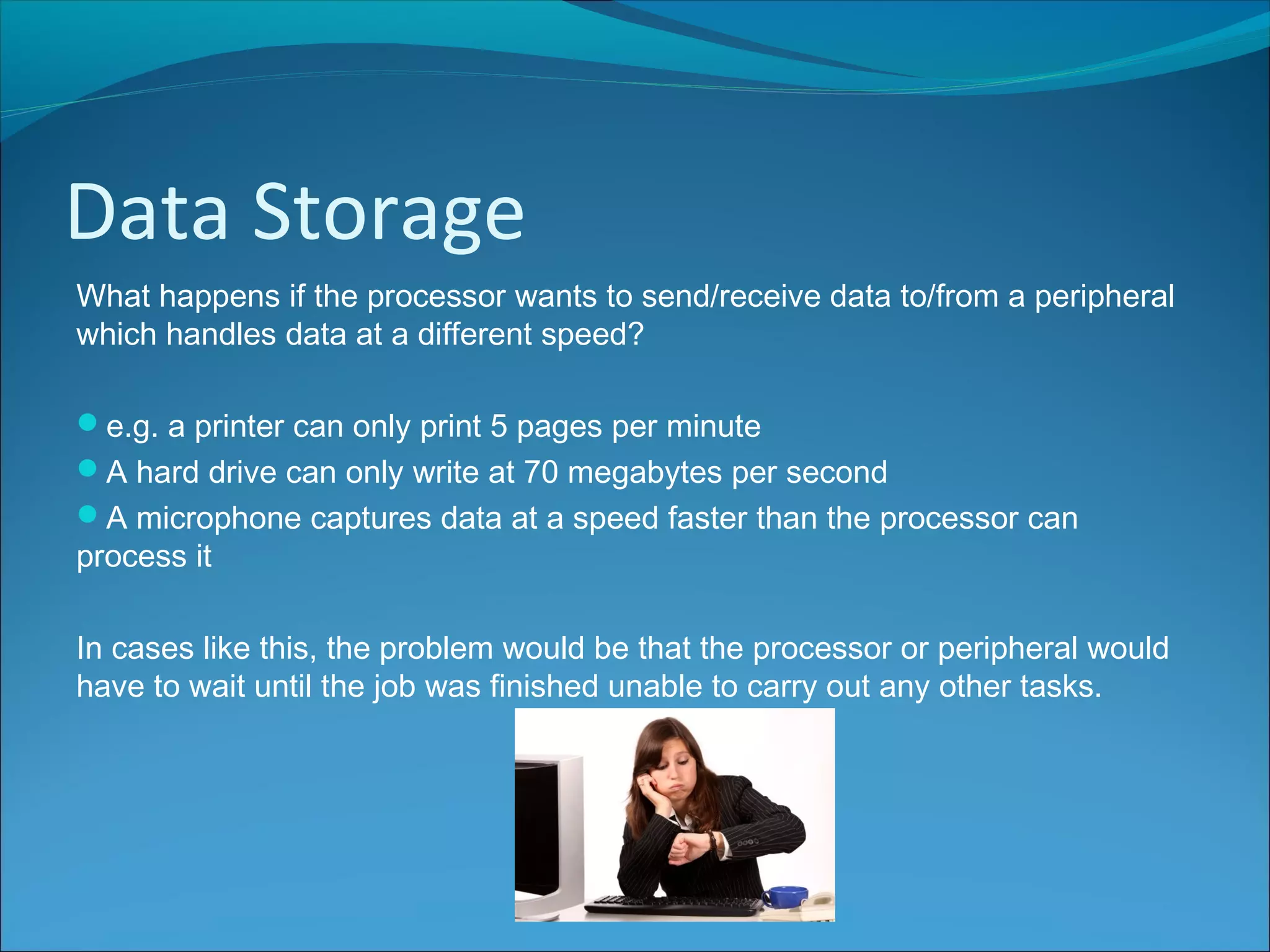
In cases like this, the problem would be that the processor or peripheral would
have to wait until the job was finished unable to carry out any other tasks.
Data Storage
What happens if the processor wants to send/receive data to/from a peripheral
which handles data at a different speed?
e.g. a printer can only print 5 pages per minute
A hard drive can only write at 70 megabytes per second
A microphone captures data at a speed faster than the processor can
process it
In cases like this, the problem would be that the processor or peripheral would
have to wait until the job was finished unable to carry out any other tasks.
Buffers and spoolers provide the solution to this problem

National 5 Computing Science - Interfaces

  • 2.
    Interfaces  A peripheralsends and/or receives data at a certain speed and using a certain format.  The CPU and/or the device receives data at a certain speed and using a certain format.  An interface is a unit that sits between the CPU and a peripheral device and compensates for the differences in speed, codes etc. to ensure compatibility. COMPUTERDEVICE INTERFACE
  • 3.
    Status Information  Theinterface can provide information on the status of the peripheral  Printer – ready / out of paper / jam  Network – data sent and received  MIDI – data received
  • 4.
    Data Conversion  ACPU will work with data using different formats and speeds than peripherals  For example, the processor will be able to send data to the printer at a speed faster than printer can handle it  Data may be sent / received in serial or parallel format Parallel Serial
  • 5.
    Protocol The processor andperipheral require a set of rules so that they know how to communicate with each other. These rules are known as a protocol. The protocol will include: the type of error checking to be used data compression method, if any how the sending device will indicate that it has finished sending a message how the receiving device will indicate that it has received a message
  • 6.
    Data Storage What happensif the processor wants to send/receive data to/from a peripheral which handles data at a different speed? e.g. a printer can only print 5 pages per minute A hard drive can only write at 70 megabytes per second A microphone captures data at a speed faster than the processor can process it
  • 7.
    Data Storage What happensif the processor wants to send/receive data to/from a peripheral which handles data at a different speed? e.g. a printer can only print 5 pages per minute A hard drive can only write at 70 megabytes per second A microphone captures data at a speed faster than the processor can process it In cases like this, the problem would be that the processor or peripheral would have to wait until the job was finished unable to carry out any other tasks.
  • 8.
    Data Storage What happensif the processor wants to send/receive data to/from a peripheral which handles data at a different speed? e.g. a printer can only print 5 pages per minute A hard drive can only write at 70 megabytes per second A microphone captures data at a speed faster than the processor can process it In cases like this, the problem would be that the processor or peripheral would have to wait until the job was finished unable to carry out any other tasks. Buffers and spoolers provide the solution to this problem