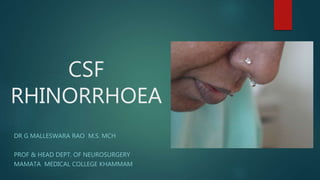
CSF
RHINORRHOEA
DR G MALLESWARA RAO M.S. MCH
PROF & HEAD DEPT. OF NEUROSURGERY
MAMATA MEDICAL COLLEGE KHAMMAM
CSF leak are the results of osseous defects at the
skull base coupled with dura and arachnoid injury
due to pressure gradient system .
Physiology
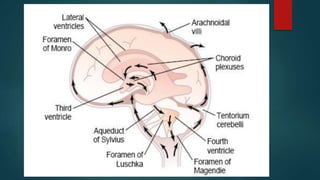
 CSF forms a jacket of fluid round the brain and spinal cord acting as a
buffer against sudden jerks.
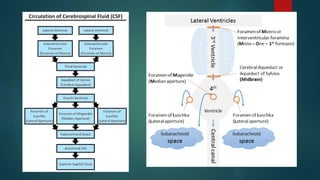
 Secreted by choroid plexus in the lateral,third & fourth ventricle &
absorbed into dural venous sinuses by arachnoid villi.
 Villi have one-way valve mechanism allowing CSF of the subarachnoid
space to be absorbed in to the blood .
 Total volume of CSF varies 90 to 150 ml.
Csf - Physiology
It is secreted at the rate of about 20ml/hr (350-500mL/day).
 Thus total CSF is replaced three to five times every day.
 CSF pressure rise on coughing, sneezing, nose blowing straining on
stools or lifting heavy weight.
 These activities should be avoided in cases of CSF leak or after its repair.
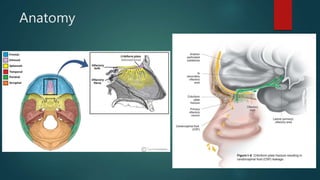
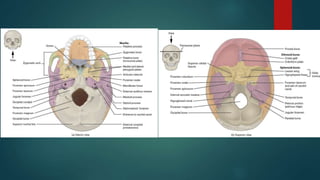
Anatomy
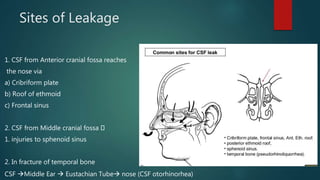
Sites of Leakage
1. CSF from Anterior cranial fossa reaches
the nose via
a) Cribriform plate
b) Roof of ethmoid
c) Frontal sinus
2. CSF from Middle cranial fossa
1. injuries to sphenoid sinus
2. In fracture of temporal bone
CSF Middle Ear  Eustachian Tube nose (CSF otorhinorhea)
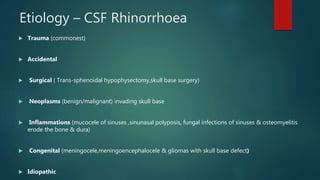
Etiology – CSF Rhinorrhoea
 Trauma (commonest)
 Accidental
 Surgical ( Trans-sphenoidal hypophysectomy,skull base surgery)
 Neoplasms (benign/malignant) invading skull base
 Inflammations (mucocele of sinuses ,sinunasal polyposis, fungal infections of sinuses & osteomyelitis
erode the bone & dura)
 Congenital (meningocele,meningoencephalocele & gliomas with skull base defect)
 Idiopathic
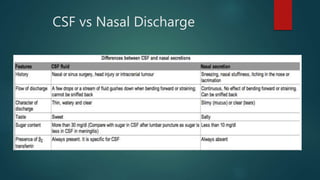
CSF vs Nasal Discharge
Clinically
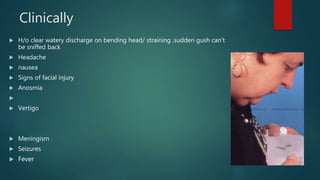
 H/o clear watery discharge on bending head/ straining ,sudden gush can’t
be sniffed back
 Headache
 nausea
 Signs of facial injury
 Anosmia

 Vertigo
 Meningism
 Seizures
 Fever
Clinical testing
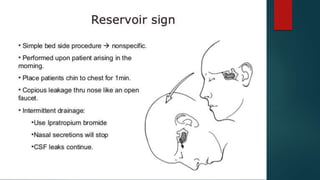
 Reservoir sign :When rising in morning CSF collected in sinuses on
bending head
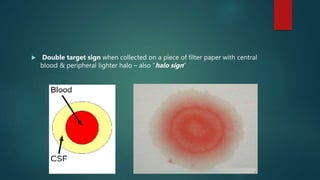
 Double target sign when collected on a piece of filter paper with central
blood & peripheral lighter halo
 Handkerchief test
 Valsalva manuover
 Double target sign when collected on a piece of filter paper with central
blood & peripheral lighter halo – also “halo sign”
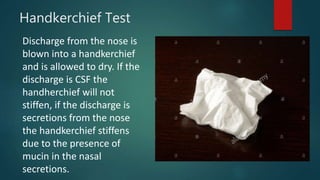
Handkerchief Test
Discharge from the nose is
blown into a handkerchief
and is allowed to dry. If the
discharge is CSF the
handherchief will not
stiffen, if the discharge is
secretions from the nose
the handkerchief stiffens
due to the presence of
mucin in the nasal
secretions.
investigations
 1. Biochemical
 2. Digital X-ray
 3. CT Scan
 4. MRI Scan
 5. Cisternal fluorescin staining test
 6. Radionucleotide scan
Biochemical
B2 transferrin
 Sensitive & specific
 Only few drops of CSF is needed
 Perilymph & aqueous also contains it but not in nasal discharge
Beta trace protein
 Specific for CSF
Glucose testing
 > 30 mg/dl in CSF
 <10 mg/dl in nasal discharge
Roentgen
Father of X-Ray
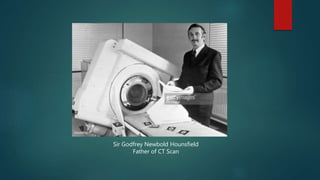
Sir Godfrey Newbold Hounsfield
Father of CT Scan
Localisation OF Site of Leak
High resolution CT scan
 Coronal & axial cuts at 1-2 mm } bony defects
 Axial frontal & sphenoid sinus
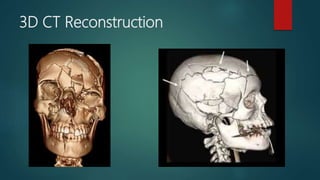
3D CT Reconstruction
Localization contd.
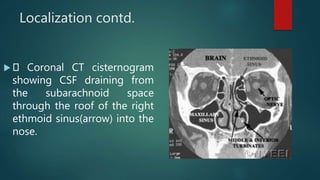
 Coronal CT cisternogram
showing CSF draining from
the subarachnoid space
through the roof of the right
ethmoid sinus(arrow) into the
nose.
Localization
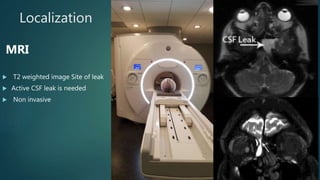
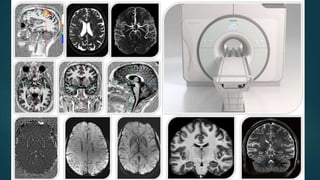
MRI
 T2 weighted image Site of leak
 Active CSF leak is needed
 Non invasive
Localization contd.
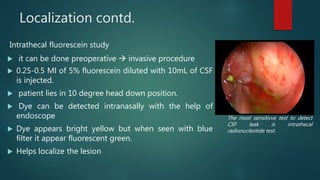
Intrathecal fluorescein study
 it can be done preoperative  invasive procedure
 0.25-0.5 Ml of 5% fluorescein diluted with 10mL of CSF
is injected.
 patient lies in 10 degree head down position.
 Dye can be detected intranasally with the help of
endoscope
 Dye appears bright yellow but when seen with blue
filter it appear fluorescent green.
 Helps localize the lesion
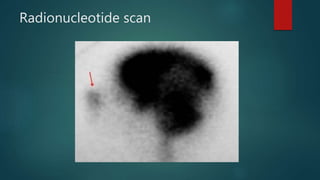
The most sensitivve test to detect
CSF leak is intrathecal
radionucleotide test.
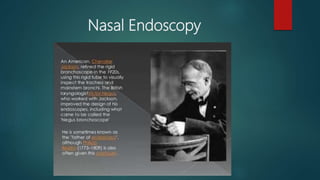
Nasal Endoscopy
Radionucleotide scan
Management
Early case of post traumatic Case of CSF rhinorrhea can be managed by :
 Conservative measures
 Bed rest
 Elevating the head of bed
 Stool softeners
 Avoidance of nose blowing, sneezing & straining
 Prophylactic antibiotics can be used to prevent meningitis
 Acetazolamide ↓ formation of CSF
 Mannitol as per ICP
Surgical treatment – history of
 Galen in 2nd century AD mentioned about csf
 Miller in 1826 described csf circulation
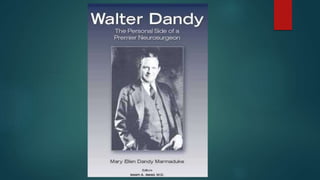
 Dandy pioneered intracranial repairs in 1926.
 Extracranial repair by dohlam in 1948
 Waiganand described endoscopic repair in 1981
Indication for Surgery
 Recurrent attacks of meningitis with continuing leak despite
conservative management
 †Patients with enlarging pneumocephalus ( > 2 cc persistent intracranial
air - significant) despite conservative treatment †
 Acute traumatic or post-operative leaks that recur or persist after 10-13
days of conservative management including Lumbar CSF drainage
 Proven intermittent or delayed leaks †
 High pressure leaks with hydrocephalus
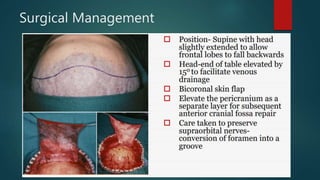
Surgical Management
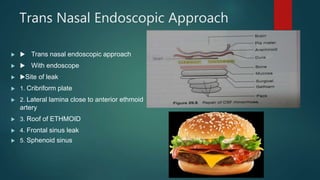
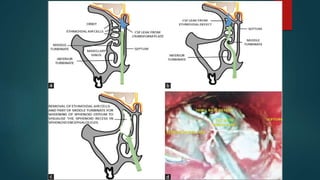
Trans Nasal Endoscopic Approach
  Trans nasal endoscopic approach
  With endoscope
 Site of leak
 1. Cribriform plate
 2. Lateral lamina close to anterior ethmoid
artery
 3. Roof of ETHMOID
 4. Frontal sinus leak
 5. Sphenoid sinus
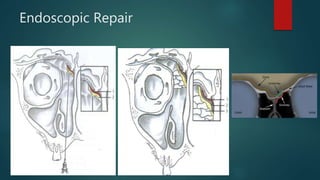
Endoscopic Repair
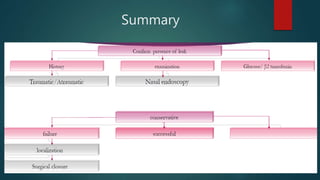
Summary
“The feasibily of an operation is not an indication for its
performance!!”
Thank You

Csf Rhinorrhea - Overview

  • 1.
    CSF RHINORRHOEA DR G MALLESWARARAO M.S. MCH PROF & HEAD DEPT. OF NEUROSURGERY MAMATA MEDICAL COLLEGE KHAMMAM
  • 2.
    CSF leak arethe results of osseous defects at the skull base coupled with dura and arachnoid injury due to pressure gradient system .
  • 3.
    Physiology  CSF formsa jacket of fluid round the brain and spinal cord acting as a buffer against sudden jerks.  Secreted by choroid plexus in the lateral,third & fourth ventricle & absorbed into dural venous sinuses by arachnoid villi.  Villi have one-way valve mechanism allowing CSF of the subarachnoid space to be absorbed in to the blood .  Total volume of CSF varies 90 to 150 ml.
  • 4.
    Csf - Physiology Itis secreted at the rate of about 20ml/hr (350-500mL/day).  Thus total CSF is replaced three to five times every day.  CSF pressure rise on coughing, sneezing, nose blowing straining on stools or lifting heavy weight.  These activities should be avoided in cases of CSF leak or after its repair.
  • 7.
  • 9.
    Sites of Leakage 1.CSF from Anterior cranial fossa reaches the nose via a) Cribriform plate b) Roof of ethmoid c) Frontal sinus 2. CSF from Middle cranial fossa 1. injuries to sphenoid sinus 2. In fracture of temporal bone CSF Middle Ear  Eustachian Tube nose (CSF otorhinorhea)
  • 10.
    Etiology – CSFRhinorrhoea  Trauma (commonest)  Accidental  Surgical ( Trans-sphenoidal hypophysectomy,skull base surgery)  Neoplasms (benign/malignant) invading skull base  Inflammations (mucocele of sinuses ,sinunasal polyposis, fungal infections of sinuses & osteomyelitis erode the bone & dura)  Congenital (meningocele,meningoencephalocele & gliomas with skull base defect)  Idiopathic
  • 11.
    CSF vs NasalDischarge
  • 12.
    Clinically  H/o clearwatery discharge on bending head/ straining ,sudden gush can’t be sniffed back  Headache  nausea  Signs of facial injury  Anosmia   Vertigo  Meningism  Seizures  Fever
  • 13.
    Clinical testing  Reservoirsign :When rising in morning CSF collected in sinuses on bending head  Double target sign when collected on a piece of filter paper with central blood & peripheral lighter halo  Handkerchief test  Valsalva manuover
  • 15.
     Double targetsign when collected on a piece of filter paper with central blood & peripheral lighter halo – also “halo sign”
  • 16.
    Handkerchief Test Discharge fromthe nose is blown into a handkerchief and is allowed to dry. If the discharge is CSF the handherchief will not stiffen, if the discharge is secretions from the nose the handkerchief stiffens due to the presence of mucin in the nasal secretions.
  • 17.
    investigations  1. Biochemical 2. Digital X-ray  3. CT Scan  4. MRI Scan  5. Cisternal fluorescin staining test  6. Radionucleotide scan
  • 18.
    Biochemical B2 transferrin  Sensitive& specific  Only few drops of CSF is needed  Perilymph & aqueous also contains it but not in nasal discharge Beta trace protein  Specific for CSF Glucose testing  > 30 mg/dl in CSF  <10 mg/dl in nasal discharge
  • 19.
  • 20.
    Sir Godfrey NewboldHounsfield Father of CT Scan
  • 22.
    Localisation OF Siteof Leak High resolution CT scan  Coronal & axial cuts at 1-2 mm } bony defects  Axial frontal & sphenoid sinus
  • 23.
  • 24.
    Localization contd.  CoronalCT cisternogram showing CSF draining from the subarachnoid space through the roof of the right ethmoid sinus(arrow) into the nose.
  • 25.
    Localization MRI  T2 weightedimage Site of leak  Active CSF leak is needed  Non invasive
  • 27.
    Localization contd. Intrathecal fluoresceinstudy  it can be done preoperative  invasive procedure  0.25-0.5 Ml of 5% fluorescein diluted with 10mL of CSF is injected.  patient lies in 10 degree head down position.  Dye can be detected intranasally with the help of endoscope  Dye appears bright yellow but when seen with blue filter it appear fluorescent green.  Helps localize the lesion The most sensitivve test to detect CSF leak is intrathecal radionucleotide test.
  • 28.
  • 29.
  • 30.
    Management Early case ofpost traumatic Case of CSF rhinorrhea can be managed by :  Conservative measures  Bed rest  Elevating the head of bed  Stool softeners  Avoidance of nose blowing, sneezing & straining  Prophylactic antibiotics can be used to prevent meningitis  Acetazolamide ↓ formation of CSF  Mannitol as per ICP
  • 31.
    Surgical treatment –history of  Galen in 2nd century AD mentioned about csf  Miller in 1826 described csf circulation  Dandy pioneered intracranial repairs in 1926.  Extracranial repair by dohlam in 1948  Waiganand described endoscopic repair in 1981
  • 33.
    Indication for Surgery Recurrent attacks of meningitis with continuing leak despite conservative management  †Patients with enlarging pneumocephalus ( > 2 cc persistent intracranial air - significant) despite conservative treatment †  Acute traumatic or post-operative leaks that recur or persist after 10-13 days of conservative management including Lumbar CSF drainage  Proven intermittent or delayed leaks †  High pressure leaks with hydrocephalus
  • 35.
  • 36.
    Trans Nasal EndoscopicApproach   Trans nasal endoscopic approach   With endoscope  Site of leak  1. Cribriform plate  2. Lateral lamina close to anterior ethmoid artery  3. Roof of ETHMOID  4. Frontal sinus leak  5. Sphenoid sinus
  • 37.
  • 40.
  • 41.
    “The feasibily ofan operation is not an indication for its performance!!”
  • 42.